


Why the Renault Espace Was a Revolutionary Family Car
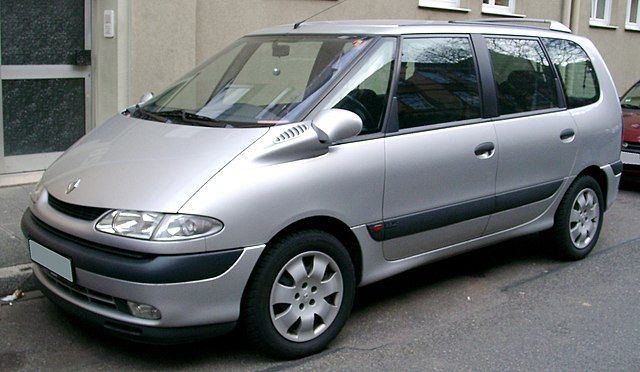
Photo: Renault Espace (III Generation) by Rudolf Stricker, CC BY-SA 3.0, via Wikimedia Commons
The Renault Espace is one of those cars people might drive past on the M60 without giving it a second look, but if you care about family cars, it’s a pretty big deal. Before it showed up in 1984, family motoring in Europe was mainly saloons, boxy estates and the odd van that had been half-heartedly converted with extra seats. Then this tall, strange-looking French thing arrived, with its nose a bit like a fast train and a body that was just one big smooth box. It looked like a mini coach with ideas above its station. And yet, it quietly changed how families travelled. The Espace didn’t just add a couple of extra seats; it rewrote how the inside of a car could work. Suddenly, a car could feel like a family room on wheels, which sounds normal now, but back then it was properly bold.
Here at Dace Motor Company in Stockport and Manchester, we see a lot of family cars come and go, from compact hatchbacks to seven-seat people carriers. And you know what you notice after a while? So many of the clever tricks that newer cars use - sliding seats, removable chairs, big airy windows - go straight back to ideas the Espace helped to bring into the mainstream. That’s why it’s worth talking about this car, even if you’ve never owned one or you’re just trying to work out what might suit your family for school runs around Reddish or weekend trips to the Trafford Centre. The Espace was one of the first European cars to really take the idea of a multi-purpose family vehicle seriously. It didn’t treat kids as an afterthought tucked into a cramped third row; it put families front and centre. And because it stuck around for decades and several generations, it’s also a neat way to see how family cars have kept changing, from fibreglass bodies in the 80s through to hybrid seven-seat SUVs being built today.
Where the Idea Came From: Vans, Trains and a Big Leap of Faith
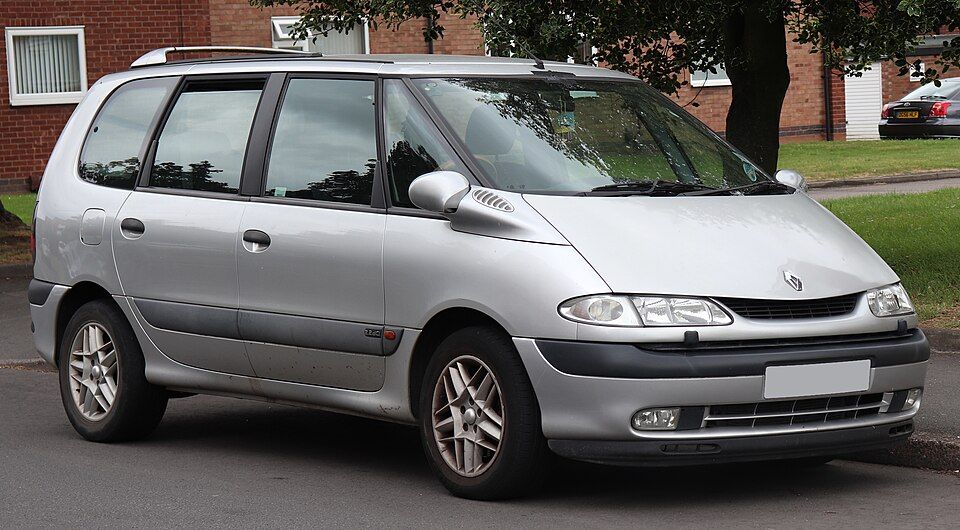
Photo: 2002 Renault Espace Expression DCi 2.2 by Vauxford, CC BY-SA 4.0, via Wikimedia Commons.
The story of the Espace doesn’t actually start at Renault at all. It goes back to the 1970s, when a British designer called Fergus Pollock was working at Chrysler UK in Coventry. He helped come up with the idea of a roomy family vehicle with a high roof, based on the company’s Supervan concept. The idea was then picked up by the French company Matra, which had already been building quirky cars and wanted to make a different kind of family machine. Greek designer Antonis Volanis shaped the body, and Matra boss Philippe Guédon pushed for a European answer to the American family van: something playful, flexible and more like a family lounge than a normal car.
Here’s the twist: the project was supposed to be sold as a Talbot. When Peugeot bought Chrysler’s European arm, the new bosses looked at this strange tall car made from fibreglass over a steel frame and decided it was too risky and too expensive. So they dropped it. That could easily have been the end of the idea. But Matra didn’t give up. They took the design to Renault. Renault boss Bernard Hanon and his team looked past the weird shape and saw something clever: a family car with a flat floor, big windows, and seats that could be moved around like furniture. Renault agreed to supply the engines and mechanical bits, and Matra would build the car. The result finally reached showrooms in France in July 1984, with the first cars arriving in the UK in 1985. At first, hardly anyone bought it - just a handful of cars went out in the first month - because people weren’t sure what they were looking at. Was it a van? Was it a car? But once families tried it and realised how much easier life got with that interior space, sales picked up and the Espace slowly became a reference point for big family cars across Europe.
One Big Box on Wheels: Why the Shape Mattered So Much
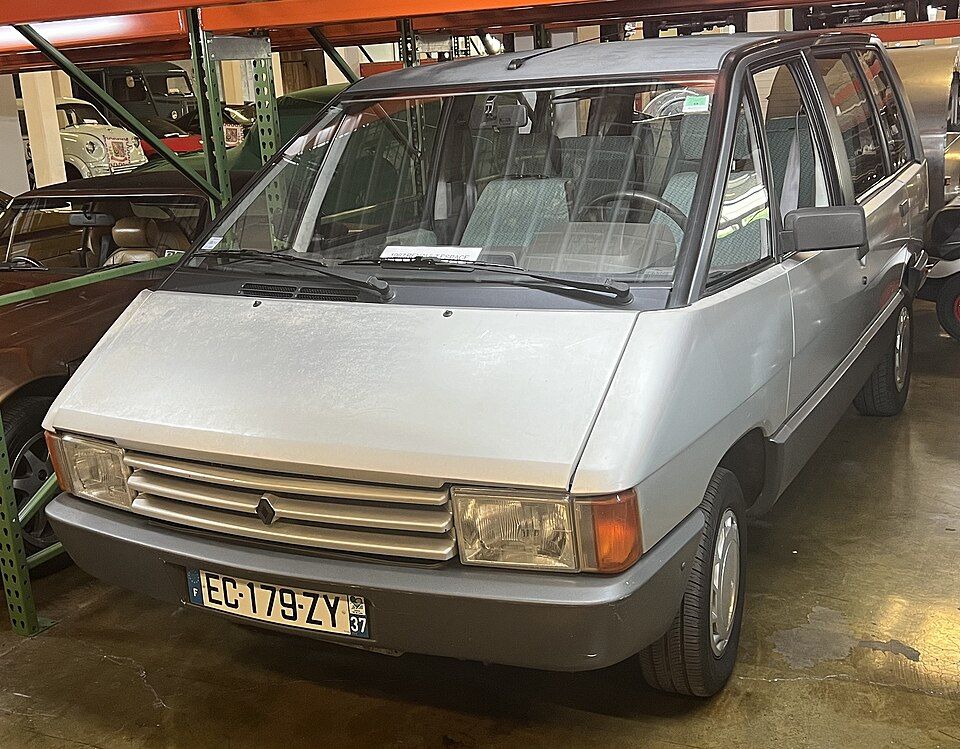
Photo: 1987 Renault Espace Lane Motor Museum by TaurusEmerald, CC BY-SA 4.0, via Wikimedia Commons
If you park a first-generation Espace next to an 80s saloon or estate, you can see straight away why it felt so different. Most cars back then had a long bonnet, a separate cabin and a boot you could clearly pick out. The Espace was a one-piece shape, what designers like to call a “one-box” design. The bonnet was short and sloped, the windscreen was huge and stretched far forward, and the roofline ran in almost a straight line towards the back. Some people joked that it looked like a cross between a train and a mini bus, which isn’t totally wrong; the front end was said to be inspired by the French high-speed train, the TGV, and it really did look like it wanted to devour motorway miles from Calais all the way to the M62.
Underneath that shape, the car was just as unusual. The body was made from fibreglass panels sitting on a galvanised steel frame, a lot like a kit car or a sports car rather than a normal family saloon. This kept weight reasonable and helped with rust protection, which mattered in places where roads get salted in winter, like up around Snake Pass or over Woodhead. Inside, the tall roof meant you could actually stand, bend and move about more easily when belting kids in. That might sound minor, but ask any parent who’s stuffed three kids into the back of a small hatch in a Tesco car park in Stockport rain; that extra headroom is worth its weight in gold. The Espace didn’t pretend to be sleek and low. It fully committed to being tall and roomy, and that honesty about its shape became one of its biggest strengths. It set the pattern for a whole wave of people carriers that came later, many of which copied that same tall, one-piece layout.
Inside the Espace: A Living Room on the Move
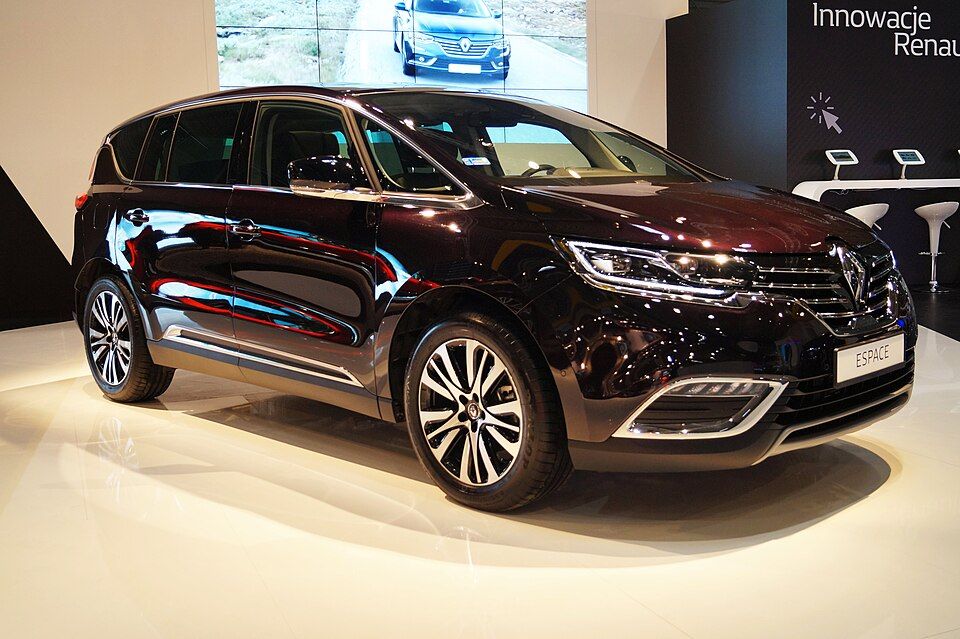
Photo: 2016 Renault Espace by Jakub "Flyz1" Maciejewski, CC BY-SA 4.0, via Wikimedia Commons
The real magic of the Espace was inside. Step through the big sliding-style doors and you found a layout that felt less like a car and more like a small lounge or a family room. Instead of a fixed rear bench, you had individual seats that could be moved, folded, turned to face backwards, or taken out completely in many versions. In early models you could remove the seats and use the Espace almost like a van during the week, then drop them back in for a family trip at the weekend. It sounds obvious now, but back in the 80s, the idea of a family car where each kid had their own proper seat, with space for knees and feet, felt seriously fresh.
As the Espace went through later generations, Renault kept playing with the interior. The third generation in the late 90s moved the main instruments to a digital display in the middle of the dashboard, which freed up space and gave the driver a clearer view forward. Heating and air controls were placed along the sides, and the floor was kept almost completely flat, so moving from one side to the other was easy. Big windows and a high seating position meant you could see out in every direction, which makes a huge difference if you’re trying to keep an eye on traffic in central Manchester or watching for cyclists on Deansgate. Kids got a great view out too, instead of staring at the back of a seat. If you think about how many family cars now advertise flexible seating, removable chairs, sliding second rows and neat storage spaces, that whole idea of treating the interior as a flexible space rather than a fixed object owes a lot to what the Espace was doing decades ago. It showed car makers that families wanted options: places to stash snacks and football boots, seats that could grow with kids, and a cabin that didn’t feel like a cramped afterthought.
The Espace in Everyday Family Use
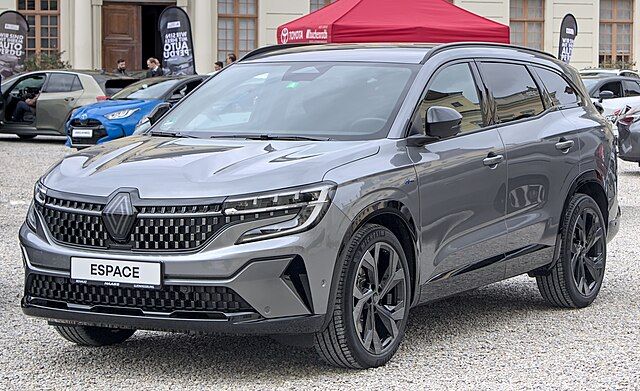
Photo: Renault Espace VI at Automesse Ludwigsburg 2024 by Alexander-93, CC BY-SA 4.0, via Wikimedia Commons
To really understand why the Espace changed things, imagine real family life with it, rather than a glossy brochure. Picture pulling up outside a primary school in Cheadle or Levenshulme on a wet Monday morning. In a regular saloon, everyone is squeezed in, someone drops a book on the floor, you’re stretching awkwardly to pick it up, and someone at the back can’t quite reach their seat belt. In an Espace, that high roof and big doorway make it easier to lean in, adjust seats, and sort everything out without feeling like you’re performing a yoga move. That matters when you’re doing it every single weekday for years. The Espace made boring tasks like school runs and supermarket trips slightly less stressful, which for many parents is a huge win.
The long wheelbase versions, like the Grand Espace, made long trips across the country feel more relaxed too. Families could spread out more, and the individual seats meant fewer arguments about who was stuck in the middle with no space. The boot could swallow bikes, camping gear or a stack of suitcases for a run down to Cornwall or a week in the Lake District. Some owners used them as mini minibuses for sports teams or big families. Drivers liked the high seating position that gave a better view ahead on motorways and over hedges on country roads, something you still hear people talk about when they move from a low hatchback to a taller people carrier or SUV today. In city traffic around Manchester, being up high can make it easier to judge gaps and plan lane changes on busy ring roads. The Espace proved that a roomy family car didn’t have to feel clumsy and van-like; it could be comfortable, stable and surprisingly smooth to drive, even with a car full of kids, bags and the random bits of life that always seem to end up rolling around under the seats.
How the Espace Changed Other Cars
Before the Espace, Europe didn’t really have a proper modern people carrier on sale. There were vans with seats, and there were estates with big boots, but very few cars that had been planned from day one as tall, roomy family transport. The Espace showed there was a real demand for that kind of vehicle, and car makers noticed. Pretty soon, you started seeing more dedicated people carriers from other brands: cars like the Chrysler Voyager in Europe, the Ford Galaxy, the Volkswagen Sharan and models from Citroën, Peugeot and others. Many of these followed the same basic recipe the Espace helped to popularise: tall, one-box body, three rows of seats, big glass area and a cabin that could change shape depending on whether you were carrying people or stuff.
The Espace also encouraged Renault itself to go further with family-focused cars. It led to smaller but related ideas like the Renault Scénic, a more compact people carrier that borrowed a lot of the same thinking and scaled it down for families who didn’t need a huge vehicle. Other makers copied this pattern too, creating small and medium people carriers because they’d seen how well the Espace worked as a concept. Even crossovers and SUVs you see around Stockport today, from many different brands, still lean heavily on the idea of a high driving position, flexible seats and a cabin made for family use rather than just style. So while the Espace might not get the same attention as flashy performance cars, its influence spreads through a massive slice of the family car market. A lot of the things people now expect from a spacious family vehicle started as unusual ideas in the Espace: proper space for seven, grown-up comfort in all three rows, and interiors that could be reconfigured at will rather than being frozen at the factory.
From Space Age Van to Hybrid Family SUV
The Espace story didn’t stop with that first fibreglass-bodied version in 1984. It kept evolving through several generations, each one reflecting what families needed at the time. The first three generations were built by Matra and stayed true to the tall, one-box people carrier look. They refined the engines, worked on comfort and safety, and added more luxury over time, especially with the second generation’s V6 options and the third generation’s futuristic digital dashboard and even more flexible seating layout. In 2002, Renault took over production fully for the fourth generation and moved the car upmarket, using lighter materials and improving equipment to appeal to families who wanted space without feeling like they were in a basic minibus.
From the fifth generation onwards, the Espace gradually shifted shape again. The 2015 model leaned into a more crossover-style look, blending some SUV styling with people carrier practicality, and loaded up with modern features like advanced safety systems, large screens and assist technology to help with long drives and parking. The latest sixth generation, launched in 2023, takes things even further and turns the Espace into a seven-seat SUV based on Renault’s Austral, with a hybrid setup aimed at cutting fuel use and emissions. It’s built in Spain and comes with lots of driver assistance systems, a modern multimedia system that uses Google software, and up to 32 different helpers like cameras, lane help and smart cruise control. So you go from a quirky fibreglass 80s people carrier to a high-tech hybrid family SUV over four decades, but the core idea stays the same: a spacious, flexible family vehicle that gives people room to breathe and travel together in comfort.
Why the Renault Espace Still Matters If You’re Looking at Used Family Cars
So what does all this history actually mean for someone wandering around used car forecourts in Stockport or Eccles today? You might never buy a Renault Espace, and that’s fine. But the ideas it made popular can really help when you’re choosing any family car. The Espace showed that space, flexibility and visibility are the things that make family life easier in a car. So when you’re sitting in the second or third row of a used seven-seater at Dace Motor Company, ask yourself some simple Espace-style questions. Can everyone get in and out without gymnastics? Is there legroom for growing teenagers, not just small kids? Can the seats slide, fold, or come out to give you a big boot for flat-pack furniture from IKEA Ashton or bikes for a ride around the Mersey? Are there enough storage spots for snacks, bottles and the random little toys that always appear from nowhere? Those are the kinds of practical checks that come from the same thinking the Espace championed all those years ago.
The thing is, a lot of modern family cars are styled to look like chunky SUVs, but underneath the badge and plastic cladding, the good ones still follow the Espace’s basic rules. They give you a high driving position, good all-round visibility for busy roads like the Mancunian Way, and cabins built to handle school runs, muddy football boots and holiday trips without complaint. Whether you’re leaning toward something German, Japanese, British or French from our used stock - maybe a big Skoda, a Ford people carrier, or a seven-seat crossover from another brand - it’s worth mentally comparing it to what the Espace nailed: honest space, real flexibility and comfort for every seat, not just the front two. The Espace helped Europe learn how to build proper family vehicles. So even if you never own one, its ideas are quietly sitting there in the background, helping you and your family feel a bit less squashed and a bit more relaxed on every loop of the M60 or every wet drive back from Old Trafford after the match.