


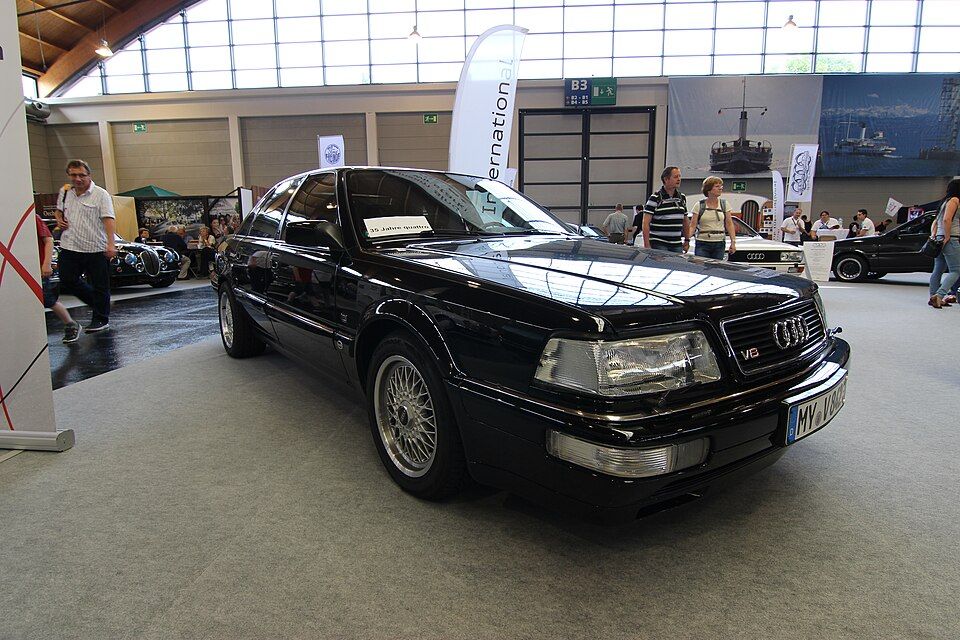
The Story of the Audi V8 - The Forgotten Luxury Flagship
Photo: Audi V8 by © Hilarmont (Kempten), CC BY-SA 3.0 DE, via Wikimedia Commons.
You can learn a lot about a car by looking at what people remember first. Say “classic Audi” and most people jump straight to the rally cars, the boxy quattro, the RS badges, or the smooth A8 that still looks sharp outside a nice hotel. The Audi V8? That one gets a quieter nod. It’s the car that sits in the corner of the story, looking rather serious, wearing a dark suit, and waiting for someone to notice how much it actually did. Here at Dace Motor Company, we see plenty of used Audi models pass through the Manchester and Stockport area, and it’s funny how the same thing happens in car chat. Some cars shout. Some cars wink.
The Audi V8 did neither. It just turned up with a big engine, four-wheel grip, lots of leather, and the sort of confidence that didn’t need to make a scene. Audi launched it in 1988 as its first large luxury model, with a 3.6-litre V8 engine and four valves per cylinder, and that was a bold move for a brand trying to sit at the same table as Mercedes-Benz and BMW. It wasn’t a copy of a big German saloon, either. It had its own strange charm. Think of it as the mate who turns up to a rainy walk near Lyme Park wearing proper boots while everyone else is sliding about in trainers. Quietly prepared. A bit underrated. Very Audi.
Why Audi Needed A Big Saloon
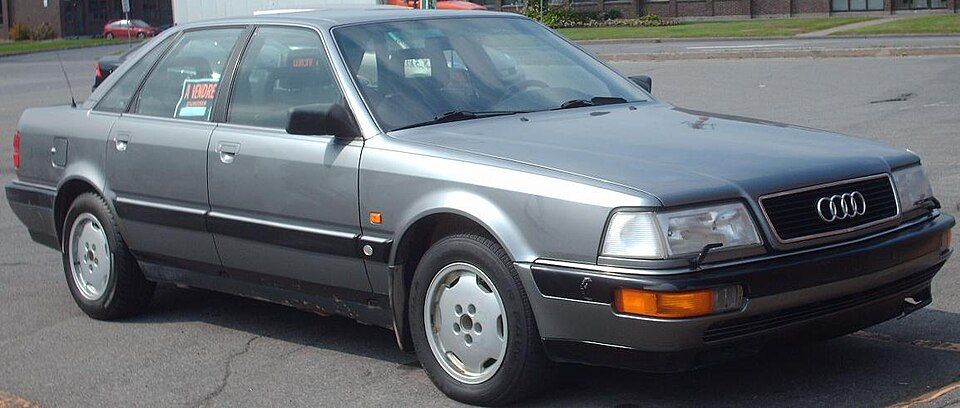
Photo: 1990 Audi V8 by Bull-Doser, Public domain, via Wikimedia Commons.
Back in the late 1980s, Audi was in an odd but exciting place. The brand had already made a name for itself with quattro four-wheel drive, especially through motorsport, but selling a big luxury saloon was a different sort of challenge. Luxury buyers wanted comfort, status, space, and a badge that said, “Yes, I’ve done well.” Mercedes had the S-Class. BMW had the 7 Series. Audi had clever tech and a strong reputation for grip, but it still needed a flagship, the sort of car that could pull up at a boardroom, a country hotel, or outside a posh restaurant in Didsbury and look like it belonged there. So the Audi V8 arrived. The name was simple, almost blunt.
No fancy extra title. No poetic badge. Just V8. That name mattered because it was Audi’s first car to use a V8 engine, and it was also the company’s first step into the full-size luxury class. It was built at Neckarsulm, the German site with a long car-making history, and Audi’s own history pages mark 1988 as the year the company entered the full-size car class with this model. From the outside, the V8 looked a bit like an Audi 100 or 200 that had been to a very good tailor. Similar family face, yes, but wider, calmer, richer, and more serious. The clever bit was that Audi didn’t try to out-shout its rivals with chrome and drama. It tried to feel safe, planted, and quietly expensive, which is a very different flavour of luxury.
The Name Was Simple Because The Message Was Simple
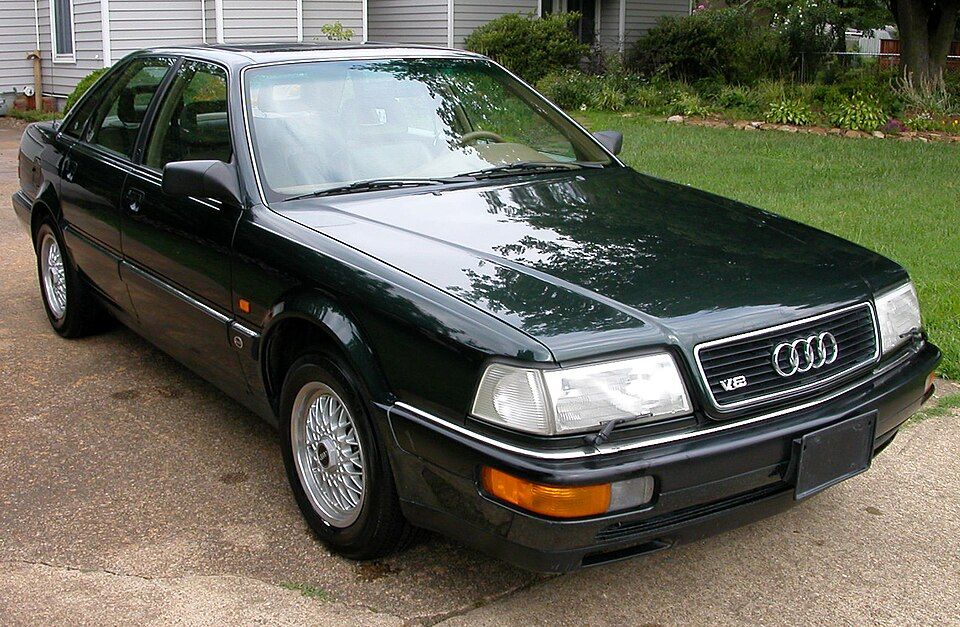
Photo: Audi V8 Quattro by Jagvar, Public domain, via Wikimedia Commons.
The Audi V8 used a 3.6-litre petrol engine at first, and it was strong for the time. Later, Audi added a 4.2-litre version, giving the car a bit more shove and a smoother sense of ease. Those numbers might not sound wild now, when even family hatchbacks can feel quick, but picture the late 1980s for a second. Big mobile phones. Boxy suits. Cassette tapes in the glovebox. A luxury saloon with a V8 engine and four-wheel drive was not normal background noise. The V8 came with quattro permanent four-wheel drive, and it became the first Audi to combine quattro with an automatic gearbox, which was a big deal because it matched comfort with all-weather grip.
In our bit of the country, where roads can go from dry to grim before you’ve even cleared the M60, that idea still makes sense. You didn’t buy this car to show off at every traffic light. You bought it because it could cruise, grip, and make a long trip feel less tiring. There were manual versions too, including a five-speed manual with the 3.6-litre car and a six-speed manual with the later 4.2-litre car, but those are rare and now have a bit of collector sparkle. Still, the automatic suited the car’s mood. Smooth. Calm. Heavy in a good way. The Audi V8 didn’t feel like a sports car dressed as a limo. It felt like a limo that could keep its head when the weather got silly.
It Looked Familiar, And That Was Both Clever And Risky
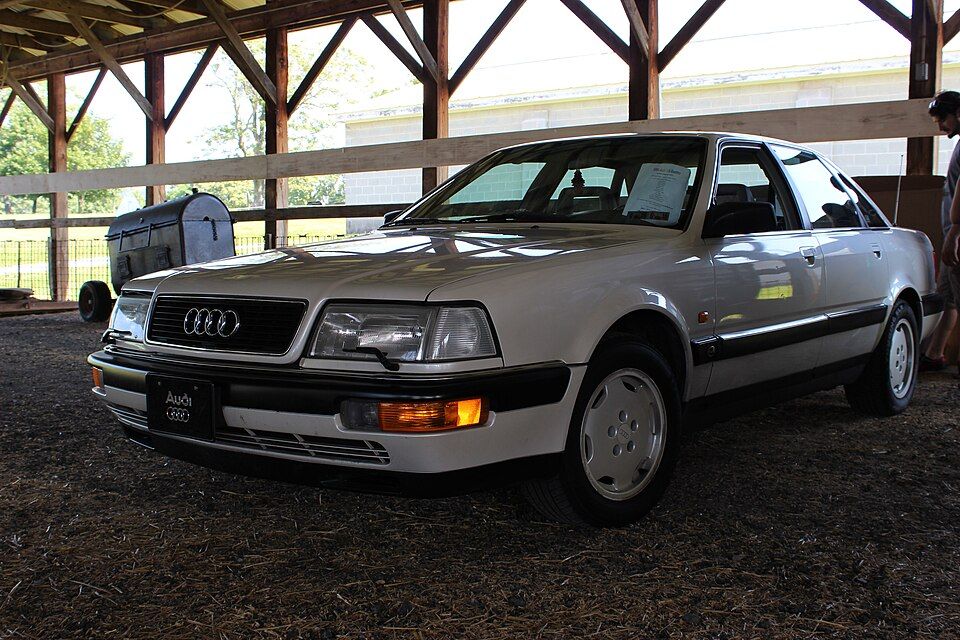
Photo: Audi V8 Quattro by ilikewaffles11, CC BY 2.0, via Wikimedia Commons.
Here’s where the Audi V8 gets interesting. It didn’t look wildly different from smaller Audis of the time, and that probably helped and hurt it at the same time. On one hand, the shape was tidy, clean, and very much part of the Audi family. No shouting. No silly trim. No look-at-me tricks. On the other hand, people spending luxury-car money sometimes want neighbours to know they’ve spent luxury-car money. The V8’s body was based on an enlarged version of the Audi 100 and 200 shell, with its own grille, bumpers, lights, wider track, longer wheelbase, and richer cabin trim. That meant people who knew cars could spot it. People who didn’t might just think it was another big Audi. You know how it is. Park a flashy coupe near the Trafford Centre and heads turn.
Park an Audi V8 there and only the proper car nerds wander over. But that low-key style has aged well. A lot of big luxury cars from the same era now look like they’re trying very hard. The V8 still has that squared-off, calm confidence. It’s the car version of a good wool coat: not trendy, not loud, but still right on a cold day. Inside, it leaned into comfort with wood trim, leather, and a solid dashboard layout. It wasn’t a nightclub inside. It was closer to a quiet old lounge where the heating works and the chair is better than it looks. That might sound simple, but for Audi, it helped set the tone for the luxury cars that came after.
The Quattro Trick Made It Feel Different
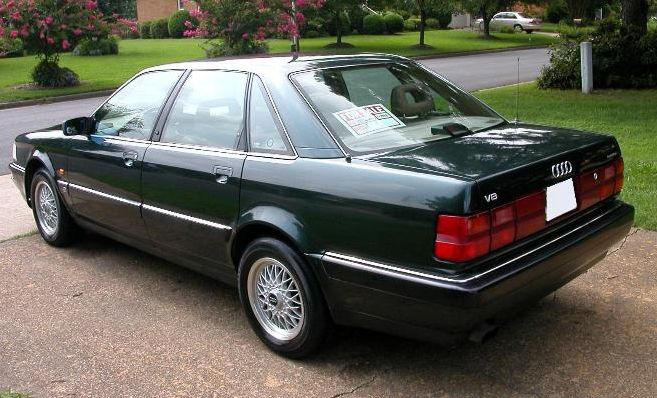
Photo: Audi V8 Quattro by Jagvar, Public domain, via Wikimedia Commons.
A lot of luxury saloons in that period followed the same idea: big engine at the front, drive going to the rear wheels, soft ride, proud badge. Audi went another way. The quattro system gave the V8 permanent four-wheel drive, so the car could put its strength down with more confidence in poor weather. That didn’t turn it into a mountain goat, of course. It was still a big saloon, not a small rally car. But the feel was different. Imagine setting off on a wet morning in Stockport, lights glowing on the A6, buses splashing through puddles, and the road surface doing that shiny, greasy thing it does after a bit of rain. In a rear-drive luxury car of the era, you’d be a little careful with your right foot.
In the Audi V8, the car’s party piece was that planted feeling, that sense that it had all four corners helping out. Audi had already proved the quattro idea in rallying and circuit racing, so the V8 brought some of that thinking into a big, leather-lined saloon. This is why the car matters. It wasn’t just another large engine with posh seats around it. It was Audi saying, “Our luxury car will be different because our idea of confidence is grip.” That’s a very Audi sentence, really. And while many buyers at the time still leaned toward the famous old names, the V8 showed a way forward. Today, four-wheel drive in big premium cars feels normal. Back then, Audi was still pushing the idea into places where people weren’t fully expecting it.
Then It Went Racing, Which Still Feels Slightly Mad
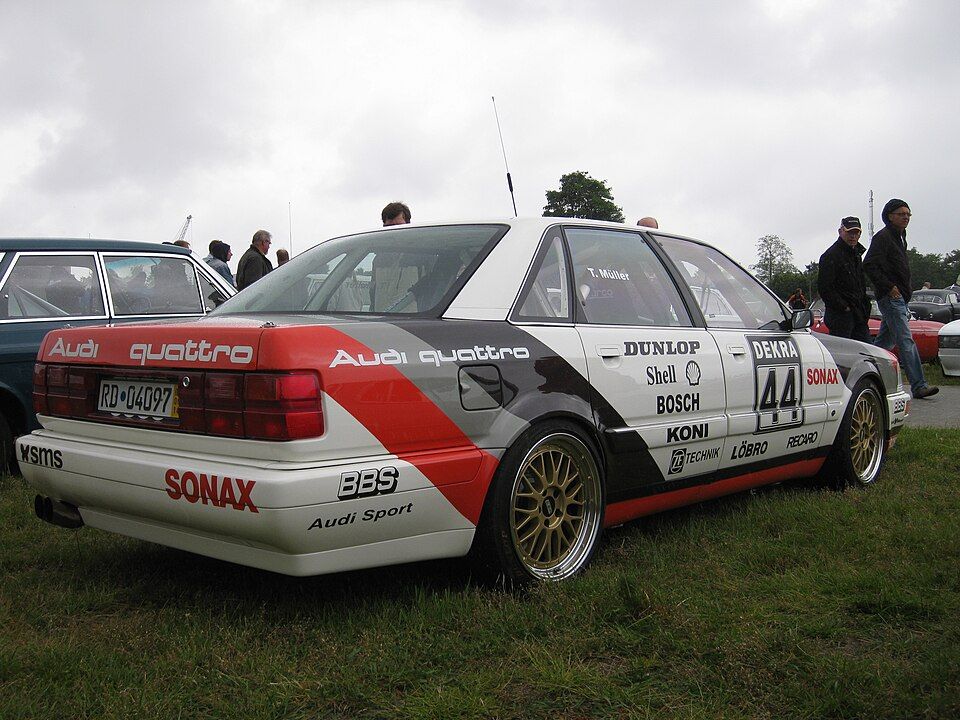
Photo: Audi V8 Typ 4C by KarleHorn, CC BY 3.0, via Wikimedia Commons.
This is the part of the story that sounds as if someone in a meeting had too much coffee. Audi took its big V8 luxury saloon racing in the German touring car championship. Not a small coupe. Not a lightweight hatch. A large, square-shouldered saloon with a luxury image. And it worked. Audi’s official motorsport history lists the Audi V8 quattro as the DTM winner in 1990 and again in 1991. Audi also says Hans-Joachim Stuck took seven wins during the car’s debut DTM season in 1990, while Frank Biela became the 1991 champion in the Audi V8 quattro. That’s a proper claim to fame, and it gives the car a weird double life. On the road, it was quiet and plush.
On track, it was a serious bit of kit that annoyed rivals because it had traction where others had wheelspin. There’s something brilliant about that. It’s like seeing someone’s grandad turn up at five-a-side and score a hat-trick. You didn’t expect it, but fair play, he’s still got it. The racing version also helped Audi prove that quattro could do more than handle muddy rally stages. It could win on circuits too. The DTM success gave the V8 a flash of fame, but it didn’t turn the road car into a huge seller. Maybe that’s part of the charm. Some cars become legends because everyone bought one. Others become interesting because hardly anyone did, even when they had a lot going for them. The Audi V8 sits in that second group.
So Why Is It Forgotten?
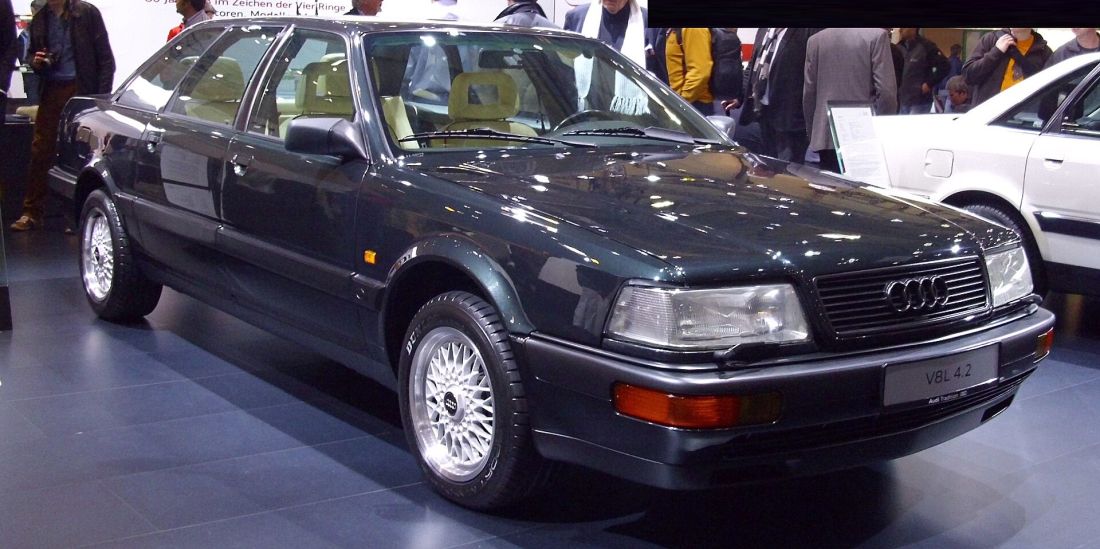
Photo: 1990 Audi V8 L by Buch-t, CC BY-SA 3.0 DE, via Wikimedia Commons.
The Audi V8 is forgotten for a few reasons, and none of them are because it was a bad idea. First, it arrived in a part of the market where buyers can be stubborn. If someone has had three big Mercedes saloons in a row and likes the dealer, the seat, the bonnet star, and the whole routine, it takes a lot to pull them away. Same with BMW buyers who wanted that sharper driving feel. Second, the V8 looked too close to other Audis for some buyers. Great for people who liked subtle cars. Less great for people who wanted their driveway to announce the upgrade. Third, it didn’t last long. Production ran from 1988 into the early 1990s, and the A8 replaced it in 1994. The A8 had a much clearer identity, helped by its aluminium body and sleeker shape, so it became the car people remember as Audi’s proper luxury breakthrough. The V8 became the bridge. Bridges are useful, but people don’t always take photos of them, unless it’s the Stockport Viaduct, which, to be fair, is hard to miss. The V8 also came from an era before the internet turned every rare car into a cult hero overnight. For years, it was just an old executive Audi: complex, thirsty, and expensive to fix if the wrong bits went wrong. That kept it in the shadows. Now, though, those shadows make it more interesting.
What It’s Like To Look At One Today
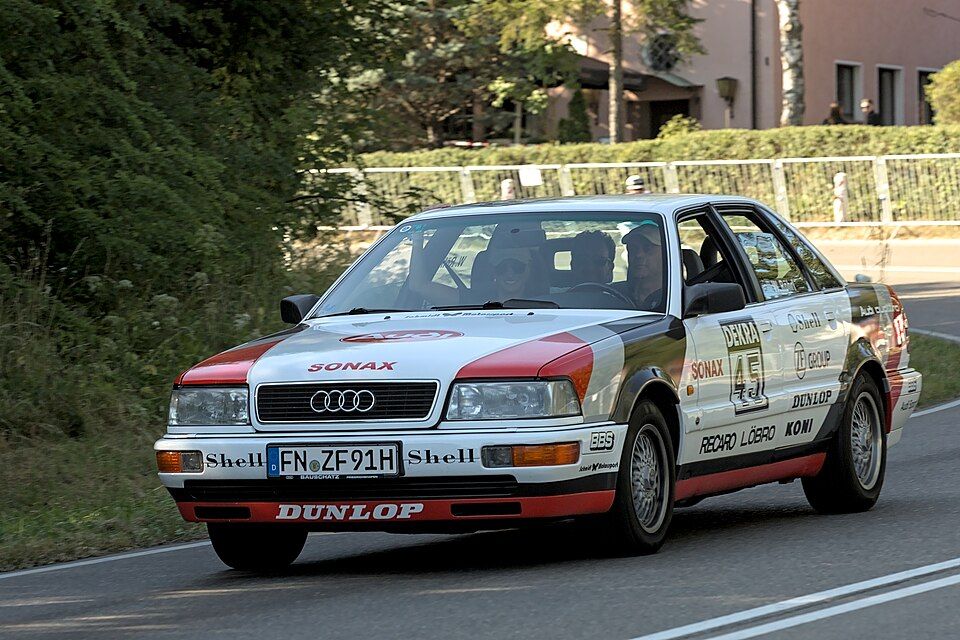
Photo: Audi V8 Quattro DTM by Alexander Migl, CC BY-SA 4.0, via Wikimedia Commons.
Seeing an Audi V8 now feels different from seeing a newer luxury saloon. Modern cars are full of giant screens, touch controls, mood lighting, driver aids, and menus for the menus. The V8 comes from a time when luxury meant thick seats, solid switches, quiet cruising, and a big engine doing the hard work without making a fuss. That doesn’t mean it’s simple. Far from it. A car like this needs careful checking, especially around service history, electrical items, suspension, brakes, cooling, and signs of neglect. Big old luxury cars can be tempting because the buying price may look friendlier than you’d expect, but the running costs can still act like the car remembers it was expensive when new. That’s where a bit of patience helps. Check that everything works. Listen from cold. Look for warning lights. Read the paperwork, not just the shiny advert. And don’t get carried away because the wood trim looks lovely in photos. We’ve all been there, haven’t we? One nice cabin picture and suddenly common sense is standing outside in the rain. A cared-for Audi V8 can be a special thing, though. It gives you a type of driving that’s getting rare: relaxed, weighty, mechanical, and calm. No fuss. No drama. Just that old-school feeling of a big car settling into a cruise. It won’t suit everyone, and that’s fine. Cars with real character rarely do. The right person will look at it and get the idea straight away.
The Legacy Is Bigger Than The Sales Numbers
The real legacy of the Audi V8 is not that it beat the S-Class or 7 Series at their own game. It didn’t. The point is that it helped Audi work out its own game. It showed that a big Audi could be luxurious, serious, and different. It proved that quattro had a place in large premium saloons. It gave Audi a V8 flagship before the A8 arrived. And it had racing success that still sounds slightly bonkers in the best way. Without the V8, the A8 story feels less complete. Audi didn’t just wake up one morning and build a luxury saloon with confidence. It had this earlier chapter, a bit boxier, a bit quieter, and maybe a bit misunderstood. That’s why the Audi V8 deserves more love. It’s not the obvious poster car. It’s not the one your neighbour will always know by name. But for people who enjoy the odd corners of car history, it’s a cracker. It’s the forgotten flagship that did a lot of heavy lifting without asking for much applause. And maybe that suits it. Manchester and Stockport drivers know a thing or two about cars that need to handle real roads, wet mornings, tight streets, motorway slogs, and the odd run out toward the Peaks. The Audi V8 was built with that same sort of no-nonsense confidence, just dressed in late-eighties luxury. It may not be the most famous Audi saloon, but it helped shape the ones that followed. That’s a story worth telling.