


BMW CSL Models Explained: What Does CSL Actually Mean
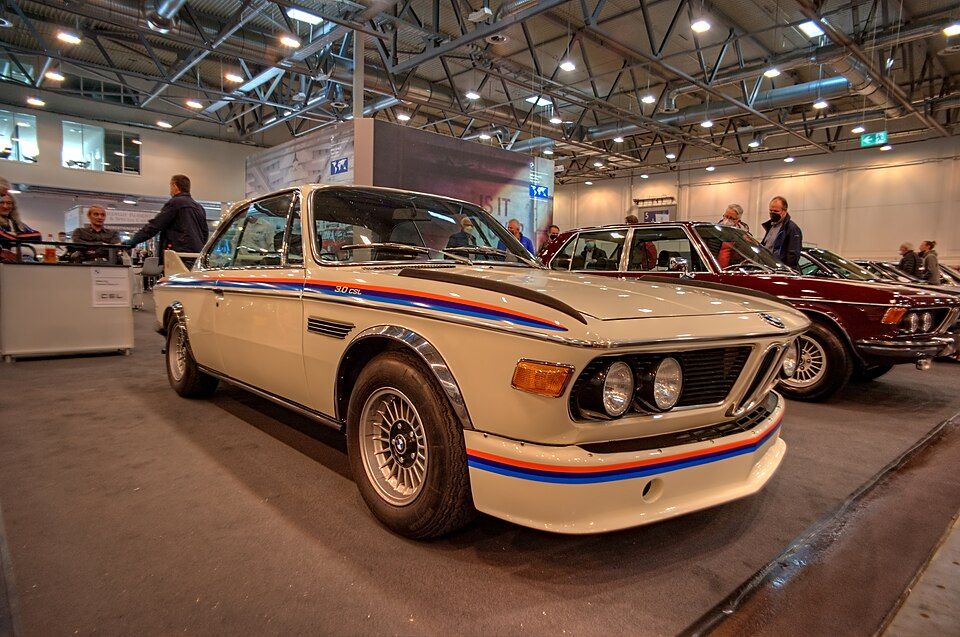
Photo: BMW 3.0 CSL by Thomas Vogt from Paderborn, Deutschland, CC BY 2.0, via Wikimedia Commons.
You’ve seen the badge. Three letters, sitting quietly on the boot of a BMW that usually costs far more than the regular model and looks ready for a race circuit before it has even left the car park. CSL. It sounds important, and it is, but the meaning gets muddled because BMW has used the letters across different decades and explained them in slightly different ways. The basic idea has stayed steady, though. A CSL is a BMW built around less weight, sharper responses and a much closer link to racing. It isn’t simply a standard car with a bigger engine and a few stripes. The whole car is reworked, sometimes in ways that make it less comfortable, less practical and harder to live with every day. That’s part of the point.
At Dace Motor Company, we know many drivers around Manchester and Stockport first meet these badges while browsing used BMW listings, watching auction prices or spotting something rare on the A6. The badge can look like another trim level at first glance. It isn’t. CSL sits near the top of BMW’s special-model ladder and has appeared on just a small group of road cars: the original BMW 3.0 CSL from the early 1970s, the BMW M3 CSL from 2003, the BMW M4 CSL from 2022 and the hand-built BMW 3.0 CSL released for BMW M’s 50th anniversary. Each one came from a different age, with different rules and technology, yet the same recipe runs through all of them. Remove weight. Make the engine feel keener. Tighten the suspension. Improve the airflow around the body. Strip away anything that gets between the driver and the car. That sounds simple, but doing it properly takes far more than fitting lighter seats. A real CSL changes the character of the base car, and that’s why these models have such a strong following.
So, What Does CSL Stand For?
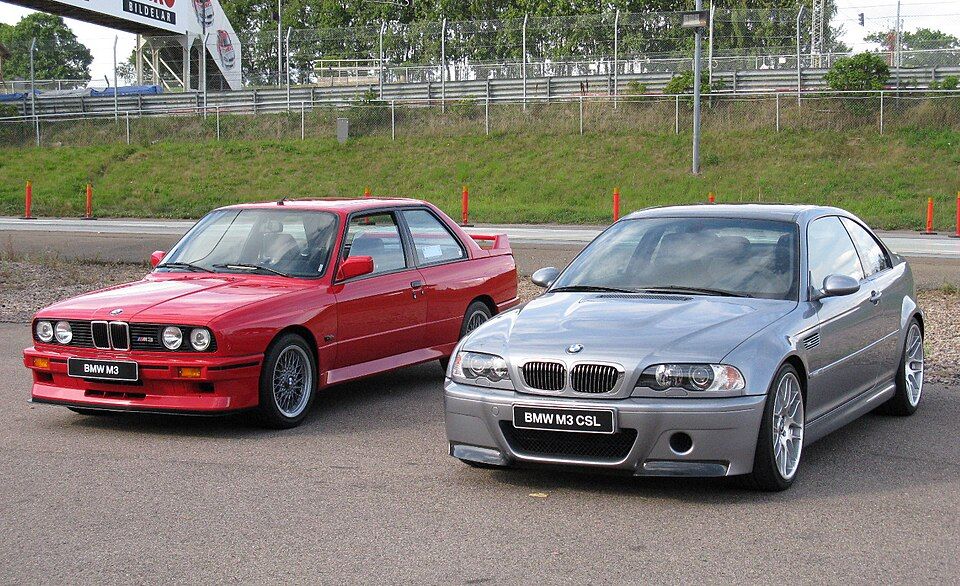
Photo: BMW M3 CSL and M3 E30 by nakhon100, CC BY 2.0, via Wikimedia Commons.
The original meaning is German: Coupé Sport Leichtbau. “Coupé” means a fixed-roof two-door car, “Sport” is fairly clear, and “Leichtbau” means lightweight construction. Put it together and you get something close to “sport coupé with lightweight construction.” That was the thinking behind the first BMW 3.0 CSL. BMW’s own history pages still use this meaning for the classic car, and it fits perfectly because the early model was created as a lighter version of BMW’s elegant six-cylinder coupé. Years later, BMW gave the letters a modern English reading for the M4 CSL: Competition, Sport, Lightweight. That can sound like the old meaning has been replaced, but it’s better to think of it as a fresh explanation for a newer model. The “L” has never lost its main job. It still means the car has been put on a serious diet. The “S” still points to a sportier, track-led setup.
The first letter is the one that changed from Coupé to Competition in BMW’s modern wording. That small change makes sense because BMW now uses “Competition” across many M cars, and it also links the newer CSL badge with the company’s current naming style. So which answer is correct? Both, depending on the model and the period. For the classic 3.0 CSL, say Coupé Sport Leichtbau. For the 2022 M4 CSL, BMW’s official wording is Competition, Sport, Lightweight. For the 2003 M3 CSL, enthusiasts usually connect it to the classic German phrase because the car was created as the direct spiritual follow-up to the original lightweight coupé. The key point is easier than the language lesson: CSL means BMW has focused hard on weight, driver feel and circuit ability. It’s the badge for a car where comfort takes a step back and precision moves to the front. Think of it like packing for a weekend away with one small bag instead of filling the boot with half the house. Everything left in the car has to earn its place.
The Original BMW 3.0 CSL Set the Rulebook
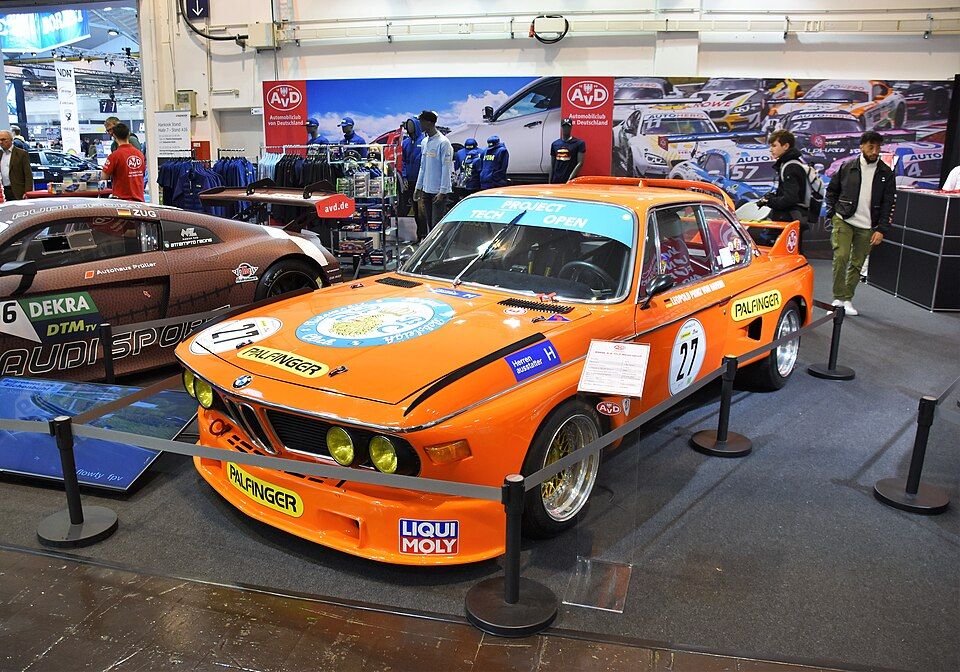
Photo: 1971 BMW 3.0 CLS Rennsport by Charles from Port Chester, New York, CC BY 2.0, via Wikimedia Commons.
The story starts with the BMW 3.0 CSL from the E9 family. The first lightweight version arrived in 1971, before BMW M had become the familiar badge people know now. BMW wanted a car that could compete in touring-car racing, but racing rules required a road version to be built as well. That process is called homologation, which simply means making enough road cars so the racing version is allowed to enter. The normal BMW 3.0 CS was a stylish, comfortable grand tourer. It was quick for its day, but it carried trim, sound insulation and heavy body parts that didn’t help on a circuit. The CSL cut that excess. Depending on the version and market, BMW used aluminium for parts such as the doors, bonnet and boot lid, fitted thinner glass, reduced sound deadening and removed some comfort equipment. Early cars had 180 horsepower, while the final 1973 road version reached 206 horsepower from a 3.2-litre straight-six engine.
BMW lists the final car at 1,270 kilograms, which made it very light for a large six-cylinder coupé of the period. The car also looked different as it developed. Wider wheel arches and a dramatic group of fins and spoilers appeared on later versions, helping the racing car stay stable at speed. The road car’s huge rear wing couldn’t be approved for use in Germany, so BMW supplied it separately. Owners could decide what happened next. You can imagine the conversation at home: “Yes, it came in the boot. No, it’s not a shelf.” That mix of elegant shape, low weight and racing hardware made the CSL stand apart. It also set a pattern BMW would return to decades later. Start with a fine road car, remove the softer edges, add parts that serve a real job and leave the driver with something far more direct. The badge wasn’t created as a marketing shortcut. It described the engineering choices made throughout the car.
Why People Call the 3.0 CSL the Batmobile
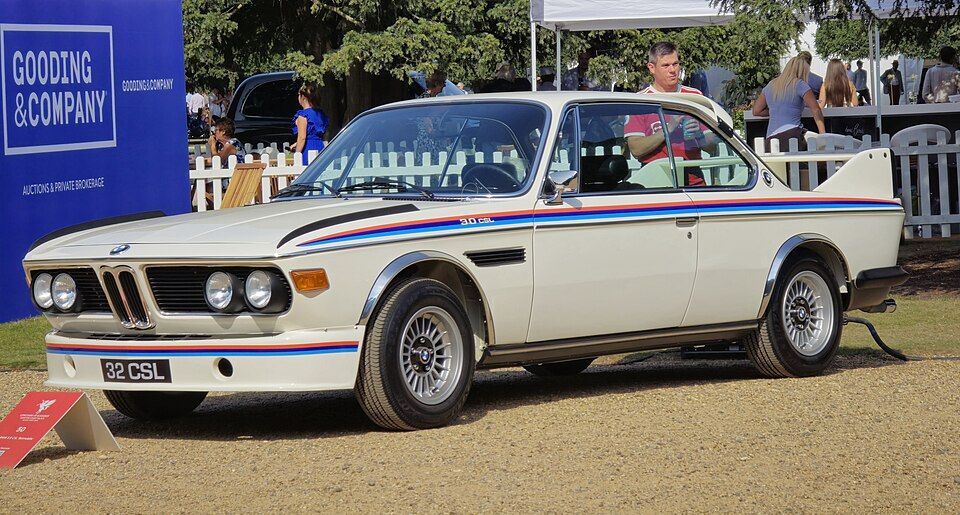
Photo: 1974 BMW 3.0 CSL Batmobile 8 by Calreyn88, CC BY-SA 4.0, via Wikimedia Commons.
The nickname “Batmobile” came from the huge aero package fitted to the most famous later 3.0 CSL cars. There was a deep front air dam, small fins running along the front wings, a roof spoiler and that towering rear wing. On a modern car, large spoilers are common enough that people barely look twice. In 1973, this thing looked as if it had driven straight out of a comic book. The shape wasn’t there just to shock people outside a hotel. It helped the car work on a circuit by managing how air moved around the body and by pressing the tyres onto the road more firmly at speed. The race versions backed up the looks with results. The BMW 3.0 CSL won the European Touring Car Championship in 1973, then won the title five years in a row from 1975 to 1979. It also became linked with BMW’s Art Car story when Alexander Calder painted a 3.0 CSL race car in 1975.
That car was the first in a long series of BMW Art Cars. All this matters because CSL gained its reputation through visible results, not a clever advert. It won races. It looked wild. It gave BMW Motorsport an identity. Even the famous blue, violet and red stripes became tied to that period. Drivers today may know the classic CSL from old footage, scale models or the occasional display at a specialist event, but its influence is easy to spot in later cars. A carbon roof on an M3 CSL, a stripped rear cabin in an M4 CSL, or the huge wing on the 2023 3.0 CSL all trace back to the same question: what can be changed to help the car respond better? Around Greater Manchester, a genuine classic CSL would be a rare sight even at a busy Sunday meet, and that scarcity adds to the myth. Still, the badge matters for reasons beyond rarity. The first CSL proved that reducing weight could change how a road car felt in every corner, under braking and during acceleration. Lighter didn’t just mean quicker. It meant more alert.
The 2003 BMW M3 CSL Brought the Badge Back
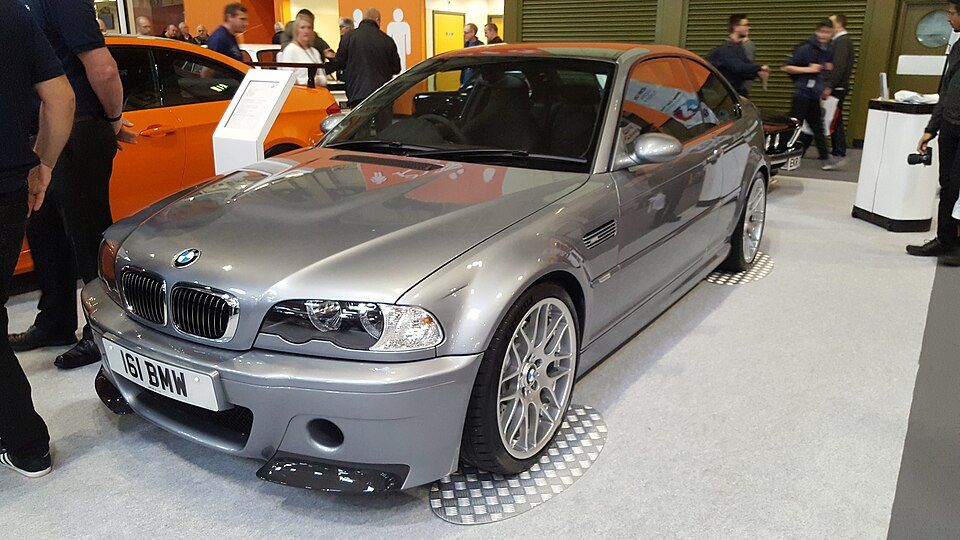
Photo: 2003 BMW M3 CSL by Kieran White from Manchester, England, CC BY 2.0, via Wikimedia Commons.
Then came a long gap. BMW built many fast M cars through the 1980s and 1990s, but the CSL badge stayed away until 2003. Its return on the E46-generation BMW M3 felt special because the normal M3 was already one of the best-loved performance cars of its time. BMW didn’t need to rescue a weak base car. It had to take a very good one and make it feel far more focused. The M3 CSL weighed 1,385 kilograms, around 110 kilograms less than the regular M3 Coupé. BMW achieved that with a carbon-fibre roof, thinner rear glass, an aluminium bonnet, lighter interior parts, special seats and less sound insulation. The roof was a big deal. BMW says it was the first carbon-fibre roof fitted to an M production car, and the idea later spread to many other models. The engine was also changed. The 3.2-litre straight-six rose from 343 to 360 horsepower, helped by revised internal parts and a large carbon air box.
That air box gave the car one of its most memorable features: a hard, metallic intake sound that gets louder as the engine climbs through the rev range. No fake speaker noise. Just a six-cylinder engine gulping air. BMW produced 1,383 examples, all with the company’s automated single-clutch gearbox rather than a normal manual. That gearbox can feel clumsy in slow traffic, especially compared with newer systems, but fast shifts at high engine speed suit the car’s urgent nature. The M3 CSL reached 100 kilometres per hour in 4.9 seconds and recorded a 7 minute 50 second lap of the Nürburgring Nordschleife. Those figures were serious in 2003, yet numbers tell only part of the story. Owners and road testers remember the steering, the front-end grip and the sense that every input gets an immediate answer. On a damp morning near Stockport, that focus also means respect is needed. A CSL isn’t a car to treat casually just because it wears number plates.
The 2022 BMW M4 CSL Changed the Formula for a New Age
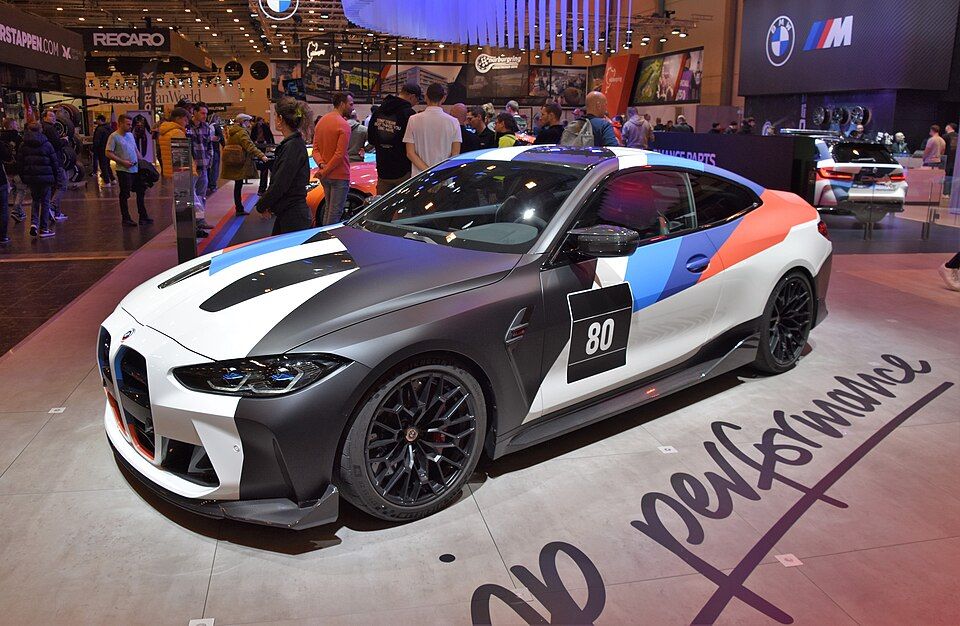
Photo: 2022 BMW M4 CSL Coupé (G82) by Charles from Port Chester, New York, CC BY 2.0, via Wikimedia Commons.
The BMW M4 CSL arrived in 2022, almost twenty years after the M3 CSL. Cars had become larger, safer and packed with far more equipment, so creating a lightweight special was a different job. BMW started with the M4 Competition Coupé and removed around 100 kilograms. The rear seats disappeared, replaced by a storage area with spaces for helmets. Lightweight carbon bucket seats cut a large chunk of mass, while carbon-fibre was used for the roof, bonnet, boot lid and other parts. BMW also fitted a titanium rear silencer, reduced sound insulation and changed parts throughout the cabin. The result still weighed 1,625 kilograms, which is far heavier than the 2003 M3 CSL, but comparing the figures alone misses the point. Modern safety structures, larger wheels, stronger brakes and extra technology all add weight. The real question is how much the CSL saves against the car it came from, and 100 kilograms is a major reduction.
The 3.0-litre turbocharged straight-six produces 550 horsepower and sends it to the rear wheels through an eight-speed automatic gearbox. BMW limited production to 1,000 cars. It reached 100 kilometres per hour in 3.7 seconds, and BMW recorded a full Nürburgring Nordschleife lap of 7 minutes 18.137 seconds. The M4 CSL also used model-specific suspension settings, stronger body bracing and track-focused tyres. Drive one through central Manchester and some of that setup would feel like overkill. The seats are firm, the ride is stiff and the rear cabin isn’t much use for carrying friends home after a match. But on a circuit, every choice starts to make sense. The steering feels sharper, body movement is kept tight and the car changes direction with less delay. It’s a modern CSL because it follows the same old rule: remove what isn’t needed, improve what remains and accept that everyday comfort won’t be the main concern.
The 2023 BMW 3.0 CSL Was the Rarest Tribute
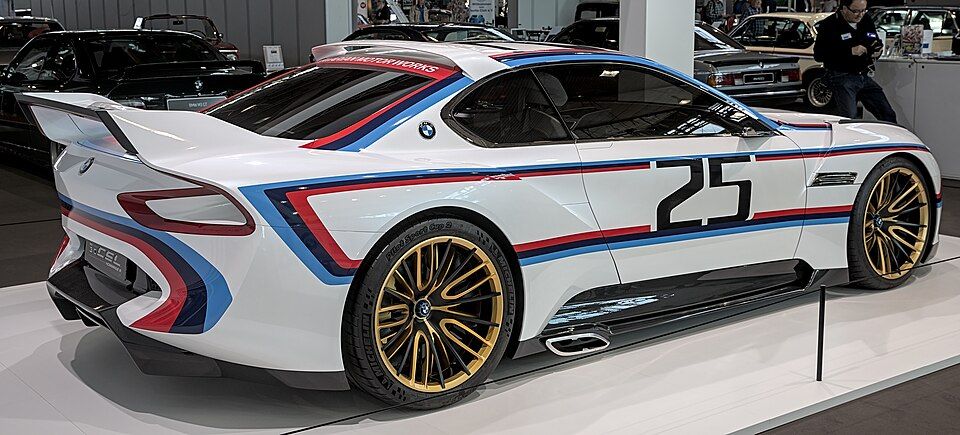
Photo: 2015 BMW 3.0 CSL Hommage R by Alexander Migl, CC BY-SA 4.0, via Wikimedia Commons.
BMW marked the 50th anniversary of its M division with another car carrying the full 3.0 CSL name. This 2023 model wasn’t simply an M4 CSL with different badges. It had its own body panels, a manual gearbox, rear-wheel drive and a hand-finished paint scheme inspired by BMW racing colours. Only 50 numbered cars were made. BMW says each one went through a labour-heavy build process, with a team of 30 trained technicians handling assembly and setup. The paint alone involved many separate stages, partly because the body uses a large amount of carbon-fibre and carries the coloured stripes across complex curves. Under the bonnet sat a 3.0-litre turbocharged straight-six with 560 horsepower, which made it the strongest road-legal BMW straight-six at the time of release. A six-speed manual gearbox sent drive to the rear wheels.
That detail mattered. The M4 CSL used an automatic, while the new 3.0 CSL aimed for a more old-school connection between driver and car. Its huge rear wing and roof spoiler copied the spirit of the classic Batmobile, but the rest of the shape was modern and muscular. The car was never meant to be a common sight, even by limited-edition standards. With only 50 made, it was closer to a collector piece built to celebrate BMW M’s history. Some people questioned whether such an expensive, rare car would ever be driven hard. Fair point. A car made for circuit feel can easily end up sitting under a cover in a heated garage. Yet the 2023 model still says something useful about the CSL badge. BMW didn’t celebrate it with a luxury cruiser or a comfortable grand tourer. It chose two seats, a manual gearbox, rear-wheel drive, extensive weight saving and a body shaped around airflow. The details changed, but the recipe stayed familiar.
CSL, CS and Competition Are Not the Same Thing
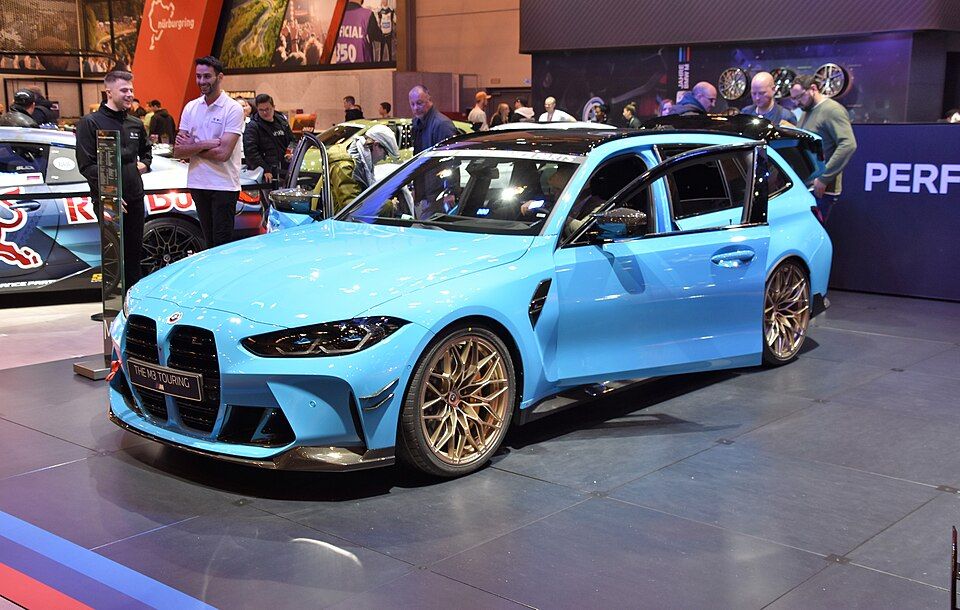
Photo: 2022 BMW M3 Competition Touring (G81) by Charles from Port Chester, New York, CC BY 2.0, via Wikimedia Commons.
BMW’s badges can get confusing, especially when a used-car advert includes M Sport, M, Competition, CS and CSL in the same search results. Here’s the simple way to read them without turning it into homework. An M Sport car is usually a regular BMW with sportier styling, seats and suspension choices. It may be quick, but it isn’t the same as a full BMW M car. A full M model, such as an M3 or M4, has major changes to the engine, brakes, suspension, body and cooling. A Competition version sits above the standard M model in many ranges and usually brings extra engine output, equipment and setup changes. CS means Competition Sport. BMW uses it for special M models that sit above Competition cars while keeping a fair amount of daily usefulness. CSL goes further. It gives weight reduction and circuit work a bigger role, and it may remove rear seats or comfort features to get there.
That makes CSL less friendly as an only car, even if it’s thrilling on the right road or track. There are exceptions because BMW’s naming has changed over time, and older cars don’t always fit the latest ladder neatly. Still, this rough order helps: M Sport, full M, Competition, CS, then CSL at the sharp end. You may also see GTS on older special models, such as the M4 GTS. Those cars followed a similarly hard-edged idea, but BMW used a different badge. For a buyer in Manchester or Stockport, the badge should never be the only thing checked. A normal M3 with a clean history and careful maintenance can be a much better purchase than a neglected special edition. Look past the letters. Check the service record, tyres, brakes, body condition and any signs of circuit use. With rare cars, correct factory parts matter as well. Replacing a damaged carbon panel or special seat can be very expensive, and missing original parts can affect value.
What a CSL Feels Like From the Driver’s Seat
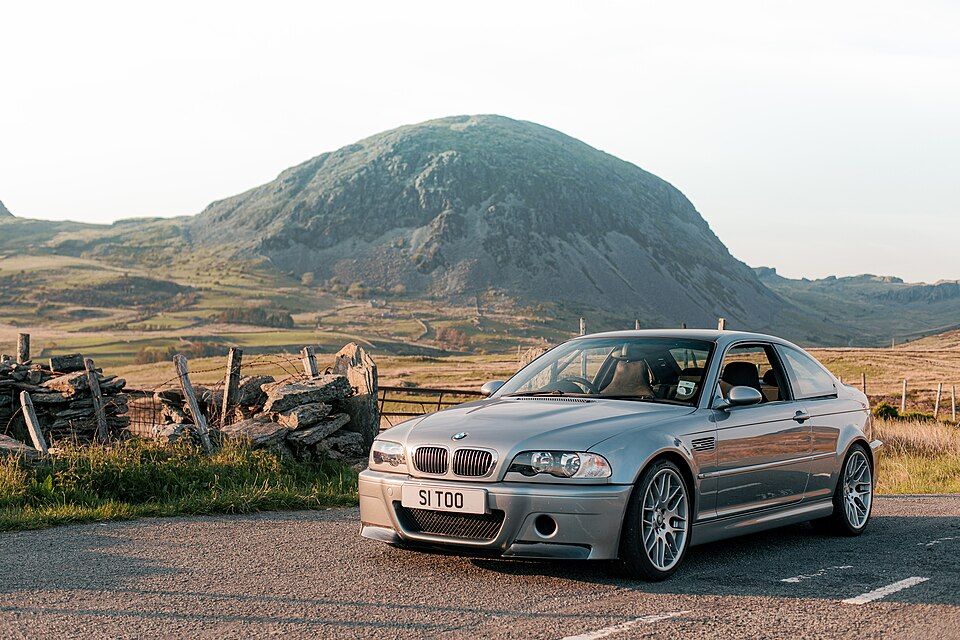
Photo: BMW M3 CSL (E46) by Jake Thomas, CC BY-SA 4.0, via Wikimedia Commons.
A CSL is about response. Press the brake pedal and the car should settle quickly. Turn the wheel and the nose should follow without a lazy pause. Accelerate out of a bend and the engine, gearbox and rear tyres should feel tied together. Weight reduction helps each of those moments because every part of the car has less mass to move or stop. Imagine running up the steps at Stockport station with a full suitcase, then doing the same with a small backpack. Your legs haven’t changed, but everything feels easier and quicker. Cars react in a similar way. Less weight can help acceleration, braking, cornering and tyre life during hard use. It can also improve feedback because the body doesn’t need such soft settings to control a heavy load.
The trade-off is that some weight-saving choices remove comfort. Thin glass lets in more road noise. Firm seats can get tiring. Less sound insulation means tyre roar on the M60. Track-led tyres may feel poor in cold rain and can wear quickly. A low front splitter needs care near steep car-park ramps. That’s why a CSL makes sense for a certain kind of buyer. You need to enjoy the things it does well enough to accept the bits it does badly. We’ve all seen cars bought for the badge, then sold because the owner didn’t expect the stiff ride or awkward seats. A short test drive around smooth streets won’t tell the full story. Try broken surfaces, slow traffic and a motorway stretch, while staying within legal limits. Listen for rattles, check how the gearbox behaves when cold and make sure the driving position works for you. With a rare used model, a specialist inspection is sensible. These cars are tough when cared for, but track use, old tyres, worn brakes or poor repairs can turn a dream purchase into a very expensive lesson.
Why the CSL Badge Still Matters
CSL matters because it shows a different way of making a car faster and better to drive. Adding engine output is easy to grasp. The number gets bigger, the car accelerates harder and the advert writes itself. Reducing weight is less obvious and usually far harder. Engineers have to study the roof, seats, glass, exhaust, body panels, cabin trim and even the amount of insulation hidden behind the carpet. Save a few kilograms in enough places and the whole car changes. That was true for the 1971 BMW 3.0 CSL, the 2003 M3 CSL and the newer specials. Their shapes, engines and gearboxes are very different, but they share a clear attitude. Keep the parts that help the drive. Question the parts that don’t. For enthusiasts, that creates cars with strong personalities, not just impressive figures. The classic 3.0 CSL feels delicate and mechanical. The M3 CSL is famous for its high-revving six-cylinder engine and sharp steering. The M4 CSL brings huge speed and modern circuit ability. The 2023 3.0 CSL mixes new engineering with old ideas, including a manual gearbox and rear-wheel drive. None is the sensible answer for most daily drivers, and that’s fine. Special cars don’t have to suit every trip to the shops. They need a reason to exist. CSL has one. It turns BMW’s interest in racing and lightweight construction into a road car you can see, hear and feel. So the next time you spot those letters in a listing, at a car meet near Manchester, or on the back of something rare heading past Stockport, you’ll know they aren’t random. On the classic car, they point to Coupé Sport Leichtbau. On the modern M4 CSL, BMW calls them Competition, Sport, Lightweight. Either way, the message is the same: this BMW has been stripped back, sharpened up and built for drivers who care about every response.