


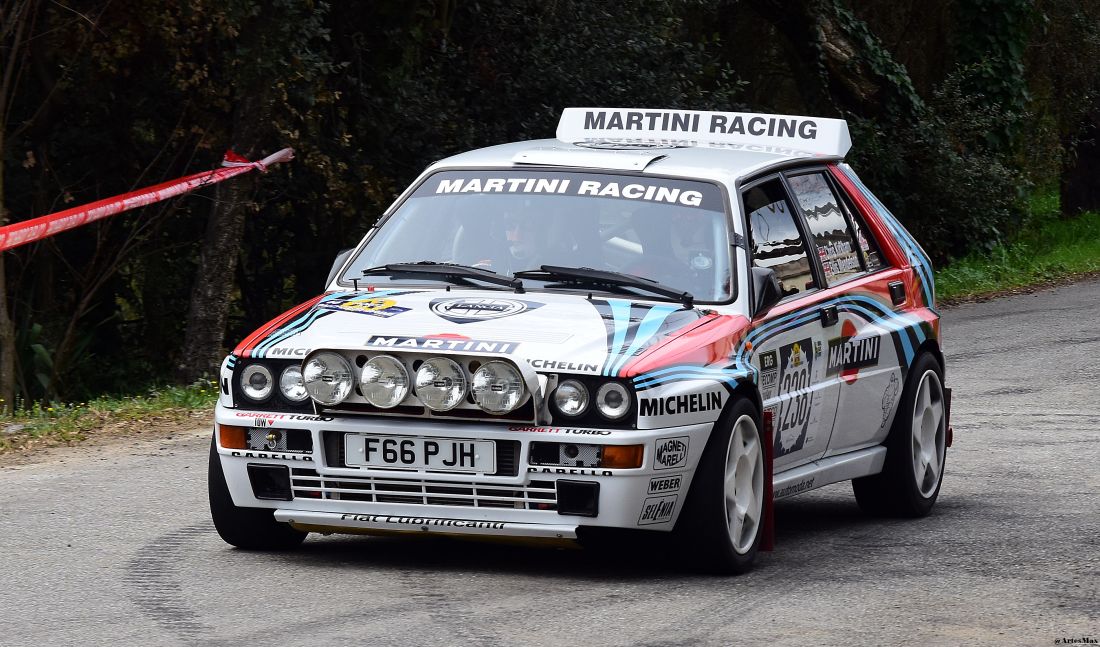
Why the Lancia Delta Integrale Still Defines Rally Cool
Photo: Lancia Delta Integrale HF 16V Rally Moritz Costa Brava 2018 by Artes Max, CC BY-SA 2.0, via Wikimedia Commons.
At Dace Motor Company, we spend a lot of time around cars that need to make sense in real life. They need to fit family plans, school runs, wet roads, tight parking spots, and the odd long slog up the motorway. That’s one reason the Lancia Delta Integrale still hits so hard. It did not begin as some wild, low-slung fantasy machine that looked useless unless it was parked under bright lights. The first Delta was a neat five-door hatch, shaped by Italdesign, with sharp straight lines and a practical body, and it even won the 1980 Car of the Year award before the rally legend side of the story really took over. So the cool bit starts with a surprise.
This thing looked sensible. Friendly, even. And then, a few years later, that same basic shape turned into one of the fiercest rally cars anyone had seen. That twist matters. People love a car that can wear two faces without feeling fake. The Delta could look like something you’d see parked outside a bakery, then head into the hills and start causing trouble. You can explain that to a 12-year-old in about ten seconds. It’s the car version of the quiet kid at school who turns out to be unreal at football. You just remember it. And to be honest, that shape has aged brilliantly. The flat sides, the crisp nose, the upright glass, the stubby tail. It still looks tidy now, in the same way a good pair of old trainers still works because the design was
It arrived right when rally needed a new hero
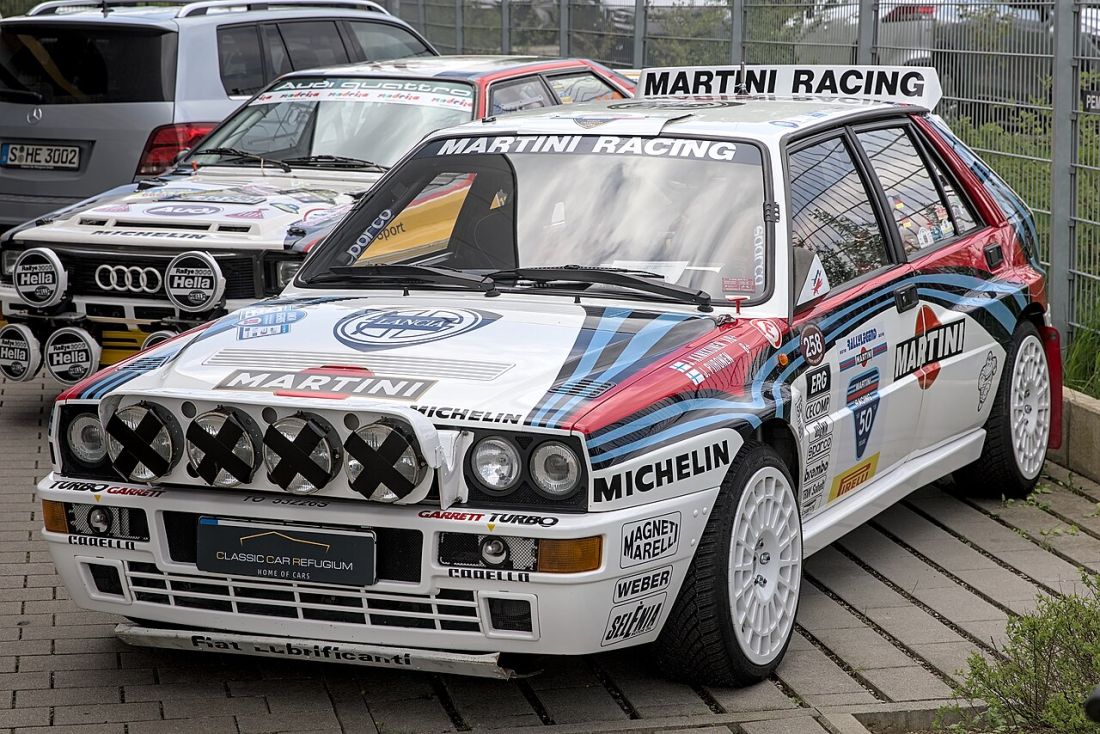
Photo: Lancia Delta HF Integrale Evoluzione (Group A) by Alexander-93, CC BY-SA 4.0, via Wikimedia Commons
The timing helped, but that does not make the Delta a fluke. Rally in the mid-1980s had become a bit mad. The fastest cars were incredibly quick, very dramatic, and in some cases frighteningly hard to control. After serious accidents, the sport’s rule makers shut that chapter and moved to a class for 1987 that pushed teams much closer to real production cars. That change is a massive part of the Delta story, because Lancia was ready for it. The company had already begun work on the Delta HF 4WD, and on its first World Rally Championship event, the 1987 Monte Carlo Rally, it won straight away. That is such a strong opening line that it barely needs dressing up. New rules. New car.
First big outing. Bang, win. You know how it is when a footballer scores on their debut and the crowd decides, right there, that they’ve found someone special. It was that sort of moment. The Delta did not need years to build its name. It kicked the door in. The shape also helped people connect with it. Because these newer rally rules were based on cars people could actually buy, the race car felt tied to the road car in a way that made the whole thing easier to love. It was not some distant spaceship. It was a hatchback with attitude, four driven wheels, and enough grit to turn a snowy mountain road into its playground. That link between road and rally gives the Delta a kind of honesty that still lands today. It felt earned. It felt real. And that matters a lot when people talk about cool.
Winning again and again changed everything
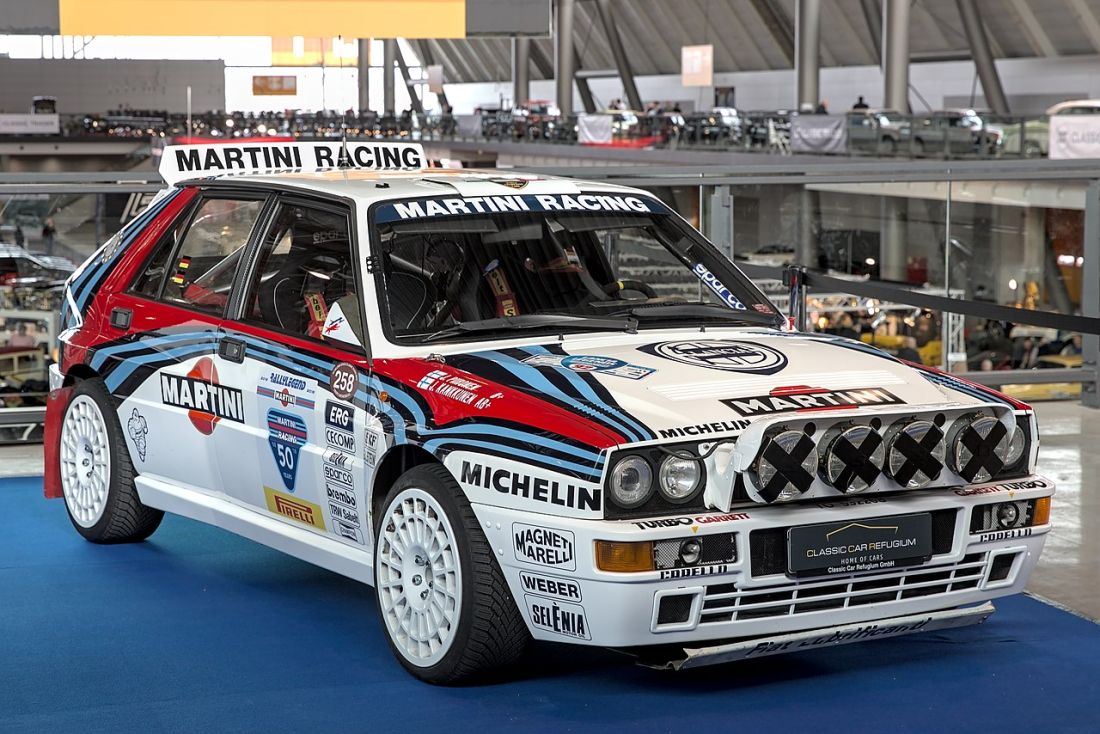
Photo: Lancia Delta HF Integrale Evoluzione (Group A) by Alexander-93, CC BY-SA 4.0, via Wikimedia Commons
One great season can make a car famous. Six straight manufacturers’ titles can turn it into folklore. From 1987 to 1992, the Delta line kept winning in the World Rally Championship, taking six constructors’ crowns in a row. The same family of cars also stacked up four drivers’ titles in that stretch, and across its different versions the Delta reached 46 overall victories in championship rallies. That is not a lucky run. That is total control. And let’s face it, repeated winning changes the way people feel about a machine. A car does not stay cool for decades because it looked nice in one photo. It stays cool because the stories keep piling up. Monte Carlo. Portugal. Safari. Snow, gravel, mud, rain, heat.
The Delta kept showing up and doing the job. That gave it a kind of toughness people could sense even if they never sat in one. Kids had posters of it. Grown-ups talked about it in pubs, at petrol stations, on driveways, at shows. You still hear that tone now, that little lift in somebody’s voice when the Integrale comes up. It is respect, but it is also something warmer than that. The Delta earned affection because it kept proving itself. There is a lesson in there for any car fan. Real cool cannot be handed out by marketing alone. It has to be backed up by something. Wins help. A lot. So when people say the Integrale defines rally cool, they are not just talking about stripes, spoilers, or nostalgia. They are talking about a car that spent years making rivals miserable in almost every condition you can imagine. That kind of record sticks. It gets into the bones of the car.
It looks angry without trying too hard
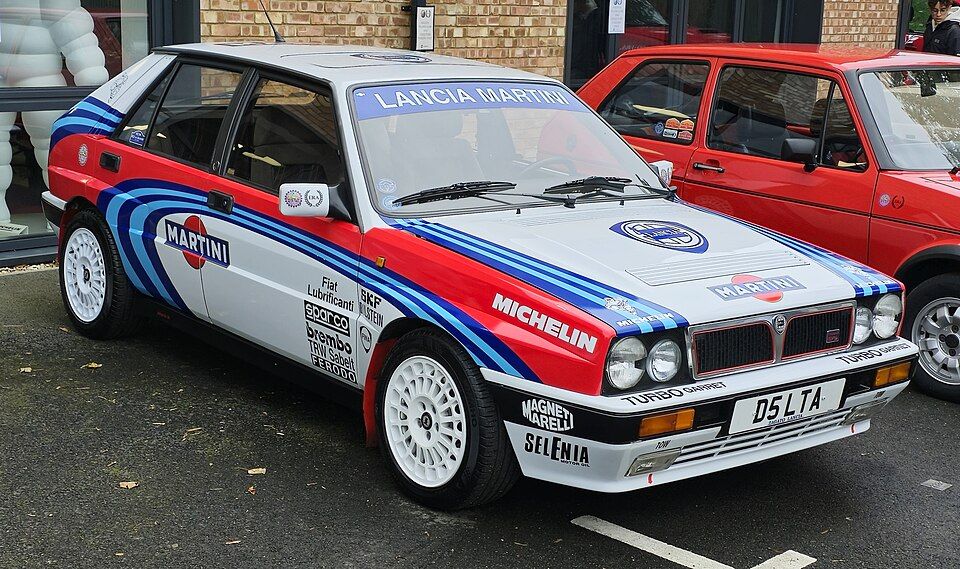
Photos: 1990 Lancia Delta HF Integrale BS O24 by MrWalkr, CC BY-SA 4.0, via Wikimedia Commons
Some performance cars beg for attention. The Delta Integrale does not really beg. It stares. The look changed as the car evolved, and each update pushed the stance a little harder. By 1988 the Integrale had wider wheel arches, bigger front air openings, and a lower weight than the earlier version. Then the sixteen-valve model brought that famous bonnet bulge, and the Evoluzione version added even wider fenders and a rear roof spoiler that made the whole thing look planted, like it had braced itself before launching into the next corner. Yet it never lost the original hatchback shape. That balance is the trick. It looked muscular, but still compact. Aggressive, but still usable.
That is a hard balance to get right. A lot of cars either end up too soft or too silly. The Integrale sat in the sweet spot. The box arches are a big part of it, of course. They make the car look like it is wearing winter boots and standing its ground. Park one on a grey day near the old mills in Stockport, or rumble one through the Northern Quarter on a damp evening, and it would not look out of place at all. It would look perfect, actually. There is grit in the design. No fancy curves for the sake of it. No nonsense. Just straight lines, swollen shoulders, and that feeling that every panel is there because the car means business. Even people who do not care much about rally can read that look in a second. It says, very clearly, that this hatchback is up for a scrap. And weirdly, that directness makes it charming. It does not dress up the message. It just gets on with it.
The road car kept the whole thing believable
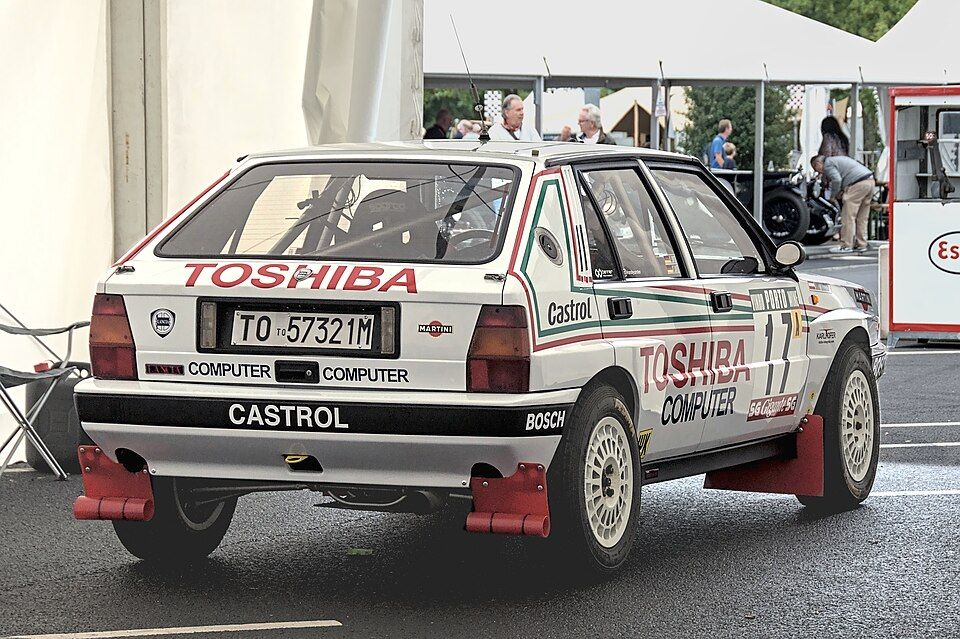
Photo: Lancia Delta HF Integrale in competition Classic-Days 2022 by Alexander Migl, CC BY-SA 4.0, via Wikimedia Commons
This is where the Integrale really separates itself from loads of famous race-bred cars. The road version still felt like a car you could picture living with. The rally rules of the late 1980s pushed teams to build competition cars from production models, with limits on weight, extra body add-ons, and output, so the connection between the car on the stage and the car in the showroom stayed strong. Stellantis Heritage says the early Delta HF 4WD road car used a two-litre engine with 165 hp, while the Group A rally version grew to 265 hp in that first form.
You do not need to get lost in the numbers to see why that matters. The bones were shared. The road car had four doors, a hatchback boot, proper seats, and the kind of footprint that would still work on normal streets. But it also had four-wheel drive and the feel of something bred for bad weather and rough surfaces. That mix is gold. It means the Integrale was not cool in an untouchable way. It was cool in a “you could imagine this on your road” way. That is much stronger. It is why so many people who grew up loving rally still latch onto it harder than they do to some exotic supercar. The Delta feels close. Familiar. Human-sized. If you have ever driven through Manchester rain, or crawled around Stockport in winter slush, you already get the appeal. A fast car that seems ready for ugly weather feels heroic in a very British sort of way. And because the road car stayed tied to the rally car, every chunky arch and bonnet vent felt deserved. Nothing looked stuck on for show. The Integrale looked right because, in a very real sense, it had to be.
It speaks to the kind of roads and weather we actually know
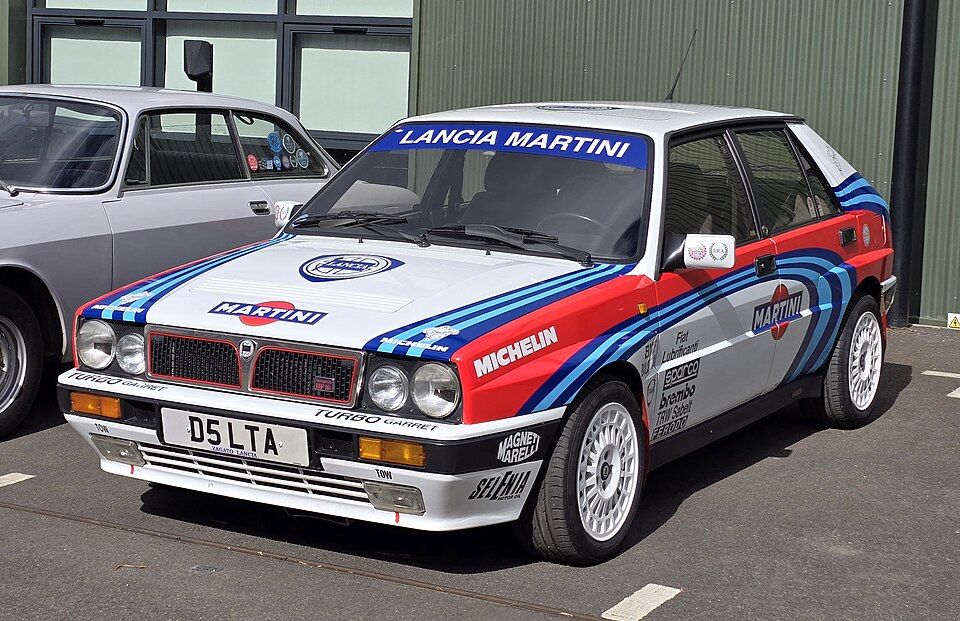
Photo: 1990 Lancia Delta HF Integrale 16v by Calreyn88, CC BY-SA 4.0, via Wikimedia Commons
A big reason the Delta still feels right in places like Manchester and Stockport is that it was never about perfect sunshine and empty coastal roads. It was built around grip, balance, urgency, and getting on with it when the surface was cold, greasy, broken, or all three at once. That makes it feel very close to home for anyone who has driven around here for long enough. Think of the mix we know well: damp mornings, shiny roundabouts, rougher back roads outside the town centres, sudden downpours that arrive like they own the place, and winter days when everything looks a bit grey until a bright car comes through and wakes the whole street up. The Integrale suits that mood. It is stylish, yes, but it is not delicate. It has swagger, but it still looks ready for weather. That’s a very Northern kind of charm. You can imagine it parked outside a chippy in Reddish, or threading past shops on Buxton Road, or heading out beyond the ring road with that squat stance making even a simple A-road feel like the start of a stage. And there is another reason people here tend to get it. In Greater Manchester, flash for the sake of flash can feel a bit try-hard. We like things with a bit of graft in them. A bit of edge. A good coat that can take rain. A proper pair of boots. The Delta is like that. It is handsome, but there is work in its face. To be honest, that might be why adults still love it just as much as kids who first spot it in a video or a picture. It feels honest. It feels useful. And then you remember that this useful-looking hatch was out there collecting titles and wins, and the whole thing becomes even cooler.
It never turned into a dusty old legend
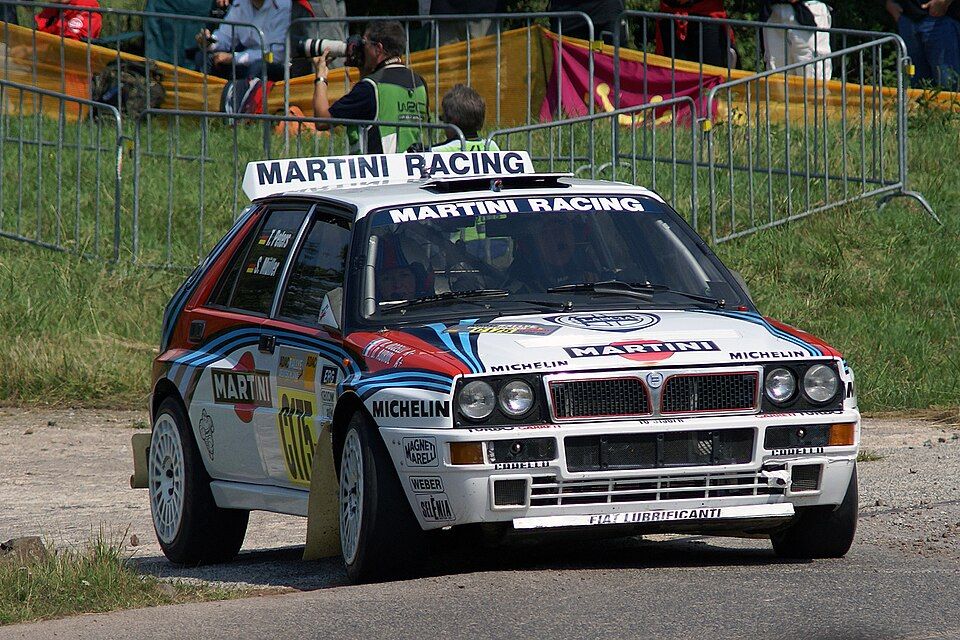
Image: 1992 Lancia Delta HF Integrale by Andrew-44-19, CC BY-SA 4.0, via Wikimedia Commons
Some famous cars fade into that sad little corner where people respect them, but nobody really does much with them. The Delta Integrale missed that fate. Years after its rally peak, official heritage departments were still putting original-style parts back into production, starting in late 2019 with front and rear bumpers for the Integrale and Evoluzione, then adding more body panels in 2021. That tells you something straight away. There is still demand. People are still restoring these cars, keeping them alive, and wanting the details right. That is one sign of real cultural staying force. Another is the way newer builders keep coming back to the Integrale as a base for fresh ideas. Automobili Amos created the Futurista using an original Integrale as the starting point, keeping the shape recognisable while reworking the body and trimming the design into a sharper three-door form. You do not do that with a car nobody cares about. You do it with a car that still has a pull. A car that still sparks arguments, daydreams, and stupidly long chats between people who should have gone home an hour ago. That is the kind of cool the Delta has. It is alive. It still moves people to spend time, money, and effort on it. And because the original design was compact and clear, these modern tributes do not feel like desperate revival acts. They feel like love letters. You can disagree with a rebuilt special, sure. Plenty of people do. But the fact that the Integrale keeps getting this level of attention says the same thing every time: the spell never broke. It just changed shape a bit. And that is very different from nostalgia alone. Nostalgia looks backwards. The Delta still pulls ideas into the present.
Rally cool is hard to fake, and the Delta never had to
So why does the Lancia Delta Integrale still define rally cool? Because it nailed every part of the brief without feeling forced. It started life as a clever, compact hatch drawn by one of the great car design houses, won Car of the Year in 1980, then got reshaped by the demands of top-level rally into a machine that won on debut in Monte Carlo and went on to take six straight manufacturers’ titles and 46 championship rally wins across its different forms. Those facts matter, sure, but the feeling matters just as much. The Delta looked like a road car first. It sounded like trouble. It wore its arches and vents like scars it had earned. It had room for mates, shopping, muddy boots, whatever, and still carried itself like it was ready for a fight. That is a rare mix. At Dace Motor Company, we know the cars people really warm to are usually the ones that hit both sides of the brain. You want heart, but you also want sense. The Integrale does that in a way very few cars ever have. It is exciting without feeling fake. Famous without feeling distant. Fast-looking without becoming cartoonish. And years later, with official parts still being made and modern builders still reworking the shape, it remains a live thing in car culture rather than a dead chapter in a history book. Maybe that is the simplest way to put it. The Delta Integrale still defines rally cool because it never stopped feeling real. You can picture it on a special stage. You can picture it outside your house. Very few legends manage both.