


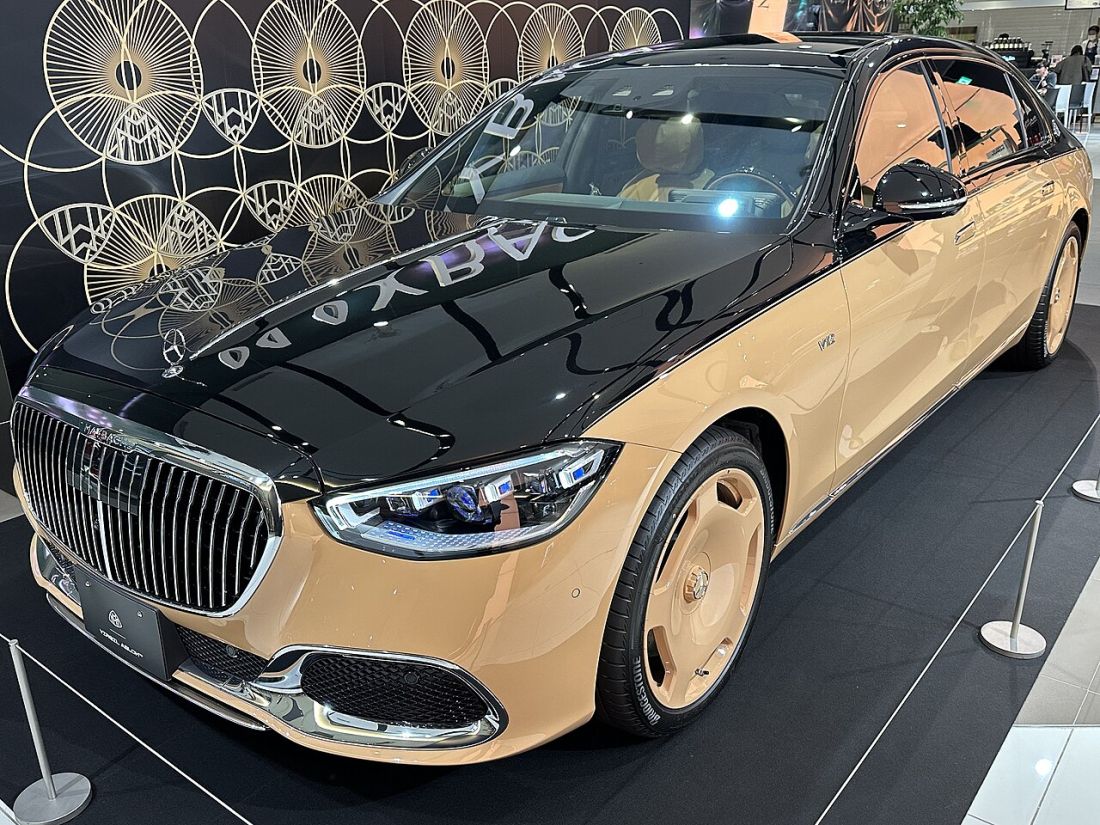
How Mercedes-Benz Became the Benchmark for Luxury Cars
Photo: Mercedes-Maybach S-Klasse "Maybach by Virgil Abloh" S 680 by Tokumeigakarinoaoshima, CC BY-SA 4.0, via Wikimedia Commons.
People use the word “luxury” for almost anything now. A soft seat, a large screen and a shiny badge can all get the label. But a true benchmark is different. It’s the thing people use as a measuring stick. For cars, Mercedes-Benz earned that role over many decades by making comfort, safety, engineering and status feel like parts of the same idea. You know how it is: a car can look expensive in a photograph, yet feel rather ordinary once you shut the door, sit in traffic and live with it for a week. Mercedes-Benz built its name by paying attention to what happens after that first glance. The weight of a door, the calm of the cabin, the way the seat supports you on a long run, the clear view from the driver’s chair and the sense that the controls are where you expect them to be all matter.
None of those details sounds dramatic alone. Together, they shape the mood of a car. That mood is a big reason the three-pointed star became linked with success, from business districts and hotel entrances to family driveways in places such as Stockport and Manchester. Let’s face it, local roads are a fair test. A car may feel graceful outside a showroom, but can it stay settled over patched tarmac near the Stockport Viaduct, remain easy to place on a tight side street, and keep everyone relaxed during a slow crawl on the Mancunian Way? The best luxury cars don’t ask you to forgive them during ordinary life. They make ordinary life feel calmer. Mercedes-Benz didn’t create that expectation in one lucky year. It built it through repeated choices, starting with the birth of the motor car itself and growing into a clear belief: progress should be something a driver can feel, use and trust.
It started with the car itself, not a fancy trim package
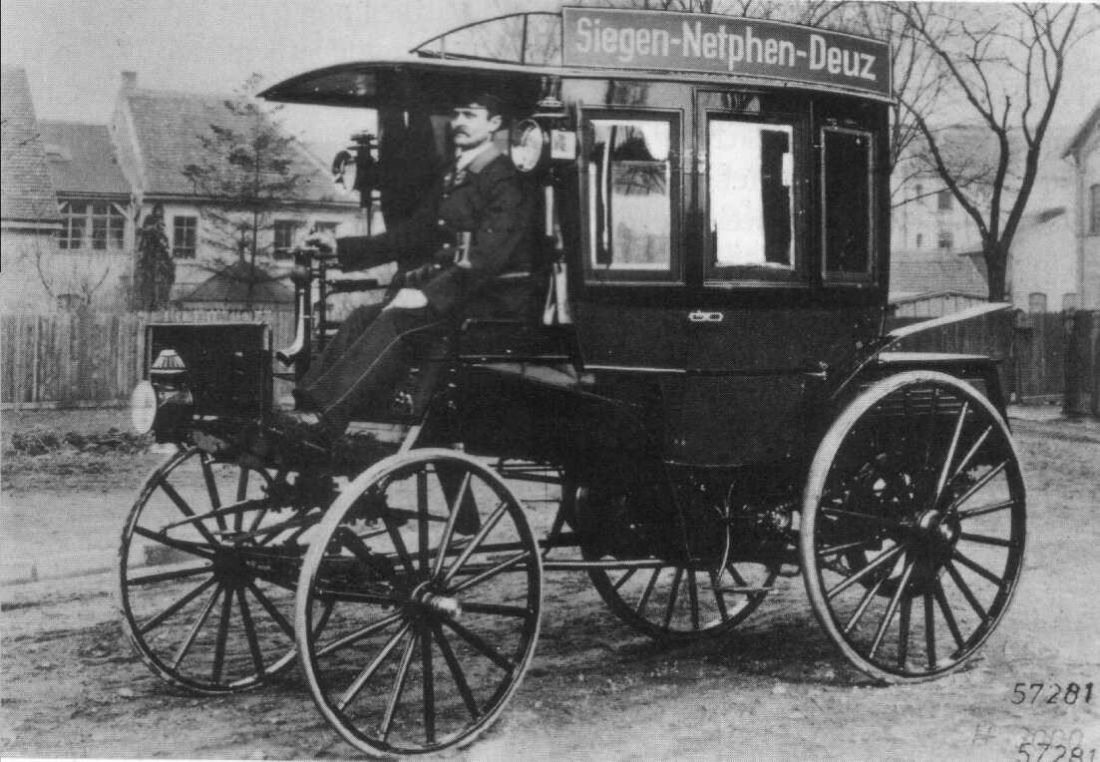
Photo: First internal combustion-engined bus in history: the Benz Omnibus, built in 1895 for the Netphener bus company. Photo by Siegener Zeitung, Public domain, via Wikimedia Commons.
The Mercedes-Benz story begins before anyone had a settled idea of what a luxury car should be. In 1886, Carl Benz registered a patent for his three-wheeled motor car, widely treated as the birth certificate of the automobile. Around the same period, Gottlieb Daimler and Wilhelm Maybach were working on their own small, fast engine and a four-wheeled motor carriage. These were strange machines to people used to horses. They were noisy, unfamiliar and hard to trust. And that’s where Bertha Benz enters the story. In August 1888, without telling Carl first, she took the motor car from Mannheim to Pforzheim with her sons. The trip covered over 100 kilometres on roads that were mostly unpaved, and it took over twelve hours. She found fuel at a chemist’s shop and dealt with problems along the way. It was part family visit, part real-life test and part public demonstration.
Think of it as an early road review, except there were no service stations, no recovery vans and no sat-nav voice telling her to turn around. Her drive showed that the motor car could do something useful beyond a short display near a workshop. That matters to the luxury story because Mercedes-Benz began with a habit that stayed with the brand: new ideas had to work in real life. A feature isn’t impressive just because an engineer can describe it. It has to help a person travel with less strain, greater safety or better control. That basic rule later shaped quiet cabins, easier braking, protective body structures and supportive seats. It also explains why heritage carries real weight here. Plenty of companies can borrow a style. Mercedes-Benz can point back to the point where the basic shape of personal motoring began. That history doesn’t make every car flawless, of course. We’ve all seen older premium cars that need care. But it gives the badge a rare kind of credibility, built from use rather than decoration.
The Mercedes name arrived with speed, style and a clever change in shape
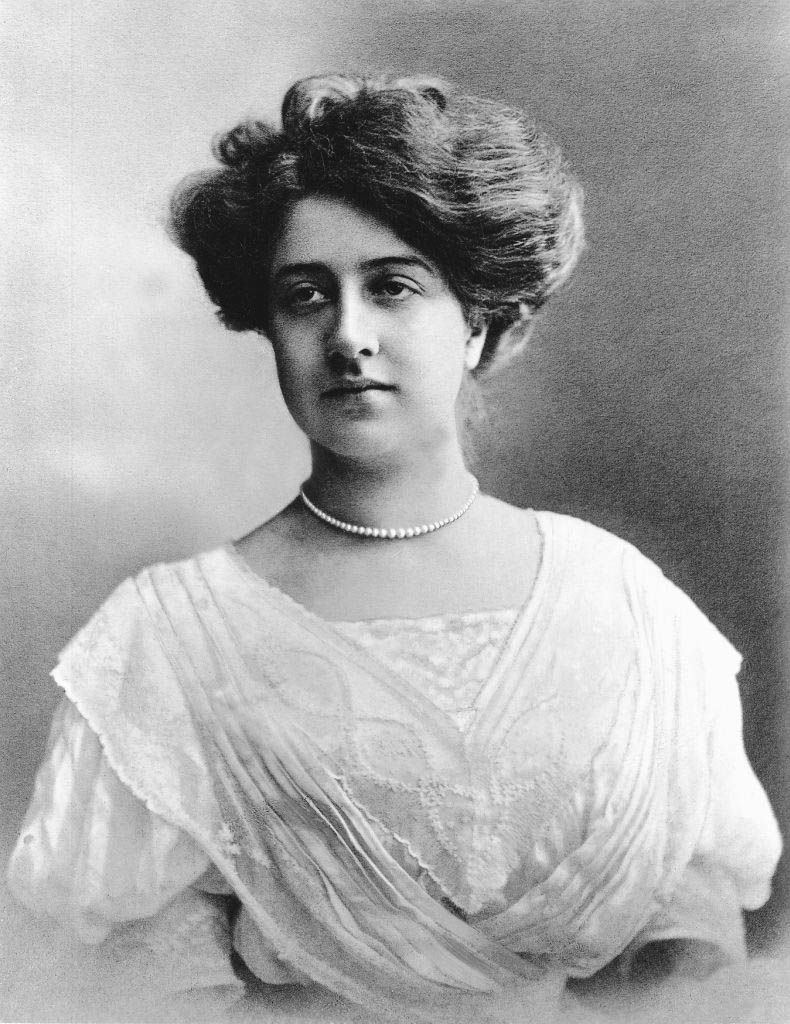
Photo: Mercédès Adrienne Ramona Manuela Jellinek (16 September 1889 – 23 February 1929) was the daughter of Austrian automobile entrepreneur Emil Jellinek and his first wife Rachel Goggmann Cenrobert.
The name “Mercedes” came from Mercédès Jellinek, the daughter of businessman Emil Jellinek. He sold Daimler cars and entered races on the French Riviera under a name linked to his daughter. He also pushed for a car that was lower, longer, lighter and easier to control than the tall motor carriages of the day. The result was a new Mercedes model, delivered in 1900 and successful during the 1901 Nice race week. Historians at Mercedes-Benz describe it as a major step toward the modern car because its layout moved away from the feel of a carriage with an engine added. It looked purposeful. It sat closer to the road. It had a wider track and a lower centre of weight, which helped it feel steadier. In 1902, the Mercedes name gained legal trademark protection. Then, in 1926, the companies created by Daimler and Benz joined to form Daimler-Benz, with their cars carrying the Mercedes-Benz name.
The star and Benz laurel elements came together as a shared badge, giving the new company a mark that could be recognised from a distance. This mix of competition, visual identity and useful engineering helped form the luxury formula we still know. A premium car needs to look special, yes, but the shape should also have a reason. That idea shows up again and again in later Mercedes-Benz models. A grille may carry family resemblance. A long bonnet may give a car presence. A clean cabin may feel expensive because it removes clutter rather than adding random decoration. The clever bit is balance. Too much show can age quickly. Too little character can make an expensive car feel anonymous. Mercedes-Benz found a middle ground that worked across grand saloons, sports cars, estates and family models. Even people who can’t name the exact model can usually spot the star. That kind of recognition takes decades to build and a surprisingly short time to lose, so the brand has had to keep linking its image with substance.
Luxury became something you could feel before the car even moved
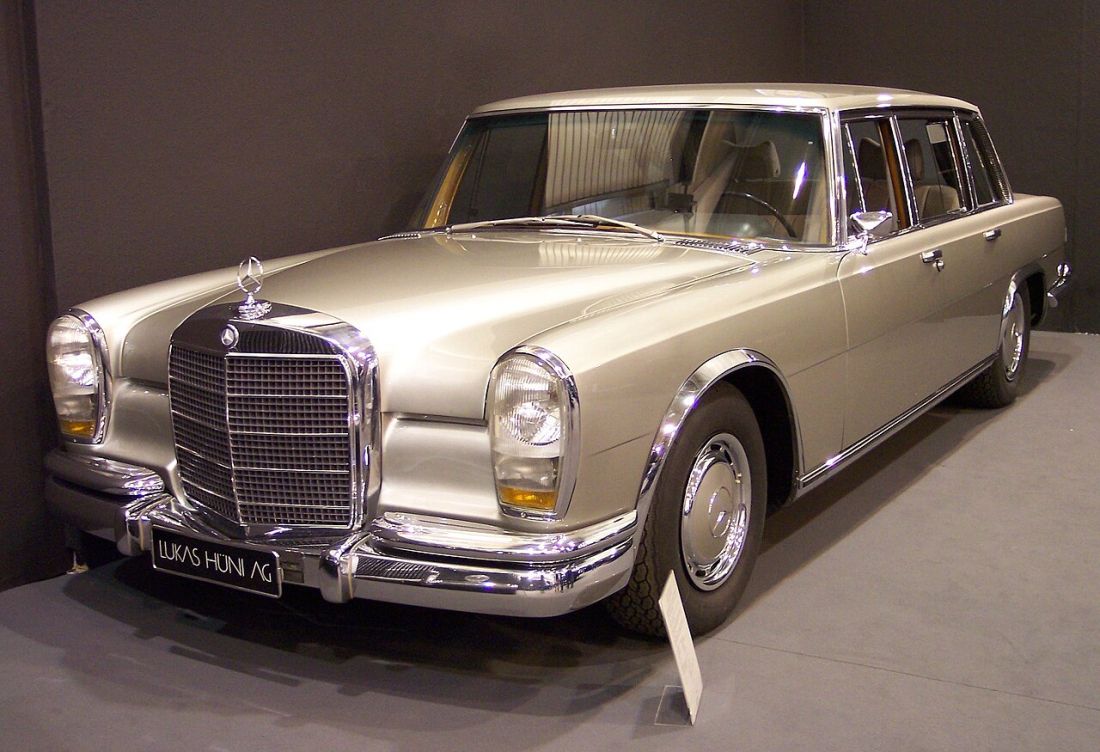
Photo: Mercedes-Benz 600 (1963-1978) by Stahlkocher, CC BY-SA 3.0, via Wikimedia Commons.
Luxury used to mean size, rare materials and a chauffeur. Mercedes-Benz helped turn it into a full-body experience for the person driving as well as the people in the back. Sit in a well-kept Mercedes-Benz saloon from almost any era and the first impression is usually calm rather than flashy. The seat feels shaped for a human back. The controls have a clear order. The cabin seems built around long hours, not a five-minute showroom visit. That approach grew through cars made for wealthy private buyers, public figures and heads of state. The Mercedes-Benz 600, presented in 1963, became one of the clearest examples. It offered remarkable comfort for its time and was chosen by leaders, dignitaries and famous owners across the globe. Yet the bigger effect came from what such flagship cars taught the rest of the range. A top model acts like a test kitchen.
Ideas begin at the expensive end, prove themselves, then appear in cars that far more people can buy. You can see the same pattern in cabin layout, heating, seat adjustment, sound control and ride comfort. And there’s another part people sometimes miss: restraint. A luxury car doesn’t need to shout every second. Picture leaving a rainy evening event near Deansgate. The road is busy, your coat is damp and everyone just wants to get home. The car that warms up quickly, gives you a clear view, keeps road noise low and makes the controls easy to find feels far richer than one with glittery trim and a confusing screen. Mercedes-Benz became a benchmark because it kept returning to that human side of luxury. The aim wasn’t simply to impress a passer-by. It was to reduce effort for the people inside. That’s why older examples can still feel special even when their screens are small or absent. Good seat shape, sensible control placement and a settled ride don’t become useless when a newer model arrives. They age with far greater grace than fashion-led tricks.
Safety became part of the luxury promise
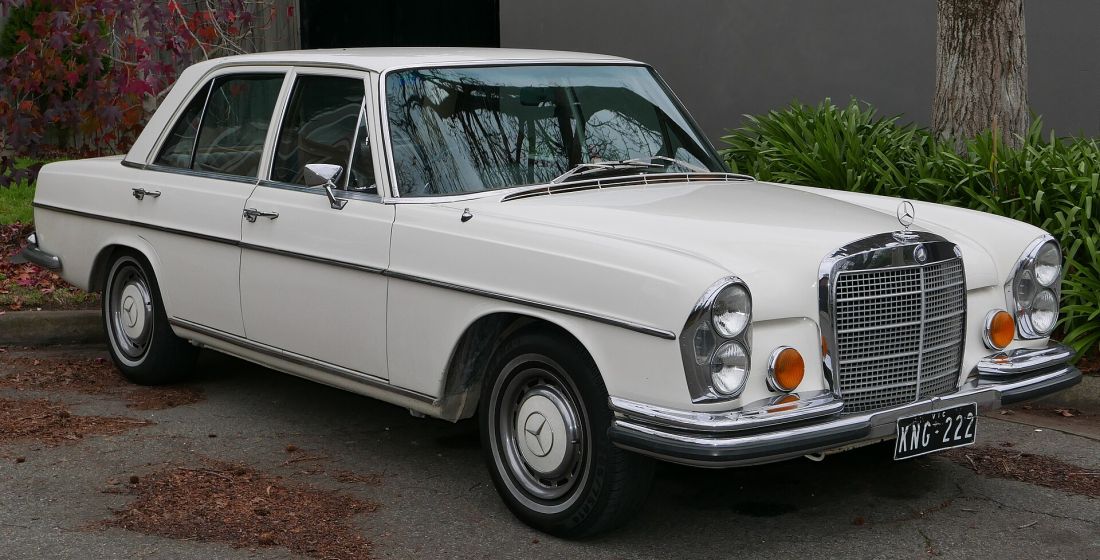
Photo: 1970 Mercedes-Benz 280 SE (W 108) by OSX, Public domain, via Wikimedia Commons.
For Mercedes-Benz, luxury grew beyond comfort and appearance. It also came to mean being looked after by the car. In 1951, the company filed a patent for a safety body idea with a strong passenger area and front and rear sections made to absorb crash energy. The first series-production use arrived in 1959. This changed the way car makers thought about an impact. Instead of trying to make every part equally stiff, the car could sacrifice space at the ends while protecting the people in the middle. It sounds obvious now because the idea spread so widely, but at the time it was a major shift. Mercedes-Benz kept adding safety ideas to high-end production cars. In 1978, it introduced an electronically controlled anti-lock braking system in the S-Class. The system helped prevent the wheels from locking during hard braking, so the driver had a better chance of steering around danger. In 1981, a driver airbag and seat-belt tensioner reached series production in the S-Class.
Again, features first seen as expensive or unusual later became expected across much of the car market. That pattern is central to the benchmark label. Mercedes-Benz didn’t simply make luxurious rooms on wheels. It helped change what buyers believed an expensive car owed them. Soft leather wasn’t enough. A premium car should also give the driver better control and give passengers better protection. For anyone driving around Greater Manchester, that idea is easy to appreciate. Wet roads, sudden lane changes, busy roundabouts and stop-start traffic don’t care how polished a badge looks. Safety has to work in a split second, without drama. Of course, no system can cancel bad driving or the laws of physics. Tyres, brakes, servicing and attention still matter. Yet Mercedes-Benz helped place safety near the centre of luxury, where it belongs. Feeling relaxed is much easier when the car has been built with serious thought about what happens when a trip goes wrong.
The S-Class became a preview of what other cars might offer next
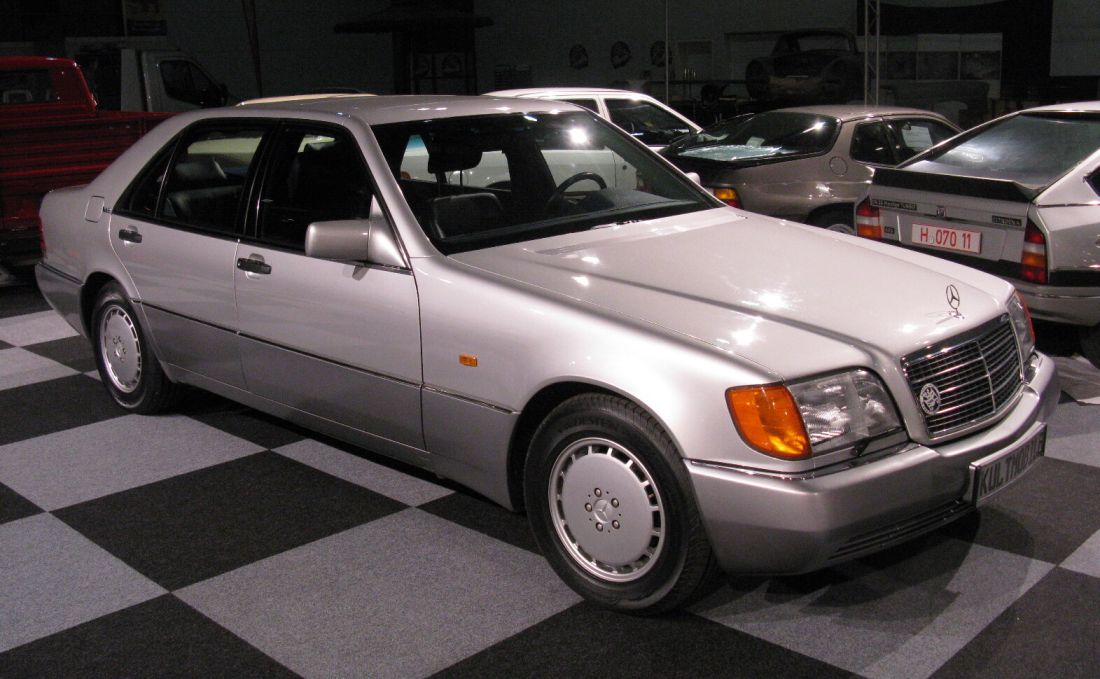
Photo: Mercedes-Benz 600 SEL W140 by nakhon100, CC BY 2.0, via Wikimedia Commons.
The S-Class sits at the heart of the Mercedes-Benz luxury reputation. Its roots stretch back through earlier grand touring and prestige saloons, while the first range officially called S-Class appeared in 1972. Since then, each generation has carried a heavy job. It has to feel like a proper Mercedes-Benz straight away, yet it also has to introduce ideas that may seem normal several years later. That can include new safety systems, better seats, quieter cabins, improved lighting, clearer displays and ways to reduce the driver’s workload. The result is a car that people across the industry watch closely. Rival brands study it. Chauffeur firms judge it. Private buyers compare other saloons against it, even when they choose something else. This is how a benchmark works: it shapes the conversation. The S-Class also helped prove that luxury doesn’t have to mean a soft, floaty car with vague steering.
A large saloon can be calm and comfortable while still giving the driver a clear sense of where it is on the road. That matters on a motorway run, but it matters just as much on the bends beyond Marple or during a tight turn into a Stockport car park. You don’t want a big car to feel like a canal boat. You want it to shrink around you. And then there’s the back seat, where the S-Class has long treated comfort as serious business rather than an afterthought. Space, support, quietness and a smooth ride all change how fresh someone feels after a long trip. The clever part is that this influence reaches beyond one expensive model. Once buyers experience a feature in a flagship, they start asking why it isn’t available elsewhere. Competitors respond. Smaller cars gain better equipment. Expectations rise. Mercedes-Benz helped create that cycle, and the S-Class became its most visible stage.
The badge gained status because the cars kept showing up in serious places
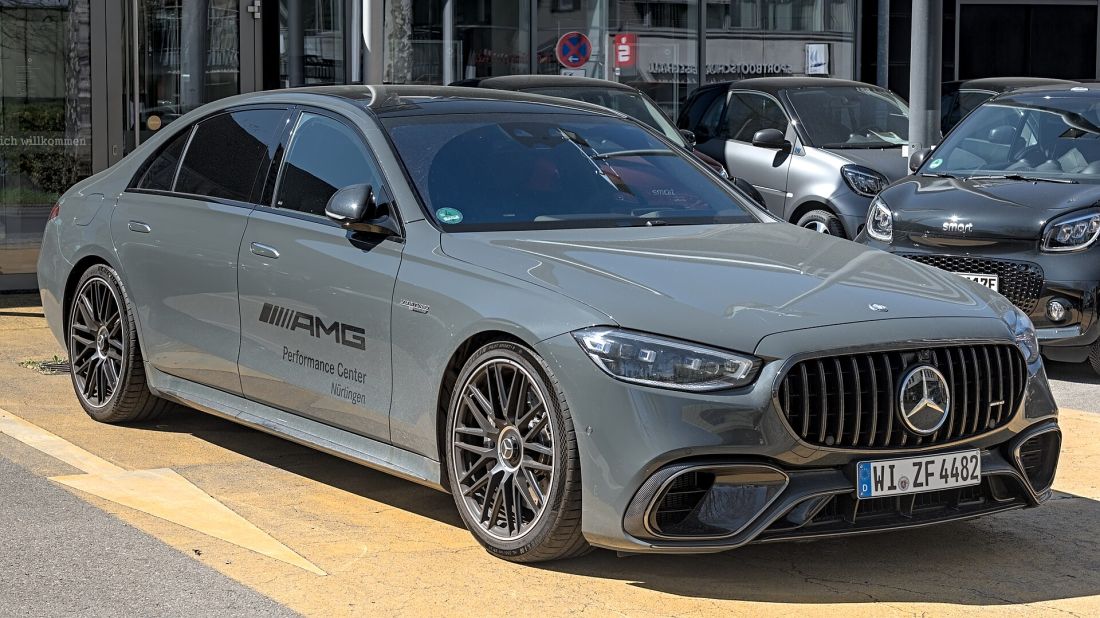
Photo: Mercedes-AMG S 63 E Performance by Alexander Migl, CC BY-SA 4.0, via Wikimedia Commons.
A luxury badge becomes famous through stories, but it stays famous through repetition. Mercedes-Benz cars appeared at hotels, government buildings, race events, airports, business meetings and family celebrations. They were seen carrying public figures, company owners, artists and people who had saved for years to buy one. The 600 gave the brand a formal, state-car image. The gullwing sports car added glamour and drama. The S-Class became linked with executive travel. Smaller saloons and estates brought the same family look to people who needed a car for work, school runs and holidays. That spread mattered. Mercedes-Benz didn’t remain a distant maker of rare machines. It created a ladder of models, each linked by the star and by shared ideas about comfort, build and road manners. In Britain, the badge came to mean you’d done well, though the meaning could change with the model.
A clean estate might say sensible success. A large saloon might feel formal. A compact model could offer a first step into the brand. And yes, image played a part. Let’s not pretend otherwise. People buy with their eyes and with their emotions. Still, image lasts only when enough owners have a good story to tell. A car that feels solid after years of use, provided it has been cared for, adds to the legend in a way an advert never can. The same is true in the used market. An older Mercedes-Benz can still deliver the seat comfort, cabin calm and motorway ease that made it special when new. But the badge isn’t a magic shield. Service records, tyre quality, warning lights, body condition, electronics and evidence of careful ownership matter greatly. At Dace Motor Company, that’s the useful way to view any used Mercedes-Benz: respect the history, enjoy the character, but judge the actual car in front of you. A famous name should raise your expectations, not replace your checks.
What the Mercedes-Benz benchmark means for a used-car buyer today
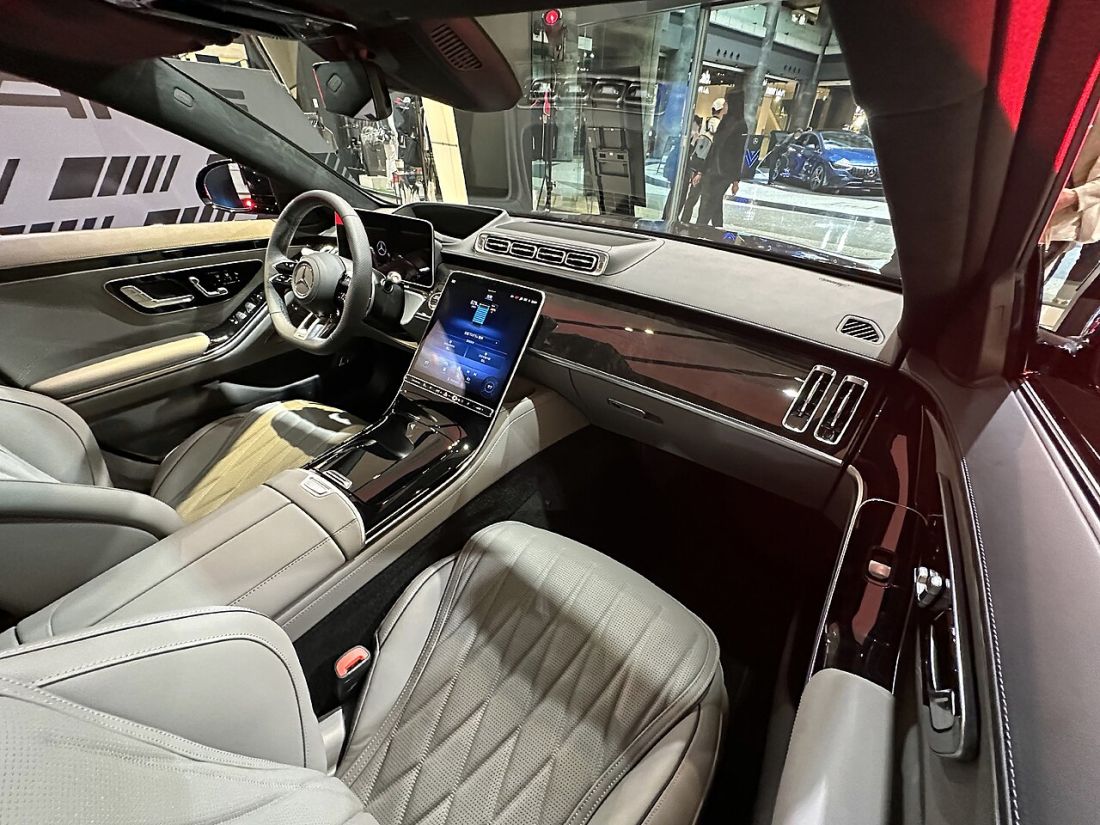
Photo: Mercedes-AMG S 63 E PERFORMANCE (W223) by Tokumeigakarinoaoshima, CC BY-SA 4.0, via Wikimedia Commons.
So, what should you take from all this if you’re looking at a used Mercedes-Benz in Manchester or Stockport? Start with the reason the brand became a benchmark. It wasn’t one feature. It was the way many small choices worked together. Check whether the seat feels right for you. Try every switch. Listen for unwanted knocks over uneven roads. See how easy it is to look out at junctions. Test the heating, cooling, windows, cameras and driver aids. Make sure the service history matches the age and mileage, and ask for a proper vehicle history check. A car can have beautiful paint and still hide neglected maintenance. You’ve probably dealt with this before in other parts of life: the smart-looking option isn’t always the cared-for option. Take your time. A used Mercedes-Benz should feel composed, not tired. It should brake cleanly, steer without fuss and settle after bumps. On a test drive, include the kind of roads you use each week. A short glide on smooth tarmac tells you very little. Try a busy urban section, a faster road and a few rough patches, because that’s closer to real life around Greater Manchester. Think about running costs as well. Larger wheels can mean dearer tyres. Complex comfort features may cost extra to repair. A full inspection and clear finance figures can save a lot of bother later. Dace Motor Company offers used Mercedes-Benz models alongside many other makes, so we can say this without turning it into a badge contest: the best choice is the car that suits your budget, space needs and daily routine. Mercedes-Benz earned its place as a luxury yardstick by joining invention, comfort, safety and identity across many generations. The smartest buyer honours that story in a practical way. Look past the star, check the details, and choose the example that still delivers the calm, confidence and care that made the badge famous in the first place.