


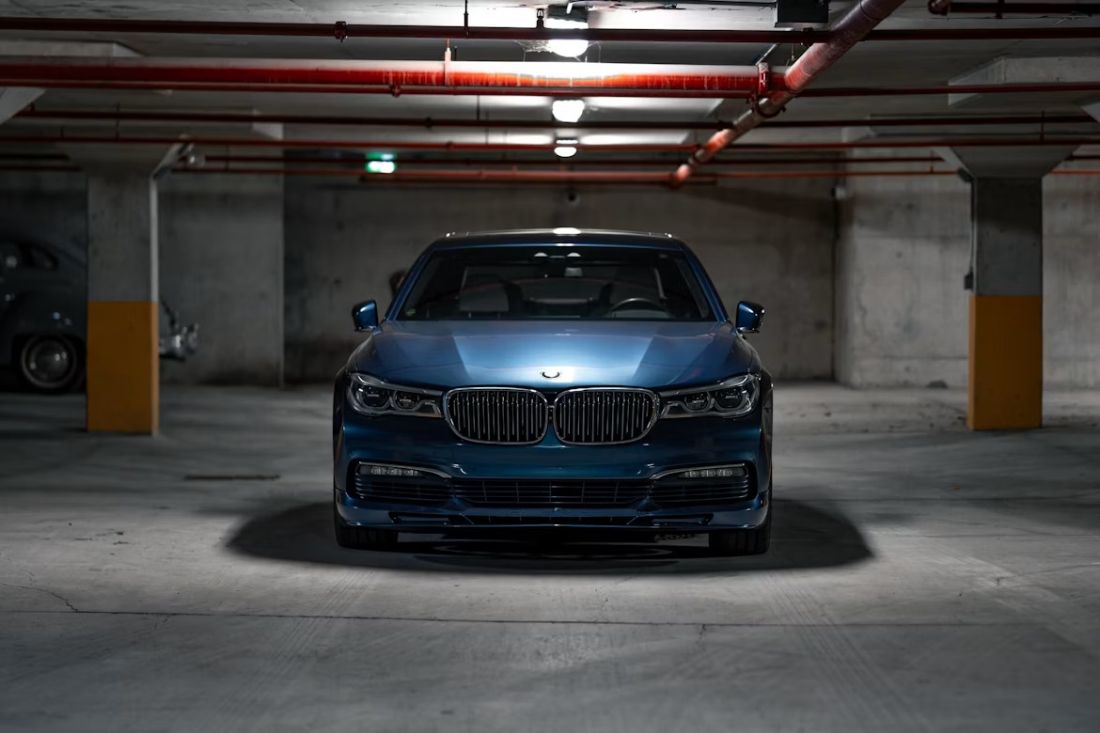
What Makes Alpina Different from BMW M?
Park an Alpina beside a BMW M car and they can look like close relatives. Both begin with a BMW model. Both can be seriously quick. Both can turn a simple drive into something you remember. Yet they’re built around different ideas. A BMW M car tends to feel alert and eager. The steering reacts quickly, the body stays tight in bends, and the engine and gearbox make each hard push feel like an event. BMW says the aim of an M model is to bring the feel of motor racing into a car that can still be used every day. Alpina has long taken another route. It mixes very strong performance with a softer ride, a calmer cabin and a less showy look.
Think of a BMW M as a talented athlete who’s ready for a sprint. An Alpina is the well-dressed person who catches the same train, takes the best seat and arrives without looking rushed. Both are fast. The mood is different. That gap becomes clear on roads around Manchester and Stockport. A normal day might include slow traffic near the centre, rough tarmac around town, a wet run past the Stockport Viaduct and a clear stretch on the motorway. The M car keeps the driver closely involved through every part of that drive. The Alpina tries to smooth out the awkward bits while keeping huge speed ready for the moments when the road opens up. At Dace Motor Company, we’d never say that one badge wins every time. The better car depends on the driver. Some people want sharp reactions and a strong racing feel. Others want quiet confidence, comfort and speed without much drama. That’s the real starting point.
Alpina Was a Car Maker, Not Just a Styling Package
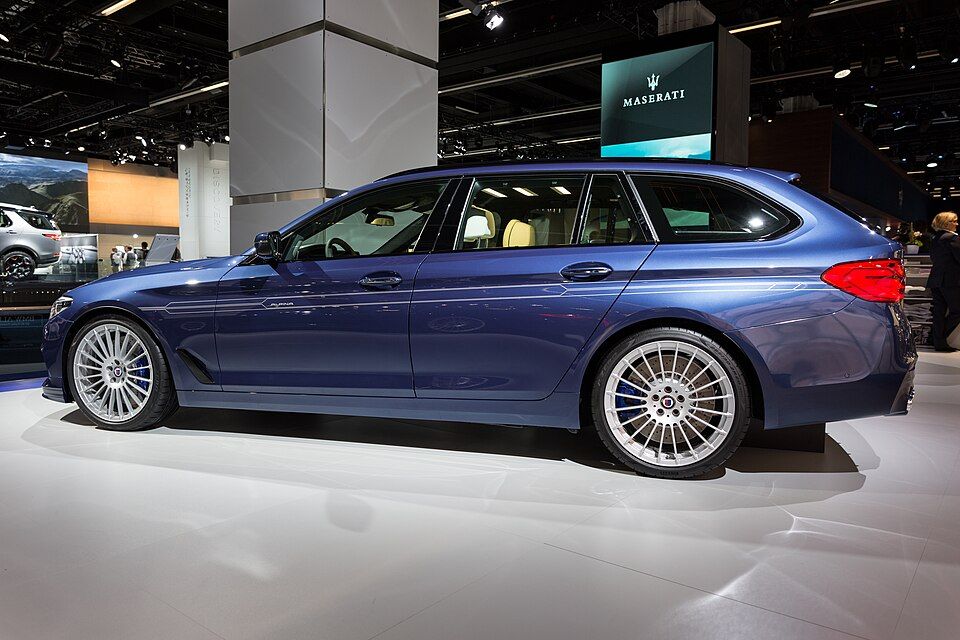
Photo: Alpina B5 by Matti Blume, CC BY-SA 4.0, via Wikimedia Commons.
A common mistake is to think Alpina was simply a set of wheels, stripes and leather added to a normal BMW. The story goes much deeper. Burkard Bovensiepen founded Alpina in 1965 after creating a carburettor system for the BMW 1500. The company worked with BMW cars in tuning and motor racing, then began building passenger cars based on BMW models in 1978. In 1983, Alpina became officially registered as a car manufacturer in Germany. That status matters. An Alpina wasn’t treated as a random garage conversion. It was created as a complete vehicle, with changes to areas such as the engine, gearbox, suspension, aerodynamics and cabin. Under the long-running arrangement, base cars were assembled on BMW production lines before further work and final finishing took place through Alpina’s operation in Buchloe.
Production stayed small. BMW reported that around 2,000 vehicles were produced in Buchloe during 2021, which shows how rare these cars were beside mainstream BMW models. BMW M grew from a different background. BMW Motorsport was formed in 1972, and its early cars had a direct link with competition. The BMW 3.0 CSL became one of its key early projects, while the first BMW M3 was closely tied to touring car racing. BMW M’s own history describes its goal as bringing motor-racing excitement into road cars. Alpina was interested in speed too, but it mixed that speed with comfort, fine materials and discreet styling. So an Alpina isn’t simply an M car made softer, and an M car isn’t an Alpina with stiffer springs. Their roots point in separate directions. One grew from a small specialist manufacturer working closely with BMW. The other came from BMW’s own competition department. You can still feel that history from the driver’s seat today.
The Engine and Gearbox Give the Game Away
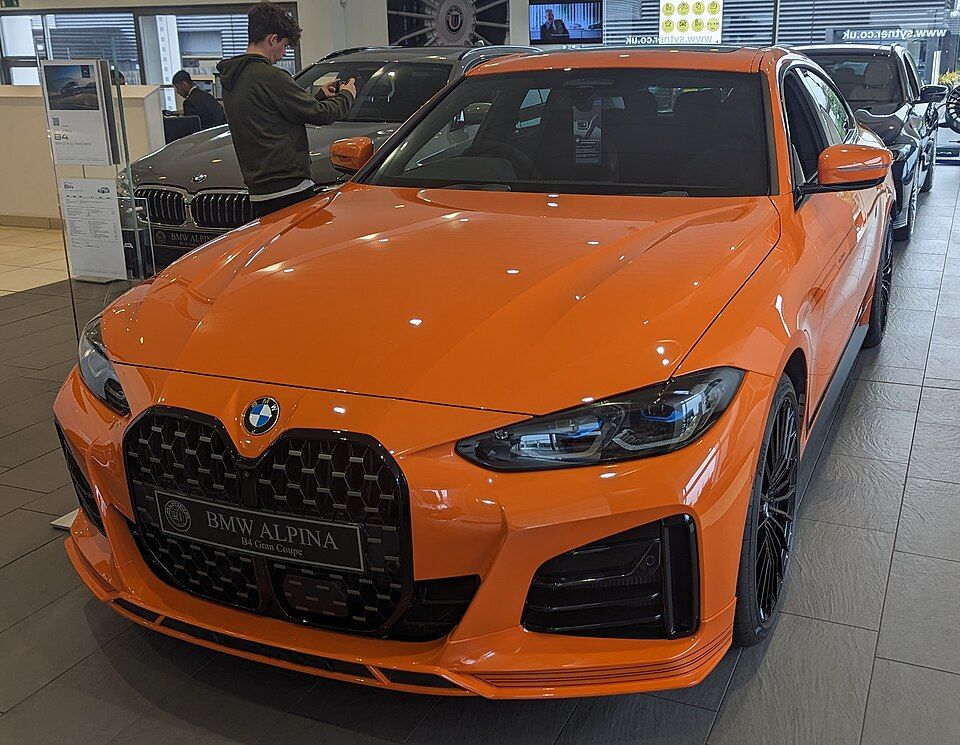
Photo: 2023 BMW Alpina B4 by Calreyn88, CC BY-SA 4.0, via Wikimedia Commons.
Performance figures can make Alpina and BMW M seem almost identical. Look at the numbers and you may see a large engine, two turbochargers, four-wheel drive and acceleration that would have belonged to a supercar a few years ago. The difference is in how the speed reaches you. A BMW M car tends to respond with urgency. Press the accelerator and it feels ready to jump. The gearbox may hold a lower gear, changes can feel firm in the sportier settings, and the sound is part of the excitement. It asks the driver to join in. Alpina has usually aimed for a smoother kind of force. Its engines are set up to give strong pull from lower engine speeds, and its automatic gearboxes use their own settings to keep progress calm in comfort mode.
In the Alpina B8, for example, the official description says the car can cruise at low engine speed while still having a large amount of pulling force ready as soon as the driver asks for it. That creates a different sensation. In an M car, a quick overtake can feel like a small performance. In an Alpina, the same move can feel as though the road ahead has simply become shorter. There’s still serious pace, but less noise and fewer sharp edges. This suits drivers who spend long periods on motorways or carry passengers who don’t want every gear change announced through the seat. It also explains why Alpina kept a strong focus on refined automatic gearboxes, even during years when many keen drivers linked fast cars with manual shifting or very aggressive transmission settings. BMW M wants each input to feel immediate. Alpina wants the result to feel effortless. Neither idea is wrong. One gives you excitement through reaction and sound. The other gives you confidence through a deep reserve of speed that appears without much fuss.
The Biggest Difference May Be the Ride
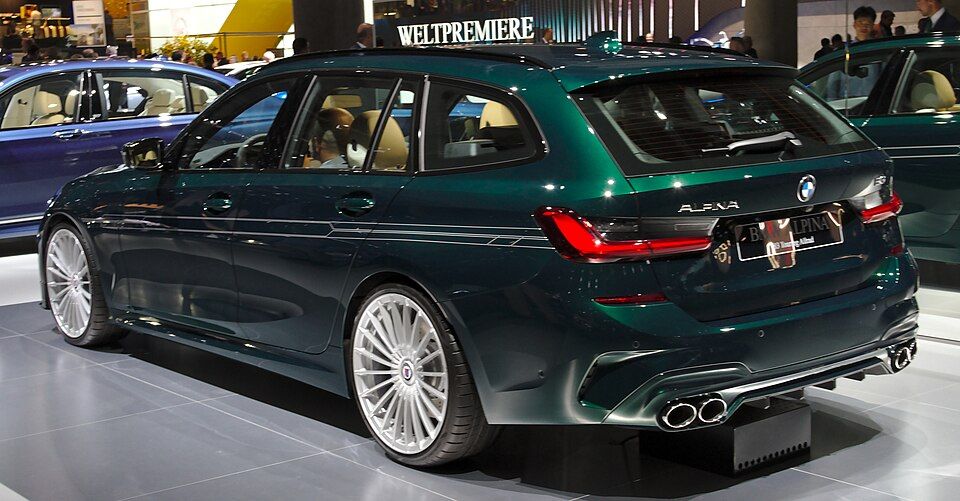
Photo: Alpina B3 Touring (G21) by Alexander Migl, CC BY-SA 4.0, via Wikimedia Commons.
You don’t need a race circuit to tell these cars apart. A patched road in Stockport, a broken stretch near Salford or a long run around the M60 can reveal the difference within a few miles. BMW M suspension is set up to control the body closely and react fast when the driver turns, brakes or accelerates. On a smooth road, that can feel precise and exciting. The car stays level, changes direction quickly and gives the driver a clear sense of what the tyres are doing. The trade-off is that rough surfaces may reach the cabin with a sharper thump, especially when the car has large wheels and its firmest setting selected. Alpina has long chased a wider gap between comfort and control. Official material for the Alpina B8 describes a suspension that combines long-distance comfort with accurate handling.
The car used its own spring, damper and mounting choices, along with steering and rear-wheel steering settings aimed at keeping it settled at speed. The result isn’t a soft car that leans around every corner. A good Alpina still feels controlled. It simply lets the wheels deal with more of the road before the movement reaches the people inside. That can make a big difference in Britain, where a road can change from smooth to scarred in the space of one roundabout. The steering tells a similar story. An M car may feel keen around the straight-ahead position and quick to turn into a bend. An Alpina tends to feel calmer in a straight line, then builds its response in a steady way. That helps on long motorway trips, where a nervous steering setup can become tiring. Put simply, BMW M usually gives the driver a stronger sense of connection. Alpina tries to keep that confidence while removing some of the strain.
BMW M Looks Ready for Action, While Alpina Keeps Things Quiet
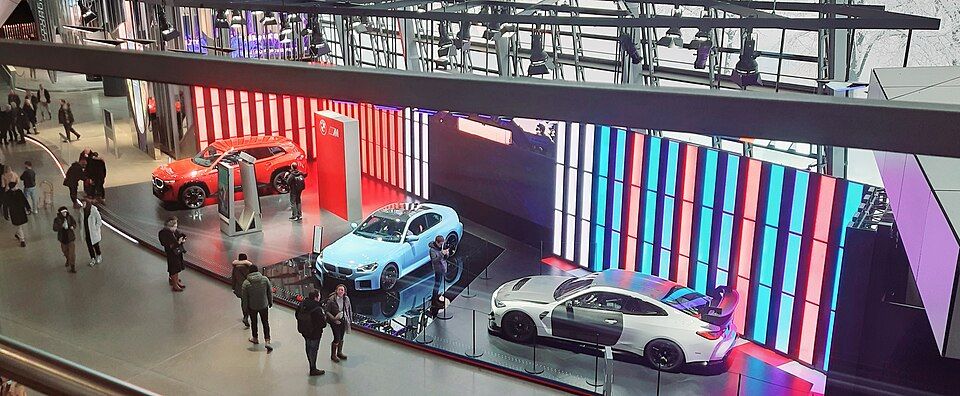
Photo: BMW M4 GT4, BMW M2 Performance and BMW XM by WikiGenesis, CC BY 4.0, via Wikimedia Commons.
BMW M cars usually make their purpose clear. Wider bodywork, deep bumpers, large air openings, four exhaust outlets and heavily shaped seats all tell you that the car sits near the sporting end of the BMW range. Some generations look fairly restrained, while others turn every arrival into a statement. Either way, an M car tends to wear its character on the outside. Alpina has long preferred a quieter approach. Its classic multi-spoke wheels are the biggest clue. You may also spot small spoilers, oval exhaust tips on certain models, Alpina lettering and optional stripes running along the sides. Alpina blue and Alpina green became famous paint choices, yet many cars were ordered in darker, more discreet colours.
Someone who knows the badge will notice one at once. Someone who doesn’t may think it’s simply a very smart BMW. That low-key style is part of the charm. You can arrive near Spinningfields, pull into a busy car park or collect someone from Piccadilly without feeling as if you’ve brought a racing car into town. Inside, BMW M keeps the focus on the driver. Expect supportive seats, thick steering wheels, M colours and displays that can show detailed driving settings. Alpina cabins lean towards fine leather, soft colour choices, wood trim, blue and green stitching, special instruments and small production details. The exact finish changes by model, year and original order, so two used Alpinas can feel surprisingly different. Still, the main idea remains easy to spot. BMW M adds sporting theatre. Alpina adds rarity and calm luxury. The M car says, “Let’s take the long way home.” The Alpina says, “Good idea, and we’ll still arrive relaxed.” That contrast may sound small on paper, but it shapes the whole ownership experience.
Rarity Changes What It’s Like to Own One
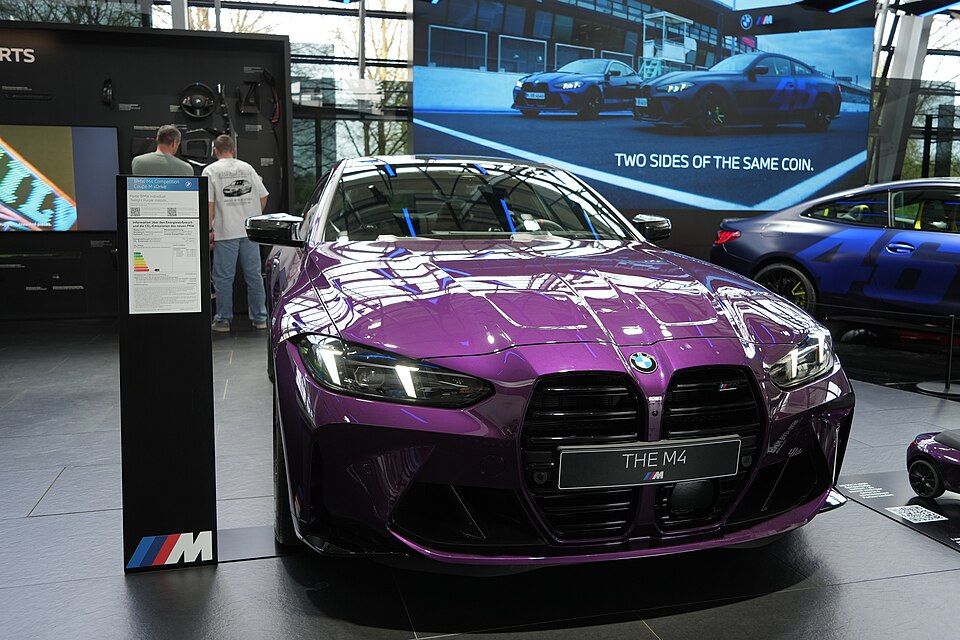
Photo: 2025 BMW M4 Competition Coupe by Strubbl, CC BY-SA 4.0, via Wikimedia Commons.
An Alpina can feel special before the engine starts because you’re unlikely to see the same model parked two spaces away. BMW M cars are still desirable and uncommon beside regular BMW models, but they were built and sold in far larger numbers than most Alpinas. That makes an M3 or M5 easier to find, compare and replace. It can also make servicing knowledge and used parts easier to come across. Buying an Alpina may take patience. The right B3, D3, B5, B7 or another model may appear only now and then, and two examples from the same year can have very different equipment. Rarity can help a car hold interest with collectors, but it doesn’t promise a rising price. Mileage, condition, originality, service records and repair costs still count. A rare car with missed maintenance can be a poor buy beside a well-kept example with a few extra miles.
There’s also a major date to know. BMW agreed to acquire the rights to the Alpina name in 2022, while the previous cooperation continued until the end of 2025. On 1 January 2026, BMW ALPINA launched as an exclusive standalone brand within the BMW Group. BMW says the new brand will keep the mix of high performance, ride comfort, personal choices and distinctive materials. This creates a new period for the name, but it doesn’t change what older cars are. An Alpina built in 2012, 2018 or 2024 came from the earlier arrangement with the family-owned company in Buchloe. Buyers may care about that history in the same way that people care about different generations of an M3. The badge is one part of the story. The exact year, engine, gearbox, suspension and specification are just as important.
Which One Works Better in Real Life?
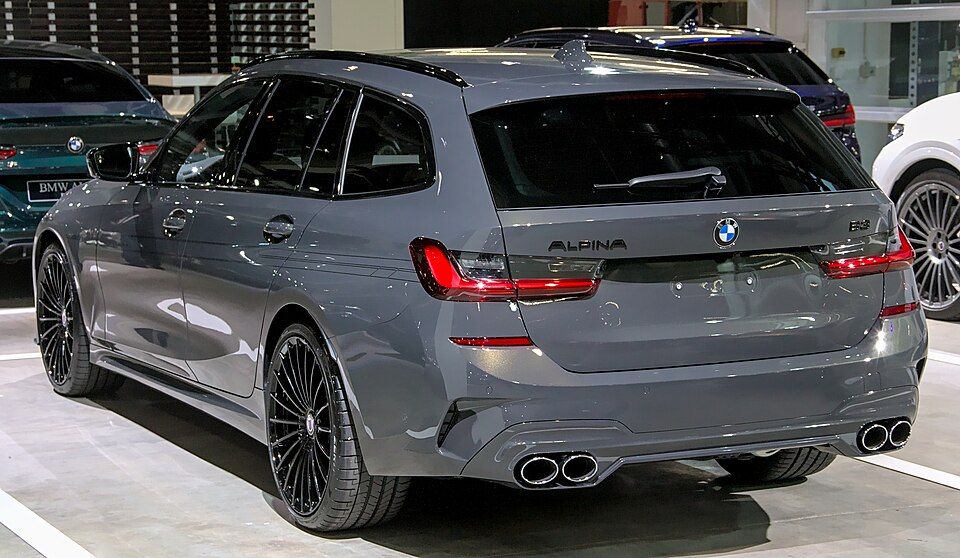
Photo: 2021 Alpina B3 Touring (G21) by Alexander Migl, CC BY-SA 4.0, via Wikimedia Commons.
Start with the driving you really do, not the perfect Sunday drive you picture when looking at adverts. Do you spend hours on motorways, carry family or clients, and want to arrive feeling fresh? An Alpina may make better sense. Its softer ride, strong pull at low engine speed and calmer cabin can turn a long trip into an easier day. Do you enjoy quick steering, firm body control and a car that reacts to every movement? A BMW M may suit you better. Then look at the details that don’t seem exciting in a showroom. A firm seat can feel great for twenty minutes and tiring after four hours. A huge wheel can look fantastic outside a café in Hale, yet lose some charm after a week on broken roads. A loud exhaust can make the first drive memorable, then become tiring on a steady motorway run.
The same applies in reverse. An Alpina may feel wonderfully mature, but a driver looking for a raw edge could find it too calm. Take a proper test drive. Use town roads, a faster section and a rough surface. Try every driving setting. Check how the steering feels at low and high speed, how the gearbox behaves in traffic and whether the ride suits the people who’ll travel with you. Park it as well. Some versions are wide, and a car that feels brilliant on an open road can feel rather large in a tight Manchester car park. Listen for tyre noise and cabin rattles. Test the heating, air conditioning, cameras, seat controls and screens. The right car should still make sense after the first rush of excitement has faded. A badge can start your search, but your normal week should make the final choice.
Buying Used Means Checking the Car, Not Trusting the Badge
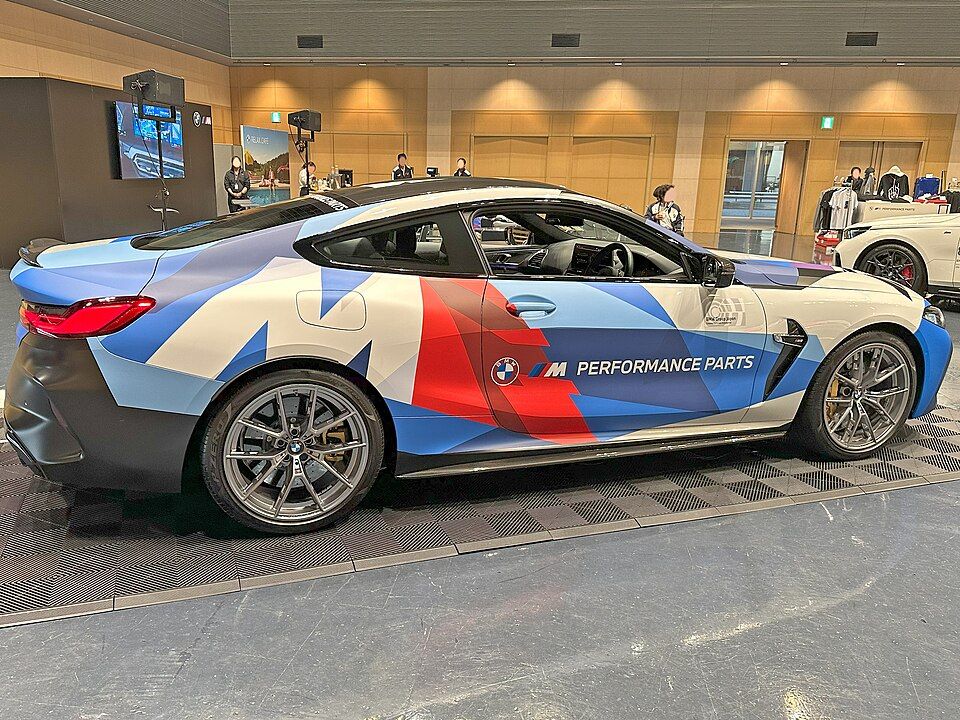
Photo: 2024 BMW M8 Coupé Competition (F92) by Tokumeigakarinoaoshima, CC BY-SA 4.0, via Wikimedia Commons.
Fast luxury cars can hide expensive faults, and shiny paint tells you very little about how a car has been treated. Begin with the service history. Look for work completed at the correct time and check invoices rather than relying only on stamps in a book or entries on a screen. An Alpina shares many service items with the BMW model beneath it, but some engine, cooling, suspension, exhaust, wheel and cabin parts are specific to Alpina. They may cost extra or take longer to find. A BMW M can also bring large bills for brakes, tyres, suspension and drivetrain repairs. Check that the tyres are good quality, correctly matched across each axle and wearing evenly. Uneven wear can point to poor wheel alignment, tired suspension parts or past accident damage.
Inspect the wheels closely. Alpina’s multi-spoke designs can be expensive to repair well, while large M wheels are also easy to mark or bend. On the test drive, the engine should start cleanly, idle smoothly and pull without hesitation. The gearbox should move away without a heavy knock and change gear in a way that matches the selected driving mode. Try the brakes at several speeds and watch for vibration through the steering wheel. Check every electric feature. Small faults across cameras, seat motors, climate control and screens can soon add up. A full vehicle history check is sensible too, covering outstanding finance, theft records, mileage concerns and recorded insurance damage. At Dace Motor Company, we see the same lesson again and again: the cheapest example can become the most expensive one once repairs begin. Don’t rush because an Alpina is rare or because an M badge looks exciting. Buy the condition, the history and the way the car drives. A good example is worth waiting for.
The Choice Comes Down to the Kind of Driver You Are
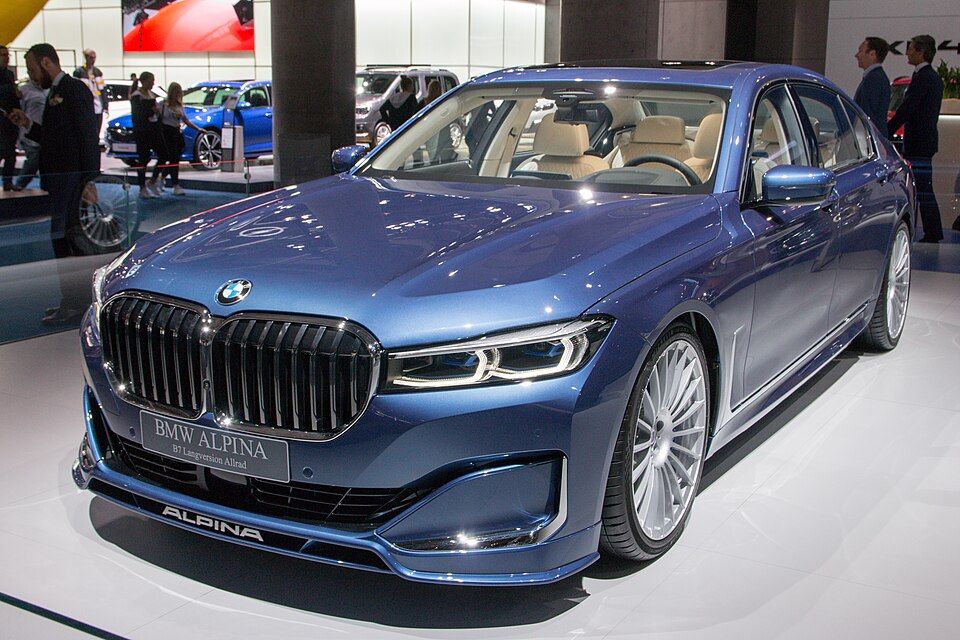
Photo: 2019 Alpina B7 by Johannes Maximilian, CC BY-SA 4.0, via Wikimedia Commons.
Alpina and BMW M answer the same question in two different ways: how can a BMW become much faster and feel far more special? BMW M answers with sharper reactions, a stronger motor-racing link and a sense that the driver is part of every move. Alpina answers with speed that feels smooth, discreet and easy, backed by a calmer ride and richer cabin details. That doesn’t mean every M car is harsh or every Alpina is gentle. Wheel size, model age, options and driving settings can change the feel a great deal. A modern M5 can cover motorway miles in real comfort, while an Alpina B3 can move along a twisting road at a pace that surprises nearly anyone. The difference sits in the main character of each car.
BMW M starts with driver involvement and adds daily comfort. Alpina starts with long-distance comfort and adds remarkable speed. For drivers around Manchester and Stockport, that’s a useful way to frame the choice. Pick BMW M when you want the car to feel keen, direct and ready to play whenever the road clears. Pick Alpina when you want strong pace without giving up a relaxed cabin or a forgiving ride. And don’t worry if you’re still split. The two ideas overlap enough to make the decision difficult, which is part of their appeal. Compare the exact models, read their histories and spend real time behind the wheel. Internet arguments won’t tell you how a seat feels after two hours or how a suspension setup handles the road near your home. One badge brings the racing paddock closer. The other turns fast travel into something calm and polished. Both are true BMW experiences. They simply speak with different accents.