


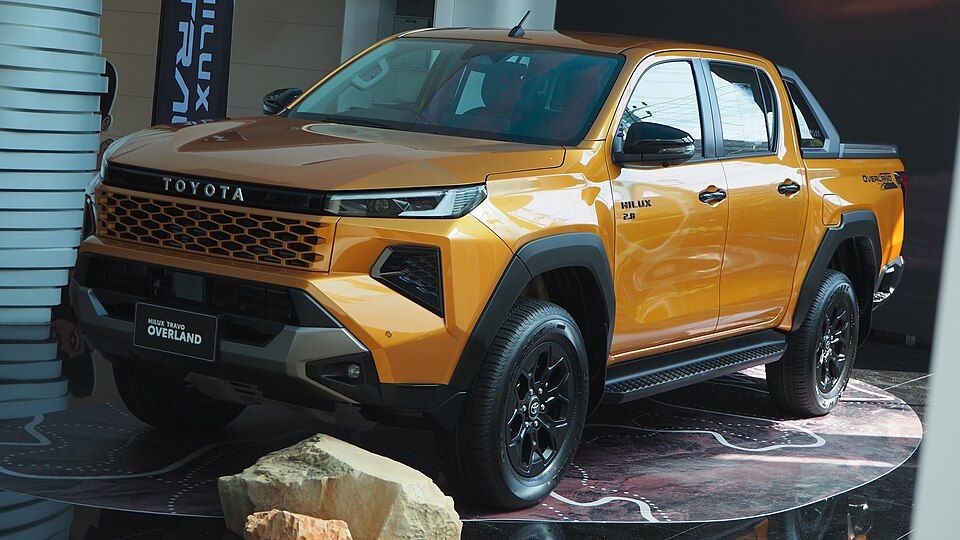
The Story Behind Toyota's Legendary Hilux Durability
Photo: 2025 Toyota Hilux Travo Overland Double-Cab by Chanokchon, CC BY-SA 4.0, via Wikimedia Commons.
Some cars become famous because they look fast, sound dramatic, or appear in a film. The Toyota Hilux earned its name in a less flashy way. It kept turning up for work. Since its launch in Japan in March 1968, the pickup has been used by builders, farmers, engineers, families, rescue teams, explorers, and drivers who simply need a vehicle that won’t complain when the road gets rough. Toyota says the original Hilux was developed and built by Hino Motors as a shared successor to two earlier light trucks, the Briska and the Light Stout. Even the name has a slightly unexpected story. “Hilux” joins “high” and “luxury,” which sounds odd for a truck known for mud, tools, and hard graft, but the first model was meant to bring a more car-like feel to a working vehicle. It had a separate frame, front coil springs, rear leaf springs, room for three people, and a one-tonne carrying limit.
That basic recipe mattered. The body sat on a strong frame, while the rear setup was simple and suited to weight in the load bed. Nothing about it needed to shout. It just needed to cope. You know how it is around Greater Manchester. A vehicle can face stop-start traffic near the city centre, wet roads around Stockport, potholes after winter, and a loaded run across the Pennines, all in the same week. A working pickup has to deal with very different jobs without feeling fragile. The Hilux built its early reputation in places where a breakdown wasn’t a mild nuisance. It could mean lost work, spoiled goods, or being stuck miles from help. That’s the key to the whole story. Durability wasn’t added later as a clever sales line. It was part of the job from day one. Over the decades, each new version became larger, safer, quieter, and easier to live with, yet Toyota kept returning to the same question: will this truck bring its driver home?
The separate frame is the quiet hero
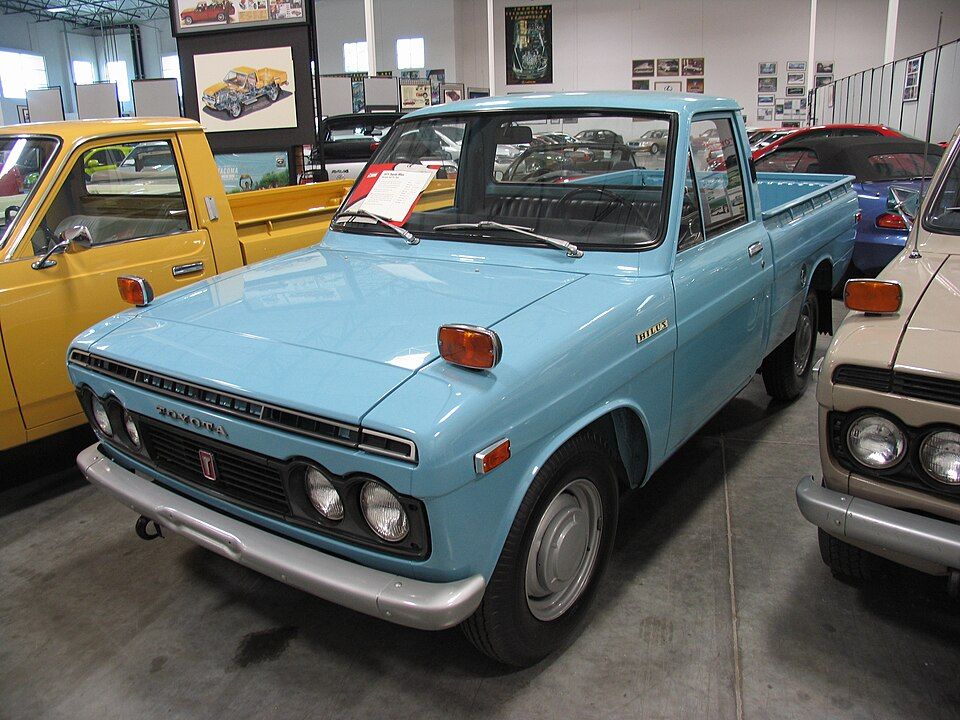
Photo: Toyota Hilux (First generation) by Jacob Frey 4A, CC BY 2.0, via Wikimedia Commons.
To see why the Hilux has lasted so well, picture a sturdy ladder lying flat beneath the vehicle. Two long rails run from front to back, joined by cross pieces. The cab and load bed sit on top. This is called a ladder-frame layout, and Toyota has stayed loyal to it on the Hilux because it suits hard use. A normal family hatchback usually joins the body and main structure into one shell. That can save weight and give a smooth road feel, but a pickup has a different life. It may carry building supplies, tow a trailer, crawl over broken ground, or sit with one wheel higher than the others on a rough track. Those forces twist and bend the vehicle. A separate frame gives the truck a strong base that can take those loads while the suspension keeps the tyres in contact with the ground.
Toyota has said that the Hilux frame is built to resist severe twisting on difficult terrain. That doesn’t make it magic, and it doesn’t mean damage is impossible. Any truck can suffer if it’s overloaded, neglected, badly repaired, or driven through deep water without the right preparation. Still, the layout gives engineers a sensible starting point. Think of an old brick mill in Stockport. The windows, roof, and rooms can change, but the main structure has to hold everything together.
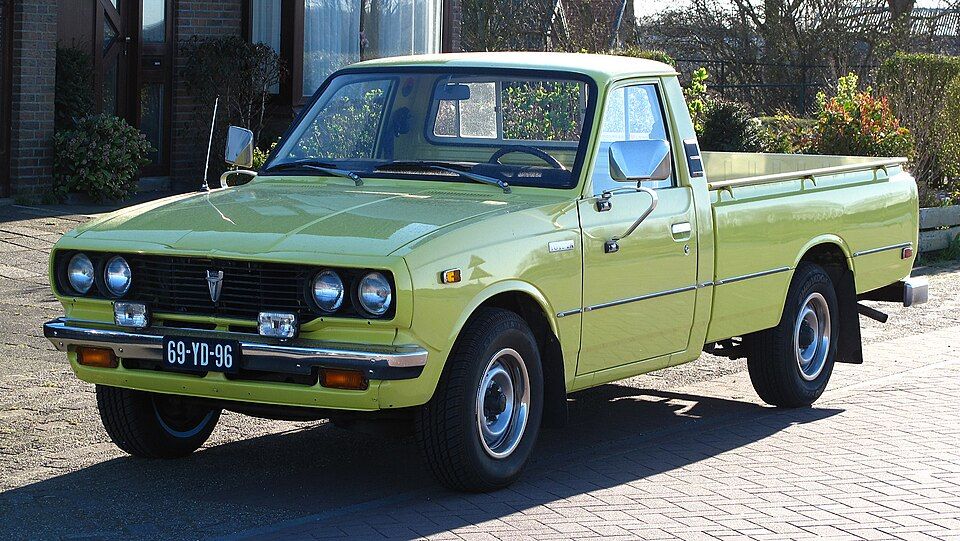
Photo: 1977 Toyota Hilux by Rutger van der Maar, CC BY 2.0, via Wikimedia Commons.
The Hilux follows a similar idea. Its frame carries the serious strain, while the cab can be shaped for comfort, safety, and daily use. The rear leaf springs also have a long history in working vehicles because they’re simple, strong, and good at supporting changing loads. An empty pickup can feel firmer than a car because those springs are waiting for weight. Put tools, timber, or equipment in the back, within the legal limit, and the setup starts to make sense. No fuss. No mystery. It’s engineering shaped by the job. That frame-and-suspension mix is one of the biggest reasons older Hilux models can still feel useful years after their first owner collected the keys.
Real drivers helped shape every generation
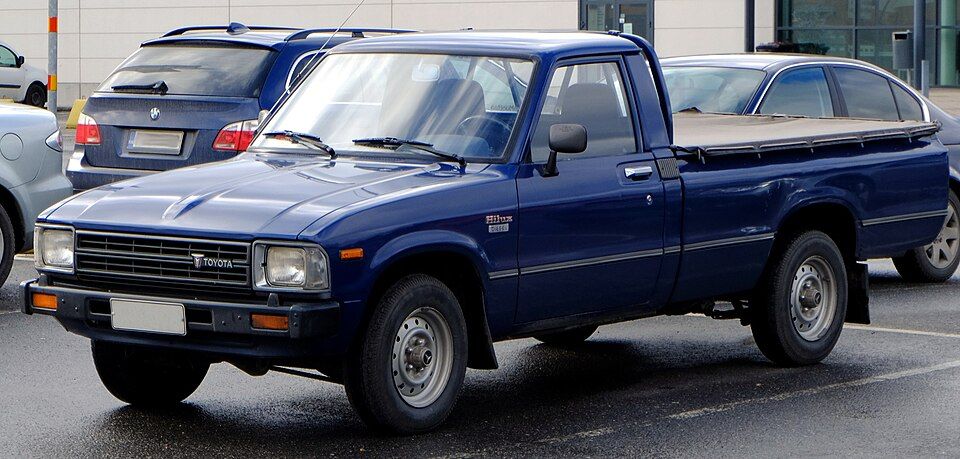
Photo: 1983-1988 Toyota Hilux by Tommi Nummelin, CC BY-SA 3.0, via Wikimedia Commons.
A durable truck can’t be created by sitting in an office and guessing what people need. Toyota’s Hilux teams have spent years speaking with drivers and watching how the vehicle is used in very different places. That matters because one owner may travel across dry farm tracks, another may work in freezing weather, and another may spend most days in busy towns with the odd weekend on rough ground. The sixth-generation chief engineer, Masaaki Ishiko, described how the same pickup faced very different demands across markets. In North America, some buyers wanted comfort and used the truck for leisure. In parts of Southeast Asia, drivers carried very heavy loads and sometimes changed the vehicle for passenger transport. Those needs pull the design in opposite directions. Softer suspension feels nicer with an empty bed, while heavier work calls for firmer support.
A long wheelbase can feel settled at speed, while a shorter one can be handier on uneven ground. Engineers had to make choices, then offer different body, engine, and drive versions to suit the job. For the eighth generation, launched in 2015, development teams travelled across the globe, spoke directly with customers, and drove many kinds of roads. Their goal wasn’t just to make the metal stronger. They also wanted long drives to feel less tiring, the cabin to be quieter, and the truck to travel farther between fuel stops. That may sound like comfort rather than durability, but there’s a link. A tired driver makes poorer decisions.
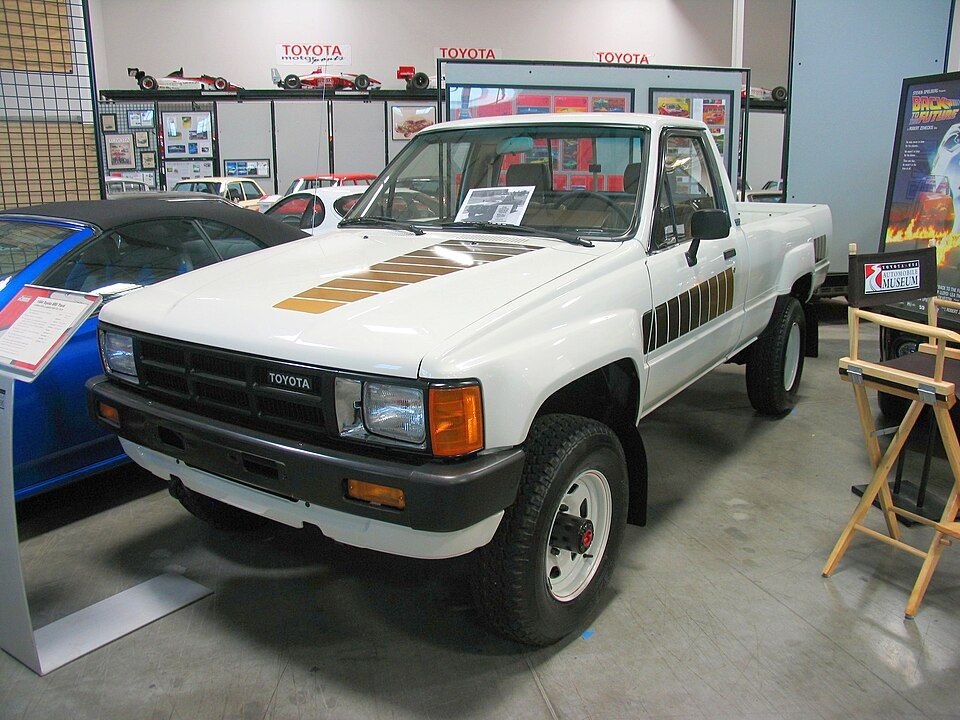
Photo: Toyota Truck SR5 4WD by Jacob Frey 4A, CC BY 2.0, via Wikimedia Commons.
A noisy cab can make a long shift harder. Limited range can be a real problem far from a filling station. Toyota’s chief engineer Hiroki Nakajima summed up the aim with a demanding phrase: tougher than the engineers themselves could imagine. The point wasn’t to create a truck for one dramatic stunt. It was to make one that could repeat difficult work, day after day, in heat, cold, dust, rain, and traffic. That slow feedback loop is a big part of the Hilux story. Drivers found weak spots. Engineers learned. The next version changed
Simple ideas, carefully improved
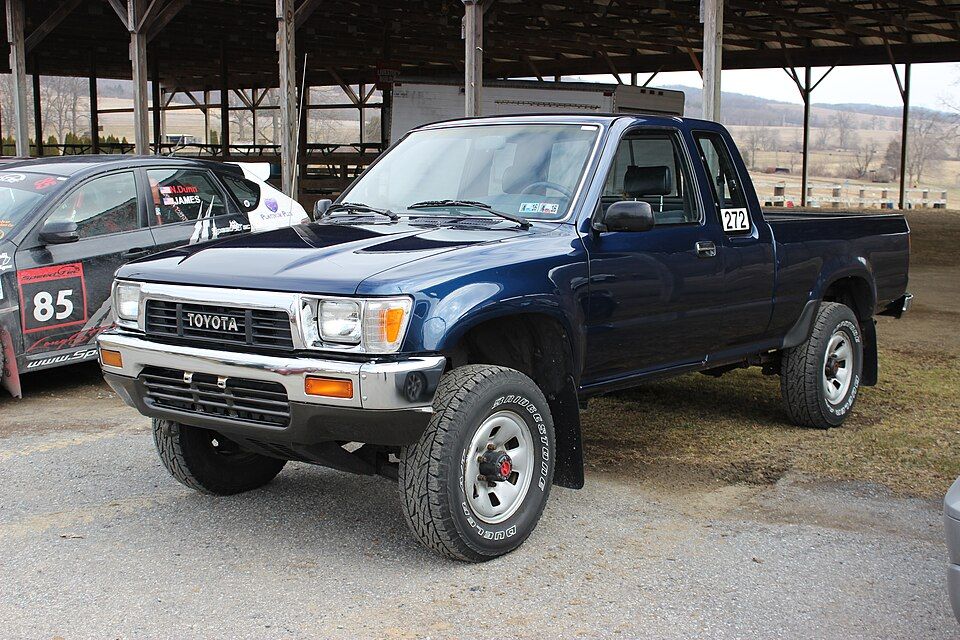
Photo: Toyota Pickup Xtracab 4x4 by Jacob Frey 4A, CC BY 2.0, via Wikimedia Commons.
People sometimes talk about reliable vehicles as though they’re built from old parts and frozen in time. The Hilux story is different. Toyota kept the basic working-truck layout, then changed thousands of small details across each generation. The first model arrived with rear-wheel drive. A four-wheel-drive version joined the range in 1979, opening the door to deeper mud, loose tracks, snow, and steeper ground. Later models gained double cabs, giving families and work crews proper rear seats. Engines changed. Gearboxes changed. Brakes, steering, safety systems, rust protection, cooling, sealing, and cabin comfort all moved on. Yet the truck still had to be repairable and dependable in places where specialist help might be far away.
That balance is harder than it sounds. Add too much weight and the truck becomes thirsty and clumsy. Make everything too light and it may suffer under repeated strain. Fit a very soft suspension and it can struggle with a loaded bed. Make it too firm and the driver gets bounced around on an empty run. Toyota’s approach has been to keep testing the whole package, rather than treating one impressive number as proof of quality. Its wider factory method also plays a part. The Toyota Production System aims to remove waste, spot problems early, and build consistent processes. In everyday language, that means workers are expected to notice faults, deal with their cause, and avoid passing the same problem down the line.
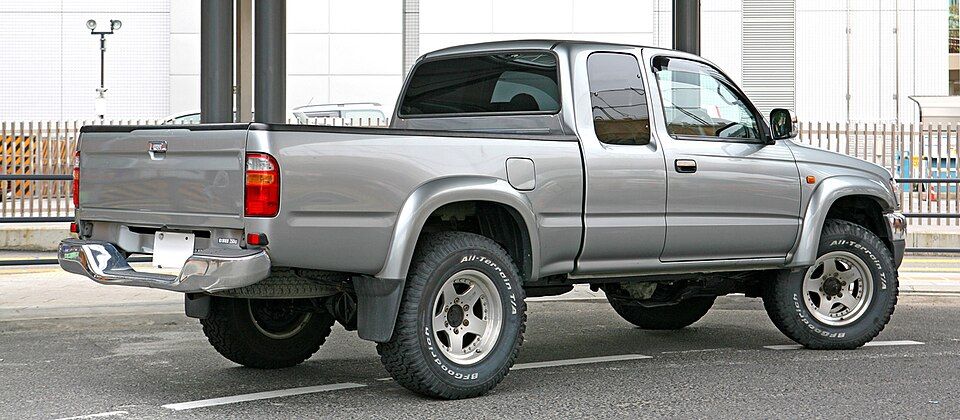
Photo: Toyota Hilux N170 by Tennen-Gas, CC BY-SA 3.0 , via Wikimedia Commons.
A dependable vehicle needs dependable assembly. A well-drawn part can still fail early if it’s fitted badly, contaminated, or made outside the correct limits. We’ve all seen a flat-pack cupboard where one tiny missing fitting ruins the whole thing. A vehicle has far higher stakes. The Hilux reputation grew because the large parts and the little parts had to work together: frame, joints, seals, bearings, wiring, cooling, and fasteners. There isn’t one secret component hidden under the bonnet. The “secret” is repetition, learning, and refusing to ignore small faults.
The famous television test made the legend visible
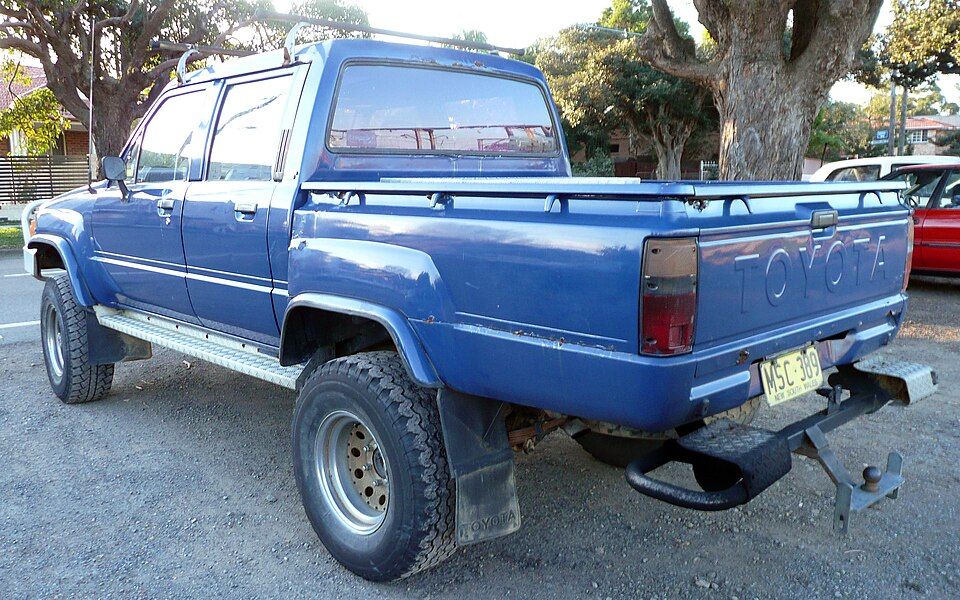
Photo: 1984 Toyota Hilux 4-door Utility by OSX, Public domain, via Wikimedia Commons.
For many British drivers, the Hilux reputation stopped being a quiet fact and became a piece of popular culture after Top Gear tried to destroy an older diesel model. The programme subjected the pickup to a string of cruel stunts, including seawater, fire, heavy impacts, and the demolition of a tower block beneath it. The truck was badly damaged, of course. Calling it unharmed would be nonsense. Yet it was made to run again with basic tools, and the battered vehicle later became part of the Top Gear display at Beaulieu. That spectacle didn’t create the Hilux reputation from nothing. Farmers, tradespeople, and drivers in remote areas had trusted the model for years. What the programme did was turn a practical reputation into a story that millions of people could see and remember.
A normal durability test is hard to make exciting. Engineers might repeat a rough-road route, check a weld, measure a temperature, or inspect a seal after dust testing. Useful work, but it doesn’t exactly fill the pub with conversation. Dropping a pickup with a building does. Let’s face it, no owner should copy those stunts, and a used Hilux that has been flooded, burned, or crushed belongs in a workshop or a museum, not on your shopping list. The lesson is narrower and more sensible. The truck’s basic systems were simple enough, and its core structure tough enough, to keep going after treatment far beyond normal driving. The surviving Hilux became a symbol, rather like the old industrial machines still found around Manchester mills. They’re scarred, noisy, and clearly from another age, yet you can see why people trusted them. The television episodes gave the Hilux a nickname it still carries in conversation: the indestructible pickup. No vehicle is truly indestructible. But very few have been given such a public, memorable chance to argue the point.
The coldest trips proved it wasn’t just television
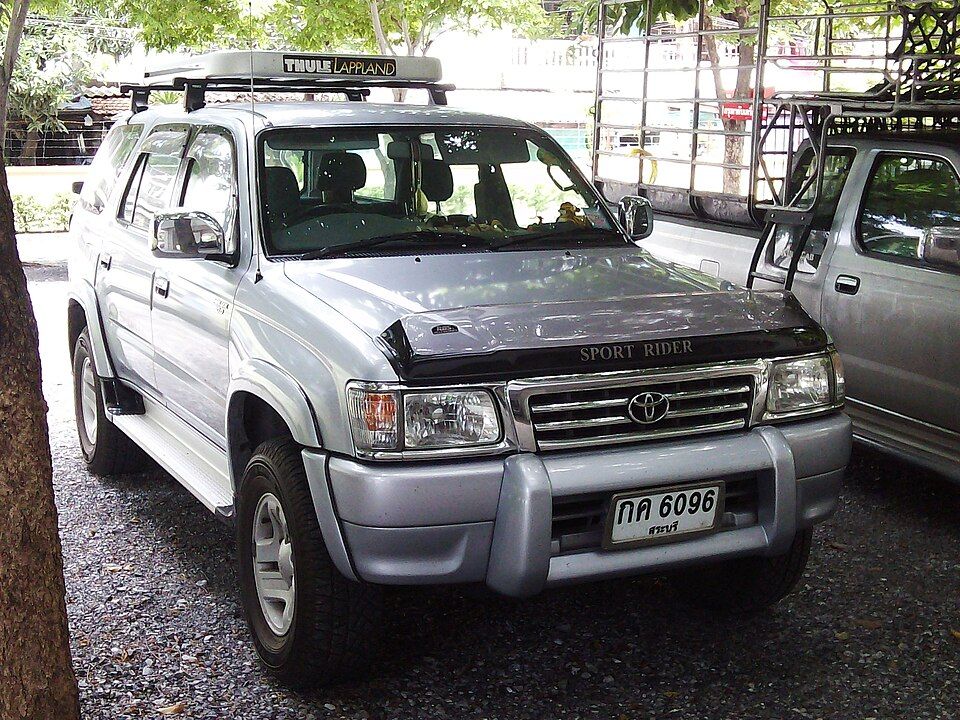
Photo: Toyota HiLux Sport Rider by M.rJirapat, CC BY-SA 4.0, via Wikimedia Commons.
The Hilux also built its reputation far away from studio lights. In 2007, a heavily modified version became the first car driven to the Magnetic North Pole during a Top Gear expedition. The changes were major, including huge low-pressure tyres and equipment suited to deep snow and extreme cold, so it wouldn’t be fair to pretend it was a standard showroom truck. Still, the engine and base vehicle had to cope with a place where small failures become serious very quickly. The story continued in Antarctica. In 2010, four Hilux pickups carried an Indian scientific team on a 4,600-kilometre return trip to the South Pole. Toyota reported temperatures down to minus 56 degrees Celsius and heights above 3,400 metres. The vehicles were prepared by Arctic Trucks, yet the 3.0-litre diesel engines were left internally standard for the expedition. That’s a striking detail.
Cold thickens fluids, weakens batteries, makes rubber less flexible, and can expose any weak seal or connection. High altitude also reduces the oxygen available to an engine. Add deep snow, long distances, and limited support, and you’ve got a test that makes a wet morning on the M60 look friendly. These expeditions matter because durability isn’t one thing. A truck may resist potholes but struggle in deep cold. It may carry weight but overheat during slow work.
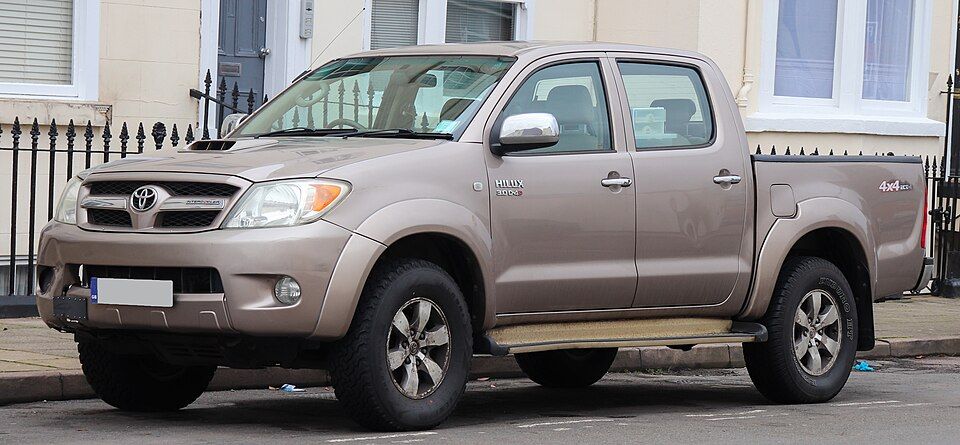
Photo: 2005 Toyota Hilux Vigo D-4D by Vauxford, CC BY-SA 4.0, via Wikimedia Commons.
It may start every day in town yet suffer when dust gets into moving parts. A good working vehicle has to manage many small stresses at once. The polar Hilux models had specialist preparation, as any serious expedition vehicle should. Their success still rested on a base truck chosen for a long record of dependable service. That’s the honest version of the legend. The Hilux didn’t roll out of a local dealership and head straight for the South Pole. Skilled teams changed it for the task. But they started with a vehicle they trusted, and the original engine design remained at the heart of the trip.
Durability depends on the owner too
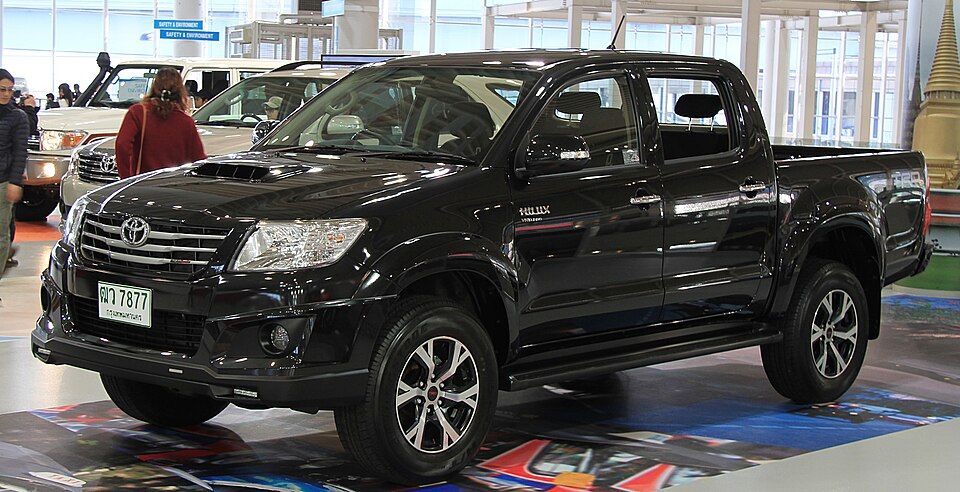
Photo: Toyota Hilux Vigo Champ TRD by TTTNIS, CC0, via Wikimedia Commons.
Here’s the bit that gets missed in heroic stories: even a Hilux needs care. A strong frame can rust. A dependable engine can suffer if oil changes are skipped. A four-wheel-drive system can wear if different tyre sizes are mixed or if it’s used incorrectly. Towing beyond the stated limit puts extra heat and strain into the engine, gearbox, brakes, and rear suspension. And water can cause costly trouble if it reaches the air intake, electronics, axles, or gearbox. The Hilux gives an owner a very good base, but maintenance protects that base. For a used example, start with its history. Look for regular servicing, sensible mileage records, and invoices that match the type of work the truck has done. Check the underside closely. Mud can hide corrosion, while fresh black coating can sometimes hide old repairs. Look at the frame rails, cross pieces, suspension mounts, brake pipes, and the area around the tow bar.
Uneven tyre wear may point to poor alignment, worn suspension parts, or past impact damage. During a test drive, listen for knocks, feel for vibration, make sure the gearbox changes cleanly, and check that the four-wheel-drive settings engage as described in the handbook. A clean cab doesn’t prove an easy life, just as a scratched load bed doesn’t prove neglect. Work trucks get marks. What matters is whether the owner fixed problems properly and kept up with routine care.
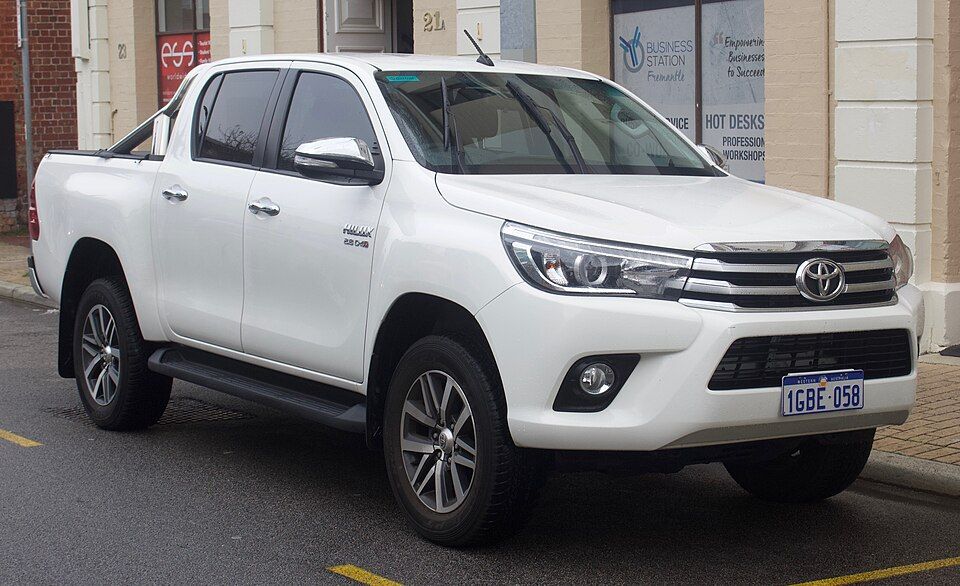
Photo: 2016 Toyota Hilux by EurovisionNim, CC BY-SA 4.0, via Wikimedia Commons.
At Dace Motor Company, we always think a full vehicle history check and a careful inspection matter as much as the badge on the grille. That’s especially true with pickups, because two trucks of the same age can have lived completely different lives. One may have carried garden waste at weekends. The other may have towed heavy plant across rough sites every day. Same model. Very different wear. Buy the condition and history, not the legend alone.
Why the Hilux story still matters in Manchester and Stockport
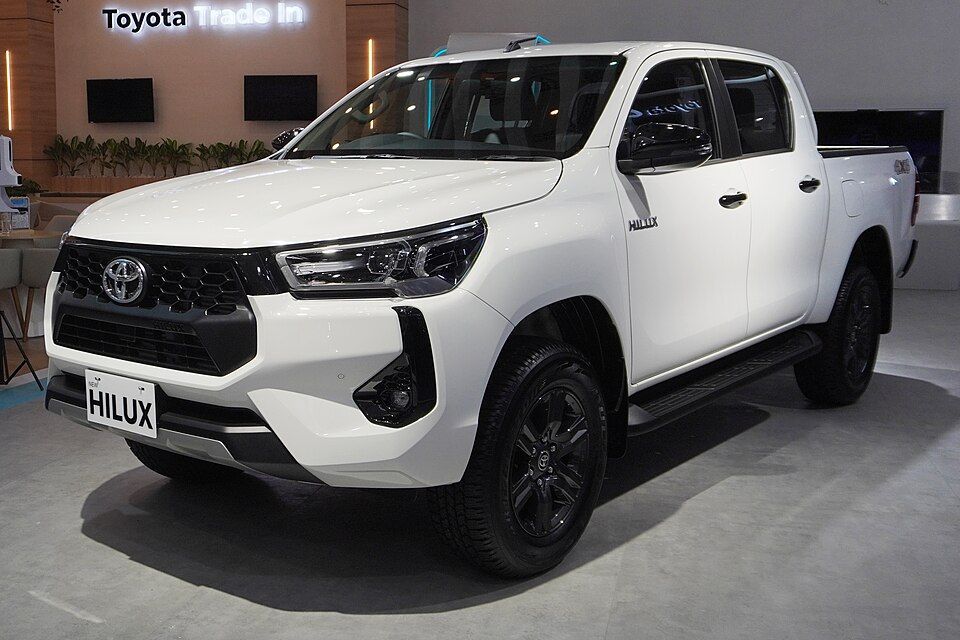
Photo: 2024 Toyota Hilux 2.4 V 4x4 Crew Cab by Andra Febrian, CC BY-SA 4.0, via Wikimedia Commons.
So why does a pickup born in Japan nearly six decades ago still mean something to drivers around Manchester and Stockport? Because dependability is easy to appreciate. You don’t need to cross Antarctica. You might need to reach a job near Trafford Park before sunrise, collect materials in the rain, tow equipment out past Glossop, or get home after a long day without a warning light spoiling the evening. The Hilux became famous by doing ordinary hard work in extraordinary numbers, then proving the same basic idea in some wild places. Toyota marked the model’s fiftieth anniversary in 2018 and said global sales had passed 18 million.
By then it had been sold across 180 countries and regions. That spread matters. A truck used across such different climates gets judged by people with very different needs. It has to make sense on dusty roads, busy city streets, farms, building sites, and frozen tracks. The Hilux didn’t stay unchanged while earning that trust. It grew from a compact three-seat work truck into a modern pickup that can carry a crew, handle family duties, and still do a serious day’s work. That mix explains why clean used examples attract buyers who may never put a bale of hay in the back. They like the high driving position, useful load bed, towing ability, and reputation for long service. But the best reason to respect the Hilux isn’t a television stunt or a dramatic photo from the South Pole. It’s the less exciting stuff. Starting on a cold morning. Carrying the load it was built to carry. Taking rough roads without shaking itself apart. Coming back the next day and doing it again. At Dace Motor Company, that’s the part of the story we find most convincing. Legends are fun. A vehicle that keeps earning its keep is better.