


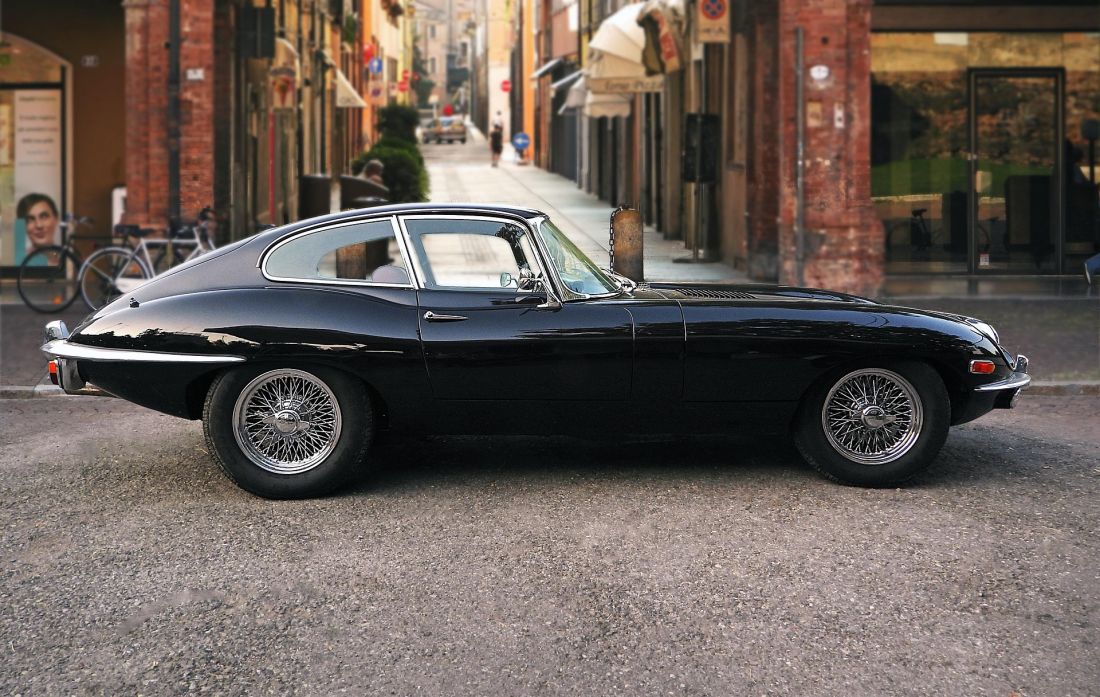
Why the Jaguar E-Type Was Called the Most Beautiful Car Ever Made
At Dace Motor Company, we spend a lot of time around cars that turn heads for a second. The Jaguar E-Type is one of those rare cars that can hold your attention for much longer than that. You look once, then again, then you start noticing little things: the way the bonnet seems to go on forever, the tiny cabin set back in the body, the curve of the roof on the coupé, the way the whole thing looks like it’s moving even when it’s parked. That reaction started right at the beginning. Jaguar launched the E-Type in Geneva on 15 March 1961, and the response was so big that Jaguar sent a second car from Coventry to Switzerland through the night so more people could see it and ride in it. Bob Berry drove the fixed-head coupé to the launch, and Norman Dewis brought the roadster after Sir William Lyons pushed for another car to be there fast. That kind of entrance matters. Cars become famous for lots of reasons, but a dramatic first sighting can stamp a picture into people’s minds for decades. There’s another part to this story that needs a careful touch. The line calling the E-Type “the most beautiful car ever made” is widely linked to Enzo Ferrari, and Jaguar has repeated it in anniversary material. But the hard proof is thin. RM Sotheby’s notes that there’s no public speech or recorded interview where Ferrari says it, and that the evidence is secondhand. So the safest way to put it is this: the quote may be real, it may have grown with time, but the feeling behind it is easy to get. When a car causes that much of a stir on day one, people don’t need much help finding big words for it.
It looked fast before anyone turned the key
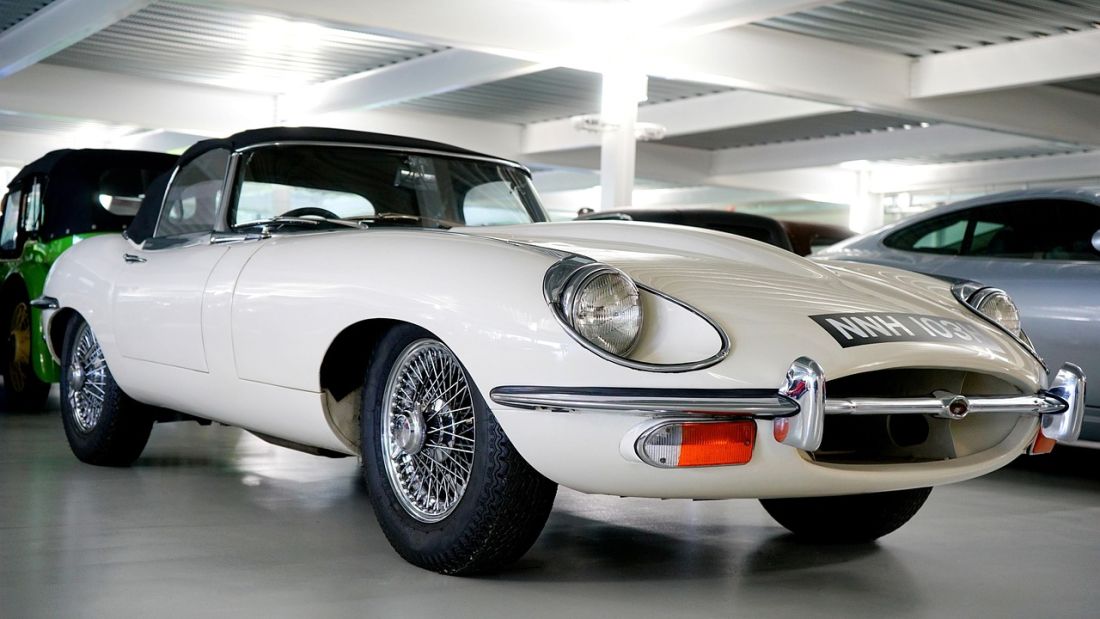
A lot of cars are pretty from one angle. The E-Type is pretty from just about everywhere, and that’s a big part of why people still talk about it like it’s rolling art. Start at the front. The nose is low and smooth, with oval openings and covered headlamps on the early cars that make the whole face look clean and almost animal-like. Then your eye moves down that very long bonnet, back to a tight little cabin, and then out again over the rear arches. It’s balanced in a way that feels natural, like every line knows where it’s going. You don’t need a design degree to feel that. It’s the same kind of instant reaction you get when you catch sight of Stockport Viaduct in the right light or when the skyline opens up near Deansgate and one building just looks right against the rest.
The E-Type has that same easy confidence. Jaguar’s own design history talks about the car’s purity and simplicity, and Ian Callum later said Malcolm Sayer shaped it with very pure geometric lines, guided by mathematics rather than decoration for decoration’s sake. That helps explain why the car hasn’t dated in the way some old favourites have. It wasn’t covered in fussy details. It didn’t need fake vents, giant fins, or bits stuck on to make it seem special. The shape itself did the job. And let’s face it, that’s hard to pull off. Plenty of cars from the 1960s look charming now because they’re old. The E-Type still looks good because the proportions are right in a deeper way. It feels settled, calm, and a little dramatic at the same time, which is a tricky mix to get right.
Malcolm Sayer gave it beauty with maths, not fuss
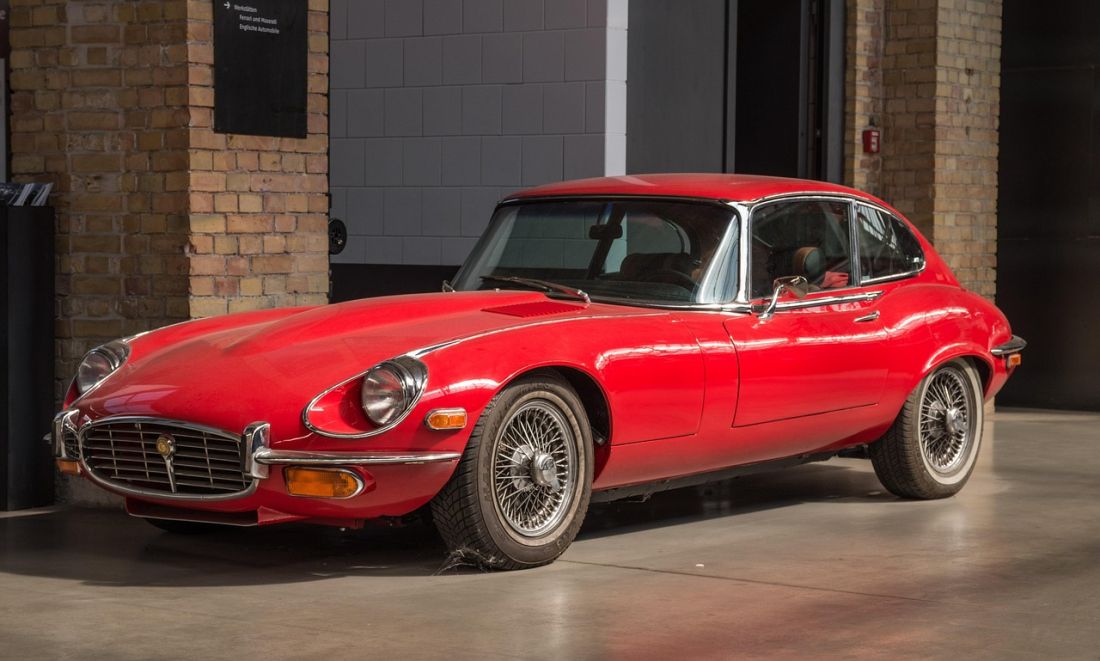
One reason the E-Type feels different from a lot of flashy sports cars is that Malcolm Sayer did not start with the idea of making a shiny toy. He was trained as an aeronautical engineer, and Jaguar says he had already used that background on the Le Mans-winning C-Type and D-Type racers before shaping the E-Type. That matters because aircraft thinking is very direct. Air has to move cleanly. Curves have to make sense. A line can be beautiful, but it still has a job to do. Jaguar’s archive says Sayer used a scientific method with slide rules and logarithmic tables to plot the curves and straight lines of the car. Ian Callum later summed it up in a way that gets to the heart of the matter: Sayer wasn’t chasing prettiness for its own sake. He was trying to create something fast, clean, and honest, and the beauty came out of that.
You can feel it in the E-Type’s body. Nothing looks swollen or forced. The bonnet is long because the engine needed space. The body sits low because the car was meant to cut through the air. The roofline of the coupé falls away so neatly that it seems obvious, yet very few cars have matched it. That’s a funny thing with great design. Once you’ve seen it, it can look inevitable, as though it was always waiting to exist. But it wasn’t easy. It took skill, judgement, and a very clear eye. You know how it is: sometimes the best-looking thing in the room is also the least desperate to prove anything. The E-Type has that mood. It doesn’t shout. It just sits there, looking so right that you start to wonder why so many other cars try too hard.
It had racing roots, but it still felt usable
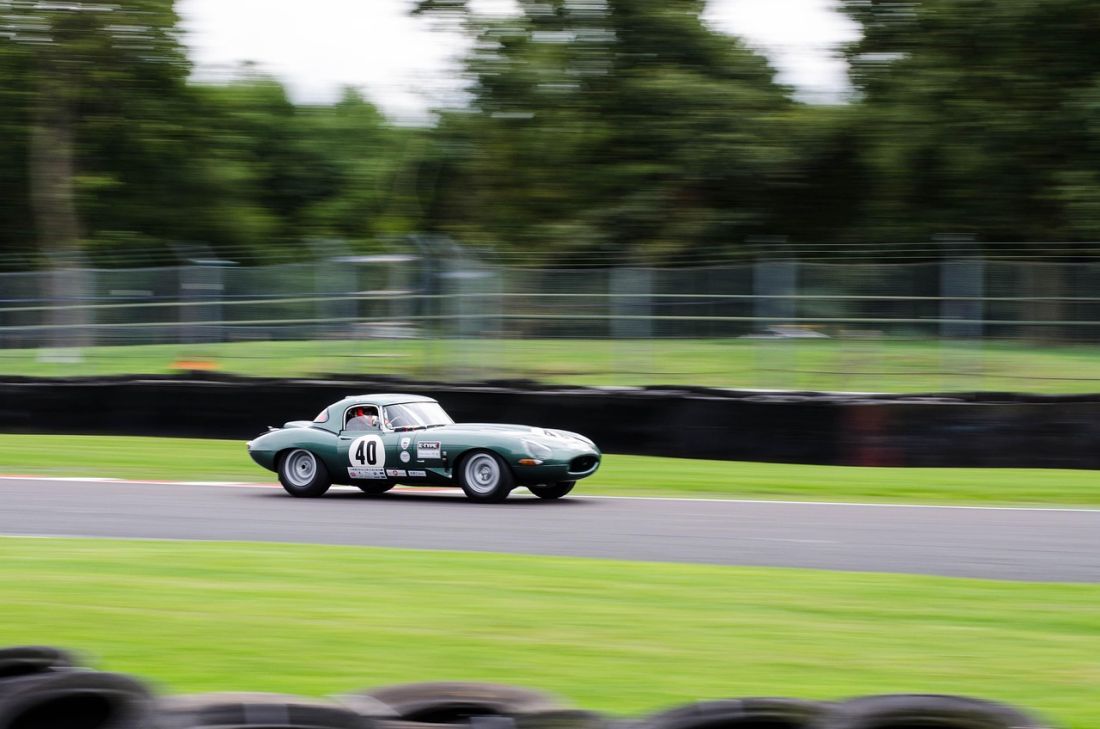
The E-Type did not become a legend on shape alone. If it had looked amazing and driven like a shopping trolley, people would have moved on. The reason it stuck is that the engineering backed up the looks. Jaguar Heritage traces the E-Type’s story through the C-Type and D-Type racers, and Jaguar notes that the straight-six engine had already been part of five Le Mans victories in the 1950s. The D-Type alone took three wins at Le Mans, which helps explain why the E-Type arrived with such a serious air about it. Then there were the numbers that made people blink. Jaguar said it could do 150 miles per hour, and period testing of the early press car got right to that magic mark.
Jaguar also points out that the E-Type used four-wheel disc brakes, independent rear suspension, and a body structure that was advanced for the time. That may sound a bit technical, but the simple version is easy: it had smart engineering for the time, and that helped it go, stop, and hold the road in a way that matched its looks. Better yet, it was sold for around £2,200 at launch, which was far less than exotic rivals with similar pace. That price changed the mood around the car. This wasn’t some distant machine built for royalty and film stars alone. It still sat high in the wish list, of course, but it was close enough to real life that people could dream about owning one without laughing at themselves. That’s a huge part of beauty, to be honest. A thing feels even better when it seems just within reach, like the best shop window on a rainy afternoon in Manchester where you stand there for a minute and think, maybe one day.
The E-Type made style feel less distant
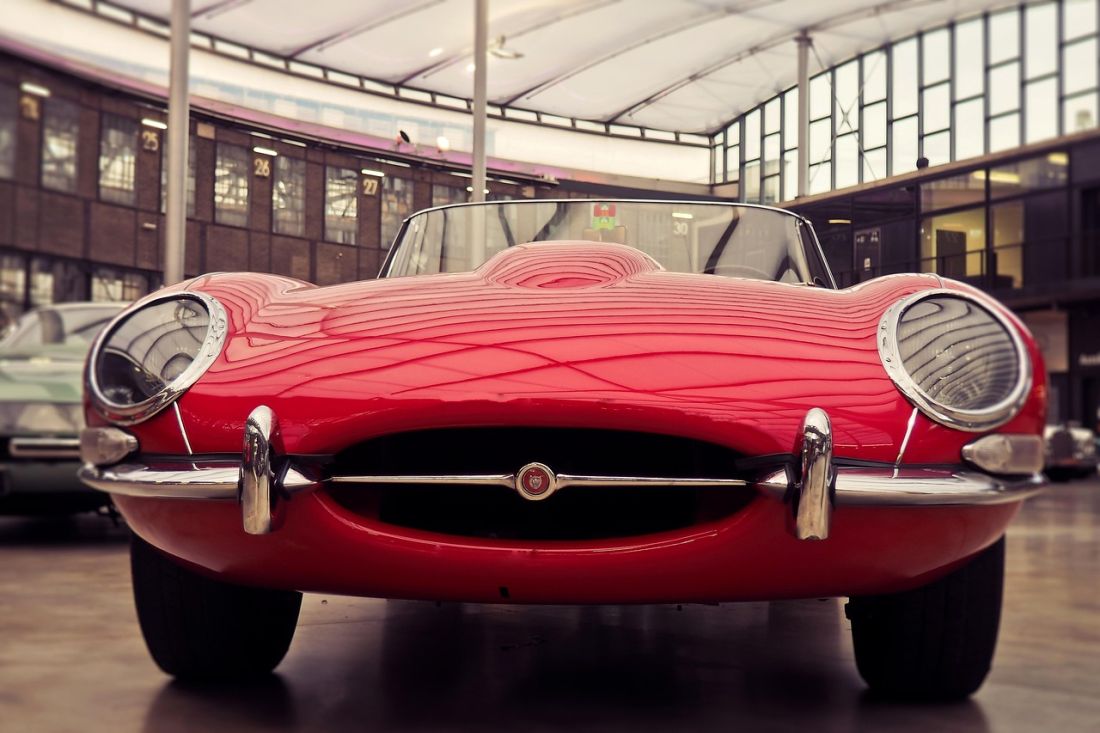
There’s a reason the E-Type reached beyond car fans and into wider culture. Jaguar said its appeal went past cars from the moment it arrived, and the Museum of Modern Art in New York later made it a permanent exhibit. That is a huge clue. Museums do not add machines like that just because they are quick. They do it when an object says something bigger about design, taste, and the time it came from. In 1996, the museum staged an exhibition about the E-Type and described it as only the third automobile to enter its design collection. That tells you people were judging this car the way they might judge a chair, a lamp, or a piece of sculpture. Jaguar also pointed out that famous owners included George Best, Brigitte Bardot, Tony Curtis, and Steve McQueen. And for readers around Manchester and Stockport, George Best is a lovely local hook because his style on the pitch carried the same sort of swagger the E-Type had on the road. That mix matters. The car had glamour, but it never looked silly. It had drama, but it didn’t feel dressed up. You could picture it outside a smart hotel, outside a city flat, or parked by a country road with the Peak District not too far away, and it would fit every scene. Some cars belong to a niche. The E-Type seemed to belong anywhere people cared about beauty. That made it easier for the public to fall for it. They did not have to learn a secret language to appreciate it. They could just look at it and feel that something had clicked into place. In that sense, its fame was built the best way possible: by people seeing it with their own eyes and instantly getting the point.
It worked as a roadster and as a coupé, which is rare
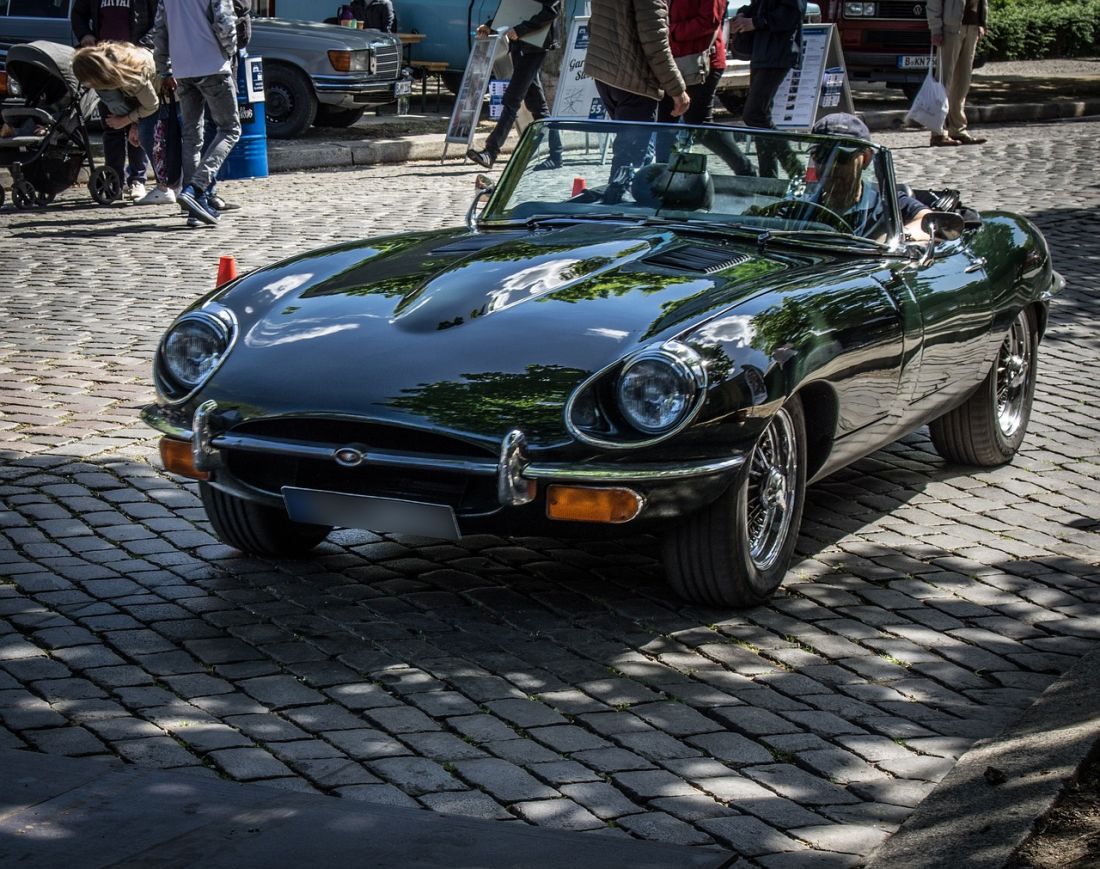
Here’s another reason people rate the E-Type so highly: both main body styles are gorgeous, and that almost never happens. A lot of convertibles lose something when the roof goes down. Some coupés look great until you see them from the rear. The E-Type managed to be a lovely open car and a lovely closed car, which feels almost unfair. The roadster has that clean, breezy feel people dream about when they think of open-top driving, especially on a bright day heading out past the city and into roads where the views start to widen. But the fixed-head coupé may be the cleverer design. Jaguar Heritage says Sir William Lyons pushed for it and that Bob Blake created the fixed-head form, which became Lyons’s favourite version. Once you know that, the roofline makes even more sense. It has a gentle sweep that turns the car from pretty to unforgettable. The glasshouse is slim, the tail is neat, and the whole thing feels like one continuous motion from front to back. There’s no awkward break in the shape. No dead patch. No bit that makes you think, that could have been tidier. And this is where the E-Type separates itself from many famous cars. It isn’t beautiful because of one trick, like a massive grille or a wild spoiler or a loud colour. It’s beautiful because the whole composition hangs together. Even the stance helps. The wheels sit just right in the body, giving the car a planted look without making it seem heavy. You could park one near the red brick mills around Reddish, or outside a modern glass building in central Manchester, and it would make sense in both places. That’s not luck. That’s shape, proportion, and restraint all pulling in the same direction.
It stayed special even as the years rolled on
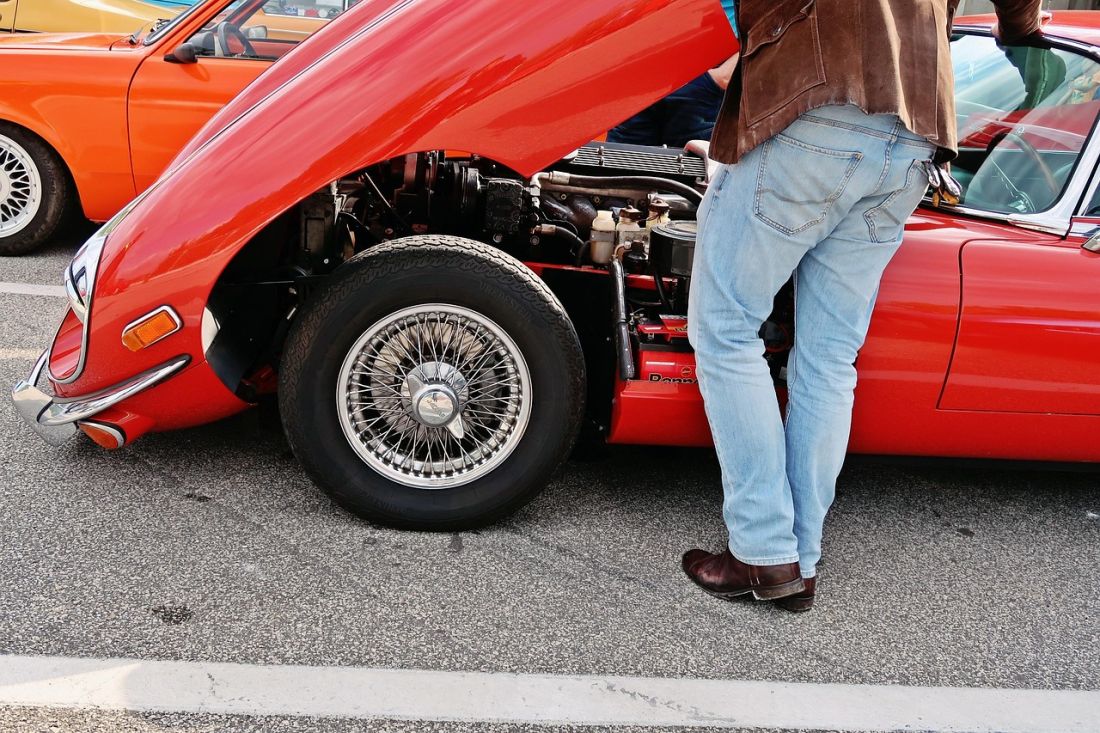
Another reason the “most beautiful car ever made” line has hung around is that the E-Type was not a one-season wonder. Jaguar says it stayed in production for 14 years, sold more than 70,000 cars, and ran through to 1974. Jaguar Heritage notes that the model changed over time, with small updates and then bigger shifts, but the core idea stayed strong enough to survive all of that. That’s pretty telling. Sometimes a car creates a scene at launch, then fades once fashion moves on. The E-Type did the opposite. People kept wanting it, kept restoring it, kept photographing it, and kept putting it in museums, magazines, and books. Even now, when we’re surrounded by huge wheels, sharp creases, giant screens, and shapes that can feel a bit breathless, the E-Type still looks calm and complete. That calmness is part of its charm. It doesn’t need to beg for attention. It gets attention because it seems comfortable in its own skin. And there’s another simple point here. Kids can like the E-Type. Adults can like the E-Type. People who know every nut and bolt can like the E-Type. People who just enjoy a beautiful shape can like it too. That wide appeal is hard to fake. If you showed a Series 1 E-Type to someone who had never read a single page of car history, there’s a good chance they’d still smile. They might not know who Malcolm Sayer was. They might not care about independent rear suspension. But they’d know the car looks special. That instant, human reaction is a huge part of why the legend has lasted. Beauty that needs a lecture behind it is on shaky ground. The E-Type never needed that lecture.
Why people still call it the most beautiful car ever made
So, why did the Jaguar E-Type end up carrying that giant label? Because it hit several targets at once, and very few cars have managed that. It arrived with theatre at Geneva. It had a shape that looked clean, graceful, and fast without feeling busy. Malcolm Sayer gave it lines born from real engineering sense, and Sir William Lyons backed a design team that knew how to keep the car elegant instead of overworked. The engineering underneath was strong enough to stop the looks from becoming empty show. The price made it feel possible. The culture around it, from famous owners to the museum world, gave it a life far beyond the road. And through all of that, the E-Type kept one thing many famous machines lose: warmth. It isn’t cold beauty. It isn’t the kind that makes you nod politely and move on. It pulls you in. It makes you want to walk around it again, crouch a bit, look along the bonnet, and picture how it must have felt to see one for the first time in 1961. Around Manchester and Stockport, where people know how to appreciate style but still want substance with it, that balance makes sense. We like things that look good and have a proper reason for looking good. At Dace Motor Company, that’s a big part of why the E-Type still matters. Even if the Ferrari quote stays a little misty around the edges, the car itself makes the case well enough. You don’t need a famous line to tell you what your eyes already know. The Jaguar E-Type still has that rare gift of making people pause, grin, and think the same thing generations before them thought. That is why the label has stuck, and why it probably isn’t going anywhere.