


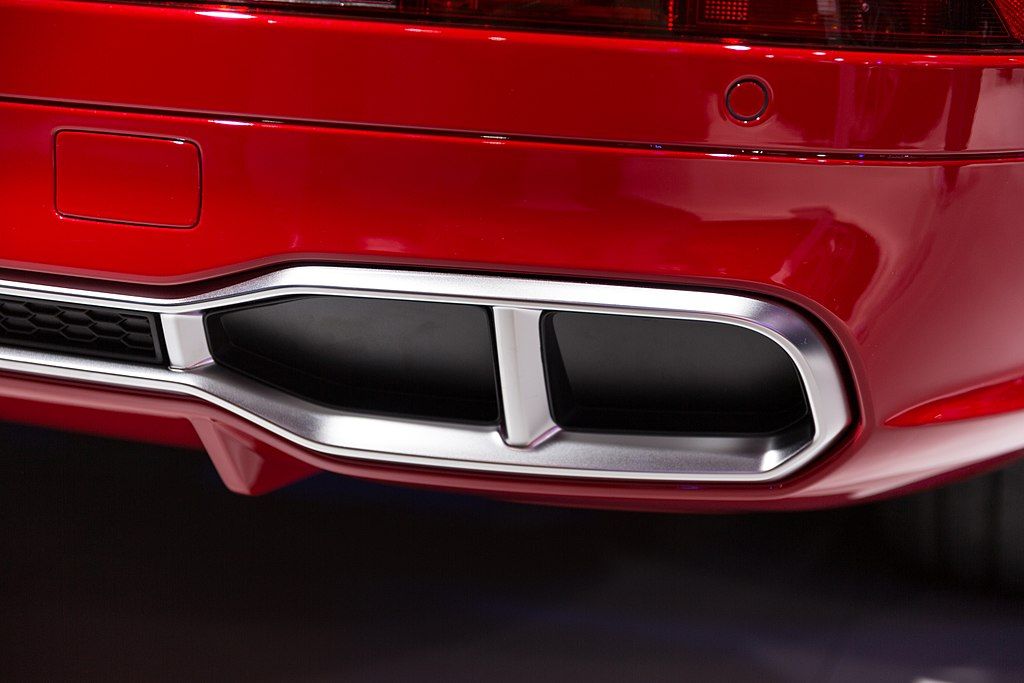
Why Some Cars Have Fake Exhaust Pipes
Image: Matti Blume, CC BY-SA 4.0, via Wikimedia Commons
You’ve probably been walking through Manchester city centre, maybe around Deansgate or out near Stockport’s A6, and spotted a car with two big shiny exhaust pipes poking out the back. Then you get closer and realise… they’re not even real. They’re just bits of trim, sometimes with nothing behind them, or the actual exhaust pipe is tucked away somewhere smaller, usually pointing down. Feels a bit like false advertising, right? Like when you open a packet of crisps and half of it’s just air. Now, car makers don’t just wake up one morning and say, “You know what, let’s stick on some fake pipes for a laugh.” There’s a reason behind it, actually a few reasons. Some of it’s about style, some about rules around emissions, and some of it’s just about how people expect modern cars to look. And before you roll your eyes, there’s a lot more going on here than you’d think. Cars have always had this reputation thing attached to them. Back in the day, if you had a big chrome bumper and a growly exhaust, people assumed your car was powerful. Today, with electric cars coming in, quiet engines, and stricter rules about pollution, the real pipes don’t always fit the image manufacturers want to sell. So, they make the visible part look “sporty,” while hiding the boring but necessary pipework underneath. It’s a bit of smoke and mirrors, but that’s car design for you. Just like putting LED lights everywhere to make a car look more high-tech than it really is.
Style vs. function - why looks sometimes win
Here’s the thing: most people buy cars with their eyes first. You can have the most reliable, sensible car in the world, but if it looks dull, it’ll sit on the lot forever. At Dace Motor Company, we’ve seen it ourselves. You line up two cars, same price, same mileage, but the one with the bigger wheels, shinier trim, and yes, those fake exhausts, will usually get picked first. That’s just how people are wired. Manufacturers know this, and they design cars to “look” like they belong in a certain class. Take a family SUV, for example. It might only have a 1.5-litre engine and be designed to save fuel, not race anyone off the lights in Stockport. But if you stick tiny downward-facing pipes under the bumper, the whole rear end of the car looks a bit unfinished. Add a couple of fake exhaust trims, suddenly it looks chunkier, more balanced, more like it means business. Even if the real pipes are doing their thing somewhere else. And it’s not just SUVs. Luxury brands like Audi, BMW, and Mercedes have been doing it for years. You’ve probably noticed some of their sporty-looking models where the exhaust “openings” are actually sealed. Total fakes. But the idea is to give the impression of power, even if the engine is smaller, quieter, and built for efficiency rather than performance. It’s a bit like adding a spoiler to a car that never goes over 70mph on the M60. Functionally pointless, but visually, it adds that sporty edge. And in the car market, looks can sell a car just as much as what’s under the bonnet.
Rules and regulations messing with design
Another big reason for fake exhausts is something most drivers never think about: emissions rules. Over the past couple of decades, governments have been putting stricter and stricter limits on how much pollution cars can pump out. Great for clean air around Manchester, not so great if you’re a car designer trying to make a family hatchback look cool. Real exhaust pipes have to be shaped and placed in ways that reduce noise, keep emissions low, and work with all the filters and tech stuffed into modern cars. That means the pipes might point downwards or be hidden completely, because that’s the most efficient way to get rid of gases. Sticking a big fat chrome pipe out the back just doesn’t line up with those rules anymore. But here’s the problem: people still expect cars to have them. Imagine buying a sporty-looking car and finding no pipes at all. It’d feel like something’s missing, wouldn’t it? So, designers came up with a middle ground. Keep the real pipe tucked away where it works best, and add some fake trims on the bumper to keep buyers happy. It’s a compromise. Kind of like when a café in Stockport wants to sell giant milkshakes loaded with sweets and biscuits, but they also have to stick “low fat” options on the menu. You get both ends of the spectrum, even if one’s just there for appearances. This mix of function and regulation is why you see so many modern cars with exhausts that look amazing at first glance, but up close are just pretend. They tick the boxes for style, but still play by the book for emissions and efficiency.
The psychology of buyers
Let’s be honest, buying a car isn’t just about getting from A to B. If it was, we’d all be driving the same plain little hatchbacks and calling it a day. People buy cars because they say something about us. And exhausts, fake or not, are part of that message. Think about it. If you’re sat in traffic on the M56 and you glance at the car next to you, those twin chrome pipes on the back instantly give you a vibe. Even if the driver’s just heading to Tesco, it makes the car look more powerful, more “premium.” Car makers know this, and they lean into it hard. There’s also something about symmetry. Humans like things that look balanced. A car with two neat exhaust trims, one on either side, just looks “right” to our eyes. Doesn’t matter if only one of them works, or neither of them do. The balance makes the whole back end of the car look finished, tidy, and more expensive. And let’s face it, people can be a bit vain with cars. Nobody brags to their mates down the pub in Stockport, “My car has the best hidden-downward exhaust system you’ve ever seen.” But they will happily point out those sporty looking pipes. It’s the same way nobody really cares about the WiFi router hidden in your living room, but they do notice the big TV on the wall. So, the fake exhaust isn’t just about design. It’s about how we feel looking at it. It’s a trick that plays on our sense of style and our little bit of vanity, and it works.
Do fake exhausts actually fool anyone?
Here’s the funny part. Most drivers know they’re fake. You can walk through our Dace Motor Company showrooms and spot them straight away. So, do they really fool anyone? Not really. But that’s not the point. It’s less about tricking people and more about setting the vibe. They’re like wearing a nice watch. Most people don’t actually care if it’s waterproof to 200 metres or tells the lunar cycle. But they’ll notice how it looks on your wrist. Same with exhausts. Even if you know they don’t “work,” they still shape your impression of the car. Some drivers roll their eyes at them, especially car enthusiasts who’d rather see a proper performance exhaust with the real deal. But for the everyday buyer in Stockport or Manchester, who just wants a nice-looking used car with finance that won’t wreck their credit score, it doesn’t matter much. If anything, they like that their car looks a bit sportier than it actually is. It’s also worth saying that fake exhausts don’t really hurt anything. They don’t affect how the car drives, and they don’t make it less safe or less reliable. They’re just… decoration. Like alloy wheels or chrome trim. You don’t need them, but they make the car more appealing, and that’s often enough to make a sale.
Will fake exhausts disappear with electric cars?
Here’s where it gets interesting. With electric cars, there’s no exhaust pipe at all. Nothing to hide, nothing to fake. But have you noticed? Some brands are still shaping the bumpers of their electric cars to look like they’ve got exhaust pipes. Madness, right? But again, it’s about what people expect. For decades, exhaust pipes have been a normal part of what a car looks like. Take them away completely and cars can look unfinished or strange to buyers who aren’t used to it. That’s why even electric cars sometimes have styling that hints at exhausts, even though they’ll never need one. Over time, that’ll probably change. As more people switch to electric and get used to clean, pipe-free designs, manufacturers might drop the act. But for now, car designers still lean on what people know, even if it makes no sense mechanically.
And that’s the truth behind fake exhausts. They’re not about performance, they’re about psychology. They’re about giving us something familiar and stylish, even if the function is hidden away somewhere else.