


Why the Mercedes W124 Is Considered One of the Greatest Cars Ever Built
Photo: 1992 Mercedes-Benz (W124) 400 E by Charles from Port Chester, New York, CC BY 2.0, via Wikimedia Commons.
Some cars become famous because they’re wild, rare, or quick enough to make your stomach feel strange. The Mercedes W124 took a very different route. It earned respect by doing normal things with an almost stubborn sense of care. It carried families, covered motorway miles, waited outside railway stations, hauled luggage, and turned up for work the next morning. That sounds less exciting than a poster car with huge vents and a noisy exhaust, yet it’s a big part of why people still talk about the W124 with such warmth. Mercedes-Benz presented the new 124 series to the press in Seville on 26 November 1984, replacing the much-loved 123 series. From the start, the aim was clear: make a medium-size Mercedes that felt modern, safe, efficient, calm, and built for a long working life. The result wasn’t one single model, either.
The family grew to include saloons, estates, coupés, convertibles, long-wheelbase cars, and special chassis used for jobs such as ambulances and hearses. That range helped the 124 become part of everyday life in many countries, rather than a luxury item seen once in a blue moon. Here in Greater Manchester, you can picture why the formula made sense. A car that feels settled on the M60, easy to place through Stockport, comfortable on a wet run past Manchester city centre, and smart enough for a formal occasion has real value. At Dace Motor Company, we see plenty of cars that impress for a year or two. The W124’s trick is that it still feels meaningful decades later. That’s a harder thing to achieve, and it’s the first clue that this Mercedes was something special.
A Shape That Refused to Age Badly
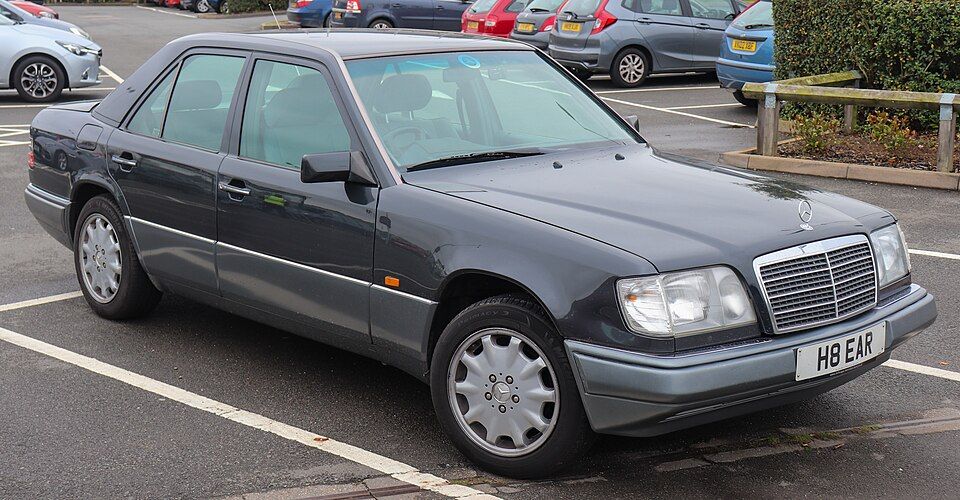
Photo: 1995 Mercedes-Benz E220 Automatic by Vauxford, CC BY-SA 4.0, via Wikimedia Commons.
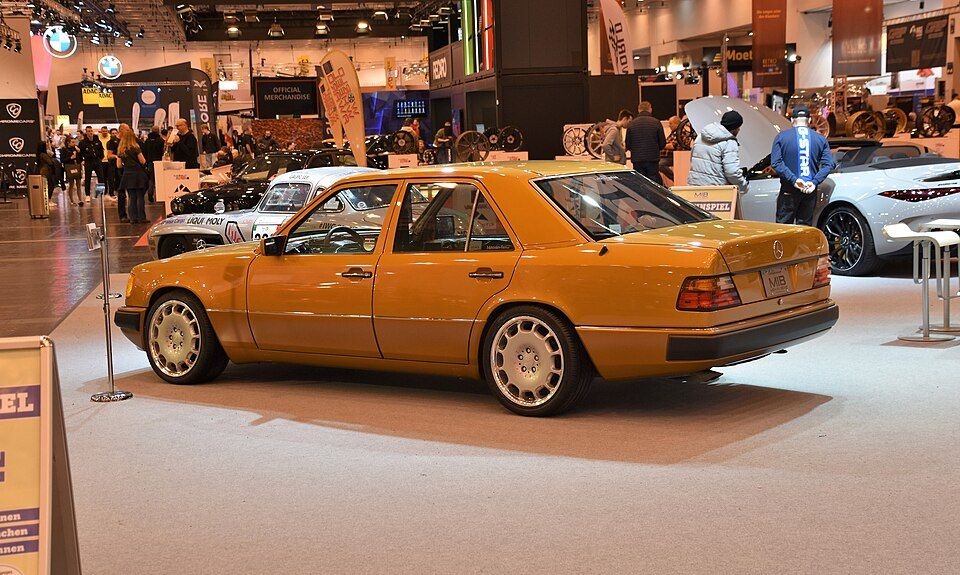
Look at a W124 from across a car park and there’s no single dramatic feature trying to grab you. The bonnet is low and clean. The glass area is generous. The boot is tidy. The sides are straight without looking dull. Even the famous Mercedes grille seems confident rather than flashy. That restraint is a huge reason the car has aged so well. Plenty of cars from the 1980s wore sharp details that later looked stuck in their decade. The W124 feels tied to its era, of course, but it doesn’t feel trapped there. Its shape came from practical thinking as much as style. Mercedes used wind-tunnel work to refine the tapered rear and rounded upper edges, helping the car move through the air with less waste. The deep boot lid and angled inner edges of the rear lights also created a low loading lip, which made the large boot easier to use. Then there’s the single windscreen wiper.
It looks like a small oddity until you watch it work. The blade rises and changes its sweep as it moves, clearing 86 per cent of the windscreen, which Mercedes said was the largest wiped area in the car industry at that time. It’s such a W124 detail. One arm, but clever. Simple to look at, yet carefully thought through. The same idea runs through the cabin. The switches are chunky, the dials are clear, and the seats feel made for a long day rather than a five-minute showroom test. Nothing begs for attention. It simply does its job. You know how some old houses feel calm because the doors shut properly and every room has the right shape? The W124 has that kind of feeling. It doesn’t need to prove itself with tricks. It wins you over by making each small task feel settled, from loading shopping to checking your speed in bad weather.
Serious Engineering Hidden Under a Calm Surface
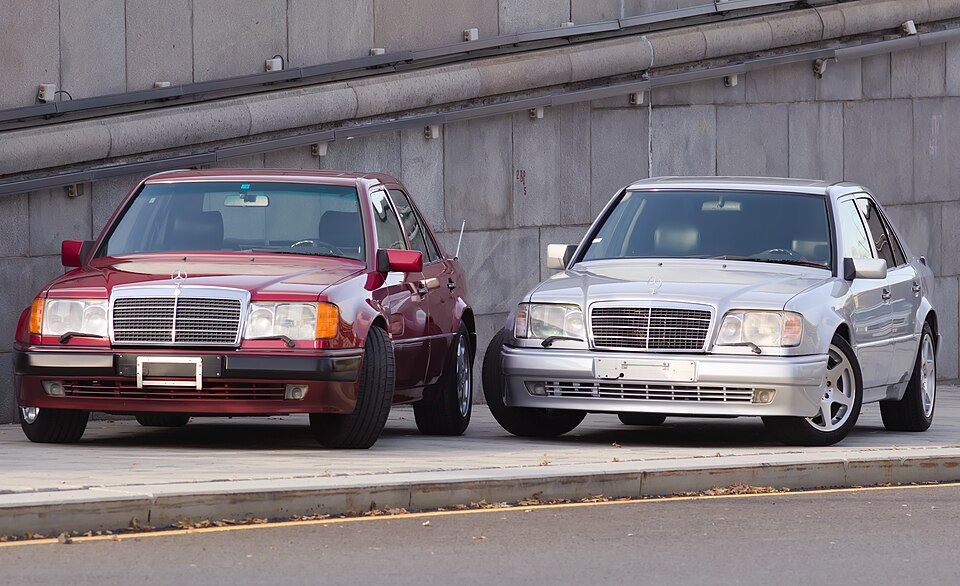
Photo: Mercedes-Benz W124 by Retired electrician, CC0, via Wikimedia Commons.
The W124’s polite looks hide a lot of serious work. Mercedes used high-strength steel and lighter materials in selected areas, seeking lower fuel use without giving away the solid feel buyers expected. Safety received equal care. The passenger area was built to resist side impacts and rollovers, while the front and rear sections were shaped to absorb crash energy. Mercedes also tested the saloon against an offset front impact with 40 per cent overlap at 55 kilometres per hour, a demanding measure for the period. That matters because the car’s reputation isn’t based on thick doors alone. The structure had a plan. The suspension did too. At the rear, each wheel was guided by five separate links, letting the tyre stay better controlled as the car moved over bumps or leaned in a corner. At the front, the layout included measures to reduce the nose dipping under braking.
You don’t need an engineering degree to feel the result. A good W124 rides with a smooth, measured rhythm, yet it doesn’t feel loose or vague. It’s the kind of car that can take the edge off a rough road without turning every bend into a wobble. The range also gained clever traction systems. Mercedes showed its four-wheel-drive system in the mid-1980s, and customer cars followed from 1987. Anti-lock brakes became standard across the series in September 1988, alongside other useful upgrades. None of this was added just to fill a brochure. It helped the W124 feel composed in poor conditions, which is handy on a grey Manchester morning when the road is greasy and everyone around you seems late. The car’s appeal comes from this hidden effort. It feels simple from the driver’s seat because the difficult work was handled before the car reached the showroom. That’s good design. The driver gets calm, predictable behaviour. The clever bits stay mostly out of sight.
One Car Family, Loads of Different Lives
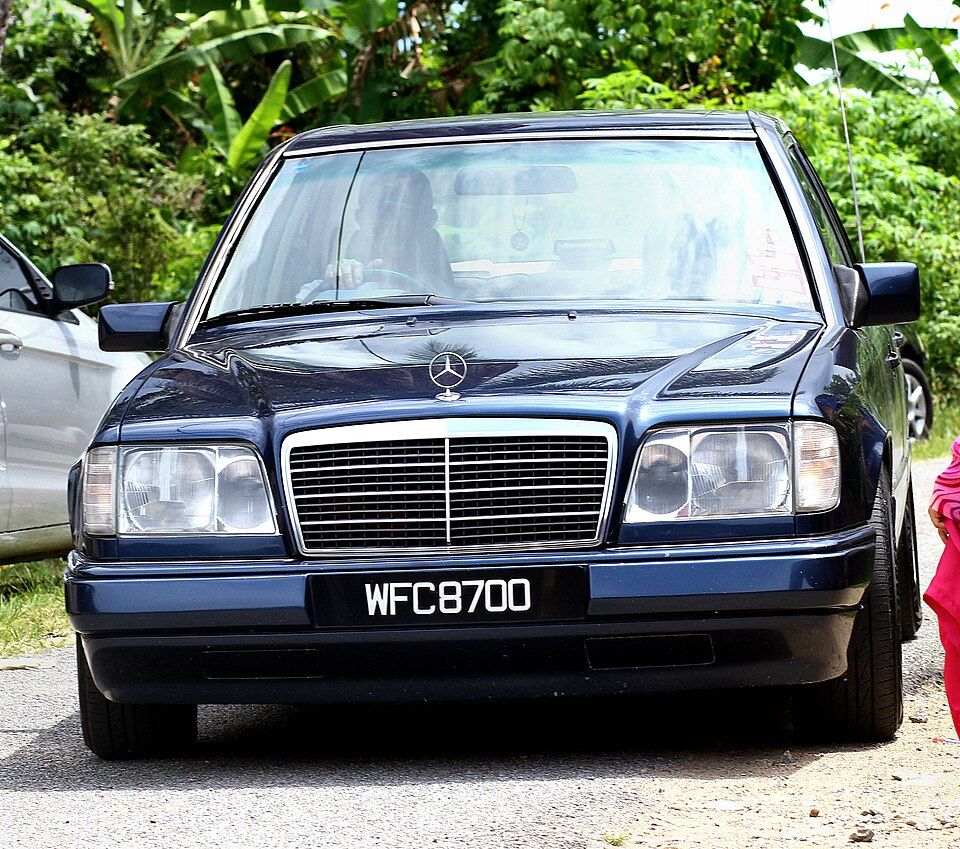
Photo: 1996 Mercedes-Benz E-Class (W124) by Phalinn Ooi, CC BY 2.0, via Wikimedia Commons.
A great car becomes even greater when it can suit very different people, and the 124 series was unusually good at that. The saloon was the backbone, the shape most people picture first. Then came the estate, launched soon after, with a long roof and the sort of square load space that makes moving house look slightly less painful. The coupé arrived in 1987 with a shorter wheelbase and a pillar-free side window look that still feels elegant. In 1991, Mercedes showed the four-seat convertible, which required around 1,000 newly developed parts to strengthen the body after the fixed roof was removed. There were long-wheelbase six-door versions as well, plus special chassis for coachbuilders making ambulances and funeral cars. This wasn’t variety for the sake of filling gaps. Each version kept the same basic character: clear controls, steady road manners, useful space, and a sense that the car had been made for real use. In June 1993, the range received another update and officially took the E-Class name.
The badging changed so the class letter came first, turning names such as 320 E into E 320. That may sound like a tiny detail now, but it placed the W124 right at the start of the naming system people still recognise. The body versions also lasted for different lengths of time. The saloon gave way to its successor in 1995, while estates and coupés carried on into 1996, and the convertible stayed in production until July 1997. That long overlap says plenty about the basic design. Mercedes could keep adapting it without making the car feel confused. And buyers could choose the W124 that fitted their lives. School run? Estate. Long business trips? Saloon. Sunday drive over the Peaks? Coupé or convertible. Need six doors for hotel work? There was an answer for that too. Few car families manage to feel this broad without losing their identity.
Engines for Workers, Cruisers, and Quiet Show-Offs
The W124 engine range is another reason the car reached so many people. There were four-cylinder petrol models, smooth six-cylinder petrol cars, steady diesel versions, turbo diesels, and later eight-cylinder saloons. Some were slow by modern standards, but speed wasn’t the whole point. A 200 D could spend its life getting on with the day, while a six-cylinder 300 E gave drivers the silky, relaxed feel many people link with an old Mercedes. The estate range widened the choice further, and four-wheel drive could be paired with selected petrol and diesel engines. Mercedes kept improving the line as the years passed. New petrol engines arrived in the early 1990s, bringing four valves per cylinder, stronger mid-range response, and lower fuel use. Airbags, central locking, and electrically adjusted mirrors became standard across the medium-size range from October 1992. By June of that year, the two-millionth 124-series car had already left the line.
Final totals vary depending on whether special chassis and certain overseas production are counted in the same way, but the safe claim is simple: Mercedes built well over 2.5 million vehicles from the wider 124 family. That scale matters. A car doesn’t reach those numbers through collector hype. It gets there because people trust it to work. Still, the W124’s durability story needs a sensible reading. These cars survived because the basic design was strong and because many owners maintained them. Oil changes, cooling-system care, fresh suspension parts, and proper repairs still count. An old Mercedes with a missing history and years of cheap fixes isn’t made safe by its badge. A cared-for one, though, can feel remarkably fresh. The doors still shut with that dense click. The engine settles. The cabin goes quiet. And suddenly a car built before smartphones feels less old than expected. That everyday competence is far more impressive than a big number on a speedometer.
The 500 E Proved the W124 Could Be Wild Without Looking Silly
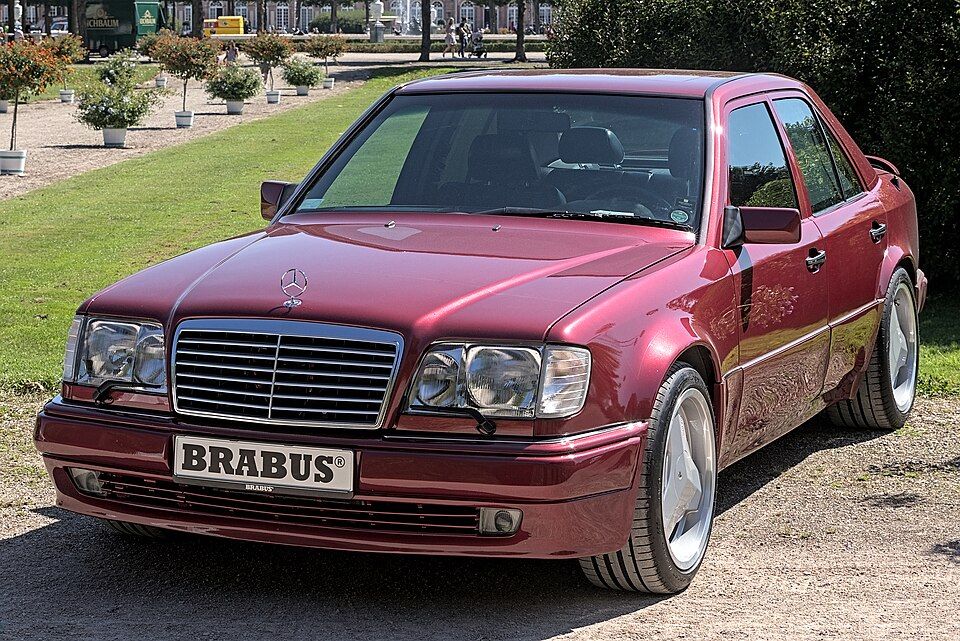
Photo: Mercedes-Benz W124 Brabus 6.5 by Alexander Migl, CC BY-SA 4.0, via Wikimedia Commons.
Then there’s the 500 E, the W124 that looks like it knows a secret. From a distance, it resembles a smart saloon on slightly wider wheels. Look closer and you notice the flared arches, lower stance, deeper front apron, and fog lamps set into the bumper. Under the bonnet sat a 5.0-litre eight-cylinder engine related to the unit used in the 500 SL, rated at 240 kilowatts. Mercedes quoted 0 to 100 kilometres per hour in 5.9 seconds and limited the top speed to 250 kilometres per hour. Those figures were serious in 1990, especially for a four-door car that could disappear into office traffic. The story gets better because Porsche helped develop and assemble it. Daimler-Benz gave Porsche the development contract in 1988, asking for a W124-based saloon fitted with the large engine.
Body assembly and final construction took place at Porsche in Zuffenhausen, while Mercedes handled paint and final delivery work at Sindelfingen. The process was slow and involved transport between sites, but it created one of the best-known fast saloons of its age. By April 1995, 10,479 had been built. Each one had four seats because the large rear differential left no room for the usual centre-seat hardware. The 500 E matters even if you’d never buy one. It proved the basic W124 structure had enough depth to become something far quicker without turning into a cartoon. The car kept its dignity. No giant wing. No loud graphics. Just wider shoulders and a quiet warning. It’s like seeing someone in a plain coat lift a fridge without making a fuss. You weren’t expecting it, and that’s half the fun. The 500 E added excitement to the W124 story without changing what made the normal cars appealing. Calm first. Speed waiting in reserve.
The Driving Experience Still Makes Sense on British Roads
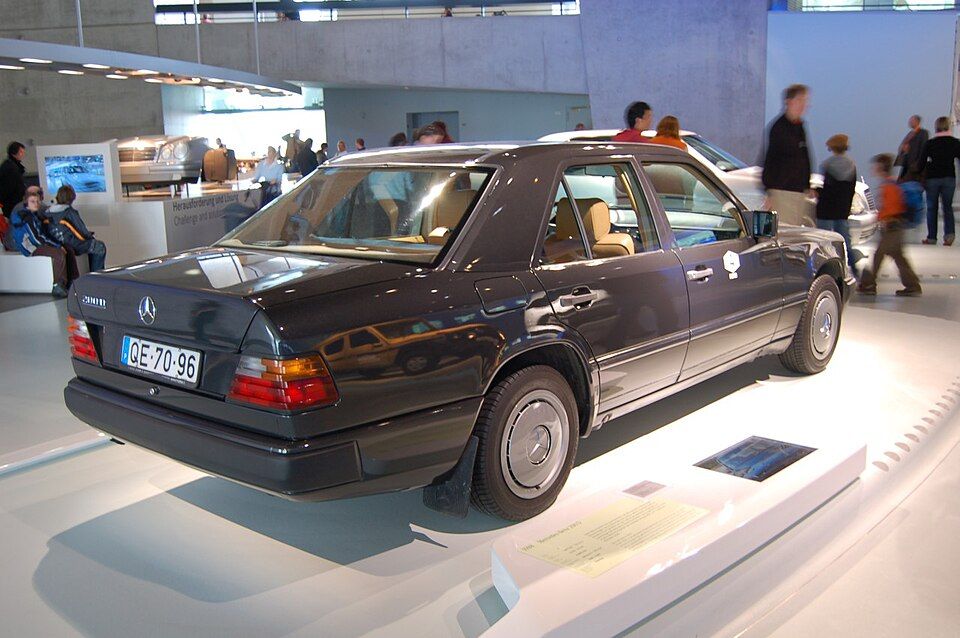
Photo: A million-mile taxi from Portugal by Stephen Hanafin from Kilkenny, Ireland, CC BY-SA 2.0, via Wikimedia Commons.
A W124 doesn’t try to entertain you every second. That’s one of its strengths. The steering is measured, the pedals feel deliberate, and the automatic gearbox in many versions prefers smooth progress over sudden drama. At first, a driver used to a small modern car may think everything feels heavy. Give it a few miles. The rhythm starts to make sense. You sit with a clear view through upright glass, the bonnet corners are easy to judge, and the cabin keeps road noise at a respectful distance. On a motorway run, the car settles into the sort of steady cruise that makes a long trip feel shorter. On a broken urban road, the suspension rounds off sharp edges instead of reporting each crack through the seat. And on a flowing route outside Stockport, the five-link rear suspension helps the car stay calm rather than bouncing from one idea to the next. It isn’t a sports car, unless you’re talking about the 500 E or one of the rare tuned versions, but a regular W124 can still feel satisfying.
The appeal is in its consistency. Brake, turn, settle, go. No fuss. You can understand what the car is doing without being flooded by settings, screens, and warning chimes. Let’s face it, modern cars have many useful safety features and can be cleaner, quicker, and easier to park. The W124 doesn’t beat them by pretending time stopped. It offers a different kind of pleasure. The controls have weight. The structure feels solid around you. The car asks for a little patience, then pays you back with a sense of calm. That suits local roads better than people might expect. A wet evening on the Mancunian Way isn’t the place for theatre. It’s the place for clear visibility, predictable responses, a good heater, and a seat that doesn’t leave your back complaining. The W124 understood that job very well.
Great Reputation, Yes, but Check the Car in Front of You
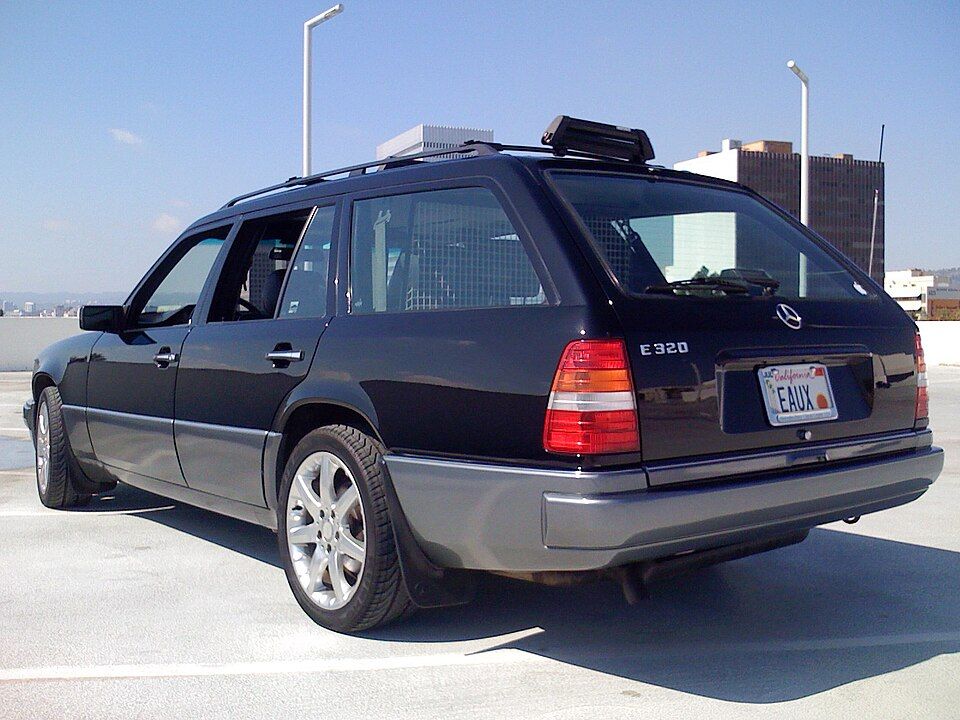
Photo: 1995 Mercedes W124 Wagon by Ekstarr at English Wikipedia, Public domain, via Wikimedia Commons.
The W124’s reputation can make buyers careless. They hear “built like a tank” and assume every example must be sound. We’ve all been there. A shiny bonnet, clean wheels, and a thick folder on the passenger seat can make an old car feel trustworthy before it has earned that trust. Age still wins small battles, even against a well-made Mercedes. Rust is the biggest concern. Check all four wheel arches, the lower edges of the doors and boot lid, the inner arches, and the areas where the plastic side cladding meets the metal. Look for bubbling paint, fresh underseal hiding rough repairs, uneven panel gaps, and damp carpets. A proper inspection should also cover the jacking points, sills, brake lines, suspension mounts, and the underside around the rear axle. Then move to the mechanical side. Start the engine from cold, listen for rattles or uneven running, watch for smoke, and make sure the temperature stays steady.
An automatic gearbox should engage cleanly and change without harsh bangs or long delays. Test every electrical item, including windows, mirrors, sunroof, heater fan, central locking, and seat controls where fitted. Drive over a rough road and listen for knocks. Check the tyres for uneven wear. Most of all, read the history. A stack of invoices showing regular care is much more useful than a low mileage claim with big gaps. The smartest buy may be a car with higher mileage and clear maintenance rather than a garage queen that has sat unused and received attention only before sale. Bring a specialist or arrange an independent inspection if the car is expensive. That fee can feel annoying on the day, yet it’s small beside welding, gearbox work, or a neglected cooling system. The W124 can be a brilliant classic to use, but buy the condition and history, not the legend printed in your head.
Why the W124 Still Deserves Its Place Among the Greats
Calling any car “one of the greatest ever built” is bound to start an argument. Good. Car people enjoy those. The W124 earns its place because it brought together so many qualities without letting one ruin the others. It was safe for its time, yet it didn’t feel bulky. It was comfortable, yet it could handle a quick road with control. It looked formal, yet the estate could swallow family clutter. It offered small diesels, smooth petrol engines, four-wheel drive, graceful two-door bodies, a four-seat convertible, and a Porsche-assisted eight-cylinder saloon. It also introduced details that owners used every day, from the huge sweep of that single wiper to the low boot opening and clear cabin layout. No single feature makes the car great. The whole thing hangs together. That’s rare. The W124 isn’t flawless, and pretending otherwise does it no favours. Rust can be costly. Some parts are dear. A neglected example can turn a dream purchase into months of repairs. Fuel use from the larger petrol engines won’t make anyone smile at the pump, either. Yet a good car still makes a strong case for itself the moment you close the door and head down the road. It feels purposeful. Honest, even. At Dace Motor Company, based around Stockport and Greater Manchester, we spend our days looking at used cars from many brands and many eras, so we know age alone doesn’t create quality or character. The W124 has both because its makers cared about the small details and the big structure at the same time. That’s why it remains admired by taxi drivers, engineers, collectors, families, and people who simply like a car that feels properly made. The W124 didn’t need to shout when it was new. It doesn’t need to shout now. It just keeps making sense.