


Why Road Signs Use Specific Fonts and Shapes
Road signs look “simple” on purpose
You know when you’re on the M60, you’re watching the lane markings, the cars around you, the sat nav voice is chatting away, and then you’ve got about half a second to clock a sign and do the right thing? That’s the real job of a road sign. It’s not there to look pretty. It’s there to land a message in your brain fast, even when you’re tired, it’s raining sideways, or you’re stuck in that classic “why is the A6 crawling again?” traffic. And that’s why the font and the shape matter so much. A sign isn’t trying to teach you to read. It’s trying to get you to react without your eyes leaving the road for too long. That’s also why road signs across the UK feel weirdly familiar, whether you’re driving past Stockport Viaduct or heading out towards Salford Quays. The system is meant to be consistent so your brain doesn’t have to keep re-learning it.
At Dace Motor Company, we talk to drivers every day who’ve done the rounds of Greater Manchester, from Reddish to Eccles and back again. People don’t always think about signs until they miss an exit and end up doing that “extra loop” around a roundabout. Then you suddenly notice how much the road is shouting information at you. The thing is, those signs are shouting in a very controlled way. The shapes are like instant shortcuts for meaning, and the lettering is picked because it stays readable at speed, from a distance, and in low light. If signs were random fonts and random shapes, driving would feel like trying to read a group chat while riding a bike. Bad idea.
Your brain spots shapes before it reads words
Here’s a quick truth about people: we’re better at noticing shapes than reading words, especially when we’re moving. You can test this without even trying. Next time you’re a passenger heading down Manchester Road in Stockport, look out the window and don’t read anything. Just notice. You’ll still know when you’re seeing “warning” style signs because of the triangle. You’ll still know when you’re seeing “orders” because of the circle. And you’ll still pick up that long rectangle sign is giving directions, like the stuff that points you towards the city centre or the Trafford Centre area. That’s not magic. That’s a system doing its job.
In the UK, the government groups signs into three main types: signs that give orders, signs that warn, and signs that give information. Each type comes with its own shape so you can tell what kind of message it is before you’ve read a single letter. Triangles are warnings. Circles are orders. Rectangles are information and directions. So even if the sign is a bit dirty, partly hidden by a van, or you’re catching it out of the corner of your eye, you’re already halfway to the meaning. It’s like how you can spot a football kit colour from far away before you can see the badge.
This is also why the same sign shape gets used again and again. People sometimes complain it’s boring. Good. Boring is safe. When you’re driving, you want “boring and clear,” not “cute and creative.” If every council made up its own style, you’d spend your whole drive decoding. And if you’re driving around Greater Manchester where roads can go from quiet streets to busy multi-lane bits quickly, you don’t want extra puzzles.
Colours do a lot of heavy lifting too
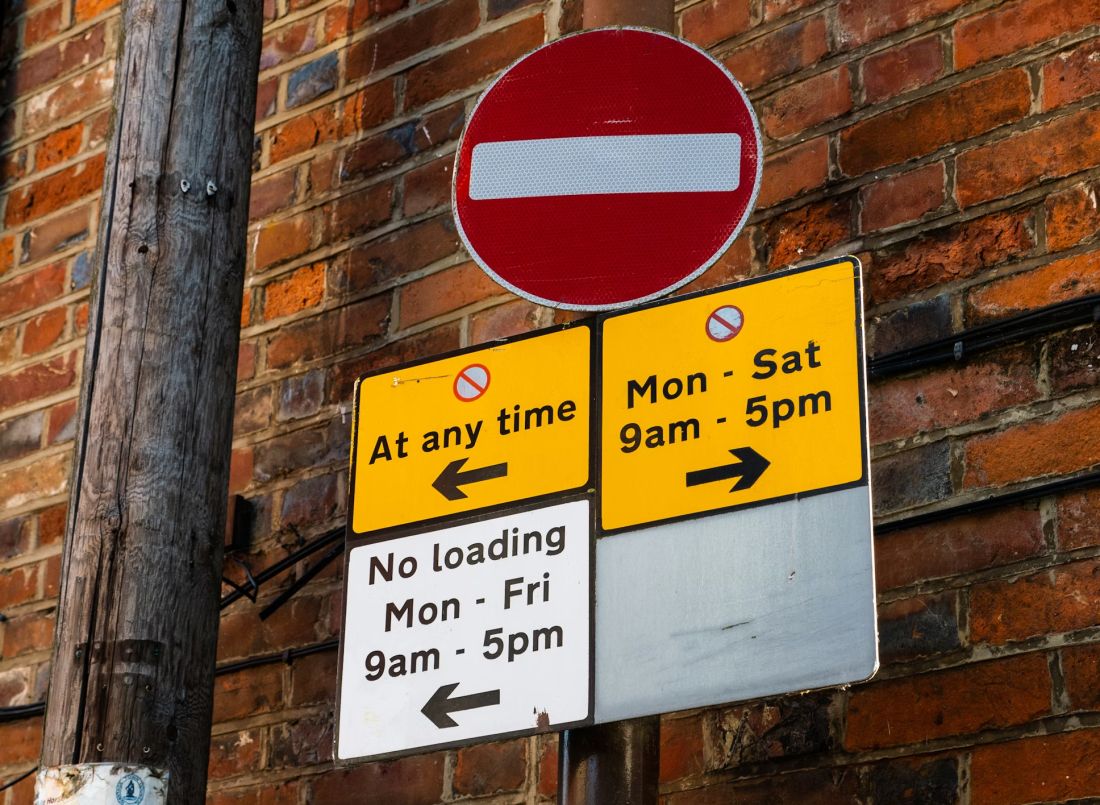
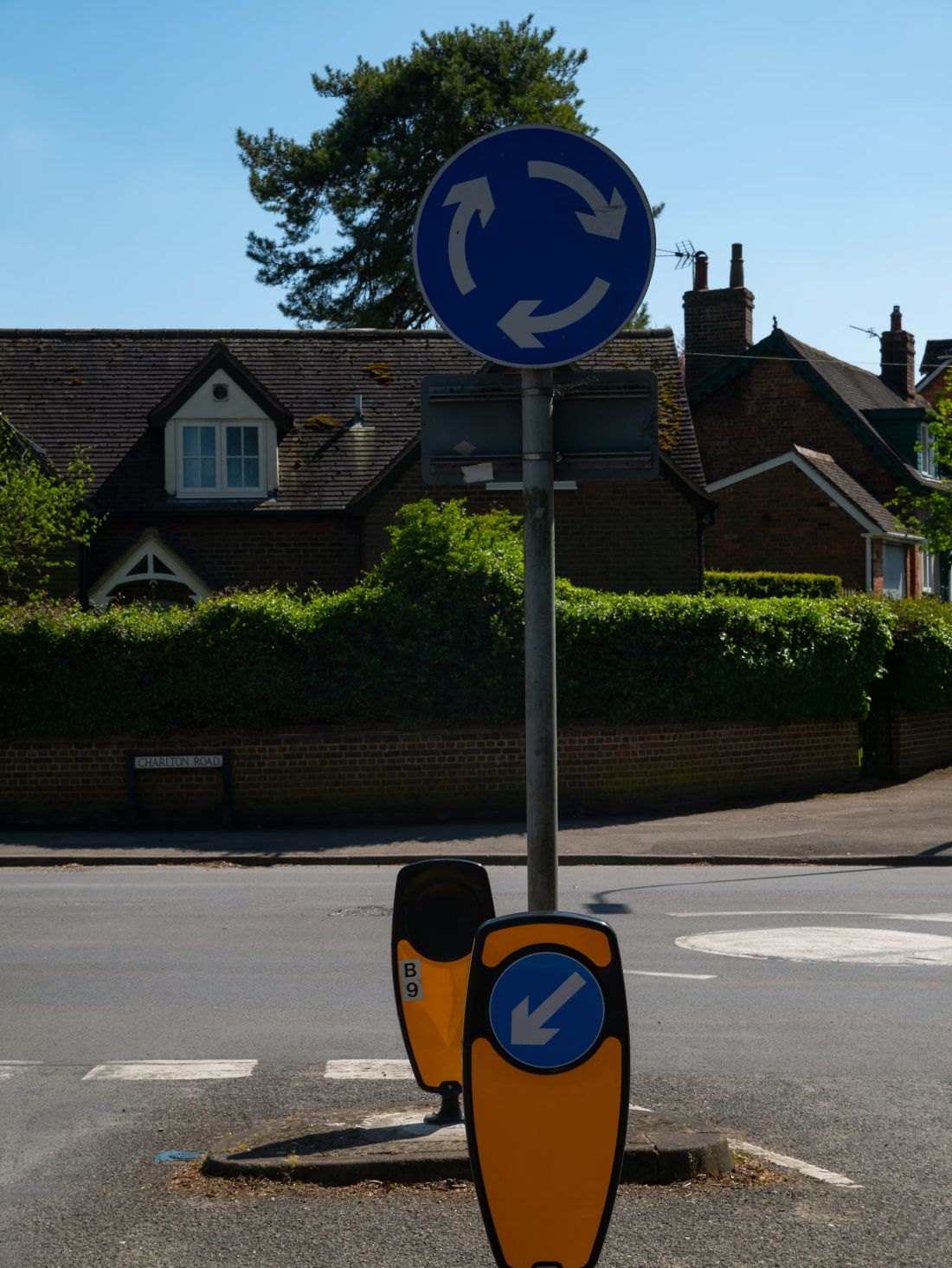
Shapes are one part of it, but colour is doing a sneaky amount of work at the same time. Red is used because it grabs attention and it’s linked with “stop” and “don’t do that” in most people’s heads. In the UK system, triangular signs are red-bordered warnings, and a lot of the “orders” signs use red circles for things you’re not allowed to do. Blue circles usually tell you something you must do, like “go this way” on a mini-roundabout sign. Then direction signs have their own look: the big motorway ones are blue, while primary route signs are green, and that helps you know what kind of road you’re dealing with before you even check the route number.
This is the part people don’t think about until they drive somewhere unfamiliar. If you’ve spent years in Manchester and Stockport, you’ve kind of learned these colours without sitting down and studying them. You just know. You see a red-bordered triangle and your foot eases off a bit because something might be coming up. You see a red circle and your brain goes “that’s a rule.” You see a long direction sign and you start looking for place names and arrows. No big drama. Just recognition.
And there’s another quiet benefit: colour helps when you can’t read the sign well. That could be because it’s dark, or because the sun is reflecting off it, or because you’ve got a spray of water from the car in front. The colour still punches through. That’s part of why the system tries so hard to stay consistent. Your eyes get the hint fast, then your brain fills in the rest.
Why the STOP sign is a weird shape, and why “Give Way” isn’t a circle
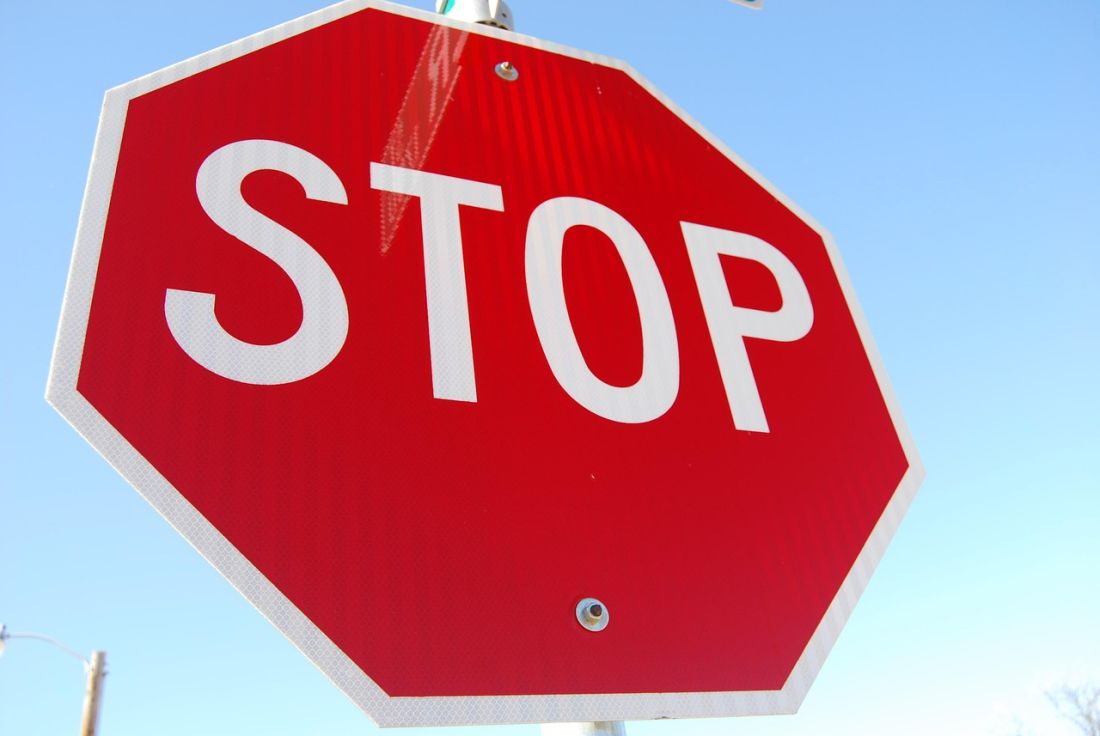
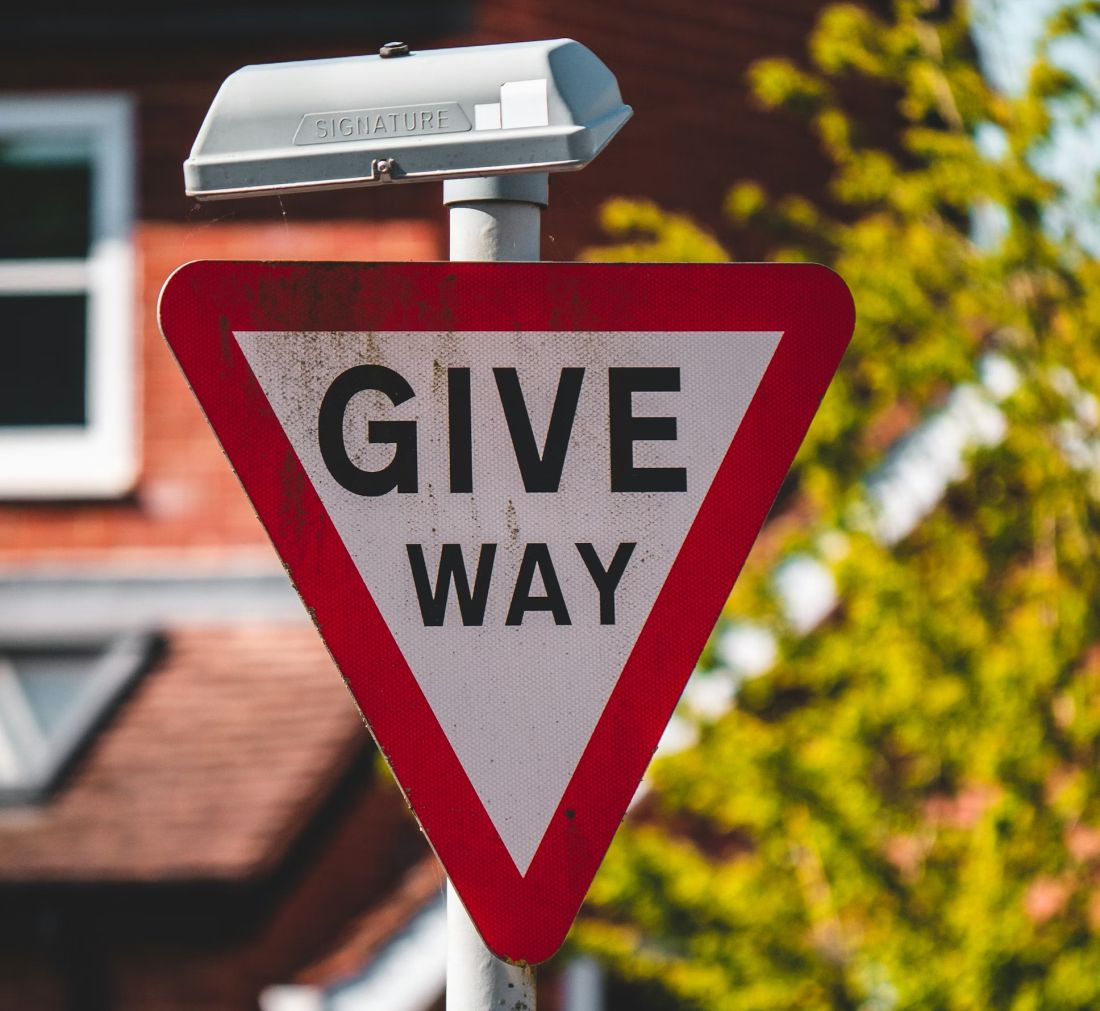
Most signs that give orders are circular in the UK, but there are a couple of famous exceptions. The STOP sign is one, and it’s meant to stand out. In the UK guidance, it’s called out as a notable exception to the “mostly circular” rule, because it’s a special case: you must stop at the line, every time, no arguing with yourself about it. And “Give Way” is another special one you’ll spot straight away because it’s an upside-down triangle. That shape is basically a warning and an instruction rolled into one, and it’s so recognisable you can spot it even when you’re seeing the back of it or catching it at an angle.
Now, if you’ve ever wondered why STOP signs are eight-sided in a lot of places, including the rules used in the United States, the answer comes back to recognition. The American sign rules literally state the STOP sign “shall be an octagon,” and that’s part of how they make it instantly different from everything else. It’s a “you can’t confuse this with another sign” move.
And here’s the real-world bit: shapes still work even when words don’t. Words can be covered in grime. Words can be hard to read if your eyes are tired. Words can be in a language you don’t know if you’re visiting somewhere. But an octagon is an octagon. An upside-down triangle is an upside-down triangle. That’s the point. When you’re rolling through busy junctions around Stockport, or you’re dealing with the stop-start rhythm near big retail areas, you want signs that are hard to miss and hard to misunderstand. No fuss. Just clear.
The UK’s road sign lettering wasn’t picked at random
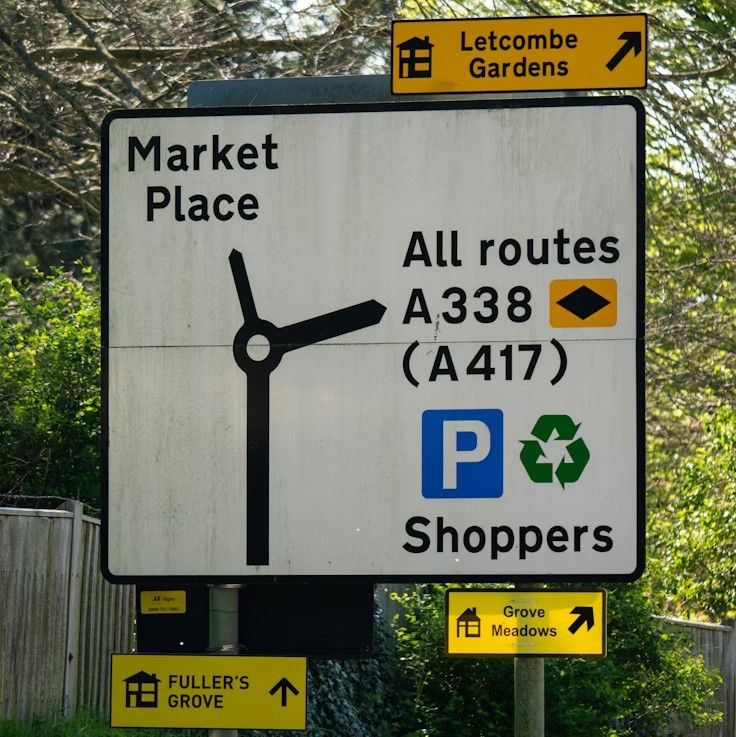
Now let’s talk fonts, because this is where it gets surprisingly interesting. The main lettering used on UK road signs is called Transport, and it was created by two designers: Jock Kinneir and Margaret Calvert. Their work wasn’t some tiny project either. It became the standard system used across British roads from 1 January 1965, after the country decided the old patchwork of signs wasn’t keeping up with faster traffic and more cars. That change came out of official committees that looked at what drivers needed to see at speed and how signs should be organised. The Transport lettering was made specifically for signs, not for books or posters.
One of the clever things they pushed was using a mix of upper- and lower-case letters for place names, instead of shouting everything in capitals. That sounds small, but it matters. Mixed case gives words a more distinctive outline, so your brain recognises them faster. Think about it: “Manchester” has a different shape on the page than “MANCHESTER.” With all caps, lots of words start looking like the same rectangle. With mixed case, you get taller and shorter letter shapes, and you can pick the word out quicker. That idea is mentioned in design history around the UK system and it matches what most of us feel when we’re trying to read quickly.
There’s also a related lettering style for motorway route numbers and certain motorway sign elements, linked to the same design team. So when you’re flying along the motorway and the signs feel “right,” that’s because the whole thing was built as one joined-up system: shapes, colours, symbols, and lettering all working together. You’re not meant to notice the design. You’re meant to get the message and keep driving.
It’s not just the font, it’s the spacing and size rules
If you’ve ever thought, “Why are road sign letters so big, and why do they look spaced out?”, you’re asking the right question. The letters aren’t just big for the sake of it. UK sign design uses a measurement based on the height of the lower-case letter “x” to set text size, and that “x-height” idea shows up in the official Traffic Signs Manual. The key point is simple: signs are designed with a repeatable system so that, at certain speeds and distances, the text stays readable. It’s not guesswork. The manuals talk about letter height rules, and they use consistent units so signs don’t end up cramped and messy.
Spacing matters because letters can blur together when you’re moving. If the letters are too close, “M6” and “M8” can start to look similar from far away, especially in rain or glare. If the lines of text are too tight, the place name and the route number can mash into one blob. So designers build in breathing room. That’s also why road sign fonts avoid fussy shapes. The letters are clean, with clear differences between similar-looking characters. You don’t want a fancy “I” that looks like a “1.” You don’t want a “O” that looks like a “0.” You want quick, confident reading.
And there’s a human side to this too. People aren’t perfect readers, especially when they’re stressed. If you’ve got a car behind you pushing, a bus to your left, and you’re trying to pick the right lane for the M56 split, you’re not calmly spelling out every letter. You’re grabbing the word shape, the first few letters, and the arrow direction. That’s why the system leans so hard on clear fonts, clear spacing, and predictable layouts.
Other countries do it differently, but the goal is the same
The UK isn’t the only place that treats road sign lettering like a safety tool. In the United States, a long-running set of sign lettering styles is tied to the Federal Highway Administration’s “standard alphabets,” and the family is widely known as Highway Gothic. The specs go back to the late 1940s, and updates added things like lower-case letters later on, because mixed case helps with quick word recognition on big guide signs.
Zoom out even more and you’ll see that sign shapes themselves can vary by region, but there’s a big push for consistency so travelling drivers don’t get caught out. An international agreement called the Vienna Convention allows warning signs to be triangular in many places, but it also allows a diamond shape in some countries, which is why you’ll see different-looking warnings if you travel. Same purpose, different local tradition.
What doesn’t change is the aim: fast recognition, low confusion. Whether you’re reading a green sign pointing you towards Stockport town centre or you’re on a road abroad trying to follow symbols you’ve never seen before, the sign system is trying to help you react safely. That’s why designers keep coming back to the same ideas: simple shapes, high-contrast colours, and lettering that stays legible at speed. It’s not about style points. It’s about reducing mistakes.
How you can use this to drive smarter around Manchester and Stockport
Once you know what signs are doing with shapes and fonts, you can actually use it to make driving feel calmer. First, trust the shape. If you spot a red-bordered triangle near schools or busy crossings, treat it like a heads-up before you’ve even read it. Same with circles: they’re rules, and rules usually mean “don’t wing it.” Rectangles are info, so that’s when you start hunting for arrows, lane guidance, and place names. That little mental shortcut helps when roads get busy, like when you’re threading through junctions near the Merseyway area or dealing with the ring road flow around central Manchester.
Second, give yourself more reading time by thinking ahead. Sounds obvious, but loads of missed turns happen because people wait too long to look. Signs are sized and spaced based on how far away you should be able to read them, but that doesn’t mean you should leave it late and hope for the best. If you’re looking up early, the Transport lettering and the big arrow layouts suddenly feel like they’re working for you. If you’re looking up late, everything feels rushed and noisy.
Third, if night driving stresses you out, don’t just blame your eyes. Rain, glare, dirty windscreens, and bright headlights all mess with contrast. Clean glass helps more than people like to admit. And make sure your seating position is decent so you’re not craning your neck to catch signs at the last second. It’s small stuff, but it stacks up.
And if you’re picking up a used car and you’re getting used to how it feels on the road, take a few local practice runs where you know the routes. That way the signs aren’t another surprise while you’re learning the car. We see drivers do that all the time around Stockport and Manchester. It’s sensible. You settle in, you learn the controls, and the signs become what they were meant to be: quick hints, not stressful puzzles.