


Why Do Cars Have That ‘Clicking’ Sound When Signalling?
Have you ever been driving around Stockport or Manchester, pulling off the M60 or cruising past MediaCity UK, and heard that familiar click-click-click when you flick on your indicator? It’s one of those little things in a car that almost everyone notices, but maybe never really thinks about. At Dace Motor Company we’ve sold hundreds of used cars and heard plenty of curiosity about that sound-so I thought I’d sit down and chat about why it happens, in a way that makes sense even if you’re not a gear-head.
The Sound and Why It’s There
You flick the stalk, the amber lights flash, and you hear click-click-click. Sounds simple, right? But there’s a bit of history behind it. That noise isn’t just a quirk-it started out as part of how indicators worked, and has stuck around even though technology has changed.
Way back (pre-1950s even) when cars were simpler machines, electrical parts weren’t as small or as silent as they are now. To make the indicator lights flash, engineers used something called a thermal flasher unit. Essentially this was a little metal device inside the dash or relay box: when you turned on your indicator, an electrical current would heat up a thin bi-metallic strip. Because the two metals had different rates of expansion when heated, the strip would bend, make contact, current would flow, light would flash. Then it would cool, bend back, break contact, lights off. And repeat. That constant heating-bending/heating-cooling made that click-sound we all know.
So originally the clicking was literally the metal part snapping between contacts every time the lights flicked on or off. It was mechanical, honest. And you could hear it through the shell of the flasher unit.
Why Keep It If Technology Moved On?
Good question. So as vehicles got more advanced (even here in the North West) the indicator flashers moved from purely mechanical units to solid-state electronics. Modern cars often have an electronic relay or computer control to flash the lights-no heating strip physically bending. But the clicking sound stuck around. Why?
One big reason: the sound gives the driver a confirmation. You’re flicking the indicator, you hear the click, you know it’s working. You might be stuck in rush-hour traffic heading into Manchester city centre, you might have neighbours pulling out of the car park near our showroom in Reddish, Stockport-you don’t want the indicator stuck on or silently not flicking. The click reminds you you’ve turned it on.
Another reason: habit and expectation. Drivers got used to hearing a click when signalling. If that was missing, some might think “oh, is my indicator not working?” or worse leave it on. Automakers realised it’s better to include a simulated sound even if the mechanism changed.
How It Works In Today’s Cars
Let’s keep it simple: when you flick the indicator…
- The signal stalk sends a request to the vehicle’s flasher circuit.
- If it’s an older style (you might find one in a classic car), the circuit uses that bimetallic heating strip to alternately make and break contact. That generates the click and the flash.
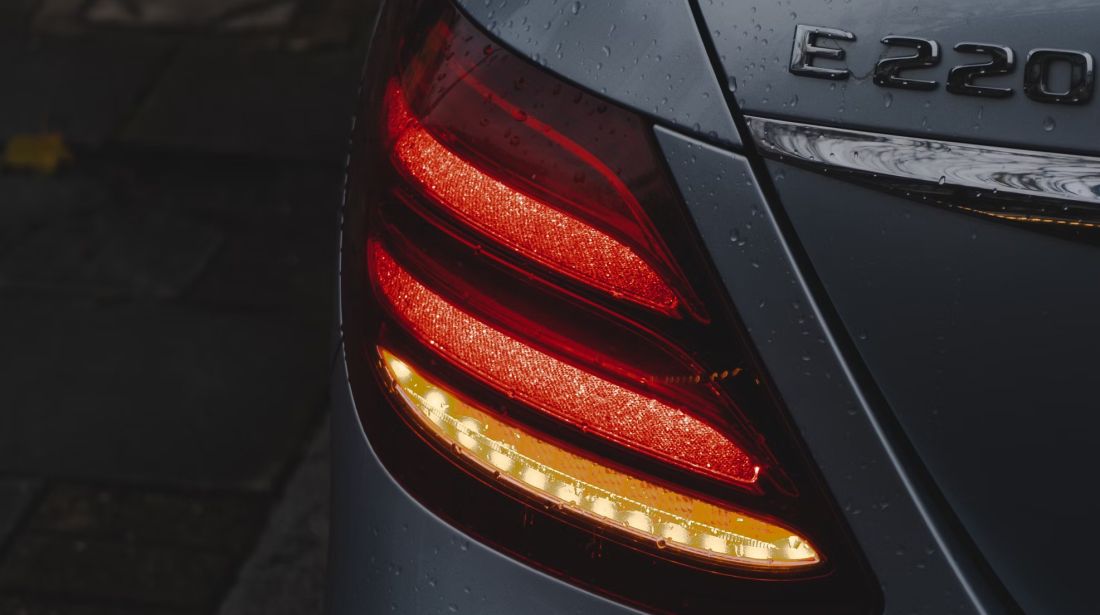
- If it’s a newer car, the flash might be triggered by a computer module or electronic relay. The sound you hear might be from a small relay or might even be generated artificially through the car’s speaker system so you still get the familiar click.
So, even though many cars don’t need that old heating strip trick anymore, the noise remains because it works from a usability point of view.
What If It Sounds Different?
Now, because we deal with many used cars (used cars from brands like Audi, BMW, Mercedes-Benz, Volkswagen, and more) we sometimes hear clicking that isn’t the usual indicator click. If your car’s click sounds odd, too fast, too slow, continuous when it shouldn’t be-there may be an issue.
A few red flags:
- The indicator keeps clicking even when you’ve turned the stalk off. That might mean the flasher relay or control unit is sticking.
- The click is very rapid (like hyper-flashing) when one side of your indicators is out (bulb blown). The system uses resistance to determine if a bulb is failing, and changes flash rate accordingly.
- The sound is coming from somewhere odd (e.g., steering column or under the dash) during turns or even when indicators aren’t on-could be something else in the column or stalk, not the indicator unit.
So: clicking is normal. But if the pattern of clicking changes-too fast, too slow, persists when it shouldn’t-that’s when you probably want a check-up.
Why It Matters: Little Sound, Big Safety
It may seem tiny, but think how many times each day people change lanes, take junctions, pull into a petrol station, drive out of a side-street in Stockport or Manchester. The indicator light and that click help keep communication clear between drivers.
Imagine you’re pulling out of a junction near Piccadilly Gardens, you flick your indicator and hear the click. Good. You turn, you cancel the indicator, you head on. Now imagine you flick and don’t hear anything. Maybe you didn’t turn it on properly. Maybe it’s broken. Maybe someone behind you thinks you’re going straight when you’re turning and… well, you get the picture.
So although the sound itself doesn’t drive the car, it’s part of the driver feedback loop. It keeps you in-touch with what your car is doing.
A Quick Walk-Through: What Happens While You’re Driving
Let’s do a little scenario:
You’re driving out of one of our branches at the Dace German Car Centre on Manchester Road, Stockport. You’re heading into town. You spot a space to change lane. You flick left. Instantly: indicator lights on dash, lights on side of car start to flash, you hear the click-click. Nice. You change lane, you press the indicator stalk back to neutral, the flashing stops, the click stops. Everything is normal.
Now imagine you flick the indicator, but you don’t hear the click or you hear one rapid click and then silence. That might mean the unit inside has lost the cycle rate-or the bulb on one side is blown so resistance is different, causing the system to behave differently. That means come in for a check. At Dace Motor Company we’ll happily check that for you when you’re browsing used cars (whether a small city car or a big SUV).
Why We Mention This At the Dealership
You might ask: “Why is Dace Motor Company telling me about this clicking sound when I’m looking for a used car?” Because small things add up. When you’re buying a car-especially a used one-you want to feel confident you know what you’re buying.
In our 25 years in Stockport and Manchester, we’ve learned that transparency matters. We mention the clicking sound stuff because:
- It’s totally normal. So you don’t walk away thinking your purchase has a weird fault if the indicator clicks.
- But also: if it isn’t normal, you want to spot it and ask about it. Because that kind of fault can lead to bigger things (like lighting issues, or even safety concerns).
- We believe in giving you straightforward info-whether you’re looking at a small Ford or a luxury Jaguar or Land Rover from our stock.
Next time you get in a car-whether in our showroom at Eccles, Manchester, or when you’re driving around Stockport-give the indicator a flick. That click you hear? It’s more than just noise. It’s a legacy of how cars used to work, and still how they communicate with you.
And if you ever buy a used car from us: you’ve got that little click, you’ve got the signal lights, and you’ve got the confidence knowing that at Dace Motor Company we check these things for you. Because it’s the details-small ones like clicking indicators-that build trust, remind us of good design, and help keep you safe. So yeah-next time you hear click-click-you’ll know what’s going on. It’s not magic. Just good, clever engineering. And a touch of nostalgia, really.