


Why Do Cars Have an OBD Port - and What Can It Really Tell You
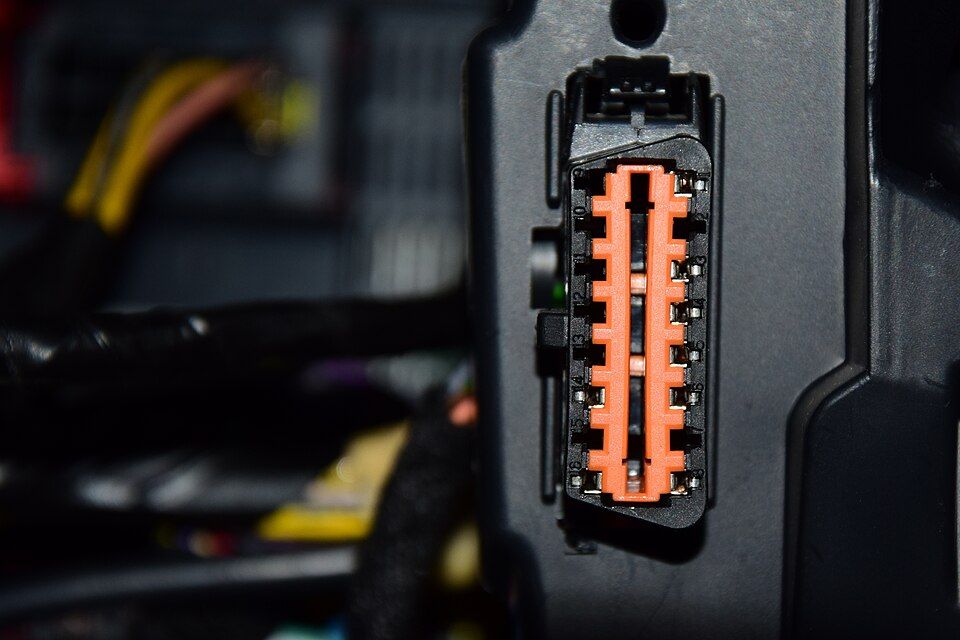
Photo: ODB-II connector by 0x010C, CC BY-SA 4.0, via Wikimedia Commons
You know that little socket hiding under the dashboard that nobody pays attention to until something goes wrong? That’s the “diagnostic port” (people also call it the OBD port). It’s one of those bits of a car that feels boring… right up until your dashboard lights up like the Christmas Markets in Manchester and you’re thinking, “Is this serious or is my car just being dramatic?” Let’s face it, we’ve all been there. You’re stuck in traffic near the M60, you’re late, the engine light pops on, and suddenly you’re listening for weird noises that were probably there yesterday too. The diagnostic port exists for moments like that. It’s a way for a scanner to talk to the car’s computer and ask, “What’s up? What did you notice? What do you remember?” And the cool part is: it doesn’t just spit out a random “something’s wrong” message. It stores clues. Real ones. The kind that can save hours of guessing in a workshop and can stop you spending money on parts you didn’t need. At Dace Motor Company we see this every week across Stockport and Manchester. A customer comes in convinced the car needs a massive repair, and the scan points to something simple like a sensor reading that’s gone strange. Other times, someone thinks it’s “just a light” and the scan shows a misfire that could damage expensive exhaust parts if you keep driving. So this post is about what that port is really for, what a scan can read, and why it changed car servicing in a big way. No tech-speak marathon. Just the stuff you’d actually want to know.
So what is that little port, anyway?
Picture your car like a busy house with loads of tiny helpers doing jobs in the background. One helper watches fuel use, another watches temperature, another watches the exhaust system, and so on. The diagnostic port is like the front door where a trusted visitor can come in and ask those helpers what they’ve seen. It’s a standard-shaped plug with a fixed number of pins, and it’s meant to be reachable from the driver’s seat area, not hidden in the engine bay like older setups. The standard even talks about it being in the driver or passenger compartment around the dashboard area, so you’re not tearing the car apart just to connect a tool. That’s why you’ll see it under the steering wheel area, near the fuse box cover, or tucked close to the centre console. If you’ve ever been in a car where you had to do a yoga pose in the footwell to find it… yep, you’ve found it. And once something is plugged in, the car can share stored fault messages and live readings. Think of it like checking a fitness tracker. You’re not guessing how many steps you did; you’re reading the count. Same idea here: instead of “it feels down on power,” a scanner can show what the car’s computer saw at the time. And this is where people get it twisted. The port isn’t magic. It can’t see a cracked spring just because it exists. It can’t smell burning oil. What it can do is give you a structured report of what the car’s own brain noticed, especially things linked to emissions and engine running. That’s also why so many add-on gadgets use this socket too, like tracking plugs or driver-score devices. It’s easy access, no spanners needed. But the original reason it exists is bigger than convenience. Rules and clean air targets pushed the whole industry into making cars “talk” in a standard way. And once that happened, servicing never looked the same again.
Why it exists: emissions rules, clean air, and making cars “prove it”
The diagnostic port didn’t become common because car makers woke up one day and thought, “Let’s make life easier for garages.” It became common because governments wanted cars to keep their emissions systems working properly for years, not just on the day they left the factory. In the United States, rules pushed a standard system for model year 1996 petrol cars and light trucks, with diesel passenger vehicles following right after. The idea was simple: cars should notice when something that affects emissions goes wrong, warn the driver with a dashboard light, and store information so a technician can fix the real cause instead of playing darts in the dark. California took this very seriously because smog was (and is) a major problem in big cities, so the system was tied directly into emissions checks. For many vehicles in California, the inspection moved toward reading the car’s own diagnostics instead of relying only on a tailpipe test. Europe brought in its own requirements too. For diesel passenger cars across Europe, on-board diagnostics became compulsory from 2004, and petrol cars had earlier requirements. If you drive around Stockport or Manchester, you don’t see “smog check” signs like in parts of the US, but the same theme is here: cities want cleaner air, and cars are expected to monitor themselves. That’s why your dashboard has that engine warning light that can cause an MOT fail if it stays on. And in the UK, the MOT inspection manual spells out which vehicles need that warning light checked, including petrol cars first used from 1 July 2003 and diesel cars first used from 1 July 2008. So yeah, the port and the system behind it are partly about repair, but they’re also about accountability. The car is basically keeping a diary that says, “Here’s what I detected, here’s when it happened, and here’s proof that my self-checks have run.” That diary changed everything for servicing, and it also changed how drivers deal with warning lights-because now there’s a trail to follow.
What a scan can read, in normal human language
So what can you really learn when someone plugs a scanner into that port? First, you can read the stored fault messages that triggered a warning light (or would have triggered one). These are like short labels for problems: not “your car is broken forever,” more like “this system saw something out of range.” And the scanner can also pull extra context that’s way more useful than people realise. One big example is “freeze frame” data, which is basically a snapshot the moment a fault was detected. Imagine you’re filming a football match and you pause it right when the goal happens. That paused moment tells you where everyone was standing, what the score was, and what just happened. Freeze frame does that for certain car faults: engine speed, temperature, load, and other readings from the exact moment things went weird. That’s gold for diagnosis because it answers questions like, “Did this happen on a cold start?” “Was it under hard acceleration joining the A6?” “Did it happen when the engine was already warm?” A scan can also show live readings while the engine is running, so you can see if temperature rises normally, if the engine is misfiring, if the fuel system is adjusting in a strange way, or if a sensor is giving nonsense numbers. But here’s the part that keeps it real: the scan is a clue tool, not a verdict. A code might point to an oxygen sensor reading, but the real cause could be an exhaust leak, a wiring issue, or a different part feeding bad info. That’s why a proper technician doesn’t just “swap the part the code mentions.” They read the code, check the freeze frame, look at live data, and then confirm with normal checks. It’s like a doctor. A thermometer can tell you there’s a fever. It doesn’t tell you if it’s a cold, flu, or something else. Same with a scan. It narrows it down fast, and that’s the superpower.
The bit people miss: the car’s self-check “homework” and why clearing codes can bite you
There’s another thing a scan can show that matters a lot, especially if you’re buying a used car or trying to get through an MOT: the status of the car’s built-in self-checks. You can think of them like little tests the car runs on itself while you drive-checking the exhaust system, fuel control, misfire detection, and more. People call them “readiness monitors,” but you don’t need that label to get the point: the car needs time and the right driving conditions to finish these checks. This is why you’ll hear someone say, “I cleared the light and it stayed off,” and then a week later it’s back. Clearing faults doesn’t fix anything; it just wipes the memory and resets the stored snapshots. It can also reset those self-check results, meaning the car goes back into a “I haven’t finished checking myself yet” state. That matters because if you’re trying to judge whether a car is healthy, you want to know if it’s been driving long enough after a reset for the checks to complete. If nothing is “ready,” you haven’t learned much yet-because the car hasn’t had a fair chance to spot the problem again. This ties into UK testing culture too. The MOT doesn’t just sniff exhaust gases; it includes checking that the engine warning light works correctly on vehicles in specific date ranges, and a light that stays on can be classed as a serious issue. So if a seller says “no lights on the dash,” that’s good, but it’s not the full story if the memory was wiped five minutes before you arrived. To be honest, this is where a quick scan can save you from buying a headache. Not because you’re hunting for perfection, but because you’re checking if the car’s story makes sense. If the system shows completed self-checks and no faults stored, that’s a calmer signal than “everything was cleared and nothing has had time to reappear.”
When that engine light pops on in Manchester traffic: what the car is trying to tell you
Let’s talk about the dashboard light, because that’s the moment most people discover the diagnostic port exists. The big rule is: a steady engine warning light and a flashing one are not the same mood. A steady light can mean a lot of things, including small issues that still need attention-like a sensor reading that’s drifted, or something affecting emissions without making the car feel awful. A flashing light is the one that should make you stop doing the “it’ll be fine” thing, because manufacturers warn that flashing can mean a fault that may damage the catalytic converter (an expensive exhaust part). You don’t have to panic and slam on the brakes on Deansgate, but you should back off, avoid hard acceleration, and get it checked as soon as you can safely manage. And if the car is shaking, losing power, or sounding rough, don’t push it. Get somewhere safe and get help. Here’s why the diagnostic port matters in that moment: the car stores the reason it turned the light on, and it stores details around it. So instead of “it happened once, then went away,” the system can show a record of what was detected and under what conditions. That’s huge for faults that come and go, like a loose connection or a sensor that misbehaves only when it’s cold and damp (hello, Greater Manchester weather). And yes, we know the human side too. People worry the scan will lead straight to a big bill. But the scan can also prevent the “replace three parts and hope” approach. A decent technician reads the stored clues, checks the car properly, and explains what’s going on in plain English. No shame, no scare tactics. It’s your car. You deserve to know if it’s a simple fix, a “book it in soon,” or a “don’t drive this across the M62 tonight” situation.
Buying a used car: how diagnostics helps, and where it can’t save you

If you’re shopping for a used car around Stockport, Reddish, Eccles, or anywhere nearby, the diagnostic port is like a quick honesty check-if it’s used the right way. A scan can show stored faults, whether warning lights were triggered, and whether the car’s self-checks have been completed since the last reset. That’s valuable because it reduces guesswork. But you also need to know what it can’t do. A scan won’t tell you a clutch is worn just because it’s worn. It won’t tell you the tyres are cheap ditch-findings. It won’t spot a rattle from a suspension arm unless it causes a sensor to complain. So think of a scan like checking the messages on a phone: if there’s something in the inbox, you learn a lot. If the inbox is empty, it doesn’t prove nothing happened-it just means nothing is recorded right now. That’s why people who try to hide issues will sometimes clear the memory. The system can wipe stored fault data and freeze-frame snapshots when codes are cleared. That doesn’t make the car “fixed,” it just makes it quiet for a bit. A proper check looks for signs the car has been reset recently, like self-checks not completed yet. At Dace Motor Company, we’re big on quality assurance for exactly this reason: you want the car’s story to line up with how it drives and how it’s been looked after. We also HPI check vehicles before sale, which is a different kind of history check (things like outstanding finance or write-off markers) and it sits alongside diagnostics rather than replacing it. The best mindset is: use diagnostics as one tool in a bigger picture. If the scan is clean, the test drive feels right, the service history makes sense, and the car hasn’t got suspicious “just cleared” signs, you’re in a much happier place than relying on dash lights alone.
Plug-in gadgets, cheap scanners, and the privacy angle
These days, loads of people plug things into the diagnostic port that aren’t garage tools. Some are harmless, like basic readers you keep in the glovebox. Some are linked to insurance policies or fleet tracking. Some claim they’ll “boost performance” (be careful with that kind of promise). The reason they all love the same socket is simple: it’s a standard physical connection for reading diagnostic info. But here’s the part people don’t talk about enough: anything you plug in can only be as trustworthy as the device and the app behind it. A cheap reader might show a vague message, or it might miss brand-specific details, or it might translate codes into nonsense. And if it’s a tracking-style device, it can share driving data somewhere else depending on the service you signed up to. That’s not “scary spy movie stuff,” it’s just how connected gadgets work. So if you’re using one, read what it collects and where it goes. Also, don’t leave random devices plugged in forever if they’re poorly made. You want something that fits well, doesn’t wobble loose, and doesn’t drain the battery on cars that don’t like extra electronics hanging around. Even official testing guidance has warned that some analyser connections can cause battery drain on certain models if used in the wrong way, which tells you the car-and-device relationship isn’t always perfect. If you’re unsure, ask a garage you trust to run a scan with proper kit. You’ll get clearer results, and you won’t be stuck reading internet arguments about what a code “really means.” And yeah, we’ve seen those arguments. They never end well.
Why this changed servicing: less guessing, faster fixes, and better protection for your wallet
Before modern diagnostics became standard, fixing a running problem could feel like detective work with half the clues missing. You’d describe a symptom, the mechanic would test what they could, and sometimes it turned into trial-and-error. The diagnostic system changed that by making the car record evidence. If a fault is detected, the system turns on a warning light and stores important info so the issue can be found and fixed properly. It also made it easier for independent garages to compete, because the rules pushed the industry toward shared standards instead of “you must come back to the main dealer for everything.” And it didn’t add massive cost to vehicles compared to what it saved in time and wasted parts-back in 1996, the US government estimated the added retail cost of meeting the requirements was around $61 per new vehicle. That’s tiny compared to the cost of throwing parts at a problem and hoping the light goes away. The system also made emissions compliance more realistic. Instead of a car passing a test on one day and then polluting badly for years because nobody noticed a failing component, the car can flag issues as they happen. For drivers around Manchester and Stockport, this just means fewer mystery breakdowns and fewer “we replaced it but it didn’t fix it” moments. And if you’re buying used, it means a better chance of catching problems early-especially if you scan for stored faults and check whether the car has completed its self-checks since the last reset. We won’t pretend a scan solves everything. You still need good servicing, honest inspections, and common sense. But the diagnostic port is one of the best “truth tools” modern cars have. If you want a hand reading a warning light properly, or you’re choosing between cars and want the basics explained without the waffle, pop in and ask. We’re here every day across our Stockport and Manchester sites, and we’d rather help you understand what’s going on than watch you stress-scroll forums at midnight.