


Why Aston Martin Is So Closely Linked to James Bond
You know how some pairings just stick in your head? Fish and chips. Manchester rain and a brolly that flips inside out. And, for loads of people, James Bond and an Aston Martin. Even if you’ve never watched a full Bond film, you’ve probably seen the bits: the sleek silver car, the cool gadgets, the smooth getaway. And that’s the point. This link didn’t just make Bond look stylish. It also helped shape how people see Aston Martin, right down to the “posh, fast, movie-star” vibe the brand carries around with it. Here at Dace Motor Company, we chat with customers every week who’ve got a film scene in their head when they think about cars. Some folks want the “Bond feel” without the Bond price tag, which is fair enough. But if you’re wondering how one movie character could help a real car company’s image, the Bond-Aston story is basically the best example out there. It’s a mix of timing, clever choices, a bit of luck, and some seriously memorable screen moments.
Back in the early 1960s, Aston Martin made beautiful cars, but they weren’t this global pop-culture icon yet. Then along came the Bond films, with producers Albert “Cubby” Broccoli and Harry Saltzman pushing the series into big, shiny, worldwide entertainment. Bond himself, created by author Ian Fleming, was written as the sort of person who’d notice details: good suits, good food, good taste.
In Fleming’s 1959 novel “Goldfinger,” Bond drives an Aston Martin DB Mark III (Fleming calls it a “DB III” in the book), and it even has gadgets fitted to it. So the idea of Bond in an Aston started on the page before it hit the big screen. But the film version is what burned the image into everyone’s brain. Once a silver Aston Martin turned up in “Goldfinger” (1964) with gadgets and attitude, it wasn’t just a car in a film anymore. It became a shortcut for a whole personality: calm, sharp, confident, and a bit dangerous when it needs to be. And honestly? That’s a powerful bit of branding without anyone having to say “brand” out loud.
It started with a book, but the film made it massive
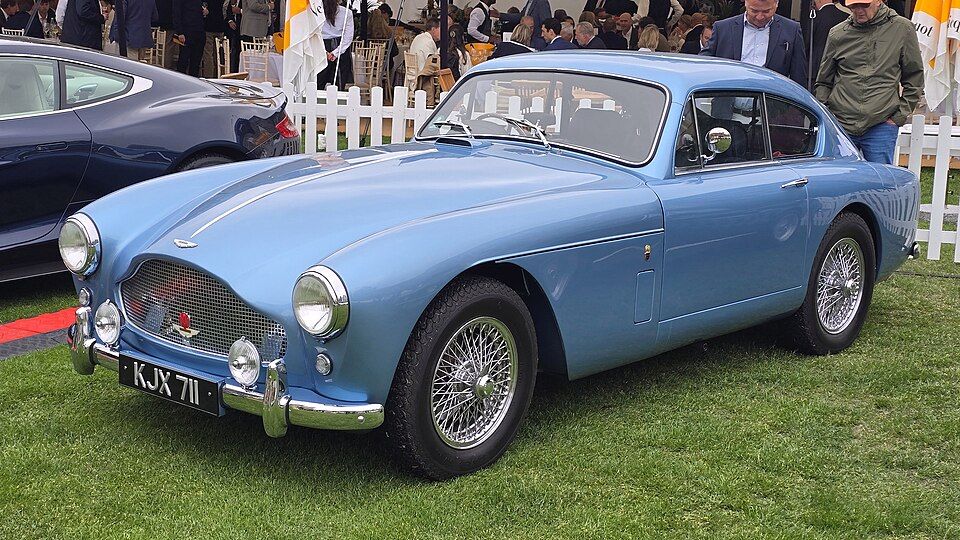
Photo: Aston Martin DB Mark III by MrWalkr, CC BY-SA 4.0, via Wikimedia Commons
Let’s get the order straight, because this part matters. Ian Fleming didn’t put Bond in a DB5 first. In the “Goldfinger” novel (1959), it’s the Aston Martin DB Mark III. That’s already a strong choice: British, classy, quick, and not something you’d see parked outside every house on your street. It fits Bond’s character in a really simple way. He’s a government agent, yes, but he’s also written like a guy who knows what’s good. In the book, the Aston is treated like a serious tool, not just a flashy toy. It’s got little extras fitted, which is basically the seed of the gadget-car idea. So, even before the films made everything louder and shinier, Bond and Aston were already connected in the story world.
Then “Goldfinger” the film comes along in 1964, and the filmmakers decide to upgrade the car choice to the Aston Martin DB5. The DB5 was newer and had that clean, modern look for the time. And here’s the bit that sounds almost painful to imagine: the special effects team took a prototype DB5 and started cutting into it to fit gadgets. John Stears, the special effects supervisor, talked about making the hole for the ejector seat and having to walk away for a coffee before he could bring himself to drill into that “beautiful car.” That little detail tells you everything about how bold the move was. They weren’t treating the car like a prop you could smash up and forget. They knew it was special. But they also knew the film needed something viewers would talk about the next day, and the next year, and decades after that.
Once the DB5 appeared on screen with its gadgets, people didn’t just remember the car. They remembered how it made them feel. Like when you’re driving down the A6 or swinging onto the M60 and you spot a seriously nice car next to you, and you can’t help but glance over. That little “whoa” moment. The DB5 gave audiences that feeling, but bigger, because it was wrapped up in Bond’s confidence and the film’s excitement. It also helped that Sean Connery’s Bond had this calm way about him. He didn’t look surprised by the car. He looked like it was normal for him. That’s the fantasy, isn’t it? The idea that the coolest stuff in the world is just your everyday Monday. And that’s how the Bond films turned an already-great Aston into the Aston people couldn’t stop talking about.
The DB5 in “Goldfinger” wasn’t just a car, it was a character
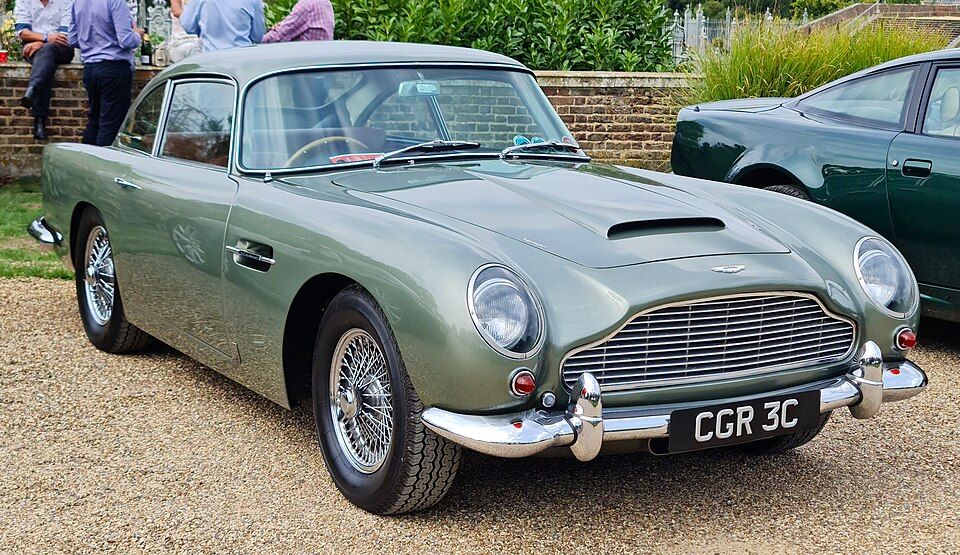
Photo: Aston Martin DB5 by MrWalkr, CC BY-SA 4.0, via Wikimedia Commons
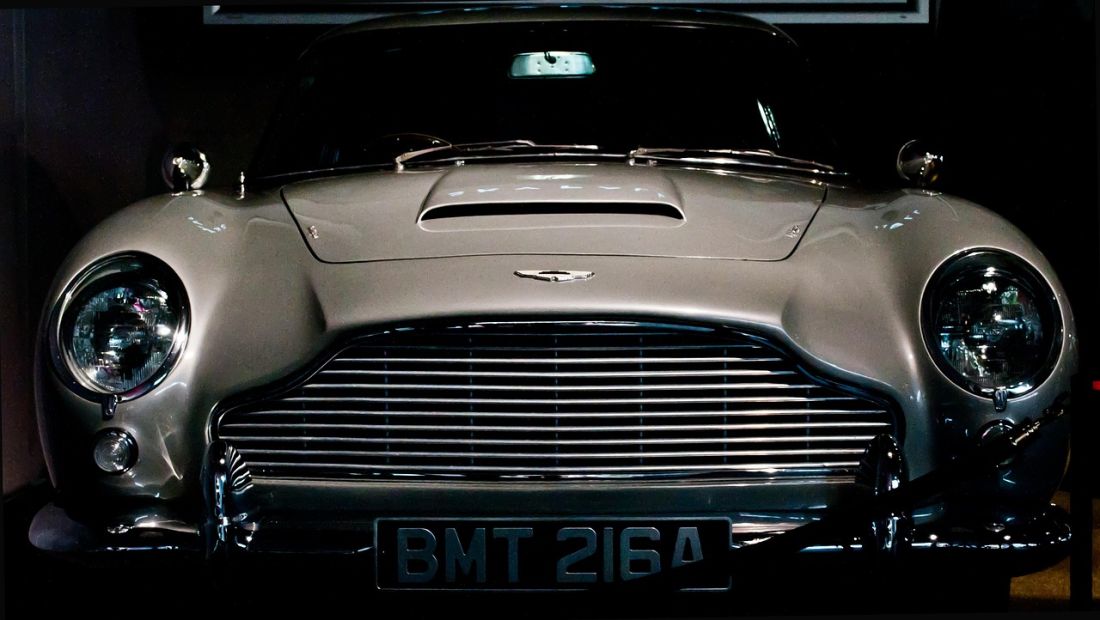
If you ask most people to name “the Bond car,” they’ll say Aston Martin DB5 without thinking. That’s how deep it goes. In “Goldfinger” (1964), the DB5 is introduced with a proper moment: Bond meets the gadget expert, Q, and gets shown all the weird and brilliant features. We’re talking ejector seat, revolving number plates, smoke screen, bullet shield, and more. It’s basically a spy toolkit on wheels. And the wild thing is, the Bond films didn’t treat these features like background details. They made them part of the story. The gadgets help Bond escape. The gadgets raise the stakes. The gadgets also make you grin because they’re just so cheeky. It’s like the car is in on the joke.
Production-wise, the DB5 story is pretty specific. The “Goldfinger” DB5s weren’t one single car. Sources describe multiple DB5s connected to the film: filming cars and promotional cars, with different roles depending on whether they needed gadgets, driving shots, or displays. That’s normal for movies, but it adds to the legend because each car has its own history. One of the original “Goldfinger” DB5s used for driving scenes sold at auction in 2010 for millions, which tells you how much people value the Bond connection. Another famous DB5 linked to “Goldfinger” was stolen in 1997, which sounds like something out of a Bond plot on its own. People still talk about that theft because it’s not just “a classic car got nicked.” It’s the Bond car.
Now think about what that did for Aston Martin’s image. The DB5 wasn’t shown as a rich person’s weekend toy. It was shown as the ultimate cool machine: fast, clever, and ready for trouble. That changes how the public reads a brand. Even if you don’t know engine details, you know the vibe. For people in places like Stockport and Manchester, where you’ll see everything from tidy city cars to big sporty motors on the East Lancs Road, vibe matters. Loads of buyers don’t just buy transport. They buy a feeling. The DB5 put Aston Martin in a feeling category that was hard for other brands to copy. You can make a fast car, sure. But you can’t easily copy decades of “this is what Bond drives” stuck in the public mind. That’s the difference between “nice car” and “icon.”
Bond didn’t stay in the 1960s, and neither did Aston
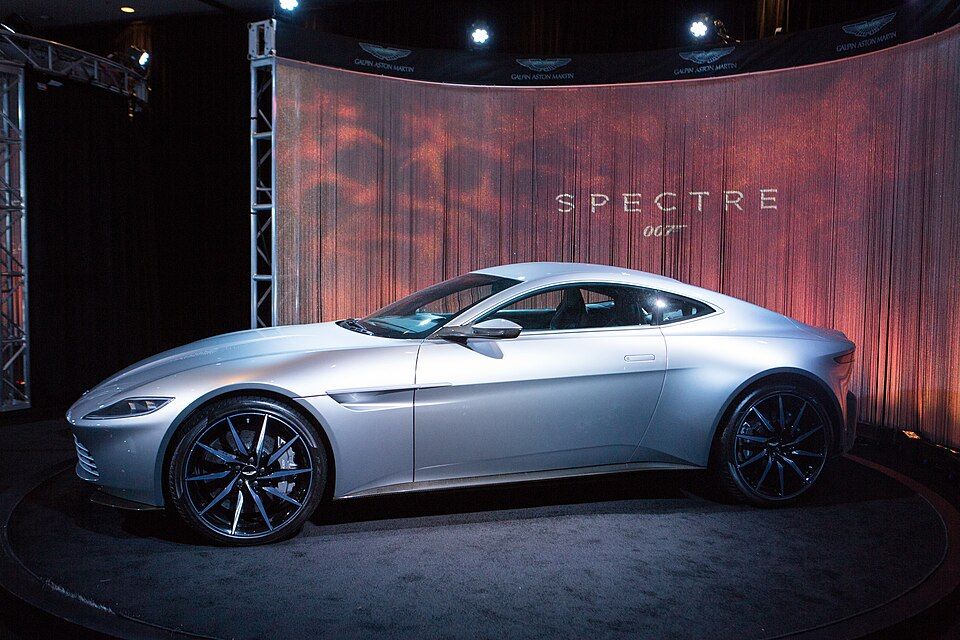
Photo: Aston Martin DB10 by Shelby Asistio from Los Angeles, United States, CC BY-SA 2.0, via Wikimedia Commons
Here’s where the relationship gets even smarter: Aston Martin didn’t become the Bond car once and then disappear. The Bond films kept bringing Aston back at key moments, like a running joke that never gets old. The DB5 returned in “Thunderball” (1965), then later it popped back into the film series again during the Pierce Brosnan era, like “GoldenEye” (1995) and “Tomorrow Never Dies” (1997). And then, when Daniel Craig took over, the films did something clever. They didn’t just use new cars and forget the past. They used the DB5 as a symbol, like a piece of Bond’s history you can’t shake off. The DB5 shows up again around “Casino Royale” (2006) and then in a big way in “Skyfall” (2012). If you’ve seen “Skyfall,” you’ll know the DB5 moment lands like a punch. It’s not just “here’s a car.” It’s “here’s Bond’s past, and he’s still that guy.”
Aston Martin also got modern spotlight with newer models tied to Bond films. For “Spectre” (2015), Aston created the DB10 specifically for the movie, and only a small number were made. That’s a huge statement. It’s not product placement where a company just hands over something they already sell. It’s the brand saying, “We’re building something for Bond, because Bond matters to us.” It’s like making a special kit just for one match at Old Trafford. You’re telling the world this event is a big deal. Aston and the Bond producers unveiled the DB10 at Pinewood Studios in late 2014, which is basically the home base for loads of famous British films. Again, it’s all about that mix of Britain, cinema, and style.
Then “No Time to Die” (released in 2021) leans into Aston even harder, with multiple Aston Martins appearing across the film. Aston itself has talked about the line-up, including classics and newer models. This matters because it shows the relationship isn’t stuck in nostalgia. It’s flexible. Some brands get linked to a movie and that link fades. This one kept evolving because the films kept finding ways to make the cars feel important, not random. And because Aston Martin kept leaning in too. When you keep showing up in the biggest spy films on earth, you’re not just a car brand anymore. You’re part of a story people grow up with, pass down, and joke about. That’s why you’ll hear someone in the Trafford Centre car park say, “That’s a proper Bond motor,” even if the car they’re pointing at isn’t actually an Aston. Bond has become shorthand for a certain kind of cool, and Aston is the brand most people attach to that word.
So why Aston, specifically? Because it matched Bond’s personality
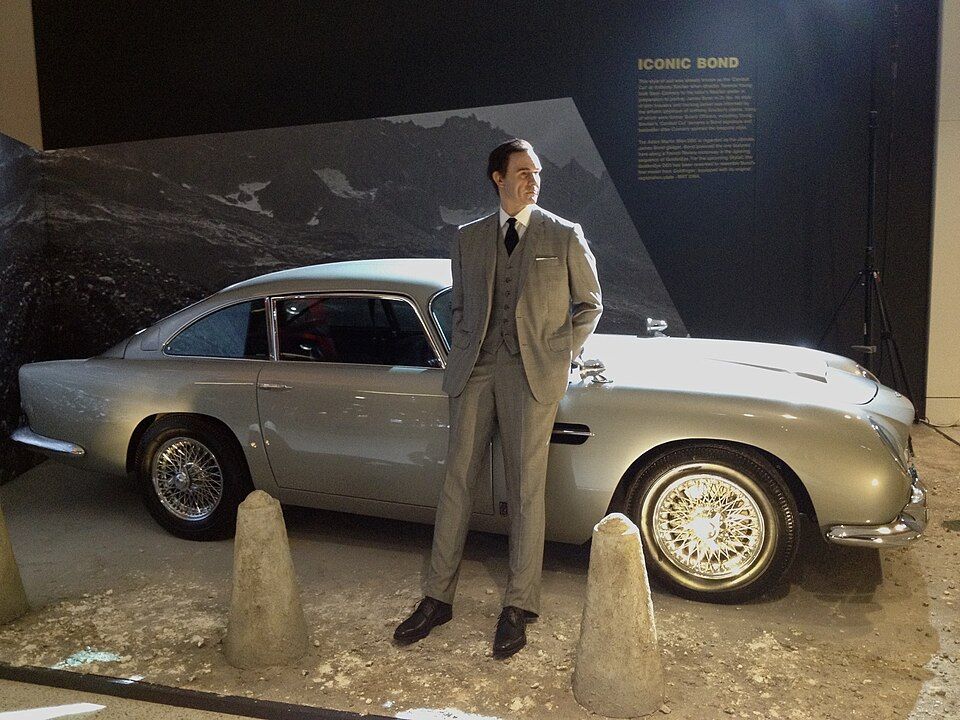
Photo: Aston Martin DB5 by Ank kumar, CC BY-SA 4.0, via Wikimedia Commons
A lot of people assume this link is just money talking. Like, “They paid to be in the film.” And yes, film deals and partnerships exist, but the deeper reason is simpler: Aston Martin makes sense for Bond as a character. Bond is British. Aston Martin is British. Bond is sleek and controlled, but he can flip into chaos when he needs to. Aston’s image fits that too: elegant on the surface, but built for speed and drama underneath. If Bond drove something that felt too loud or too common, it would mess with the character. It’d be like turning up to a fancy restaurant in muddy trainers. You might still eat the food, but the vibe is off.
Also, Aston Martins have always had that “special” look. Even people who don’t know car models can tell an Aston is meant to be desirable. The lines are smooth. The front end looks confident. It doesn’t need stickers and wild shapes to get attention. And that matches Bond, who doesn’t run around shouting about how cool he is. He just is. That quiet confidence is basically the heart of the brand link. The DB5, in particular, hit the sweet spot. It looked like a gentleman’s car, but it was quick enough to feel dangerous. That’s exactly what the Bond films wanted in the 1960s: modern luxury with an edge.
Then there’s the gadget factor. Bond films are famous for clever tools, secret compartments, hidden weapons, and silly-but-fun tricks. The DB5 became a rolling version of that theme. The car wasn’t just transport. It was part of Bond’s “kit,” like his watch or his Walther pistol. Once a car is shown like that, it sticks. Kids remember the ejector seat. Adults remember it too, but they pretend they’re above it. They’re not. Everyone loves it.
And here’s a Manchester-and-Stockport way to think about it. Imagine you’re driving past Stockport Viaduct at dusk, and you spot a car that looks like it belongs in a film, smooth paint, classy shape, and a sound that turns heads without trying too hard. That’s the Aston effect. It doesn’t have to shout. It just changes the mood around it. Bond films use that mood like a tool. The car tells you who Bond is before he even speaks. That’s why the link has lasted. It’s not forced. It fits.
The Bond effect on Aston Martin’s image was huge, and people can measure it
This is where things get really real: the Bond connection didn’t just make Aston Martin “famous.” It helped change the company’s fortunes and the public’s demand. Auction houses and car historians have pointed out how big the “Goldfinger” moment was for the DB5. One RM Sotheby’s listing for a DB5 even says the Bond movie and the car were so popular that Aston Martin made a profit for the first time in years, and it mentions a quote linked to Aston staff at the time saying that if they could have produced a huge number of DB5s per week, they would have sold them. That’s not just hype. That’s the sound of a brand being pulled into the spotlight by pop culture.
People sometimes forget that in the 1960s, you didn’t have social media clips flying around every second. If a car became famous, it was because millions saw it in cinemas, talked about it at work, mentioned it in pubs, and kept it alive by word of mouth. “Goldfinger” did that. The DB5 didn’t need a giant ad campaign where someone says, “Look at this car.” The film did the showing for them, with action scenes that made the car feel alive. And once a car is “alive” in people’s minds, it stops being just metal and leather. It becomes a symbol.
You can still see that symbol power today in how Aston Martin keeps returning to Bond moments. The brand even built a modern run of DB5 “Goldfinger” continuation cars decades later, made to look and feel like the movie car, with gadget-style features worked into them. That kind of project doesn’t happen unless the company knows the Bond link is part of its identity. Aston Martin and the Bond film team EON Productions announced plans to make 25 of these continuation DB5s, built at Aston Martin Works in Newport Pagnell, the same place connected to the original DB5 production. They even involved a Bond special effects supervisor, Chris Corbould, to help develop the gadget features for the continuation cars. That’s a big deal. It’s Aston Martin saying, “We’re proud of this history, and we’re still leaning into it.”
And while most of us in Greater Manchester aren’t shopping for a multi-million-pound continuation DB5, the bigger point still hits. When a brand is linked to a character like Bond, it lifts the whole image of the company. Even people buying a much more everyday used car still talk about “Bond spec” colours, “Bond style,” or “that looks like something 007 would drive.” It shapes tastes. It shapes dreams. It shapes what people think “luxury” looks like. That’s brand image changing in real time, and it started with one film choice that turned out to be magic.
What this means if you’re a normal driver who just likes cars
Let’s face it, most of us aren’t planning a dramatic escape down Deansgate with a smoke screen. You’ve still got school runs, work commutes, parking battles outside the chippy, and that one roundabout that makes everyone forget how lanes work. So why should you care about Aston Martin and Bond, apart from it being a fun story? Because it shows how film and culture mess with what we want, what we notice, and what we think is “cool.” That’s useful when you’re buying any car, used or new, because you can catch yourself before you get swept away by pure image.
At Dace Motor Company, we see it all the time. Someone comes in saying they want a certain badge because it “feels classy.” Or they want a colour because they saw it in a film. Or they want a coupe shape because it looks sporty, even though they’ve got two kids and a weekly shop to haul home. None of that is wrong. Cars are emotional. But it helps to separate the dream from the day-to-day stuff. Bond’s Aston Martin is the dream: sleek, rare, perfect lighting, no potholes, no speed bumps, no bus lane cameras. Real life is different. Real life is checking service history, thinking about fuel costs, thinking about tyres, thinking about comfort in traffic on the M56 when it’s crawling.
If you love the “Bond car” feeling, you can still chase parts of it in a sensible way. Look for cars with clean, timeless design rather than something that’s trendy for five minutes. Pick a car that feels solid and well cared for, because that “quality feel” is a big part of why Aston matches Bond. Go sit in a few different cars and notice what feels calm and confident inside. Some interiors feel like you’re in control; others feel like you’re just along for the ride. Bond’s car always feels like an extension of him, so look for that connection in your own choice. And if you’re thinking about finance, keep it simple: understand what you’re paying each month, how long for, and what the total cost is. Some finance checks can be done in a way that doesn’t leave a heavy mark on your credit file, and that can help you explore your options without stress. The main thing is this: enjoy the dream, but buy for your real roads. Because your real roads include the A34 at rush hour, not a film set.
Why the Bond link still works now, even after 60+ years
Here’s the part that surprises people: this partnership has lasted because it keeps getting refreshed. If it was just “that old silver car from the 1960s,” younger viewers wouldn’t care. But Bond films keep reintroducing Aston Martin in ways that make sense for each era. Sometimes it’s nostalgia, like bringing back the DB5 so fans get that warm, “I remember this” feeling. Other times it’s a fresh statement, like creating the DB10 for “Spectre.” And sometimes it’s both at once, like “No Time to Die” using a mix of classic and modern Aston models so the brand looks like it has history and future at the same time.
Also, the Bond films keep the tone balanced. They’re serious enough that the car feels cool, but playful enough that gadgets don’t feel silly. That balance is rare. If a movie is too serious, the gadget car can feel childish. If it’s too silly, the car loses its status. Bond sits right in the middle, which keeps Aston looking stylish instead of cartoonish. And because Aston Martin’s design language tends to be clean and elegant, it ages well on screen. A DB5 still looks good now because it wasn’t designed with loads of fussy details that date quickly. It’s like a classic coat that still works even if fashion changes.
There’s also the “British identity” factor, which sounds big, but it’s actually easy to feel. You see Bond, you hear the accents, you see London, you see countryside roads, and you see British products presented as world-class. Aston Martin fits that story perfectly. For viewers overseas, it’s part of the British “cool package.” For viewers here, especially around Manchester and Stockport, it’s a bit of pride too. A British brand on the world stage, looking sharp, keeping up with the best. It’s the same reason people get a little buzz seeing a local band make it big, or a player from a local club smash it internationally. You just feel it.
And the relationship feeds itself. Once the public thinks “Bond equals Aston,” new Bond films can use an Aston and instantly get a boost of meaning. The car arrives with a ready-made legend attached. That saves storytelling time. It also keeps Aston Martin in the public conversation, even for people who will never buy one. You don’t have to own an Aston to care about it. You just have to have seen it glide onto the screen, and then suddenly you’re the person saying, “That’s the Bond car,” while walking through a car park in MediaCity or grabbing a coffee in the Northern Quarter. That’s the real power of the link: it turned Aston Martin into a shared reference point, like a cultural wink that people of different ages all understand.