


Why Are Rear Number Plates in the UK Always Yellow?
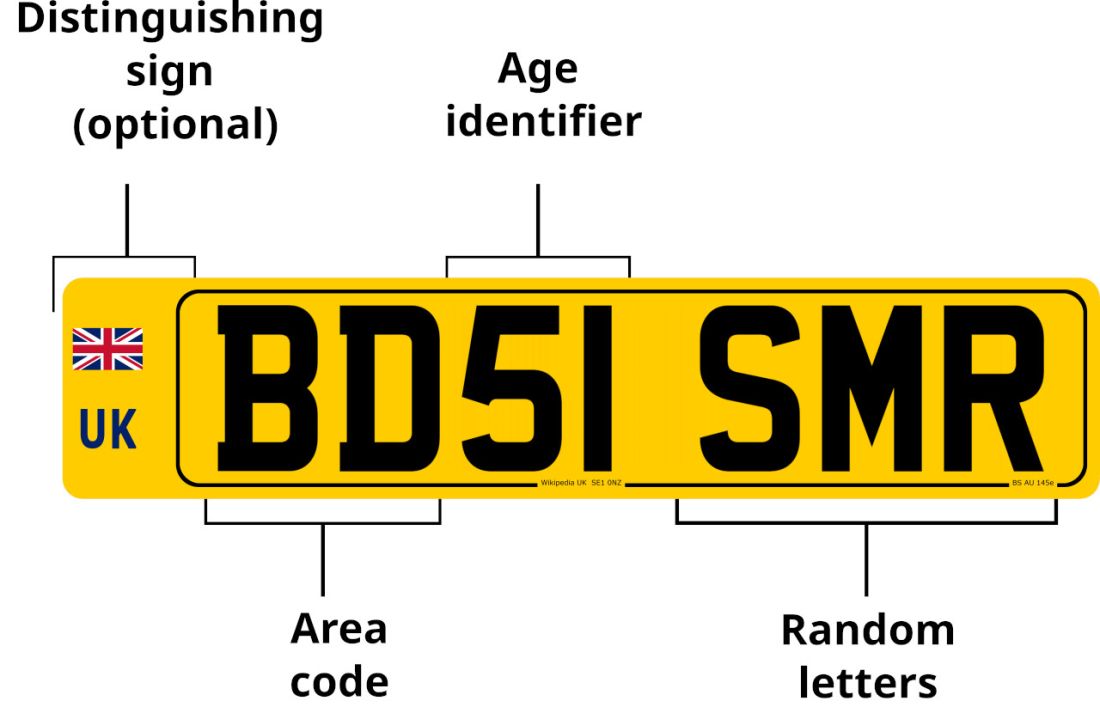
Image: UK rear number plate by Cnbrb & ZElsb, CC BY-SA 4.0, via Wikimedia Commons
If you live in Stockport or Manchester, you’ll notice one thing straight away when you’re out on the roads: the number plate at the front of a car is white with black letters, and the one at the back is yellow with black letters. It’s so familiar we barely think about it. But have you ever wondered why that is? Why yellow at the back, and white up front? Let’s chat about that-because it’s more interesting than you might expect.
A quick history of number plates in the UK
Cars weren’t always as common as they are now. In the early 1900s, roads in the UK were starting to fill up with vehicles and things could get messy. The Motor Car Act 1903 made a law that from 1 January 1904 all motor-cars had to be registered and have number plates. At that time, the plates often were black with silver or white characters. Then a big change came in the 1970s: the UK moved to a system where the front plate must have a white background with black characters, and the rear plate must have a yellow background with black characters. That colour scheme was introduced around 1973.
Why yellow at the back and white at the front?
Alright, here’s where it gets neat. There are a couple of practical reasons why this set-up works.
Visibility & direction
When you’re driving around, you may not always know whether you’re looking at the front or the back of another car-especially in tricky light or weather (fog, rain, dusk in Manchester, you know). Having different colours helps. The bright white front plate catches your eye, the yellow rear plate stands out in headlights, and you can quickly tell: “That car is moving away” or “That car is coming towards me”. According to the Driver and Vehicle Licensing Agency (DVLA), this difference helps other drivers instantly figure out the orientation of a vehicle.
Contrast for readability
Black characters on a light background (white or yellow) give strong contrast. That makes the numbers and letters readable from a distance, day or night. The yellow at the back works well when headlights shine on it because yellow reflects back strongly. White at the front is bright and clear in daylight, visible to approaching drivers. One source says: “yellow plates allow drivers and speed cameras to identify vehicles clearly from behind.”
Safety & regulation
Since about 1971–1973 the UK introduced reflective number plates for improved visibility. And current rules say plates must: be made from reflective material, have black characters on white (front) or black characters on yellow (rear), not have a background pattern, and be marked with the supplier and British Standard number.
How this looks around Stockport & Manchester
If you’re driving past our showroom on Greg Street in Reddish (Stockport), or heading into Manchester via Eccles and you see row after row of used cars (we’ve got over 600 at our four sites!) you’ll notice the plates. Front white, back yellow. That uniformity helps in lots of ways: law enforcement, vehicle recognition, maybe even just less confusion when you’re reversing out of a parking spot on a busy Manchester street. For a dealership like us at Dace Motor Company, it makes things straightforward: all our cars comply with the rules, so you’re safe buying here.
What changed from the past
As mentioned, before the 1970s number plates were mostly black background with white or silver characters. Those older styles are still legal for some very old vehicles (registered before certain dates) but not for modern ones. Some historic cars keep the black plates because it suits their era and design.
Also, over time the material and regulations improved. More reflective material, stricter fonts, stricter sizes. All this to help with safety and legibility.
What you should know as a car-buyer
Since you might be shopping for a used car (and if you’re visiting one of our Dace Motor Company showrooms maybe you’ll pick up one!), here are a few things to watch out for regarding number plates:
- Make sure the front plate is white with black characters, the rear plate is yellow with black characters. If not, that could be a sign the car hasn’t been correctly updated or something is off.
- The plates must be made from reflective material. It’s required by law. If the plate looks very dull or non-reflective it might be non-compliant.
- No background pattern, no weird colours, no tinted overlay. The law says the plate background must be plain white up front, plain yellow at back.
- If the car is a classic (say a vehicle registered before 1 January 1980) then exceptions may apply for the older black/white style. But for normal modern cars you want the standard white/yellow arrangement.
Why it matters for you
You’re not just buying a plate colour. You’re buying assurance. When you pick up a used car - maybe one of dozens at our Stockport sites - you want to know everything’s legit. The plate colour scheme is part of that: it signals that someone’s followed the rules. If someone hasn’t, it might toss up problems later with MOTs, insurance, or even enforcement.
Also, if you’re ever riding through Manchester city centre, or parking outside a café in Reddish, you’ll spot the difference a mile off: yellow at the back means “this is the back of the car”. That little detail adds up to safer roads, easier recognition. For our team, it means we check every vehicle thoroughly, and it’s part of the standard check-over we do.
Some interesting things you might not have known
- The scheme of white front / yellow rear was largely introduced in 1973.
- In other countries many vehicles use the same colour front and rear plates - but the UK chose different colours for a reason.
- If a plate is missing, wrong colour, or non-reflective, the car could fail its MOT or you could get fined. The regulations are strict.
So there you have it: the reason your car’s rear number plate is yellow in the UK is pretty straightforward when you break it down. It’s about visibility, safety, and making sure everyone on the road knows which way a car is pointed. And for those of you thinking of buying a used car from a reputable dealer (like us over at Dace Motor Company) it’s one of those details that shows the car meets the rules and you’re buying smart. Anyway - next time you park up near the Arndale or cruise through Stockport town centre, have a glance at those plates while you wait for your coffee. White up front, yellow at the back, simple as that.