


What Happens When You Overfill Engine Oil
How this happens in real life (and why it catches people out)
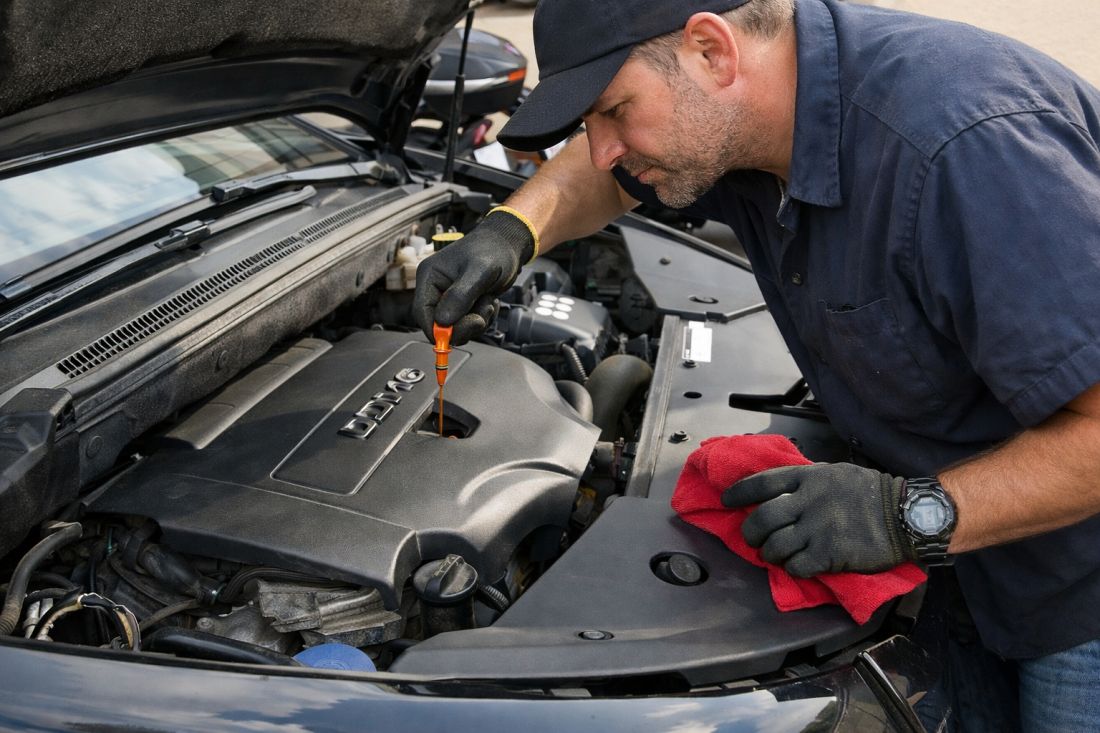
You know how it is… you’re trying to do the right thing. Bonnet up on the drive, it’s doing that Manchester drizzle that can’t decide what it wants to be, and you’ve got a bottle of oil in one hand and the dipstick in the other. You check the level, it looks a bit low, and you think, “I’ll just top it up.” Then the phone buzzes, the neighbour starts chatting, or you’re rushing because you’ve got to get across the M60 before it turns into a car park. It’s easy to pour a bit too much. Another common one is checking the dipstick right after switching the engine off. Oil takes a few minutes to drain back down into the bottom of the engine, so the first reading can mislead you. People see “low,” add oil, then check again later and realise they’ve overshot. And here’s one that catches loads of people around Stockport’s hills: checking or filling on a slope. Park nose-up on a driveway, the oil shifts, the dipstick reading changes, and now you’re topping up based on a wonky measurement.
The tricky bit is that a small overfill doesn’t always shout at you straight away. The engine can sound fine. The dash can look normal. You can potter around Reddish, pass Stockport Viaduct, crawl through Portwood, and nothing seems different. That’s why people shrug and think it’s harmless. But if you’ve gone past the safe mark by a proper amount, the engine isn’t “happy” with extra oil. It’s coping with it. And engines aren’t great at coping with stuff they weren’t built for. At Dace Motor Company we see this now and again, usually after someone’s tried to look after their own car at home, which is fair enough. The problem is that “too much” changes the way oil behaves inside the engine, and that’s where foaming, pressure trouble, and seal damage start showing up.
Why the oil level matters (oil isn’t just “extra protection”)
Engine oil does a few jobs at once. It keeps moving metal parts apart with a thin slippery film so they don’t scrape on each other. It helps carry heat away from hot areas. It also holds onto tiny bits of dirt and soot so the oil filter can catch them. For all that to work, the oil needs to stay a steady liquid, not a bubbly mix, and it needs to sit at the right height in the sump, which is the oil “bath” at the bottom of the engine. The pump pickup sits down there so it can draw oil smoothly. When the level is right, the sump is calm, the pump gets a steady supply, and the engine gets consistent lubrication.
When the level is too high, the spinning crankshaft and nearby parts can start slapping the oil and flinging it around. That churning is the start of most overfill damage. A couple of maintenance guides explain the same theme: excess oil can get whipped up by moving parts, which leads to foaming and other knock-on problems. People also get caught out by the dipstick marks. “Full” isn’t “as high as possible.” It’s the top of the safe range. On a lot of cars, the distance between the low and full marks represents a meaningful amount of oil, not a tiny splash. And because oil expands when it’s hot, the level can read higher after a drive than it does when the engine is cold, which is why checking it in a calm, repeatable way matters.
So the point of that top line is simple: it’s a boundary. Cross it by enough, and the engine starts behaving differently. Not because it’s fussy, but because the oil system and the moving parts are built around a certain level.
Foaming: when oil turns into froth (and stops doing its job)
Foaming is the big one, because it changes what the oil is. Picture shaking a bottle of washing-up liquid and watching it go bubbly. In an overfilled engine, the crankshaft can act like a fast whisk. If the oil level is high enough, the crankshaft hits the oil as it spins and beats air into it. CarTalk’s community explanation puts it plainly: if the crankshaft contacts the oil, it can aerate it, and aerated oil can stop the pump from supplying oil properly, which can lead to oil starvation and a drop in oil pressure.
That’s where people get surprised. They think, “More oil means more lubrication.” Foamy oil is the opposite. Foam is a mix of oil and air pockets. Air pockets don’t protect metal surfaces, and they don’t carry heat away well either. The oil pump is built to move liquid, not bubbles, so the flow can get patchy. That’s when you can hear tapping or ticking, especially from the top of the engine, because some parts aren’t getting a smooth film. If you’re wondering, “Can I spot foaming without taking anything apart?” sometimes you can. A mechanical Q&A points out that small bubbles on the dipstick can be a clue, and it also mentions that in extreme cases oil can get pushed into the engine’s breathing hoses.
And here’s the bit people don’t love hearing: foaming doesn’t “settle out” as a fix if the level stays high. Each time you drive, the crankshaft churns it again. So the solution isn’t “give it a week.” The solution is “get the level back in range.”
Pressure problems: where oil gets forced into places it shouldn’t reach
People hear “pressure” and assume it’s all about the oil pump. Overfilling doesn’t turn the pump into a superhero, but it can raise pressure inside the lower parts of the engine where oil, air, and vapour share space. When there’s too much oil, the moving parts fling it around harder, and you end up with more oil mist and splash than the engine was designed to handle. Several car maintenance guides warn that excess oil can raise internal pressure and can lead to oil being forced past seals and gaskets.
This is also where the engine “breathing” setup comes into play. Engines aren’t sealed jars. They have hoses and passages that let pressure and fumes move out and get routed back into the intake to be burned. If you overfill, that system can end up dealing with a lot more oil mist than it was designed for. Honest John’s forum discussion says too-high oil can cause frothing, and that froth can get carried into the cylinders through the gas recirculating setup, with unburnt oil heading down the exhaust.
In day-to-day driving, pressure trouble can show up as small, annoying signs. Oil smell after a run. Oil residue around the filler cap. Fresh oil around seams, like the engine is sweating. Or a bit of smoke from the engine bay when you pull up after crawling through traffic near Deansgate. None of those are cute quirks. They’re warnings that oil is being pushed into places it shouldn’t reach, and fixing the level quickly is the smart move.
Seal and gasket damage: how a small mistake becomes a leak
Seals and gaskets are the engine’s “keep the oil in” bits. They sit at joins and around spinning shafts, and they’re built to cope with heat, vibration, and normal pressure changes. But they aren’t built to cope with oil being thrown into every corner because the sump is too full. When pressure rises and oil mist is everywhere, oil starts hunting for escape routes. That’s why multiple guides link overfilling with leaks: excess oil can strain gaskets and seals and can lead to oil leaking out.
And a leak isn’t just “a bit of oil on the drive.” Once a seal starts leaking, it can keep leaking even after you fix the oil level. Sometimes it calms down. Sometimes it doesn’t, and then you’re dealing with a repair you didn’t plan for. The location matters too. A minor seep from a cover gasket is annoying but manageable. A leak from a crankshaft seal can be a bigger job because it’s buried behind other parts, and that’s where labour time ramps up.
There’s also a useful reality check from CarTalk’s community chat: it says pumped oil pressure doesn’t directly affect main seals, but an overfilled engine can still leak oil past a main seal, especially if the breathing system isn’t clearing pressure well. That lines up with what workshops see: the overfill creates the conditions, and then a weak seal is the first thing to complain.
So if you spot oil pooling under the car after you’ve topped up, don’t just assume the drain plug is loose. It might be. But it might be a seal that’s had enough.
Other knock-on issues: smoke, rough running, and exhaust damage
Foam, pressure, leaks. Those are the main themes. But overfilling can also trigger extra issues that feel random until you connect them back to the oil level. One is smoke from the exhaust. If oil gets carried into the intake and then into the cylinders, it can burn along with the fuel. TotalEnergies lists dense smoke as a sign that excess oil may be burning inside the engine, and it also mentions spark plug fouling as another possible outcome when oil gets where it shouldn’t. When spark plugs get coated in oily deposits, the engine can misfire, idle rough, and feel “off.” Not dramatic every time, but enough to notice, especially if you’re sat at lights on the A6 wondering why it feels lumpy.
Then there’s the emissions unit in the exhaust, the bit that helps clean up what comes out the tailpipe. If too much oil gets burned and sent down the exhaust, it can contaminate that unit over time. Some guides warn that burning excess oil can harm the catalytic converter. That’s not a quick fix, and it can bring on warning lights and failed emissions checks, which is the last thing you need when you just want the car to behave.
There’s also the smell-and-mess factor. Overfilled oil can get pushed out as vapour, then you get oily residue in hoses, around clamps, and on nearby parts. It’s not dangerous every single time, but it’s a sign the engine is fighting the situation. And if your car has a turbocharger, the stakes can feel higher because turbos rely on a clean, steady oil supply, and they don’t love frothy oil or oil mist in the wrong places. Jason Fenske on the Engineering Explained channel has even shown, with a clear-view setup, how rising oil level can lead to more violent foaming, which helps people visualise why “extra” is a problem.
What to do right now if you think you’ve overfilled it
First: don’t panic. Second: don’t keep driving “to see if it clears” if you can avoid it. The sensible move is to check the level properly and correct it. Park on level ground. Switch the engine off and give it time for the oil to drain back into the sump. If you’ve just come off a fast run and everything’s hot, giving it ten minutes helps. Pull the dipstick, wipe it, push it back in fully, then pull it again and read it. If the oil is above the maximum mark by a noticeable amount, you’ve got your answer.
Some sources stress that the damage risk depends on how far above the mark you are, so a big overfill is a different situation from a tiny one. To remove excess, you’ve got two practical routes. You can drain a little from the sump plug, carefully, into a container. Or you can extract a little through the dipstick tube using a hand pump. The goal is simple: bring the level back into the safe range, then recheck, then recheck again after a short run so you know it’s settled. If you’re doing the drain-plug route, go slow. A tiny twist can release more oil than you expect, and nobody wants a driveway spill.
If you’re seeing heavy smoke, the engine’s running rough, oil is pouring out, or an oil warning light has shown up, treat it as urgent. Switch off and get help. The “I’ll just nip home” decision is the one that turns a small mistake into a bigger bill. And if you’d rather not mess about with tools on the driveway, that’s fair. Dace Motor Company is local across Stockport and Manchester, so you’re not travelling for ages just to get a quick check and the level corrected.
How to avoid the same headache next time
Prevention is boring, and boring is perfect here. Add oil slowly. Give it a moment. Check the dipstick after each small pour. And don’t try to fill past the top mark like you’re trying to win something. Keep it within the marked range and you’re doing the job properly. A simple routine helps too. Check the oil level every couple of weeks, or before a long trip. If you do regular motorway miles between Manchester and Stockport, or you’re heading up the M6 for a weekend away, a quick check before you set off is time well spent. If your car uses oil between services, topping up little and checking carefully beats waiting until it’s really low and then trying to catch up in one go.
Also, don’t ignore weird-looking oil. If the dipstick shows milky, coffee-coloured foam, that can point to water mixing with oil, which is a different problem and needs attention fast. And if you’ve had an oil change elsewhere and the dipstick looks high, do a proper cold check before you assume someone’s messed up. Oil expands with heat, and the reading can look higher when it’s hot. The calm approach is boring, but it saves hassle.
Keep the level right and you avoid the main headaches: foaming that ruins lubrication, pressure that pushes oil into places it shouldn’t reach, and seals getting stressed until they start leaking. No drama. Just a car that gets you through the roundabouts at Portwood and back again without leaving a mark behind it.