


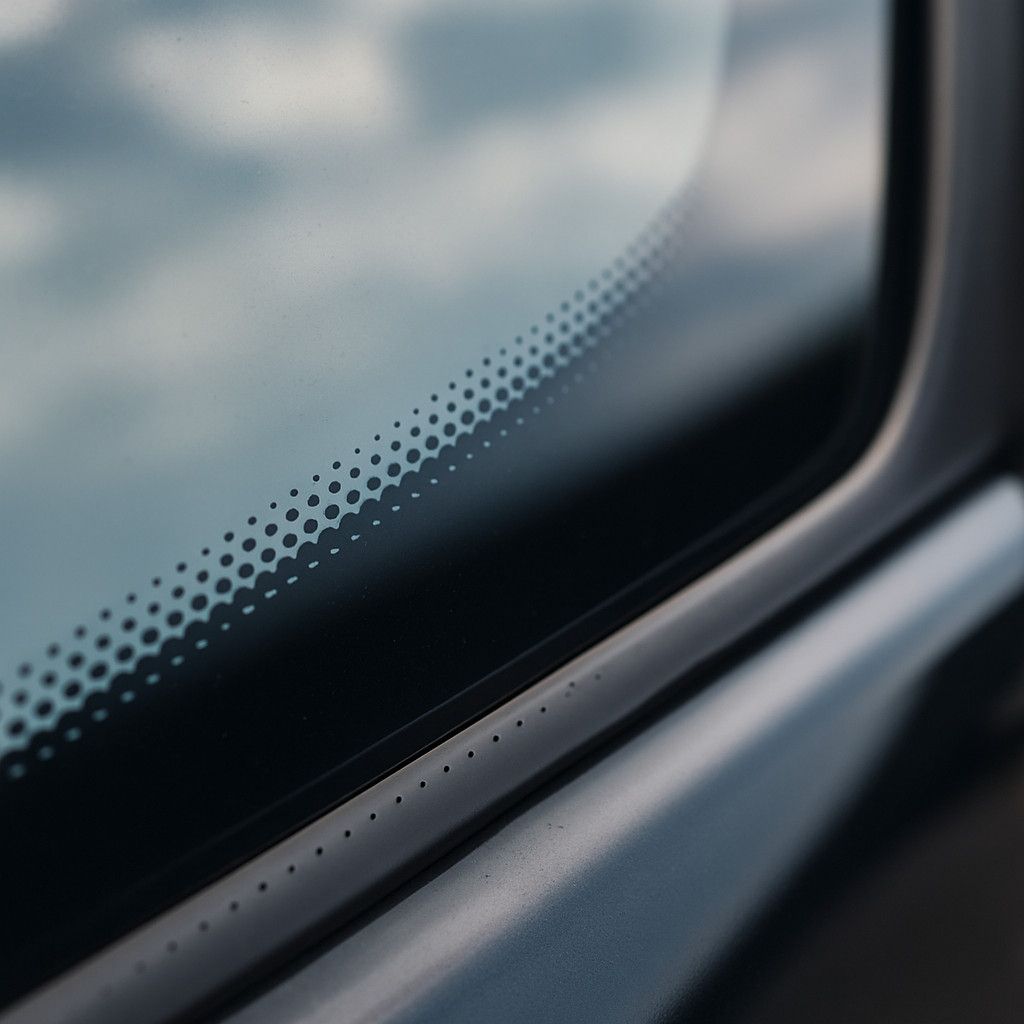
What Are Those Little Black Dots on Car Windows?

If you’ve ever sat in a car and stared at the edge of the windscreen while waiting at the lights on Wellington Road in Stockport, you’ve probably noticed them-those funny little black dots that run around the glass. They’re not random decoration, and no, they’re not there just to make your car look fancy. They actually have a really clever job, and once you know what they do, you’ll never look at them the same way again.
The thing is, car manufacturers don’t just slap glass into a frame and call it a day. Windscreens and side windows have to put up with a lot-heat, cold, wind, wipers, sun, even the odd football if you park too close to a pitch in Brinnington. Those tiny black dots are part of something called the ceramic frit, which is basically a baked-in feature of the glass. It looks simple, but it’s been designed very carefully over decades to do a whole load of different things at once. And the best part? Most people have no clue they’re even working behind the scenes.
We at Dace Motor Company get asked about odd little details like this all the time. People shopping for a used car will often notice quirks, like buttons they’ve never seen before, or details in the glass they don’t understand. The dots are one of the most common ones. And because we love cars (and explaining the bits that puzzle people), let’s break down exactly what those dots are, why they exist, and how they quietly make your drive a lot easier than you realise.
Why do car windows even need those dots?
You know how on a sunny day in Manchester-rare as it sometimes feels-the car can get roasting hot? Well, glass doesn’t just let light in, it soaks up heat. And when it heats up, it expands. Not evenly, either. The edges of glass, especially around the windscreen, get hotter and cooler at different rates compared to the middle. That can cause stress in the glass and, if it’s not controlled, cracks or warping.
This is where the black border and the dots come in. That black band you see around the edges of the glass? That’s part of the ceramic frit. It’s a layer baked right into the glass during manufacturing. The solid black area blocks out harsh sunlight around the edges where adhesives hold the windscreen in place. Without it, the glue holding your screen in could break down quicker from UV rays, and then you’d be in real trouble.
But a solid line can look a bit harsh, like a blocky outline. So, the dots are added as a gradient-going from solid black to clear glass. This helps smooth the visual transition, so you don’t notice the border as much. It’s easier on your eyes. You’ve probably seen how your eyes can struggle when there’s a sharp jump between light and dark. The dots soften that jump, so your eyes adjust more comfortably. It’s a subtle trick, but it works brilliantly.
And the temperature thing? The dots also help the glass heat more evenly. Without them, you’d get hot spots and cold spots across the windscreen, which could make the glass more likely to crack. The dots spread out the heat in a gentler way, reducing stress. So yes, those tiny speckles are doing a lot of heavy lifting for something you barely notice.
Do they actually help you while driving?
Absolutely. Think about those really sunny afternoons when you’re stuck on the M60, sun blazing in your eyes, and you’re wishing you had a better pair of shades. That dotted section, especially around the top edge of the windscreen, acts a bit like sunglasses for your car. It reduces the glare right where the sun often sits in your field of vision.
The dots aren’t tinted glass exactly, but they cut down the brightness that can hit your eyes when you’re glancing up. That’s why they’re often arranged in a denser patch behind the rear-view mirror. That little shaded area is a sun shield of sorts. The sun loves to sneak in around that spot, and the dots help tone it down so you’re not constantly squinting.
There’s also something else. Ever noticed how the inside of your car can look warped when you stare through the curved edge of the glass? Without the dots, that distortion would be even more noticeable. The gradient makes the transition between glass and frame feel smoother to your eyes. It might not sound like much, but on long drives it makes a difference.
And then there’s the look of it. Cars are designed to be sleek, and without the dotted border, the windscreen would have a pretty sharp contrast between the black edge and the clear middle. The dots soften that look, making the design flow better. It’s the kind of thing you don’t consciously notice, but if it wasn’t there, you’d definitely feel like something looked off.
Why are they called a ceramic frit?
The name sounds like something you’d hear in a science classroom, doesn’t it? But it’s pretty straightforward. “Ceramic” because it’s made from ceramic paint. And “frit” is just the name for the enamel coating that gets fused into glass. Once it’s baked on at crazy high temperatures, it’s permanent. You can’t scrape it off. It’s not a sticker. It’s part of the glass itself.
This is important because windscreens need to last. You don’t want something peeling away after a few years. Car makers figured out ages ago that baking in the frit not only protects the adhesives and helps with the sun, but it also gives the glass better grip when it’s being bonded to the frame. Basically, the glue sticks more reliably to the fritted area than it would to clear glass. That means your windscreen is more secure.
So, the next time you’re parked outside the Trafford Centre and glance at those dots, just remember-they’re not decoration, they’re science. They’re keeping the screen in place, protecting the glue, reducing glare, helping with temperature, and even saving your eyes from harsh edges. That’s a lot of jobs for some little dots most of us barely think about.
Do all cars have them?
Pretty much, yes. Some newer models use slightly different patterns or shading, but almost every car out there will have some version of the ceramic frit. It doesn’t matter if it’s a small city car like a Fiat 500, a big Land Rover, or something sportier like a BMW 3 Series-those dots are there, working away.
If you’re walking around our Dace Motor Company site on Greg Street, you can check for yourself. Take a look at the windscreens across different cars. You’ll notice some cars have big bold bands, others have smaller dots, but the idea is always the same. Protect, smooth, and shade.
And yes, even back windscreens have them, especially around the heating elements. You might not notice because they blend in, but once you start looking, you’ll see them everywhere. It’s one of those things where, once you spot it, you can’t unsee it.
Everyday benefits you never think about
Here’s the funny thing: if those dots didn’t exist, you’d notice right away. The edges of the windscreen would probably look ugly. Your eyes would struggle more with glare. Your car could be at higher risk of cracks from uneven heating. The glue might not last as long. In other words, you’d have a lot more problems without them.
But because they do exist, you don’t even think twice. You just get in your car, drive through Stockport town centre, and get on with your day. That’s the beauty of clever design-it works so well you forget it’s there.
And that’s kind of why we like talking about things like this. Cars are full of little details that make your life easier. Some of them are obvious, like heated seats or reversing cameras. Others are hidden, like the ceramic frit. Both are important, just in different ways.
At Dace Motor Company, we’ve spent years helping people find the right used car. We know that when you’re buying, it’s the big stuff that grabs your attention-mileage, service history, price. But it’s the little things, like these dots, that remind you cars are built with more thought than most people ever realise.