


The Most Unusual Mercedes Models You’ve Probably Never Heard Of
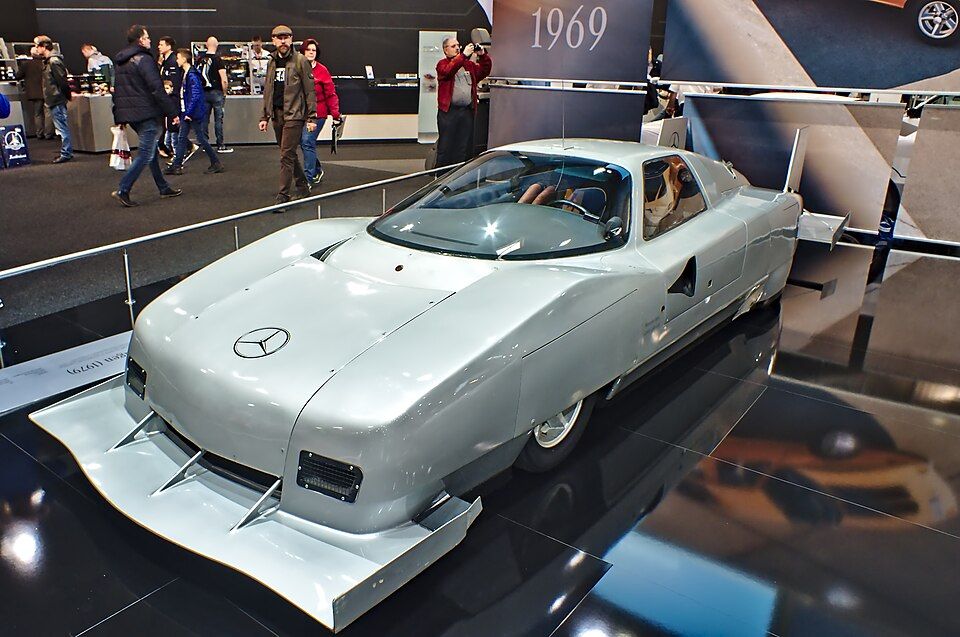
Photo: Mercedes Benz C 111 IV by Thomas Vogt from Paderborn, Deutschland, CC0, via Wikimedia Commons.
Mercedes-Benz has a very clear image in most people’s heads. You picture a smart saloon gliding down Deansgate, a roomy estate loaded for a weekend away, or a big four-wheel-drive car waiting at the lights near Stockport Viaduct. Sensible shapes. Solid engineering. A badge almost everyone knows. But the company’s back catalogue has some properly strange corners, and that’s where things get fun. Across the decades, Mercedes engineers have put engines in unexpected places, built a car with swappable bodies, tested a tiny city box with sliding doors, removed the steering wheel, and created a six-wheeled pickup that looks as if it could climb over the Mancunian Way rather than drive along it. Some of these cars reached buyers. Some stayed as experiments. A few were built in such tiny numbers that seeing one in person would be like spotting a film star buying a meal deal in Reddish. At Dace Motor Company, we spend our days around familiar used Mercedes models, so looking back at the oddballs makes a nice change. It also shows something people forget about the three-pointed star. Mercedes hasn’t spent its whole history playing safe. Quite the opposite. Many of its strangest ideas appeared years before the rest of the car trade caught up, even when the original vehicle itself went nowhere. So, make a brew and settle in. These are seven unusual Mercedes models that deserve a place in the pub quiz, even if they’d be hopeless at finding a normal parking space outside the Trafford Centre.
Mercedes-Benz 130: the engine was hiding at the back
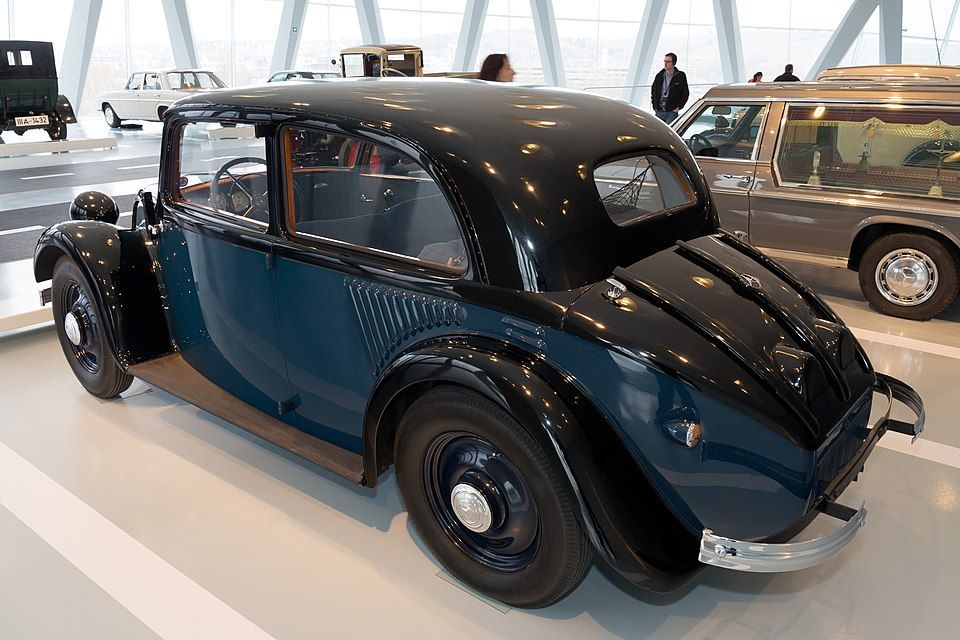
Photo: 1935 Mercedes-Benz 130 (W23) by Morio, CC BY-SA 3.0, via Wikimedia Commons.
The Mercedes-Benz 130 arrived in 1934, and at first glance it looked like a small, upright car from its time. Nothing too wild. Then you checked where the engine lived. Instead of sitting under the bonnet at the front, it was mounted behind the rear axle. That layout is now linked with cars such as the classic Volkswagen Beetle and early Porsche models, but Mercedes was trying it before either had become a familiar sight on ordinary roads. The company’s own archive calls the 130 its first rear-engined production passenger car and its smallest production passenger car at launch. It also describes it as the first mass-produced rear-engined car, aside from some very early vehicles built by motoring pioneers. That’s a huge claim for a Mercedes that most drivers have never seen.
The engine made 26 horsepower, which sounds tiny now, though roads, traffic and expectations were very different in 1934. The 130 came as a two-door saloon, an open tourer and a convertible-style saloon, so buyers had a bit of choice. The tricky part was weight. With around 65 per cent of the load sitting over the rear, the car could feel tail-heavy, and its handling became a talking point. You can picture the basic problem with a shopping trolley. Put every heavy bag behind the rear wheels, then try to turn quickly. The front gets light and the back wants a say in where you’re going. Mercedes kept working on the idea and later produced the 170 H, but the 130 remains the real curiosity. It was small, bold and a little awkward. In other words, exactly the sort of experiment that makes old car history interesting. It also proves that Mercedes was willing to put a strange idea into showrooms, let real drivers test it, and learn from what happened next.
Mercedes-Benz 150 Sports Roadster: a mid-engined Mercedes before it was fashionable
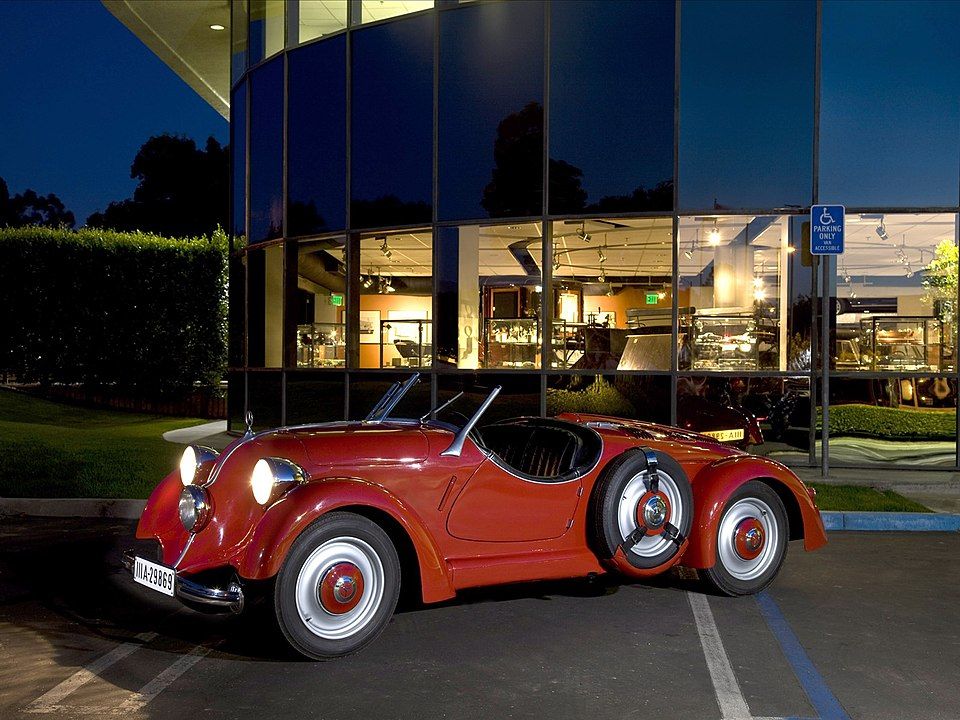
Photo: Fully Restored 1934 Mercedes-Benz 150 Sport Roadster at the Mercedes-Benz Classic Center by Mercedes-Benz USA, LLC., CC0, via Wikimedia Commons.
The Mercedes-Benz 150 Sports Roadster looked as though someone had taken a sleek 1930s racing car, softened the edges, and then hidden the engine in the middle. That last bit matters. The engine sat in front of the rear axle, which is what we now call a mid-engined layout. Today, that setup brings to mind low supercars, loud exhausts and posters on bedroom walls. Mercedes was testing it in the mid-1930s. The 150 began as a two-seat sports saloon made for competition use. Its 1.5-litre engine produced 55 horsepower, over twice the figure of the smaller unit that inspired it. The closed car earned four gold medals in a 2,000-kilometre endurance event across Germany in 1934, and one was driven by Hermann Lang, who later raced the famous Silver Arrows. Mercedes then used that competition car as the base for the open Sports Roadster shown in Berlin in February 1935.
Here’s where the story gets wonderfully messy. Mercedes’ archive says the unusual shape and mechanical layout caused a stir, but the roadster never entered full production. Even the surviving paperwork disagrees about how many existed. Body records point to five, while order books show four shipped examples. That makes the car rare enough to turn any classic-car gathering silent for a moment. Its proportions are odd but charming. There’s a long, smooth nose, even though the engine isn’t in it, and the spare wheel sits sideways under the front bodywork. Imagine opening the bonnet and finding luggage space and a wheel rather than the oily machinery you expected. Very strange. Very clever. And a little confusing. One example is held by the Mercedes-Benz Museum, which is probably the safest place for it. Bring it to a wet roundabout in Greater Manchester and every classic-car owner within ten miles would start sweating.
Mercedes-Benz C 111: the orange gullwing that was never for sale
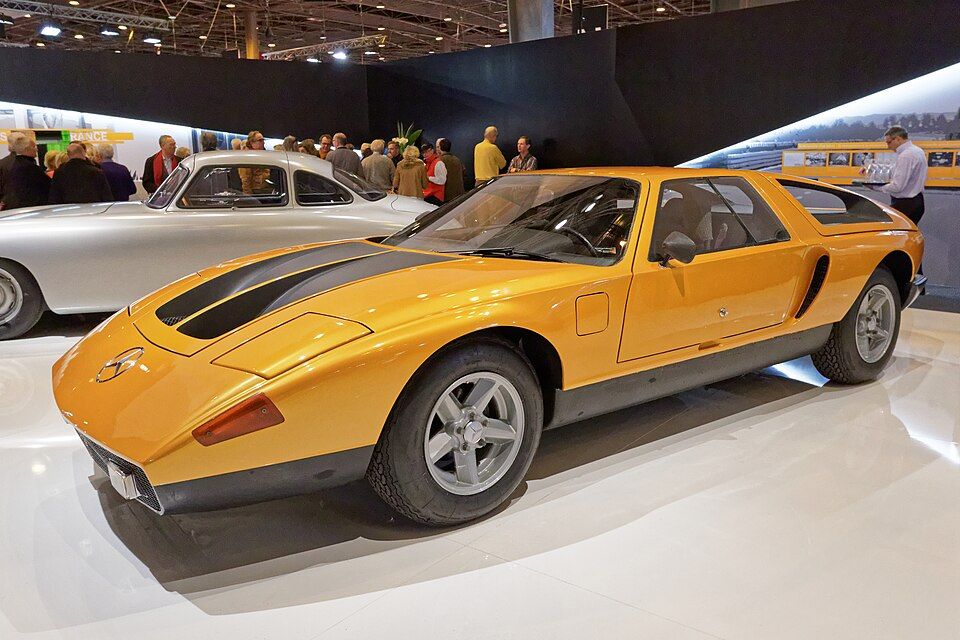
Photo: 1970 Mercedes-Benz C 111 by Thesupermat, CC BY-SA 4.0, via Wikimedia Commons.
The C 111 is the car most likely to make someone say, “Hang on, Mercedes built that?” It appeared at the end of the 1960s looking like a visitor from a science-fiction film. Low roof. Sharp nose. Bright orange paint. Doors that lifted upwards. It had the drama of the famous 300 SL Gullwing, but the C 111 wasn’t meant to become a normal showroom model. Mercedes called it a laboratory on wheels. The main goal was to test a rotary engine, a kind of engine that uses spinning parts rather than the usual pistons moving up and down. You don’t need an engineering degree to get the appeal. Fewer moving parts sounded neat, the engine could be compact, and the smooth way it ran seemed perfect for a fast car.
The second major version, shown at the Geneva Motor Show in 1970, used a four-rotor engine producing 350 horsepower. Mercedes recorded a top speed of 300 kilometres per hour and a run from zero to 100 kilometres per hour in 4.8 seconds. Those figures would still feel quick on a modern motorway slip road. In 1970, they were wild. Yet the C 111 never became the orange dream car people asked to buy. Mercedes kept it as a test bed rather than sending it to dealers, and the rotary idea never became a regular production engine for the brand. That decision makes the C 111 even more fascinating. It wasn’t a failed supercar. It was a research tool wearing the body of one. Think of it like a laboratory coat cut to look like a racing suit. And because it never became common, the shape still feels fresh. Park one beside modern traffic near MediaCity and it would pull a crowd in seconds, even before those gullwing doors went up.
Mercedes-Benz NAFA: the tiny city box that came decades early
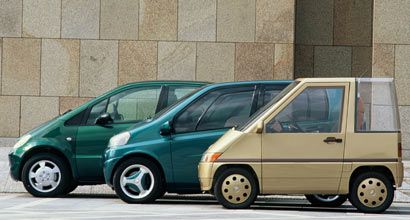
Photo: Mercedes-Benz NAFA by The original uploader was Gemini23 at German Wikipedia., CC BY-SA 3.0, via Wikimedia Commons.
In 1981, long before tiny two-seat city cars became a familiar sight, Mercedes built the NAFA. The name came from a German phrase meaning local transport vehicle, but you can forget the name for a second and just look at the thing. It was only 2.5 metres long and 1.5 metres wide. That’s small enough to make an ordinary hatchback look bulky. The body was upright, square and covered with glass, almost like a telephone box that had learned to drive. Sliding doors made sense in tight spaces, because they didn’t swing out into the next car. Four-wheel steering gave it a turning circle of just 5.7 metres, helping it twist around narrow streets and cramped car parks. It also used front-wheel drive, which was new ground for a Mercedes car. Under the short bonnet sat a 1.0-litre three-cylinder engine with 40 horsepower. Nobody was going to set a lap record in it, but that wasn’t the point.
This car was made for short urban trips, easy parking and getting through crowded streets without dragging a huge body around. Picture trying to squeeze into one of those spaces that appears near the Northern Quarter, then noticing the gap is about the size of a garden shed. The NAFA would have fancied its chances. It never became a production car, though parts of the idea feel familiar now. Its upright cabin and tiny footprint bring the later Smart car to mind, while its clever use of space hints at the first Mercedes A-Class. That doesn’t mean the NAFA turned directly into either one. Car ideas rarely move in a perfectly straight line. But it showed that Mercedes was thinking hard about small cars, crowded cities and easy access years before those subjects became everyday sales talk. It’s quirky, sensible and oddly likeable. A proper little box of ideas.
Mercedes-Benz Vario Research Car: four cars hiding in one
The Vario Research Car from 1995 tried to solve a problem many drivers still have. You need a small saloon for daily use, an estate for a holiday, a convertible for sunny weekends, and a pickup for hauling something messy. Buying four cars would be ridiculous. Mercedes’ answer was one car with four different upper bodies. The roof, side panels and rear section formed a single shell that could be lifted off and swapped. In about 15 minutes, the same base could change from a saloon into an estate, an open-top car or a pickup. Mercedes even imagined special service stations holding the spare bodies. You’d arrive, have a coffee, and leave with a different kind of car fitted to the same lower section. It sounds a bit like changing the case on a phone, except the case has windows, doors and half a boot attached. The idea never reached normal buyers, and it’s easy to see why. Storing large body sections would cost money, the swap equipment would need space, and every seal would have to keep Manchester rain outside after repeated changes. Still, the car was far from a silly styling exercise. Daimler-Benz’s 1995 annual report said it was a working test vehicle for new steering systems, lighter construction, an adaptable chassis and new controls. Contemporary Mercedes material also described it as the company’s first research car with electronic steering commands rather than a direct mechanical link. So beneath the party trick sat serious work. The Vario Research Car asked a smart question: should one vehicle stay the same shape for its whole life? Carmakers still play with modular interiors, removable roof panels and flexible load areas, but nobody has made swappable full bodies a normal part of ownership. Maybe that’s for the best. Turning up at a Stockport service centre and asking staff to “put the pickup back on” would take some explaining.
Mercedes-Benz F 200 Imagination: no steering wheel, no pedals, no problem
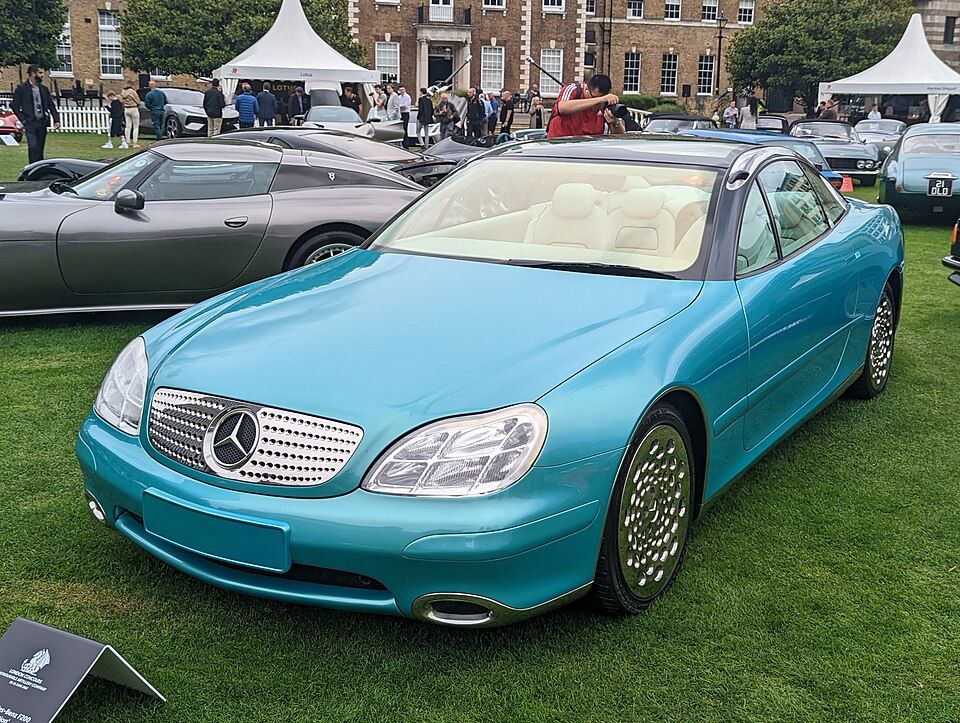
Photo: 1996 Mercedes F200 Imagination by Calreyn88, CC BY-SA 4.0, via Wikimedia Commons.
The Mercedes-Benz F 200 Imagination arrived at the 1996 Paris Motor Show with one very obvious missing item. It had no normal steering wheel. It also did without the usual pedals. Instead, the driver controlled the car with side-mounted sticks that sent electronic commands to the steering, brakes and engine. A centre stick could even be reached from either front seat. Just think about that for a second. Mercedes built a large luxury coupe that could be controlled from the passenger side, nearly three decades before giant screens and electronic controls became normal talking points in new cars. The cabin had a wide display stretching across the dashboard, early internet access, cameras in place of some mirrors, curtain airbags and headlights that could change the shape of their beam.
Plenty of those ideas later appeared in production cars, though thankfully the steering wheel stayed. The F 200 also gave a strong clue about the shape of the large Mercedes coupe launched in 1999. Its smooth roofline, broad rear and soft curves looked unusual in 1996, then became much easier to recognise once the road car arrived. The steering system is the part everyone remembers, and rightly so. Moving a small stick seems easy when you’re playing a driving game on the sofa. It feels very different when a real car, real kerbs and a real bus are involved. Imagine guiding it through the tight bends by Stockport Market while your left hand rests on something that resembles an aircraft control. You’d need a calm passenger. The F 200 was never meant to remove every steering wheel from future Mercedes models. It was a way to test what electronic controls might make possible, while giving designers freedom to rethink the cabin. Strange? Absolutely. Pointless? Not at all.
Mercedes-Benz G 63 AMG 6x6: because four wheels apparently weren’t enough
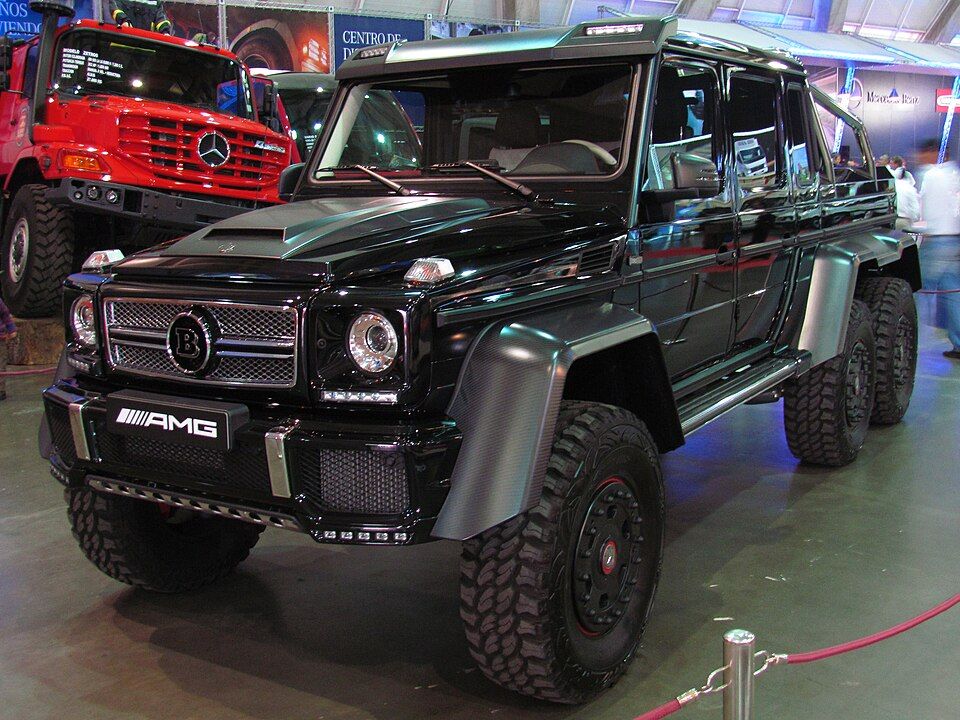
Photo: Mercedes Benz G 63 AMG Brabus B63S 700 6x6 by order_242 from Chile, CC BY-SA 2.0, via Wikimedia Commons.
Some unusual Mercedes models are tiny and thoughtful. The G 63 AMG 6x6 is neither. It takes the square shape of the G-Class, adds a pickup bed, fits three axles and six driven wheels, then gives the whole machine the cabin of a luxury car. The result looks like a military truck that won the lottery. Mercedes fitted a 5.5-litre twin-turbocharged eight-cylinder engine with 544 horsepower, along with special axles and a system that let the driver change tyre pressure from inside the cabin. Ground clearance was 46 centimetres and the stated wading depth was one metre. In other words, it could tackle water deep enough to make most road-car owners reach for their phone and call for help. At the same time, the interior had the leather, screens and comfort people linked with an expensive Mercedes.
That clash is the whole appeal. Mud outside. Lounge inside. Six huge tyres everywhere. It’s hard to imagine a vehicle less suited to a city-centre multi-storey car park, yet that only adds to the story. You wouldn’t take one into Manchester and casually nip into a narrow bay. You’d arrive, pause, look at the concrete ramps, and quietly leave before becoming local news. The 6x6 began as a near-production show vehicle and did reach customers in limited numbers. It was never meant to replace the regular G-Class or become a sensible family choice. It was a statement, a mechanical dare and a display of what the G-Class base could cope with. Plenty of modified six-wheel luxury trucks have appeared since, but the factory Mercedes version still has a special sort of madness. There’s no subtle way to own one. Even parked, it seems to be shouting.
What these strange Mercedes models tell us
Put these seven cars side by side and they don’t look like members of the same family. One is a tiny city box. One is a bright orange test car. One changes its body. One has six wheels. Yet they share the same basic habit: each asks a question that ordinary cars avoid. What happens if the engine moves to the back? Can a sports car place it in the middle? Could one car wear several bodies? Do we really need a steering wheel? How small can a comfortable city car be? And, at the other end of the scale, how many wheels can a luxury off-roader carry before everyone starts laughing? Some answers worked. Some didn’t. That’s normal. Experimental cars aren’t supposed to get every detail right. Their job is to try things, expose weak spots and leave useful ideas behind. The NAFA’s size and sliding doors made urban sense. The F 200’s wide screen and electronic controls predicted features that later became familiar. The C 111 tested an engine idea inside a shape people still remember. Even the flawed rear weight balance of the 130 gave engineers real lessons. For drivers looking at used Mercedes cars today, these models are a reminder that the badge’s history isn’t built from safe saloons alone. There’s a playful streak in there. A stubborn one too. At Dace Motor Company, the Mercedes models you’ll meet are much easier to park, insure and live with than a C 111 or a six-wheeled G-Class, which is probably a relief. Still, knowing about the odd experiments makes the everyday cars a bit richer. The next time you see a Mercedes in traffic around Manchester or Stockport, remember that somewhere in its family album sits a tiny glass box, an orange gullwing and a coupe driven by joysticks. Car history would be dull without the weird relatives.