


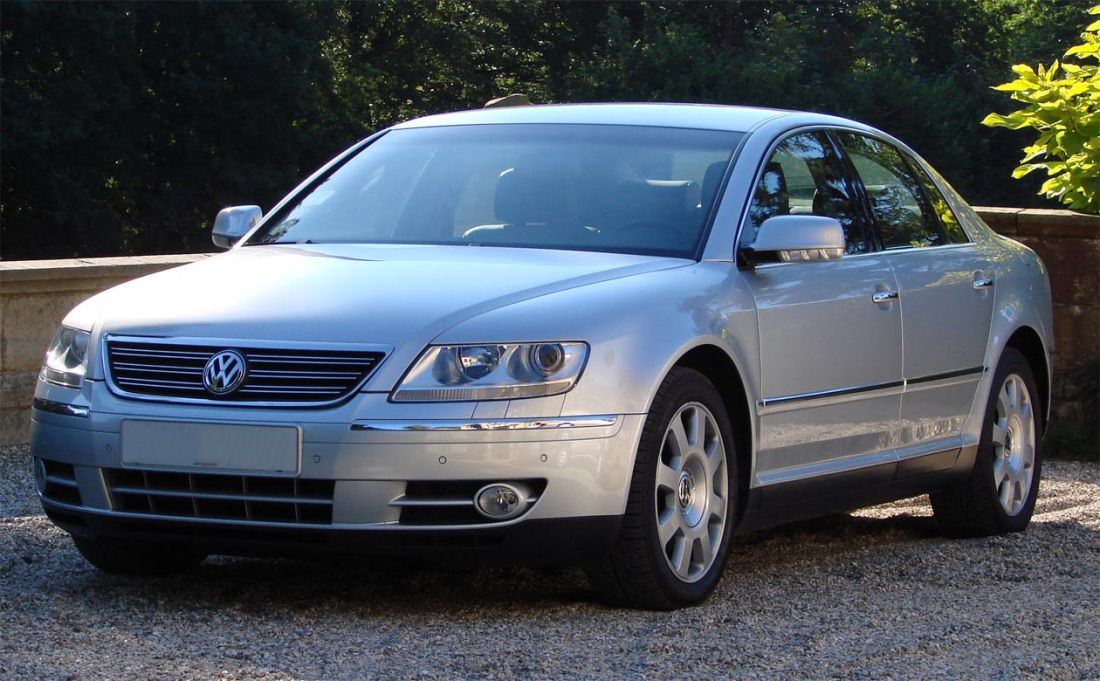
Volkswagen Phaeton: Why VW Built a Luxury Car to Rival Mercedes
Photo: 2005 V6 TDI Volkswagen Phaeton by Bewibble at English Wikipedia, Public domain, via Wikimedia Commons.
You know how some cars make sense the second you see them? A Golf makes sense. A Polo makes sense. A Passat makes sense. They’re cars for real life: school runs, work trips, weekend drives, rainy supermarket runs, the lot. Then there’s the Volkswagen Phaeton, a huge, quiet, leather-lined luxury saloon from the same badge you’d see on a neighbour’s hatchback outside the chippy. At first glance, it sounds like Volkswagen woke up one morning and said, “Right, let’s have a go at Mercedes.” And, well, that’s not miles off. The Phaeton was Volkswagen’s bold try at building a car that could sit near the Mercedes S-Class, BMW 7 Series and Audi A8 without looking nervous. It was big, calm, heavy, clever and very expensive when new. But it wore a Volkswagen badge, which made the whole thing feel a bit like turning up to The Midland Hotel in Manchester in a perfectly cut suit, then telling everyone you came on the 192 bus. Strange? Yes. Brilliant? Also yes. And that’s why this car is still talked about today.
A Volkswagen that didn’t act like a normal Volkswagen
The Phaeton story really starts with Ferdinand Piëch, the kind of car boss who didn’t seem happy with “good enough.” He was an engineer at heart, and he had already helped shape some seriously important cars before the Phaeton came along. Volkswagen says the project began near the end of the nineties, with Piëch wanting to open a fresh market for Volkswagen through a proper luxury saloon, while lifting the whole brand at the same time. That bit matters, because the Phaeton wasn’t just about selling one posh car to people with big driveways. It was about proving a point.
Volkswagen wanted to show that it could build something with the comfort, finish and quiet confidence people linked with the best German luxury cars. The Concept D preview arrived in 1999, and by 6 March 2002 the finished Phaeton had its big public moment at the Geneva Motor Show. Volkswagen’s own archive says the car had over 100 patents and sat right at the top of the passenger car class, with details like air suspension, four-zone climate control and a fully new information and sound system for the time. That’s a lot of effort for a car many people walked past because the badge didn’t shout “wealth.” But that was also part of the charm. The Phaeton didn’t shout. It cleared its throat, quietly, then proved it knew what it was doing.
Why aim at Mercedes in the first place?
Mercedes had the S-Class, and for many buyers, that car was the boss of big saloons. It had status. It had history. It had that “important person in the back seat” feel. You’d see one outside a nice hotel, a legal office, an airport lounge entrance, or crawling through city traffic with dark glass and a driver who looked like he knew every shortcut from Deansgate to the airport. Volkswagen, meanwhile, was still seen by plenty of people as the maker of sensible family cars. Good cars. Trusted cars. But not cars you’d compare with a chauffeur-spec Mercedes without raising an eyebrow. Piëch seemed to enjoy that challenge.
He wanted Volkswagen to stretch higher, and the Phaeton became the proof. Volkswagen later said the car helped pave the way for other high-end models such as the Touareg and Arteon, which shows how the Phaeton’s job was bigger than its sales figures. It was like a flagship shop on a smart street: maybe not where the whole business makes its money, but it changes how people see the name over the door. Around Stockport and Manchester, we know that feeling well. A business can be known for solid, everyday service, then still surprise people with something a bit special. Dace Motor Company has showrooms in Stockport and Manchester, and because we see all sorts of used cars, we get why the Phaeton still gets people chatting. It’s a car that asks a simple question: what happens if the “people’s car” brand builds a luxury car with almost no ego?
The brief was a bit wild, to be honest
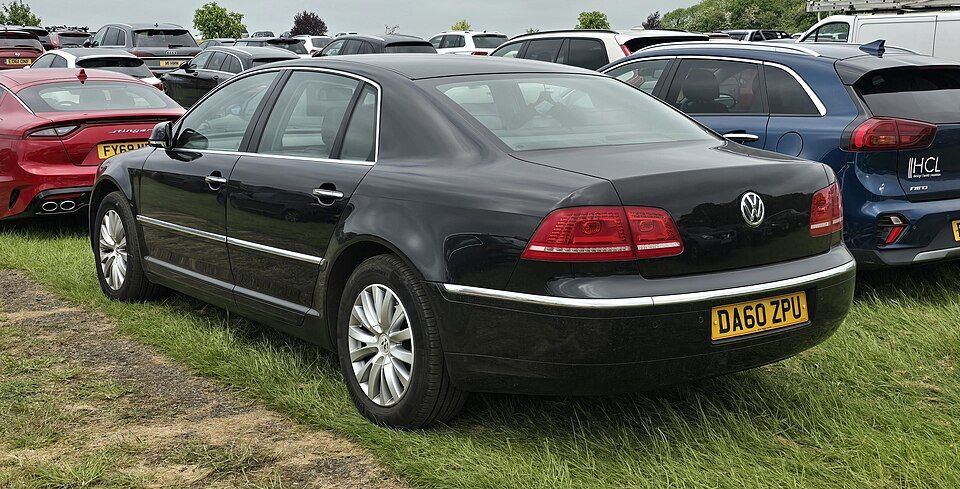
Photo: 2011 Volkswagen Phaeton V6 TDi 4Motion Auto by Calreyn88, CC BY-SA 4.0, via Wikimedia Commons
One of the most famous stories about the Phaeton is the heat and speed test. VW Press UK says the W12 model could keep the cabin at 22 degrees Celsius while the car held 186 miles per hour, which is 300 kilometres per hour, in 50-degree heat. Think about that for a second. That’s hotter than anything you’ll feel stuck on the Mancunian Way in July, even with the windows up and the sun bouncing off every white van in sight. And 186 miles per hour is race-track stuff, not “late for work in Stockport” stuff. The point wasn’t that owners would drive flat out through a desert every Tuesday.
The point was that the car had to feel calm even when pushed far beyond normal life. That explains a lot about the Phaeton. Its climate control wasn’t just a fan blowing cold air at your face. Volkswagen talked about draught-free four-zone air conditioning, which means each area of the cabin could be kept comfy without that annoying blast of air on your forehead. The body had to be stiff, the doors had to shut with a deep thud, the cabin had to stay quiet, and the seats had to feel right after hours on the motorway. It was luxury built from small feelings: silence, softness, weight, warmth, cool air, no rattles. The stuff you notice after five minutes, and then miss in other cars.
The factory was part of the magic
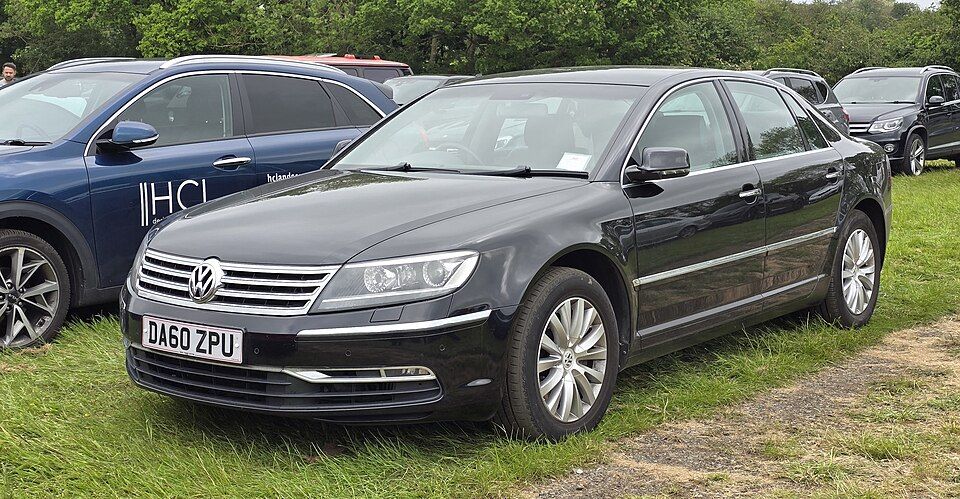
Photo: 2011 Volkswagen Phaeton V6 TDi 4Motion Auto by Calreyn88, CC BY-SA 4.0, via Wikimedia Commons.
Volkswagen didn’t just build the Phaeton anywhere. It built a glassy showcase factory in Dresden called the Transparent Factory, or Gläserne Manufaktur. Volkswagen says the Phaeton was assembled almost completely by hand there, in bright halls where workers wore white clothing and many wore gloves. The floors used light Canadian maple and dark German moor oak. That sounds less like a normal car plant and more like somewhere you’d expect to buy a grand piano, or maybe a very serious watch. It was meant to say: this Volkswagen is different.
Customers and visitors could see the process, which gave the Phaeton a bit of theatre. And theatre matters with luxury cars. People don’t buy a Mercedes S-Class only because it has seats and a boot. They buy the feeling around it. The badge, the showroom, the smell of the leather, the way the door shuts, the quiet little details that tell your brain “this is a big deal.” Volkswagen knew it needed some of that. So the factory became part of the car’s story. If the Golf was the trusted local café, the Phaeton was the glass-fronted restaurant with polished floors, soft lighting and someone checking every fork lined up right. Same parent brand. Very different mood. It was a brave move, and yes, maybe a slightly mad one. But you’ve got to respect the confidence.
Understated looks, serious hardware
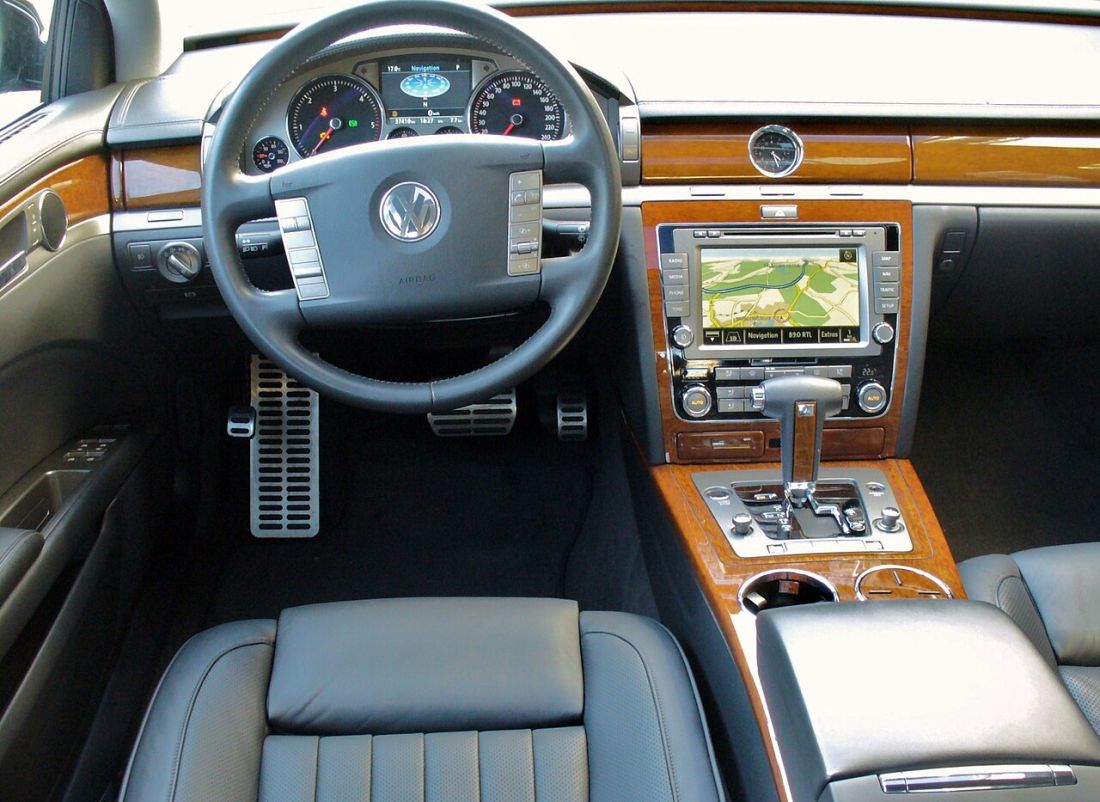
Photo: VW Phaeton Interior by Thomas doerfer, CC BY 3.0, via Wikimedia Commons
The Phaeton didn’t look wild. No huge grille. No look-at-me body kit. No “move out of my way” face. It looked like a big Passat that had been sent to finishing school and told to speak more quietly. Volkswagen’s 20-year look back gives its size as 5.06 metres long, 1.90 metres wide and 1.45 metres high, so it had the same kind of road presence as the big German saloons it wanted to sit beside. The shape was calm and smooth, with a rounded roof line and a cabin that felt rich rather than flashy. Inside, Volkswagen used leather, chrome and wood veneer made from up to 30 layers, while the vents could hide behind wooden panels and open quietly as the climate system worked.
That’s such a Phaeton detail. Nobody needed hidden air vents, really. But they made the cabin feel cleaner and calmer. Engine choices added to the big-car feel. Volkswagen’s archive lists a range across the car’s 14 years, from a 3.0-litre diesel with 224 PS to a V10 diesel with 313 PS and a W12 petrol engine with 450 PS. The early W12 made 420 PS, while later versions gained more. There were also V6 and V8 petrol models in some markets. And many versions came with four-wheel drive, which suited the car’s heavy, steady character. It wasn’t trying to be a sports car. It was trying to make a long run feel easy, like the M60 had been ironed flat overnight.
So why didn’t it beat the S-Class?
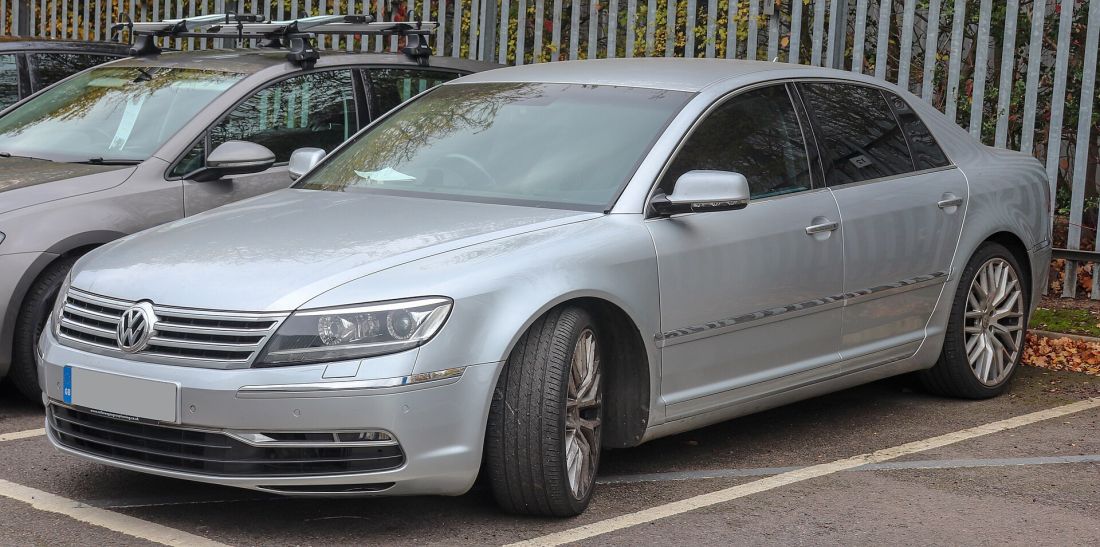
Photo: 2013 Volkswagen Phaeton V6 by Vauxford, CC BY-SA 4.0, via Wikimedia Commons
Here’s the tricky bit. The Phaeton was deeply impressive, but car buying isn’t just a checklist. If it were, we’d all buy the car with the best seats, the biggest boot and the neatest service history, then go home happy. Real life is messier. People care about badges. They care about what the neighbours think. They care about the story they tell themselves when they spend luxury-car money. A Mercedes S-Class says “top of the range” before you even open the door. A Volkswagen Phaeton asked people to look past the badge and judge the car on what it could do. Some buyers loved that. Many didn’t.
That’s the heart of the Phaeton problem. It was built like a luxury car, priced like a luxury car, and felt like a luxury car, but the badge had to do a job it wasn’t used to doing. Then there were running costs. A car with air suspension, advanced climate control, big engines, heavy doors, lots of motors and lots of comfort kit can be wonderful when everything works. But if things go wrong, bills can get spicy. No one wants a bargain luxury car that turns into a wallet-eating sofa on wheels. Volkswagen kept updating the Phaeton in 2007, 2008, 2010 and 2013, adding kit and fresh styling, but the car stayed a niche choice. Production ended on 18 March 2016 after 84,235 Phaetons, including early build cars, had been made in Dresden.
The cancelled second Phaeton tells you a lot
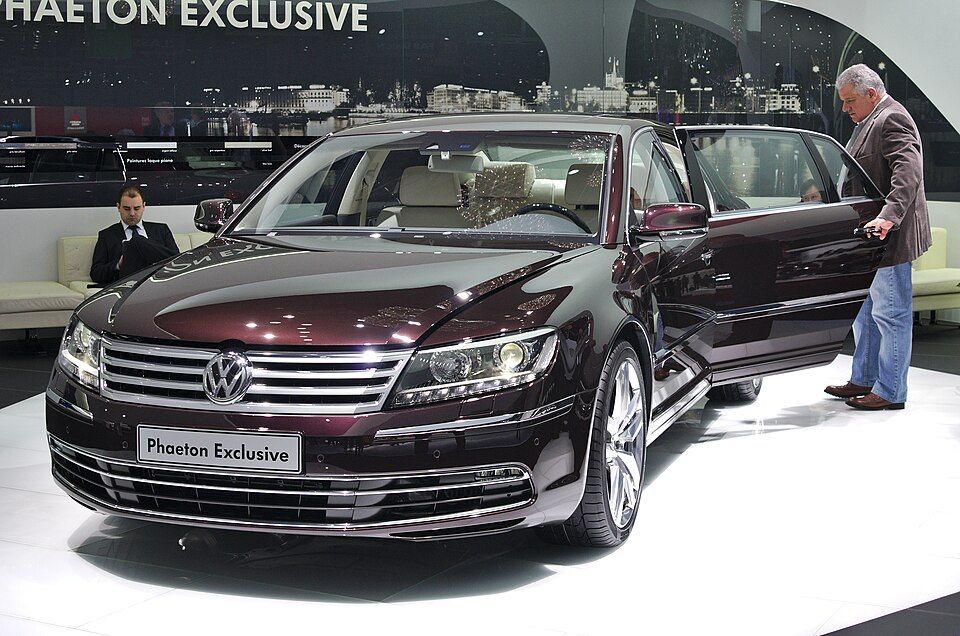
Photo: 2014 Volkswagen Phaeton Exclusive by Clément Bucco-Lechat, CC BY-SA 3.0, via Wikimedia Commons.
The saddest bit for fans is that Volkswagen had another Phaeton ready in spirit. The company later showed the Phaeton D2, a near-production successor that never made showrooms. Volkswagen said the one-off car came after an internal choice between four designs, and it was built for a final board decision. Then Volkswagen chose to focus its energy on electric cars, so the luxury saloon was dropped. That makes the first Phaeton feel even more unusual now. It was a snapshot of a very specific moment. Big diesel engines were still seen as clever. Large saloons still carried huge status.
Volkswagen wanted to climb the ladder, and Piëch believed engineering could pull the brand upward. Today, that feels like a different age. Car makers now spend huge money on batteries, software and electric range, while big saloons share space with luxury sport utility vehicles and electric fastbacks. But the Phaeton still matters because it shows what can happen when a brand refuses to stay in its lane. It didn’t become the new S-Class. It didn’t turn Volkswagen into a limo badge. Yet it gave the company a halo, a car people still point at and say, “Can you believe VW built that?” That’s a win of a different kind. Not a sales win, maybe. A memory win.
What used car buyers should take from it
As a used car idea, the Phaeton is tempting and scary in equal measure. You might see one for far less than its original price and think you’ve found the deal of the year. And maybe you have, but you need to go in with both eyes open. The good ones can feel amazing: quiet cabin, soft ride, huge seats, proper long-distance comfort and a sense of calm that still feels special. The tired ones can be expensive. Service history matters. So does checking the air suspension, electrics, climate control, gearbox behaviour, brakes, tyres and any warning lights.
A cheap Phaeton with no paperwork can turn into a very dear lesson. The diesel versions, especially the 3.0-litre diesel, tend to make the most sense for regular driving, while the W12 is the one people talk about because it’s so rare and so wonderfully excessive. The V10 diesel is another legend, but it’s not for the faint-hearted. Think of the Phaeton like buying a big old house near a lovely park. It might have charm, space and a lovely feel, but you still want to know the roof is sound and the boiler isn’t about to ruin your week. The same idea applies here. Before buying any ageing luxury car, get it checked properly and don’t be blinded by leather and wood. Nice trim won’t save you from a big repair bill.
Why the Phaeton still grabs people
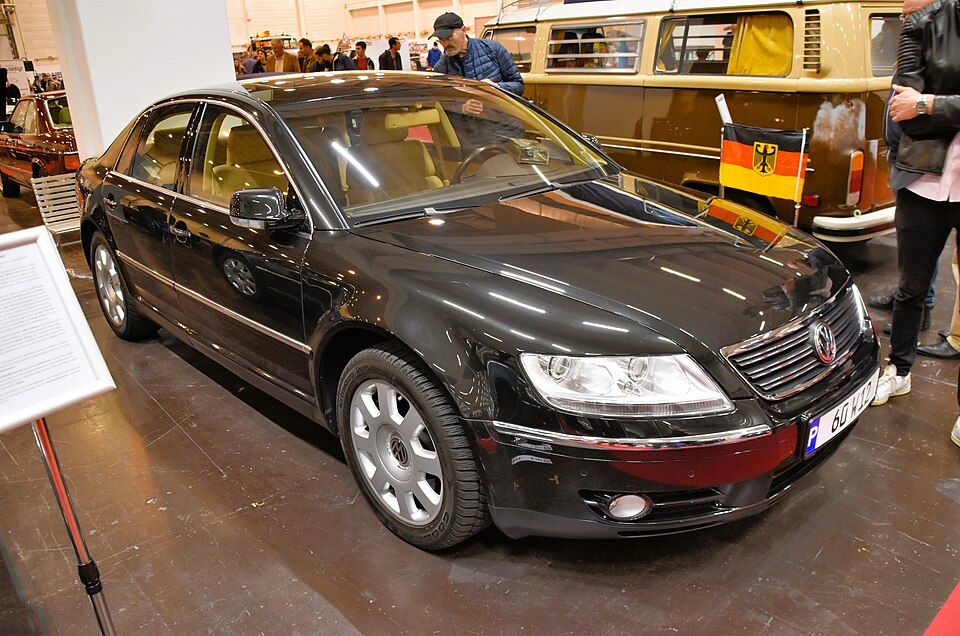
Photo: 2002 Volkswagen Phaeton W12 by Charles from Port Chester, New York, CC BY 2.0, via Wikimedia Commons
The Phaeton is one of those cars that makes more sense as a story than as a spreadsheet. On paper, you can pick holes in it. Too costly to build. Too close to Audi. Too expensive for a Volkswagen badge. Too shy beside a Mercedes. All fair. But cars aren’t just sums. They’re ideas on wheels, and the Phaeton was a fascinating idea: what if the brand known for everyday cars built a luxury car with the care of a top-class saloon, but without the loud image? That’s why it still has fans. It feels like a secret handshake for car people. Most folk might see an old big Volkswagen. The person who knows, knows. They know about Dresden. They know about the W12. They know about the hidden vents, the quiet cabin and the wild heat test story. Around Manchester and Stockport, where you’ll see everything from tiny city cars to big motorway cruisers, that kind of sleeper appeal makes sense. Some drivers don’t want flash. They want comfort, ability and a car with a story. The Phaeton gives them all three, with a side order of “what on earth were Volkswagen thinking?” And honestly, that’s half the fun.
A luxury car that made Volkswagen look braver
The Volkswagen Phaeton didn’t knock the Mercedes S-Class off its throne, but it did something else. It made people look at Volkswagen differently, even if just for a moment. It showed that the company could build a car with serious comfort, huge engines, careful finishing and brave thinking. It gave engineers room to show off. It gave car fans a future classic to argue about. It gave used buyers something odd, clever and deeply tempting to search for late at night. And it gave the brand a flagship that still feels almost unreal. Maybe that’s why the Phaeton has aged better as a tale than it did as a showroom product. It wasn’t the sensible choice. It wasn’t the easy choice. But it had nerve. And in a market full of cars trying very hard to look richer, sportier or louder than they are, the Phaeton’s quiet confidence still feels refreshing. It was Volkswagen saying, “We can do this too,” then building the evidence in glass halls, with white gloves, hidden air vents and a twelve-cylinder engine. That’s a bit daft. It’s also brilliant. And if you ask us, that mix is exactly why the Volkswagen Phaeton deserves to be remembered.