


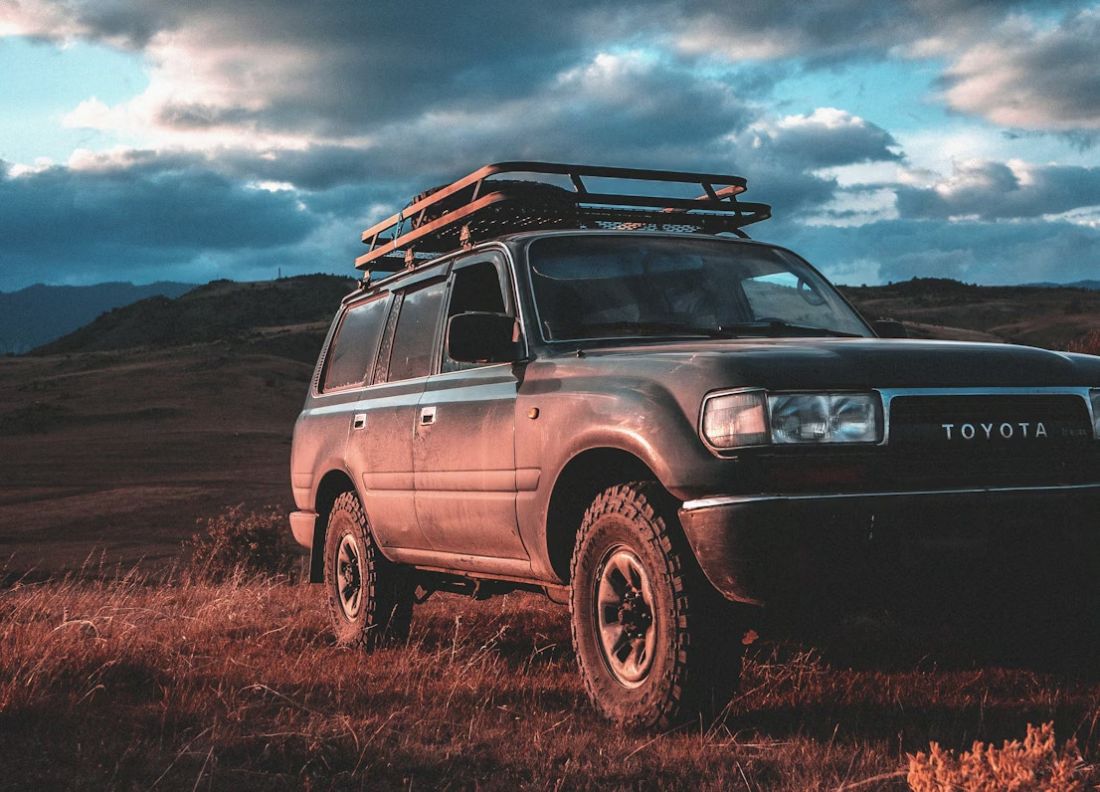
Toyota Land Cruiser: How One Name Became a Global Off-Road Legend
Some car names come and go. You hear them for a few years, maybe see a few on the school run, then they fade away like a rainy Saturday in Stockport. The Toyota Land Cruiser isn’t that sort of car. This name has been around since the early 1950s, and it still carries a strange kind of respect. Farmers know it. Aid workers know it. Families who tow caravans know it. People who live miles away from smooth roads really know it. And even if you’re just popping from Reddish to the Trafford Centre, you can still see why people talk about it like it’s a proper tool, not just a big shiny car. Toyota says the first version was launched on 1 August 1951 as the Toyota “Jeep BJ,” before the Land Cruiser name arrived in June 1954, after “Jeep” turned out to be a trademark owned by Willys-Overland Motors. That little naming twist matters because it gave Toyota room to build its own story, with its own character, and a name that sounded ready for dusty tracks, snowy hills, muddy farms, and long roads where you really don’t want to be stuck.
It started as a serious machine, not a lifestyle badge
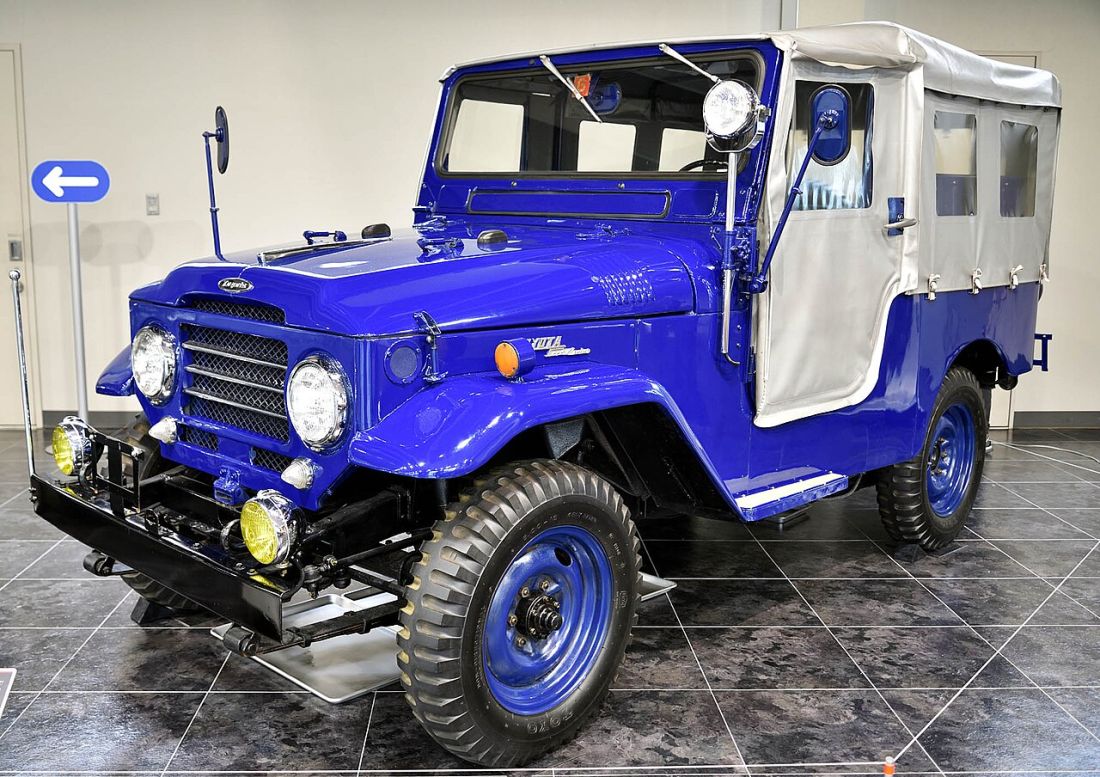
Photo: 1957 Toyota Landcruiser model FJ25L by Rikita, CC BY-SA 4.0, via Wikimedia Commons.
The Land Cruiser’s first job wasn’t to look tough outside a coffee shop. It was built for hard use. Back in 1951, Japan needed a four-wheel-drive vehicle, which just means the engine can send force to all four wheels instead of two. That helps when the ground is slippery, rocky, sandy, or full of ruts. Think of walking across a muddy field in smart shoes, then doing the same in walking boots. Same person, very different grip.
The first Toyota BJ was tested in a big way too. Toyota says it became the first vehicle to climb to the sixth station of Mount Fuji, which is a bit like saying, “Yes, it can handle a steep hill,” but in the loudest possible way. The car didn’t win its original police contract, and that could’ve been the end of the tale. But Toyota carried on, turned it into a civilian vehicle, and started building it for people who needed something that could work all day, far away from help. That’s a key part of why the Land Cruiser name stuck. It wasn’t born as a fashion item. It earned its name in awkward places, doing jobs that would make most normal cars turn around and go home.
The name changed, and the idea got clearer
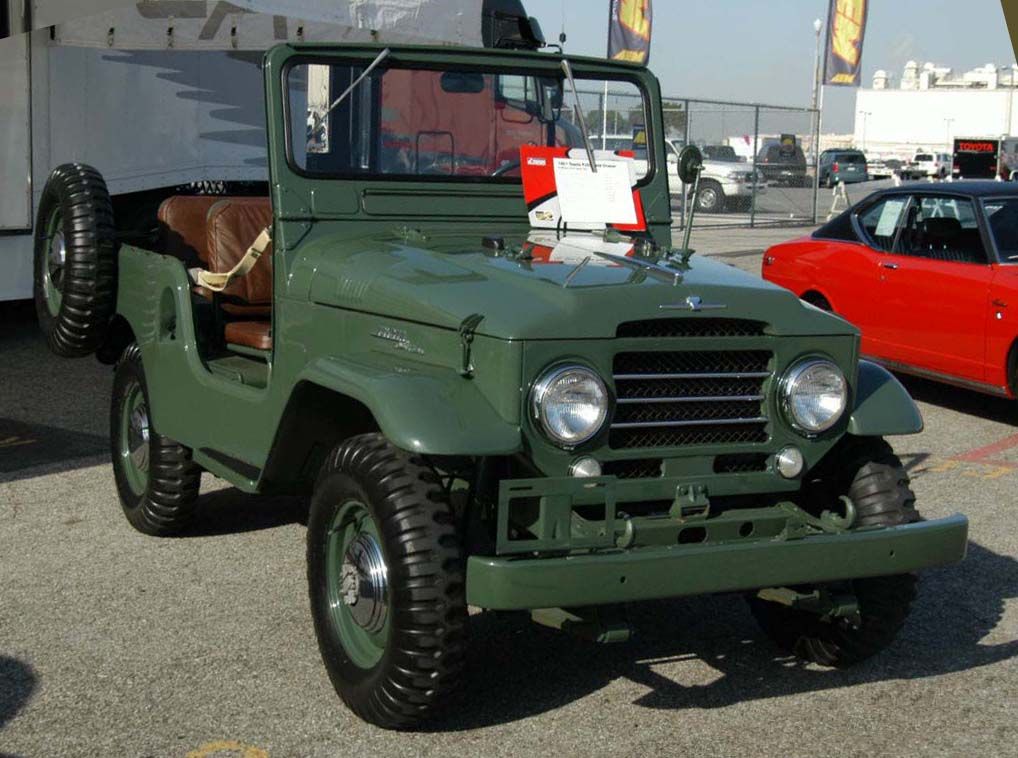
Photo: Toyota Land Cruiser FJ25 at the 2008 "Toyota Fest" by Alex V from Los Angeles County, USA;Cropped and rotated by uploader Mr.choppers, CC BY 2.0, via Wikimedia Commons.
By 1954, Toyota had moved away from the “Jeep BJ” name and called the vehicle Land Cruiser. It’s a brilliant name, really. It’s simple. Land. Cruiser. You know what it’s meant to do before you’ve even seen it. The early cars were basic, but basic can be good. Less fancy stuff can mean fewer things to go wrong, which is exactly what you want if you’re miles from a main road, phone signal is poor, and the weather has gone full Manchester in November. Then came the 20 Series in 1955, and Toyota started full-scale exports.
That matters because this was the moment the Land Cruiser began to move from Japanese workhorse to global name. Toyota says fewer than 100 units were exported each year at the beginning, but by 1965 that number had passed 10,000 a year. That’s not hype. That’s people in lots of different places choosing the same machine because it did the job. And jobs were varied. Some drivers needed to cross rough farmland. Some needed to carry goods. Some needed a vehicle that could start in heat, cold, dust, and rain. Bit by bit, the Land Cruiser became the car people trusted when the road stopped being friendly.
The 40 Series made the legend feel real
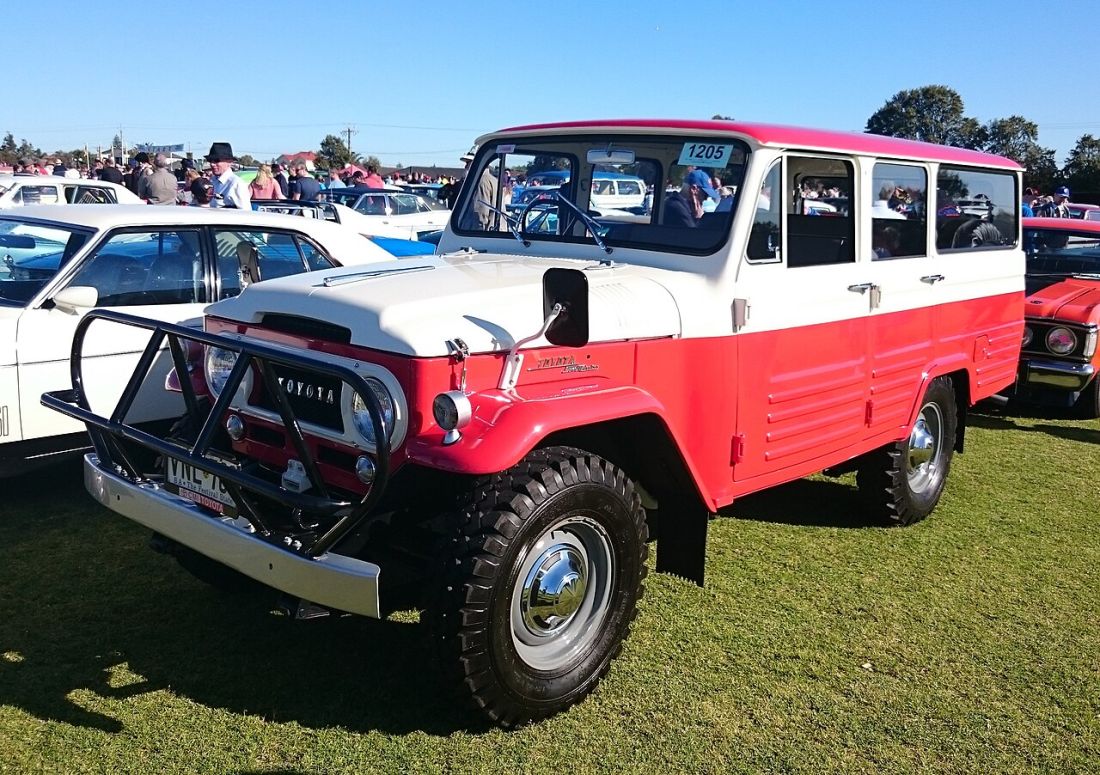
Photo: 1963 Toyota Land Cruiser Station Wagon (FJ45) by GTHO, CC BY-SA 4.0, via Wikimedia Commons
Ask a lot of Land Cruiser fans to picture the classic one, and many will think of the 40 Series. Boxy shape. Round headlights. Short overhangs. A stance that looks like it’s saying, “Go on then, show me the hill.” Toyota put the 40 Series on sale in August 1960, and it became famous as a dependable cross-country vehicle. That phrase can sound a bit dry, so let’s make it easier. Cross-country means it could go where a normal car would get upset. Mud tracks, rocky paths, washed-out roads, farm lanes with grass down the middle, all that kind of stuff.
Toyota says the 40 Series was cherished for 24 years, and that’s a long time for any car shape to keep working and keep making sense. It had different body styles too, from short versions to longer ones used as vans, pickups, and work vehicles. That variety helped the name spread. One driver might see it as a farm truck. Another might see it as a family carrier for rough roads. Someone else might see it as a vehicle for rescue work, mining, forestry, or travel across places where fuel stations are rare and breakdown trucks are rarer. Around Manchester and Stockport, we might think of bad potholes, heavy rain on the M60, and a weekend escape to the Peaks. The Land Cruiser was built for problems much bigger than that, which is part of the charm.
Why did people trust it so much?
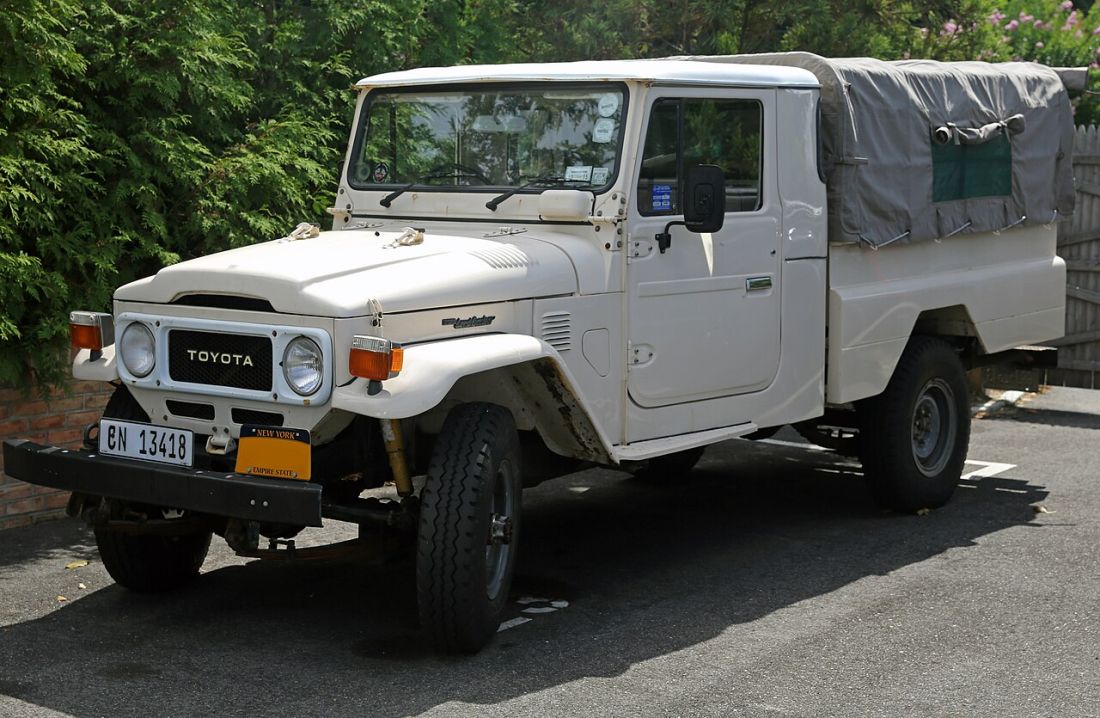
Photo: 1975 Toyota Land Cruiser FJ45 LWB Pickup (FJ45RP-K) by Mr.choppers, CC BY-SA 3.0, via Wikimedia Commons.
A name becomes a legend when people tell stories about it. The Land Cruiser has loads of those stories because it has been used in places where cars don’t get an easy life. Toyota’s own history talks about the basic ideas that shaped it: reliability, durability, and driving on poor roads. In normal words, that means it should start, keep going, and cope with rough ground without turning every trip into a drama. You can see why that matters. If you’re taking the kids to school near Heaton Chapel, a small warning light is annoying.
If you’re crossing a desert road, a warning light is a very different matter. Toyota staff have spoken about seeing Land Cruisers used in the Middle East by police, tour firms, and fishermen hauling in nets on the coast. That paints the picture better than any advert. These cars weren’t sitting still looking pretty. They were being worked. Hard. And people kept buying them because a good reputation has a snowball effect. One person gets home safely. A neighbour notices. A business buys three. A local repair shop learns them inside out. Years pass, and before long, the Land Cruiser is part of the scenery. Like Stockport Viaduct, but with tyres.
The 70 Series kept the old-school spirit alive
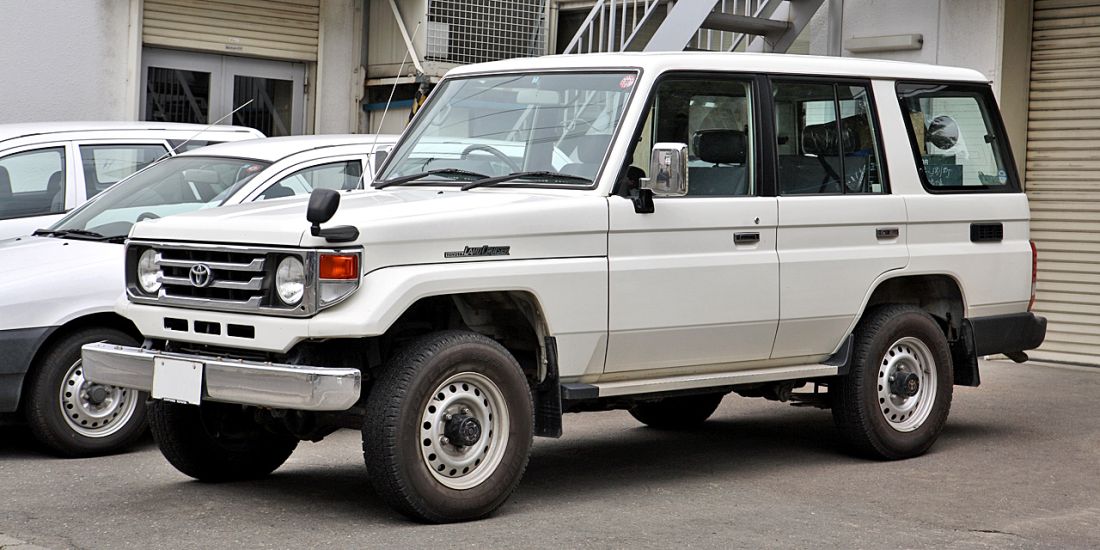
Photo: Toyota Land Cruiser 70 Semi-long 4.2 LX by Tennen-Gas, CC BY-SA 3.0, via Wikimedia Commons.
The 70 Series arrived in November 1984 as the follow-up to the 40 Series, and this is where the Land Cruiser story gets really interesting. A lot of cars soften with age. They get smoother, quieter, and nicer inside, which is fine, but sometimes they lose the thing that made people love them. The 70 Series tried to keep the tough, practical side alive while adding better comfort and easier daily use. Toyota says it was built for commercial work and harsh places, and it continued overseas after sales ended in Japan in 2004.
Then, in 2023, Toyota brought the 70 Series back to Japan with updates to the engine, handling, design, and safety kit, while keeping the main traits people cared about. That’s rare. Imagine a band from the eighties still packing out venues because the songs still work. That’s the 70 Series. It’s not the plushest branch of the family tree, but for many fans it’s the purest. It says the Land Cruiser isn’t just about size or status. It’s about getting somewhere, doing the job, and getting back again. No fuss. No hassle. Just the sort of steady character people remember long after the shiny extras have stopped feeling new.
Comfort arrived, but the badge still had muddy boots
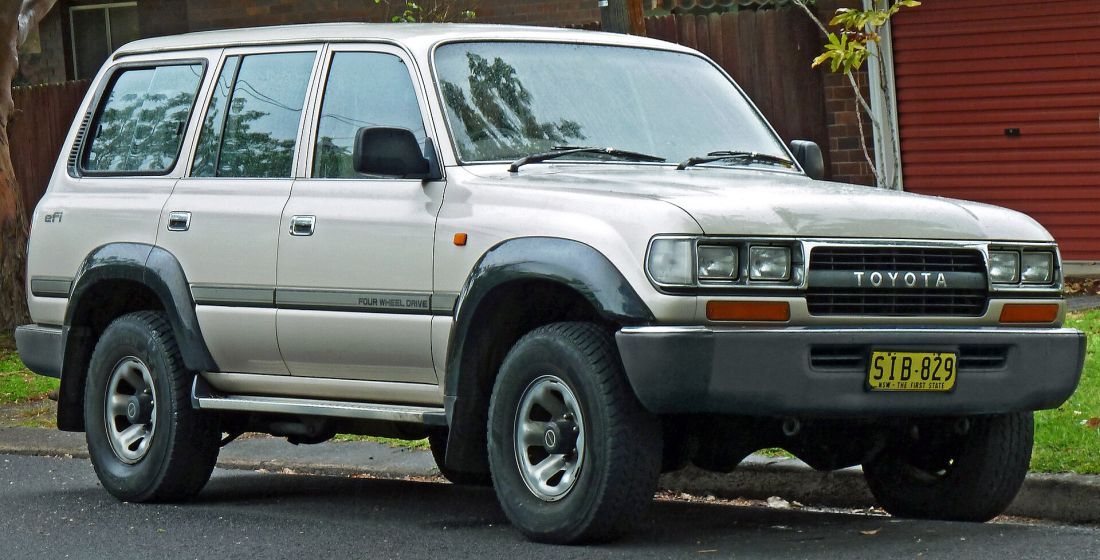
Photo: 1992 Toyota Land Cruiser (FJ80R) GXL wagon by OSX, Public domain, via Wikimedia Commons.
Of course, many Land Cruisers became much comfier over time. Drivers wanted better seats, easier steering, safer cabins, and a calmer ride on normal roads. That makes sense. We’ve all been in a car that feels fine for ten minutes, then gets tiring after an hour on the motorway. For a big vehicle that might tow, carry family, or travel long distances, comfort matters. The trick was keeping the real off-road skill while making the car less tiring to live with. Different Land Cruiser lines handled that balance in different ways. Some stayed close to the working-vehicle roots.
Others became roomier family four-wheel drives with nicer interiors and road manners that didn’t make every speed bump feel personal. Here in Greater Manchester, that mix makes sense. You might want a car that feels calm on the school run, steady in horrible rain, useful on a run to B&Q, and ready for a muddy campsite in North Wales. The Land Cruiser’s best trick is that it doesn’t feel like it’s pretending. Even the more comfortable versions carry that old promise: if the road gets worse, the car won’t panic. And to be honest, that’s a pretty comforting thing to have in the back of your mind.
Big numbers helped, but reputation did the heavy lifting
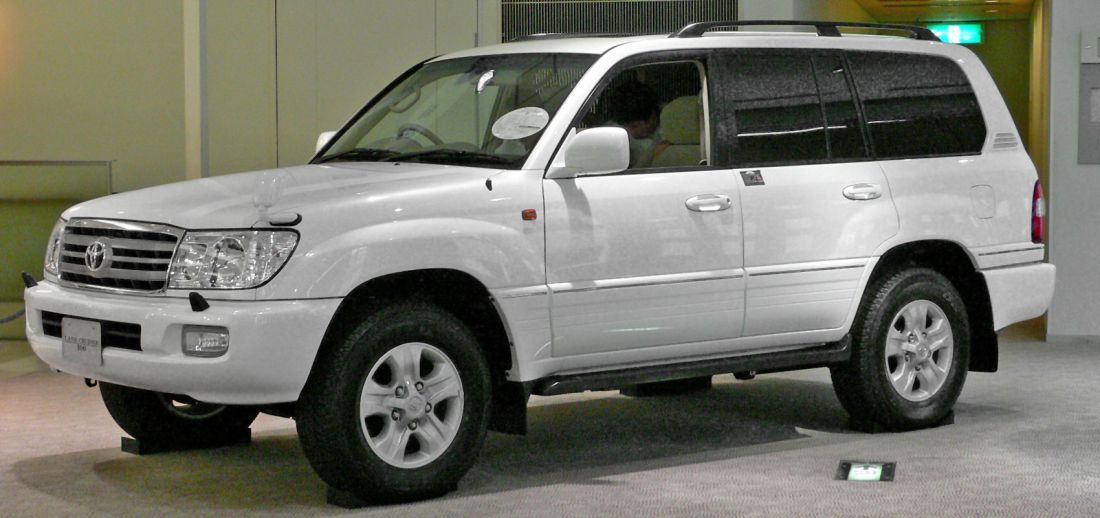
Photo: 2005 Toyota Land Cruiser VX Limited (UZJ100) by Mytho88, CC BY-SA 3.0, via Wikimedia Commons.
Toyota announced in September 2019 that total Land Cruiser sales had passed 10 million, with the count reaching that mark by 31 August 2019. Toyota also said the Land Cruiser was sold in about 170 countries and regions, with yearly global sales of about 400,000 at that time. Those numbers are huge, but numbers on their own don’t make people care. What matters is what those numbers say. They say the same name worked in many climates, many jobs, many budgets, and many kinds of road. Toyota later said the Land Cruiser series had reached about 11.3 million total sales by the end of September 2023, counting related Lexus models too.
That’s a lot of drivers putting faith in one family of vehicles. Some will have bought them new. Many more will have bought used versions years later, maybe with scuffed bumpers, muddy tow bars, faded paint, and a folder full of service bills. And there’s nothing wrong with that. In fact, used Land Cruisers are part of the legend. A car that still feels useful after years of work tells you something. The badge isn’t magic, of course. Condition still matters. Service history matters. Rust checks matter. Sensible buying matters. But the reason people keep searching for them is pretty clear: the name has earned a lot of trust.
Why it became loved in so many places
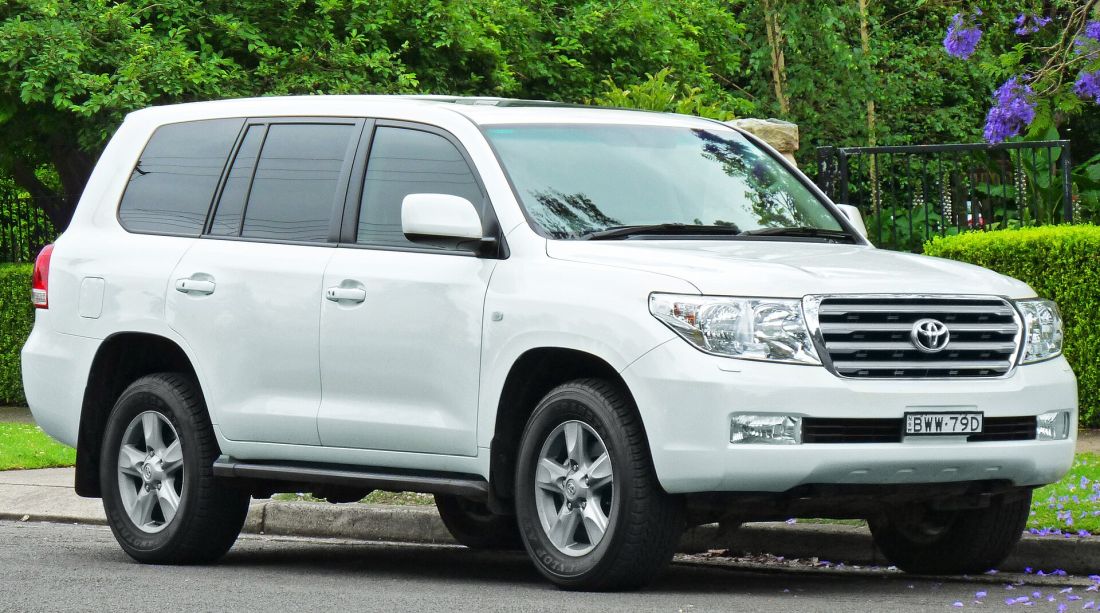
Photo: 2011 Toyota Land Cruiser (UZJ200R) Sahara wagon by OSX, Public domain, via Wikimedia Commons.
The Land Cruiser didn’t become famous because every version was perfect. No car is. It became famous because it had a clear job and did that job again and again. That sounds simple, but car makers can forget simple things. They chase trends, add flash, change shapes, and sometimes make cars that look exciting but feel a bit lost. The Land Cruiser had a steadier path. It needed to cope with bad roads. It needed to carry people and kit. It needed to be fixable. It needed to feel safe when the nearest town was a long way away.
That sort of trust builds slowly. A farmer uses one through winter. A builder tows with one for years. A family takes one camping, then keeps it because it never complains. A charity uses one in rough country and tells others. You know how it is, word gets around. Around Stockport, people might chat about a good mechanic, a decent chippy, or which route avoids the worst traffic by the Pyramid. In remote places, people share which car got them home. That’s how a vehicle becomes part of local life in many different countries. Not through loud claims. Through repeated proof. Again and again. Mud, rain, heat, stone, sand, hills, then home.
The Land Cruiser against Manchester weather
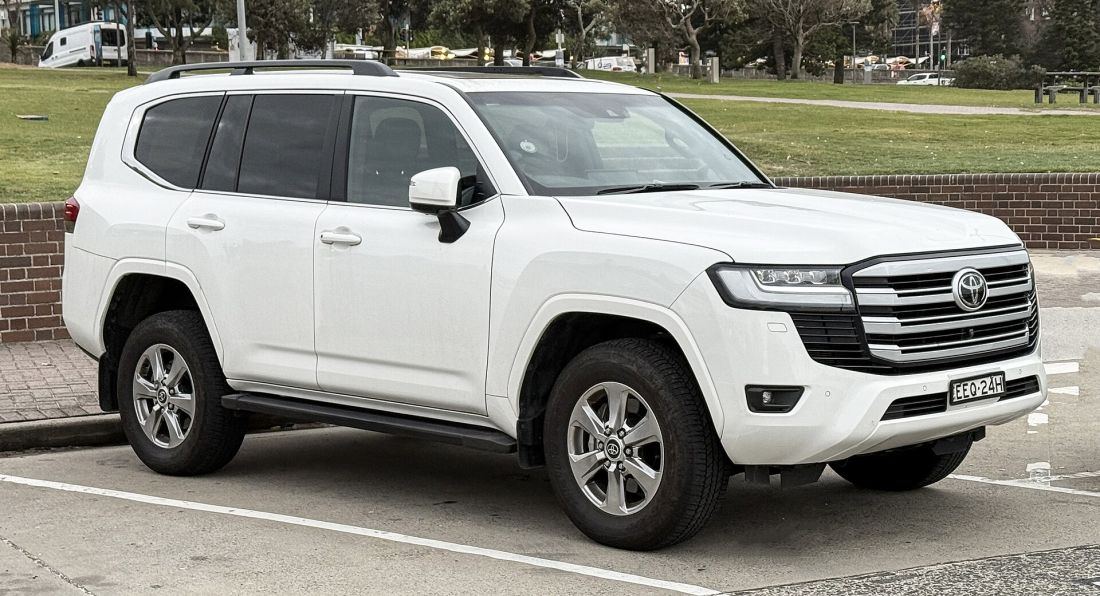
Photo: 2024 Land Cruiser VX by LuvsMG481, CC BY-SA 4.0, via Wikimedia Commons.
Let’s bring it back home for a minute. Most of us in Manchester and Stockport aren’t crossing deserts. We’re crossing wet roundabouts, tight side streets, busy school zones, and the odd country lane near the Peaks that looks friendly until the rain comes sideways. The Land Cruiser is bigger and heavier than many family cars, so it’s not something everyone needs. Let’s face it, if your life is mostly short city trips, tight parking, and no towing, a smaller Toyota might make far more sense.
But if you tow, carry loads, head out to farms, go camping, live near lanes that flood, or want a car that feels ready for foul weather, you can see the appeal. Its high driving position gives a great view. Its four-wheel-drive setup helps on loose or slippery ground. The boxy shape can be easier to place than you’d think, because you can see the corners better than in some swoopy sport utility vehicles. Still, don’t buy the story without checking the actual car. Tyres, brakes, suspension, service records, past off-road use, and signs of rust all matter. That’s the boring bit, sure. But boring checks can save you from very exciting bills later, and nobody wants that after a Saturday test drive.
What used buyers should look for
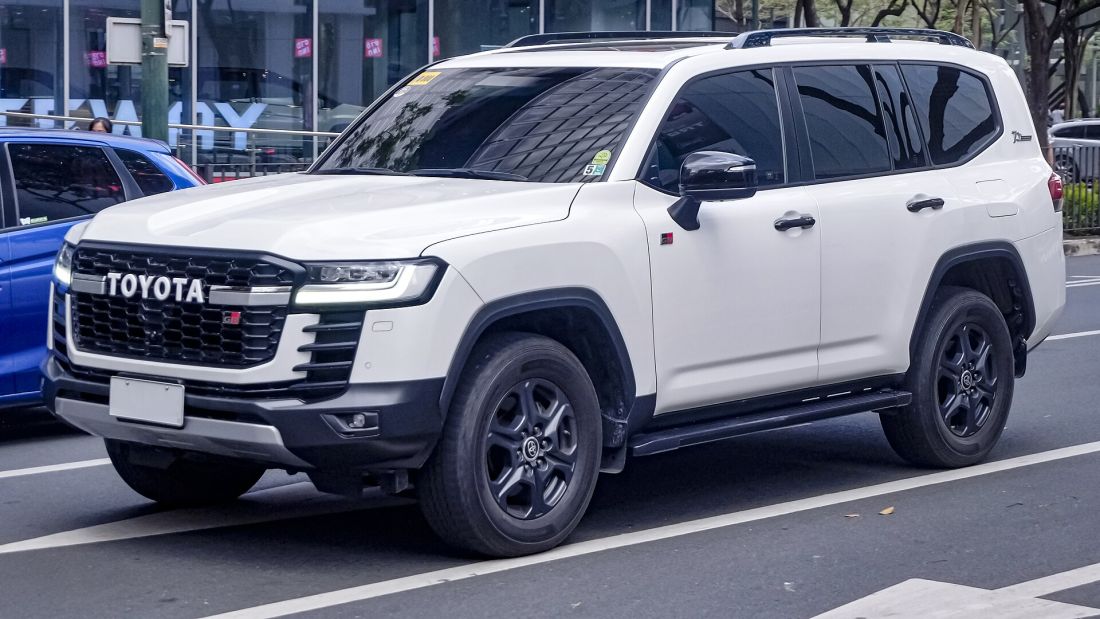
Photo: 2021 Land Cruiser GR Sport by Ethan Llamas, CC BY-SA 4.0, via Wikimedia Commons.
If you’re looking at a used Land Cruiser, start with the same mindset you’d use for any serious used car: history first, shine second. A freshly cleaned car can look great under showroom lights, but the paperwork tells the better tale. You want to see regular servicing, sensible mileage patterns, and signs the owner dealt with issues instead of ignoring them. On older four-wheel-drive cars, look underneath if you can. Mud trapped around the underside can hide wear, and rust can be costly. Check that the tyres match well, because uneven tyres on a four-wheel-drive car can cause extra strain.
Test the brakes, listen for knocks, and pay attention during slow turns. If it has been used for towing, that isn’t bad by itself, but it should have been cared for properly. A Land Cruiser can do hard work, but hard work still leaves marks. This is where a trusted used car dealer can make the process less stressful. At Dace Motor Company, we’re used to helping drivers across Stockport, Reddish, Eccles, and Greater Manchester compare used cars in a calm, sensible way. We offer used car finance with a soft search that has zero impact on your credit score, and every vehicle being sold should be checked properly before you make a choice. No pressure. Just get the facts, ask the awkward questions, and buy the car that fits your real life.
Newer Land Cruisers still nod to the old ones
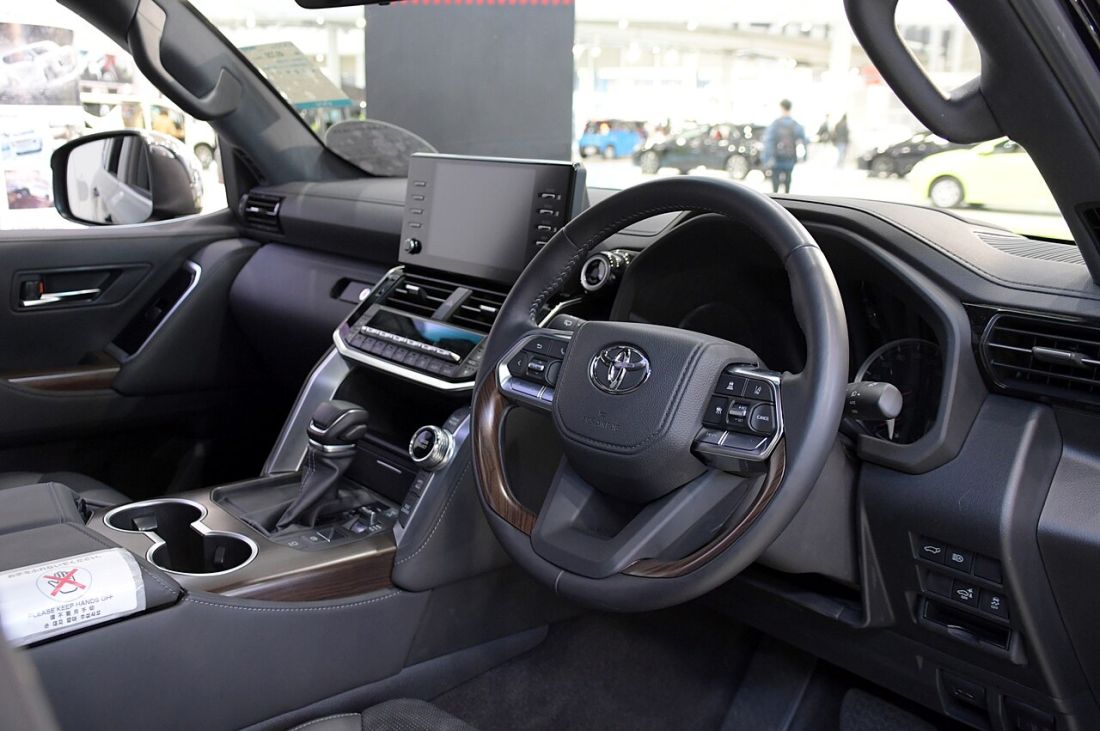
Photo: Toyota Land Cruiser VX VJA300W interior by Ypy31, CC0, via Wikimedia Commons.
The latest UK Land Cruiser keeps a lot of the old feel while adding modern comfort. Toyota UK said the 2024 model for Western Europe uses a 2.8-litre turbo diesel engine, paired with an eight-speed automatic gearbox, and it can tow up to 3,500 kilograms. UK model details also included seven-seat versions, large screens, driver display tech, and comfort kit that would’ve seemed wild to someone driving an early BJ up a mountain track.
But the shape still matters. The upright body, the clear view out, and the “ready for rough stuff” stance all nod back to the older cars. That’s clever because nostalgia can go wrong if it feels fake. Here, it works because the Land Cruiser has never fully left its roots behind. It can be comfortable, yes. It can have modern safety features, yes. But the reason people care is still the same reason people cared decades ago: it feels like a vehicle made for real weather, real loads, and real places. The same basic idea has survived through different bodies, engines, and markets. That’s not easy. Most car names don’t get that much patience from buyers. The Land Cruiser did, because it kept giving people a reason to believe in it.
Why the Land Cruiser story still matters
The Toyota Land Cruiser became a global off-road legend because it wasn’t trying too hard to be one. It began with a hard job, got a strong name, proved itself in rough places, and kept changing just enough to stay useful. That balance is tricky. Change too little and a car gets left behind. Change too much and fans say, “That’s not the same thing anymore.” The Land Cruiser has walked that line better than most. From the early BJ to the 20 Series exports, from the much-loved 40 Series to the long-serving 70 Series and the modern UK models, the badge has carried one big promise: get there and get back. It’s the kind of promise that matters whether you’re in a desert, on a mountain road, towing on a wet motorway, or heading over the Pennines with the sky looking moody. And yes, most of us don’t need a car that can survive the roughest tracks on Earth. But we all understand the appeal of something that feels dependable. Something with history. Something that doesn’t make a big song and dance about being tough. It just gets on with it. That’s why, after all these years, people still stop and look when a Land Cruiser rolls by. Quiet respect. The best kind.