


The Weird World of "Engine Downsizing" - How Small Engines Became Powerful
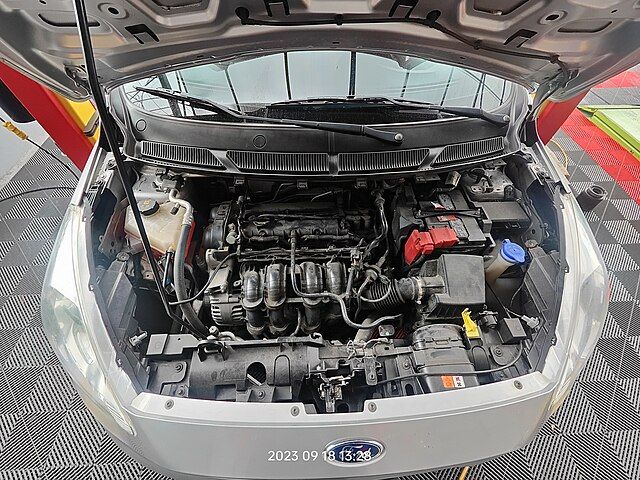
Photo: Ford EcoBoost 1.5T by Iamjosemon, CC BY 4.0, via Wikimedia Commons
You know how a big backpack can carry loads, but it’s a pain to lug around, and you end up sweating before you’ve even hit the end of the street? Engines had a similar problem. For years, car makers leaned on bigger engines because bigger usually felt easier. More space inside the engine, more air and fuel in, more shove out. Then “downsizing” turned up and basically said: keep the same everyday shove, but do it with a smaller engine. That’s the whole idea in normal-people language: a smaller engine that can still make the car feel lively, while using less fuel when you’re just cruising.
When people talk about an engine being “one point zero” or “one point four” litres, they’re talking about the engine’s total “air space” inside its cylinders. Think of cylinders like three or four (or more) sturdy syringes all pumping together. If the syringes are smaller, you move less air each pump. Less air usually means less shove. So how did the smaller engines avoid feeling gutless? That’s where the weird part starts. Car makers didn’t just shrink the engine and hope for the best. They added clever ways to cram more air into those smaller cylinders, and they got really smart about how fuel is delivered and how the engine reacts when you press the pedal.
Downsizing also changed what “normal” feels like behind the wheel. A lot of these smaller engines are at their happiest when you drive smoothly, like you’re rolling along the A6 or easing through Stockport traffic lights without treating every gap like a drag race. Do that, and a small engine can feel surprisingly eager. Drive like you’re late for the tram at MediaCity, foot planted, and you’ll see the other side of the deal. We’ll get to that part.
Why did car makers start shrinking engines in the first place?
Part of it was money. Fuel isn’t cheap, and nobody in Manchester enjoys watching the digits spin on the pump like it’s a fruit machine that never pays out. But the bigger push came from rules that demanded lower carbon dioxide coming out of tailpipes across a brand’s whole line-up of new cars. In Europe, makers had to hit fleet-average targets, and those targets got tighter over time. One widely cited milestone was a fleet-average target of one hundred and thirty grams of carbon dioxide per kilometre by 2015 for new passenger cars, phased in across the years leading up to 2015.
Here’s the thing: those targets didn’t care if you personally bought a tiny hatchback or a big family wagon. They pushed the whole market. So makers looked for changes that could be rolled out across loads of models without totally reinventing the car. Smaller engines were a tempting answer because a smaller engine has less internal rubbing, less mass to get moving, and less “stuff” to keep spinning when you’re just pottering about. That can help fuel use when you’re driving gently.
There was also a vibe shift. People started expecting a car to be both decent to drive and not a guzzler. And, let’s face it, city driving around Manchester is full of stop-start moments: roundabouts, lanes that suddenly merge, buses pulling out, the usual. A smaller engine paired with modern tech can be tuned to feel punchy at normal road speeds, which is where you live day to day. That’s a big reason three-cylinder engines became more common: three cylinders can cut friction and weight, and with the right add-ons they can still feel quick enough for normal roads.
So downsizing wasn’t some random trend. It was a response to rules, fuel costs, and what drivers started demanding all at once.
The secret sauce: how a small engine punches above its size
The main trick is a turbocharger. If you’ve heard the word “turbo” and pictured a flashy badge on a boot lid, this is the real deal behind it. A turbocharger is like a little air pump that uses the engine’s own exhaust flow to spin a turbine (a tiny fan). That spinning fan is connected to another fan that pushes extra air into the engine. More air in means the engine can burn more fuel when you ask for it, which means more shove out. So even if the engine is physically smaller, it can act like a bigger one when you press the pedal.
This idea isn’t new. A Swiss engineer named Alfred Büchi patented a system for exhaust-driven turbocharging way back in 1905. That’s not a typo. Nineteen-oh-five. People had the concept ages ago, but the materials, fuels, and manufacturing just weren’t ready for it to become normal in everyday cars. Büchi’s work is a big reason 1905 is treated as an early landmark year for turbocharging, and his patent is still talked about today.
So why did turbocharging suddenly pop up everywhere decades later? Because modern engines got better at controlling heat and timing, and because electronics got far better at making thousands of tiny adjustments every second. That matters because cramming more air into an engine makes it run hotter and puts more stress on parts. The newer approach is: keep the engine small for normal driving, then bring in the extra air when you need it. It’s like walking most of the day and only sprinting when you’ve got to catch the train. You’re not sprinting at every step, so you don’t burn out instantly.
That’s the “weird” part people argue about: a small engine can feel big, but only when the conditions are right.
Real examples you’ll see on roads around Stockport and Manchester
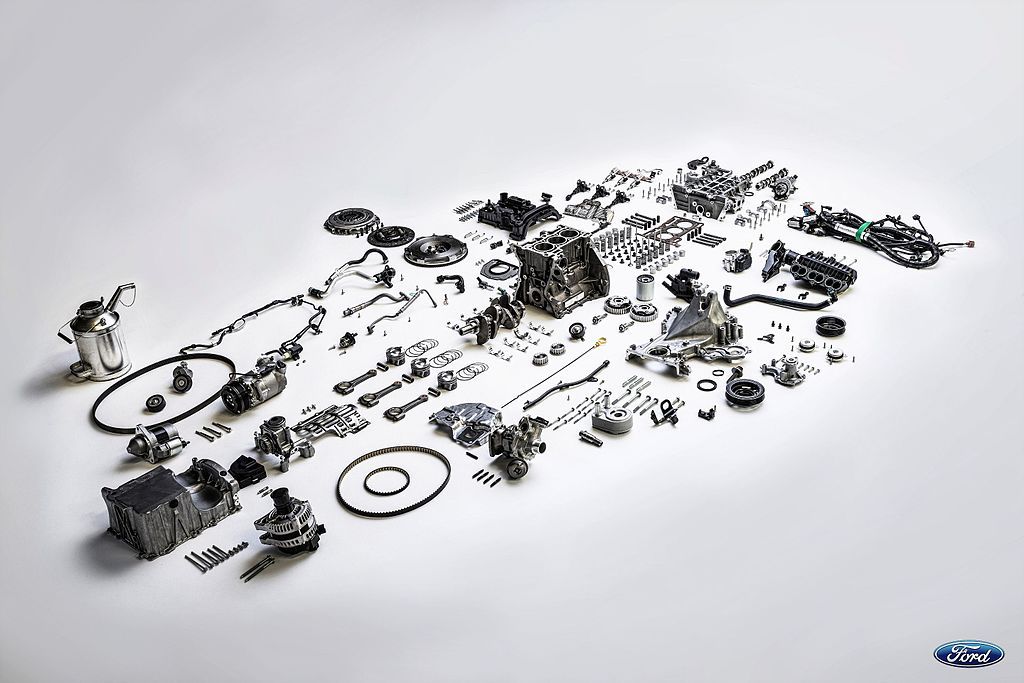
Photo: The inline 3-cylinder Ford EcoBoost 1.0 litre Fox engine by Ford Motor Company, CC BY 3.0, via Wikimedia Commons
This isn’t theory. You’ve probably been next to a downsized car at the lights outside the Trafford Centre and not even realised it. One headline example is Ford’s one point zero litre three-cylinder EcoBoost petrol engine. Production of that one point zero litre unit started in April 2012, and it was developed in the United Kingdom (including Ford’s Dunton Technical Centre).
Another big moment was Volkswagen’s move with its one point four litre turbo petrol engine for cars like the Jetta. Volkswagen’s own media release talks about that one point four litre turbo engine setup (with fuel sprayed directly into the engine’s cylinders and a turbocharger doing the air-pushing job) as a way to get strong performance from a smaller engine size.
And it wasn’t just Ford and Volkswagen. Fiat pushed a tiny two-cylinder TwinAir engine into production from 2010 onwards, including turbocharged versions around eight hundred and seventy-five cubic centimetres. A two-cylinder car engine sounds like something from a vintage bubble car, but Fiat made it work in modern models like the Fiat 500.
Renault also introduced a three-cylinder petrol turbo engine called the Energy TCe 90 around the 2012 Geneva Motor Show. Renault’s own press site covered the introduction of its first three-cylinder petrol turbo engine in that period.
Then there’s the Peugeot and Citroën side of things with the one point two litre three-cylinder turbo PureTech family, which Stellantis (covering the old Groupe PSA archive) has talked about in its press materials, including awards for that engine.
So, around our patch, it’s normal to see downsized engines across loads of badges: Ford, Volkswagen, Renault, Peugeot, Citroën, Fiat, MINI, BMW, Audi, you name it. It’s baked into the last decade-plus of cars.
Why these engines can feel brilliant… and why they can also feel a bit odd
Here’s where it gets real. Downsizing can feel great in the “normal life” zone: rolling along, light pedal, calm acceleration, steady speed. A turbocharged small engine can give a nice surge without you having to rev it to the moon, which can make the car feel relaxed around town. But you’ve probably dealt with this before: you press the pedal and there’s a tiny pause before the car really goes. That pause has a name: turbo lag. Garrett Motion (a major turbocharger company) explains turbo lag as a delay in response because the engine needs enough exhaust flow to spin the turbo’s turbine and push extra air in.
Modern turbos and engine controls have reduced that delay a lot, but it can still show up. Especially if you’re in the wrong gear and you ask for a burst of acceleration up a slip road onto the M60. You press. The engine thinks. The turbo spins up. Then the shove arrives. Some people love that “build” and some people just want instant response.
There’s also the sound and feel. Three-cylinder engines can sound a bit thrum-thrum compared with a smoother four-cylinder. Some drivers like the character, some don’t. And because the engine is smaller, it may need to work harder when you’re fully loaded: family in the back, bags in the boot, heater on full, and you’re climbing a hill out past Mellor or heading up towards the Peaks. That’s not the engine being “bad”. It’s just physics.
Downsizing didn’t delete compromises. It moved them around.
The fuel-saving promise: true, but only if you drive like a human, not a maniac
This is the part people argue about in car parks. Downsizing is real, and the tech can reduce fuel use and carbon dioxide in the right conditions, which is why it got so popular. The International Council on Clean Transportation has written about “downsized, boosted” petrol engines and how turbocharging helps make downsizing possible by increasing how much performance you can get from a smaller engine.
But driving style matters. A lot. If you’re gentle on the pedal, the small engine spends more time in an efficient zone. If you’re heavy-footed, the turbo spends more time pushing extra air in, and the engine burns more fuel to match. That’s why some testing organisations have found that small turbo engines don’t always give the fuel economy people expect in real driving. Consumer Reports, for example, published findings in 2013 saying many small turbo engines they tested delivered no better fuel economy than bigger conventional engines, and sometimes had slower acceleration too.
Does that mean downsizing is a con? No. It means it’s a trade. The car can be frugal when you drive calmly, and lively when you ask for it, but you don’t get both at the same time for free. That “free lunch” idea is what trips people up. A turbo doesn’t make fuel appear out of nowhere. If you keep demanding hard acceleration, the engine will drink like a bigger one, because it’s basically acting like a bigger one in that moment.
So the best way to get the upside is boring advice: smooth starts, steady speed, don’t treat every short gap as a personal challenge. Easy to say. Hard to do on Mancunian roads at five o’clock.
So… are downsized engines reliable, or are they trouble?
The honest answer is: it depends on the engine and how it’s been looked after. Downsized engines can be reliable, but they can be less forgiving of skipped maintenance, because they run with higher pressures and higher heat when you’re using the turbo. That means oil quality and oil change history really matter. If oil changes were missed, the turbocharger and other parts that rely on clean oil can suffer. That’s true across brands, whether it’s a Ford EcoBoost, a Volkswagen turbo petrol, Renault’s small turbo petrol units, or a Peugeot three-cylinder turbo.
Turbo lag aside, another thing to remember is heat. After a hard run, the turbo and exhaust side can be very hot. Some cars manage this well with cooling and clever controls, but it’s still a good habit to avoid parking up straight after thrashing it up the motorway. Give it a short gentle roll at the end of a trip if you can. No drama. Just a bit of mechanical sympathy.
And listen during a test drive. A healthy turbo setup shouldn’t sound like a dentist drill. A faint whistle can be normal on some cars, but loud whines, clouds of smoke, or warning lights are a “walk away” sign. Also check for a smooth idle. A three-cylinder won’t feel like a silk-smooth six-cylinder, but it shouldn’t be shaking like a washing machine with one trainer inside.
This is where buying from a place that checks cars properly matters. At Dace Motor Company, every vehicle is checked before sale and is vehicle-history checked, and we include a free warranty period, with the option to extend it. We mention that because modern engines are clever, but clever doesn’t cancel out wear and tear. Having cover for early ownership can take the edge off the “what if” worries.
What to look for if you’re buying a used downsized car around here
If you’re shopping for a used car in Stockport or Manchester, downsizing is already baked into loads of the cars you’ll see, from small runabouts to bigger family cars. So the goal isn’t “avoid downsized engines”. It’s “buy a good example”. Start with the paperwork: a solid service record matters more than a shiny set of tyres. Look for regular oil changes at sensible intervals, and make sure the car hasn’t been running on mystery oil for years. If the seller can’t show you anything, that’s a red flag.
Then, the test drive. Don’t just loop the block. You want a mix: slow traffic, a steady cruise, and a bit of acceleration. Around here, that might mean a stretch that feels like real life: rolling past Stockport Viaduct, joining a faster road for a short run, then back into town. You’re checking for smooth response, no strange hesitation beyond the normal tiny turbo pause, and no warning lights. Pay attention to temperature too; the car should warm up in a normal time, and the heater should behave properly.
Ask direct questions. Has the car had any turbo-related work? Any oil leaks fixed? Any cooling system repairs? A seller who answers calmly and clearly is miles better than someone who shrugs and changes the subject.
And don’t forget the money side. If you’re weighing options, Dace Motor Company offers used car finance and a “soft search” finance check that aims to give you an idea of your options without leaving a hard mark on your credit file. It’s handy for planning, especially if you’re comparing a couple of cars across our sites in Reddish, on Buxton Road, on Manchester Road, or over in Eccles. The main thing is simple: a downsized engine can be a great everyday pick, but you want one that’s been cared for. No fuss. No hassle. Just a well-kept car that fits your life.