


The Strange History of Cars Powered by Wood Gas
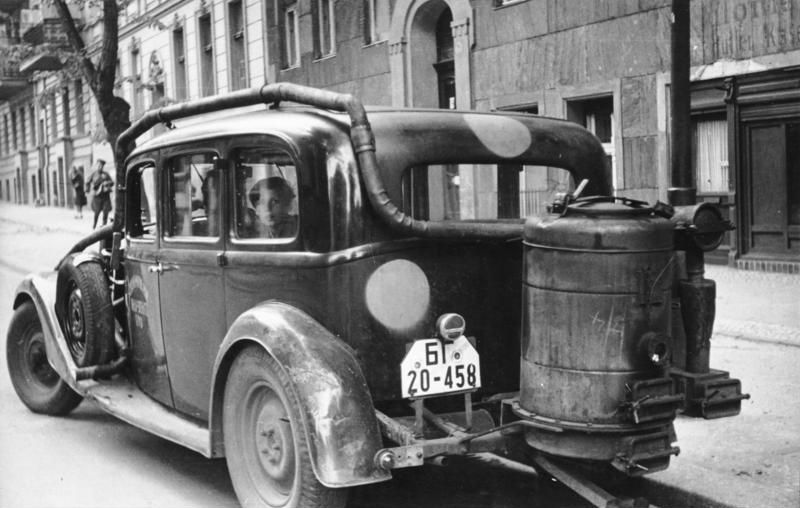
Image: Wood gas powered vehicle by Bundesarchiv, Bild 183-V00670A / CC-BY-SA 3.0, CC BY-SA 3.0 DE, via Wikimedia Commons
The world ran out of petrol, so people turned to wood
Imagine hopping in your car, turning the key, and instead of filling up at a petrol station, you’ve got a boot full of firewood. Sounds completely mad, doesn’t it? But that’s exactly what people were doing during the hardest years of the 20th century. They weren’t doing it because they thought it was trendy or good for the environment, but because they had no other choice. Petrol was scarce, expensive, and in some places, almost impossible to get. Wars and fuel shortages pushed people to come up with alternatives, and wood gas was one of the strangest - yet cleverest - ideas that stuck around longer than you’d think.
Here’s the basic idea. Cars were fitted with a contraption called a gasifier, usually a big metal drum strapped to the back or side of the vehicle. You’d fill that drum with chunks of wood or sometimes charcoal, light it up, and the smoke created would be filtered and fed into the car’s engine. That smoke - or gas - could actually replace petrol. Not perfectly, mind you, but well enough to get you from A to B. It wasn’t glamorous. These cars looked clunky, they smelled smoky, and they were much slower than petrol-powered ones. But in a time when driving otherwise meant walking or staying home, they were lifesavers.

You’ve probably seen old war films with black-and-white footage of tanks and lorries rolling through towns. What you don’t usually see are the little trucks and buses in the background with massive barrels strapped on. Those were the wood gas vehicles, puffing along with a steady cloud of smoke behind them. They weren’t fast. They weren’t sleek. But they worked. And to the people of that time, that was all that mattered.
Here in Stockport or Manchester today, the idea of cutting logs before heading into town sounds bonkers. Can you picture popping into Tesco Extra in Stockport with a boot full of firewood? Or queuing at a log supplier instead of a Shell garage on the A6? Yet for millions of people across Europe, Asia, and even parts of Australia, that was everyday life during the petrol shortages of the 1940s. It’s strange history, but it’s true.
Why wood gas actually worked (and didn’t blow up your car)
Now, let’s be honest. At first glance, the whole idea of burning wood to run an engine feels like it should’ve ended in disaster. Engines are complicated, and the thought of piping in smoke seems like something out of a cartoon. But the science was simple enough for mechanics back then to pull it off. When you heat wood without letting it fully burn, it releases a mix of gases - mostly carbon monoxide, hydrogen, and methane. Those gases are flammable, and an engine doesn’t care if it’s burning petrol, diesel, or gas, as long as something explosive is in there. That’s what made wood gas a weird but workable substitute.
Here’s where it gets quirky. To start one of these cars, you couldn’t just turn the key. First, you had to light the wood in the gasifier, wait for it to heat up, and let the smoke build. That meant anywhere from ten to twenty minutes before you could even pull away. Forget quick getaways. You’d probably be standing there with a matchbox, cursing under your breath, and hoping the engine would eventually cough into life. People even kept a separate fire going just to save time for the next trip. Not exactly convenient.
And it wasn’t just about lighting a fire. Drivers had to keep feeding wood into the system every so often. Long drives meant carrying sacks of logs, like hauling coal for a steam train. Imagine driving from Stockport to Manchester on the M60 and pulling over on the hard shoulder to chuck in more wood. It sounds ridiculous, but that was reality.
Then there were the quirks. Engines running on wood gas lost a lot of power - sometimes nearly half compared to petrol. Hills were a nightmare. You’d often see buses crawling up slopes with passengers having to hop out and push. In snowy northern countries, people joked about passengers being warmer outside walking than inside the smoky, freezing bus. And yes, the smoke sometimes leaked into the cabin. That meant carbon monoxide poisoning was a real risk if things weren’t sealed properly. Not exactly something Health and Safety would approve of today.
Still, for all its clumsiness, it did the job. During World War II alone, it’s estimated over a million vehicles in Europe were converted to run on wood gas. That number included cars, trucks, tractors, and even boats. Desperate times made people inventive, and you’ve got to admit, it was a pretty clever workaround.
Life on wood gas: stories from the road
If you lived in Sweden, Finland, or Germany in the 1940s, chances are you saw more wood gas vehicles than petrol ones. There are photos of buses in Stockholm with massive burners bolted on the back, and stories of farmers in rural areas running their tractors entirely on wood. In Finland, they even made motorbikes with little gasifiers attached, which sounds insane but apparently worked. It was noisy, smelly, and awkward, but people adapted.
One of the funniest images comes from stories of queues at “wood stations.” Instead of petrol pumps, towns had spots where you could top up with bags of firewood. Picture the petrol station at Heaton Chapel replaced with a wood yard. Instead of checking tyre pressures, staff would be stacking logs into car boots. Locals in Manchester would have been rolling their eyes, but if you wanted to get to work or the market, you put up with it.
And here’s another detail that’ll make you smile. Because wood gas made engines weaker, drivers often had to plan their journeys differently. Long hills were dreaded. In Norway and Germany, there were actual rules about how many passengers had to get out and walk if a bus couldn’t make it up a steep road. Imagine getting dropped off halfway up Buxton Road in Stockport, told to hike the rest, and then hop back on at the top. That was real life back then.
But there was also pride in these contraptions. Mechanics and drivers who managed to keep their smoky beasts running were admired. It took constant tinkering, cleaning out ash, making sure the pipes didn’t clog, and sealing up leaks. Cars broke down all the time, but so did everything else back then. People were used to mucking in and fixing things. You didn’t call roadside assistance; you grabbed a spanner and sorted it yourself.
Of course, when petrol became more available again after the war, most people dropped wood gas cars without looking back. Who’d choose all that hassle over just filling up at a pump? But in some rural areas, especially where wood was cheap and petrol remained expensive, these vehicles kept going into the 1950s and even the 60s. Some reports say in North Korea and parts of China, wood gas vehicles were used much later. Strange as it sounds, the idea never fully disappeared.
Could wood gas ever make a comeback?
So, here’s the big question people sometimes ask: could wood gas cars come back? After all, we’re always talking about alternative fuels now. Electric cars are everywhere, and hydrogen gets mentioned every so often. But wood? Honestly, it’s hard to see it happening again in places like Manchester or Stockport. No one’s got the patience to light a fire before going to the Trafford Centre, and Health and Safety would have a field day with the carbon monoxide risk.
That said, some survivalists and eco-tinkerers still play around with wood gas today. You’ll find YouTube videos of people in America building homemade gasifiers and running old pickup trucks on them. They like the idea that as long as you’ve got trees, you’ve got fuel. It’s messy, smelly, and far from practical, but in an emergency, it works. If petrol ever completely disappeared, you can bet someone around here would be welding a big drum onto a Ford Fiesta in their driveway, just to keep moving.
For us at Dace Motor Company, it’s a fascinating bit of history that makes you appreciate how far cars have come. We’ve got rows of used cars in Stockport and Manchester that would blow the minds of drivers in the 1940s. Heated seats, sat navs, fuel-efficient engines, hybrid systems - it’s a different world. And yet, those smoky, log-fuelled vehicles kept people moving through some of the toughest times. Without them, whole towns would’ve been stuck.
You know how people today complain about the price of petrol or the hassle of charging electric cars? Imagine telling them they’d need to chop wood for every trip into town. Next time you’re filling up in Stockport, just think about that. Suddenly, standing at the pump for five minutes doesn’t sound too bad, does it?
And maybe that’s the real takeaway from the strange history of wood gas cars. They were clumsy, dirty, and slow, but they were also a symbol of human grit. People didn’t just give up when fuel ran out. They found a way, even if it meant strapping a chimney to their car. Looking back, it’s equal parts ridiculous and inspiring - and that’s why it’s one of the strangest chapters in car history we’ve ever seen.