


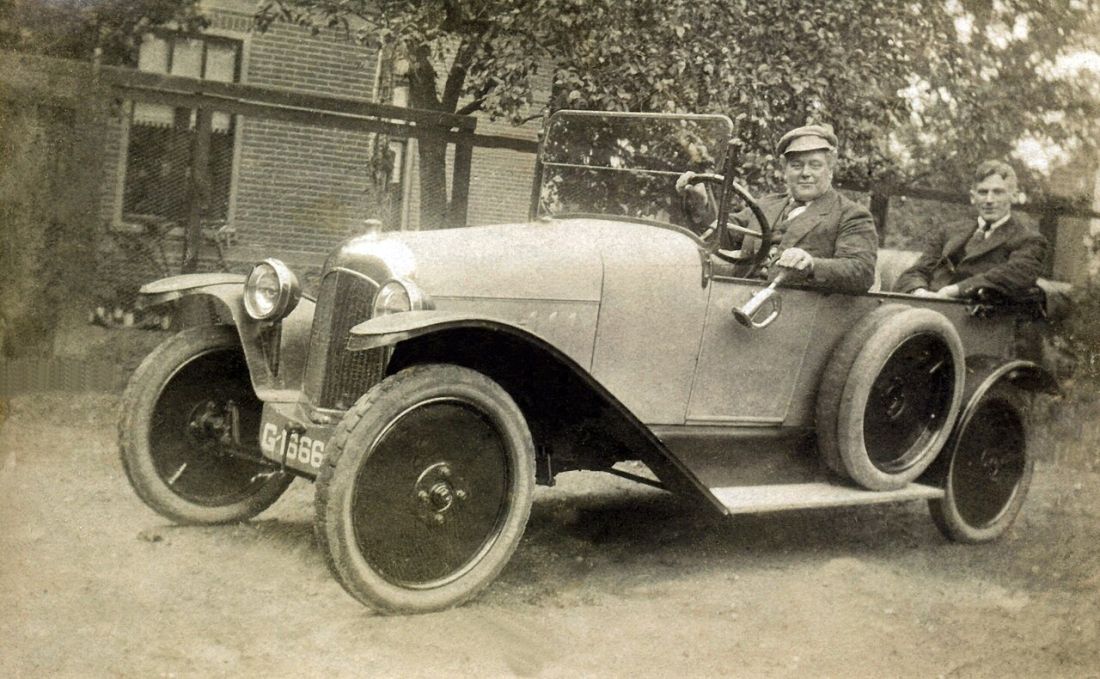
The Story of the First Mass-Produced Car in Europe
Photo: The Citroën Type A Torpedo 1919 with Dutch license plate G-16666 issued on 1 June 1921 (by Hanengerda, CC BY-SA 4.0, via Wikimedia Commons).
Why “mass-produced” even matters (and why you should care in Stockport or Manchester)
If you’ve ever looked at used cars and thought, “How are there so many of these?”… that’s mass production doing its thing. It’s the reason you can scroll through loads of choices, compare prices, and actually have a shot at finding something decent without needing a millionaire’s budget. Mass production is basically this: instead of building one car like it’s a one-off school project, a factory builds the same car again and again, with the same parts, in the same way, so the price drops and the car becomes normal-people stuff. And once cars became normal-people stuff, they became used cars too. That sounds obvious, but it’s massive. No mass production, no big used car market. No big used car market, and places like Stockport and Manchester would look totally different on a Saturday. Fewer cars, fewer options, and way more “sorry mate, parts are impossible to get.”
Here at Dace Motor Company, we see the ripple effect every day. You’ll get families wanting a sensible runaround, someone commuting into Manchester, and someone else wanting a comfy car for the motorway to see relatives. Same city. Different needs. And that choice is only possible because, years ago, car makers figured out how to build cars in big numbers. The story of the first mass-produced car in Europe is basically the moment Europe said, “Right then, cars aren’t just for rich people.” And even if you’re not a car history person, you’ll feel that moment every time you spot a bargain, compare like-for-like models, or sort out finance without it turning into a headache.
Before assembly lines, cars were basically hand-made (slow, pricey, and a bit chaotic)
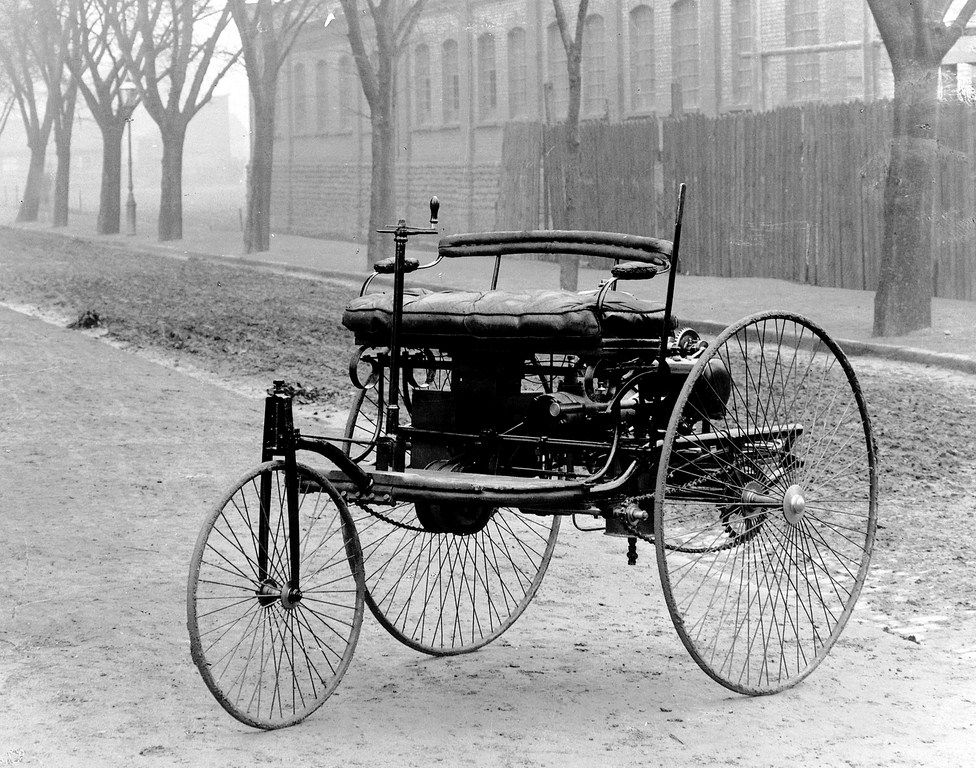
Photo: The first automobile made by Karl Benz in 1885 by Saforrest, Public domain, via Wikimedia Commons
So, before we get to the “first mass-produced car in Europe,” you’ve got to picture what cars were like before factories started pumping them out in big series. Early cars were closer to fancy custom builds. A lot of them were made in tiny numbers, and they borrowed loads from horse carriages. Same vibe, just with an engine bolted on. Back in the 1880s, Karl Benz built what’s widely recognised as the Benz Patent-Motorwagen, and he applied for a patent in January 1886. That car is one of the big “start here” moments for motoring. Around the same time, Gottlieb Daimler and Wilhelm Maybach were doing their own early car work in Germany too. Then France got properly involved in the 1890s, with firms like Panhard et Levassor selling cars from 1890 onwards, using Daimler engine licences.
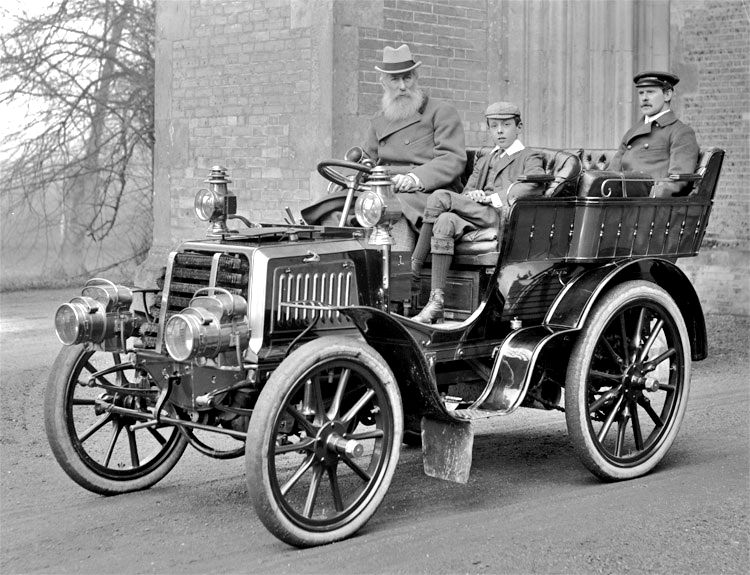
Photo: 12 h.p. Panhard motor car being driven by Ivor Bertie Guest, 1st Baron Wimborne (1835-1914), ca. 1902 by Lafayette photography studio, CC BY-SA 4.0, via Wikimedia Commons.
But here’s the catch. Even when cars were “being made,” the process wasn’t like what we think of today. There wasn’t one smooth system where the same model rolls out, again and again. A buyer might get a chassis from one place and a body from another. Think of it like ordering a bike frame from one shop, then asking a different shop to build the rest, then hoping it all fits. It made cars expensive, and it made repairs tricky because parts weren’t always standard. If something broke, you couldn’t just replace it with the same part from another car. You might need a specialist to make a part again from scratch. And let’s face it, that’s not how most people want to live. People wanted cars that were easier to buy, easier to fix, and cheaper. Europe was ready for a “do it the same way every time” moment. And that’s exactly what arrived in 1919, with a French engineer-businessman called André Citroën.
Meet André Citroën: the guy who wanted cars to be a normal thing, not a rare luxury
André Citroën wasn’t just sitting around sketching cars for fun. He was an engineer and an industrial organiser, and during the First World War he ran large-scale production for munitions. After the war ended, he looked at his factory set-up and thought: why not use this skill for cars? His big plan was to build a small, affordable car in high numbers, using factory methods inspired by Henry Ford’s approach in the United States. That matters because Ford’s Model T had already shown what happens when you build cars in a repeating system: prices drop, and more people can buy them. Citroën wanted that effect in Europe.
The company “Automobiles Citroën” was founded on 4 June 1919. And he set up production at Quai de Javel in Paris, turning an industrial site into a modern car factory for its time. The idea wasn’t just “make a car.” It was “make a car and make it predictable.” Predictable sounds boring, but it’s brilliant. Predictable means parts match. Predictable means you can train workers faster. Predictable means you can build a dealer and service system because you’re not dealing with random one-off builds. And predictable means you can start talking about price in a way that normal people can handle.
That’s why Citroën’s first car isn’t just a “first model” story. It’s a culture shift story. You can feel it in how we buy and sell cars now, even in places like Stockport where you’ve got busy roads, tight parking, and you just want something you can rely on. Citroën helped push Europe into the idea that a car could be a standard product, like a fridge or a bike, rather than a custom-made toy for the elite.
The car itself: the Citroën Type A 10 HP, shown in Paris and sold like a real product
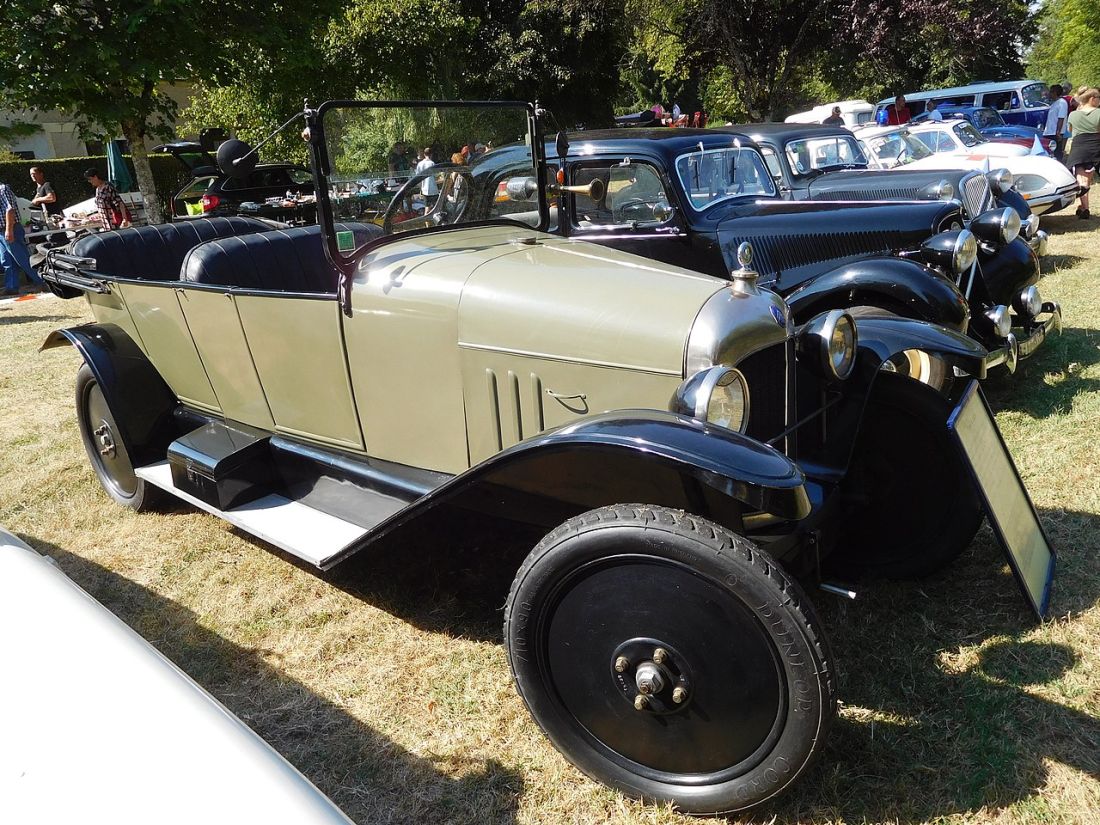
Photo: 1919 Citroën Type A by Cjp24, CC BY-SA 4.0, via Wikimedia Commons
The star of this story is the Citroën Type A 10 HP. It was Citroën’s first production car, built in Paris, and it went into production in 1919. It was produced from June 1919 to December 1921, and 24,093 were built. For that era, that’s a serious number. Not “a few hundred for rich collectors.” Proper volume.
There’s a nice bit of detail about how it was launched, too, because Citroën understood publicity. On 4 June 1919, the Type A was unveiled at Fernand Charron’s dealership on the Champs-Élysées in Paris, and the first car was delivered to the first customer, Mr. Testemolle, on 7 July 1919. That’s not a vague “some time that year.” That’s a specific moment where “cars made in big numbers” stopped being a rumour and became a real thing you could buy.
Now for the car specs, in plain language. The Type A used a 1.3-litre, four-cylinder engine (1,327 cubic centimetres), rated at 18 horse, and it could reach around 65 kilometres per hour. The base price was advertised at 7,950 francs in its first year. Again, the numbers matter, because the whole point was: decent performance for the time, and a price that opened the door for more buyers. This is why so many sources describe it as Europe’s first mass-produced car, meaning a European brand building cars in big series using modern factory methods.
So how did Citroën make it “mass-produced” instead of “fancy but rare”?
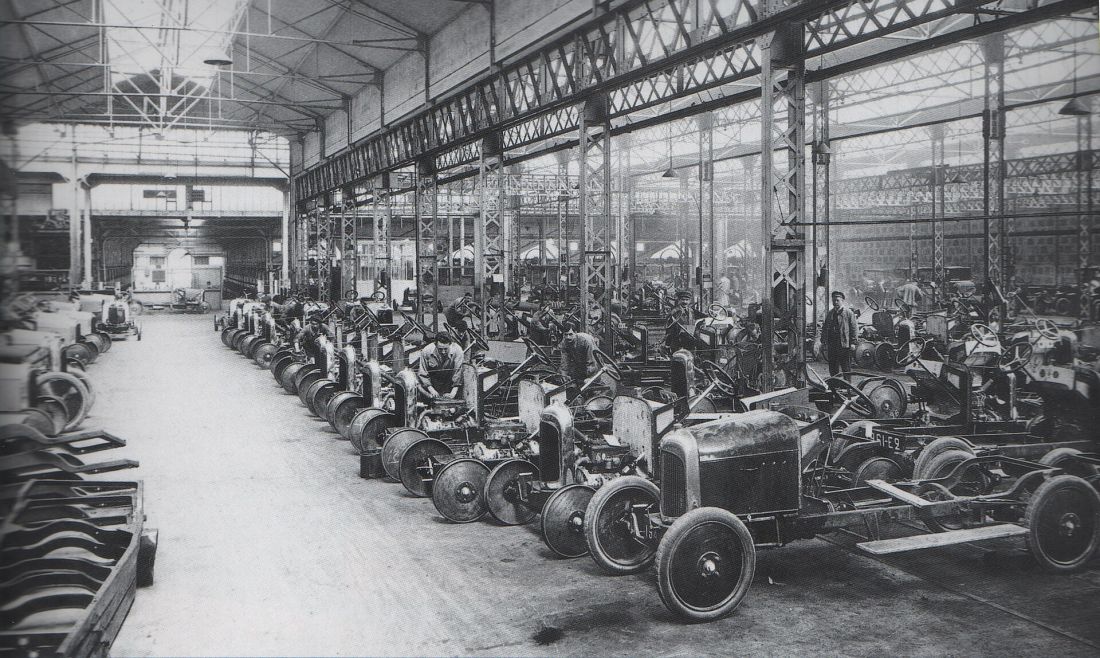
Photo: Assembly line of a Citroën 10hp (Public domain, via Wikimedia Commons).
When people say “mass-produced,” they’re really talking about a method. It’s not magic. It’s a system. The basic idea is that the car moves through the factory in steps, and workers repeat the same tasks again and again. Instead of one small team building a whole car from scratch, you break the job into chunks. One group fits this. Another group fits that. The parts are ready. The tools are ready. Everyone knows what’s happening next. It’s like making sandwiches in a busy café: you don’t wait for one person to bake bread, slice tomatoes, grill chicken, and ring up the till. You split it up, so the queue doesn’t explode.
Citroën leaned hard into that way of working, taking inspiration from Ford’s production style. And then he made smart product choices to keep production smooth. The Type A wasn’t sold as a million random variations where every buyer wanted a special tweak. It was offered in body styles, sure, but the key bits stayed standard so the factory didn’t get stuck switching back and forth all day. The result was volume. And volume is what changes everything.
The other thing that’s easy to miss is how “finished” the Type A was for its day. A lot of cars back then could involve extra messing about before you had a fully ready vehicle. Some sources highlight that the Type A was sold ready to drive, which sounds normal now, but back then it was part of the pitch: buy it, drive it, done. And features mattered too. Accounts of the Type A’s early selling points include electric starter and lights (so you’re not fighting with old-school starting routines), plus practical touches like a spare wheel already mounted, and a low entry price for the time. It’s all very “make life easier,” which, to be honest, is what most car buyers want whether it’s 1919 Paris or a rainy Tuesday near Stockport Viaduct.
A Manchester link: while Citroën changed Europe in 1919, Manchester already knew the factory vibe
Here’s where it gets fun for anyone local. When we talk about “Europe learning mass production,” Manchester has its own piece of the puzzle sitting right there in Trafford Park. Ford opened an assembly plant at Trafford Park in 1911, and it’s widely described as Ford’s first overseas plant. The Science and Industry Museum talks about Ford opening its first factory outside the United States at Trafford Park in 1911, building Model T cars there. So yes, long before 1919, people in Greater Manchester were already around big industrial making. Trafford Park itself is famous as one of the earliest purpose-built industrial areas, right by the Manchester Ship Canal, which is very on-brand for this region: build big, make things, get them shipped.
So you might be thinking, “Hold on, if Ford was making Model T cars in Trafford Park in 1911, how can the Citroën Type A be the first mass-produced car in Europe?” Good question. The way this is usually framed is that Citroën’s Type A is the first European-brand car produced in large series using modern factory methods, and it marked Citroën becoming the first big mass-production manufacturer in Europe. Ford, in Manchester, was an American company building an American design, and early Trafford Park work began as assembly using imported parts, then built up over time. Citroën’s move in 1919 was Europe saying, “We’re doing this ourselves, at scale, as a European maker.”
And that local link actually makes the story feel closer. Mass production isn’t some distant concept from a textbook. Manchester has lived around it for ages, whether that’s Trafford Park’s factory history, the museum collections, or just the general culture of making things properly. Citroën’s Type A fits right into that bigger picture: industry turning into everyday life.
What the Type A changed for normal people (and why the used car market exists the way it does)
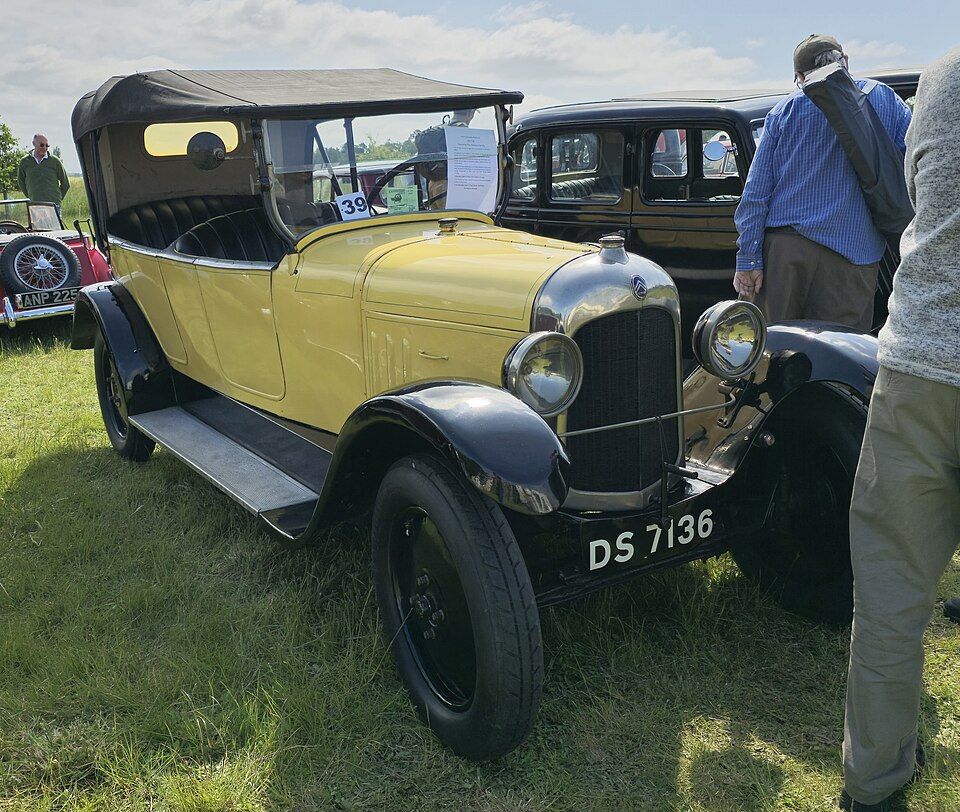
Photo: 1921 Citroën Type A by Calreyn88, CC BY-SA 4.0, via Wikimedia Commons.
Once you can build cars in big series, you get a chain reaction. New cars become less rare. More drivers appear. More repair shops appear. Roads change. And, crucially, a used car market becomes a real, steady thing rather than a weird side hobby for a few enthusiasts. It’s also when “car ownership” starts feeling possible for people who aren’t kings, bankers, or racing drivers. In France, Citroën grew into one of the major players of the 1920s, alongside other big French firms, as Europe’s car industry scaled up after the war years.
And the practical side is the bit you can still feel today. Standard parts and repeatable builds mean repairs get simpler. You can find replacement bits. Mechanics learn the quirks of common models. Even insurance and finance get easier when cars are standard products instead of handmade puzzles. You see it today when you’re buying used: you can compare like-for-like cars, check common faults, and make a sensible decision without guessing. That’s the long shadow of mass production.
There’s also the “trust” part. A car built in a standard way invites standard checks. You’re not relying on someone’s word that it’s fine. You can check service records. You can check mileage patterns. You can check if it’s been looked after. It’s the reason modern buyers have expectations like “I want a warranty option” or “I want to know it’s been inspected.” Those expectations didn’t fall from the sky. They grew as cars became normal products with repeatable quality and repeatable checks.
So yeah, the Type A is a history story, but it’s also a “why your Saturday car search isn’t impossible” story. Without cars like this being made in big numbers, you wouldn’t have hundreds of options across different makes and styles sitting within a short drive of Stockport or Manchester. You’d have a handful of oddball vehicles, each one a gamble.
How to use this story when you’re buying a used car now (no fluff, just real-world moves)
History is nice, but you’re probably thinking about real problems. Will it start every morning? Will it fit the kids? Will it feel good on a longer run? Will it drain your bank account with random fixes? The Type A story helps in one big way: it reminds you that cars got better for buyers when they became predictable. So when you’re buying used now, you want to hunt for predictability.
Start with the basics that never go out of style. Look for a clear service history and signs the car’s been cared for, not just cleaned up for photos. Take your time on the test drive. Don’t just do a tiny loop; get it up to speed and listen. Does it pull straight? Does it brake smoothly? Any weird knocking over bumps? You don’t need to be a mechanic to notice when something feels off. And be honest with yourself: if you’re buying it for commuting, a sporty seat that looks cool but hurts your back after ten minutes isn’t a win.
Then there’s finance. People get nervous here because they think every check is going to mess up their credit score. That’s why a soft search can be handy: it lets you see finance options without a full impact in the early stage. That’s the modern version of what Citroën was doing in 1919: lowering the barrier so more normal people can say yes. And warranties matter too. In the early days, buyers wanted reassurance because cars were still new and a bit mysterious. Same vibe now. A warranty isn’t about being dramatic; it’s about protecting yourself from the annoying surprise bill.
We keep that mindset in mind at Dace Motor Company, but we don’t bang on about it. We just see it play out. People want a fair deal, a car that’s checked properly, and a buying process that doesn’t feel like a trap. That’s what mass production made possible in the first place: cars as dependable products, not scary experiments.
Where we see the 1919 “make it easier for people” mindset today, right here at Dace Motor Company
You can draw a straight line from André Citroën trying to make cars a normal purchase in 1919 to what buyers expect now in Greater Manchester. People want choice. They want clarity. They want to feel like they’re making a smart decision, not rolling dice. And because we’ve got four sites around Stockport and Manchester, we see loads of different buyers with different plans. Some people want something small and simple for local trips. Some want a bigger car for family life. Some want a premium badge because they just love the feel of it. From Alfa Romeo to Volkswagen to Volvo, we get why the list of brands matters: different cars fit different lives.
And here’s the quiet truth: the reason you can pick between so many styles is the same reason the Type A mattered. Once a car maker proves “we can build loads of these, all the same,” the market gets wide. Then used cars become a proper option, not a last resort. That’s also why price comparisons make sense now. You can look at similar cars and say, “This one’s priced fairly,” or “That one’s a bit ambitious.” Citroën pushed that idea early by aiming for volume and a clear price point.
We try to keep things human. We’re a family-run business that started in Stockport in 1993, and we’ve grown because people talk, and word gets around. If someone in Reddish has a good experience, their mate in Eccles hears about it. That’s how it works round here. And we’re open every day, because life doesn’t stick to a neat schedule. If you’re free on a Sunday, you’re free on a Sunday.
So, the next time you’re browsing used cars and thinking “How did we even get here?”, just remember: a French factory in 1919 helped turn cars into everyday stuff. Without that shift, buying a used car in Stockport or Manchester would be a totally different experience. Not better. Just harder.