


The Story of the Car That Drove Itself Before Tesla
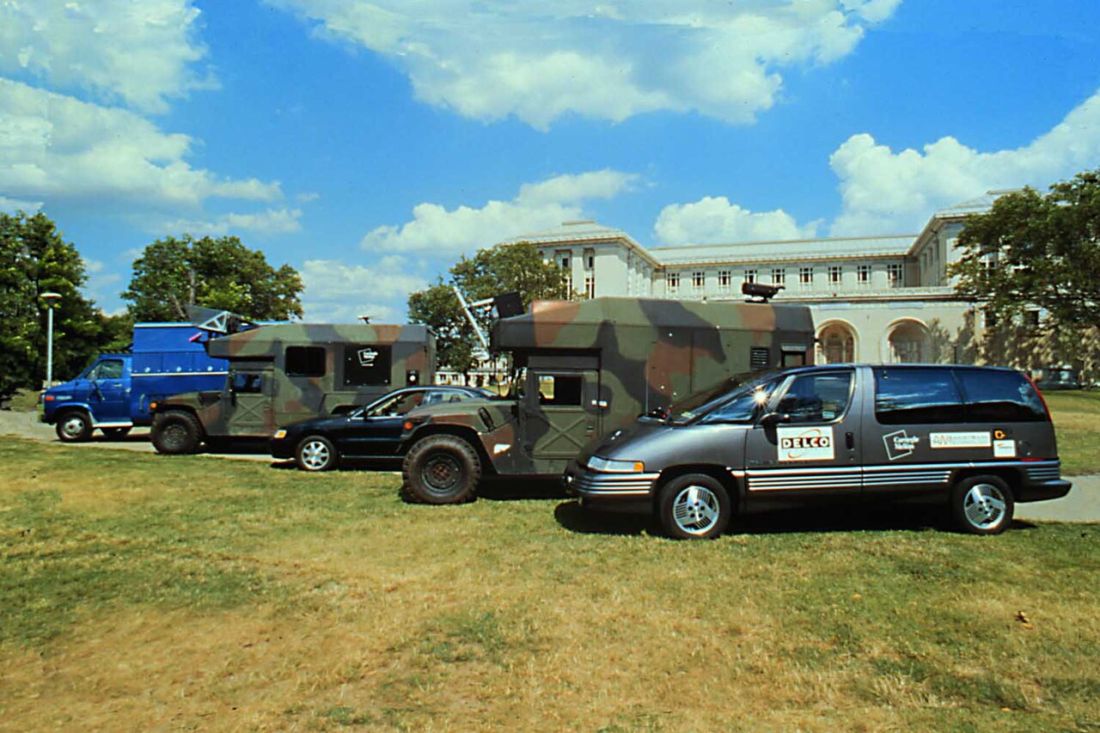
Photo: Navlab models 1 (farthest) through 5 (front). Navlab 5 completed the first coast-to-coast drive with 98.2% autonomy. All five vehicles were developed at Carnegie Mellon University, from 1984 through 1995 (by Firefly4342, CC BY-SA 4.0, via Wikimedia Commons).
You and I both know that driving around Manchester, through rush hour or down the M60, can be a bit of a pain. Imagine though, if your car could take over some of the work. That idea isn’t new. Researchers in the 1980s thought “what if the car steers itself?” They were playing with sensors, cameras, computers - all jammed into big machines. They weren’t just dreaming; they were actually building things.
One example: at Carnegie Mellon University in the US they built a van-like “self-driving” car in 1986. They called it “NavLab 1”. It could drive itself, although slowly and not perfectly.
In Germany, a fellow named Ernst Dickmanns and his team at the Bundeswehr University Munich worked on autonomous cars with the company Mercedes?Benz. They managed quite advanced things by the very late 1980s and early 1990s.
The “Wow” Moment (But It Was Messy)
Let’s zoom in. The NavLab 1 project: picture a blue Chevrolet van, piled high with computers, generators, sensors - the sort of set-up you don’t see on your average drive through Stockport. It rolled out in 1986. It could drive itself at around 20 mph. Not motorway speeds. Not cruising the M62. But still: a car steering itself.
Rediscover the 80s
Then over in Germany, Dickmanns and his team built a car that could handle real traffic on a major highway. Yes, in the 1990s they took something up to roughly 130 km/h (about 80 mph) on a German Autobahn, with little human intervention. The important thing: it was planned and demonstrated years before self-driving cars became “everyday” tech.
So anyway: that old “self-driving” car from the 80s was nothing like the smart Teslas of today. But it was brave, odd, and way ahead of its time.
Why It Mattered
You might ask: “Okay, that’s cool, but what’s the big deal? And why didn’t it become common then?” Fair questions.
Here’s a little breakdown:
Why it was a big deal:
The idea that a car could steer, brake, change lanes, or at least recognise the road and react - that was science fiction for most of us. But the tech people made it work, albeit in controlled conditions.
It showed what could be possible. If it works in research, maybe one day you and I could buy a car that helps drive itself in Manchester traffic.
Why it was hard:
Back then, computers were way slower, sensors were huge, and budgets were… well, not like they are today. The NavLab van weighed a ton, had a giant generator. It looked more like a moving lab than a sleek ride.
- Roads are messy: weather, traffic, pedestrians, weird obstacles. The research cars often had “safety drivers” ready to take over. They weren’t perfectly ready for every eventuality.
- Cost and regulation: It took years for technology to drop in price, and for governments to allow driverless things on public roads.
- Public trust: We drive ourselves. We like control. Giving it up, even a little, is a big leap.
What It Taught Us
Even though that 80s project didn’t turn into a regular car you could buy, it handed off a few big lessons. And yes, when you’re looking for used cars-say you come into our Dace Motor showroom in Stockport-they may not drive themselves yet, but the tech inside them often does.
- Visual systems and sensors: The 1980s autonomous cars used cameras and image recognition to “see” the road. That’s a direct ancestor to the lane-keeping and collision avoidance systems in many vehicles today.
- Data and control: They learned how to integrate data from multiple sensors (cameras, sometimes radar) with steering and braking systems.
- Real-world testing matters: You can test stuff in a lab, but roads in Stockport or Manchester are unpredictable. The early work involved real highways, real traffic. That prepares for today’s used-car market where features like parking sensors or adaptive cruise mean something.
- Patience and iteration: It reminds us that big changes in cars don’t happen overnight. Just like at Dace Motor Company we check all our used cars, warranty the early months, make sure they’re right. Technology-wise, the journey is similar.
How Does That Link to Dace Motor Company
When you drop into one of our showrooms - maybe the big one on Greg Street in Reddish or the specialist one on Buxton Road - you’re looking for a used car. A car you trust. A car that’s had its checks. We want you to feel confident. And the story of that 1980s self-driving car kind of fits with the idea of trust and technology and reliability.
We’re not selling you a car that drives itself (yet). But at Dace Motor Company we are selling you a car we’ve checked, a car with warranty, a car where we’ve done the hard work so you don’t worry about the tech underneath. The same careful-learning principle from those early autonomous vehicles shows up in how we handle used cars: tests, checks, real-world conditions, making sure everything works.
Also, given we’re in Stockport / Manchester, we know local roads are full of character. Bumpy lanes, Manchester weather, roundabouts by the Trafford Centre, the motorway swaps… A car that’s been looked after is worth more. The same principle the researchers learned: real conditions matter.
A Story That Fits In With Real Life
Picture this: you’re in the driver’s seat on the Eccles branch of Dace. You test drive a car. Everything feels good. Then you think: “I wonder if one day this car could drive me to Piccadilly without me touching the wheel.” You smile, knowing the future is coming. Then you remember that some clever folks in the 1980s built something like this already. They set the stage.
Now picture the 1980s team: piles of wiring, massive computers in a van, a safety driver on standby. Not exactly sleek, right? But brave. They risked the unknown. Just like when you buy a used car you trust but still – there’s some risk. That’s why the checks matter.
And when you walk through our lot, maybe you spot smarter features: parking sensors, maybe an automatic braking system. The tech may not be fully autonomous yet, but we’re farther than the 80s project in many ways. Yet the roots trace back there.
What You Can Do If You’re Buying a Used Car
Since you’re reading this because you might be looking for a car (and because we want you comfortable), here are a few practical tips - thanks to what those self-driving car pioneers taught us about “real roads”:
- Check the sensors: If the car has features like parking assist or automatic braking, test them in real life. A light drizzle in Manchester should not throw them off.
- Ask about the history: Vehicles that have been well maintained, with no strange modifications, are more reliable. At Dace we HPI-check every car (so you don’t get a nasty surprise). Our in-house warranty means we stand by the car.
- Test drive the car in a variety of conditions: Town traffic, slower roads, maybe a motorway stretch if you can. You’ll see how it handles in the real-world - just like those research vehicles did.
- Know what you want and be ready: If you drive a lot of miles between Stockport and Manchester, maybe you value comfort, fuel economy, low maintenance. Our large variety of stock means you can pick something that matches you.
- Take advantage of finance if you need it: At Dace we offer used-car finance with soft search (so your credit score isn’t impacted just by enquiring). So you can explore without worry.
So yeah - the self-driving car story from the 1980s is more than a footnote. It shows what happens when people try big ideas and work with real roads. It ties into what we do at Dace: bringing you cars you can trust, in real conditions, in real life around Stockport and Manchester.
Next time you’re browsing our showrooms - maybe the German Car Centre on Manchester Road, Stockport - remember: someone, somewhere back then, loaded a giant computer into a van and said “let’s do this.” That spirit lives on in every good used-car purchase. You’re not getting a “self driving car” yet, but you’re getting a car with solid care behind it. And who knows? Maybe one day we’ll all buy used cars that really do drive themselves. Until then - pick your car, test it hard, ask questions, and drive safe.