


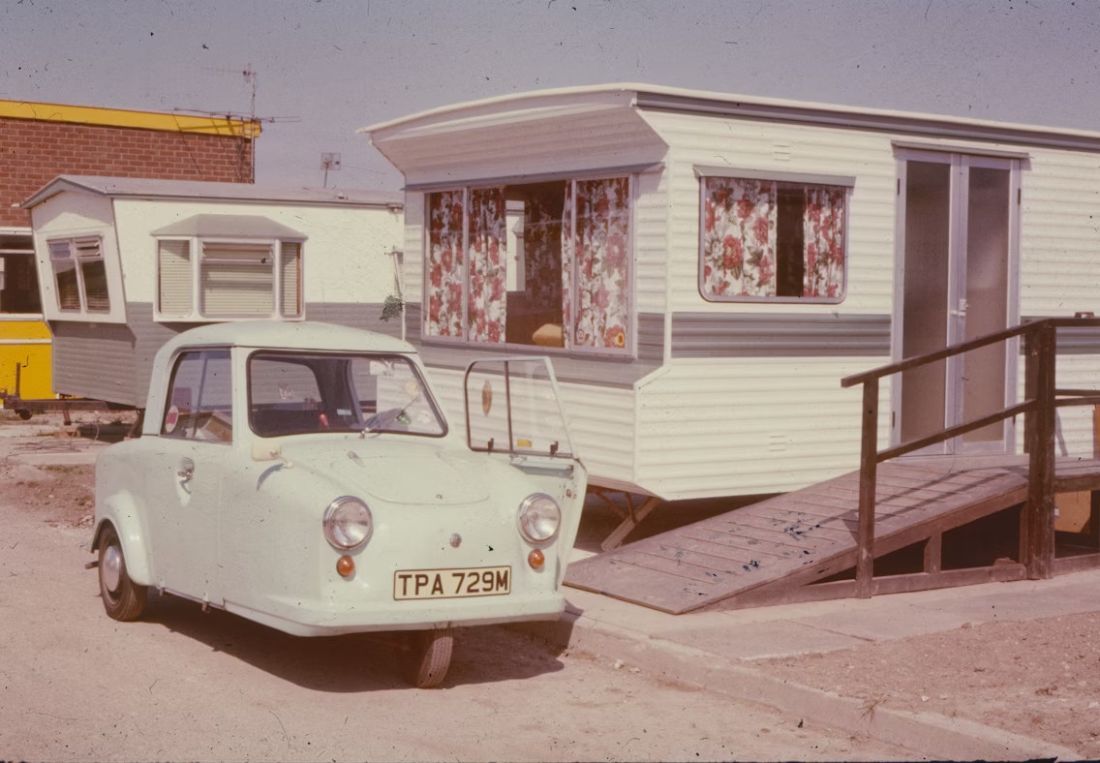
The Story of Cars with Three Wheels
You might think a car has to have four wheels. Most do. But over the years, some bright, daring, quirky engineers built cars with only three wheels. They baffle people, sometimes worry mechanics, but often win hearts. Sit back-let me take you through some of the weird and wonderful tales of three-wheelers, from the humble Reliant Robin to the bold Morgan 3-Wheeler. And yes, we at Dace Motor Company love a bit of motoring oddity now and then.
Why build a three-wheeled car?
Before we get into names and dates, let me explain why someone would even try to build a car with one wheel missing.
Think of cost. Less steel, fewer parts, simpler things. In some places and times, vehicles with three wheels were taxed or insured like motorcycles. That could be a big saving. Also, people liked the oddness: a car that stands out. Mechanics might moan, but drivers might grin.
Still, three wheels come with challenges: balance, turning, stability. You’d need clever design so it doesn’t tip over in a corner. And comfort-how to make it safe, not just a gimmick. Over time, engineers tried many designs, some succeeded, many failed.
Let’s start with one of the most famous three-wheel cars in Britain: the Reliant Robin.
Reliant Robin: Britain’s plastic pig
When you say “three-wheeler” in the UK, many people immediately think of the Reliant Robin. It’s quirky, weird, fun-and often made fun of. But it has history and heart.
Reliant was a company that had built small cars and vans. But the Robin (first made in 1973) became their best known model.
What made the Robin special? First, its body was made of fibreglass. That’s a kind of plastic composite. Fibreglass is light, it doesn’t rust like steel. That helped keep the weight down.
The original Robin had a 750 cc engine. Later versions got a bit more power, going up to 850 cc.
One reason the Robin became so famous (or infamous) is its reputation for tipping over. Turn too sharply? Ooops. Many jokes have been made about people tipping a Robin over. But fans say that’s exaggeration-if driven sensibly, it’s okay. Still, it adds to the legend.
Over the years, Reliant updated the Robin. From 1973 to 1981 was the first era. Then there was a pause. Then in 1989, they brought it back with a totally new look.
In the late 1990s, there was a “Robin 65” edition (65 special cars) with extra trim, better interiors, special badges.
In its life, the Robin sold in decent numbers, and many are still on the road (though they’re rare now).
The Robin is sometimes called “the plastic pig.” That’s because of its fibreglass body and its reputation for being a bit odd. But fans love it for those quirks too.
There are clubs and communities dedicated to preserving them. People fix them, maintain them, drive them in shows. In a way, the Robin is part of British motoring folklore.
Early three-wheelers: Morgan and cyclecars
But the story of 3-wheelers isn’t just about Robin. It goes way back-over a century. One of the earliest names is Morgan.
Henry Frederick Stanley Morgan (often called HFS Morgan) founded Morgan Motor Company in 1910.
Before Morgan made four-wheel cars, its first offerings were three-wheelers-often called “cyclecars” or runabouts. These were very light, simple vehicles. Morgan’s first runabout (with a single wheel at the back) appeared around 1909 or 1910.
Their simple shape, low weight, and leaf-spring suspensions made them practical in their era. Driving one felt different: no roof (or minimal roof), exposed to wind, a feeling of being closer to the road. Many were open, two-seat models.
Morgan kept making three-wheelers for many years. Eventually, they also built four-wheeled cars and sports cars. But the three-wheel formula remained part of their identity.
In fact, Morgan made what they called the Super Sports 3 Wheeler in the 1930s (1932–1937). These had more power and some styling bells and whistles.
But after 1952, Morgan stopped building their three-wheelers (at least the traditional ones). They focused more on four-wheel sports cars.
The modern revival: Morgan 3-Wheeler (2011–2021)
Fast forward to the 21st century. Suddenly, Morgan decided to bring back the three-wheel car-but with a twist. Not fragile, not low power-something bold. They launched the Morgan 3-Wheeler in 2011.
This new model had a V-twin engine (basically two big cylinders in a “V” shape) and a manual gearbox, driving the rear wheel.
It’s light-Morgan aimed to keep the fun alive. One of their quoted stats was doing 0 to 60 mph in around 4.5 seconds.
But don’t think this was just a nostalgia act. It was built with care, performance, and a bold character. It’s not ideal for daily commuting in heavy traffic, but for fun drives, twisty roads, car shows-it’s brilliant.
Production of that version ended in 2021. Morgan marked the end with a limited “P101” edition.
After that, Morgan introduced a new variant called the Super 3 (launched in 2022) which continues the three-wheel tradition, updated for the wider modern market.
Morgan’s return to three wheels had a purpose: reminding people that driving can be raw, fun, memorable-not all about creature comforts or safety nets.
Other three-wheelers and oddballs
Reliant and Morgan are the biggest names. But many other small makers, hobbyists, inventors have tried making three-wheel cars.
In the UK, small firms and kit car makers built “trikes,” “autocycles,” “microcars.” Some were one-off prototypes, others were produced in small numbers. Some used motorcycle engines, some custom builds.
Also, in the early parts of the 20th century, the line between motorbike and car was fuzzy. Some three-wheelers were licensed more like motorcycles, especially in places where the law treated them that way.
Sometimes people build a three-wheeler for fun, as a hybrid between motorcycle and car. The balance is tricky, the chassis must be well designed, and safety is always a concern.
You can still find three-wheelers at classic car shows, auto fairs. They draw attention. Kids point. Adults ask: “Can it even turn?” Enthusiasts smile. Some are restored, some modified, some kept as museum pieces.
Why people still love them
Why do three-wheeled cars have fans? Why do we talk about them instead of writing them off as oddities?
First, they’re memorable. You won’t forget seeing a car with three wheels roll past Greg Street in Stockport. It stands out.
Second, they connect you with driving. With less insulation, fewer assists, fewer creature comforts, the driver senses every bump, hears every noise. You feel the drive more.
Third, for some, it’s a hobby, a passion. Restoring, maintaining, showing. It’s about the story behind the machine.
Fourth, they remind us that car design is a playground. Not everything must follow the norm.
A few fun facts and quirks
- The Robin was made so that, in some cases, it could be taxed like a motorcycle-cheaper in some ways. Though over time laws changed.
- The Robin’s fibreglass body made it “rustproof” compared to steel cars. That helped in British weather. But fibreglass has its own repair quirks.
- Morgan’s original three-wheelers often used motorcycle engines, especially early on.
- When Morgan relaunched the 3-Wheeler in 2011, it looked old school, but had modern touches beneath.
- Morgan planned an electric version (called EV3) at one point (though it’s uncertain how far that went).

Thinking locally: what this history means for us in Manchester & Stockport
You might wonder: what does all this have to do with Dace Motor Company, or cars in Manchester, or used car buyers?
First, it reminds us that cars are more than transport. They’re stories, character, personality. When someone comes into our showrooms in Stockport or Eccles, and they see a sleek BMW, a crisp Audi, or a rugged Land Rover, they’re not just buying metal-they’re buying identity. The story of the three-wheelers is part of car lore.
Second, it teaches humility. Sometimes weird ideas-three wheels instead of four-challenge the norm. At Dace, we sometimes get asked weird requests (“Do you have this odd brand?”) or unusual combinations. Being open to odd ideas can lead to surprising finds. If someone asked us to track down a rare three-wheeler or a niche classic, we’d try.
Third, restoration and specialist vehicles are part of the used car world. Classic car buyers, enthusiasts, people who want something that stands out-these folks are part of what we serve. A three-wheeler is niche, but enthusiasts seek them. Knowing the history helps us talk knowledgeably with them.
Finally, Manchester and Stockport have great roads for fun drives. Rolling hills north of Manchester, the Peak District nearby. Imagine someone driving a Morgan 3-Wheeler on a sunny weekend, open air, feeling the wind. That’s the kind of romantic vision that keeps people loving cars.