


The Story Behind the Nissan Skyline GT-R Legend
At Dace Motor Company, we spend a lot of time around real-life cars. Family hatchbacks. Everyday SUVs. Sensible diesels. Little city cars that make life easier on a wet school run through Stockport or a crawl past the Trafford Centre. But every so often, one car story rises above the usual chat about mileage, boot space, and whether the rear seats can handle two kids and a football kit. The Nissan Skyline GT-R is one of those stories. It’s the sort of car that makes grown adults grin like kids, and kids stare like they’ve just seen a spaceship. And the funny thing is, the GT-R didn’t become a legend because of one flashy launch or one lucky magazine cover. It got there bit by bit, through racing, smart engineering, long gaps where people thought it was gone for good, and a strange kind of fame that spread from circuits to game consoles to bedroom posters. That’s why the Skyline GT-R still feels special. It wasn’t handed a crown. It earned one. And let’s face it, that makes people care more. Around Manchester and Stockport, where people tend to spot nonsense a mile off, that matters. A car with a backstory gets respect. A car that keeps proving itself, year after year, gets remembered. The Skyline GT-R started in 1969, disappeared after the early 1970s, came back in 1989 after a 16-year break, and stayed under the Skyline name until the R34 ended in 2002. Then, in 2007, Nissan brought back the badge as the Nissan GT-R, dropping the Skyline name altogether. That split matters, because for a lot of fans, the Skyline GT-R years feel like a distinct chapter, a bit rougher round the edges, a bit more human, and maybe, to be honest, a bit cooler.
Before the badge, there was a moment that changed everything
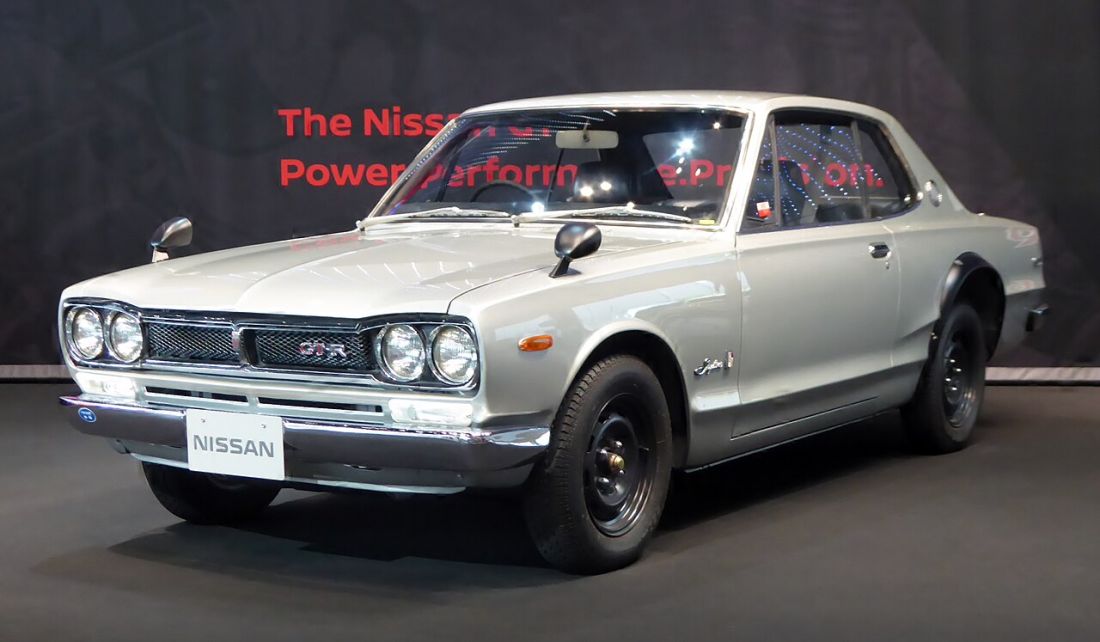
Photo: 1972 Nissan Skyline 2-door Hardtop 2000GT-R by Tokumeigakarinoaoshima, CC BY-SA 4.0, via Wikimedia Commons
The GT-R story didn’t begin with the letters themselves. It began with a Skyline shocking people on a race track. Back in 1964, Prince, the company behind Skyline before it merged with Nissan, built a special Skyline GT for the second Japan Grand Prix. The aim was simple enough: take on serious sports cars and see what happened. And what happened was the stuff that turns an ordinary car name into folklore. A Porsche won the race, yes, but the Skyline GT filled second through sixth places, which was a huge moment in Japan at the time. Nissan’s own heritage story says the crowd went wild when the Skyline passed the Porsche during the race, and that this was the point where the Skyline’s image as a high-performance sports saloon was really born.
You can see why. It’s the classic underdog scene. Big-name rival, home crowd, proper drama. Like seeing a local lower-league side give one of the giants a bloody nose under the lights. People remember that sort of thing. And once people attach a feeling to a car, the car stops being just metal and glass. It becomes a character. That early Prince Skyline GT also showed a pattern the GT-R would keep for decades. Nissan and Prince didn’t just want a car that looked brisk in a brochure. They wanted something that could prove itself where it mattered, with everyone watching. That matters because the GT-R legend has never really been about one single stat sheet. It’s about moments. The kind of moments people repeat to their mates at a pub in Heaton Moor or over a brew in Eccles. “Did you know the Skyline nearly upset Porsche back in the day?” That’s how legends grow. Quietly at first. Then all at once.
Hakosuka, and the point where the Skyline became a monster in the best way
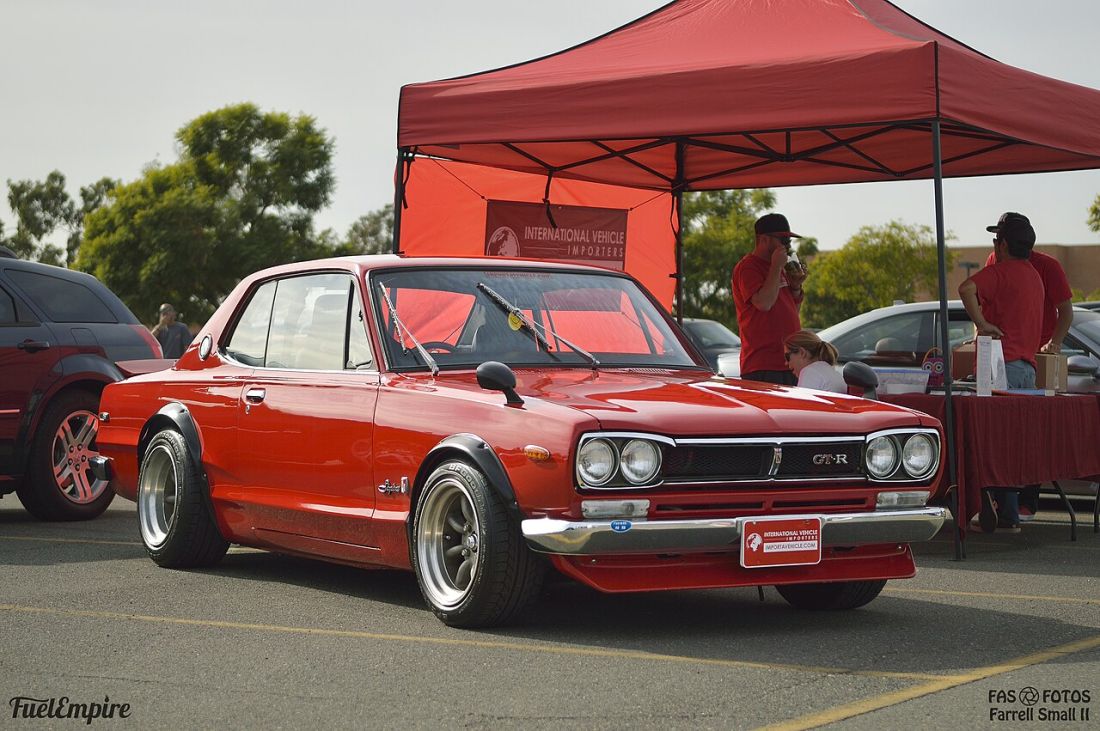
Photo: Lightly modified Hakosuka Skyline GT-R by Farrell Small, CC BY 2.0, via Wikimedia Commons
The first proper GT-R arrived in 1969, and this is where the story really starts to sound a bit wild. Nissan says the first GT-R came from the third-generation Skyline and used lessons learned from its pure racing machines. The car looked like a normal saloon to plenty of people, which made it even better. It had that “wolf in sheep’s clothing” feel long before people started throwing that phrase around every five minutes. Then it started winning. And winning. And winning again. Nissan’s heritage records say the early GT-R reached 50 race victories in 2 years and 10 months, and by the time the works racing team stopped its activities in October 1972, the total had reached 52. The later two-door hardtop version, known by fans as the boxy “Hakosuka,” shortened the wheelbase and cut some weight, which sharpened things further.
Nissan also says the nickname “Hakosuka” came from the car’s boxy shape. That shape is a big part of the charm now. It looks serious, almost stern, like it would rather get on with the job than show off. In a weird way, it’s a bit like some of the toughest old-school industrial streets around Greater Manchester. No fancy sparkle. Just purpose. The early GT-R’s six-cylinder engine, racing-bred ideas, and huge run of victories made it feel almost unfair in its day. Nissan even notes that people said, “Skyline’s only rival is Skyline.” That tells you everything. When a car starts competing with itself because rivals can’t keep up, people stop seeing it as just good. They start seeing it as inevitable. That’s a dangerous kind of fame, because it builds expectation. Once you’ve created a car that scary, people expect every future GT-R to carry the same feeling. That’s a hard weight for any badge to carry. But the Skyline GT-R was already carrying it by the early 1970s.
Ken and Merry, a short goodbye, and a ghost that stuck around
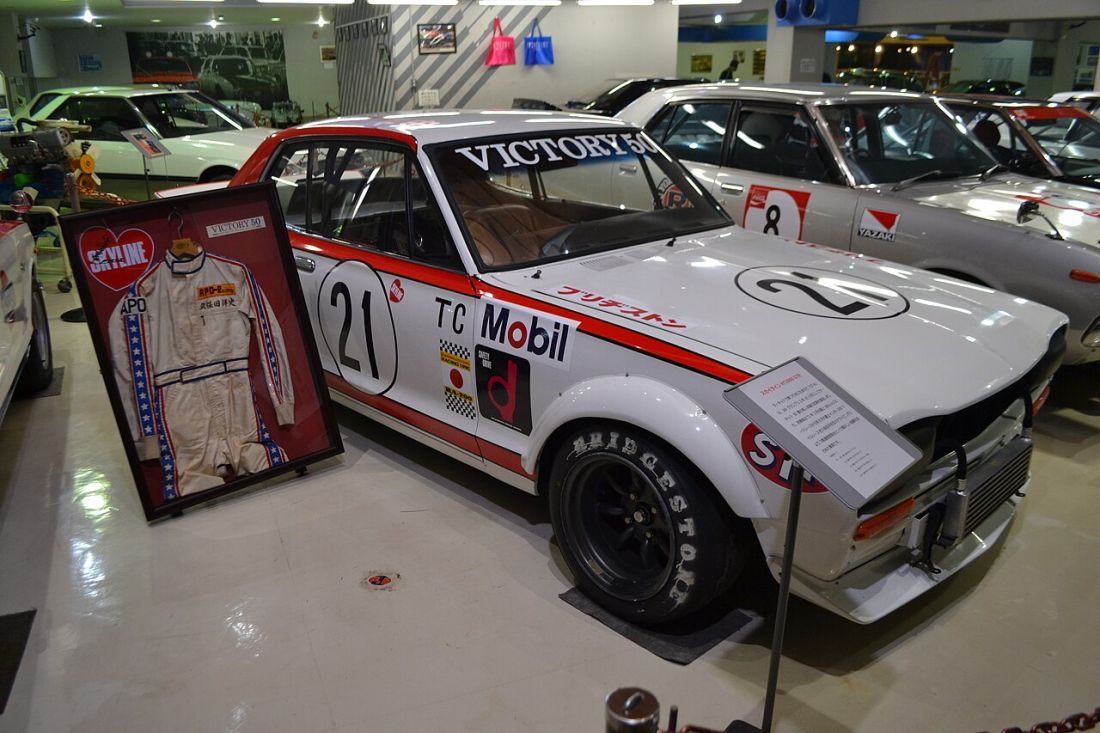 Photo: Nissan KPGC10 Skyline 2000GT-R by ????, CC0, via Wikimedia Commons
Then came one of the strangest bits of the whole tale. The fourth-generation Skyline arrived in the early 1970s with a hugely famous ad campaign built around “Ken and Merry,” a young couple used in the marketing. Nissan’s heritage site says that campaign became a social phenomenon in Japan, which is a big phrase, but in this case it fits. The C110 Skyline had style, charm, and public attention. It should have been a perfect stage for the next GT-R chapter. But life got in the way. Nissan showed a Skyline 2000GT-R Racing Concept at the 1972 Tokyo Motor Show, wearing race number 73 as a hint at plans for the 1973 season.
Then the works team stopped operating, with Nissan saying the company had to focus on anti-pollution technology and fuel efficiency. Another official Nissan source adds that the production KPGC110 GT-R was built for only four months, from January to April 1973, and that fewer than 200 were made. So here you had a GT-R that should have roared into a new age, but instead turned into a near-ghost almost straight away. That’s part of why people talk about the “Kenmeri” GT-R with such affection now. It wasn’t just rare. It feels unfinished, like a brilliant TV series cancelled after one season. You’re left imagining what could have happened if the timing had been different. And that gap matters because absence can make a car more famous, not less. People miss what disappears. They build it up in their heads. They tell stories. By the time the GT-R went quiet, it had already done enough to be remembered, and the sudden stop gave the name a kind of mystery. It hadn’t faded away because it was weak. It had stepped off stage while people still wanted another encore. That’s a powerful bit of myth-making, even if nobody planned it that way.
The long silence made the comeback hit even harder
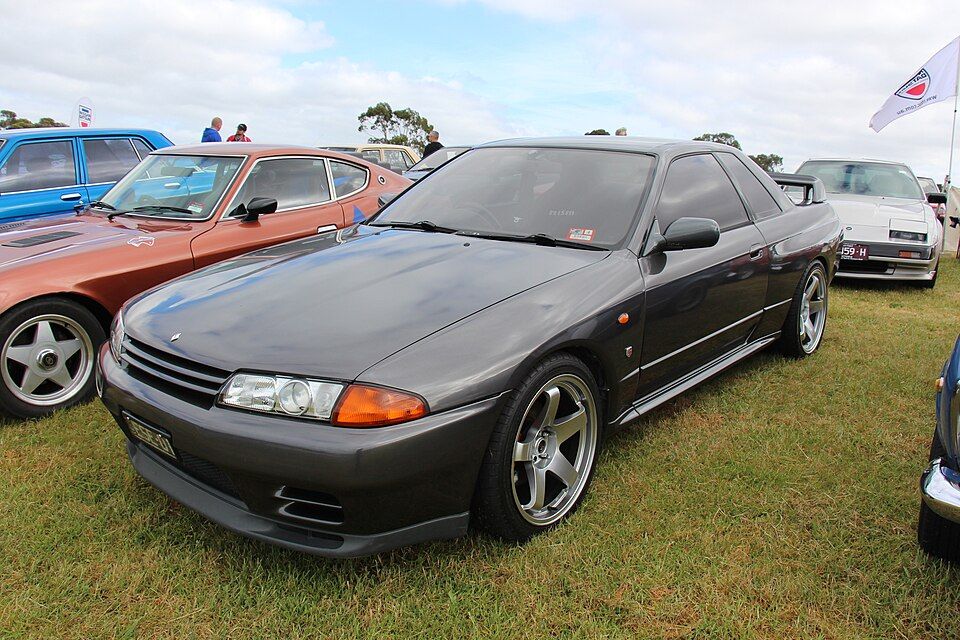
Photo: 1991 Nissan Skyline R32 GTR by Sicnag, CC BY 2.0, via Wikimedia Commons
The GT-R badge then vanished for 16 years, which is a long time in car life and a very long time in fan memory. Whole generations came and went without a new Skyline GT-R. Nissan kept building Skylines, and it kept building fast cars, but the special badge stayed away until 1989. That’s why the R32 return landed with such force. It wasn’t just a new model. It felt like a name from the glory days had been dragged back into daylight with something to prove. Nissan’s official history says the eighth-generation R32 Skyline rolled out in May 1989 and the GT-R came back three months later after that 16-year absence. Then it went out and did what GT-Rs do best. It started flattening the competition. Nissan says the R32 won every one of the 29 races it entered in the Japanese touring car championship from 1990 to 1993.
Another official NISMO history page says it won poles and victories in all six races in its first season, then kept stacking up wins until the end of that era. And it wasn’t just in Japan. Nissan Motorsports Europe took the R32 to the Spa 24 Hours, where Nissan says the car scored an outright win in 1991 after leading from start to finish, then kept winning in class there too. So yes, the return was real. This wasn’t a nostalgic badge stuck onto a soft road car. This was a warning shot. And then came the nickname that sealed the deal. Australian magazine Wheels called the R32 “Godzilla” in 1989, with a writer describing it as “the monster.” Nissan’s Australian news site later said the car’s racing success gave it the now-famous Godzilla nickname, born in the Australian media. That name stuck because it fit. It sounded huge, scary, slightly mad, and impossible to ignore. A car from Japan turning up and smashing expectations in that way? Of course people reached for a movie monster. It was the only thing that felt big enough.
The R33 had a harder job, and that’s why it deserves more respect
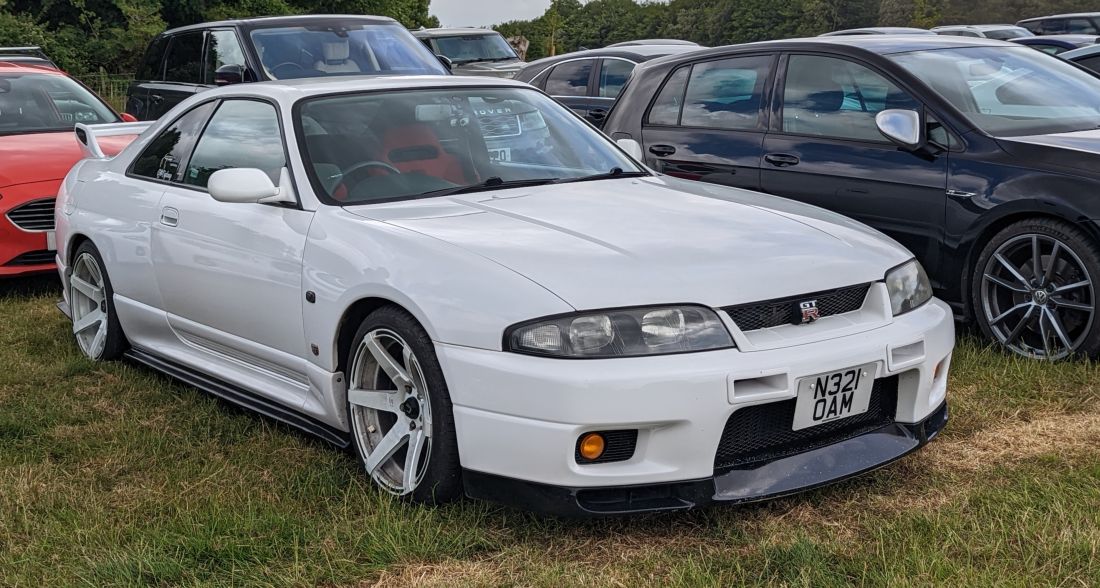
Photo: 1996 Nissan Skyline GT-R R33 V-Spec by Calreyn88, CC BY-SA 4.0, via Wikimedia Commons
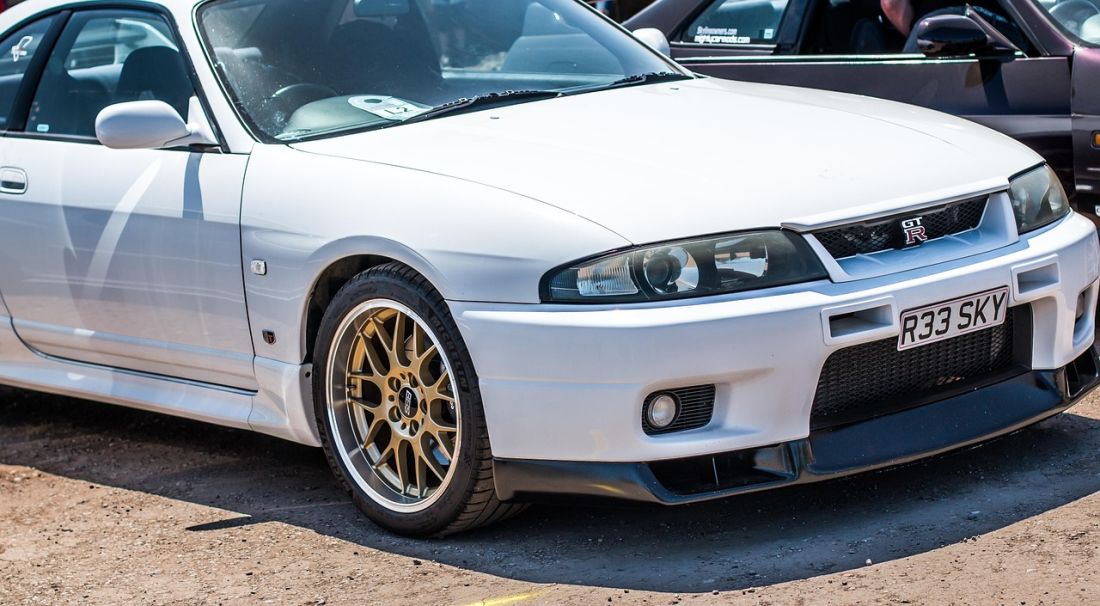
The R33 Skyline GT-R lives in a funny spot in the story. It sits between the shock of the R32 and the poster fame of the R34, so people sometimes skip past it too quickly. That’s a shame, because the R33 did a lot of heavy lifting. Nissan says the ninth-generation Skyline launched in 1993, while the GT-R version, shown first at the Tokyo Motor Show, finally reached the road in January 1995. So right away, this wasn’t a rushed handover. Nissan took its time. And the R33 proved it had depth. A factory test version recorded a Nürburgring lap of 7 minutes 59 seconds, which mattered because going under eight minutes at that track was a big statement in the mid-1990s. It was Nissan saying, “No, this isn’t just the follow-up car.
This one has serious teeth too.” The R33 also carried the Skyline GT-R story to Le Mans. Nissan’s own history says modified R33 GT-Rs raced there in 1995 and 1996, finishing 10th overall and fifth in class in the first year, then 15th overall and 10th in class in the second. That’s a strong showing in one of the toughest races in the world, and it added another layer to the legend. The car wasn’t just a Japanese hero anymore. It was travelling. It was being tested on bigger stages. And then there’s the thing people forget: the R33 helped bridge the GT-R from track monster to wider cultural giant. It kept the name alive, credible, and feared while the rest of the car scene was shifting around it. Maybe it wasn’t the one every kid had as a poster first. Fair enough. But every great sports dynasty has a player who isn’t the loudest name and still keeps the whole thing standing. The R33 is that car. Quietly brilliant. Dead serious. A bit underloved.
The R34 is where the legend broke into everyday culture
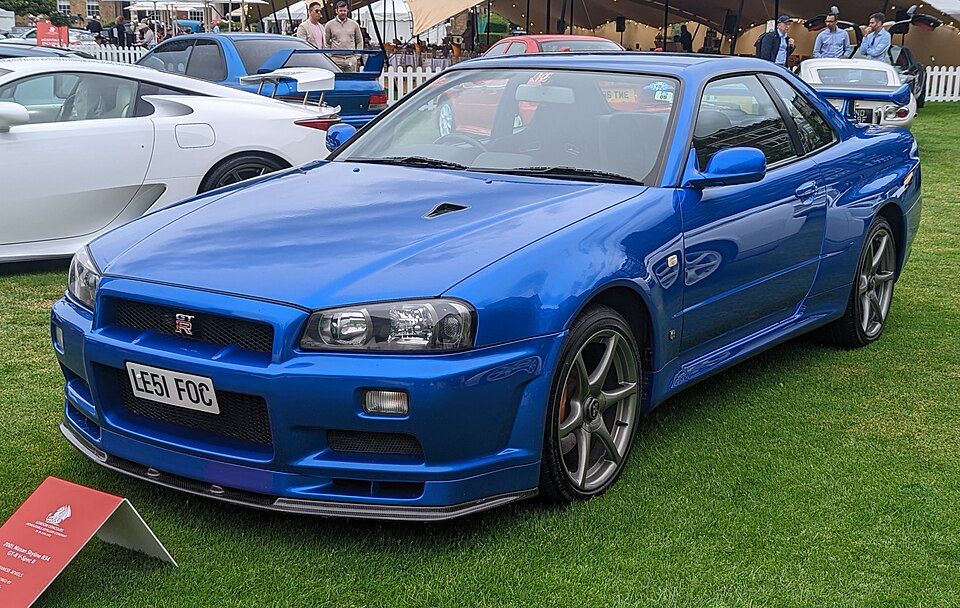
Photo: 2001 Nissan Skyline GT-R V-Spec II R34 by Calreyn88, CC BY-SA 4.0, via Wikimedia Commons
Then came the R34, and this is the point where the Skyline GT-R stopped being just a hero to racing fans and started becoming a dream car for people who’d never even sat in one. Nissan’s heritage records say the R34 Skyline GT-R launched in January 1999. Top Gear says it was the fifth and last Skyline GT-R, and that the later R35 dropped the Skyline part of the name. Top Gear also notes that the R34 was the first GT-R to get a dashboard screen showing live data, including how hard the car was cornering, which sounds normal now but felt very futuristic at the time. More than that, the R34 arrived at exactly the right cultural moment. Top Gear describes it as the poster child for a generation raised on Gran Turismo, Fast & Furious, and other digital dreams, and that’s about as neat a summary as you’ll get.
This was the GT-R that moved from racetrack legend into wider pop culture. Kids saw it in games. Teenagers saw it in films. Adults saw it in magazines and realised it could embarrass far pricier machinery. Tuners loved it because the base car already had so much going for it. Gamers loved it because it felt unstoppable. Film fans loved it because it looked sharp and had attitude without trying too hard. And the styling helped, no question. The R34 looked compact, tense, and angry, like it was permanently bracing for a sprint. You could park it outside a corner shop in Cheadle and it would still look like it wanted a lap record. That’s a rare trick. A lot of fast cars need a racetrack to make sense. The R34 made sense everywhere. It also arrived with the weight of the earlier GT-Rs behind it, which gave it an edge that newer rivals couldn’t fake. This wasn’t a fresh brand trying to invent a myth. It was the latest chapter of a name that had already won 50 races in the 1970s, vanished, returned, and battered touring car fields into submission. By the time the R34 showed up, the legend was already alive. The R34 just pushed it into the homes, hands, and heads of millions more people.
Why the Skyline GT-R still matters, even now
So why does the Skyline GT-R still hit such a nerve? Part of it is the shape, part of it is the sound, part of it is the racing record, and part of it is timing. But really, it’s the full story stitched together. The Skyline GT-R wasn’t born famous. It became famous through a chain of moments that all feel a bit larger than life. The Prince Skyline shocking people in 1964. The first GT-R piling up wins from 1969. The “Ken and Merry” era ending almost before it began. The long 16-year wait. The R32 coming back like it had a grudge. The R33 quietly proving it had substance. The R34 turning into a cultural giant. Then the Skyline name ending in 2002 while the GT-R badge carried on alone from 2007. That split almost made the older Skyline GT-R cars feel even more precious, because the chapter had clearly closed. And Nissan knows people still care. NISMO says it started a restoration service for the R32, R33, and R34, which tells you these cars aren’t being treated like old news. Nissan also built an electric R32 project and had one of the original R32 development drivers help assess it, which shows the company still sees that car as something worth revisiting, not just storing away in a museum. That says a lot. A proper legend doesn’t vanish when the sales brochure disappears. It keeps finding new audiences. At Dace Motor Company, that’s one reason we like stories like this. You don’t have to own a Skyline GT-R to enjoy what it stands for. You just have to appreciate a machine that earned its place. And if you’ve ever stood in the rain near Deansgate, heard a great car rumble past, and turned your head before you even knew what it was, you already get the feeling. Some cars are transport. Some are memories waiting to happen. The Skyline GT-R sits firmly in the second group.