


The Smallest Road-Legal Cars in the World
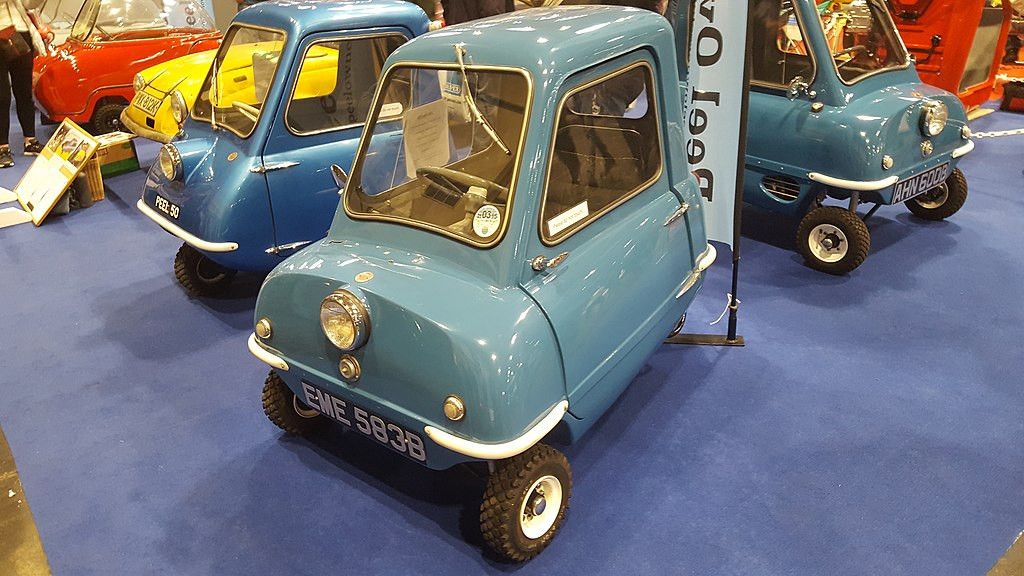
Image: 1964 Peel P50 by Kieran White, CC BY 2.0, via Wikimedia Commons

The Peel P50 - The Tiny Icon
You know how sometimes you see a car and think, “How on earth is that even allowed on the road?” That’s exactly what people said when the Peel P50 first came out back in the 1960s. This little bubble of a car was made on the Isle of Man and was officially named the smallest production car in the world. And when we say small, we mean small. It’s shorter than most people are tall and only has three wheels. If you parked it next to a Smart car, the Smart would suddenly look like a Range Rover.
The Peel P50 was built for just one person. No passenger seats, no boot space, no fancy features. You got a door, a seat, a steering wheel, and a tiny engine that sounded more like a scooter than a car. In fact, it was powered by a 49cc engine that could get you up to around 37mph on a good day. Doesn’t sound much, does it? But in the early 1960s, that was just about enough for someone who wanted to nip down the road to the shops.
The funniest thing about the P50 is how you park it. Since it only weighs around 60kg, you don’t even need to reverse. You just grab the handle on the back and drag it around like a wheelie suitcase. Jeremy Clarkson once drove one through the BBC offices on Top Gear just to prove how tiny and daft it really is.
But here’s the thing: despite how ridiculous it looks, the Peel P50 is a proper road-legal car. If you had one in Manchester today, you could technically drive it down Deansgate or through Stockport centre. Of course, you’d probably feel like a mouse surrounded by elephants with all the SUVs around, but people would definitely stop and stare. And to be fair, it’s not the worst idea if you’re only doing short city runs and need a car that can fit into spaces smaller than a phone box.
The Smart Fortwo - The City Favourite
Fast forward a few decades and the idea of tiny cars made a big comeback. This time, though, they had a bit more practicality than the Peel. Enter the Smart Fortwo. You’ve seen them dotted around Manchester city centre, usually tucked neatly into parking spots that no other car could manage. They’re quirky, they’re boxy, and they’re surprisingly good fun to drive.
The Smart Fortwo was designed for city living. Two seats, no back row, and an engine that won’t break any speed records but will happily keep up with traffic. Unlike the Peel, you don’t feel like you’re risking your life every time a bus drives past. It’s small but still feels like a proper car with airbags, air conditioning, and, depending on the model, even a bit of luxury.
What makes it interesting is how people either love them or laugh at them. Some folks swear by them, saying they’re perfect for places like Stockport or Eccles, where parking can be a nightmare. Others think they look like toy cars that got left in the sun too long. But here’s the thing: Smart cars are clever. They’re cheap to run, easy to park, and in the newer electric versions, they’re whisper quiet.
If you’ve ever tried driving around the Trafford Centre on a busy weekend, you’ll know how painful it can be to find a spot. A Smart slips into spaces that most cars couldn’t even attempt. And while it’s not built for long motorway hauls, for short trips and city living, it does the job better than most.
The Tata Nano - The Budget Wonder
Now, the Tata Nano isn’t exactly a household name around here, but it’s worth mentioning because of what it tried to do. Built in India, the Nano was created to be the world’s cheapest car. It was meant to give millions of families a safe alternative to piling onto motorbikes. And honestly, it did its job, at least for a while.
The Nano is small. Really small. About the same size as some of the little hatchbacks you’ll see around Stockport, but stripped back to the bare bones. It wasn’t flashy, it wasn’t powerful, but it was affordable. That was the whole point. Families who never thought they could own a car suddenly could.
The Nano didn’t quite take off the way Tata hoped, partly because people were wary about safety and partly because the car became a bit of a punchline. But here’s the thing: it was road legal, cheap to run, and it genuinely got people from A to B.
If you parked one outside Old Trafford, you’d probably get a few funny looks. But for tight streets and local errands, it made sense. It shows that sometimes the smallest cars aren’t about making a statement but solving real problems.
Modern Micro-EVs - Small Cars for a Big Future
The world’s moving towards electric, and that’s where things get interesting for small cars. Electric vehicles don’t need big engines, so manufacturers are experimenting with all sorts of tiny designs. Take the Citroën Ami, for example. It looks like a box on wheels, but it’s electric, it’s cheap, and in some countries you don’t even need a full licence to drive one.
Then you’ve got cars like the Renault Twizy, which looks like something from a sci-fi film. It’s technically a car but feels halfway between a scooter and a car. It’s got two seats, one behind the other, and you can park it in places where most cars wouldn’t even fit their mirrors. Imagine zipping around Manchester in one of those-it’d be like riding in your own little pod.
The cool thing about micro-EVs is that they fit today’s problems. Cities are crowded, parking is expensive, and people don’t always need a huge car for short trips. A micro-EV makes sense if you’re just commuting across town, grabbing shopping, or dropping kids off at school. And because they’re electric, they’re cheap to run and kinder to the environment.
Sure, they’re not going to replace your family SUV for long trips up to the Lakes or hauling stuff around. But as second cars, city cars, or even fun weekend toys, they’re starting to carve out their own niche. And with more brands experimenting, from big names like BMW with the i3 (a bit bigger but still compact) to smaller start-ups, it feels like we’re going to see more and more of them on the roads around Greater Manchester.
Why Small Cars Still Matter
You might be thinking, “Alright, but who actually needs a car this tiny?” The answer’s simple: more people than you think. In places like Stockport, where streets can be narrow and parking’s tight, a small car makes life a lot easier. You don’t have to wrestle for a space outside the Co-op, and you’re not constantly stressing about scraping someone’s wing mirror.
And let’s be honest, fuel prices aren’t exactly friendly right now. Smaller cars usually mean better fuel economy, and with electric versions, you’re cutting costs even further. They’re practical, they’re fun, and they make driving less of a headache in built-up areas.
At Dace Motor Company, we’ve seen the appeal of small cars first-hand. From city runarounds like MINIs to compact electrics, people love the convenience. And while we don’t stock Peel P50s (sorry!), we do have plenty of small cars that give you that mix of practicality and personality. It’s one of the reasons so many customers keep coming back to us-because whether you want a tiny hatchback or something a bit bigger, there’s always a choice.
And here’s the thing: small cars might not be glamorous, but they make sense. Whether you’re in Manchester traffic, Stockport’s back streets, or just looking to save a bit of cash, sometimes smaller really is better. You don’t need a giant SUV to get around every day. Sometimes, all you need is something simple, efficient, and yes-just a little bit fun.
The Future of Tiny Cars
We’ve gone from the Peel P50’s laughable size to Smart cars that became city favourites, to budget experiments like the Tata Nano, and now to funky little electric vehicles that look like toys but work surprisingly well. It’s a full circle in a way. People laughed at the P50, but 60 years later, the idea of a tiny car doesn’t seem so ridiculous anymore.
Imagine in a few years’ time, driving through Stockport in a car barely wider than a motorbike, plugging it into your house overnight, and paying pennies to run it. That’s where things are heading. And while the UK might not be as quick to adopt these tiny cars as some European cities, it’s happening slowly.
The question is, would you drive one? Would you swap out your current car for something so small you could practically park it in your hallway? Some people would say yes straight away. Others would laugh and stick with their trusty Ford, BMW, or Audi. Either way, the fact that these little cars exist shows that there’s more than one way to think about driving.
And that’s what makes them so interesting. They’re not just practical, they make you smile. You see one go past and you can’t help but look twice. Whether it’s the nostalgia of the Peel, the cleverness of the Smart, or the futuristic vibe of a micro-EV, these cars prove one thing: size really does matter-but smaller can be better.