


The Most Unexpected Cars Ever Made by Luxury Brands
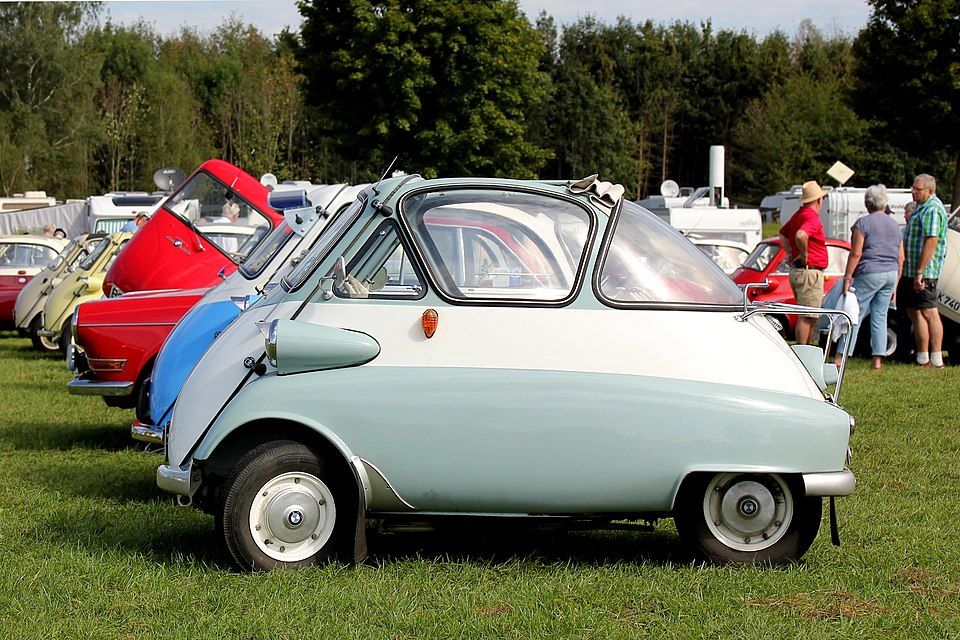
Photo: BMW Isetta by Lothar Spurzem, CC BY-SA 2.0 DE, via Wikimedia Commons.
You know that feeling when you walk past a fancy shop in Manchester city centre and see something in the window that makes you stop mid-step? Like, “Hang on… they sell that here?” Cars have had that moment too. Luxury brands love a clean image: sleek coupes, shiny paint, posh cabins, the kind of thing you’d picture outside The Midland Hotel or parked up near Spinningfields while someone nips in for a coffee. But every so often, a luxury car maker looks at their usual playbook and goes, “Let’s do something weird.” And they really mean weird. Tiny city cars with expensive badges. Big chunky off-roaders from brands known for low, loud sports cars. Even pickup trucks wearing a premium suit. At Dace Motor Company, we see loads of different makes and styles come through our sites around Stockport and Manchester, and that’s part of the fun of used cars: the history isn’t just “fast car, posh car, done.” It’s full of curveballs. And when you start spotting these curveballs on the road-on the M60, down the A6, or tucked into a side street by the Northern Quarter-you realise car brands can be as unpredictable as the weather over Heaton Moor. So let’s get into the most surprising ones. Not in a “textbook” way. More like you and me chatting about the strangest things rich-car brands have built, and why they even bothered in the first place.
Aston Martin Cygnet: A Tiny City Car Wearing a Fancy Suit
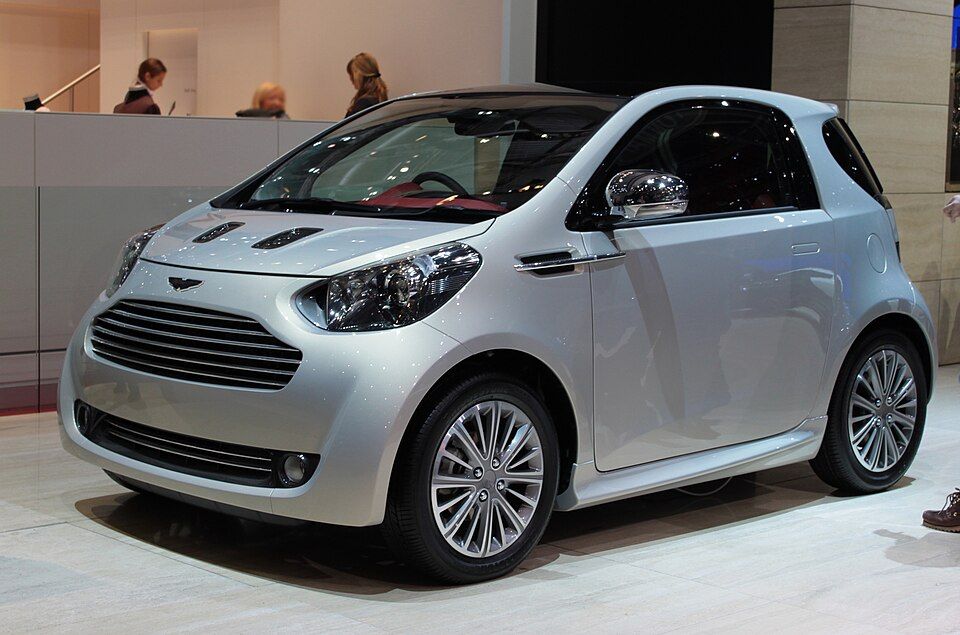 Photo: Aston Martin Cygnet at the 2010 Geneva Motor Show by El monty, Public domain, via Wikimedia Commons.
Imagine Aston Martin. You’re probably thinking of a long bonnet, a low roof, and a driver who looks like they’ve got somewhere important to be. Now imagine an Aston Martin that’s shorter than some people’s living room sofa. That’s the Aston Martin Cygnet. It was built from 2011 to 2013, and yes, it was based on the Toyota iQ. Aston didn’t hide that forever either-Toyota even talked about the plan back in 2009, saying the iQ platform would be used for a luxury commuter car made for Aston Martin owners. The main reason wasn’t because Aston suddenly got obsessed with tiny cars. It was about emissions rules in Europe and lowering Aston’s average numbers, which is a very “grown-up problem” for a company that sells big-engine sports cars.
The funny bit is the price. Reports at the time said the Cygnet cost about €37,995, which is wild money for a city car, even one with hand-finished trim. And it didn’t sell well. MotorTrend reported fewer than 150 sold in the UK across its run, when Aston had hoped for thousands a year. There were famous buyers too, like Sir Stirling Moss, which is kind of brilliant-one of Britain’s greatest racing drivers getting around in a tiny Aston. The Cygnet is the sort of car that makes you double-take at traffic lights. Like if you were waiting by Stockport Viaduct and saw an Aston badge coming up behind you, you’d expect thunder. Instead you’d get… a small hatchback. And that’s exactly why it’s on this list. It’s a luxury brand doing something completely against type, like seeing a bouncer at a club suddenly working in a library.
Lamborghini LM002: The “Wait… Lamborghini Made a Tank?” Moment
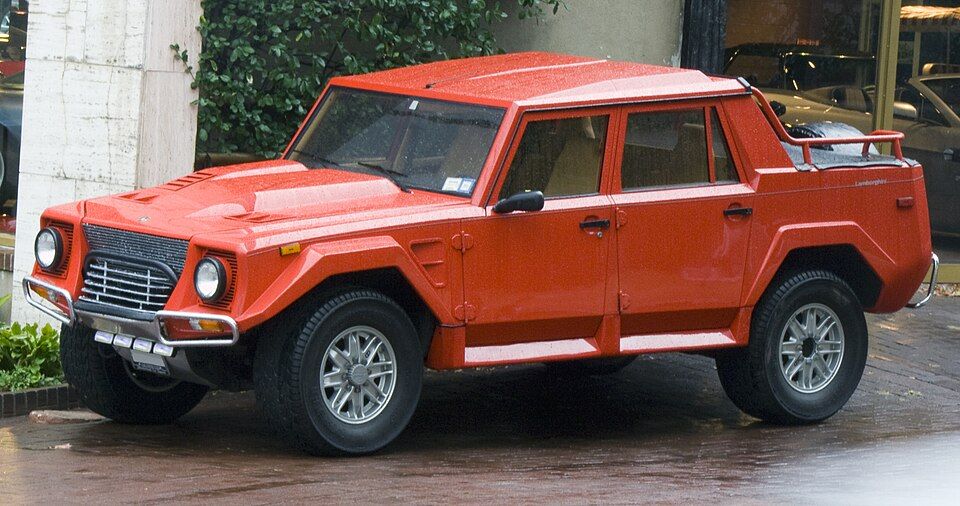
Photo: 1990 Lamborghini LM 002 by Mr.choppers, CC BY-SA 3.0, via Wikimedia Commons.
Now this one’s legendary. Lamborghini, the brand known for sharp, low supercars, made a big off-road beast called the LM002. Production ran from 1986 to 1993, and it’s basically a rolling “who dared them?” It had four doors, proper off-road ability, and a V12 engine. Wikipedia’s entry (which pulls together multiple references) says 301 examples were built in total, and the last sixty were a special version called the LM/American, first shown at the 1992 Detroit Auto Show. Even the tyres were a story: Lamborghini worked with Pirelli to make special Scorpion tyres for it.
Think about that. A supercar company getting custom desert tyres made, because why not? This wasn’t a polite countryside SUV. It was huge, loud, and thirsty. The LM002 also carried a massive fuel tank, because with a V12 you don’t exactly sip fuel like a small hatchback. If you saw one rumbling past Old Trafford on a match day, it would look like it belonged in a movie chase scene, not outside a stadium car park. And that’s the point. Lamborghini didn’t build it because customers were begging for a family runabout. The LM002 came from earlier military-style projects Lamborghini had been playing with, and it ended up becoming a very rare, very strange luxury off-roader. Years later, Lamborghini would return to SUVs with the Urus, but the LM002 is the original “what on earth is that?” It’s like the brand looked at the normal idea of a Lamborghini and said, “Nah, let’s make something you could drive across a desert… in leather.”
Porsche Cayenne: The SUV That Shocked the Purists (and Paid the Bills)
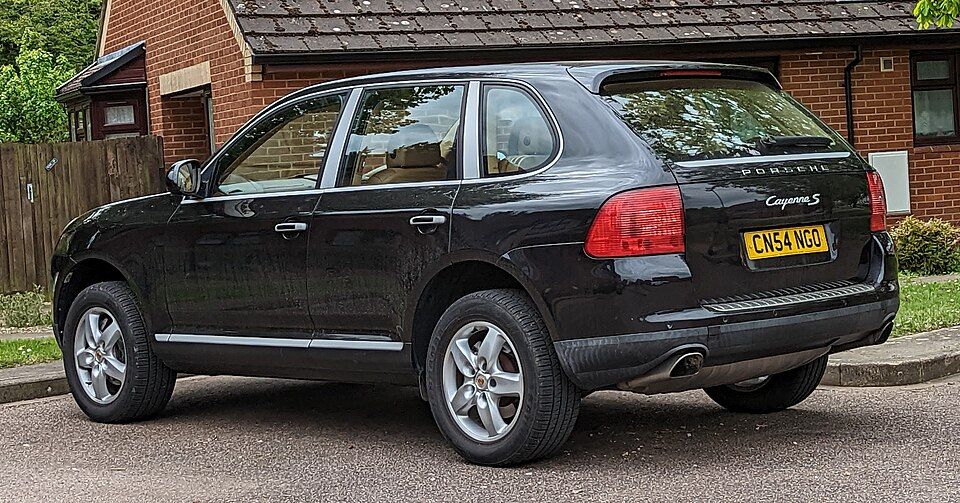
Photo: Porsche Cayenne S by Calreyn88, CC BY-SA 4.0, via Wikimedia Commons.
If you’re into cars at all, you’ve heard people argue about the Porsche Cayenne. When it debuted in 2002, plenty of fans acted like Porsche had committed a crime. A Porsche… with five doors? A Porsche… that sits high? But Porsche’s own newsroom straight up says the Cayenne arrived in 2002 as Porsche’s third model line after the 911 and the Boxster. And here’s the honest truth: it worked. Porsche has talked about the Cayenne being profitable and strengthening its collaboration with Volkswagen along the way. That matters because Porsche isn’t a charity.
Building new cars costs a lot, and the Cayenne helped Porsche grow into the company it is now. There’s another surprise angle too: it was developed alongside the Volkswagen Touareg, so behind the scenes there was a lot of shared work going on. From the outside, you just saw a Porsche badge on an SUV. Underneath, it was part of a bigger plan. The Cayenne also changed what people expected from “luxury” brands. After that, it stopped being shocking to see posh brands in the SUV space. Now you see them everywhere-on school runs, in supermarket car parks, crawling through traffic near the Trafford Centre. And once you’ve seen a Cayenne, a sporty SUV doesn’t feel weird anymore. But back in the early 2000s? It was a proper head-turner. The Cayenne is one of those cars that proves “unexpected” doesn’t always mean “bad idea.” Sometimes it means a brand saw where the road was going, and just went for it, even if the purists had a moan.
Rolls-Royce Cullinan: The Fancy Sofa on Stilts That Actually Makes Sense
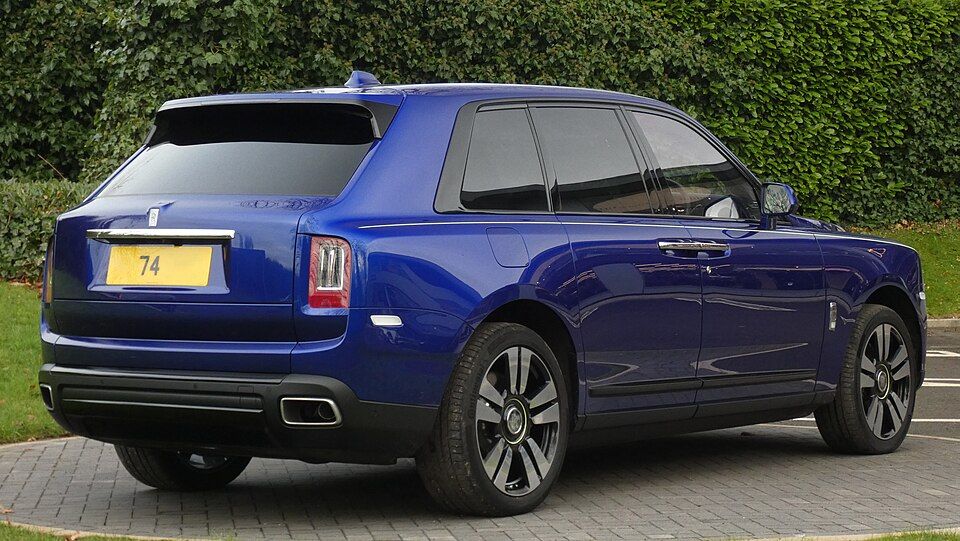
Photo: 2024 Rolls-Royce Cullinan V12 - 6749cc 6.75 (571PS) Petrol - Salamanca Blue by Harvey Bold, CC0, via Wikimedia Commons.
Rolls-Royce making an SUV feels like the kind of thing that would’ve sounded like a joke years ago. Rolls was the “chauffeur-driven” image. Big saloons. Quiet power. Now picture that same vibe, but taller, and ready to roll over rougher roads. That’s the Rolls-Royce Cullinan, and the name was confirmed by Rolls-Royce on 13 February 2018. Rolls-Royce Motor Cars’ own site leans hard into the idea of “go anywhere” luxury, and the car’s name comes from the Cullinan Diamond, the biggest gem-quality rough diamond ever found. The Cullinan is also Rolls-Royce’s first all-wheel-drive model, which is a massive shift for a brand that spent a century doing luxury in a very specific way.
And yes, this one is “unexpected,” but it also feels kind of unavoidable. Rich buyers don’t always want to sit low. They want comfort, space, and a view over traffic. If you’ve ever been stuck in stop-start traffic on the M60 and wished you could see over everyone’s roofs, you get the basic idea. The Cullinan basically says, “We’ll keep the quiet cabin and the fancy materials, but we’ll lift it up.” It’s still very Rolls-Royce, just in a new shape. And weirdly, once you see one in person, it doesn’t look like Rolls has lost its mind. It looks like they waited until the world was ready, then turned up with the poshest SUV possible. Like turning up to a rainy day in Manchester with an umbrella that’s somehow made out of silk.
Bentley Dominator: The Secret SUV That Predates the Bentayga
Before Bentley made the Bentayga (which Bentley says launched in 2015 and was named after Roque Bentayga in Gran Canaria), there was a much rarer, much stranger SUV: the Bentley Dominator. This is one of those cars that sounds made up until you see photos. It wasn’t built for normal buyers. It was made as a special request, and sources like TopSpeed and Wikipedia (in multiple languages) describe it as being produced in 1996, with only a handful built, linked to the Sultan of Brunei. The exact “how many” can get a bit messy across different reports, but the figure you’ll see repeated is six. Think about that. A luxury brand quietly building a tiny batch of SUVs decades ago, just for one ultra-wealthy customer group, while everyone else on the planet had no clue it even existed. It’s like finding out your local chippy has been serving a secret menu to celebrities for years. And the Dominator matters because it shows luxury brands have been experimenting behind closed doors for ages. Bentley didn’t wake up in 2015 and suddenly think SUVs were a thing. There were earlier ideas, earlier builds, earlier “let’s try something different” moments. The difference is, the Dominator stayed hidden, while the Bentayga went mainstream and became a real product line. If you’re driving around Stockport and you spot a Bentayga, that’s still a big deal. But the Dominator? That’s a ghost story of a car. Barely anyone’s seen one, and that’s exactly what makes it so unexpected.
Mercedes-Benz X-Class: A Luxury Pickup That Didn’t Stick Around
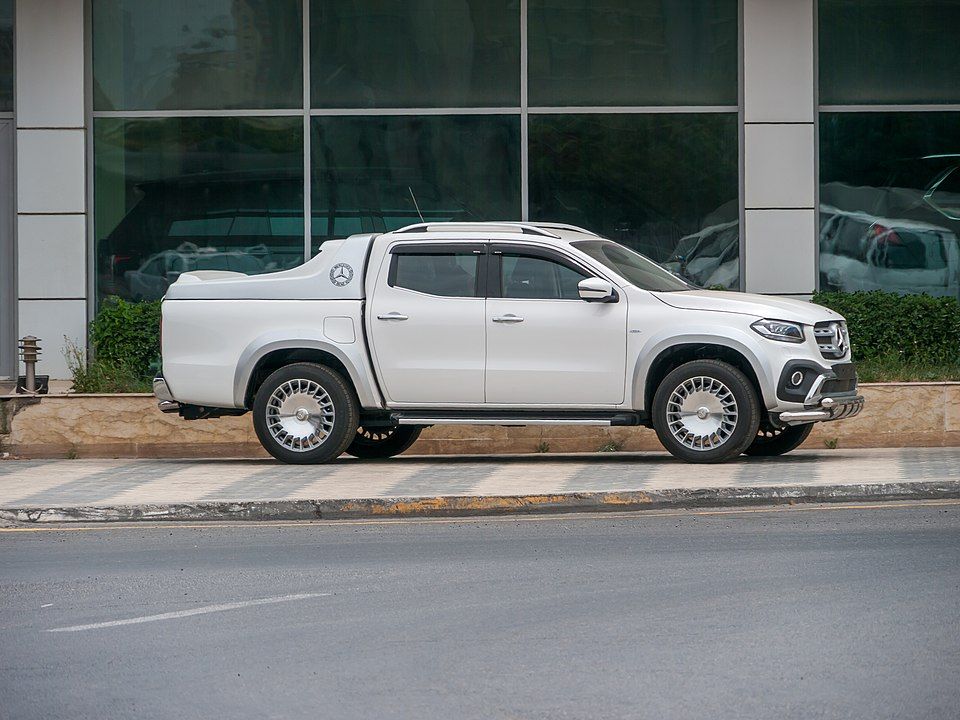
Photo: Mercedes-Benz X-Class with Maybach rims by Matti Blume, CC BY-SA 4.0, via Wikimedia Commons.
Pickup trucks and luxury badges don’t always mix in people’s heads. A pickup is supposed to be tough, practical, ready for work. Mercedes-Benz is supposed to be polished, comfortable, and “nice suit” energy. So Mercedes tried blending the two with the X-Class, a mid-size pickup sold from November 2017 to May 2020. According to Wikipedia’s overview, it was based on the Nissan Navara, with Mercedes-specific styling and features. And that right there is the twist: it wasn’t a ground-up Mercedes truck in the way some people imagined. It leaned on an existing pickup platform, then added the Mercedes look and feel.
There was noise around that at the time, with some outlets reporting Mercedes even had to defend it from “it’s just a rebadge” comments. To be fair, creating a brand-new truck from scratch is expensive. Using a shared base is a common move in the car industry. The surprising part is Mercedes even tried it in the first place, because pickup buyers can be picky. If you need a pickup for work, you care about durability. If you want a pickup as a lifestyle choice, you care about style and comfort. Mercedes went after that second group, but the X-Class didn’t last long. That short production run is part of what makes it feel like a weird footnote in Mercedes history. It’s the kind of car you might spot once in a blue moon on the A57, think “that looks different,” then never see again. And if you’re into unusual used cars, short-lived models like this can be really interesting because they’re a snapshot of a brand trying something risky.
Cadillac Cimarron: When “Luxury” Tried to Go Small (and People Didn’t Buy It)
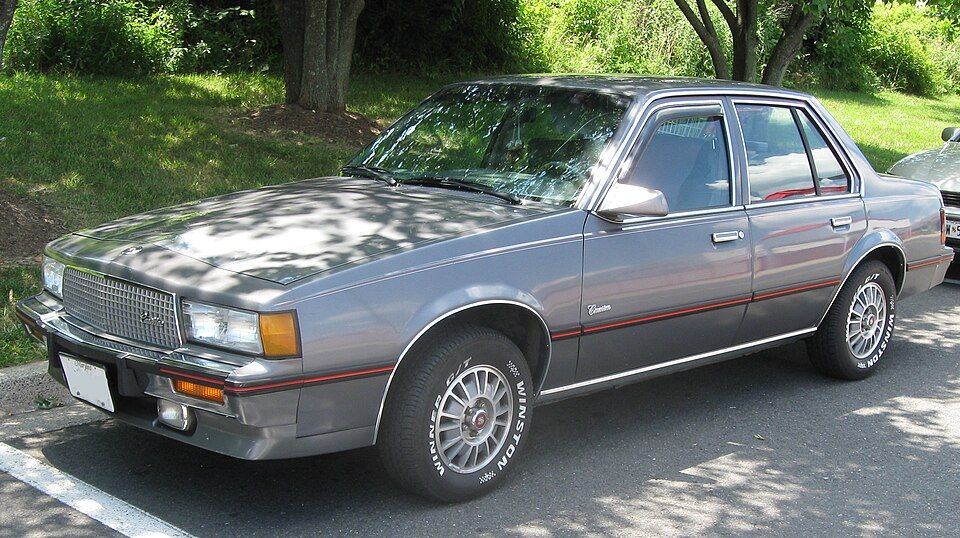
Photo: 1985-1988 Cadillac Cimarron 2.8 by IFCAR, Public domain, via Wikimedia Commons
Let’s hop across the Atlantic for a second. Cadillac has been a big luxury name in the United States for ages, known for big cars, big presence, and a very “cruise down the road” vibe. Then Cadillac launched the Cimarron as an entry-level luxury car for the 1982 model year. It was built from 1981 to 1988, and it sat on a compact platform shared with cars like the Chevrolet Cavalier. Wikipedia’s entry even names designers connected to the project: John Manoogian II and Irv Rybicki, with a 1977 design credit. The Cimarron is unexpected because it shows what can happen when a luxury brand tries to shrink itself quickly.
Cadillac wanted a smaller, cheaper way into the brand, but plenty of people felt the Cimarron didn’t feel special enough compared to its cheaper relatives. The story gets even sharper with a quote attributed in the history section: GM president Pete Estes warning Cadillac’s general manager Edward Kennard that there wasn’t time to “turn the J-car into a Cadillac.” That’s brutal. And it explains why the Cimarron became one of those “what were they thinking?” cars. It’s not that small luxury cars are a bad idea. Loads of brands do that now. It’s that the Cimarron felt like it landed before Cadillac had really figured out how to make “small” still feel properly Cadillac. If you’ve ever seen a badge on something and thought, “That badge is doing a lot of work here,” you get the vibe. It’s still a fascinating part of luxury car history because it shows brands can misjudge what people want. And weirdly, that’s useful for car buyers today: it’s a reminder to look past the badge and think about what you’re actually getting-comfort, build quality, features, and how it fits your life.
BMW Isetta: When a Premium Brand Made a Bubble Car
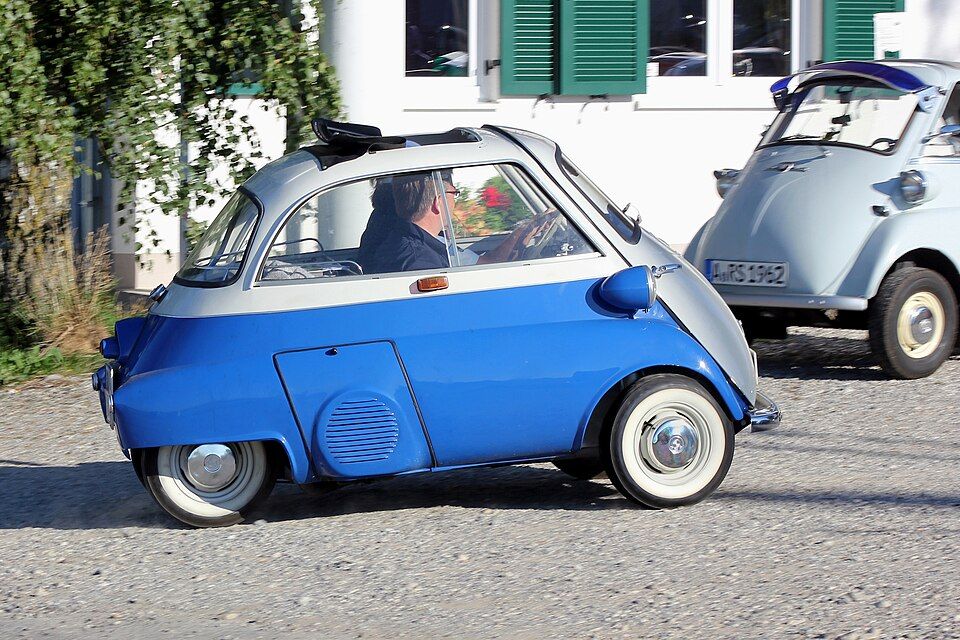
Photo: BMW Isetta by Lothar Spurzem, CC BY-SA 2.0 DE, via Wikimedia Commons
BMW is known now for sporty saloons and premium performance. But in the 1950s, BMW did something completely different: the Isetta. It’s one of the most recognisable microcars ever, and yes, it has that wild front-opening door that makes people smile the second they see it. BMW Group Classic describes the BMW Isetta Standard as being made from spring 1955 to the beginning of 1957, and the broader Isetta run is usually given as 1955 to 1962. It was a licensed version of an Italian design (Iso Isetta), and it arrived in a Europe that was still rebuilding after the war, where small, cheap transport mattered a lot. That context is why it exists, but it still feels unexpected today because BMW’s modern image is so different.
Seeing a BMW badge on something that looks like a tiny fridge on wheels is hilarious in the best way. But it also makes sense: brands do what they need to survive. The Isetta helped BMW during a tough period, and it’s now a beloved classic. If you ever see one at a car show in the North West, people gather around it like it’s a celebrity. And that’s the charm of these unexpected luxury cars: they stick in your memory. They’re not bland. They’re not safe choices. They’re the cars that make you nudge your mate and go, “Look at that… what is it?” And if you’re shopping used, that curiosity can be your friend. You might not want an Isetta for the weekly shop in Stockport, but the bigger idea still applies: don’t assume a brand only makes one type of car. Luxury names have done tiny cars, monster off-roaders, pickups, and everything in between. That’s why used car hunting can be so fun. And if you want to make the numbers work without stressing about your credit score impact, that’s where options like a soft search for used car finance can be handy-because sometimes the weird car you fall for isn’t the one you planned to buy when you set off.