


The Most Unexpected Cars to Receive Performance Versions
Photo: Nissan Juke-R by JaayJay, CC BY-SA 3.0, via Wikimedia Commons.
Some cars just look fast. You see them coming and you already know what they’re about. Low roof, wide wheels, grumpy exhaust, maybe a badge on the boot that makes car people nod in car parks. Easy. But then there are the funny ones. The cars that look like they’re off to pick up the kids, carry a sofa, nip to the Trafford Centre, or queue in traffic on the A6, yet somehow ended up with proper performance hardware. That’s the stuff we love at Dace Motor Company. Cars with a bit of a story. Cars that make you do a double take. You know how it is, some vehicles wear their speed like a big shiny jacket, while others hide it under a sensible coat. And that’s what makes unexpected performance versions so brilliant. They remind us that car makers can be playful. They can look at a family estate, a tiny city car, a van, or even a small crossover and think, “What if we made this a bit silly?” Sometimes the result is a rare collector’s car. Sometimes it’s a wild concept that never had a normal life on the road. And sometimes it becomes the kind of used car people still search for years later, because it mixes everyday usefulness with a proper grin. Around Manchester and Stockport, where roads can go from crawling traffic near the M60 to open stretches towards the Peak District in no time, that mix makes a lot of sense. You don’t always need a flashy sports car to have fun. Sometimes the surprise is the best bit.
Renault Espace F1: the people carrier that thought it was a race car
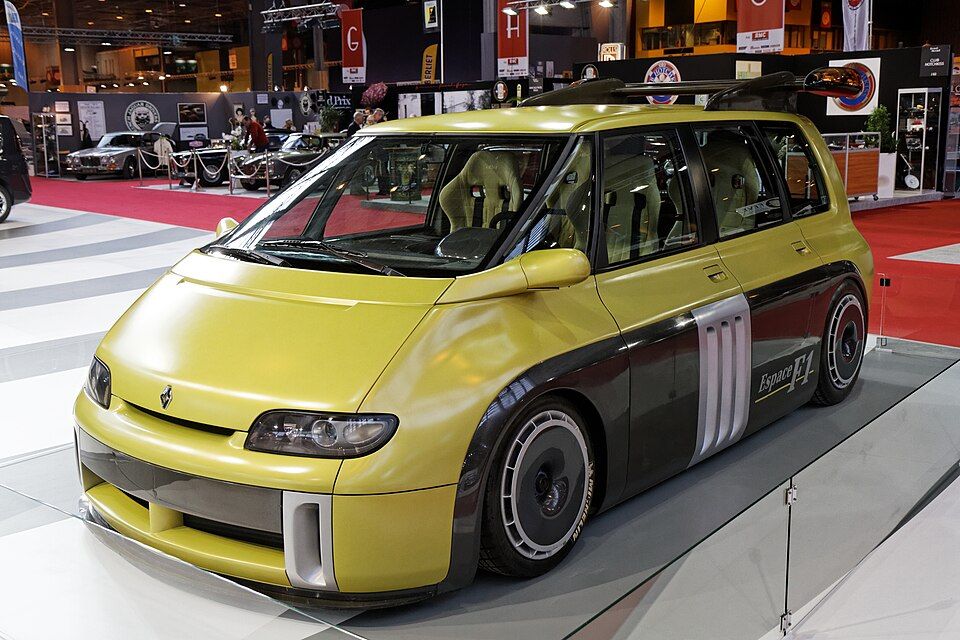
Photo: Renault Espace F1 Thesupermat, CC BY-SA 3.0, via Wikimedia Commons.
The Renault Espace was meant to be practical. Big windows, family seats, school bags, shopping, holidays, the whole lot. It was the sort of car you’d expect outside a leisure centre on a rainy Saturday morning, not screaming around like something from a race track. Then Renault went and built the Espace F1, and to be honest, it still sounds like someone made it up after too much coffee. The Espace F1 was shown in 1994 for the tenth anniversary of the Espace, and it was made with Matra and Williams. The really daft part was the engine. Renault put in a V10 linked to its Formula 1 work, with roughly 800 horsepower, which is just a wild number for a car shaped like a family carrier. That’s not a mild sporty trim. That’s a full “what on earth is going on?” moment.
Renault’s own historic material describes it as a prototype based on the second-generation Espace shape, using a V10 connected to the Williams-Renault Formula 1 car that won the 1993 constructors’ championship. Yes, a family carrier with race-bred madness underneath. It wasn’t something you could stroll into a dealership and buy, which is probably for the best, because imagine trying to explain the tyre bill. Still, it matters because it showed how far a car maker could push a normal-looking idea. The Espace F1 took a friendly people carrier shape and turned it into a rolling joke with serious engineering behind it. That’s the magic here. It wasn’t subtle, and it wasn’t sensible, but it was unforgettable.
Ford Transit Supervan: the van that refused to be normal
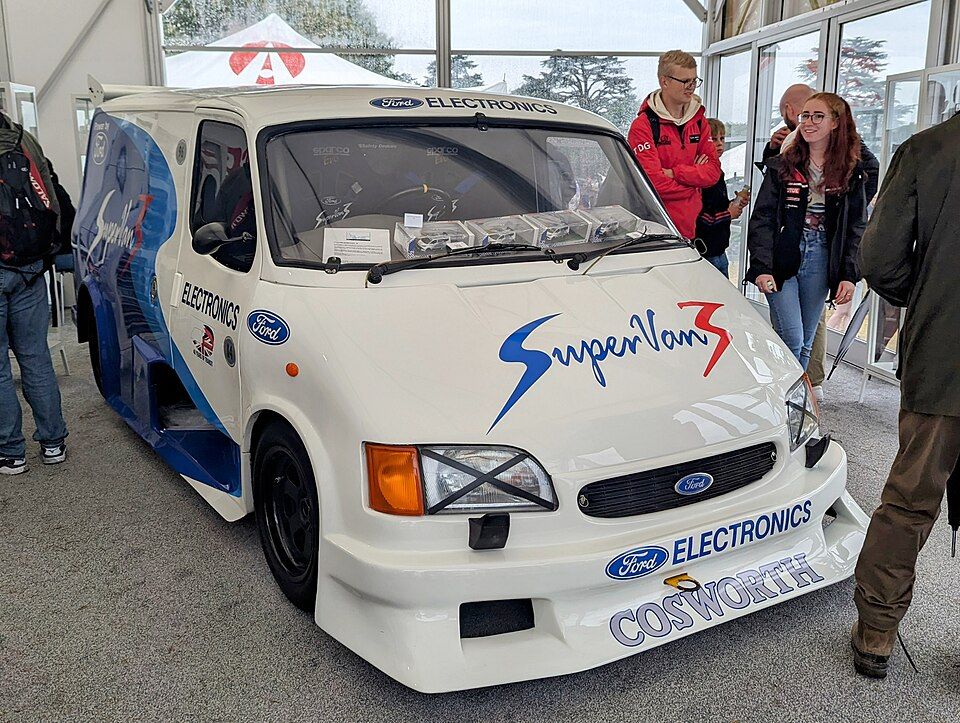
Photo: Ford Transit Supervan 3 by Calreyn88, CC0, via Wikimedia Commons.
A Ford Transit is part of British life. Builders, couriers, market traders, bands, removals, plumbers, and half the people you see stuck near a set of roadworks have probably used one. Around Greater Manchester, you’ll spot Transits everywhere, from Stockport industrial estates to Eccles, Reddish, Salford, and beyond. So making a performance version of a Transit sounds ridiculous at first. But Ford has been doing this for decades with the Supervan line, and it’s one of those stories that never gets old. The first Transit Supervan appeared in 1971, and while it looked like a van from a distance, it used serious racing hardware underneath and had a mid-mounted V8.
Later versions pushed the idea even harder. Ford’s modern electric SuperVan also kept the joke alive, only this time with huge electric output and the sort of acceleration that would make your tools fly about in the back, assuming it had a normal load bay, which it really doesn’t. Reports on the Supervan story describe the original as a promotional machine created around the familiar Transit outline, with racing parts doing the hard work underneath. That’s why it fits this list so well. A van is meant to be useful first. It’s meant to carry ladders, parcels, paint, timber, or a sofa you promised would fit. The Supervan took that everyday shape and gave it a sense of theatre. It’s not a normal performance car, and that’s the whole point. It’s a reminder that speed can be funny. And when it’s built into something as ordinary as a van, it gets even better.
Aston Martin V8 Cygnet: a tiny city car with a huge surprise
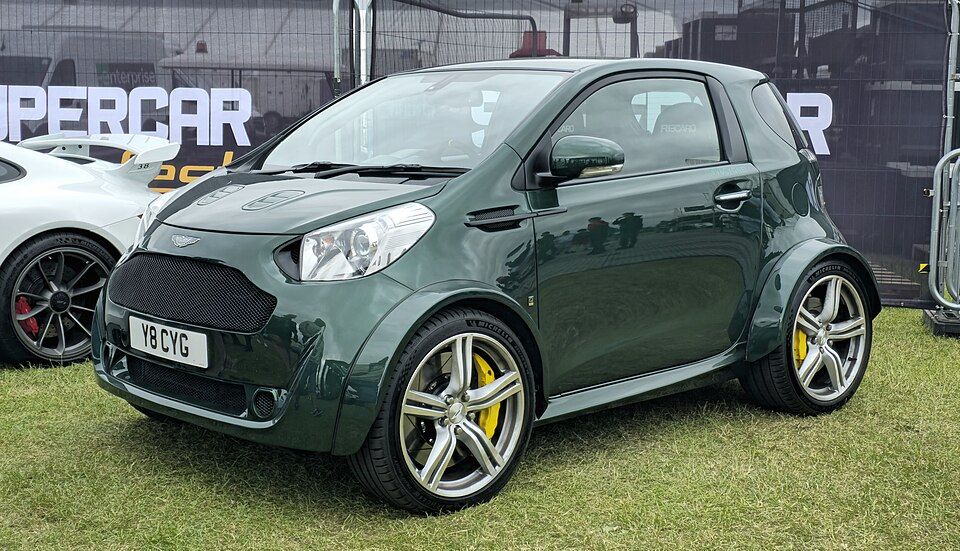
Photo: 2018 Aston Martin Cygnet V8 by Calreyn88, CC BY-SA 4.0, via Wikimedia Commons.
The Aston Martin Cygnet was already a strange thing. It was a tiny city car based on the Toyota iQ, dressed up with Aston Martin styling and a posh cabin. It was never going to make people think of Bond chasing villains through the Alps. It looked like something you’d park outside a coffee shop, then forget where you left it because it was small enough to hide behind a big bin. But in 2018, Aston Martin built a one-off V8 Cygnet for a customer, and that changed the whole mood. The car used a 4.7-litre V8 from the Vantage S with 430 horsepower, which is a massive amount for something so small.
Aston Martin called it “The Ultimate City Car”, which is a neat way of saying, “Yes, we know this is completely unhinged.” The appeal is easy to understand, even if the car itself is hard to explain. It’s the same reason people smile when a tiny dog barks like it owns the street. The scale is wrong, and that’s why it’s funny. A small city car is meant to be simple, easy to park, cheap to run, and friendly in traffic. The V8 Cygnet was none of those things in the normal sense. It was loud, short, quick, and deeply odd. But it also had charm. It showed that performance versions don’t always need to be based on cars that already seem sporty. Sometimes the best starting point is the least obvious one.
Nissan Juke-R: the crossover with a GT-R heart
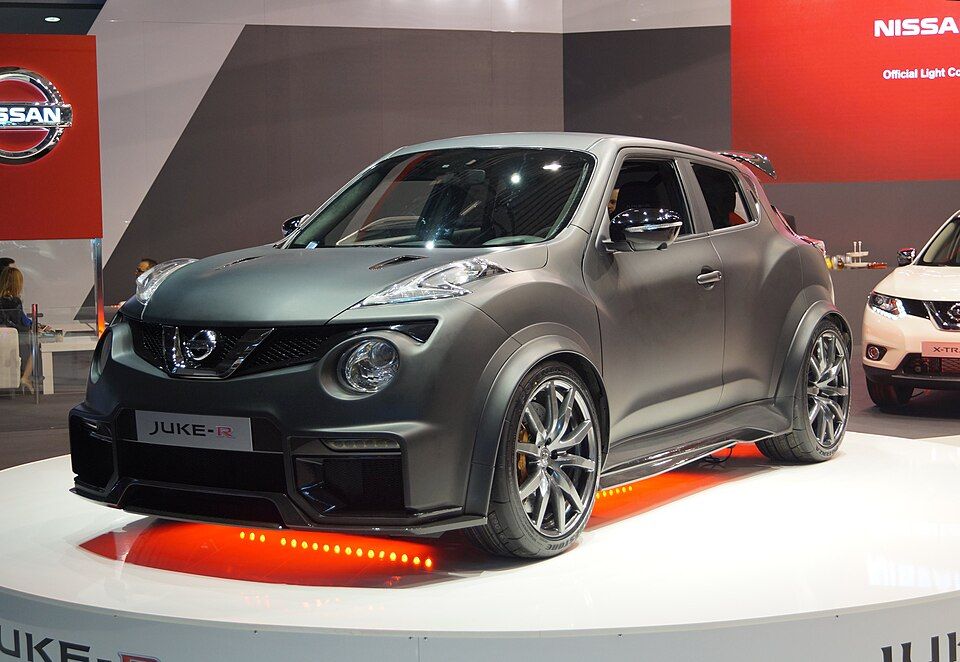
Photo: Nissan Juke-R by Jakub "Flyz1" Maciejewski, CC BY-SA 4.0, via Wikimedia Commons.
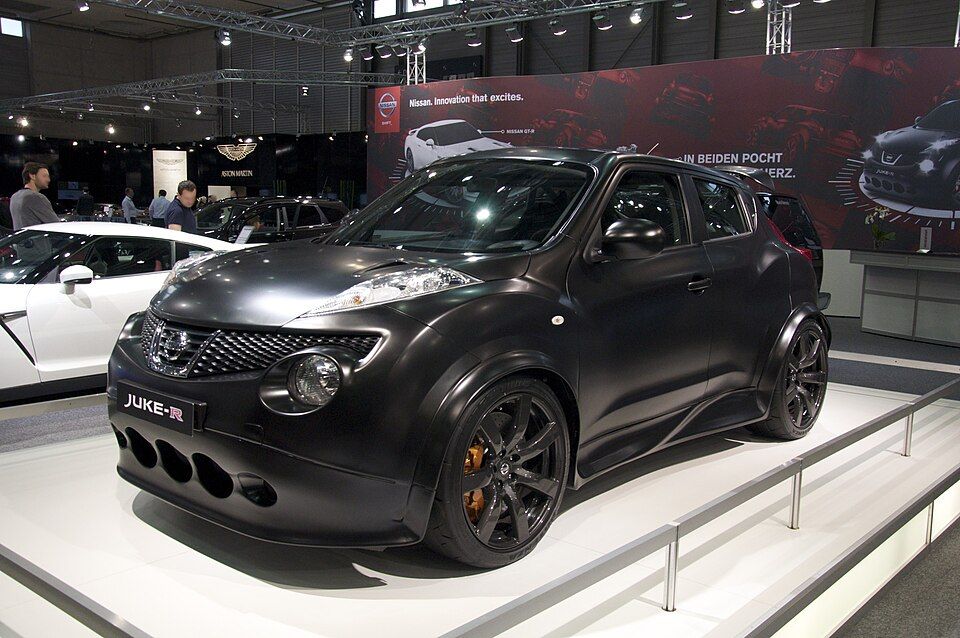
The Nissan Juke was never a shy car. Even the normal one looked like it had been sketched during a thunderstorm. Some people loved it. Some people really didn’t. But nobody could say it was boring. Then Nissan created the Juke-R, and suddenly the strange little crossover had the heart of a Nissan GT-R. Early Juke-R material from Nissan Europe talked about a 480 horsepower 3.8-litre engine, and later build-to-order versions were reported with 545 horsepower. That’s a lot for a small crossover, especially one many people first noticed because of its odd headlights. The Juke-R worked because it took a car people had strong opinions about and gave it performance that made everyone pay attention. You might not want one for the school run.
You might not want to explain the fuel bill either. But as an idea, it’s brilliant. It asks the same question all these cars ask: why should performance be limited to low, sleek shapes? People buy crossovers because they like the height, the view, the easy access, and the feeling of being in something compact but chunky. The Juke-R took that shape and stuffed it with supercar-grade hardware. It was never meant to be common, and that rarity adds to the charm. Around Manchester, where you see plenty of crossovers on every road from the ring road to the city centre, the thought of one hiding GT-R parts underneath is just funny. Slightly daft, yes. But very memorable.
Audi RS2 Avant: the estate that made fast wagons cool
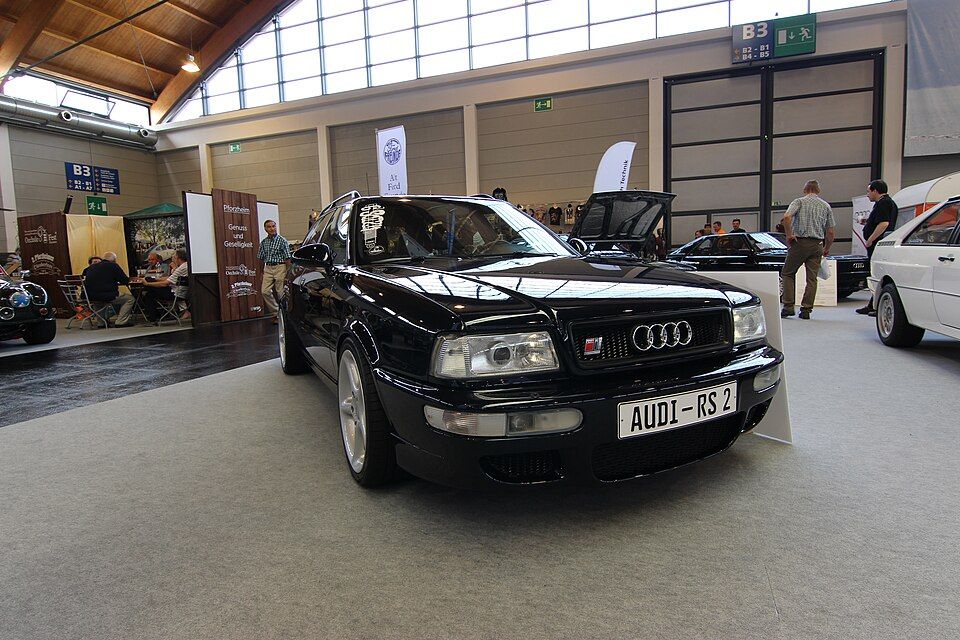
Photo: Audi RS2 Avant by © Hilarmont (Kempten), CC BY-SA 3.0 DE, via Wikimedia Commons.
An estate car is meant to carry stuff. Dogs, suitcases, flat-pack furniture, football kits, wet coats after a walk near Lyme Park, all the everyday mess of real life. That’s why the Audi RS2 Avant felt so clever. It didn’t scream for attention like a bright two-seat sports car. It looked useful. But Audi and Porsche helped create something much sharper than a normal family estate. Audi’s own media material says the RS2 Avant arrived in 1994 with a 2.2-litre five-cylinder turbo engine making 315 PS, enough for 0 to 100 km/h in 5.4 seconds and a top speed of 262 km/h. Audi also describes it as a key car in the story of high-performance estates with five seats and a big boot.
That’s the bit that still matters today. The RS2 didn’t treat practicality as boring. It treated practicality as camouflage. You could put luggage in it, sit people in the back, and still have something properly quick. That’s why fast estates still have such a loyal following. They don’t ask you to choose between family life and fun. They just get on with both. It’s the sort of idea that makes sense in the North West, where a car may need to deal with the school run, the weekly shop, a drive to Manchester Airport, and a Sunday blast out towards the hills. The RS2 proved that fast cars don’t have to be selfish. They can have space, manners, and a boot. And yes, they can still surprise the person next to them at the lights.
Mercedes-Benz R 63 AMG: the six-seat oddball with a huge V8
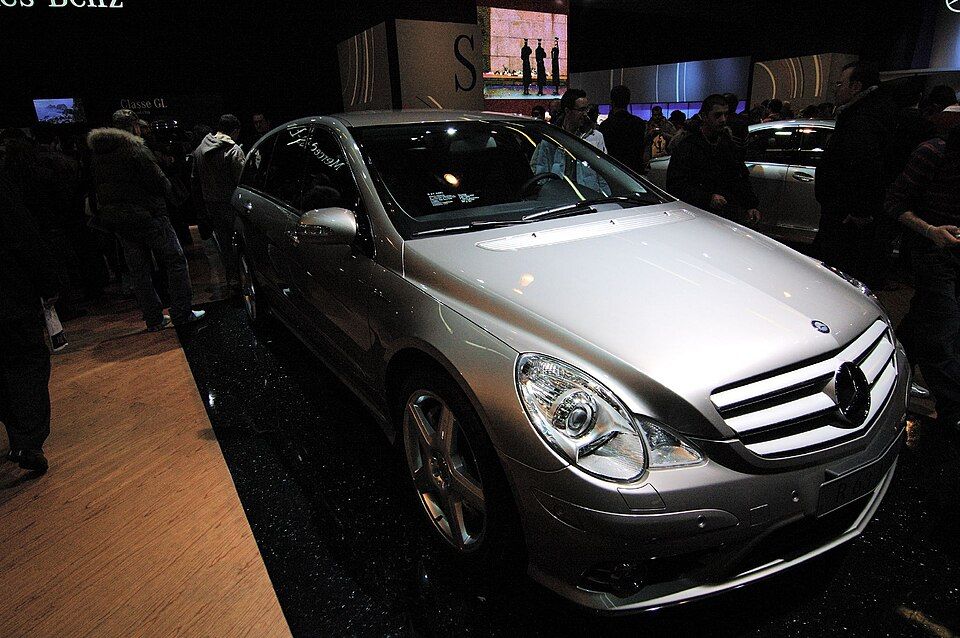
Photo: Mercedes-Benz R Class by Francesco Gasparetti from Senigallia, Italy, CC BY 2.0, via Wikimedia Commons.
The Mercedes-Benz R-Class was a hard car to put in a box. Was it an estate? A people carrier? A luxury family shuttle? A big crossover before everyone knew what to call big crossovers? Whatever label you pick, it didn’t look like the kind of thing that needed an AMG version. But Mercedes-AMG made one anyway, and the R 63 AMG is now one of those strange cars people talk about with a raised eyebrow and a grin. Mercedes-Benz archive material lists the R 63 AMG 4MATIC long wheelbase from 2006 to 2007 with the M156 6.2-litre V8 engine, while period reporting gave it 510 horsepower and 630 Newton metres of torque.
That is a lot of engine for a big six-seat family machine. It’s the kind of thing that sounds wrong until you remember AMG has always had a soft spot for putting huge engines into cars that probably didn’t ask for them. The R 63 AMG is unexpected because it doesn’t have the easy drama of a coupe or roadster. It’s tall, roomy, heavy, and a bit awkward. But that awkwardness is part of the fun. It’s like seeing someone arrive at a five-a-side match wearing work shoes, then scoring from the halfway line. Nobody expected it, which makes it better. It may not have sold in big numbers, but that adds to the story now. Some cars become interesting because they’re perfect. This one became interesting because it was brave, weird, and just a little bit bonkers.
Toyota GR Yaris: the small hatch with rally attitude
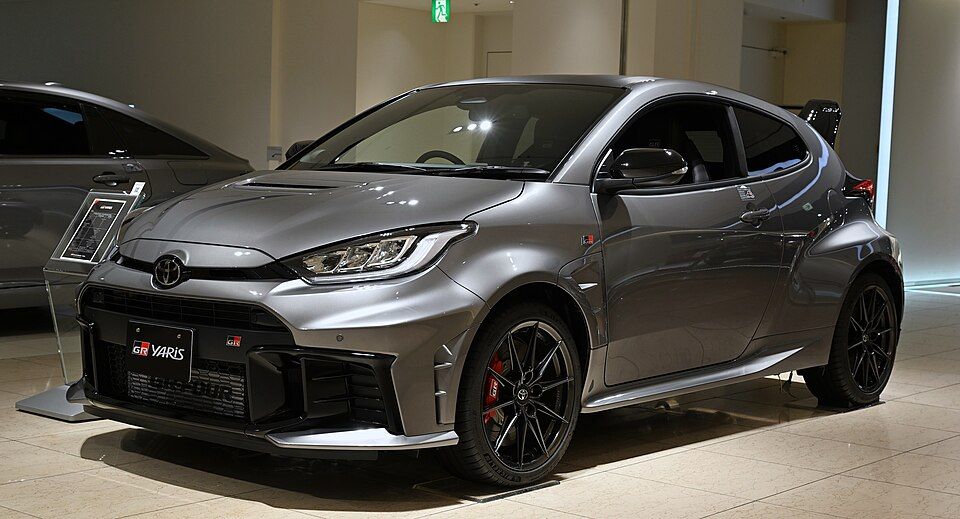
Photo: 2025 Toyota GR Yaris by TTTNIS, CC0, via Wikimedia Commons.
A normal Toyota Yaris is the sort of car people buy because it’s easy. Easy to park, easy to drive, easy to live with. You’d expect it outside a supermarket, tucked into a tight space with no drama. Then Toyota created the GR Yaris, and suddenly this little hatchback had proper rally flavour. Toyota UK’s own launch material described the GR Yaris as shaped by World Rally competition, with a new 1.6-litre three-cylinder turbo engine making 257 horsepower and 360 Newton metres of torque, matched to a six-speed manual gearbox. Goodwood also described it as a World Rally Championship homologation special with all-wheel drive and 257 horsepower. That’s a big leap from the normal idea of a small city-friendly Toyota.
The surprise is not that Toyota can make exciting cars, because of course it can. The surprise is that the excitement came in a package this small, this chunky, and this serious. The GR Yaris feels like a throwback to a time when rallying shaped some of the coolest road cars. It’s small enough to make sense on British roads, but special enough to feel like it has a story every time you get in. And that’s important. Performance isn’t just about numbers. It’s about the feeling that a car has been made with a clear purpose. The GR Yaris has that. It’s not trying to be a luxury car. It’s not trying to impress everyone outside a hotel. It just wants a good road, a willing driver, and maybe a dry day, which around Manchester is never guaranteed.
Fiat Panda 100HP: the little box that could
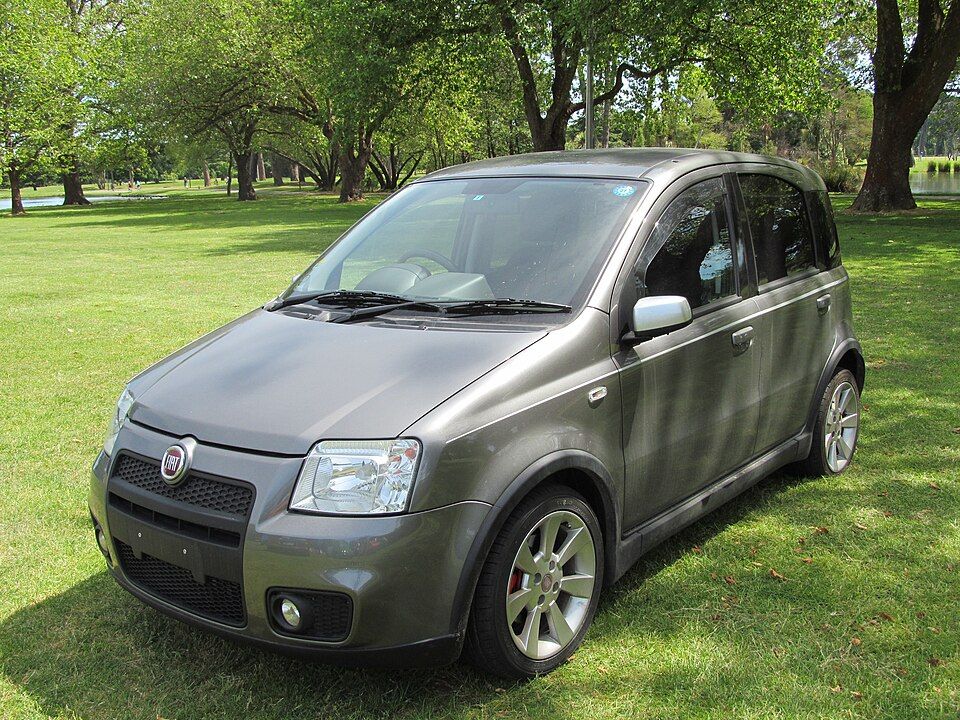
Photo: Fiat Panda 100HP by Riley from Christchurch, New Zealand, CC BY 2.0, via Wikimedia Commons.
The Fiat Panda 100HP is a much smaller, humbler kind of performance car, and that’s exactly why people still like it. It didn’t have wild power. It didn’t need it. Stellantis media described the Panda 100HP as the sporty flagship of the expanded 2007 Panda range in the UK. On paper, 100 horsepower doesn’t sound like much now, especially next to the huge numbers from the Juke-R or the Espace F1. But in a light, small, upright hatchback, it was enough to make the car feel cheeky. And cheeky is the right word. The Panda 100HP looked like a normal little city car that had found a pair of trainers and decided to run everywhere. It was the sort of car that could make a dull trip feel brighter without needing silly speed. That matters, because not every performance version has to be extreme.
Some of the best ones are about balance, character, and the sense that the car wants to play. On tight streets, small roundabouts, and busy town roads, huge power isn’t always the answer. A small car with sharp reactions can be much more fun at normal speeds. The Panda 100HP understood that. It was still practical, still compact, still easy to park, but it had a bit of spark. It also proved a point that buyers still care about today: you don’t need a massive engine to enjoy driving. Sometimes a small, honest, lively car is enough to put a smile on your face before you’ve even left town.
Volvo 850 T-5R: the sensible square car with a cheeky side
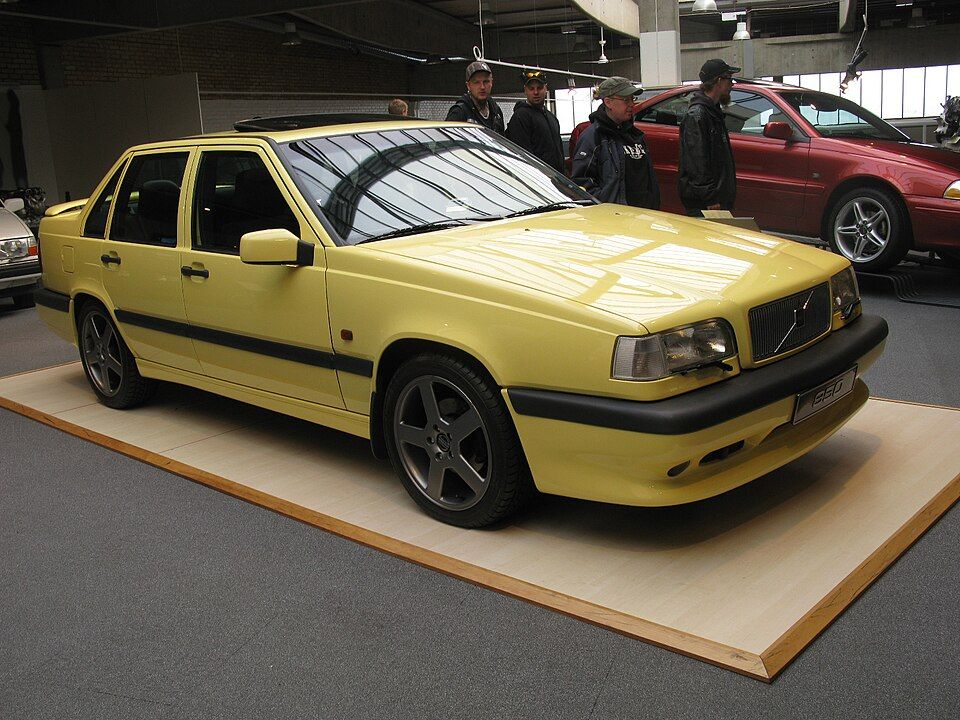
Photo: Volvo 850 T5R by nakhon100, CC BY 2.0, via Wikimedia Commons.
Volvo used to be seen by many people as the safe, sensible choice. Big square estates, strong seats, family image, calm energy. Then the 850 T-5R came along and gave that image a wink. Volvo’s 1995 press material described the 850 T-5R as powered by a 2.3-litre turbocharged engine producing 240 horsepower, with that famous cream yellow paint helping it stand out even more. Car and Driver later summed up the appeal nicely by calling it a “flying yellow brick,” which tells you pretty much everything about the car’s personality. The 850 T-5R was unexpected because it didn’t throw away the Volvo-ness. It was still boxy. It still looked practical. It still had that useful estate shape in some versions. But under the sensible surface, it had pace and attitude.
That contrast is what makes sleeper cars so enjoyable. You get the normal shape, the everyday usability, and then a little secret for those who know. It’s not shouting. It’s smirking. And that’s a lovely thing. For used car buyers, this is why performance versions of practical cars have such a pull. They don’t make every trip feel like a compromise. They give you space for real life, then a bit of excitement when the road clears. The 850 T-5R also showed that a brand known for safety could still have a sense of humour. Safe doesn’t have to mean dull. Sensible doesn’t have to mean slow. Sometimes the square car is the one with the best story.
Peugeot 205 Turbo 16: the small hatch that barely stayed small
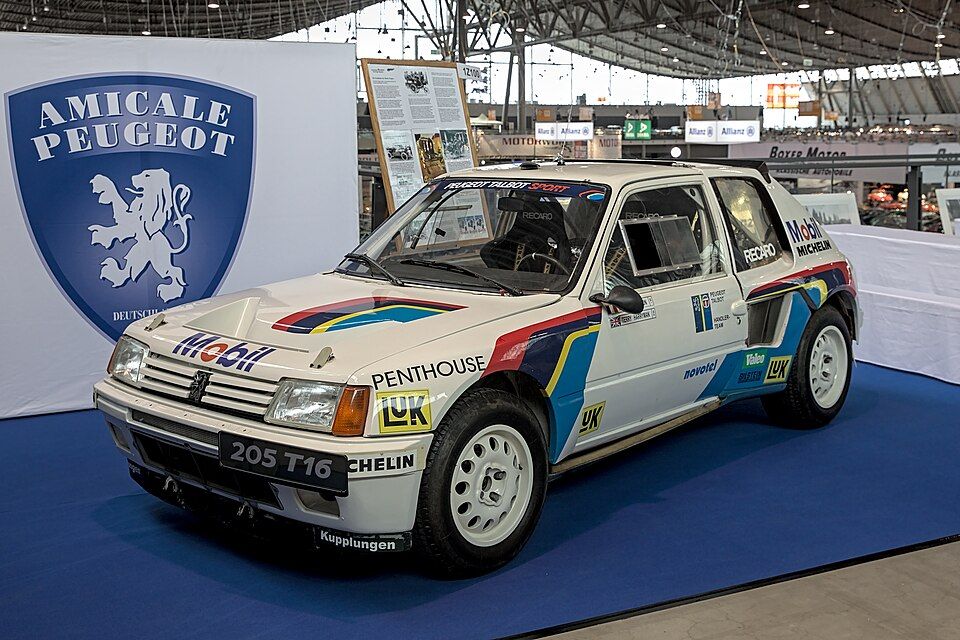
Photo: Peugeot 205 Turbo 16 by Alexander Migl, CC BY-SA 4.0, via Wikimedia Commons.
The Peugeot 205 is one of those small cars people remember with real affection. The normal versions were light, useful, and easy to like. The 205 GTI became a hot hatch legend. But the 205 Turbo 16 was something else altogether. It was linked to Group B rallying, and the road cars existed because Peugeot needed to meet rules that required production examples. RM Sotheby’s notes that Peugeot produced 200 road-legal 205 Turbo 16 cars for Group B homologation, and that the Turbo 16 had only a loose link to the everyday 205, with a rear-mounted 1.8-litre turbo engine and four-wheel drive underneath a very different body. That’s why it belongs here. From a distance, the name says “205”, so your brain thinks small French hatchback.
Then you look closer and realise this thing is much closer to rally machinery than to something your neighbour used for shopping. The 205 Turbo 16 is a reminder that some performance versions are unexpected because they start with a normal name and then go completely off-script. It wasn’t just a warmer trim or a nicer set of wheels. It was a serious machine shaped by racing needs. That kind of car gives a brand a story that lasts for decades. Even people who will never own one still talk about it, because it feels almost unreal. A small hatchback badge, rally engineering, rare road-car status, and a shape that looks familiar until it really doesn’t. That’s a proper surprise.
What these cars teach us about buying something fun
The best lesson from all these cars is simple: don’t judge a car too quickly. Some performance versions look obvious, but others hide their fun under a practical shape. That’s useful to remember if you’re browsing used cars. You might start out thinking you need a coupe or a big sporty badge, then realise a quick hatchback, estate, or compact crossover fits your life much better. At Dace Motor Company, we see that kind of thinking all the time. Someone wants a car that feels special, but they still need space, comfort, finance options, and a car that makes sense during the week. That’s where the unexpected choices can shine. The right used car doesn’t have to be the loudest thing on the road. It might be a Volkswagen with a punchy engine, a BMW touring, a quick Audi estate, a MINI with a bit of bite, a Ford with a sporty trim, or something from Toyota, Mazda, Volvo, Mercedes-Benz, Peugeot, Renault, Nissan, or another brand that blends real-world use with a bit of fun. Dace Motor Company has showrooms across Stockport and Manchester, with locations including Reddish, Manchester Road in Stockport, and Eccles, and the company’s stock covers a wide mix of used cars and finance options. The key is to look beyond the badge on the boot and think about how you’ll use the car. Will it fit your commute? Will it handle family duties? Is it HPI checked? Does it feel right on a test drive? Those questions matter. A fun car is still better when it fits your actual life.
The joy of cars that make no sense, until they do
There’s something very human about these unexpected performance cars. They’re not always logical. In fact, some of them are deeply silly. A Formula 1-style people carrier. A super-powered van. A tiny Aston city car with a V8. A crossover with GT-R hardware. A six-seat Mercedes with a huge AMG engine. None of these sounds like the safe choice in a meeting room. And yet, that’s why people remember them. They bring surprise back into cars. They give people stories to tell. They make the car world feel a little less predictable. Not every buyer needs something that wild, of course. Most of us need a car that starts on a cold morning, deals with potholes, carries bags, and doesn’t make every journey feel like hard work. But a bit of character goes a long way. That’s why performance versions, even the odd ones, matter. They show what happens when engineers and designers are allowed to have a laugh while still doing proper work. And for used car buyers, they’re a reminder to keep an open mind. The car that suits you best may not be the one you first pictured. It may be a quick estate, a warm hatch, a sporty compact car, or something with a hidden edge. Around Manchester and Stockport, where one day you’re crawling past roadworks and the next you’re heading out for a weekend drive, that mix can be spot on. The best cars aren’t always the loudest. Sometimes they’re the ones that surprise you, then keep making you smile long after the first drive.