


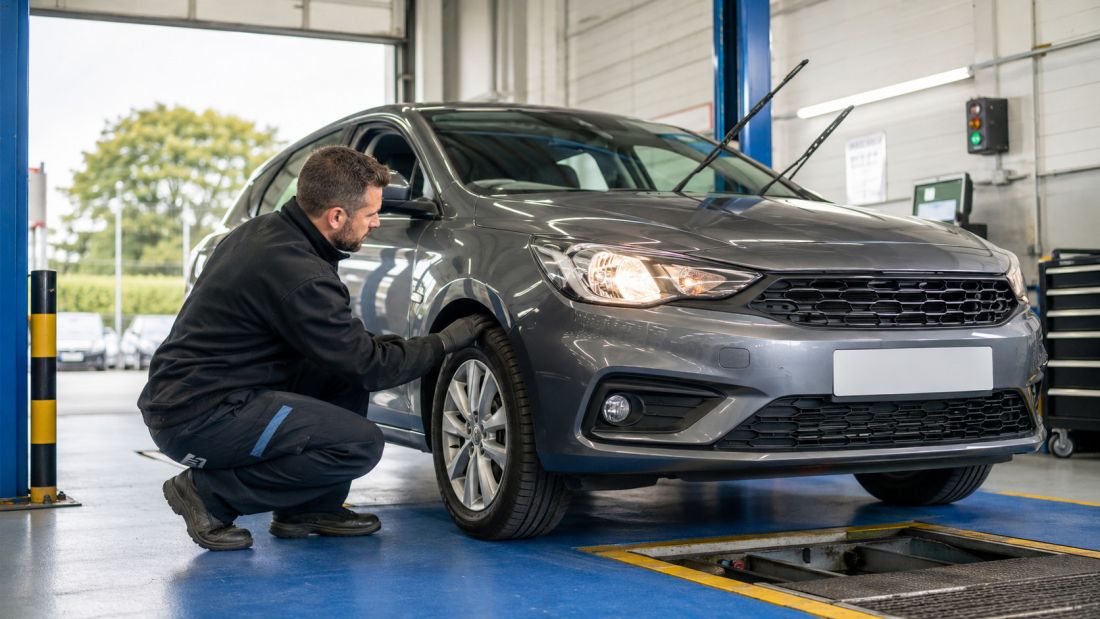
The Most Common Reasons Cars Fail MOT Tests
Let’s face it, nobody wakes up buzzing to book an MOT test. It’s one of those jobs that sits on the mental list somewhere between “sort the loft” and “finally clean the inside of the windscreen.” But it matters. A lot. The MOT test checks whether your car meets key legal standards for road safety and exhaust emissions, but it isn’t the same as a service, and it doesn’t check every part of the engine, clutch, or gearbox. So, yes, your car can pass its MOT and still need care. And yes, your car can feel fine on the school run, the M60, or the crawl through Stockport town centre, then still fail because one small thing has been missed. The most recent government data for class 3 and 4 vehicles shows an overall initial failure rate of 28.08% for 2024 to 2025, which is a big reminder that MOT failures aren’t rare. They’re normal enough. They’re also, in many cases, avoidable with a few simple checks before test day.
At Dace Motor Company, we’re used to speaking with drivers from Stockport, Manchester, Reddish, Eccles, and the roads in between, and the same worries come up again and again. “Is it the brakes?” “Will tyres fail?” “Can a warning light ruin the day?” “Do they really care about the windscreen washer?” The answer is, sometimes, yes. The little things count because the MOT test is looking at safety, visibility, structure, emissions, lights, tyres, brakes, and other kit that helps keep you and everyone else safe. Dace Motor Company’s background is local too, with sites around Stockport and Greater Manchester and a long history as a family-run used car business, so this is written with real local driving in mind, not some perfect showroom fantasy where every road is smooth and every car has just been cleaned.
Lights are a huge reason cars fail
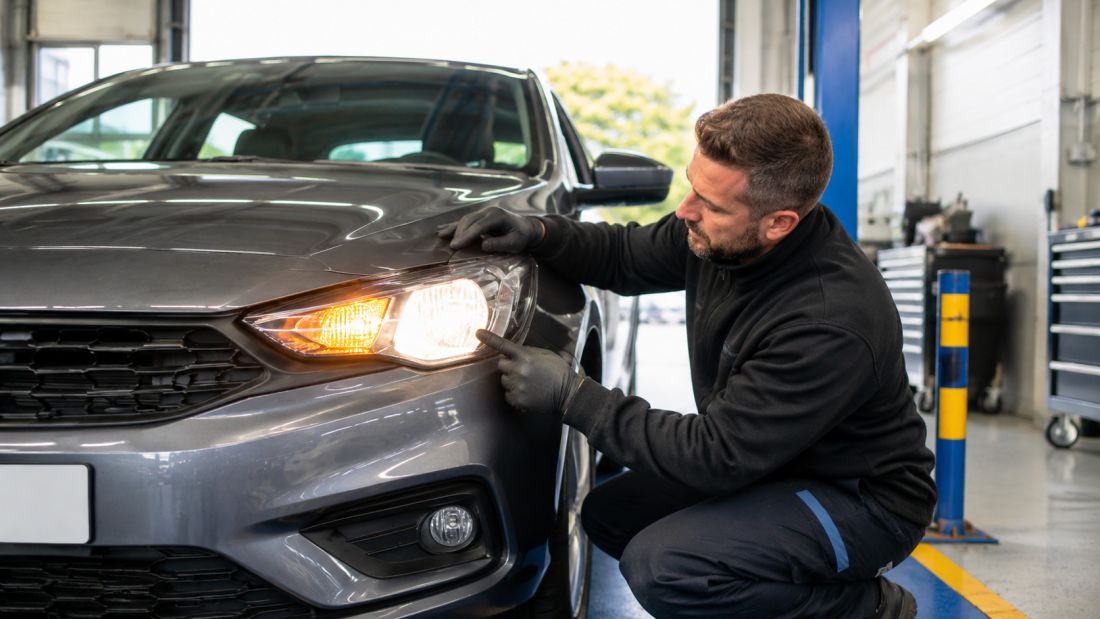
If there’s one area that catches people out, it’s lights. A brake light goes. A number plate bulb stops working. An indicator flashes too fast. A headlamp points at the moon instead of the road. You might not spot it because, well, you’re inside the car. You don’t see your own brake lights unless someone tells you, and most of us don’t do a full walk-round before every drive. Government data for 2024 to 2025 shows that lamps, reflectors, and electrical equipment were recorded in 10.89% of tests and made up 25.01% of defects overall for class 3 and 4 vehicles. That puts lighting and electrical kit right near the top of the MOT fail list.
The annoying bit is that many lighting faults are easy to spot before the test. Park near a wall, switch the lights on, and you’ll see the glow from the front lamps. Press the brake pedal and ask someone to stand behind the car. Try the indicators, hazards, rear fog light, number plate lights, and reverse lights. If you’re on your own, use reflections in shop windows or garage doors. It sounds a bit daft, but it works. Around Manchester, where rain, dark mornings, and busy roads are part of life, good lights aren’t just there to satisfy a tester. They help the cyclist at the lights see what you’re doing. They help the driver behind you react. They help you see the bend before it becomes a problem. The MOT inspection manual covers headlamps, position lamps, daytime running lamps, stop lamps, indicators, hazard warning lamps, fog lamps, reversing lamps, lighting warning signs, trailer sockets, wiring, and the battery as part of this area.
Suspension takes a battering on local roads
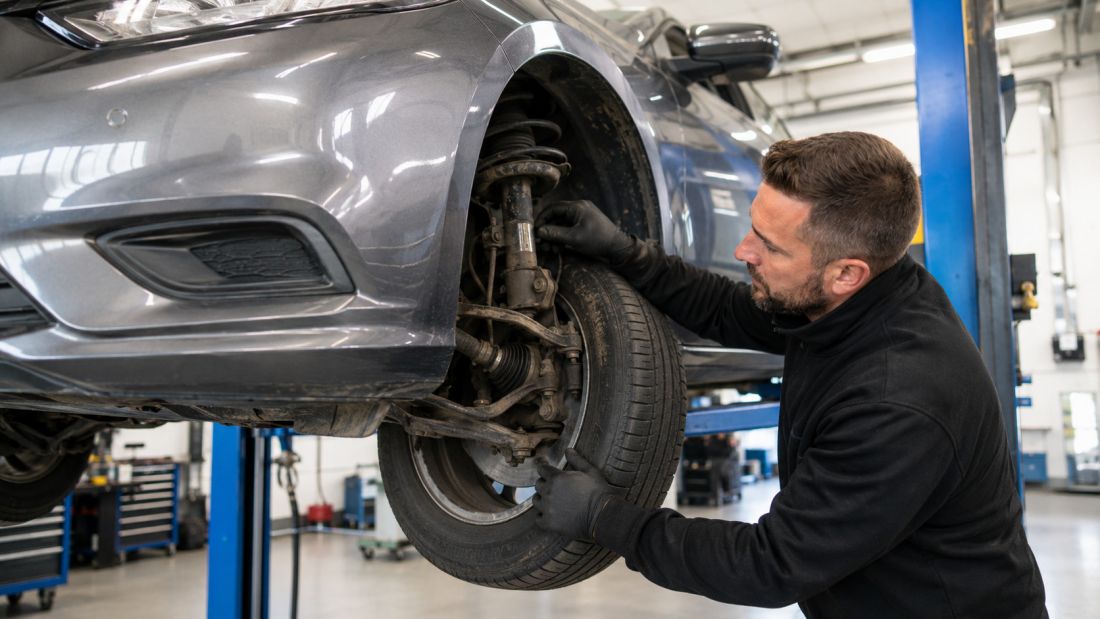
Suspension sounds like one of those garage words people nod along to while secretly thinking, “Right, but what does that actually mean?” Think of it as the bit that helps your car handle bumps, corners, potholes, speed cushions, and rough road surfaces without bouncing all over the place. It keeps the tyres in proper contact with the road. It helps the car feel stable. And, yes, it has a tough job. Anyone who’s driven through patchy side streets in Greater Manchester, or over a pothole that seemed to appear from nowhere after a wet week, knows the roads can be rough on a car. Over time, springs, shock absorbers, arms, joints, and bushes can wear, crack, leak, or loosen. You might hear knocking. You might feel the car pulling or bouncing. Or you might notice nothing at all until test day.
The government’s 2024 to 2025 data shows suspension defects were recorded in 8.73% of tests and made up 19.39% of defects overall. So this isn’t some rare, odd fault. It’s a regular MOT fail area. The inspection manual says the MOT covers axles, wheel bearings, wheels, tyres, tyre pressure monitoring, and suspension parts such as springs, shock absorbers, suspension arms, and joints.
What can you do before the MOT? Listen. That’s the big one. Turn the radio down for five minutes and drive over a few normal local roads, not at speed, just normally. Any clunking from the corners? Any creaking over speed bumps? Does the car dip more than it used to when braking? Does the steering wheel shake? Those signs don’t prove it’ll fail, but they’re worth checking. And don’t ignore small changes. Cars are good at whispering before they shout. A tiny knock today can become an expensive repair later, especially if it affects tyres or steering. We’ve all been there, pretending a noise will go away if we just don’t mention it. Cars rarely play that game nicely.
Tyres can fail for tread, damage, pressure, and age
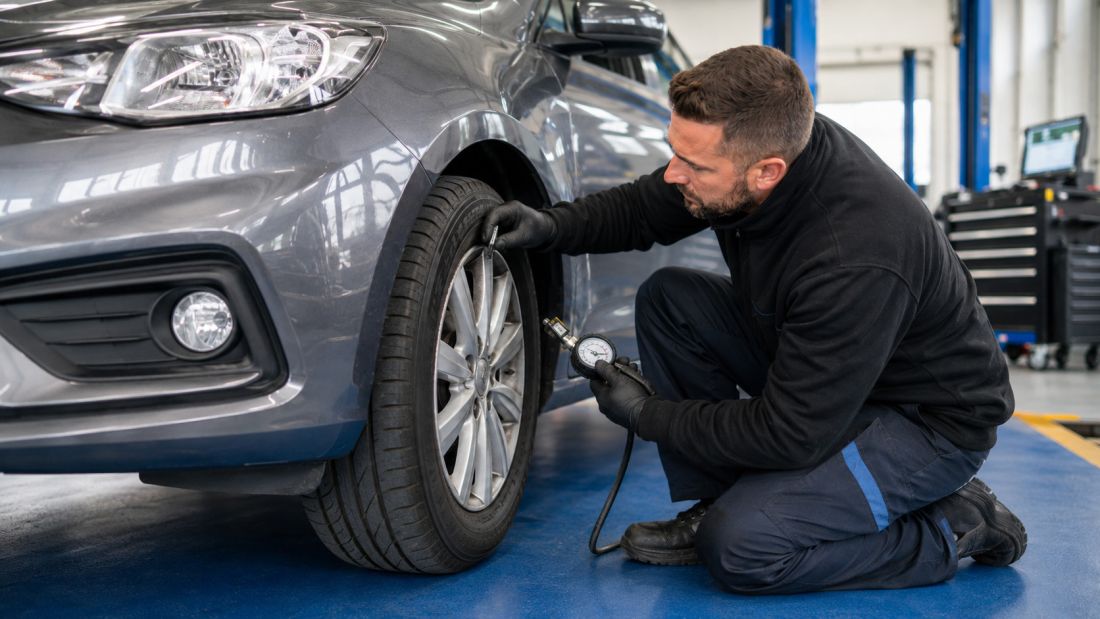
Tyres are the bit of the car that actually touches the road, which sounds obvious, but it’s easy to forget how much they do. They deal with braking, turning, puddles, grit, kerbs, motorway speed, school car parks, supermarket ramps, and those tight little turns where someone has parked half on the pavement. If your tyres are worn or damaged, the whole car feels the effect. During an MOT, tyres can fail because the tread is too low, the sidewall is damaged, there’s a bulge, the wrong tyre is fitted, the tyre is insecure, or the pressure monitoring warning is showing on cars where it applies. The Highway Code says cars, light vans, and light trailers must have at least 1.6 mm of tread across the central three-quarters of the tyre and around the full circumference.
In the 2024 to 2025 government data, tyre defects were recorded in 6.39% of tests and made up 12.86% of defects overall. Tyres also stand out in the dangerous defect figures, making up 60.12% of dangerous defects. That’s a serious number, and it makes sense. A worn tyre in dry weather is bad enough. A worn tyre in a Manchester downpour on the Mancunian Way or the M60 is a different story.
A quick tyre check doesn’t need fancy kit. Look across each tyre, not just the outside edge. Turn the steering wheel so you can see the front tyres better. Check for cuts, cracks, nails, bulges, and uneven wear. If one edge is wearing faster than the rest, that can point to tracking or suspension trouble. Use a tread gauge if you’ve got one. If not, many drivers use the 20p coin check as a rough guide, but a proper measurement is better if you’re close to the limit. And check pressures when the tyres are cold, using the figures for your car. You’ll usually find them in the handbook, inside the fuel flap, or on a door sticker. It’s not glamorous. It’s not exciting. But it can save a fail, and it can save you from a scary moment on a wet bend.
Brakes fail when wear turns into risk
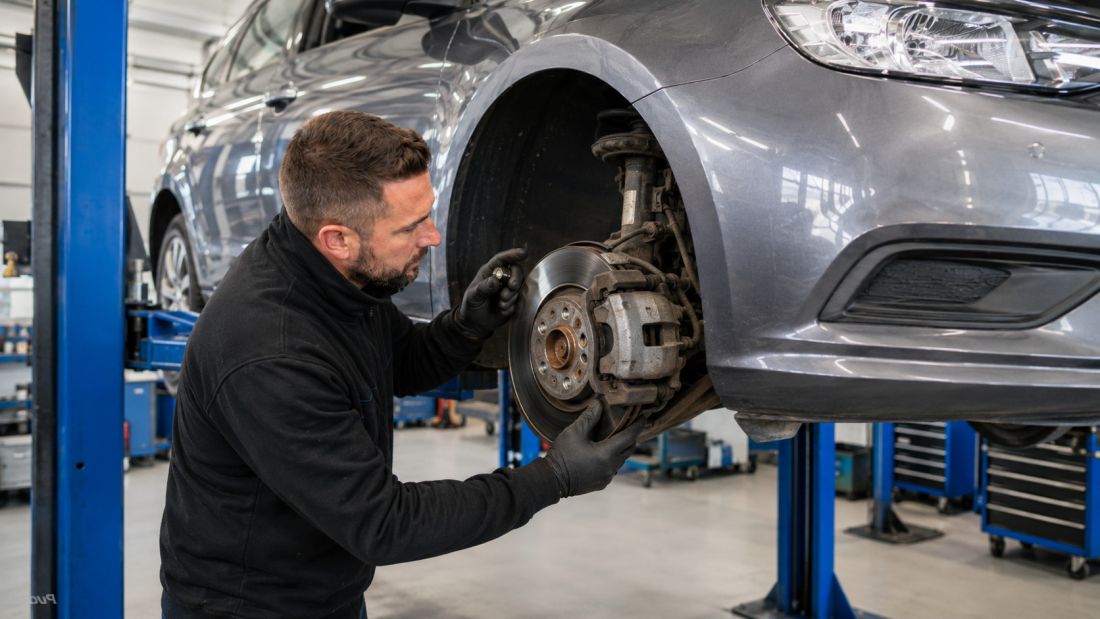
Brakes are one of those things you don’t want to think about too late. They should feel steady, smooth, and predictable. If the pedal feels spongy, the car pulls to one side, you hear grinding, or the handbrake needs to be pulled up higher than it used to, don’t shrug it off. The MOT checks brake condition and operation, service brakes, secondary brakes, parking brakes, brake fluid, and warning systems. The government data for 2024 to 2025 shows brake defects were recorded in 6.63% of tests and made up 16.15% of defects overall. Brakes also made up 29.01% of dangerous defects, so they’re right up there with the issues that can make a car unsafe.
The tricky thing with brakes is that they can wear slowly. You get used to the car taking a little longer to stop. You get used to the handbrake feeling weaker. You get used to a squeal that “only happens first thing.” Then the MOT tester sees what you’ve stopped noticing. Pads can be too thin. Discs can be badly worn or corroded. Brake pipes can be damaged. Brake fluid can be low. The parking brake might not hold the car well enough. None of that is the sort of thing you want to discover on a hill near Stockport with traffic behind you.
Before an MOT, pay attention to how the car behaves. Find a safe, quiet road and brake gently. Does the car stay straight? Any pulsing through the pedal? Any scraping sounds? Does the warning light stay on after starting? If something feels off, get it checked before the test rather than hoping for the best. And if the car has been parked for a while, brakes can get surface rust, especially in damp weather. A light film can clear with normal driving, but heavy corrosion or poor braking performance is a different matter. No fuss. No drama. Just don’t leave brakes to chance.
Visibility problems are small but surprisingly costly
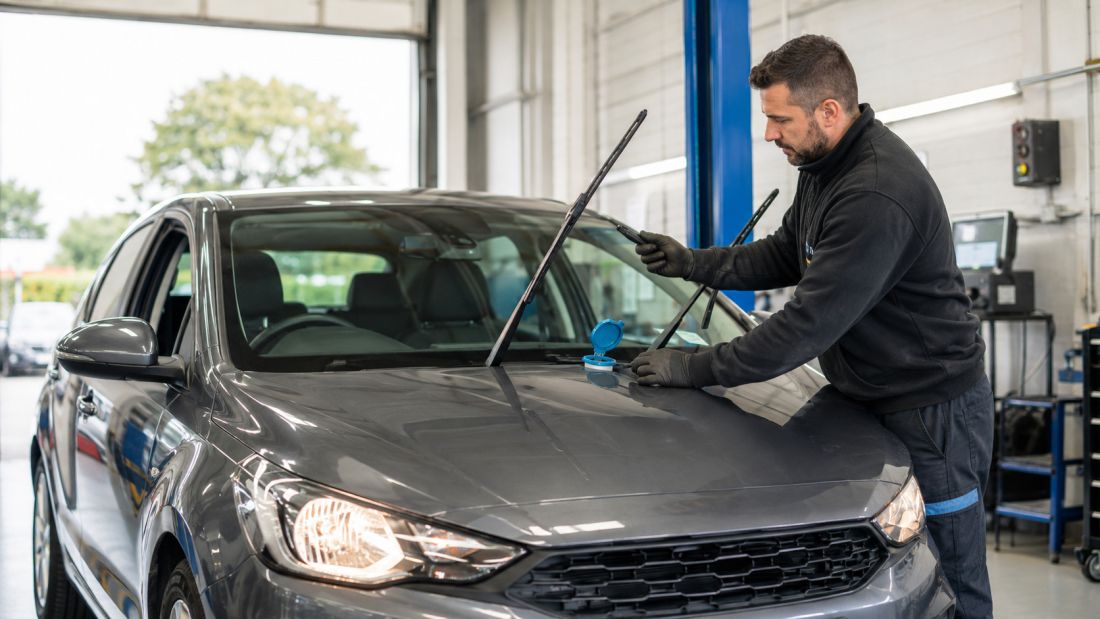
A clear view of the road sounds basic, doesn’t it? Yet visibility faults cause loads of MOT trouble. Wipers, washers, mirrors, windscreen chips, cracks, stickers, dangling air fresheners, heavy dirt, and washer jets that barely dribble can all cause problems. The government data for 2024 to 2025 shows visibility defects were recorded in 4.54% of tests and made up 7.95% of defects overall. The MOT inspection manual says wipers must keep working automatically once switched on, and a wiper can be rejected if it’s clearly damaged or worn. It also says windscreen washers must provide enough fluid for the wipers to clear the windscreen properly, and washers that don’t work or don’t provide enough fluid are classed as a major defect.
This is one of those “come on, really?” areas because the fix can be simple. Top up the screenwash. Check the spray hits the windscreen, not the roof, the bonnet, or the poor cyclist behind you. Run the wipers and see if they smear, split, judder, or leave big untouched patches. Clean the inside of the windscreen too. That greasy film inside can make low sun horrible, especially on winter mornings or late afternoons when you’re heading through town. Check for cracks or chips in the driver’s view. And make sure nothing blocks your view, even if it’s something harmless-looking hanging from the mirror.
You know how it is. You get used to the mess. A parking permit here, a phone holder there, a tiny chip that’s been there for months. But MOT testers are looking at whether the driver can see properly. That’s the job. Around Manchester and Stockport, with buses, bikes, tram crossings, rain, glare, parked vans, and pedestrians appearing from behind everything, visibility is not a small thing. It’s one of the cheapest areas to check before the test, and one of the most frustrating reasons to fail if you didn’t bother.
Exhaust, emissions, and leaks can catch you out
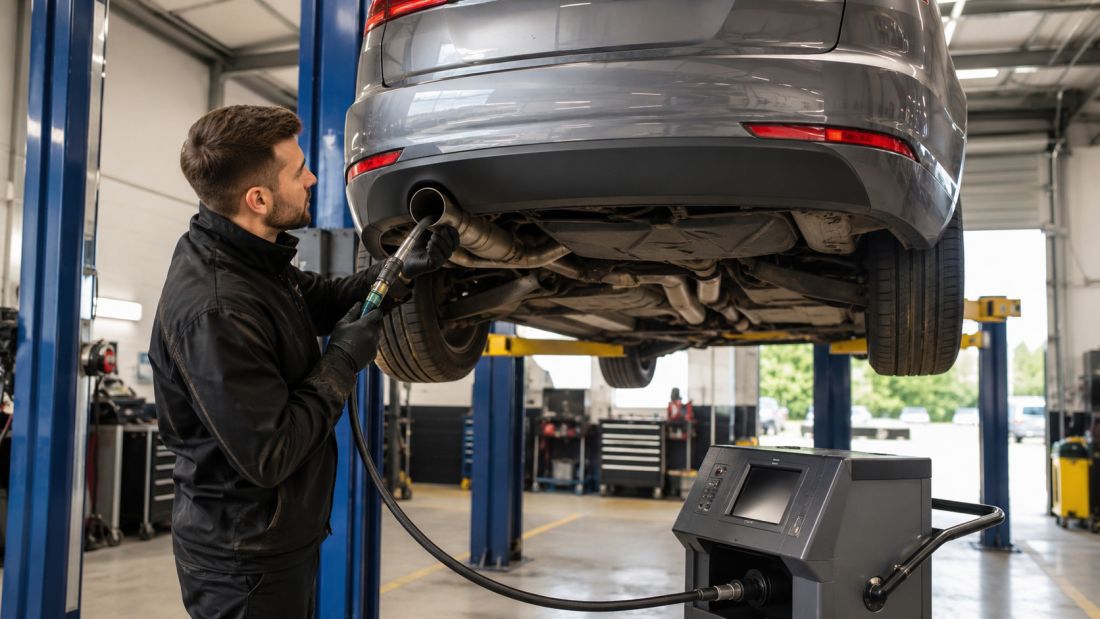
Exhaust and emissions failures can feel a bit mysterious because you can’t always see the problem. Sometimes there’s a clear clue, like a loud exhaust, smoke, a strong smell, or a warning light on the dashboard. Other times, the car drives fine, then fails because the exhaust emissions are too high or there’s a leak that the tester can see. The MOT checks whether the vehicle meets the emissions rules for its age and fuel type. It also checks that the exhaust system is secure, complete, not missing a catalyst where one was fitted as standard, free from serious leaks, and not too noisy. Government data for 2024 to 2025 shows noise, emissions, and leaks were recorded in 3.15% of tests and made up 5.80% of defects overall.
There are a few simple things that can help before test day. Make sure the car has enough fuel. Don’t turn up with the engine stone cold after a two-minute drive, especially with a diesel. The government’s MOT guidance says going for the test with a fully warmed-up engine can reduce the chance of damage during the smoke test and can improve the chance of passing because the engine produces less smoke when warm.
Also, don’t ignore warning lights. We all know someone who says, “It’s been on for ages and it drives fine.” Maybe it does. But a warning light can point to an emissions problem, and MOT testers don’t just wave it through because the car still feels normal. If the exhaust is blowing, hanging low, rattling, or sounding like a rally car when it really shouldn’t, get it checked. A small bracket or leak might be a simple repair. Left alone, it can turn into a bigger job. Cars love doing that at the worst moment, usually the week you’ve got seven other things to pay for.
Body, structure, seats, seat belts, and number plates still matter
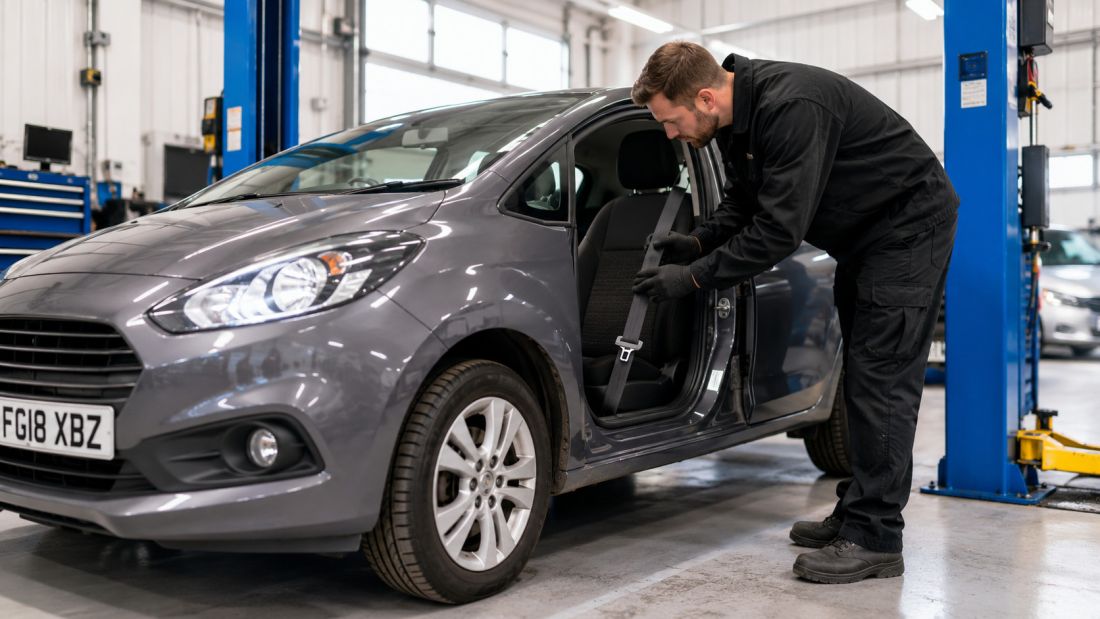
Some MOT failures aren’t about how the car drives. They’re about whether the car is safe as a whole. Body and structure defects were recorded in 3.41% of tests in 2024 to 2025, while seat belts and restraint systems were recorded in 0.97% of tests. That might sound lower than lights or suspension, but if your car fails here, it can still be a serious pain. The MOT checks body structure for excessive corrosion or damage in specific areas and checks that there are no sharp edges likely to cause injury. Seat belts are checked to make sure mandatory belts are in place, suitable, in good condition, working properly, and securely attached.
This is where a bit of common sense helps. Open and close the doors. Make sure the bonnet shuts properly. Check the boot. Look around the car for loose trim, sharp damage, hanging undertrays, cracked mirrors, or anything that looks like it could fall off. Clean the number plates and check they’re readable. Make sure the horn works. Try every seat belt, including the rear ones. Pull them out, let them retract, click them in, check they don’t jam, and make sure they aren’t twisted, badly frayed, or trapped under a child seat. If you carry kids, dogs, sports bags, shopping, tools, or half the contents of the garage in the back, it’s easy for rear belts to get buried or damaged without anyone noticing.
Rust is another one. Surface rust on an old car isn’t an automatic disaster, but corrosion in important structural spots can be. If you’re looking at a used car, pay attention to the MOT history and advisories. A note about corrosion one year can become a fail later if it’s ignored. That’s why a clean, honest look around the car before the test is worth doing. You don’t need to become a mechanic. You just need to spot the obvious stuff before the tester does.
Warning lights and dashboard messages shouldn’t be ignored
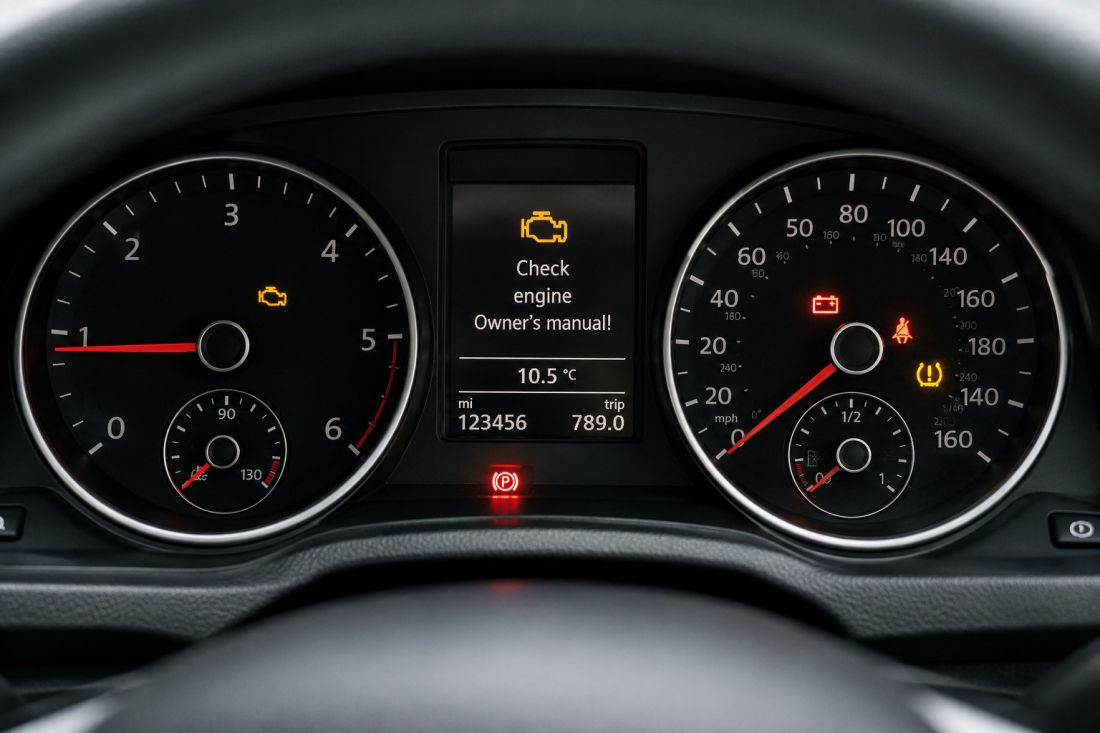
Modern cars like to talk through warning lights. Some are friendly little reminders. Some are a proper “sort this now” message. The MOT inspection manual includes checks for warning lights linked to seat belts, restraint systems, braking systems, steering systems, stability control, emissions, and other safety equipment. The government’s car parts guidance also says dashboard warning lights are checked for several systems, including seat belts and restraint systems.
The easy mistake is to think a warning light is just annoying rather than important. Maybe it came on after a flat battery. Maybe it flickers. Maybe someone told you it’s “just a sensor.” Fair enough, sometimes it is a sensor. But the MOT tester has to follow the rules, not guess what you meant to fix. If a safety or emissions warning light is on when it shouldn’t be, it can lead to a fail. And even if it doesn’t, a warning light is still your car asking for attention.
Before your MOT, start the car and watch the dashboard. Most lights should come on briefly, then go out. If one stays on, write it down. Don’t just book the MOT and hope the light gets stage fright and disappears. It won’t. Check your handbook, or get the fault read by someone with the right diagnostic kit. A simple reset might not solve the root problem, so be careful with anyone who says they’ll just clear the light and send you away. That’s not fixing it. That’s putting tape over the smoke alarm. Around busy roads like the A6, Princess Road, or the routes in and out of Stockport, you want the safety kit working properly, not just looking quiet on the dashboard.
What you can check before test day
A pre-MOT check doesn’t need to take all afternoon. Give yourself twenty minutes, a dry-ish bit of driveway if you’re lucky, and maybe a mate to help with the brake lights. Start with the outside. Check all lights. Look at tyres. Clean the number plates. Look for damage, loose panels, sharp edges, cracked mirrors, and anything hanging underneath. Then sit inside. Try the horn. Try the wipers and washers. Check the seat belts. Start the car and look for warning lights that stay on. Open the bonnet and check the screenwash. If you know how, check oil and coolant too, but don’t guess if you’re unsure. Then take the car for a short drive and listen. Knocks, grinding, pulling, smoke, heavy vibration, or a loud exhaust all deserve attention before test day.
This isn’t about trying to cheat the MOT. It’s the opposite. It’s about turning up with a car that’s safe, legal, and less likely to waste your time. The MOT rules split defects into dangerous, major, and minor categories, and a car fails if it has dangerous or major faults. Government guidance says you can take a failed vehicle away only if the current MOT is still valid and no dangerous problems were listed. It also says driving a vehicle that has failed because of a dangerous problem can lead to a fine of up to £2,500, a driving ban, and 3 penalty points.
So, yes, the MOT can feel like a nuisance. But it’s there for a reason. And the common fail points are common because real cars live real lives. They hit potholes. They sit in rain. They carry kids, shopping, dogs, tools, football boots, and the odd mystery rattle that no one can find. Give your car a quick check before the test, sort the easy bits, and don’t ignore the signs it’s been giving you. Your future self, probably stood outside a garage with a coffee and a busy day ahead, will be glad you did.