


The Longest Car Ever Driven on a Single Tank of Fuel
Photo: Miko Marczyk – the European rally champion – proved that a true driver can not only go fast but also be incredibly efficient! Behind the wheel of a Škoda Superb, he drove an astonishing 2,831 km on a single tank, achieving an average fuel use of just 2.61 l/100 km. (Source: @facebook.com/mikomarczyk95).
A rally driver, Miko Marczyk, set a new world record by driving 2,831 kilometres on a single tank of fuel. That’s about 1,759 miles. Here’s how it went: he used a stock (almost standard) version of a Škoda Superb 2.0 TDI (diesel) and covered the 2,831 km using just one full tank. To put that in UK terms: from Manchester to Edinburgh–back-or Manchester down to London and up again almost. It’s wild.
Why this matters
You might think: “So what? Who cares?” But actually, it tells us some interesting things.
- If a car can go that far, it means manufacturers are doing a lot to reduce fuel use, drag, weight, etc.
- For everyday drivers (that’s guys like us at Dace Motor, helping local folks pick used cars), trimming fuel bills matters. Whether you’re driving around Manchester city, up to Stockport or heading out further, fewer stops for fuel is a good thing.
- It also shows that with smart driving habits (which we’ll get to) you can make a big difference. Even if you’re not breaking records.
- From a used-car dealer’s point: if you’re buying something from us (think Kia, Hyundai, Toyota or whatever) and you’re thinking about how far it will go between fill-ups, this story gives you a benchmark of what extreme efficiency looks like.
So yeah, it’s a record, but it also has lessons for everyday driving.
The record details
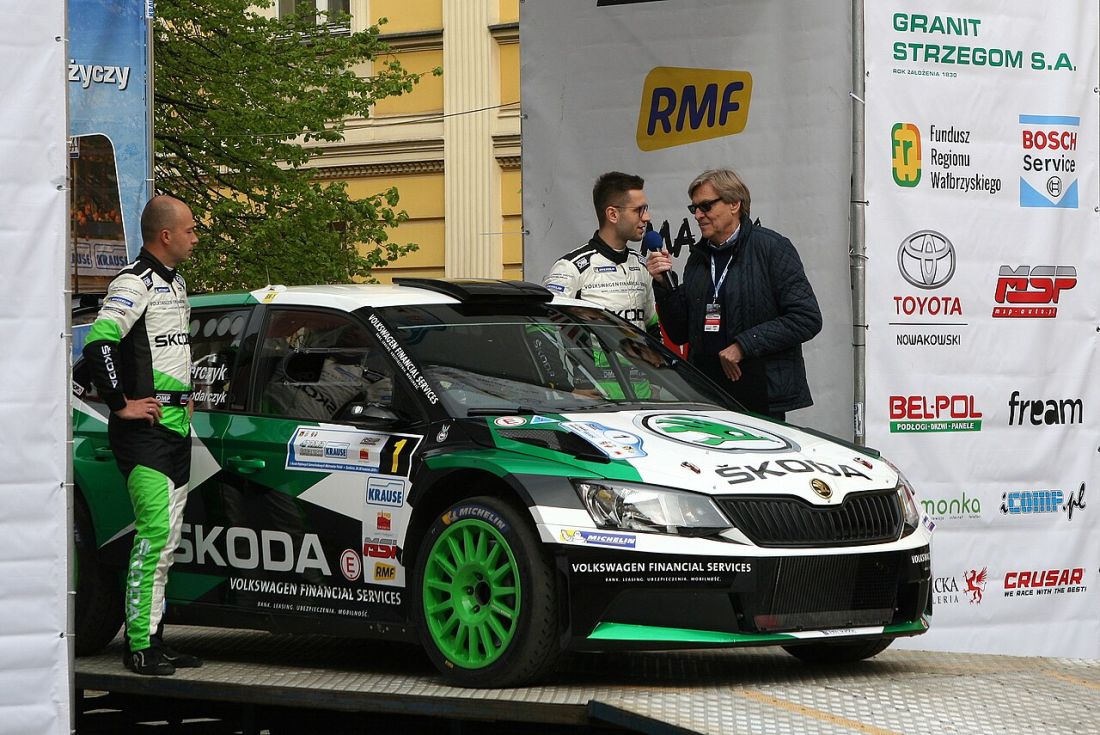
Photo: “Miko” (on the right) with his co-driver Szymon Gospodarczyk (on the left) during their winning run at the 2019 ?widnica Rally (by Makary & Myszka, CC BY-SA 4.0, via Wikimedia Commons)
Let’s look at the nuts and bolts of what happened.
The attempt by Miko Marczyk:
- The car: Škoda Superb, 2.0 TDI, 110 kW, front-wheel drive, 7-speed automatic.
- Fuel: standard diesel. He averaged only 2.61 litres per 100 km over the 2,831 km. That’s crazy efficient.
- The path: he drove on public roads (not a closed track) and planned carefully for speed, conditions, tyre pressure, etc.
- What was the previous record? The article says the previous was lower (2,545.8 km or so).
So yes - lots of planning, favourable conditions, and a very efficient car.
What did he do to make it happen?
You know how we mention fuel-economy to customers here at Dace Motor Company when showing used cars? Well, a lot of his methods can apply to everyday drivers. Here are some of the things he did:
- He kept tyre pressure at the recommended levels. That helps.
- He drove at moderate speeds (about 80 km/h) where the engine is more efficient. On some downhills he even got 2.2 litres per 100 km.
- He anticipated traffic, hills, braking-he didn’t slam on the gas or brake hard all the time. Smooth driving counts.
- He used “Eco” mode (when available) and low rolling-resistance tyres.
- He took into account the wind and aerodynamics of the car (the Superb is quite good in that respect).
What this means for you (if you’re buying used)
Now, I want to bring this home for folks in Manchester / Stockport (that’s us). If you’re thinking of buying a used car at one of our Dace Motor Company sites (whether it’s the one on Greg Street, the German Car Centre or the others), then this record gives you something practical:
- When we talk about “fuel economy” figures in used cars, know that real-world results depend a lot on how you drive and how well the car is maintained. If someone kept tyres under-inflated, ignored servicing, did lots of short journeys, you won’t get record-level economy.
- If you buy a car that’s efficient (diesel / small petrol / hybrid) and you keep it in good shape (correct tyre pressure, regular servicing, smooth driving) you’ll save more fuel.
- Those “how far can you go between stops” numbers matter. Say you commute from Manchester city to Stockport each day, or maybe you do weekend trips-every fill-up you avoid is money saved.
- At Dace Motor Company we check all our vehicles (HPI, previous owners, mileage etc.) and you’ll want a car that’s been looked after. Good condition = better economy.
- And if you ever hear marketing claims about “X miles per tank” know that the best case scenario (like the record) is extreme. Don’t expect that in daily traffic with stop-start and local driving. But you can aim for better than “meh”.
Some extra examples (because we’re curious)
While the 2,831 km record is current, there have been other impressive ones. For example:
- A couple from Australia, Helen Taylor and John Taylor, drove 1,626 miles (~2,617 km) in a stock Volkswagen Passat TDI, using “hypermiling” techniques.
- Before that, there was a record of 1,527 miles (~2,457 km) achieved by a Passat BlueMotion in Europe.
These show that the 2,800+ km mark is an ascent beyond what was common before.
What about for everyday people (you, me, local drivers)
Ok, so maybe you’re not going to drive 2,831 km on one tank. Most of us don’t. But there are practical take-aways that you can apply when you pick your next used car (and at Dace Motor Company we’ll help you with that):
- If you’re doing a lot of motorway driving (say Manchester to Leeds, or Stockport to Sheffield) then the “distance per tank” becomes quite meaningful. Short city drives use more fuel.
- If you pick a car that has good fuel economy (look at litres/100 km if it’s European spec, or mpg if UK spec) you are already on the right path.
- Maintenance matters: correct tyre pressure, timely servicing, clean filters-these all make a difference.
- Driving style: if you constantly accelerate hard, brake hard, use air-conditioning full blast, then expect higher fuel consumption. Conversely, smoother driving helps.
- Tank size: A car with a bigger fuel tank can obviously go further if efficiency is similar. But bigger tank + heavy engine + poor fuel economy = not so good.
- Used car buying tip: At our Dace Motor Company sites we check vehicle history, mileage, etc. A car that’s been well cared for is more likely to deliver better economy.
A little local flavour (because we’re in Stockport/Manchester)
You know how traffic’s on the M60, or how you might drive from our showroom in Greg Street, Reddish up to the Peak District for a weekend? Well, imagine picking a used car and knowing you could drive from Stockport to, say, Swansea on one tank (if you were driving efficiently). It’s a bit of a stretch maybe, but that’s the kind of confidence that stories like the 2,831 km record inspire.
When we show you a car at Dace Motor Company, we’ll talk you through things like: “What kind of fuel economy are you getting now? What kind of journey do you do each week? Would you benefit from something more efficient?” Because driving around Greater Manchester, you’ll naturally hit traffic, junctions, stop-lights-so efficiency becomes real, not just a spec sheet.
And just to mention in passing: since we’re a family-run business (25 years now, serving Stockport and Manchester) we’ve seen all kinds of cars, all kinds of driving styles. We’ve learned that folks who think about fuel economy before they buy often end up happier with their car. So yeah-this story about the record helps because it sets a benchmark, but the practical benefit is for everyday use in our area.
Why you should care (and why this is useful)
- Saves money: Every fill-up avoided is fewer pounds out of your pocket.
- Environmental benefit: Lower fuel use means less carbon, less waste-makes a difference even locally (Manchester air-quality, etc).
- Faster return on investment: A used car that gets decent economy will cost less to run, which means more of your budget goes into enjoying the car, not servicing it.
- Less stress: Fewer stops, less “oh no the fuel light’s on” moments.
- Confidence: Whether you’re doing a commuter drive to Manchester or a weekend trip out of town, you feel better knowing your car can perform.
What to ask when you pick your next used car
Since we’re at Dace Motor Company, showing a broad range of makes (Alfa Romeo, Audi, BMW, Citroën, Cupra, Fiat, Ford, Honda, Hyundai, Jaguar, Kia, Land Rover, Lexus, Mazda, Mercedes-Benz, MG, MINI, Mitsubishi, Nissan, Peugeot, Renault, Seat, Skoda, Suzuki, Toyota, Vauxhall, Volkswagen, Volvo) … here are some questions you should ask (we’ll certainly cover these with you):
- What is the fuel economy (litres per 100 km or mpg) for this model in the real world?
- How many previous owners? How has the car been maintained?
- When was the last service, filter change, tyres replaced?
- What’s the size of the fuel tank and what is the estimated range?
- What kind of driving will you do (city, motorway, short hops)? That changes what “good economy” means.
- Are there any known issues for this model that might reduce efficiency (e.g., worn engine, old tyres, heavy accessories)?
- If you have a long weekend ahead (Stockport to Wales, Manchester to Lake District) how comfortable would you be with one fill-up in that trip?
So there you have it - the longest car ever driven on a single tank of fuel: 2,831 km by Miko Marczyk in a Škoda Superb. A single tank. Crazy when you think about it. But useful too, because it shows what’s possible.