



The Introduction of ABS - A Technology Drivers Didn’t Trust at First
If you’ve ever had to slam the brake pedal because someone pulled out near the M60, you’ll know that half a second feels like forever. Your brain goes “stop, stop, stop,” your hands grip the wheel, and your foot does whatever it can to get the car slowed down. Now imagine doing that in the days when lots of cars didn’t have anti-lock brakes. You pressed the brake pedal hard, the wheels could lock up, and the car might slide in a straight line even if you turned the steering wheel. That’s a scary feeling, and it’s why anti-lock brakes became such a big deal. But here’s the funny part: drivers didn’t trust them at first. Some people thought the system was broken because the brake pedal kicked back or vibrated. Others felt like the car wasn’t “listening” because it didn’t do that clean, silent skid they were used to. And a few people even took their foot off the brake because the pedal felt weird… which is the exact wrong move. The thing is, new safety stuff can feel wrong at the start, even if it’s helping. Around Manchester and Stockport, where rain likes to show up uninvited and the roads can go shiny like a wet tram track, that extra control matters. At Dace Motor Company we see it all the time on test drives: someone hits the brakes a bit hard, feels the pedal buzz, and their eyes go wide like “what was that?” So let’s talk about how anti-lock brakes showed up, why people got suspicious, and why that strange pedal “judder” is basically the car saying, “I’ve got you.”
Before anti-lock brakes, stopping was a bit of a gamble
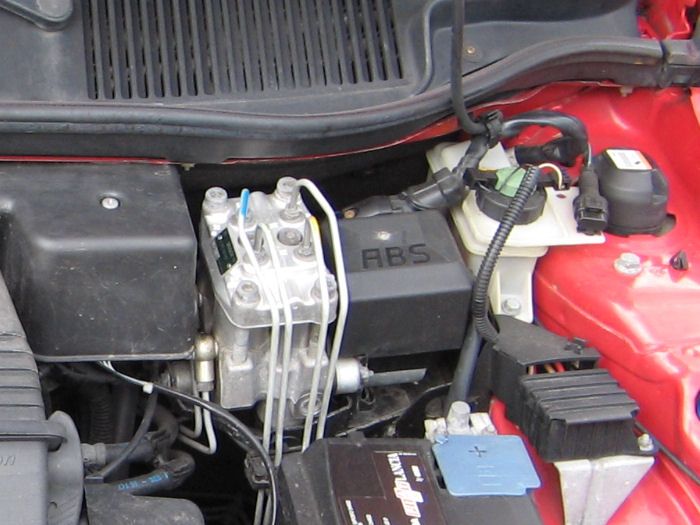
Photo: ABS system in Fiat Punto by Zoidy, Public domain, via Wikimedia Commons.
To get why anti-lock brakes felt so odd, you’ve got to picture what braking used to be like. When a wheel locks, it stops rolling and starts sliding. Sliding sounds like it should stop you fast, but on many surfaces it doesn’t. The tyre can lose grip, and you lose steering control at the same time. That’s the real problem. You can be pressing the brake pedal with everything you’ve got, turning the steering wheel, and the car still carries on in the same direction. That’s why older driving advice talked about “pumping” the brakes or doing a sort of rhythm with your foot: press, release, press, release. The goal was to keep the wheels rolling a little bit so they could still grip and steer. On a damp A6 heading down toward Stockport town centre, or coming off the Mancunian Way where traffic can stop dead for no reason, that skill really mattered. But it also meant you needed calm nerves and practice, because in a panic your body wants to stamp and hold. A locked-wheel skid can also flatten a spot on a tyre, and on older cars without fancy sensors, you might not know you’d done it until the steering wheel started shaking on the next drive. People also got used to a simple idea: “If I press harder, I stop harder.” That feels true in your bones. So when a system arrived that sometimes reduced brake pressure for a split second to keep the wheels turning, some drivers thought it was taking control away. In their heads it sounded like, “Why is my car letting go of the brakes when I’m telling it to stop?” That’s where the trust issue started.
The first tries: planes, British engineering, and a car most people never saw
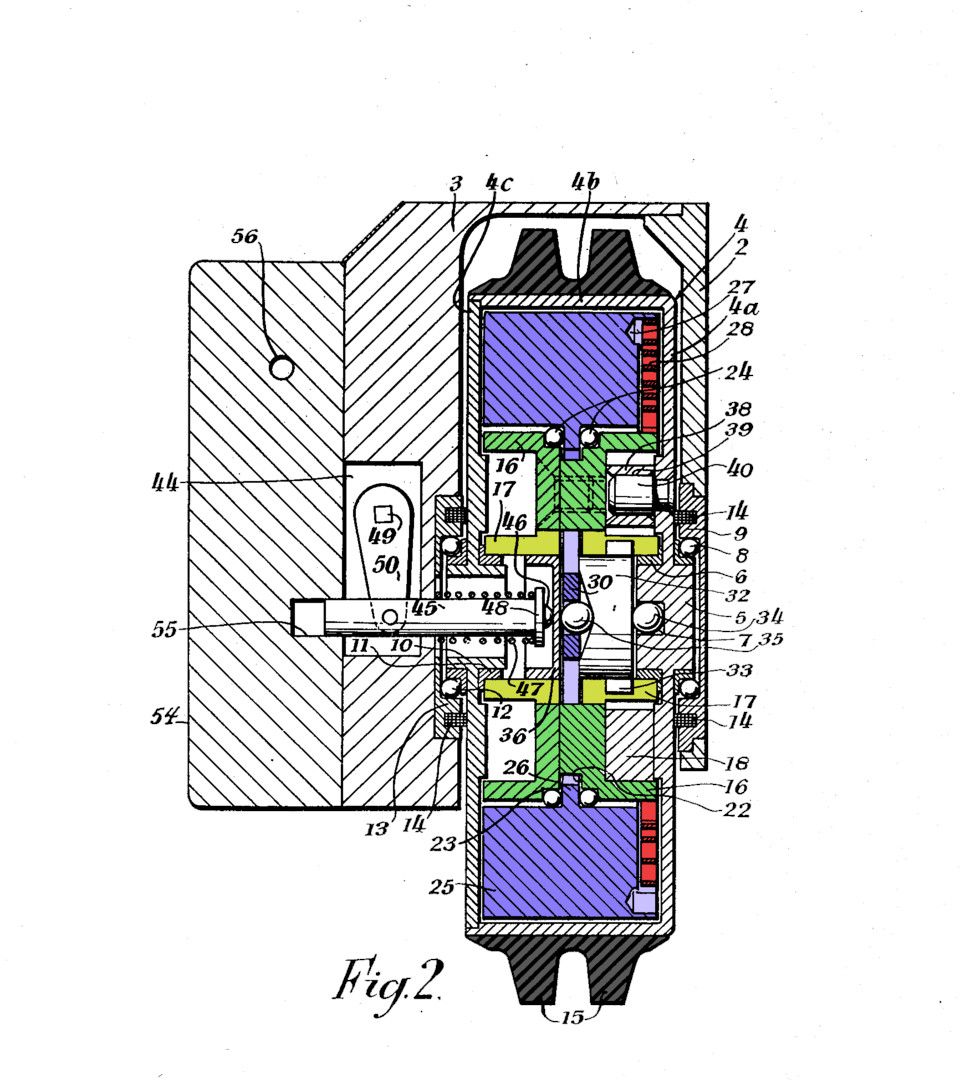
Photo: Automatic Braking Apparatus for Aircraft by Trevaskis Henry William (Dunlop Rubber Co Ltd), Public domain, via Wikimedia Commons.
Anti-lock brakes didn’t start with regular cars. One of the big early steps came from aircraft, because planes land fast, they’re heavy, and a locked wheel on a wet runway is a nightmare. Dunlop, a British company, made a mechanical system called Maxaret that was available for aircraft from 1952. It was built to stop wheels locking during heavy braking, especially on slippery surfaces. That idea later got tested on road vehicles, but early results were mixed and it wasn’t instantly a “stick it on every car” moment. Still, a few brave car makers tried. One famous example is the Jensen FF, made in England from 1966 to 1971, which used a Dunlop-Ferguson anti-skid setup based on that Maxaret thinking. Here’s the catch: the Jensen FF was rare, expensive, and most drivers never even sat in one. So the average person in Greater Manchester wasn’t thinking, “Oh yeah, anti-lock brakes, I know those.” They were still used to the old-school way: tyres squealing, wheels locking, steering going light, your heart trying to climb out of your chest. And because those early systems were mechanical, they didn’t feel like the modern “buzzing pedal” most people know now. So even though the idea existed, it hadn’t made its way into everyday car culture. It was like a cool trick you’d hear about down the pub, not something you’d count on when someone cut you up near the Stockport Pyramid.
1971: Chrysler tried a computer-brain brake, and people got nervous
The first time anti-lock brakes really pushed into the “normal car” space was in the early 1970s, and the story is a bit unexpected. In the United States, Chrysler offered a system called “Sure-Brake” on the 1971 Imperial, and it’s widely described as the first production car with a four-wheel computer-operated anti-lock braking system. The engineering work behind it got presented to the Society of Automotive Engineers by J. W. Douglas from Chrysler and T. C. Schafer from Bendix in 1971. That’s not a random little footnote either; it tells you Chrysler was serious about it, enough to bring it to the engineers’ big stage. But drivers? Drivers were another story. Picture someone stepping out of a big saloon car in 1971, jumping in an Imperial, and being told, “This car has a computer that helps your brakes.” Back then, “computer” sounded like something in a science lab, not something you wanted messing with your stopping. People already worried about reliability: if a normal brake system has a problem, you can see a leak or feel a spongy pedal. If a system has extra valves, sensors, and wiring, you start wondering what happens when one bit gives up. And because early anti-lock setups were expensive options, some people thought of them as fancy extras for rich drivers who wanted gadgets, rather than a safety must-have for everyone. Add the weird pedal feel and the noise, and you get this classic reaction: “Nah, I’ll stick with what I know.” Trust takes time, and early anti-lock brakes had to prove themselves on real roads, in real weather, with real humans doing silly human things.
1978: Mercedes-Benz and Bosch made it feel “normal”… eventually
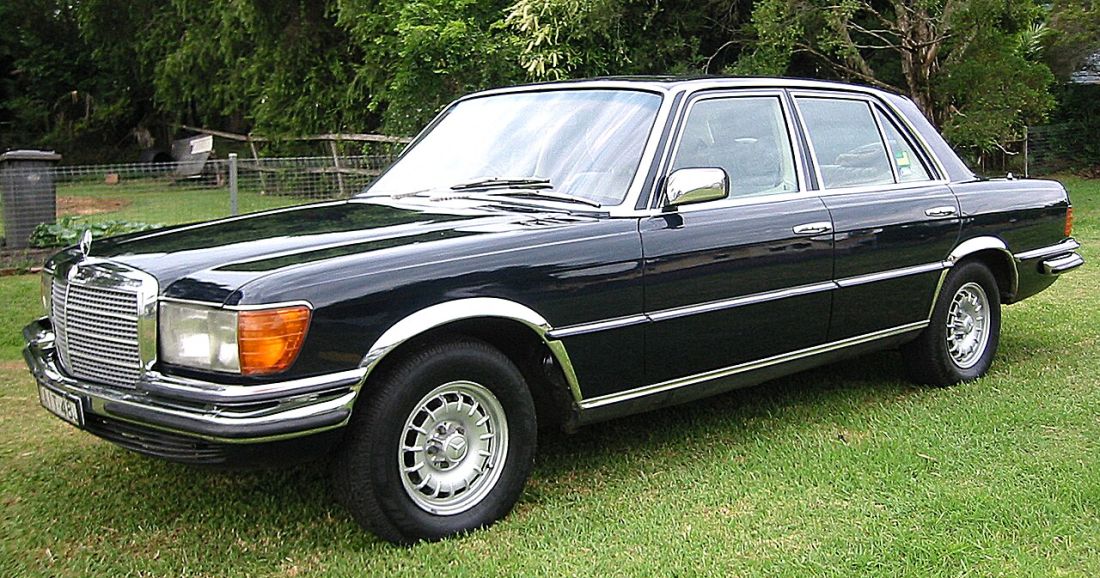
Photo: Mercedes Benz W116 by Bigka at English Wikipedia, CC BY-SA 3.0, via Wikimedia Commons
If you ask a lot of people where anti-lock brakes really took off, 1978 comes up again and again. Mercedes-Benz and Bosch showed the system to the press in Untertürkheim from 22 to 25 August 1978, and by the end of 1978 it was available in the Mercedes-Benz S-Class (the W116). Bosch also points to 1978 as the year it first launched anti-lock brakes onto the market as a supplier, working with car makers. This was a big shift, because it wasn’t a one-off clever idea. It was a system that a major brand put into a flagship car, and then other brands started following. Road & Track highlighted that Mercedes offered the first production car with an electronic anti-lock setup that could control all four wheels separately in 1978, which gives you an idea of how much people connect this moment with the “modern” version of the system. And that “modern” bit matters. The system could sense wheel speed, release brake pressure for tiny moments, then reapply it, over and over, quicker than any human foot could. It meant that in a full emergency stop, the car could stay steerable, so you could still aim the car away from danger instead of just sliding into it. But here’s the real-life part: getting drivers to accept the feel took time. If you’d been driving for ten years and your brake pedal suddenly buzzed like a phone on silent mode, you’d think something was wrong. Mercedes and Bosch could explain it, engineers could prove it, but the everyday “does this feel safe?” question had to be answered on wet roads, on icy mornings, and in those messy, sudden moments when you don’t have time to think.
So why didn’t drivers trust it straight away?
People don’t mistrust something because they’re stupid. They mistrust it because it clashes with what they’ve learned through their hands and feet. With anti-lock brakes, the biggest shock is the sensation. You press hard, and the brake pedal can vibrate or pulse. The Automobile Association in the United Kingdom tells drivers that this vibrating or “pulsating” feeling is normal, and you should keep steady pressure instead of pumping the brakes. Mazda says the same thing: anti-lock brakes pulse the brakes for you, so you keep firm, continuous pressure and focus on steering. Now, imagine you’re used to a smooth pedal. You stamp, it goes down, and that’s that. Then one day you press and it chatters back at you. Your brain reads that as “mechanical trouble.” And to be honest, on a lot of machines, vibration is a bad sign. So it was natural for people to panic. Another reason is expectations. Some drivers thought anti-lock brakes meant you’d always stop in a shorter distance, no matter what. That’s not how it works. It’s about control and keeping the wheels rolling so you can steer. On loose gravel or loosely packed snow, Mazda points out that anti-lock brakes can increase stopping distance, even though they still help you steer. That surprised people, and surprises can damage trust fast. There was also a pride factor. Good drivers in the old days learned “cadence braking,” that press-release rhythm, and some felt like a new system was taking away a skill they were proud of. Then there’s money. Early systems added cost, and if you pay extra for something, you want to feel a clear benefit right away. If your first experience is “why is my pedal shaking?” you’re not going to be a fan. Mix that with pub talk, half-true stories, and one mate swearing “my cousin’s got that brake thing and it’s rubbish,” and you can see why it took years for the trust to settle in.
How to use anti-lock brakes without panicking
This is the bit that saves people from doing the exact wrong thing in a scary moment. If your car has anti-lock brakes and you need an emergency stop, you don’t pump the pedal. You press the brake pedal firmly and keep the pressure there. The Automobile Association spells it out: press firmly, maintain pressure, expect that vibrating feeling, and keep steering smoothly where you want the car to go. Mazda backs that up and adds something that catches people out: anti-lock brakes can sound and feel rough because the system is pulsing the brakes automatically. So if the pedal buzzes, that’s not the car begging you to stop. It’s the car working. In real life, it helps to practise the “don’t lift” habit somewhere safe. An empty car park on a quiet day, away from people and trolleys, can teach your foot what the vibration feels like, so your brain doesn’t freak out later. And if you drive around Manchester and Stockport, you already know the roads can change mood in seconds: drizzle turns to proper rain, leaves collect near kerbs, diesel spills happen at roundabouts, and suddenly the surface is like soap. Anti-lock brakes help you keep steering control in those moments, but you still need tyres with decent tread and a sensible gap to the car in front. That’s the bit people forget. Anti-lock brakes don’t break the rules of grip. They just stop one mistake (locking wheels) from turning into a bigger mistake (no steering at all). Also, if the warning light for the braking system comes on, don’t ignore it and hope it’ll “sort itself out.” Brakes are one of those things where guessing is a bad plan. Get it checked, even if the car still seems to stop fine, because a fault can mean the anti-lock part isn’t there when you need it most.
Buying a used car around Manchester? Here’s how to check the brakes story
If you’re shopping for a used car in our area, you’re dealing with real-world roads. The stop-start traffic near the Trafford Centre, the steep bits as you head toward the Peak District, the wet nights around Stockport Viaduct, and the little side streets where someone can pop out without warning. So it makes sense to pay attention to braking, not just the paintwork and the screen in the dash. On a test drive, you can ask to do a safe, controlled firm stop (with space and no one behind you) to see if the pedal feels normal and the car stays straight. If the anti-lock system kicks in and you feel the pedal pulse, that’s expected in a hard stop; what you don’t want is warning lights, strange grinding every time you touch the brakes, or a car that pulls hard to one side. Mazda’s own guide reminds people that anti-lock brakes are there to help you keep control, but surfaces like gravel can still behave differently, so you want tyres and brakes in good shape for the roads you’ll drive. At Dace Motor Company, we check vehicles before sale and we do a vehicle history check too, which is about the car’s background like finance markers or insurance write-off markers. And if you’re looking at finance, we can point you toward a soft search that won’t hurt your credit score, which helps if you’re just exploring numbers first. We also talk a lot about what the car feels like, because safety systems are great, but you should be comfortable with them. If you’re moving from an older car to something newer, anti-lock brakes might surprise you the first time they activate. Better to learn that on a calm test drive near Greg Street in Reddish than on a rainy night on the M60. And one last thing: trust doesn’t come from reading a badge on the dashboard. It comes from getting what the car is doing and why. Once you get that, the weird pedal buzz turns from “something’s broken” into “good, it’s keeping the wheels rolling so I can steer.” That’s a much nicer feeling.