


The Hidden Purpose of the Dead Pedal in Cars
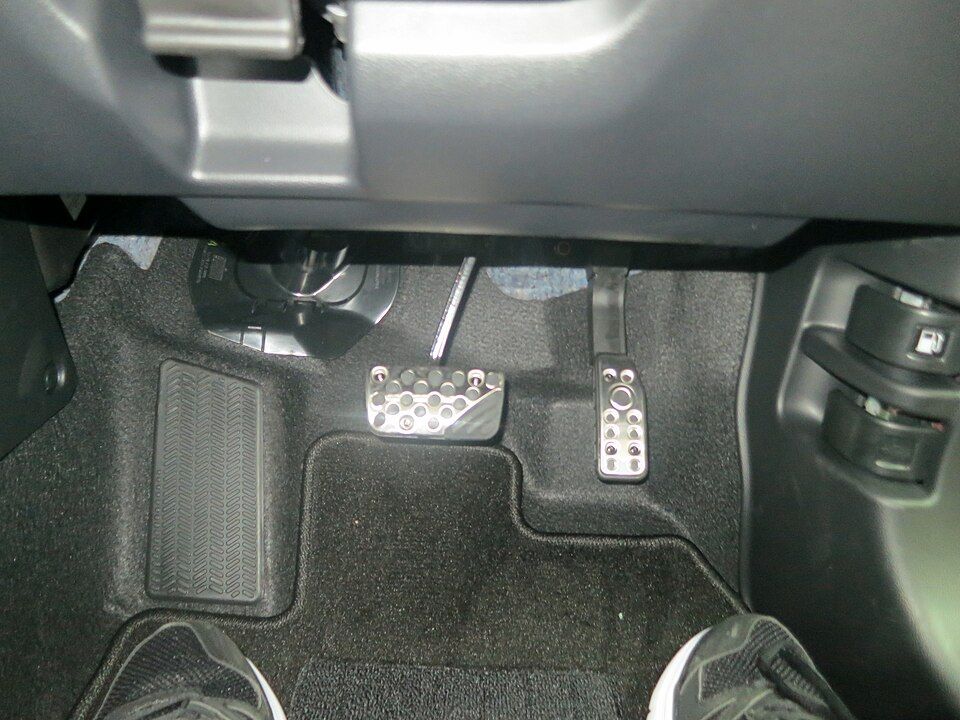
Photo: Pedals in 2019 Honda HR-V 1.8 RS by Bindydad123, CC BY-SA 4.0, via Wikimedia Commons.
You know that slanted bit of trim on the far left in the driver’s footwell? The one your left foot ends up on while your right foot’s busy doing the proper work? Loads of people notice it once, shrug, then forget it exists. And that’s funny, because that “dead pedal” (also called the left footrest) has a sneaky job. It’s there to help you stay steadier, calmer, and more in control, especially when the road gets lumpy, traffic gets stop-start, or you have to brake harder than you planned. At Dace Motor Company we see drivers of all sizes and ages trying different cars every day, and this one tiny detail changes how a car feels quicker than you’d think. It’s not a magic button. It doesn’t make the car faster. It won’t fix bad driving. But it does give your body a solid place to “lock in” so your hands and feet can be smoother. And smooth is what makes driving feel easy, even around busy bits like the M60, the A6 into Stockport, or the lanes that suddenly tighten up near Reddish. The dead pedal is like a quiet assistant. It’s there for comfort, yes, but also for control. It helps stop your left leg from floating about with nowhere to go, it can stop you leaning on the wrong pedal by accident, and it helps you brace without clenching your whole body like you’re on a rollercoaster. Sounds dramatic, but think about it: every time the car slows down, your body still wants to keep going. Every time you turn, your body wants to slide. The dead pedal gives your left leg a job in those moments. Not a loud job. Just a steady one.
So what is a “dead pedal” really?
The dead pedal is a fixed footrest to the left of the clutch in a manual car, or to the left of the brake in an automatic. It doesn’t move, it doesn’t trigger anything, and it’s not connected to the engine or the brakes. That’s why people started calling it “dead.” It’s a pedal-shaped place for your foot, with no mechanical action behind it. And yes, the name makes it sound pointless, which is unfair. The best way to picture it is this: your right foot has a full-time job, swapping between accelerating and braking. Your left foot… well, in an automatic it can feel unemployed. In a manual it’s busy with the clutch, but only some of the time. So the footrest is the “parking space” for your left foot. Wikipedia puts it plainly: it’s there for ergonomic reasons and to keep your foot in a consistent position, especially in manual cars. There’s also a bit of history tucked in there: early cars like the Ford Model T didn’t have a dead pedal built into the layout, and pedal setups were very different back then. Cars got faster, tyres got stickier, roads got busier, and drivers started needing better support so they weren’t sliding around on the seat every time they turned into a roundabout. That’s the moment this “boring” footrest started to make more sense. And it’s why you’ll see it in loads of modern cars, from little city runabouts to big family sport utility cars. The angle matters too. A flat patch of carpet isn’t the same. The slant lets your foot rest naturally without your ankle doing a weird bend for miles. If you’ve ever been stuck crawling along the M602 into Manchester, you’ll know your legs can start feeling fidgety. The dead pedal is one of those small design choices that tries to keep you relaxed while you’re dealing with everyone else’s lane changes.
It’s a brace for your body, not a decoration
Here’s the hidden bit people miss: the dead pedal is basically a brace point. Like when you’re standing on a bus and you spread your feet a bit so you don’t topple when the driver hits the brakes. Same idea. When you press your left foot into that footrest, your body stops sliding forward and sideways so much. That helps your arms stay looser. And that helps your steering stay cleaner. Think about a tight turn, like the kind you get on older Stockport roads where the lane markings look like they were painted in a hurry and the kerb feels close. If you’re not braced, your body shifts, you grip the wheel harder, and your steering can get a bit jerky. You don’t do it on purpose. It just happens. With a steady left foot pushing lightly into the dead pedal, your hips stay planted, your shoulders stay calmer, and you don’t feel like you’re hanging off the steering wheel. That matters even more during quick changes: brake a bit, turn, then straighten up. Without a brace, you end up doing tiny “catch-up” moves with your hands because your body moved first. With a brace, your hands can do their job without also being your seatbelt. And this isn’t just a comfort thing. It affects control because the more stable you are, the easier it is to make small, accurate movements. Small movements are what keep a car smooth. Big, panicked movements are what make passengers grab the door handle and go quiet. Also, bracing with your left leg can help you keep a steady position over bumps. Hit a rough patch, your right foot can accidentally change pressure on the accelerator if your whole leg wobbles. A solid left brace reduces that “whole body wobble.” It’s subtle. But after ten minutes, you’ll feel it. After an hour, you’ll really feel it.
Comfort sounds boring… until your leg starts aching
Let’s face it, comfort doesn’t sound exciting. But comfort is what keeps you sharp. A tired leg makes your brain tired, because you’re constantly shifting position trying to get comfy again. The dead pedal gives your left leg a natural resting posture, so you’re not holding it up or twisting your hip. Wikipedia calls out fatigue prevention and keeping the foot aligned, especially in manual cars. That alignment bit is bigger than people think. If your left foot has a “home,” you’re less likely to hover it near the clutch in a manual car. Hovering turns into resting your foot on the clutch without noticing. That can wear parts out and it can make the car feel odd. So the dead pedal encourages better habits without you having to “remember” anything. In an automatic, the comfort benefit is more obvious. Your left foot just needs somewhere sensible to go so your knee isn’t stuck in the air like you’re doing a slow motion march. And comfort isn’t the same for everyone. Taller drivers might need the dead pedal further out and higher up. Shorter drivers might notice it if it pushes their knee too wide. That’s why the shape of the footwell matters. If you’ve ever sat in a car where the footrest is tiny, slick, or too upright, you’ll know it can feel pointless. But get in one where it’s nicely angled and has some grip, and your leg relaxes straight away. You can spot it on a test drive too: if, after ten minutes, you haven’t thought about your left leg once, that’s a good sign. If you keep moving it around like you’ve got nowhere to put it, the footrest isn’t doing much for you. And on longer runs-say heading out past the Peak District or across to see family-those little comfort wins add up. Less fidgeting means more attention on the road. Simple as that.
Why it helps in those “oh no” moments
Now for the part nobody likes to think about: sudden stops and near-misses. If a car in front slams the brakes, you want your right foot to go straight to the brake and press it properly. You don’t want your body sliding forward so your foot lands weird, or your knee bumps the steering column, or you mash the brake harder than you meant to because you’re bracing with the wrong leg. A stable left foot can help keep your body position consistent so your right foot does the right thing. There’s also a separate issue called pedal misapplication, which is a fancy way of saying “wrong pedal, wrong time.” A research report from the Transport Research Laboratory in the United Kingdom looks at driver and vehicle factors linked to these pedal errors. We’re not saying a dead pedal “prevents” mistakes like that by itself, because life isn’t that neat. But giving your left foot a dedicated resting place keeps it away from the working pedals. It reduces foot wandering. It helps you build a repeatable body position. And repeatable is good under stress, because stress makes people sloppy. This is also where people bring up left-foot braking, because they’ve seen race drivers do it. Left-foot braking is a real technique used in motorsport, and the basic idea is that your left foot uses the brake while the right stays on the accelerator. On public roads though, that’s not what the dead pedal is for. Most everyday drivers haven’t trained their left foot for braking, and the risk is pressing too hard or pressing the wrong thing. So the safer habit for normal driving is: right foot does brake and accelerator, left foot rests on the dead pedal unless you’re using the clutch in a manual. That way your feet aren’t “competing,” and your body stays consistent. You’ll feel calmer too. And calm drivers make better decisions, especially in busy Manchester traffic where somebody will, without fail, change lanes right in front of you at the worst moment.
Crash safety and the weird story your feet can tell
This bit gets a little serious, but we’ll keep it clear. In a crash, the footwell area can deform. Pedals can move. The floor can intrude. That’s why engineers spend so much time thinking about what happens around your feet. A paper from the International Research Council on the Biomechanics of Injury looked at pedal use and foot positioning during emergency braking, and it links driver foot and ankle injury risk to what’s going on in the footwell during a crash. A separate review by B. N. Fildes looks at lower limb injuries and talks about footwell intrusion and how it connects with loads on the foot. And research shared through the Society of Automotive Engineers has found that footwell intrusion and pedal factors are tied to lower limb injury risk in frontal collisions. There’s also technical work from the United States National Highway Traffic Safety Administration that talks about producing guidelines for footwell, pedal/footrest, and restraint system design, because different footwell layouts change how the lower leg moves and loads up in a crash. What does that mean for you, sitting in your car near Edgeley or Eccles? It means the space around your feet is not an afterthought. The dead pedal sits in that space, and its placement is part of the whole footwell design. Now, we’re not going to claim “dead pedal equals safer crash,” because safety is a full system: seatbelts, airbags, structure, pedals, loads of things. But it’s fair to say this area is studied heavily, and footrests are part of how engineers think about leg position and bracing. Also, there’s a normal driving angle to this: if your left foot has a stable home, you’re more likely to sit in a consistent posture. Consistent posture helps you keep your seat position sensible (not too close, not too stretched), which is good for control. You can’t plan for everything on the road, but you can set yourself up to react better. A dead pedal is one small piece of that setup.
How to use the dead pedal without thinking about it too much
Right, practical stuff. If you’re in an automatic, your left foot belongs on the dead pedal. Not hovering over the brake. Not tucked under the seat like you’ve lost it. Just resting there, with your heel down and your foot angled so your knee feels relaxed. You don’t need to stamp on it like you’re pushing a wall over. Light pressure is enough to brace your body when you need it. Think “steady,” not “tense.” If you’re in a manual, your left foot should move between the clutch and the dead pedal. Press clutch, shift, then back to the footrest. That’s it. The habit you want to avoid is keeping your foot resting on the clutch pedal when you’re cruising. It’s easy to do without noticing, especially in slow traffic where you’re changing gears a lot. The dead pedal gives your foot somewhere else to go, so you’re less tempted. Also pay attention to footwear. Big chunky shoes can snag. Wet soles can slip. If the footrest is smooth plastic and your shoe is soaked from a Manchester downpour, your foot can slide when you try to brace. So on a test drive, do a couple of gentle turns and one firm brake in a safe spot, just to see if your left foot feels planted. Another small thing: seat position changes dead pedal usefulness. If your seat is too far back, you’ll stretch your left leg straight and the footrest becomes a reach. Too close, and your knee bends too much, and your hip can feel cramped. Aim for a slight bend in your knee with your foot on the dead pedal, and make sure you can still press the brake smoothly with your right foot without locking your leg. If you get that right, the dead pedal turns into something you use without realising. Which is the best kind of car feature, to be honest.
What to look for on a test drive around Stockport and Manchester
Next time you’re trying a used car, don’t ignore the footrest. Give it the same attention you give the steering wheel feel or the seat comfort, because it affects both. Start by just sitting still and placing your left foot on it. Does your knee feel forced wide? Does your ankle sit at a weird angle? Is the surface grippy enough? Then, on the move, pay attention in three moments: creeping traffic, sharper turns, and braking. In creeping traffic (think A6 into Stockport at the wrong time of day), you’ll notice if your left leg keeps searching for a spot. In sharper turns (some of those bends and roundabouts near Reddish can do it), you’ll notice if you brace naturally or if you end up hanging on the wheel. And with braking, you’ll notice if your body stays steady or if you slide forward and tense up. Different cars get this wrong in different ways. Some have a tiny footrest that’s basically decorative. Some have one that’s placed too far forward so you can’t use it without stretching. Some have decent placement but no grip. Once you start noticing, you’ll wonder how you missed it before. And if you’re comparing a few cars back-to-back, it becomes a quick “comfort shortcut” to help you pick. At Dace Motor Company, across our Stockport and Manchester sites, we see drivers surprised by how different the same class of car can feel just because of little layout choices like this. You don’t need to overthink it. Just notice how your body feels after ten minutes behind the wheel. If you feel settled, that’s a good sign. If you feel like you’re bracing in random places-heel on the carpet, knee against the console, gripping the wheel too hard-then the footwell layout isn’t helping you. And on real roads around here, with real traffic, help is welcome.