


The Forgotten History of Solar-Powered Cars
You know how some ideas sound futuristic, but when you look closer, they’ve actually been around for ages? That’s what solar-powered cars are like. These days, it’s easy to think of Tesla or Toyota’s hybrid systems and imagine solar panels as a “new” trend, but truth is, the idea of running a car on sunshine goes back a lot further than most people realise.
At Dace Motor Company, we’ve spent 25 years surrounded by all sorts of cars-used cars of every shape and size-and honestly, learning about the early solar-powered ones makes you see modern vehicles in a completely different light. It’s like uncovering a secret side-story to motoring history that doesn’t get enough credit.
A spark of sunlight in the 1800s
The story starts in the late 1800s. Not many people know this, but the technology that makes solar cars possible actually began long before the first car even existed. In 1876, two scientists named William Adams and Richard Day discovered that when light hit a special material called selenium, it created a tiny electric current. They didn’t have solar panels or batteries or anything like that-just an experiment-but that’s where the spark came from.
Fast-forward about 80 years. By the 1950s, the world was getting excited about space travel, satellites, and new inventions. In 1955, a General Motors engineer named William G. Cobb showed off something incredible at a car show in Chicago. It was called the Sunmobile-a small model car, about the size of a loaf of bread, powered by sunlight hitting 12 selenium solar cells. No petrol, no plug, just sunshine.
Of course, it wasn’t a car you could actually sit in or drive through Stockport with, but it marked a big first: someone had finally made a vehicle that moved using the light of the sun. People didn’t realise it then, but that tiny wooden model was the start of an idea that engineers would keep chasing for the next 70 years.
Trying to make it real
After that first spark, engineers and tinkerers all over the world started asking: could a real, full-size car run on sunlight?
In 1976, in the UK, a man named Alan Freeman built one of the first solar-powered cars you could legally drive on the road. It was a funny-looking three-wheeler, half-bike, half-car, and powered by a mix of sunlight and pedals. Imagine that trundling through the hills around Stockport on a rare sunny day-it’d definitely turn heads. Freeman’s invention didn’t revolutionise the car market, but it proved something important: solar power could actually move a road-worthy vehicle, even in our rather cloudy part of the world.
Then came one of the first major breakthroughs: 1982’s “The Quiet Achiever.” This Australian-built car made history by crossing an entire continent-4,000 km from Perth to Sydney-powered solely by sunlight. Designed by Larry and Garry Perkins and driven by Hans Tholstrup, it managed the whole trip in under 20 days. That’s no small feat considering how rough Australia’s terrain is. It was like a message to the world: “This isn’t just a dream. It actually works.”
The race for the sun begins
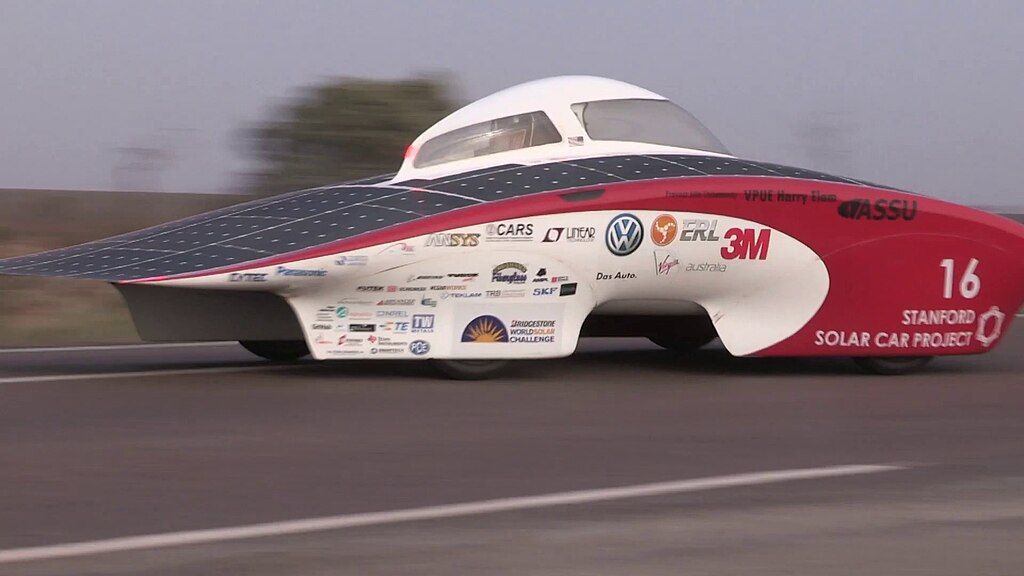
Photo: Side view of the Standord Luminos car at the 2013 World Solar Challenge by Stanford University's Precourt Institute for Energy, CC BY 3.0, via Wikimedia Commons
Once people realised solar cars could work, even if imperfectly, competition kicked in. In 1987, Australia launched the World Solar Challenge, a 3,000 km race from Darwin to Adelaide designed specifically for solar-powered cars. Since then, it’s become the big global testing ground for solar vehicle innovation.
And here’s where the story really picks up pace.
University teams from around the world began joining-Japan, the Netherlands, the USA, and more. These weren’t big car manufacturers but students and professors, designing from scratch. Their cars looked more like spaceships than anything you’d see at Dace Motor Company, with ultra-flat bodies, bubble cockpits, and wide solar panel surfaces.
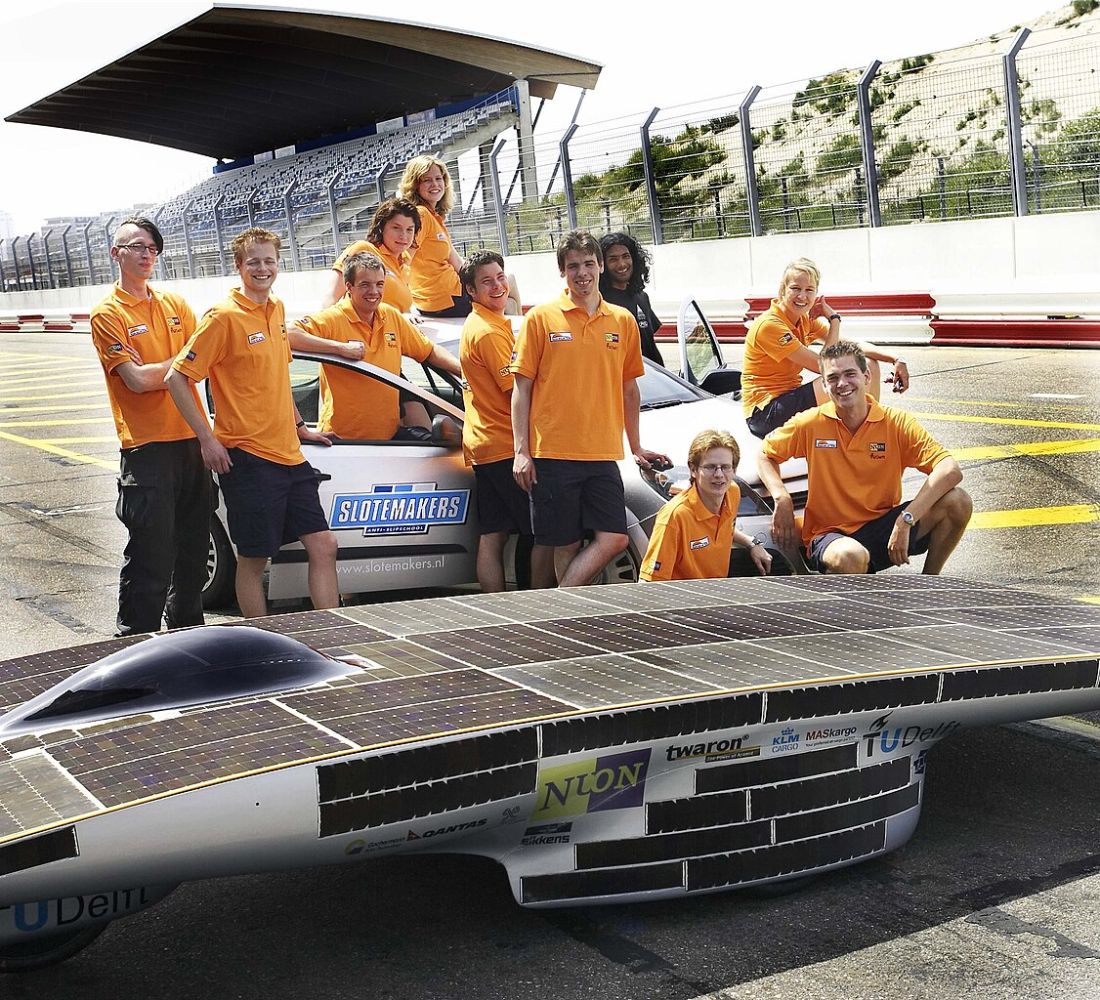
Photo: The Nuon Solar Team at the Zandvoort racing track during the presentation of Nuna 3 to the press (by Nuon Hans-Peter van Velthoven, CC BY-SA 2.5, via Wikimedia Commons).
The Nuon Solar Team at the Zandvoort racing track during the presentation of Nuna 3 to the press Left to right: Oskar van Dijk, Sander Zijlstra, Job van de Kieft, Laura Bronkhorst, Anne-Marie Rasschaert, Jeroen Bink, Barend Lubbers, Vinay Ramnath, Frank van den Hoogen, Véronique Duponselle and Jorrit Lousberg. In the front: Nuna3
By 2005, teams were hitting average speeds of 100 km/h, powered only by sunlight. One of the most famous of these was Nuna 3, built by Delft University of Technology in the Netherlands, which won that year’s race. Students used lightweight materials and high-efficiency panels, setting new records for both speed and distance.
But then came 2009, when a Japanese team completely stole the show.
The Tokai Challenger
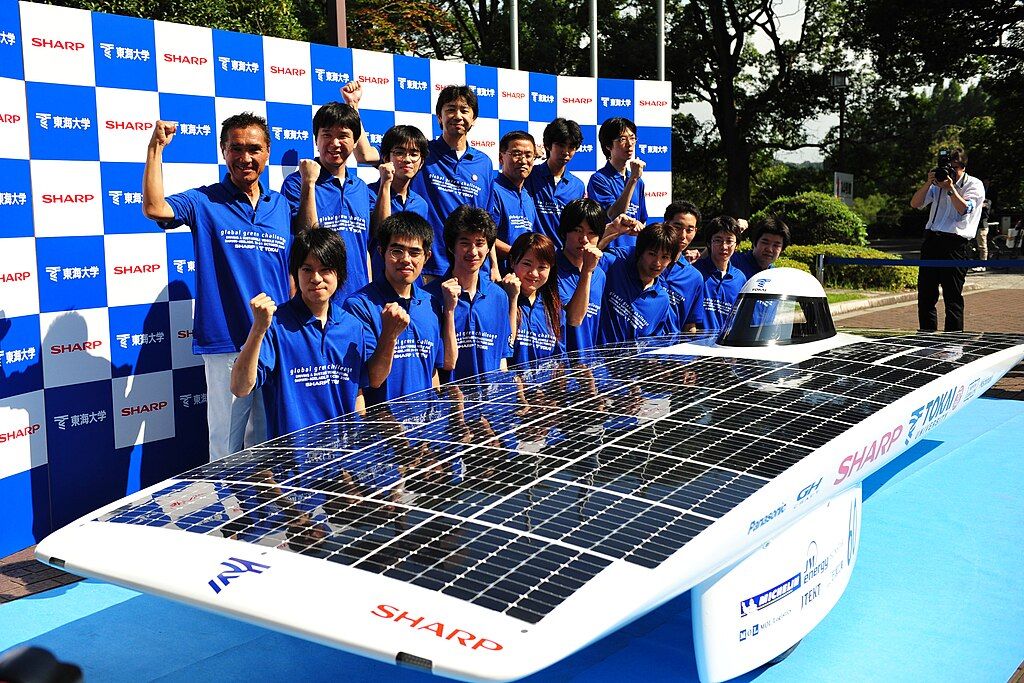 Photo: Developed Tokai University's solar car "Tokai Challenger" for Global Green Challenge by Hideki KIMURA, CC BY-SA 3.0, via Wikimedia Commons.
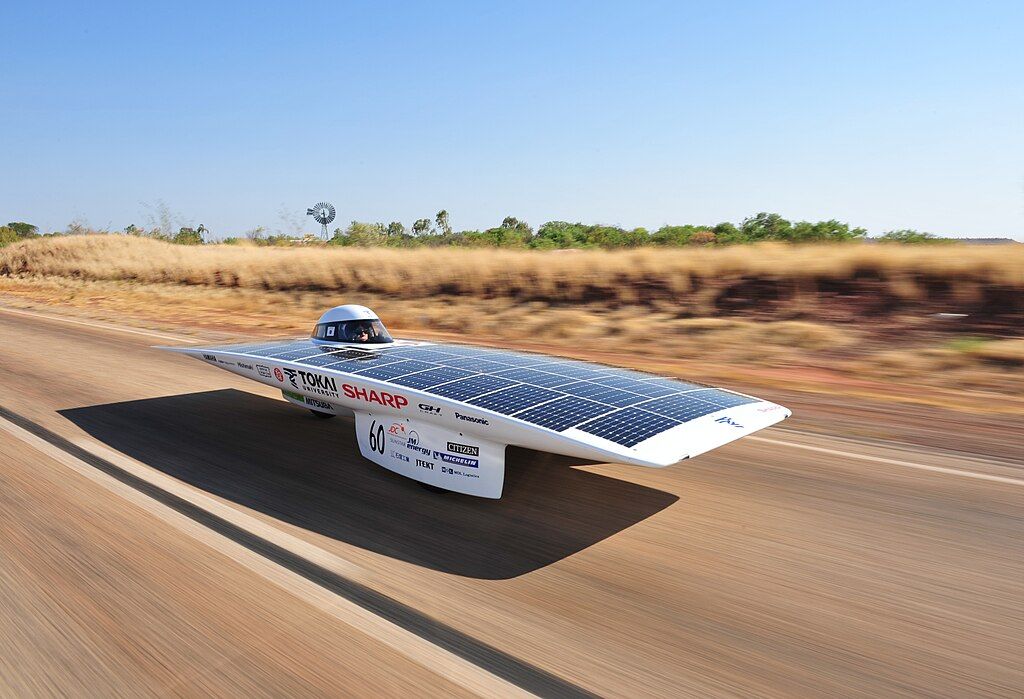
In 2009, Tokai University in Japan entered the Global Green Challenge (previously known as the World Solar Challenge) with their solar car, the Tokai Challenger.
Now, this car wasn’t just impressive-it was groundbreaking. Led by Professor Hideki Kimura, the Tokai team built a car that looked like something straight out of science fiction: a sleek carbon-fibre body, covered in space-grade Sharp solar cells, the same kind used on satellites. These panels could soak up sunlight with amazing efficiency.
The race itself is brutal: 3,000 km through the Australian Outback, from Darwin to Adelaide. Think long, scorching roads, windswept plains, and temperatures that make the bonnet of your car hot enough to fry an egg.
Despite all that, the Tokai Challenger won the race outright. It covered the entire distance in 29 hours and 49 minutes of driving time over four days, with an average speed of 100.5 km/h-powered only by sunlight. Not bad for something that didn’t burn a drop of fuel.
The car’s entire surface was built to capture energy efficiently, and because it weighed just around 150 kg, it didn’t need much power to keep moving.
They didn’t stop there either. The Tokai team came back in 2011 and won again, beating top-ranked teams like MIT and Delft. Every year they kept refining the design-lighter body, better battery, smarter control systems.
It might sound like a race for nerds, but these innovations directly influenced how modern electric cars became more efficient. The way EVs today manage drag, battery drain, and regenerative energy comes partly from these early solar experiments.
You could say the Tokai Challenger was the Formula 1 of sunlight. And honestly, if someone drove it through the Peak District, it would still turn heads today.
Why solar cars haven’t taken over (yet)
So if this all works, why aren’t we all driving solar cars down the M60 by now?
Simple: sunlight isn’t easy to rely on. You can have the most efficient panels in the world, but if it’s cloudy (hello, Manchester), that’s a big drop in energy. Solar cars work brilliantly in the Australian desert-not so much in a Stockport drizzle.
Plus, the amount of energy a car needs is huge. You’d have to cover it in solar panels to get enough power, and that’s tricky without making it awkward or expensive. Most modern attempts use solar panels to assist charging rather than completely replace it.
And that’s still valuable-think of a hybrid or electric car using solar energy to keep the battery topped up while parked. That’s the same concept, just on a smaller, more practical scale.
There’s also the cost. The Tokai Challenger used space-grade cells, the kind that cost thousands per square metre. No chance that’s ending up on your average used Ford Fiesta anytime soon.
Still, all this experimentation paved the way for better batteries, smarter energy management, and lightweight materials-all of which benefit modern cars, even the petrol ones.
Concept cars and experiments
Over time, carmakers started to take notice. In 2006, a company called Venturi unveiled the Astrolab, a futuristic-looking solar hybrid with sleek panels across its body. It never became a production car, but it made people realise that solar integration could actually look stylish.
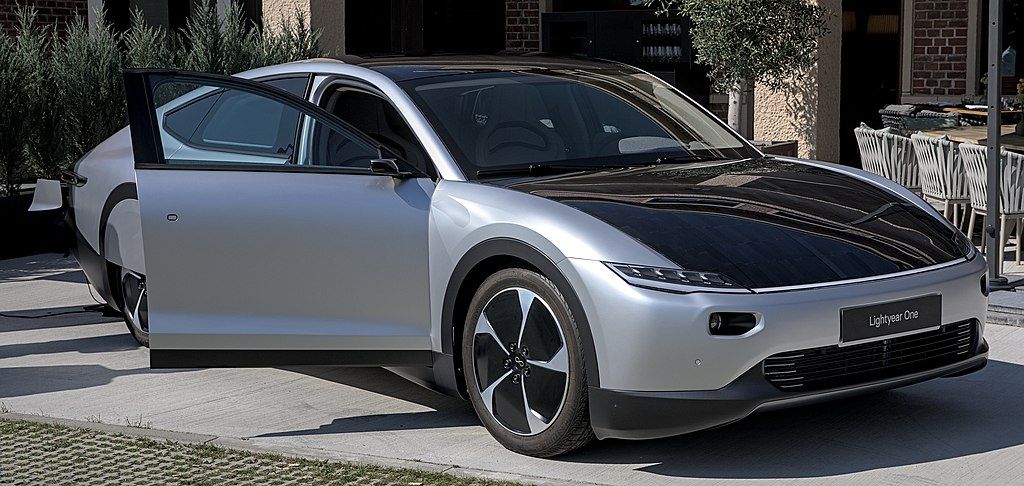
Photo: Lightyear One in Motorworld Munich by Alexander Migl, CC BY-SA 4.0, via Wikimedia Commons
Then came projects like the Lightyear One and Sono Motors’ Sion, both trying to bring solar-assisted driving to real customers. These cars use panels to extend range rather than replace charging.
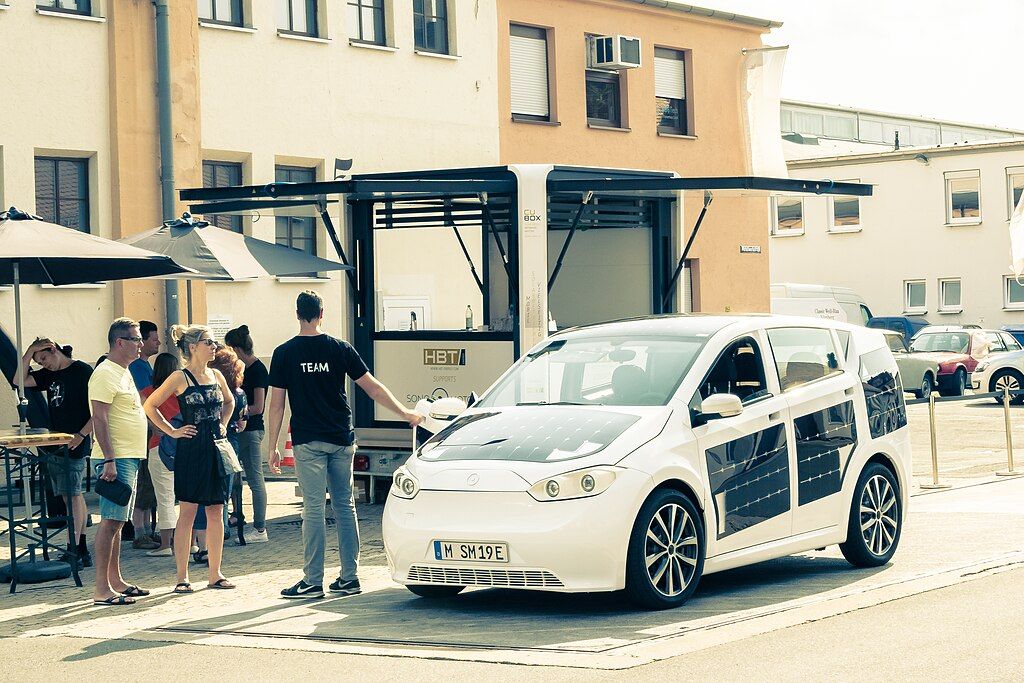
Photo: The team from the Cleanelectric Podcast tests the solar car "Sion" by Sono Motors in Nuremberg by Jakob Härter, CC BY-SA 2.0, via Wikimedia Commons.
It’s the same story everywhere: slow, steady progress. You don’t notice it happening year by year, but one day you’ll wake up and realise, “Wait, my electric car’s roof actually helps charge the battery!”
Lessons that still matter today
What’s interesting about this forgotten history is how many lessons it still teaches us now.
For one, innovation doesn’t happen overnight. It took over a century for the idea of sunlight-powered travel to become even halfway practical. That’s kind of comforting, really-progress doesn’t always look dramatic, but it adds up.
It also reminds us that new tech doesn’t have to replace old tech instantly. Look at cars around Manchester or Stockport right now-you’ll see petrol, diesel, hybrid, and electric all sharing the same road. Maybe in another 20 years, you’ll see solar-assisted EVs joining them too.
At Dace Motor Company, we pay attention to all these shifts because they shape the used-car market of tomorrow. The electric and hybrid cars on our lots today were the experimental tech of yesterday. And that’s exactly how solar tech will eventually fit in.
A few thoughts closer to home
Let’s be honest, Manchester weather isn’t exactly what you’d call “solar-friendly.” But that doesn’t mean solar-car ideas don’t matter here. Even small panels can help with things like climate control or battery management while parked.
If you’ve ever tried starting your car after leaving it for a few days and found the battery weak-that’s where a tiny solar-panel assist could help. The same principle that powered the Tokai Challenger across the Australian desert could one day save you a jump-start on a frosty morning in Stockport.
And it’s nice to think that the quiet revolution in solar technology could benefit used-car buyers down the line. Imagine a pre-owned electric car that charges a bit of its battery each time it sits in daylight-no extra cost, just smart design working for you.
A look back through time
Let’s line up some key moments, just to appreciate the road this idea has taken:
- 1876 - William Adams and Richard Day discover that light on selenium makes electricity.
- 1955 - William G. Cobb builds the first solar model car, the Sunmobile.
- 1976 - Alan Freeman builds a UK road-legal solar-pedal car.
- 1982 - The Quiet Achiever crosses Australia powered by sunlight.
- 1987 - The first World Solar Challenge race is held.
- 2005 - Nuna 3 wins, setting records for solar speed.
- 2009 - Tokai Challenger from Japan wins the Global Green Challenge, averaging over 100 km/h across Australia.
- 2011 - Tokai wins again, pushing solar performance even higher.
- 2006-Present - Concept cars like Venturi Astrolab and Lightyear One bring solar ideas closer to road reality.
That’s nearly 150 years of people tinkering with sunlight and cars. Makes you look at the roof of a car differently, doesn’t it?
What it means for us today
You might be reading this while thinking about your next car-maybe something sporty, maybe a family car, maybe an electric one. Whatever it is, all these inventions eventually trickle down into the vehicles you’ll actually drive.
The solar-car experiments helped shape better batteries, smarter electronics, lighter materials, and more efficient motors-all things that make today’s cars safer, cleaner, and cheaper to run.
So the next time you’re wandering around one of our Dace showrooms-whether it’s Greg Street in Reddish or Buxton Road in Stockport-take a look at those electric and hybrid options. Every one of them carries a bit of that solar-car DNA, even if you don’t see it.
The quiet reminder
It’s easy to forget how long it takes for ideas to catch on. Solar-powered cars have been through 150 years of trial and error, breakthroughs and dead ends. But that’s how progress works.
The Tokai Challenger didn’t just win a race-it showed what’s possible when people mix patience, creativity, and a little bit of sunlight. That same spirit is what keeps the whole car industry moving forward, whether it’s in Tokyo or Stockport.
And who knows? Maybe one day you’ll walk into Dace Motor Company and see a used solar-assisted car sitting next to the Audis and BMWs. You’ll know then that the “forgotten” history wasn’t forgotten at all-it was just warming up.