


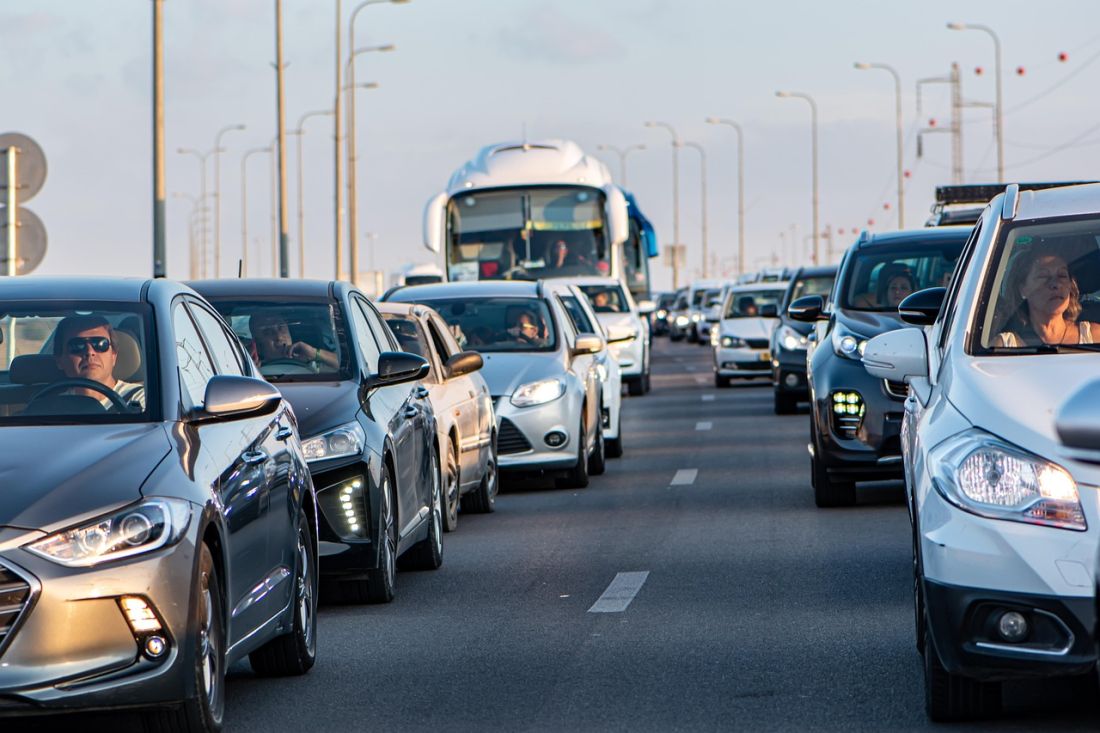
The First Traffic Jam in History
At Dace Motor Company, we spend a lot of time thinking about cars, roads, and the little dramas that play out between one set of traffic lights and the next. So here’s a fun question: when did the first traffic jam happen? You might picture a row of old motor cars coughing smoke somewhere in Edwardian London, or maybe a black cab stuck by Parliament. But the truth is messier, and way more fun than that. There isn’t one neat moment where someone rang a bell and said, “Right, this is the first one.” What the history points to is something more human. The jam came long before engines did. Long before anyone worried about petrol, parking apps, or whether they’d picked the wrong lane. If you think about a traffic jam as too many people trying to use the same bit of road at the same time, then the story goes all the way back to ancient Rome. That city had packed streets, carts, wagons, animals, shoppers, builders, officials, and people trying to squeeze through tight spaces built for a place that had grown huge and noisy. Sound familiar? It should. Swap the wagons for hatchbacks, the horses for diesel vans, and the sandals for school shoes, and you’re halfway to a rainy afternoon crawling through town. Let’s face it, the feeling of going nowhere while everyone around you looks annoyed is older than the modern car by a very long way. And that’s really the heart of it. The first traffic jam in history was probably not a car problem at all. It was a people problem, a city problem, and a too-many-things-in-one-place problem. Historians and transport writers point to ancient Rome as one of the earliest clear cases of city traffic becoming such a headache that the people in charge had to step in and control it.
Rome had the sort of jam you’d recognise straight away
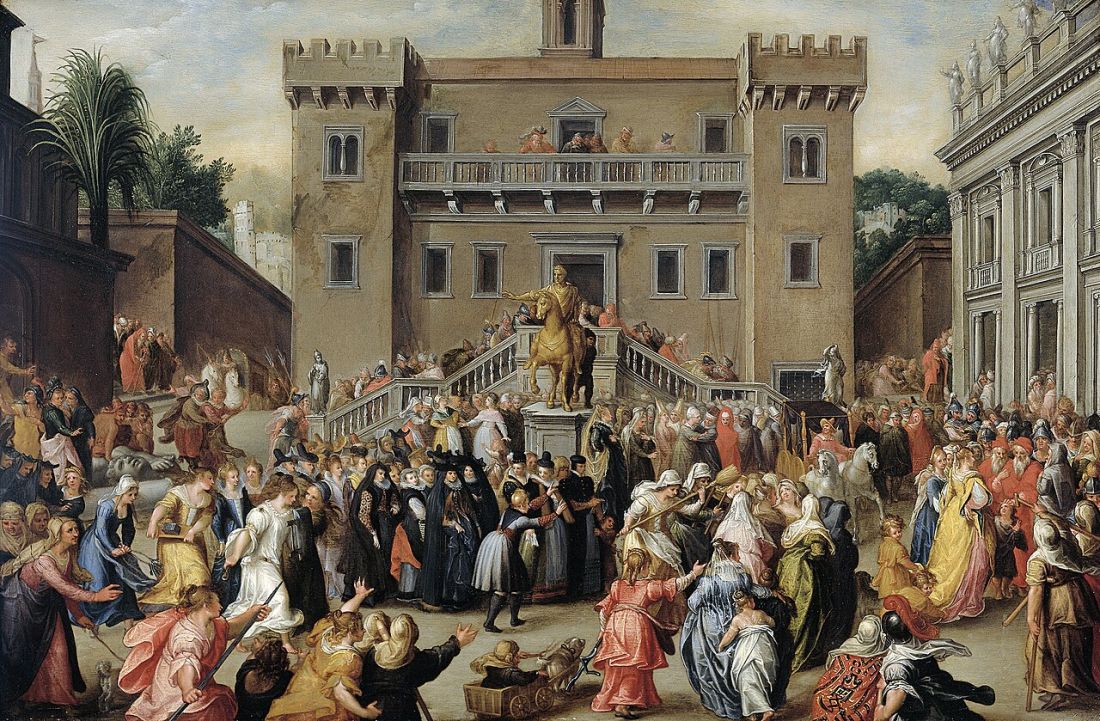
Photo: Women from various countries and eras are seen storming the Capitol in ancient Rome in protest against a proposed ruling that would henceforth allow men to have two wives (painting by Pieter Isaacsz: "The Women of Rome Gathering at the Capitol", CC0, via Wikimedia Commons).
The Roman case is the one that really sticks, because it feels so close to what we know now. We’re talking about a city that was huge for its time, packed with business, politics, trade, gossip, ceremony, and daily chores. Goods had to move. People had to move. Animals had to move. And all of that had to happen on streets that were not built for endless smooth flow. By the first century before Christ, the problem had got serious enough that Julius Caesar banned wheeled traffic from Rome during the daytime. Think about that for a second. A ruler of one of the most famous cities in history looked at the streets and basically said, “No, this is getting out of hand.” That is such a modern move it’s almost funny. A major source on road traffic history says congestion was part of city life as early as Roman times, and that bad road layouts pushed traffic from many directions into central crossing points. Another museum source adds a vivid detail: private vehicles were kept off the streets for the first ten hours of daylight, which meant business deliveries shifted into the night. So yes, while nobody in Rome was tapping a steering wheel and muttering about being late for football training, they were living with a version of the same old issue. Too many wheels. Too little room. Too much urgency. And just like now, once a city gets busy enough, the roads stop being just roads. They become negotiation spaces, bottlenecks, arguments, and waiting rooms under open sky. To be honest, that’s why Rome feels like such a strong answer to the question. It may not be the first jam we can prove with a photo or a newspaper headline, but it is one of the earliest well-backed examples of traffic getting bad enough that leaders made rules to cut it down. That matters, because it tells us the traffic jam did not arrive with the motor car. The motor car just gave an old problem a louder engine and a new paint job.
Why Rome got clogged so badly in the first place
The easiest way to picture Roman congestion is to stop thinking of the past as calm and slow. It wasn’t calm. Big cities never really are. Rome was busy in the same way Piccadilly can feel busy on a Saturday, with people crossing, stopping, hauling stuff, getting in each other’s way, and all of it happening at once. The streets were narrow in many places. The city had grown over time, so not every route made clean sense. And the traffic itself was mixed. You didn’t just get one kind of road user moving at one speed. You got carts, carriages, pedestrians, animals, work crews, public business, private business, and ceremonial traffic all sharing the same cramped patch. Britannica points out that one big cause of jams, then as now, was city planning that funnelled traffic from all sides into central crossing points. That little line says a lot. A road network can look fine on paper and still turn into chaos the minute people try to use it all at once. We’ve all been there. You edge forward, someone blocks the gap, someone else tries to squeeze through, and suddenly nobody’s moving. That basic pattern is ancient. A Cambridge chapter on transport in Rome says congestion in the city’s narrow streets had become a recognised problem by the middle of the first century before Christ. And a Penn Museum piece paints the picture even more clearly by showing how daytime restrictions pushed deliveries into the dark hours. Imagine that. Your city is so clogged that the answer is, “Fine, shift the wagons to night-time.” It’s a bit like saying, “Best do the big shop after the rush,” except on a city-wide scale. So the Roman “first traffic jam” was not one single frozen moment. It was a whole pattern of hold-ups, slow movement, and jammed crossings that got bad enough to change daily life. That’s why the story still lands. The roads may be different now, but the logic is the same, and you can almost hear the sighs from two thousand years ago.
Then New York gave the traffic jam a face, and a memory
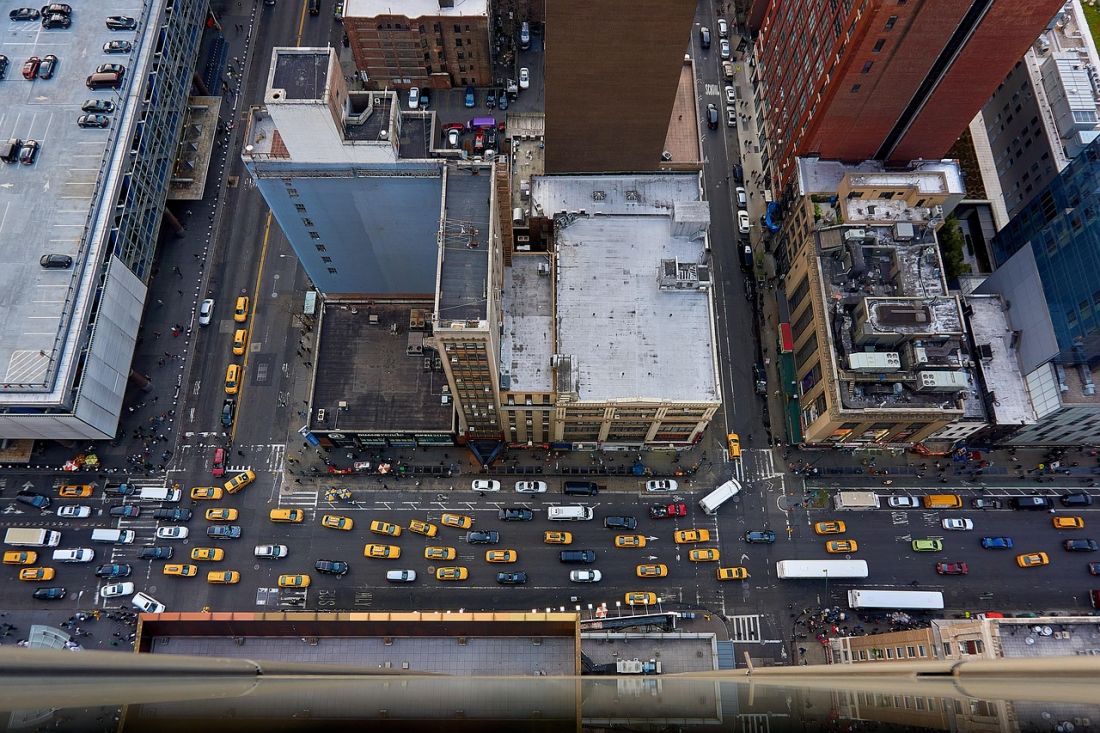
If ancient Rome gives us the oldest strong case, New York gives us something a bit more personal. In 1867, a boy called William Phelps Eno was caught in a street jam with his mother in New York City. There were no modern cars involved. Just horse-drawn vehicles, confusion, and a street system that had no clear rules to sort the mess out. Eno later wrote about that moment and said it stayed with him for the rest of his life. What struck him was how small the problem really was, only about a dozen horses and carriages, and yet nobody knew what to do. The drivers didn’t. The police didn’t. The street just locked up. That’s such a good reminder that a jam does not need thousands of vehicles to become a proper nuisance.
It just needs disorder. That childhood memory mattered because Eno grew up to become one of the biggest names in traffic control. The Eno Center for Transportation says his work helped shape the first traffic plans for major cities, and that New York City adopted his “Rules of the Road” in 1909 as the world’s first city traffic plan. There’s a lovely twist in this story too: the man who helped make road traffic saner never drove a car. You know how it is, life loves a strange detail. What makes the 1867 story so useful is that it sits between the Roman street crush and the modern jam we know now. It’s no longer ancient history. You can almost see it. Broadway, horse carriages, drivers trying to inch forward, somebody blocking somebody else, people getting cross, nothing moving. In a way, this is the moment the traffic jam starts to feel modern, even though the motor car still hasn’t taken over. It shows that once cities get busy enough, traffic chaos appears all by itself unless someone steps in with rules, signs, and a bit of common sense.
The road rules came after the chaos, not before it
That’s the bit people forget. We tend to think roads came with rules built in, as if lanes, one-way systems, traffic circles, signals, crossings, and all the rest were there from day one. They weren’t. A lot of road order arrived because cities had already had enough of the mess. Eno’s work is a perfect example. The Eno Center says his rules, adopted by New York City in 1909, became the first city traffic plan. He is also linked with ideas and features we now take for granted, like stop signs, taxi stands, safety islands, and circles to manage flow. And London, facing its own road chaos in the horse-drawn era, installed the world’s first traffic light outside the Houses of Parliament in 1868. Transport for London says it was put there to deal with the high number of people being killed on the roads, even though there were no cars yet. That first signal used red and green lights, had no amber, and needed a police officer to work it by hand. Mad, really. It was also removed after a gas explosion injured a policeman, which sounds like the sort of detail a history writer would make up if it weren’t true. Put these pieces together and you get a bigger picture. Congestion came first. Road systems came after. The jam taught the city what it needed. That’s still how it works. Nobody wakes up and installs a new junction for a laugh. It happens because the old way has stopped coping. And that’s why the question “What was the first traffic jam?” is more interesting than it sounds. It leads straight to the birth of traffic control itself. One jam becomes a pattern, the pattern becomes a public nuisance, and the nuisance turns into rules. Before long you’ve got signals, signs, road markings, and people complaining that nobody uses them properly. Some things really do stay the same.
What this old story says to drivers around Stockport and Manchester
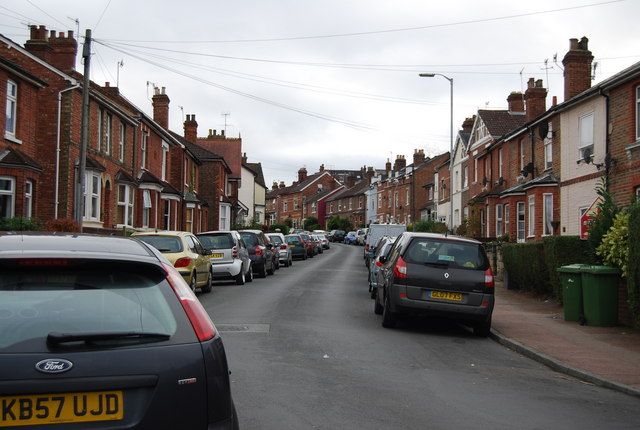
Photo: Houses in this street in Royal Tunbridge Wells were built when cars were few. With no provision for garages or off-street parking, on-street parking has formed a choke point likely to cause traffic congestion (by Nigel Chadwick, CC BY-SA 2.0, via Wikimedia Commons).
So where does all this leave us now, sat in modern traffic near Stockport, Manchester, or anywhere else where the road suddenly grinds down to a crawl for no obvious reason? It leaves us with a slightly comforting truth: congestion is not a sign that society has gone wrong this week. It’s what happens when lots of humans want the same space at the same time. The Romans had it. Nineteenth-century New Yorkers had it. London had it badly enough to try a signal system before most people had even seen a motor car. And we’ve got it now, whether that’s a slow trudge by the Pyramid in Stockport, a sticky run through the A6, or one of those days where every set of lights feels personal. At Dace Motor Company, we think that bit of history matters because it takes some of the mystery out of traffic. A jam isn’t always about one crash, one roadwork crew, or one bad driver. Many times it’s about flow, timing, space, and people reacting a second too late. That means a few simple habits still make a difference. Leave a gap. Don’t creep into a box you can’t clear. Read the road a little further ahead than your bonnet. And be honest about the kind of driving you really do. If your week is full of school runs, supermarket car parks, and tight local streets, a smaller car can feel like a gift. If your miles are mostly family trips with a boot full of bags, comfort matters more. That’s not sales talk, it’s just real life. The funny thing is, Caesar, Eno, and the engineers behind early signals were all chasing the same goal: less chaos, more movement, fewer pointless hold-ups. Strip away the centuries and that still sounds like a good plan for a Tuesday afternoon.
And maybe that’s why the story sticks
There’s something funny and a bit humbling about asking for the first traffic jam in history and ending up in ancient Rome, horse-drawn New York, and Victorian London. You start with a modern annoyance and wind up staring at a very old human habit: we bunch up, we hurry, we misjudge gaps, we all want to get there now, and then we sit there wondering why nothing’s moving. The phrase “traffic jam” itself appears in print by 1891, according to the Oxford English Dictionary, which means the name came later than the problem. I love that. The jam was there first. People had to suffer it before they had a handy label for it. In some ways, that says everything. We name things after they become impossible to ignore. So, was the first traffic jam in history in Rome? If we’re talking about the earliest strong historical case of street congestion serious enough to trigger formal controls, Rome is the best answer. If we’re talking about the first jam that feels close to modern city traffic, William Phelps Eno’s memory of New York in 1867 is a brilliant one. And if we’re talking about when cities began fighting back with the tools we’d recognise now, London’s first traffic light in 1868 is a huge moment too. That’s the honest version, and to be fair, it’s a better version than a tidy myth. History is rarely neat. Roads aren’t either. But the next time you’re sat there, inching forward, watching the brake lights glow ahead and feeling your patience slip a bit, you can remind yourself that this whole irritating business is ancient. Properly ancient. We didn’t invent the traffic jam. We inherited it. We just added radios, cup holders, and a lot more horsepower.