


The First Car to Use a Turbocharger
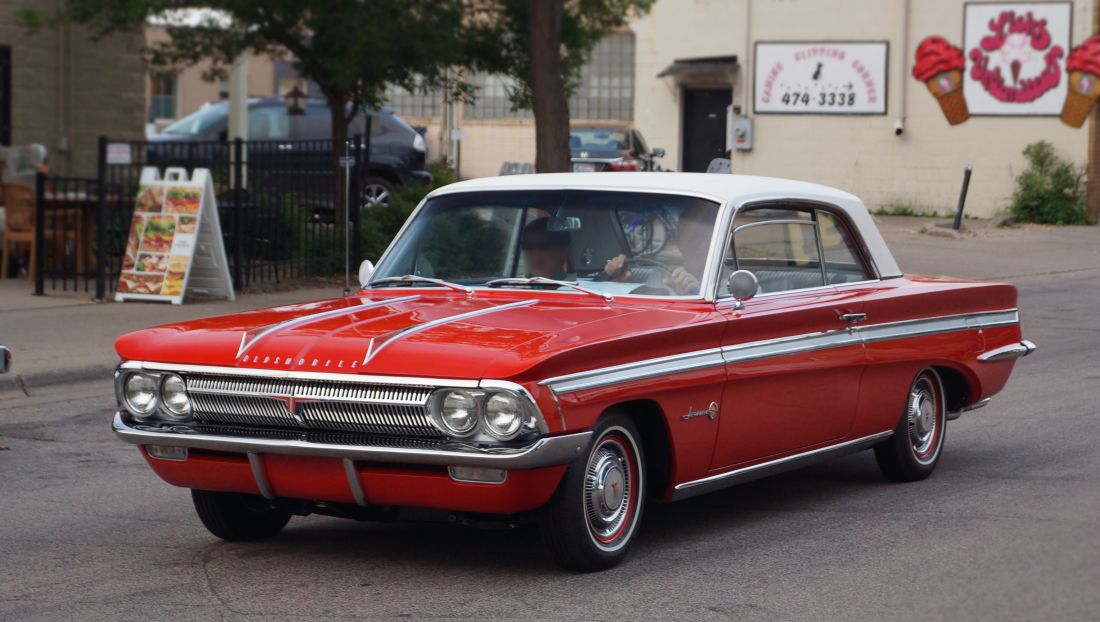
Photo: 1962 Oldsmobile Jetfire by Greg Gjerdingen from Willmar, USA, CC BY 2.0, via Wikimedia Commons by
Before we get into the first one, let’s make sure we’ve got the basics. A turbocharger is a gadget added to an engine that helps it get more air into the engine’s cylinders. More air + more fuel = more oomph from the engine. It’s like when you take big lungfuls before sprinting-it helps you do more.
Back in the day, engines mostly just sucked in air naturally. But if you could force more air in, you could make the engine bigger without making the car heavier. For families around Manchester, Stockport and beyond that meant smaller engines could do more work (and that matters when you’re keeping fuel bills and tax in check).
Now, the idea of a turbo wasn’t brand new when the first car used one-but making it dependable in a road-car was the tricky bit.
The First Turbocharged Production Car: Oldsmobile Jetfire (1962)
So, here’s the big moment. In 1962, the American carmaker Oldsmobile (a part of General Motors) launched a car called the Jetfire which featured a turbocharged engine.
It was a V8 engine, around 3.5 litres (215 cubic inches) in size, made of aluminium. It used a Garrett-AiResearch T5 turbocharger system. They also included a water-methanol injection system (“Turbo Rocket Fluid”) to prevent engine knock under boost. Yes-it was quite advanced for its time.
Production numbers were limited: only around 9,600 units (between 1962 & 1963). It wasn’t perfect-reliability was an issue-but it marked a shift. Without the Jetfire, the turbocharged car revolution might have taken longer.
Why This Was a Big Deal
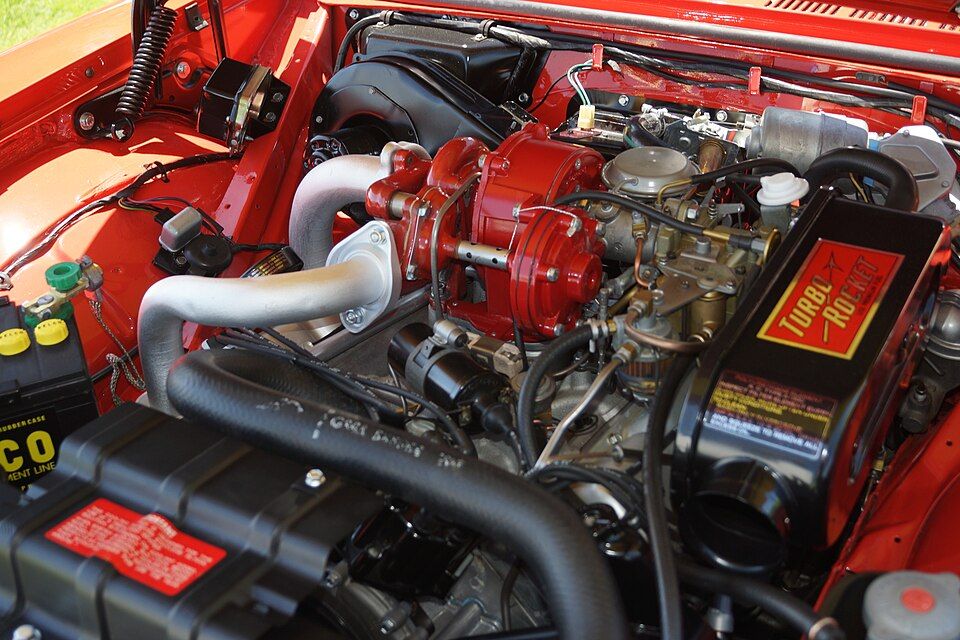
Photo: Oldsmobile Turbo-Rocket V8 in a 1962 Oldsmobile Jetfire by Greg Gjerdingen from Willmar, USA, CC BY 2.0, via Wikimedia Commons.
You might ask: “Ok, so it had a turbo-what’s the fuss?” Well, for cars in the north of England (and worldwide), this made a difference in a few important ways.
Better performance from the same engine size
Because the turbo helped force more air in, the engine could produce more power without being a huge, heavy lump. That meant cars could stay lighter and fuel bills (and tax bands) remained more manageable.
New possibilities for car makers
Before this, if you wanted more power you often had to go big: bigger engine, more weight, more running costs. With turbos, smaller engines could punch above their weight. Over time this would benefit everyday drivers-imagine a used car in Stockport that’s economical but still fun to drive.
The start of a trend
Once the Jetfire had done its thing, other manufacturers followed. For example, the Swedish brand Saab introduced turbo versions of its cars later on. The turbo became a part of many performance and now even mainstream engines.
What It Meant for Everyday Drivers
Let’s bring it down to where you and I are, footpaths and petrol stations around Stockport. If you buy a used car from Dace Motor Company and it’s turbocharged (say one of the German brands or even a mainstream hatchback), you’re essentially getting a piece of that history.
On a practical level:
- A turbocharged engine can feel more lively when you press the accelerator. That means overtaking on the M60 or getting past a slow lorry on the A6 doesn’t feel like you’re chasing your tail.
- It also means manufacturers could design smaller, lighter engines-but still give you good performance. That often means better fuel economy for everyday driving in Manchester city traffic.
- But-and there’s always a but-turbo engines can need a bit more care. Letting the engine warm up, not abusing it when it’s cold, making sure the turbo gets a chance to spin down etc. This stuff matters for longevity.
Common Mistakes with Turbos (And How to Avoid Them)
We’ve seen cars come through our showrooms and workshops at Dace Motor Company where the turbo aspect hasn’t always been looked after. Here are some things to watch, especially if you’re buying used.
Don't immediately blast off when you start the car
Give the engine a minute to warm up. Turbos are fed by exhaust gases; if the engine is cold the turbo is too. Pushing hard too soon can stress things.
After you drive hard, let things settle
When you’ve been on a motorway or driven spiritedly, let the engine idle for 30-60 seconds before switching it off. This helps cool down the turbo. If you shut off straight away, heat can build up and damage components.
Check service history
Has the turbo been looked after? Oil changes at correct intervals? Has the engine been used properly (not always just short bursts)? These say a lot about how well the turbo will perform in the future.
Listen for odd noises
Whistles, extra puff of smoke on start-up, sluggish response can signal turbo issues.
How This Changed the Landscape
The arrival of the turbocharger in a production car wasn’t just a neat story-it shifted how manufacturers designed engines, and how people like you and me thought about cars.
Back in the 1960s you might have thought: big engine = big power. But this tech proved that power could come in a more clever package. Over time that allowed:
- Smaller cars to feel more fun without gulping petrol.
- Premium cars to differentiate themselves by how smoothly and powerfully they accelerated (think German brands you might spot around Stockport).
- The industry to explore forced induction, superchargers, twin-turbo setups etc. The seed planted by that first turbo car led to the sorts of high-tech engines we see today.
So when you're looking at a used car-even one of the many makes we stock at our four locations around Stockport & Manchester-you’re dealing with technology with a heritage going back to that 1962 milestone.
Why It Matters for a Dealer Like Us
At Dace Motor Company, when we buy used cars we know the story behind the parts matters. A turbocharged engine-if properly looked after-can mean a car with real character. But if not looked after, it can mean unseen costs. That’s why we do checks, service history, inspection, and make sure our staff know what they’re dealing with.
And you know, whether you’re browsing our Dace Car Supermarket on Greg Street in Reddish or one of our Specialist Centres on Buxton Road or Manchester Road in Stockport, you’ll often find a wide variety of cars: small city models, luxuries, 4×4s, hatchbacks, you name it. Some will have turbos, others won’t-but knowing the story gives you confidence.
Picture this: you’re parked outside the Trafford Centre, or you’re navigating into the centre of Manchester for a match day. Your car needs to be reliable, it needs to accelerate when you need it (maybe you're overtaking on the M62) and still make sense for everyday use. Turbos help make those real-world moments smoother.
And for our local buyers, it’s not about flashy for the sake of it-it’s about smart. You want value. You want a used car that behaves well. A turbo isn’t just for speed. It’s often about smarter performance. So the legacy of that first turbo-car (the Jetfire) lives on every time someone opts for a well-maintained turbo vehicle.
Let’s sum up the key bits:
- That first production car with a turbo? The Oldsmobile Jetfire in 1962.
- It showed that forced air into the engine meant more output without huge size.
- For everyday drivers, this meant smaller engines could feel more capable.
- But turbo engines require a little love and correct usage to remain reliable.
- At a dealer like Dace Motor Company, knowing the tech behind the cars helps you make a better choice when buying used.
So next time you’re in one of our showrooms, and you see a car with “Turbo” or “T” or something like that in the description, you’ll know there’s history behind it. And not just any history-but the kind that helped change how cars perform and how we drive them day to day.