


The First Car to Ever Have Airbags - And How That Changed Things for All of Us
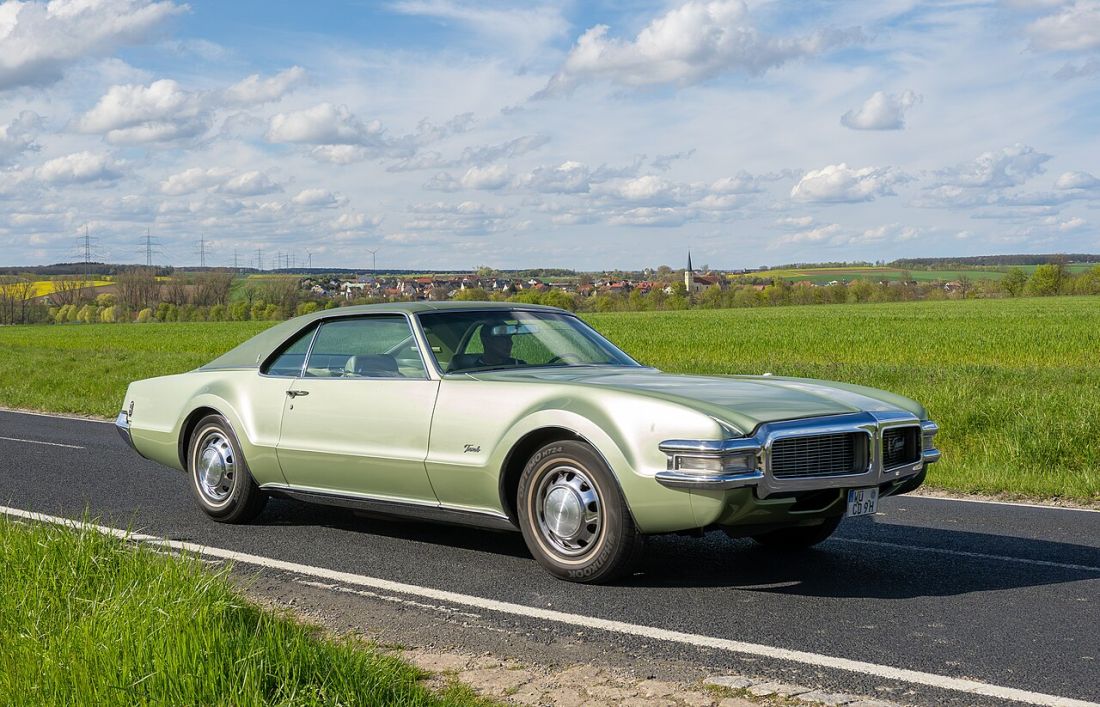
Photo: 1969 Oldsmobile Toronado by Ermell, CC BY-SA 4.0, via Wikimedia Commons.
Way back (even before many of us were born), people started thinking: “How do we protect folks in a car when there’s a crash?” Seat-belts were a big step. But someone thought: what if the car itself could help cushion the impact?
In the 1950s, an American engineer called John W. Hetrick filed a patent (in 1953) for an “inflatable safety cushion assembly for automotive vehicles”. In simple terms: a bag that could inflate to soften a person’s hit in a crash.
That idea didn’t appear on showroom cars immediately. Things had to be tested, sensors invented, materials made light yet strong, etc. But the idea planted the seed.
The first car you could buy with an airbag
So what was the first car to actually sell to the public with an airbag? A key milestone is: the Oldsmobile Toronado (in the USA) in 1973 became the first car with a passenger airbag offered to the public.
And then later, the German luxury car Mercedes?Benz S?Class (W126) (in 1981) had an airbag (driver side) as an option.
It’s important to note: “first” can mean different things depending on “optional” vs “standard”. But if you’re talking about a mass-salable car with a factory fitted airbag, the Toronado holds that claim for the passenger side.
Why this really matters for everyday drivers (yes, like you and me in Manchester and Stockport)
Let’s pause for a moment. You might think: “Okay, great - a new feature. But what difference does it make for me when I’m going through Stockport centre or heading on the M60?” Well: In an impact, your body keeps moving. Without something to slow it, you hit the steering wheel, dashboard, windscreen. That’s bad.
The airbag gives you a cushion, spreads the force over a broader area, and slows you more gently. Combine it with a seat-belt and you’re far safer.
Because the idea was put into cars (starting with those early models), manufacturers began designing everything else around it: safer cabins, crumple zones, sensors. So what began as “just a bag” helped push a broader change in how cars are built.
So when you walk into one of our showrooms in Stockport or Manchester and spot a car advertising “full airbag protection” or “multiple airbags”, you’re seeing a safety standard that came from those early innovations. We at Dace Motor Group check for these features - because we know you deserve safe, dependable cars.
How the rollout went: from luxury to mainstream
In the beginning, only high-end cars or optional extras had airbags. Think of the Mercedes S-Class example: luxury model, optional feature. Then: Through the 1980s, more cars began offering driver-side airbags.
By the 1990s, many cars started making airbags standard. For example, in the USA, regulations required dual frontal airbags in new vehicles by 1998.
Today, when you buy a used vehicle at any of our locations (the one on Greg Street in Reddish, the German Car Centre, Specialist Car Centres, etc), you’ll usually find front airbags, and many cars have side-and-curtain airbags too. That’s a legacy of the early work.
Why those early models matter: real-life safety
Think about the roads around Stockport or Manchester. Busy junctions. Motorways. Roundabouts. You don’t expect to crash - and hope never to - but things happen.
Here’s a simple story: Someone is driving along Broom Lane in Reddish, approaching a junction. Another car suddenly pulls out. The driver hits the brakes. But there’s still impact. If the car has both a seat-belt and an airbag, the difference in injury can be big.
Because of the technology that started with that Toronado, and the work Mercedes did, you have those chances.
Also, one study (mentioned in historical write-ups) pointed out that early airbag systems had faults; when used alone (without seat-belts) they were less effective. So the lesson is: airbags are great - but they work best with seat-belts and with a well-maintained car. At Dace Motor Company we make sure any used car in our stock has been checked for these basics: airbag light, belt anchors, plus an HPI check so you know you’re not buying an accident-write-off with dodgy safety features.
What changed in car safety because of this
After airbags became real, a few big shifts happened:
- Car makers started thinking more about passenger protection - not just going fast or looking good.
- Safety features moved from “luxury add-ons” to things people expect in every car.
- When you buy from us in Stockport, you’re buying from a company that knows these safety standards matter. We check the vehicles. We price-check them. We make them ready.
You see it today in many ways: multiple airbags, side-impact protection, modern sensors. The first airbag was just step one.
The caveat: safety doesn’t stop at installing an airbag
One of the tricky things is: even with airbags, things can go wrong. Some of the first systems had more force than ideal, or the deployment could hurt children or unbelted passengers.
Also: if a car has a deployed airbag (and it hasn’t been repaired properly), the next crash can be worse. That’s why buying used is important to do right. At Dace Motor Company we guarantee the cars are HPI checked: stolen-car check, previous owners, mileage check, write-offs, etc. We also check that the airbag system is intact (the airbag light in the dash is off, for example).
So when you’re browsing through our 600 + quality-assured used cars across our Stockport and Manchester sites, you can ask about airbag history. It’s your safety as well as the car’s.
Why we mention this history when you’re shopping with us
You may wonder: “Why is Dace Motor Company talking about the first car with airbags?” Good question. Because knowing the story helps you appreciate what you’re getting when you pick up a modern used car. Think about someone getting their first car in Manchester. They see a nice hatch or small SUV at our showrooms. They might care about colour, cost, MPG. But safety? That often gets sidelined.
We believe safety should be as much a feature as how the dashboard looks, or how many gadgets the car has. If we say “we price-check all our vehicles daily and guarantee value”, that’s great - but we also want you to feel confident driving away, down the A6 or up the M60, knowing that if the worst happens, some of the best protection is already built in via systems that began decades ago.
And if you’re considering finance (we do that too, zero impact on your credit score soft search), you’re making a long-term decision. The car you pick should look good and feel secure. That airbag history helps.
Looking ahead: what this means for your next car
So, when you’re thinking about buying (used) with us - maybe at our “Dace Car Supermarket” in Reddish, or the German Car Centre in Stockport, or elsewhere - here are some quick things to ask yourself, and ask us:
- Is the airbag warning light behaving properly? (It should light up briefly when you turn the ignition on, then go off.)
- Has the vehicle ever had a major crash? If so, were the airbag/seat-belt systems checked/replaced properly?
- Does the car have driver and passenger airbags? How about side-impact or curtain airbags? (Especially good if you have family or drive around town often.)
- Are the seat-belts in good condition? Even the best airbag won’t do its job if the belt fails.
- Is the seller (that’s us!) checking all the safety systems, HPI check done, and giving warranty or extension? Because we believe you deserve that.
Why the first “airbag car” still matters today
The Oldsmobile Toronado (1973) wasn’t a perfect solution. It was heavy, the system was early stage, the offer wasn’t huge. But it set a precedent. It said: we’re going to start protecting people differently in cars. Because of that, by the time you’re in one of our used cars from Dace Motor Company, you’re getting decades of safety progress. You’re getting the benefit of engineers, regulators, companies all thinking: “how do we keep folks safer in collisions?” And if you ever tell a mate “my car has airbags”, you’re referencing a safety feature whose origin goes all the way back to experiments, patents, early production models. Pretty cool when you think about it. So next time you’re in or near Manchester or Stockport, or you pop in to see a car, feel free to ask: “Which airbags does this have? And how do I know they’ve been checked?” We’ll be happy to walk you through it. After all, buying a car should be exciting. But it should also feel safe. And a lot of the safety you’re getting comes from a bit of history.