


The First Car to Break 100 mph: A Record That Shocked the Early 1900s
Setting the Scene: Cars Were Still Brand-New
Imagine this for a second. You’re walking through Manchester in the early 1900s, cobblestone streets under your feet, horses pulling carts full of coal, and the odd bicycle whizzing past. Most people had never even seen a car in real life. They were strange-looking contraptions, loud, smelly, and pretty unreliable compared to a trusty horse. In fact, back then, a car was more of a curiosity than a normal part of life. Folks would stop and stare if they saw one clattering its way down Deansgate. The idea of these “horseless carriages” going faster than the average train sounded like something out of science fiction. And yet, within just a few years of their invention, people were already obsessed with pushing them to go faster and faster.
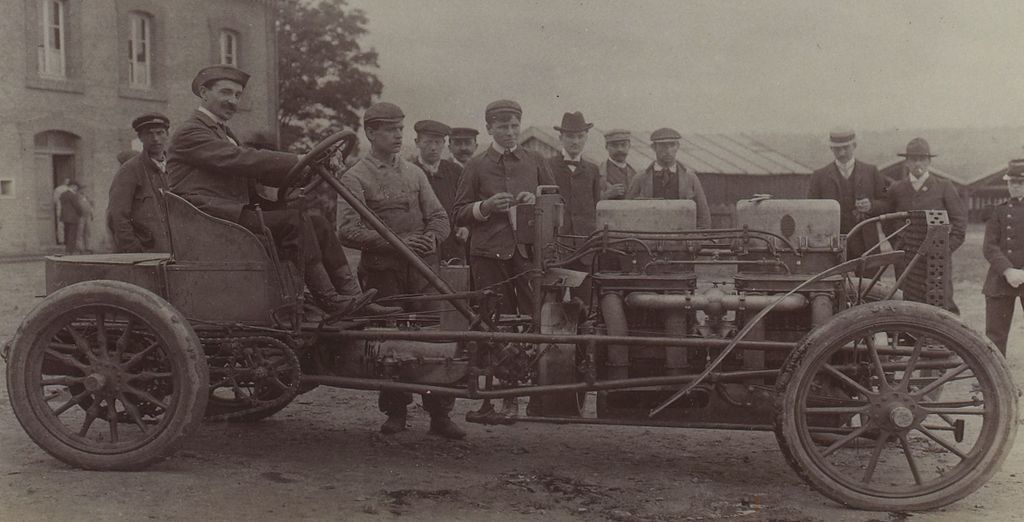
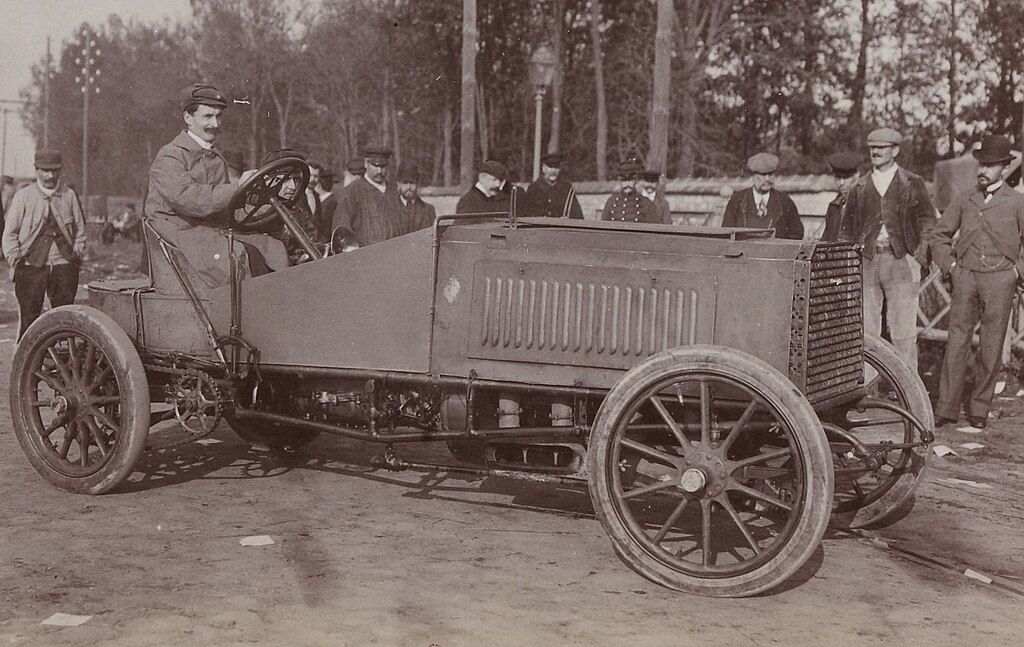
Image: Louis Rigolly, winner of the Château-Thierry hill climb on a 100 hp Gobron-Brillié.
It’s easy to forget now, but at that time, most cars could barely hit 30 mph. And that was considered flying! Roads were rough, tyres would blow out, and engines weren’t exactly built to last. But just like today, there were always thrill-seekers-the kind of people who wanted to see just how far they could push the limits. So when someone suggested trying to hit 100 mph in a car, most people laughed. They thought it was impossible, dangerous, and maybe even a little bit mad. After all, trains had been around for decades and even they rarely topped 70 mph. Cars were still in their infancy. Yet, there was this growing hunger to see how fast they could really go.
And the world was about to be stunned. The story of the first car to break 100 mph isn’t just about speed. It’s about people daring to dream bigger than anyone thought possible. It’s about the early days of motoring, when every improvement-whether it was a stronger engine or better tyres-felt like stepping into the future. And to be honest, it’s about the birth of the car culture we know and love today. At Dace Motor Company, we sell used cars every single day-everything from nippy little hatchbacks to powerful German saloons-but all of that history traces back to moments like this one. That first 100 mph run was a spark that lit a fire.
The Man Behind the Wheel: Louis Rigolly
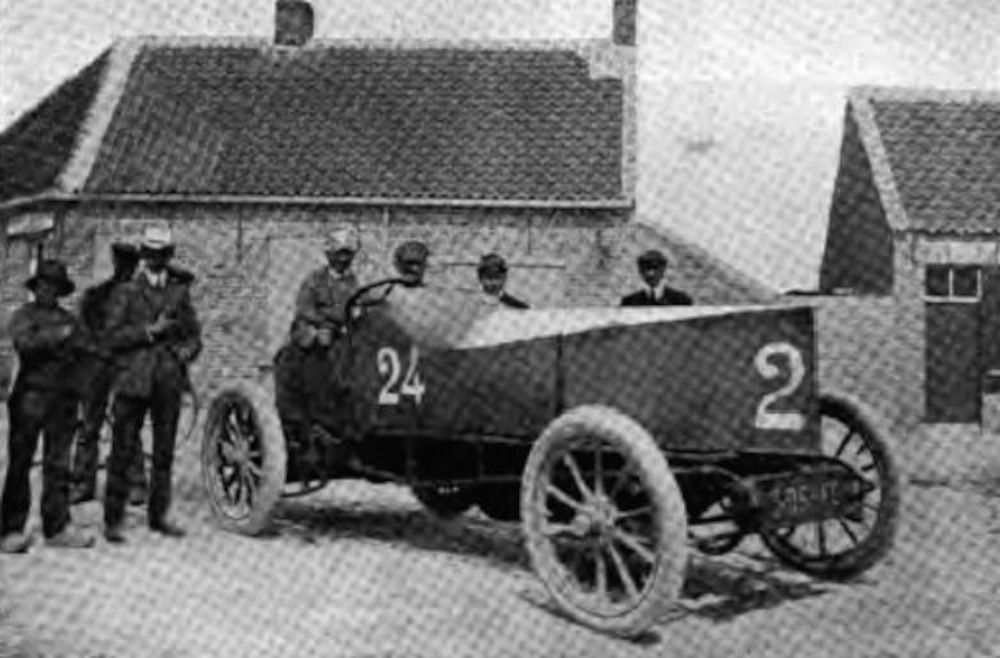
Image: Louis Rigolly and his car - the first to exceed 100 miles per hour in 1904
So, who actually pulled this off? The first man to hit 100 mph in a car was Louis Rigolly, a Frenchman with a passion for pushing limits. He wasn’t just someone tinkering in his shed; Rigolly was a racer, and he had the bravery (or maybe the madness) needed to sit behind the wheel of these early machines. In 1904, he climbed into a car called the Gobron-Brillié, which looked more like a giant metal box with bicycle wheels than the sleek sports cars we think of today. It had two seats, a long nose for the engine, and absolutely no safety features. No seatbelts, no roll cages, not even proper windscreens. Just an open cockpit, your face in the wind, and the sound of an engine roaring right in front of you.
The Gobron-Brillié wasn’t your everyday car either. It had a massive 13.5-litre engine. Yes, you read that right-13.5 litres. To put that into perspective, most family cars today are around 1.0 to 2.0 litres. Even big SUVs don’t come close. This engine was basically a monster bolted onto a frame. And Rigolly wasn’t just going for a casual spin. He lined up on a straight stretch of road in Ostend, Belgium, knowing that if anything went wrong, it could be the end of him.
When he set off, people must have held their breath. The car rattled, roared, and shook as it built up speed. Remember, at this point, tyres weren’t exactly built for this kind of stress. Roads weren’t smooth like the tarmac we drive on today-they were rough, uneven, and unpredictable. Yet Rigolly kept pushing. The noise would’ve been deafening, the vibration enough to rattle your bones. But somehow, he kept control. And then it happened. He blasted past the timing markers at just over 103 mph. For the first time in history, a car had broken that mythical barrier.
The crowd went wild. People were stunned that a machine on four wheels could go that fast. It was a record that seemed impossible, and now it was reality. Rigolly instantly became a legend, and the Gobron-Brillié was cemented in history as the first car to smash through the 100 mph mark. You know how today people get excited when a Bugatti or Tesla claims to be the fastest car in the world? This was the 1904 version of that moment. Only instead of carbon fibre and high-tech engineering, it was grit, raw power, and a man willing to risk it all.
Why 100 mph Mattered So Much
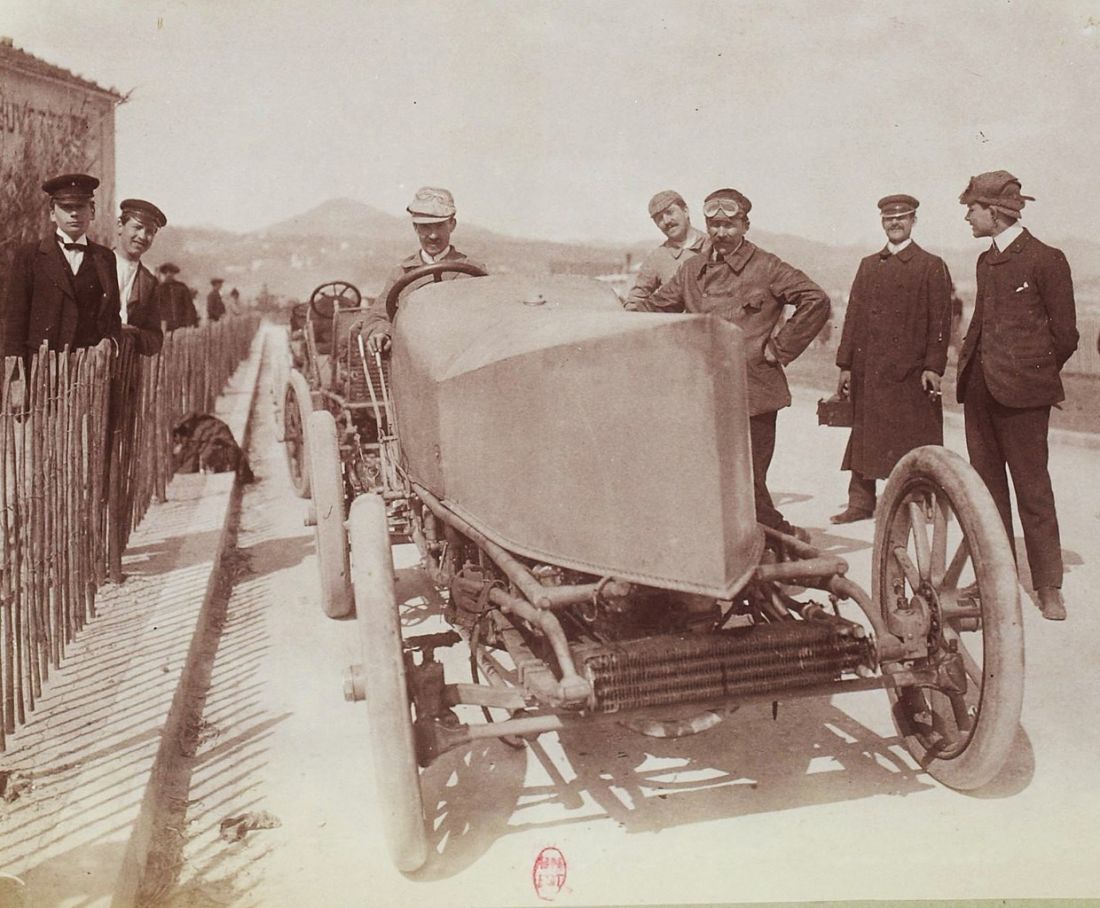
Image: Louis Rigolly, winner of the third Rothschild Cup for the flying kilometer at the Nice Speed Week 1904
Now, you might be thinking, “What’s the big deal? Cars today can easily cruise at 100 mph on the motorway.” And you’d be right. In fact, plenty of us in Stockport or Manchester have probably sat at 70 mph on the M60, looked down, and realised the car barely feels like it’s working. Modern cars are so refined, with soundproofing, smooth suspension, and powerful engines, that 100 mph doesn’t feel like much anymore. But back in 1904, hitting that speed was like landing on the moon.
Let’s face it, humans have always loved milestones. Running the first four-minute mile, climbing Everest, breaking the sound barrier-these moments capture our imagination because they show us that limits can be pushed. For cars, the 100 mph mark was one of those milestones. It showed that these strange new machines weren’t just novelties. They were serious, powerful, and capable of reshaping how people thought about travel. Suddenly, the car wasn’t just something for short trips around town. It had the potential to match, or even beat, the speed of trains. That blew people’s minds.
It also changed how the public saw drivers like Rigolly. They weren’t just tinkerers or eccentrics; they were pioneers. Every time someone broke a record, it inspired engineers to build better engines, stronger frames, and safer designs. And it inspired ordinary people too. Imagine being a young kid in Manchester, hearing the news that a car had gone 100 mph. Suddenly, this noisy contraption didn’t just look like a gimmick. It looked like the future.
Even today, car milestones stick with us. Think about electric cars now. People get excited when they hear a Tesla can go 0–60 in under three seconds. Or when someone says an EV can go 400 miles on a single charge. These numbers mean something because they tell us we’re moving into new territory. Back in 1904, that number was 100 mph. And it was more than just a number-it was proof that cars were here to stay.
The Risks and the Madness
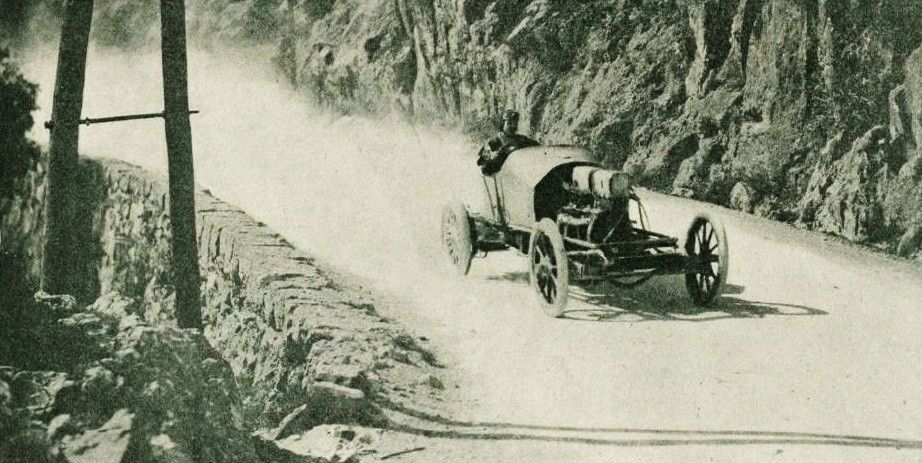
Image: Louis Rigolly, winner of the Nice Meeting in April 1904, setting a land speed record on the flying kilometer at 152.542 km/h.
Of course, chasing that kind of speed in the early 1900s wasn’t just brave-it was borderline reckless. Cars had no seatbelts, no airbags, no crumple zones. If something went wrong at 100 mph, you weren’t walking away from it. Tyres could burst, engines could explode, steering could fail. And let’s not forget the roads. These weren’t smooth, wide stretches of motorway. They were bumpy, narrow, and often full of dust or loose stones. Imagine hitting a loose stone at 100 mph in a car with skinny wooden wheels. Terrifying.
But that’s the thing. People like Rigolly weren’t put off by the risks. If anything, the danger was part of the thrill. And in a way, we still see echoes of that today. Motorsport has always been about pushing the limits, sometimes dangerously so. From the Isle of Man TT to Formula 1, there’s always been this tension between speed and safety. Back then, though, safety barely entered the conversation. It was about raw courage and the desire to do something no one else had done before.
You’ve probably heard locals talking about the A6 being a bit of a “racetrack” late at night. People love speed, even if they shouldn’t always test it on public roads. But think back to Rigolly’s time-there were no speed limits, no motorways, no rules. It was the Wild West of motoring. Breaking 100 mph wasn’t just about bragging rights; it was about showing that this new invention could go further, faster, and open up possibilities people hadn’t even dreamed of yet.
From 100 mph to Today: How Far We’ve Come
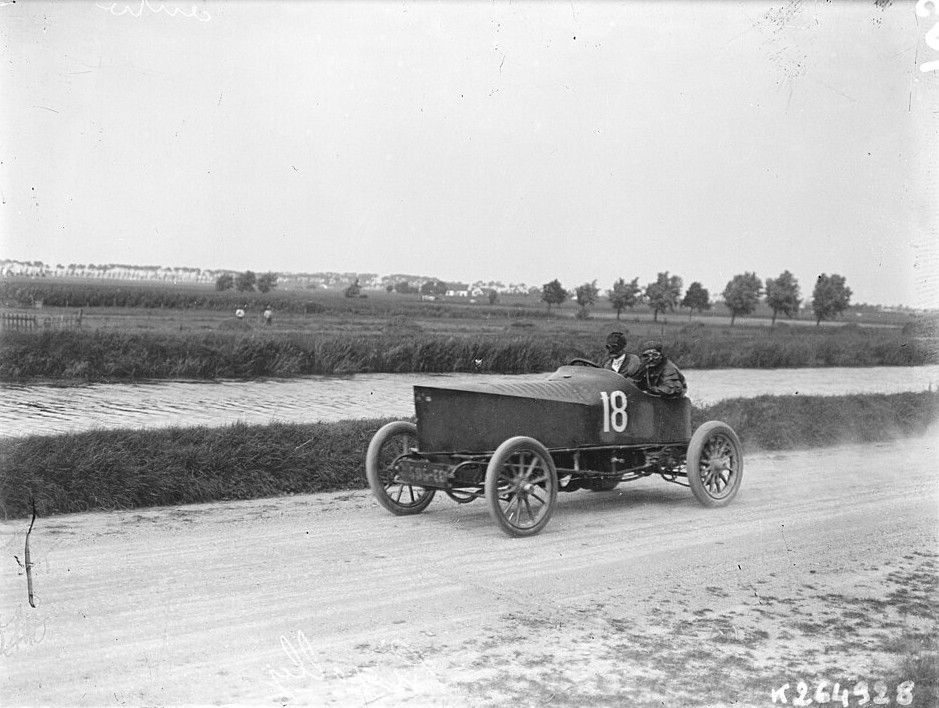
Image: Rigolly, racing in his Gobron at Ostend, July 1905.
What’s amazing is just how quickly things progressed after that first 100 mph run. Within a few decades, cars weren’t just breaking 100 mph-they were doubling it. By the 1920s, land speed records were being set at over 200 mph. Engineers kept building bigger engines, adding more cylinders, experimenting with aerodynamics. Each breakthrough made the impossible seem possible.
And here’s where it connects back to us at Dace Motor Company. Think about the cars we sell today. A BMW 3 Series, an Audi A4, even a family SUV-all of them can cruise at motorway speeds without breaking a sweat. Some hot hatches can easily top 150 mph. What once seemed like a record-breaking miracle is now part of everyday driving. In fact, cars today are so smooth at those speeds that we forget just how wild it would’ve looked to people a hundred years ago.
Even electric cars, which some people still think of as “slow,” are smashing speed records. The Tesla Model S Plaid can hit 200 mph. Porsche’s Taycan can keep up with supercars. The technology has changed-no roaring engines, no petrol smell-but the hunger for speed is exactly the same. And you can trace it all back to that first moment when someone dared to push a car to 100 mph.
Why This Story Still Matters
So why are we, a used car dealership in Stockport and Manchester, writing about a Frenchman in 1904? Because this story is part of the DNA of every car we sell. The first time someone hit 100 mph, it proved that cars weren’t just about getting from A to B. They were about possibility. About pushing boundaries. About excitement.
When you walk into our showroom in Reddish or Eccles and see rows of BMWs, Audis, or Fords, you’re looking at the legacy of that first big milestone. Cars today are faster, safer, and more reliable than ever, but they’re built on the same drive to push further that Rigolly had all those years ago. And the truth is, that sense of excitement hasn’t gone away. Whether it’s someone buying their very first little hatchback, or a customer picking up their dream Mercedes, there’s always that buzz of getting behind the wheel and feeling what a car can do.
That’s why we love stories like this. They remind us that cars are about more than just practicality. They’re about passion. And whether you’re a 12-year-old hearing about the first 100 mph car, or a grown adult walking through our Stockport Car Supermarket looking for your next motor, that excitement is something we all share.