


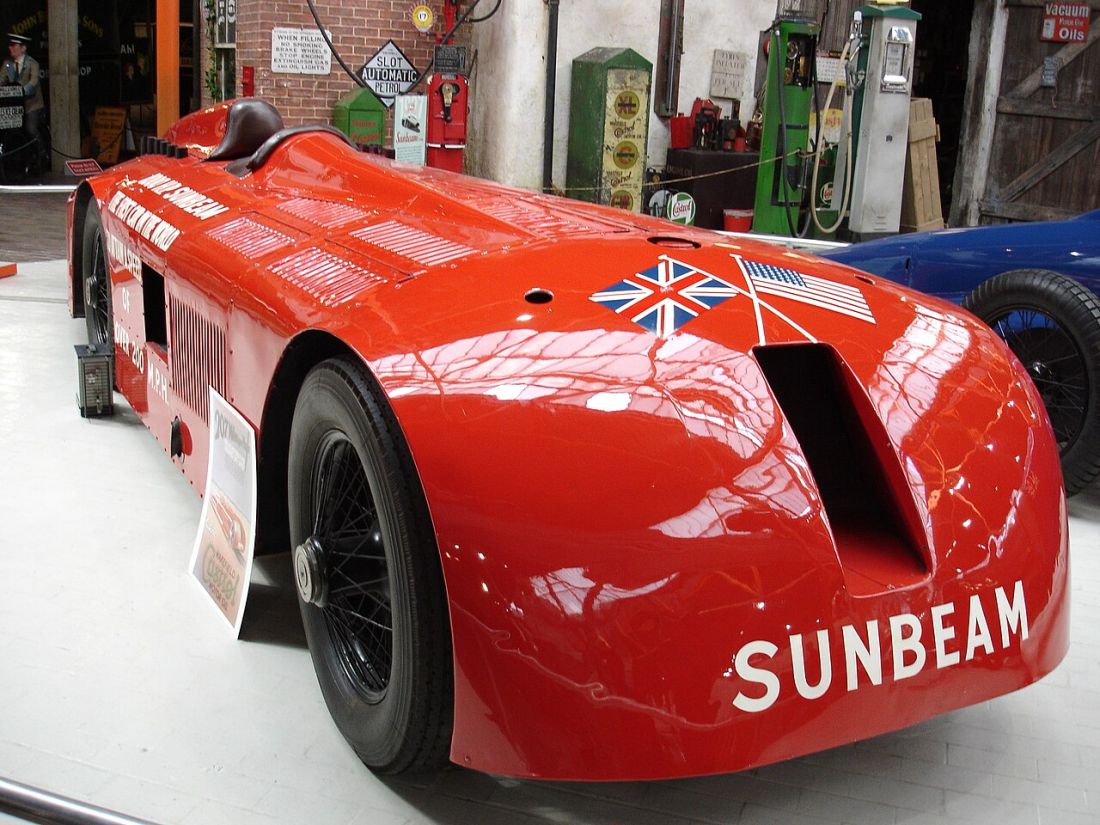
The First Car Ever to Break 200 mph
Photo: Sunbeam 1000HP at National Motor Museum in Beaulieu, UK (by David Hunt, Public domain, via Wikimedia Commons)
200 miles an hour: what does that even feel like?
Imagine you’re on the M60, coming off the Pyramid roundabout, and the traffic’s doing that classic Manchester thing where it’s either crawling or suddenly flying for about ten seconds before the next set of brake lights. Now picture a car going faster than any of that, faster than a fast train, faster than the sort of speed that makes your stomach do a little flip on a rollercoaster. Two hundred miles an hour is like doing Stockport to Manchester city centre in about six minutes if the roads were empty and you never had to stop. It’s a number people throw around now because modern cars can get close to it on a track, but back in the 1920s it sounded like science fiction. Roads were rough, tyres were basic, and nobody had the safety kit you’d expect today. A lot of people were still getting used to cars doing 40 or 50 miles an hour without shaking their teeth out. So when someone said, “We’re going to build a car that can go past 200,” plenty of folks would’ve laughed, or gulped, or both. And yet… it happened. That’s why we’re chatting about it on the Dace Motor Company blog. Even if you’re just popping round Reddish for a look at used cars, the story of the first 200 mile-an-hour car is the sort of thing that makes you look at any set of wheels with fresh eyes. It’s a bit mad, a bit brilliant, and it started with a man who’d already been racing on beaches not far from home.
The first car to do it: Sir Henry Segrave and the Sunbeam “1000 HP”
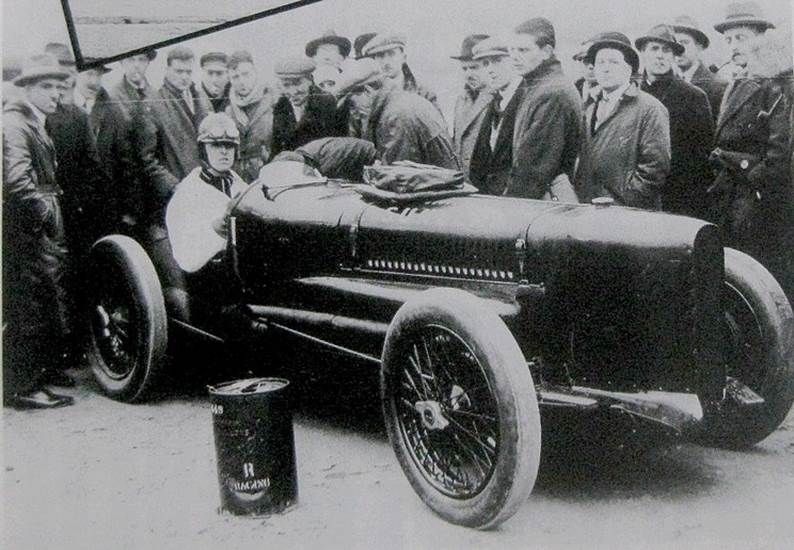
Photo: Henry Segrave in Sunbeam Tiger V12 306 HP (1926)
The first car ever to break 200 miles an hour was a long, low monster from Britain called the Sunbeam 1000 HP, also known as “Mystery” and, more famously, “The Slug.” On 29 March 1927, Major Henry Segrave drove it on Daytona Beach in Florida and set an official land speed record of 203.79 miles an hour, which made it the first car to go past 200. Segrave wasn’t some random thrill-seeker. He was a proper racer, and he’d already grabbed a land speed record in March 1926 on Ainsdale Beach at Southport, using a Sunbeam called Ladybird, with an average of 152.33 miles an hour. If you know the North West, you’ll know Southport’s a classic day out spot-ice cream, windy sand, and a beach that seems to go on forever. Back then, it also doubled as a place where brave people tried to be the quickest on land. After Segrave’s 1926 record, another Brit, J. G. Parry-Thomas, pushed the number higher in April 1926, getting 171.02 miles an hour in a car called Babs. So by early 1927, everyone who cared about speed was staring at that big, round number: 200. It wasn’t just a bit quicker than the last record. It was a whole new level, like when you go from riding a bike to riding a motorbike and you suddenly feel the air trying to peel you off. Segrave and the Sunbeam team wanted to be the first to smash it, and they weren’t shy about how wild their plan was.
Why this Sunbeam was different (and why it looked like a giant metal slug)
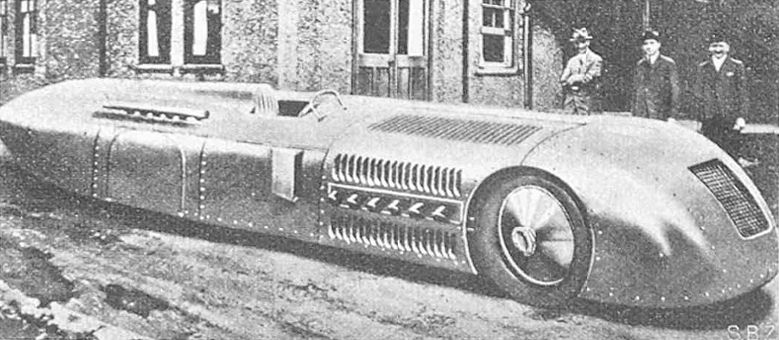
Photo: 1927 Sunbeam 1000 HP
Calling it a “car” almost feels unfair, because the Sunbeam 1000 HP was built for one thing: straight-line speed. The layout was basically two huge aircraft engines in a line, with the driver sitting between them. Each engine was a Sunbeam Matabele twelve-cylinder with a capacity of about 22.4 litres, which is enormous, and together they gave the car its “1000 HP” name, even though the combined output was said to be closer to around nine hundred “horse” in real life. The chief engineer at Sunbeam, Louis Coatalen, pushed the idea, with detailed design work by Captain J. S. Irving. And the finished machine was massive: about 25 feet long and around four tons in weight. That’s longer than a lot of vans you see parked up on Buxton Road, and heavier than you’d expect for something meant to go this fast. To get that engine force to the wheels, it used a three-speed gearbox and twin chains for the final drive. The bodywork was smooth and enclosed for the time, with an open cockpit where Segrave sat out in the wind. And yes, the nickname “The Slug” makes sense when you look at it: long, rounded, kind of like a giant metal tube with wheels tucked underneath. It wasn’t made to look pretty outside a café in the Northern Quarter. It was made to cut through air and hang on to the ground while everything inside it was shaking, roaring, and trying to turn itself into bits of hot metal.
Before 200: beaches, big risks, and a speed race that felt personal
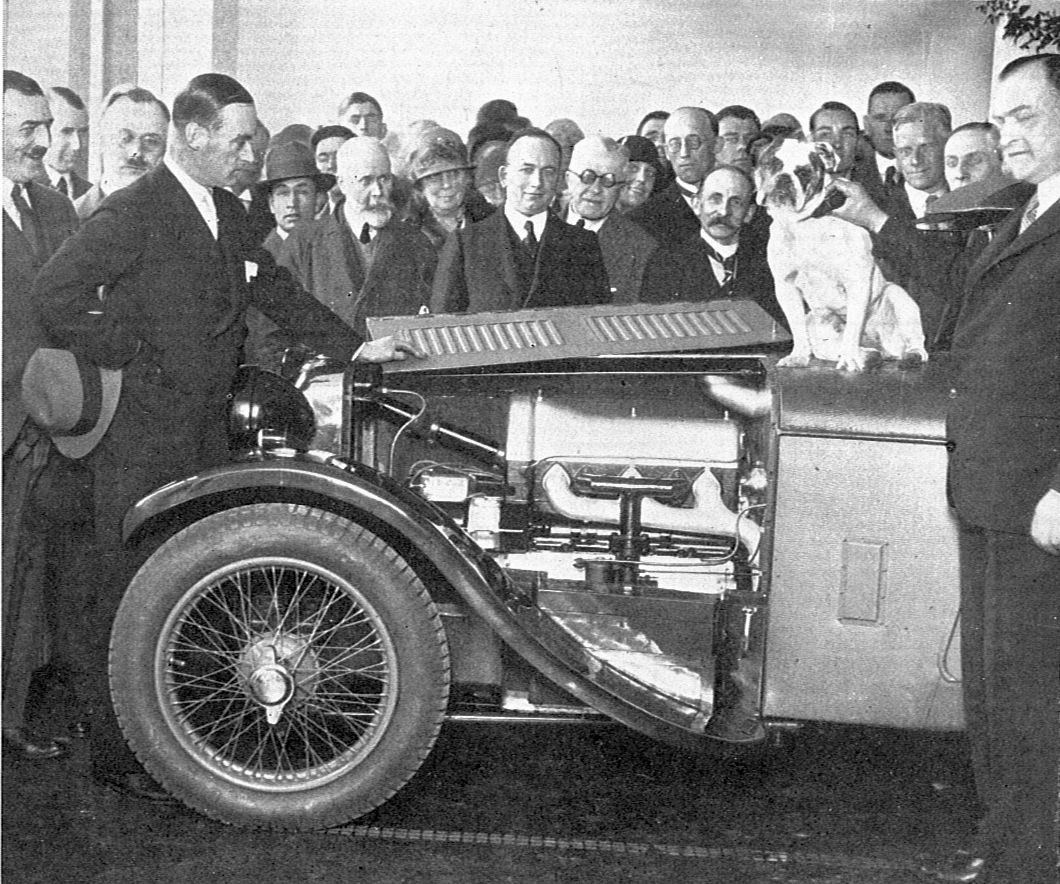 Photo: Captain Malcolm Campbell demonstrates a new front-wheel drive Alvis (Montagu, Cars and Motor-Cycles, 1928)
Here’s the thing people forget: the push to 200 miles an hour didn’t happen on smooth, empty test tracks with barriers and marshals every few metres. A lot of it happened on beaches, the same sort of place you take the kids to run around and get sand in their shoes. Segrave’s 152.33 mile-an-hour run in 1926 happened on Ainsdale Beach at Southport, on the Lancashire coast, which is the same patch of seaside many of us in Greater Manchester still head to when we fancy a change from brick and drizzle. And the rivalry was intense. Malcolm Campbell, another big name, was chasing records too, and in February 1927 he took his Napier-Campbell Blue Bird to Pendine Sands in Wales and set a record average of 174.883 miles an hour. The same attempt got a peak speed close to 195 miles an hour, which must’ve felt like being right on the edge of something huge, but the official average didn’t crack 200. Meanwhile, J. G. Parry-Thomas wasn’t just a number in a book. He was a person pushing himself and his machine hard, and it ended badly. On 3 March 1927, during another try at Pendine Sands in Babs, Parry-Thomas crashed and was killed. That’s a grim detail, but it’s part of the truth of this era: speed records were exciting, but the danger was right there in your face. No fancy rescue crew, no modern helmets, no big safety zones. So when Segrave lined up to take Sunbeam past 200 later that month, it wasn’t just a party trick. It was a serious gamble, and everybody involved knew it.
Daytona Beach, 29 March 1927: the moment it finally clicked
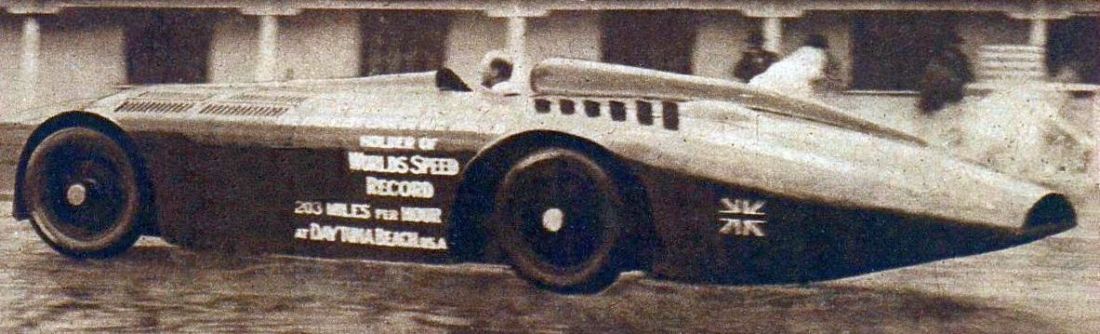
Photo: Henry Segrave, in the Sunbeam 1000 hp “Mystery Z”, land speed world record in March 1927, 203 mph.
So why Daytona Beach, and not another British beach? By the late 1920s, Daytona’s long, flat sand in Florida had become a famous place for land speed record tries, because it gave drivers a straight stretch that was miles long. On 29 March 1927, Segrave took the Sunbeam 1000 HP down that sandy “road course” and put down a record average of 203.79 miles an hour. The National Motor Museum says there were around 30,000 spectators watching, which is like a full stadium crowd turning up just to see a car go in a straight line.
Think about the noise, too. Two massive aircraft engines, the exhaust blasting, the whole car vibrating as it skims over packed sand. And Segrave wasn’t sealed inside a quiet cabin. He was sat in an open cockpit, in the wind, with sand and grit in the air, trying to keep the car straight. The Sunbeam’s setup put one engine in front of him and one behind him, and that meant heat, sound, and mechanical stress coming from both directions. The car was so unusual that even building it was a special job. Modern write-ups about its restoration talk about how almost everything had to be made as a one-off, because there wasn’t another vehicle like it sitting around with spare parts. And when it worked, when the timing gear and the wheels and the chains all stayed together, Segrave didn’t just nip past 200. He cleared it with a bit of daylight, enough that nobody could argue it was a lucky blip.
How they proved it wasn’t a fluke: two runs, opposite directions, no messing about
If you’ve ever watched someone brag about a speed and thought, “Yeah, but was that downhill with a tailwind?” you’ll get why official records have rules. Land speed records aren’t just one quick blast. Under the official record rules used today, you have to do two timed runs in opposite directions, and you have to do them within a limited time window, so the weather can’t change too much and give you a sneaky advantage. That idea of a two-way average was already baked into how these records were treated in Segrave’s era, which is why sources keep talking about his “average” speed, not his absolute top number. It’s also why Campbell’s February 1927 attempt is remembered as “close to 200” but still officially 174.883 miles an hour on the average runs. And it’s why Segrave’s 203.79 matters so much: it wasn’t just a needle twitching past 200 for a second. It was a repeatable, measured result, the kind that makes the record book change. Picture the pressure. You do one run and the car feels alive, twitchy, and a bit angry. Then you’ve got to turn around on sand, line up again, and do it once more, with the same risks, while people watch. No “best out of three.” No “we’ll try again next week.” That’s part of why the 200 barrier stuck in people’s minds. It wasn’t about guessing. It was about proving it, twice, in front of officials, on a beach, with engines meant for aircraft roaring a few feet from your legs.
What happened after 200, and why this story still feels real today
Once the 200 barrier was broken, the record chase didn’t calm down. It sped up. In April 1928, an American driver, Ray Keech, took the White Triplex to an official average of 207.55 miles an hour at Daytona. Then Segrave came back in March 1929 with a different British car, the Irving-Napier Golden Arrow, and set a new record of about 231.36 miles an hour. The numbers were climbing fast for the time, and the crowds got bigger too. One museum write-up describes 120,000 people watching Segrave’s Golden Arrow record attempt in March 1929, which is mind-blowing. But this is also where you remember the human cost. The White Triplex story includes fatal crashes, including the death of its later driver Lee Bible in March 1929. Segrave himself stopped chasing land records after witnessing that tragedy, according to a biography summary, which says he never attempted another land speed record after that high-speed death. So the Sunbeam 1000 HP record sits in a strange place in history. It’s a proud British milestone, yes, but it’s also a reminder that these machines were being pushed beyond what anybody truly knew was safe. That’s why, even now, museums treat the Sunbeam like something special. The National Motor Museum has been restoring it for years, and news in 2025 talked about one of its engines being started again for the first time in around 90 years. It’s not just nostalgia. It’s respect for a moment when engineering, bravery, and a bit of madness all lined up.
What this old record has to do with buying a used car in Manchester and Stockport
You might be thinking, “Cool story, but I’m not racing on a beach.” Fair. Most of us just want a car that starts every morning, doesn’t surprise us with warning lights, and handles the A6 or the Mancunian Way without drama. Still, the 200 mile-an-hour milestone has a nice knock-on effect: it shows how quickly cars changed once people started chasing speed seriously. The Sunbeam 1000 HP had an open cockpit, no airbags, and basically no margin for error. Compare that with a modern used car you’ll see around Stockport or Eccles: even something ten or fifteen years old has stability help, strong brakes, and crash protection that engineers in 1927 couldn’t have dreamed up. That matters in real life. It’s the difference between a scary moment in heavy rain near the Stockport Viaduct and a moment you handle and forget about by the time you’re parked up. And it’s why, at Dace Motor Company, we bang on about checks, history, and making sure the car you’re buying makes sense for your day-to-day, not just for a glossy photo. We also know money matters. If you’re looking at finance and you want to see what’s available without it hurting your credit score, a soft search can take some stress out of the first step. That’s miles away from Segrave’s era, where the “finance plan” was basically “build a one-off beast and hope it survives.” These days, you can choose something sensible, or sporty, or a bit of both, and you can do it with your eyes open. And if this story has done its job, you’ll look at that used Audi, BMW, Ford, or Volkswagen on the forecourt and think, just for a second, about the long metal Slug on a Florida beach, and the moment the speed barrier finally cracked.