


The Evolution of British Number Plates and Their Hidden Meanings
It’s funny to think about, but there was a time when cars didn’t even have number plates. When cars first started appearing on British roads in the early 1900s, things were getting a bit chaotic. Imagine horses and carts sharing roads with these noisy new machines-people needed a way to keep track of who was driving what. So, in 1903, the government brought in the Motor Car Act, and that’s when the very first number plates rolled out. Those early plates were dead simple. Just a couple of letters showing where the car was registered, followed by a number. The very first plate was “A1” in London, which has since become one of the most famous and expensive plates ever. Back then, it was all about showing what area the car came from. For example, Manchester plates started with “M,” which makes sense when you think about it. The plates were also much smaller than the ones we’ve got today. There weren’t any fancy fonts or rules about spacing. As long as people could read it, that was good enough. It wasn’t long before people started spotting patterns, though. If you had a short plate, like just a couple of digits, it actually looked more special, and people noticed. That idea of plates being a status symbol started right there, over a hundred years ago. Think about it like this: nowadays we’ve got folks queuing up outside Dace Motor Company looking for that perfect used BMW or Audi, but back then, having a plate like “M1” was just as much about showing off as having the actual car. And to be honest, some of those early plates are still around today, being traded for eye-watering prices. People want a little slice of motoring history, and a plate like that is basically gold dust.
Plates through the mid-1900s
As cars became more common, the system had to change. By the 1930s, the roads were filling up, and simple two-letter, four-number combos weren’t cutting it anymore. Authorities had to make plates longer and add more codes, otherwise they were going to run out. This is when number plates started feeling a bit more like a puzzle. For example, you’d see plates like “ABC 123,” which gave more space for new registrations. And that local code still mattered-people in Stockport could tell if the car came from their area or if it was from somewhere far away, like London. It’s a bit like spotting someone in Oldham wearing a United shirt when you’re at the Etihad-you know straight away where they stand. During the 1950s and 60s, the plates started getting more uniform. Black background, silver or white letters, screwed right onto the car. Some cars today still rock those black-and-silver plates, but only if they’re classed as historic vehicles. If you’ve ever been down the A6 and spotted a classic Jaguar or MG with those old-school plates, you know they just ooze style. Another big change came in the 1960s when the “suffix system” was introduced. This is where the end letter told you what year the car was registered. So if you saw “ABC 123A,” you knew it was from 1963. Suddenly, your number plate wasn’t just about where you were from, but also when you bought your car. It added a new twist-people could instantly tell if your motor was fresh or if it had been around the block. That year marker system is still something we use today, just in a slightly different way. For folks in Manchester and Stockport at the time, this mattered. You’d know straight away if your neighbour’s Ford Cortina was brand-new or if they were still holding onto last year’s model. And let’s face it, we all like to keep an eye on what the neighbours are driving, don’t we?
The rise of personalised plates
By the 1980s, something shifted. Number plates weren’t just about identification anymore-they became personal. People started seeing them as a way to stand out. The government caught onto this and realised they could make some serious money by auctioning off special plates. That’s when personalised number plates really took off. Now, instead of just having a random mix of letters and numbers, people could get creative. If your name was Dave, you’d want “DAV 3.” If you were a big United fan, you’d want something with “MUFC” in it. Suddenly, plates were more than just a legal necessity-they were a statement. And some of these plates went for crazy amounts of money. In fact, they still do. The plate “25 O” sold for more than £500,000 because it looks like it spells “250,” which is perfect for a Ferrari 250. That’s more than the cost of a house in parts of Stockport! And you’ve probably seen people driving through Manchester in their flashy Range Rovers with plates that are clearly spelling out their name or business. What’s funny, though, is that the rules about spacing and fonts are super strict. You can’t just shove letters together to make a word if it’s hard to read. But people still push it. You’ve seen it-we all have. Someone bends the spacing just enough so that “BO55 MAN” looks like “BOSS MAN.” It’s cheeky, but it’s part of the fun. At Dace Motor Company, we see this all the time. Someone will fall in love with a used Audi or BMW, but the first question they’ll ask after sorting finance is, “Can I put my private plate on it?” That plate becomes part of the car’s identity. And it’s not just about showing off-it’s about making your car feel like yours. That little rectangle of plastic carries a lot of weight.
The plates we know today
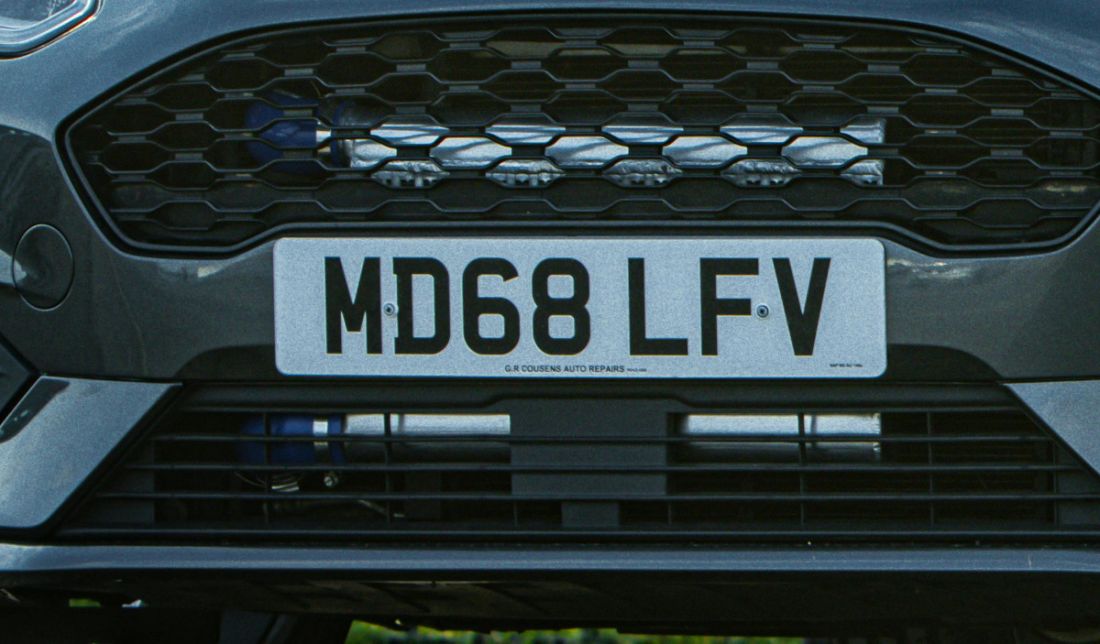
Today’s plates follow a system that was brought in back in 2001, and it’s probably the most familiar one for most of us. The first two letters tell you the region where the car was registered, the two numbers tell you the age, and the last three letters are random. Simple enough once you get the hang of it. So, if you spot a plate starting with “MA,” that means it was registered in Manchester. It’s a little badge of honour for local drivers. And the numbers? That’s where it gets fun. The year is split into two releases: one in March and one in September. So “23” means March 2023, and “73” means September 2023. Once you know that, you can clock a car’s age just by glancing at its plate. Handy if you’re browsing the stock at our Greg Street showroom and trying to figure out which motors are the newest. Of course, the plates aren’t just about dates and locations anymore. They’ve also had to get more secure. Modern plates have to meet strict rules, with specific fonts and spacing, so cameras can pick them up easily. That’s not just speed cameras either-it’s parking, congestion zones, and even ANPR systems that check insurance and MOT status in real time. Your number plate is basically your car’s fingerprint now. But even with all that tech, people still want their plates to say something about them. You’ll see plates that look like names, businesses, or just quirky words that make you laugh when you’re stuck in traffic on the M60. Plates have gone from being a boring requirement to something that’s part of car culture in Britain. And here in Manchester and Stockport, where we’ve got petrolheads of every stripe, that little rectangle still gets people talking.
Fun facts about number plates
Number plates might sound dull on the surface, but once you start digging, they’ve got some surprisingly funny stories attached to them. For one, did you know that certain combinations of letters are banned? If the sequence looks rude, offensive, or even just a bit cheeky, the DVLA won’t allow it. So, no matter how much money you’ve got, you’re not getting away with a plate that looks like a swear word. Another quirky fact is that the Queen didn’t need a number plate on her state cars. That’s right-the most recognisable motorcade in the country rolled around completely plate-free. Talk about a flex. And then there are the plates that have sold for ridiculous sums. Like “F1,” which sold for millions. That’s just two characters long, but it carries massive weight because of Formula 1 racing. Imagine paying millions for two letters you could technically scribble on a piece of paper. But that’s the appeal-scarcity and prestige. Closer to home, you’ll still see plenty of classic plates around Manchester and Stockport. Black-and-silver plates on old Minis, quirky private plates on flashy German cars, and sometimes even plates that make you chuckle when you’re sat behind them at the lights on Deansgate. They’ve become part of the culture here, something we all notice even if we don’t think about it much. At Dace Motor Company, we’ve seen cars come and go with some brilliant plates attached. Some people transfer them onto their new motors, keeping that bit of personal history alive. Others let them go with the car, and the next owner gets a little bonus. Either way, number plates have this strange way of sticking in our memories, sometimes even more than the car itself.