


The Cars That Introduced Features We Take for Granted Today
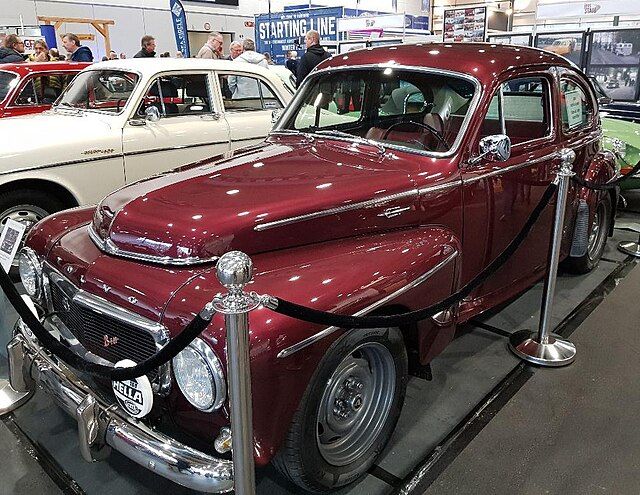
Photo: Volvo PV544 Sport by Andrew Bone from Weymouth, England, CC BY 2.0, via Wikimedia Commons.
You know that feeling when you hop into a different car and something’s… missing? Like you go to click the button to lock it from a distance and nothing happens, or you brake hard in the rain and the wheels feel like they’re doing their own thing. We get used to car features the same way we get used to Wi-Fi: you don’t think about it until it’s gone. Around Manchester and Stockport, with the M60 doing its best impression of a car park and tight spots near the Trafford Centre, these little bits of tech matter. A lot. At Dace Motor Company we see it every day because our used cars range from older, simple motors to newer ones packed with safety and comfort stuff. And it got us thinking: who started all this? Which cars were the first to bring in the features we now treat like “standard”, even though someone had to be brave (and probably got laughed at) for trying it first? So this post is a proper walk through the cars that brought in the big “firsts” - the kind of things you use without thinking, like three-point seat belts, air cushions that pop out in a crash, anti-lock brakes, cruise control, power steering, and even early sat nav. Some of these features showed up as options first, some were rare at the start, and loads of them took years to become common. But every single one started with a real car you could buy, driven by real people on real roads, doing the normal stuff: school runs, motorway slogs, rainy commutes, and panicky “why is that van stopping?” moments.
The three-point seat belt: Volvo PV544 and Volvo Amazon (1959)
Before this, seat belts existed, but they weren’t the “click and forget” type you use now. The big leap was the three-point seat belt - the one that goes across your lap and your chest and holds you in place without making you feel pinned down. Volvo engineer Nils Bohlin is the key name here. In 1959, Volvo introduced the patented three-point belt on the Volvo Amazon (also called the 120) and the PV544 in the Nordic markets, and Volvo made it standard. That’s huge, because making something standard is basically Volvo saying, “No, you’re having this, even if you didn’t ask.”
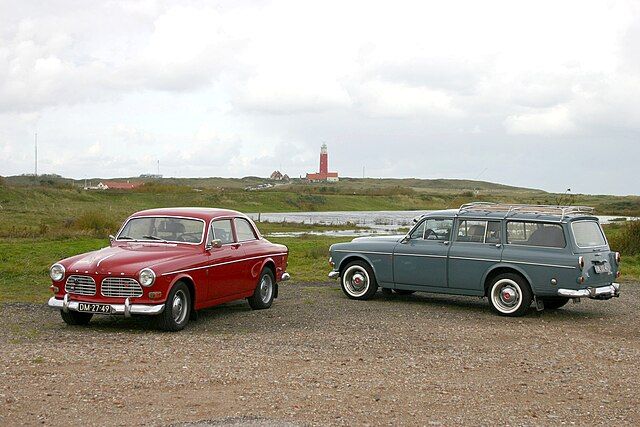
Photo: Volvo Amazon P130 and P220 by Macfip at Dutch Wikipedia, CC BY-SA 3.0, via Wikimedia Commons
And here’s the part people really respect Volvo for: they didn’t keep the idea locked away like a secret recipe. They let other car makers use the design, because it saved lives. Think about that for a second. A company gives away an invention because it keeps people alive. That’s why, even now, you’ll hear car people bring up Volvo when the topic is safety. In normal life terms, the three-point belt stops your body from smashing into the steering wheel or flying forward in a crash. It spreads the force across stronger parts of your body, like your hips and chest, instead of your face. Sounds grim, but it’s true. And once you’ve worn one your whole life, it’s easy to forget it had a “first day” in a real car, in 1959, with a real driver thinking, “This feels different.”
Automatic gears: Oldsmobile and the Hydra-Matic (1940 model year)
Now imagine driving without ever touching a clutch pedal. If you’ve learnt in a manual, you know the pain: hill starts, stop-start traffic, and that one moment you stall in front of a bus and wish the ground would open up. Automatic gearboxes didn’t start out as normal, and early versions weren’t always smooth. But the first mass-produced fully automatic gearbox for passenger cars is credited to General Motors’ Oldsmobile division: the Hydra-Matic. It was introduced in 1939 for the 1940 model year. (That’s the moment “no clutch, no shifting” became a real thing for everyday buyers, not just a fancy experiment. The impact is bigger than comfort.
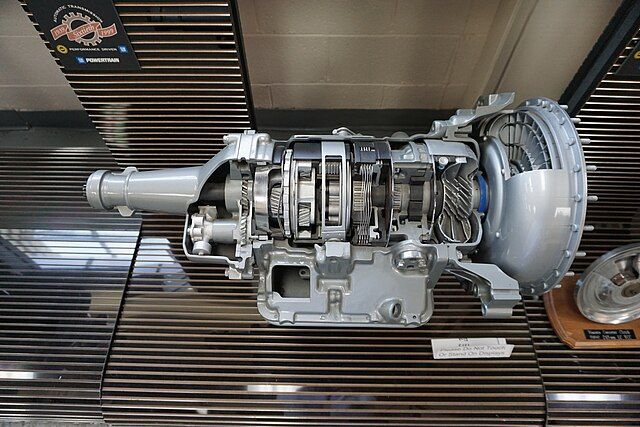
Photo: A 1956-64 Hydra-Matic 315 transmission at the Ypsilanti Automotive Heritage Museum in Ypsilanti, Michigan (by Michael Barera, CC BY-SA 4.0, via Wikimedia Commons).
Automatic gearboxes changed who could drive with less stress, helped people who had limited movement in their legs, and made city driving a lot calmer. If you’ve crawled through traffic around the A6 into Stockport, you already get it. And yes, manuals are still loved, and they can be fun, but the reason automatics feel normal now is because that early step happened in proper production cars - the sort people really bought, really used, and really wore out. It’s also a good reminder for used car shoppers: older automatics can feel different from modern ones. Some shift slower, some have fewer gears, and some feel a bit “slippy” if you’re used to newer cars. That’s not the car being bad. It’s the timeline. You’re feeling the distance between “first idea that worked” and “modern version everyone expects.”
Power steering: 1951 Chrysler Imperial and “Hydraguide”
If you’ve never tried steering a car without power steering, it’s hard to explain how heavy it can feel at low speeds. Parking becomes a full upper-body workout. Turning the wheel while the car isn’t rolling much? Your arms will tell you about it. Chrysler is widely credited with bringing the first commercially available passenger car power steering system to market on the 1951 Chrysler Imperial, calling it “Hydraguide.” Power steering sounds like a comfort feature - and it is - but it also affects safety because it helps you steer quickly when you need to. That quick “swerve a bit, then straighten up” move is easier when the steering isn’t fighting you.
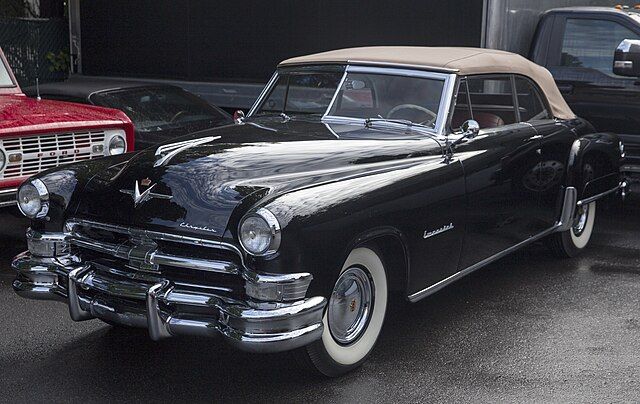
Photo: 1951 Chrysler Imperial Convertible in Black by Mr.choppers, CC BY-SA 4.0, via Wikimedia Commons
The funny thing is, once you’re used to power steering, you stop noticing it completely… until you jump into an older motor and suddenly you’re doing three-point turns like you’re rowing a boat. And power steering didn’t stay rare for long, because drivers clearly liked not arriving home with aching shoulders. Today it’s basically everywhere, and in newer cars it’s usually electric rather than hydraulic, but the big point stays the same: the wheel should help you, not punish you. Also, here’s a very normal used-car tip: if power steering feels weird - too heavy, too light, or noisy - don’t ignore it. It can be as simple as fluid on older hydraulic systems, or a worn part. Either way, it’s worth checking because steering should feel predictable, especially on wet roads around Greater Manchester where grip can change from one roundabout to the next.
Cruise control: Ralph Teetor and the 1958 Chrysler Imperial
Cruise control is one of those features that feels boring until you do a long motorway run. Then it suddenly feels like your right foot has been given a day off. The inventor most linked with cruise control is Ralph Teetor, an automotive engineer, and his system was manufactured and trademarked as “Speedostat.” Chrysler introduced it in 1958 models including the Chrysler Imperial, and Chrysler marketed it as “Auto-Pilot.” The way to think about it is simple: you set a speed, and the car tries to hold it without you constantly adjusting the pedal. That’s handy on long, steady roads. Not for busy city traffic, not for twisty lanes, but for that long stretch where you’re just rolling along. And yes, you still have to pay attention. You’re still driving. But cruise control can reduce tiredness because your foot isn’t doing tiny changes for ages. These days, loads of cars have smarter versions that can slow down when a car in front slows down, but the first big “normal person can buy it” step was that 1958 Chrysler Imperial era system. It’s also a good example of how new tech starts posh. Early cruise control was a luxury-car thing. Then people liked it, it got cheaper, and it spread. That pattern shows up again and again: a feature starts expensive, proves itself, then ends up in everyday cars, including the used cars you’ll see lined up at dealerships across Stockport and Manchester now.
Anti-lock brakes: Jensen FF (1966) and then Mercedes-Benz S-Class (1978)
If you’ve ever braked hard and felt the pedal pulse under your foot, that’s anti-lock braking doing its job. The simple idea is this: if your wheels lock up while braking, you slide. Sliding means you can’t steer properly, and that’s bad news. Anti-lock brakes stop the wheels from locking so you keep more control. One of the earliest production cars linked with anti-lock brakes is the Jensen FF, first sold in 1966, using a system based on aviation technology (Dunlop Maxaret). It wasn’t common, and it wasn’t cheap, but it was a real car, not just a concept.
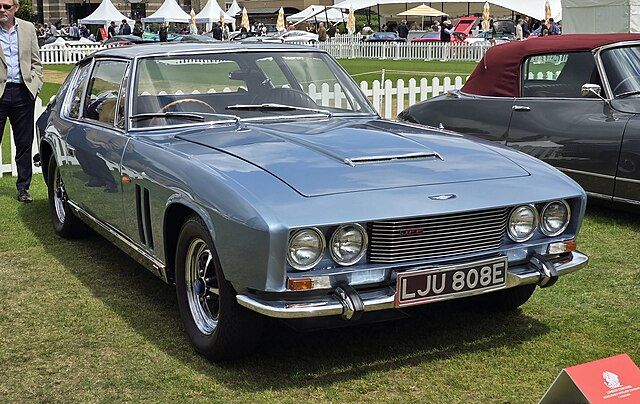
Photo: 1967 Jensen FF by Calreyn88, CC BY-SA 4.0, via Wikimedia Commons
Then there’s the big milestone that made anti-lock brakes feel like the future: Mercedes-Benz and Bosch presented a digital anti-lock braking system in August 1978, and it became available on the Mercedes-Benz S-Class (model series 116) from the end of 1978. That’s the moment the idea starts to look like something modern cars could adopt more widely. Why do people care so much about this one? Because braking is where panic happens. A kid runs out, someone stops suddenly, the road is slick, your brain goes “BRAKE NOW.” Anti-lock brakes help in those moments by letting you steer while braking hard. It doesn’t break the laws of physics, and it won’t save you from silly speeds, but it can help you keep control. And on wet winter mornings around Manchester, control is the whole story.
Airbags: GM’s early run and the Oldsmobile Toronado (mid-1970s)
Airbags are strange if you think about them too long. A fabric bag explodes out of your steering wheel… to protect you. It sounds like something a kid would come up with, then an adult would say “absolutely not,” and yet here we are. The early history is a mix of experiments and limited releases, but one clear milestone is General Motors’ early production run with airbags (what GM called the “Air Cushion Restraint System”). According to a widely cited history summary, GM installed airbags in a fleet of 1973 Chevrolet Impalas for government use only, and the 1973 Oldsmobile Toronado became the first car with a passenger airbag sold to the public.
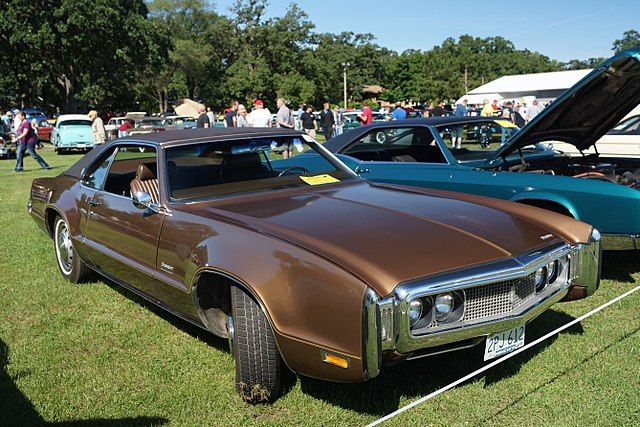
Photo: 1970 Oldsmobile Toronado by Greg Gjerdingen from Willmar, USA, CC BY 2.0, via Wikimedia Commons
The Toronado then appeared in GM’s experimental production run from 1974 through 1976 with driver and passenger airbags. So, what’s the point of an airbag if you already have a seat belt? The seat belt holds you back. The airbag cushions the space your head and chest might hit. They work together. An airbag without a seat belt can be dangerous, and a seat belt without an airbag still works brilliantly, but together they’re a stronger combo. Airbags took time to become common because they’re expensive and complicated, and because manufacturers had to learn how to make them reliable in loads of crash types, in hot and cold weather, in cars of different shapes. But that early Toronado era is a real “this is happening now” moment. It’s also why, in used cars, you should always check that the airbag warning light behaves properly. If a dashboard light stays on, it’s not a cute little decoration. It’s the car saying, “This safety system might not be ready.”
Sat nav before satellites: the 1981 Honda Electro Gyrocator
Sat nav feels like it arrived with smartphones, but car makers were trying to help drivers find their way long before that. And the early versions were… honestly pretty wild. Honda’s own heritage pages describe the Honda Electro Gyrocator, introduced in August 1981 as a dealer option for the second-generation Honda Accord, calling it the first navigation system ever developed for use in a car. Instead of using satellites (because that wasn’t a normal thing for cars yet), it used sensors and a gyroscope system, and it showed your position on special map sheets. An IEEE write-up describes it as the world’s first map-based automotive navigation system, released in 1981, using mileage and gyro sensors, with an on-board display and transparent road-map sheets. That’s basically a moving map in the early 1980s. Now picture someone trying to explain that to their mates back then: “Yeah, it shows where I am on a map… inside the car.” They’d get side-eyed for sure. But the idea is the same as now: you want to know where you are and where to go next, without pulling over and unfolding a paper map the size of a duvet. If you’ve ever gone round Stockport’s one-way bits and ended up thinking “How am I back here again?”, you understand why navigation systems caught on. Early systems were expensive and clunky, but they proved the point: drivers want guidance. And once the point is proven, the tech keeps improving until it becomes normal, then expected, then boring. That’s the life cycle of car features in a nutshell.
Stability control, remote locking, tyre pressure checks, and parking help: the “quiet heroes” of the 1980s and 1990s
Some features don’t feel exciting, but they’re the ones that stop bad days from turning into awful ones. Stability control is a perfect example. Bosch says it and Daimler-Benz brought stability control to the market for the first time in 1995 in the S-Class, and Bosch talks about it as a system that prevents skidding. That’s the simple version: if the car senses you’re sliding in a way you didn’t mean, it can brake individual wheels and help pull you back into line. It’s not magic, but it can help in that horrible moment where the back of the car starts stepping out on a greasy roundabout. Another “you don’t notice it until you need it” feature is tyre pressure monitoring. Porsche’s own story about the Porsche 959 mentions it being equipped with a built-in tyre pressure monitoring system, and the 959 is widely described as the first production car to use this kind of built-in monitoring. That matters because tyres are the only bits touching the road. If pressure drops, grip drops, braking changes, and steering feels off. Now, remote locking. Renault Group points out the 1982 Renault Fuego with remote-controlled door locks as part of the path that led to modern keyless systems. It sounds small, but it changed daily life: you lock your car in the rain without messing about at the door, you check it’s locked from a distance, you feel safer walking away. And parking help? Mercedes-Benz’s W140 S-Class is a famous “tech monster” of the 1990s, and a detailed W140 history PDF notes that from April 1995 an optional Parktronic system was available, which is sonar-based parking assistance. Reversing cameras also started showing up as early production features in Japan in the early 1990s; several industry explainers point to the Japan-market Toyota Soarer Limited in 1991 as an early production example with a reverse camera that came on in reverse. Put all of these together and you get the modern “safety net” feeling: the car quietly watches for skids, warns about tyres, helps you park, and makes daily routines easier. None of it replaces paying attention. But it does stack the odds in your favour - especially on real North West roads, with rain, glare, and the occasional surprise pothole.