


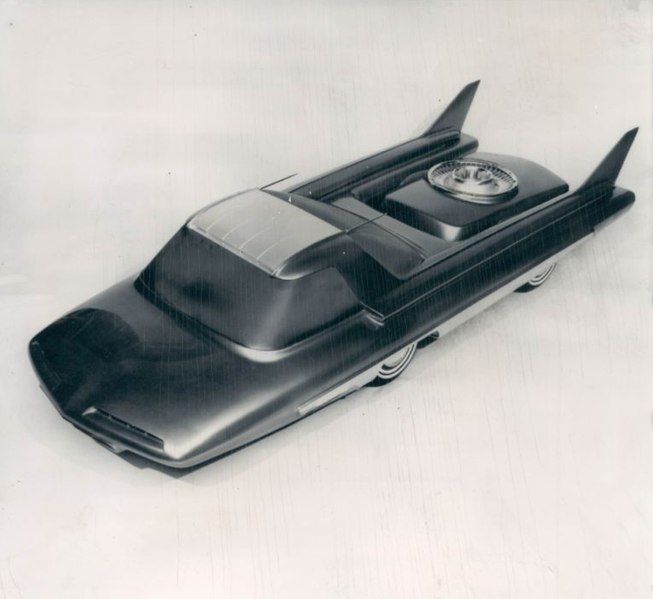
The Car That Would “Survive a Nuclear Explosion”
Imagine this: you’re driving through Stockport on the A6, mid-afternoon, when someone says, “Hey, would that car survive a nuclear blast?” You laugh, but then you wonder: did people ever seriously think about making cars that could handle world-ending bombs? As odd as it sounds, the Cold War era was full of such wild dreams. Let me take you through some of those ideas, what worked, what was totally impossible-and why most of it stayed in science-fiction land.
I’m writing this from Dace Motor Company’s point of view, because if you’re into cars, you’re going to find this fun. And yes, even though we sell used cars around Manchester and Stockport, today we’re talking about ones that might survive the unthinkable.
When people dream big: atomic cars and armored machines
Back in the 1950s and 1960s, lots of people believed atomic energy was going to solve all our problems: power plants with no pollution, flights to the moon, and yes-in some wild imaginations-cars powered by nuclear reactors. The idea: tiny reactors, shielded so you wouldn’t get cooked by radiation, running quietly for thousands of miles without refuelling.
One of the more famous ideas was the Ford Nucleon. It was a concept car from 1957 that never got built as a working vehicle (only scale models and sketches). The Nucleon would have a small reactor in the back. The reactor would heat water to steam, that steam would power the car-no petrol engine. But the big problem: shielding. To protect people inside from radiation, you’d need heavy lead or thick metal barriers-and that would make the car so heavy it couldn’t move well. Also, tiny reactors are very hard to control safely.
Other car firms had similar dreams. The Studebaker-Packard Astral was another atomic-powered concept. But they all hit the same wall: physics, safety, weight. So none of these ever made it onto roads. They were visions, hopeful sketches more than real plans.
Armor, blast deflection, and armored vehicles
Okay, so what if instead of power, you focus on protection? Cars (or trucks) that could absorb or deflect huge blasts, shield occupants, survive radiation, shock waves, EMPs (electromagnetic pulses)? Engineers and militaries actually looked at things like that (for tanks, not everyday cars).
One concept from the U.S. was the ULTRA AP-Armored Patrol Vehicle. It’s not a consumer car. It was built to withstand blasts, protect people inside, and resist explosions from beneath (like land mines or bombs). The cabin is shaped to deflect blasts, with armor plates and a frame that resists crushing. The seats are shock-absorbing, to help protect you if something pushes the car violently.
Another idea often talked about: wrapping part of the vehicle in metal shielding, or using a “blast wedge” under the chassis to deflect force upward. These ideas show up in military prototypes more than in civilian cars. The goal is: keep the cabin intact even when the ground nearby is blasting.
Some military recon vehicles from the Soviet era had features intended to handle harsh conditions and even contaminated environments. For instance, the BRDM-1 had a sealed compartment and overpressure system to help protect against contamination (for example, chemical or radioactive particles in the air) if the vehicle passed through a dangerous zone. But even that vehicle had limits: armor was thin, vulnerable to heavy fire, and the electronics and tires remained risky. It wasn’t bulletproof against everything, much less “nuclear explosion proof.”
The harsh reality: why “nuclear-proof” cars are almost impossible
Let’s bring down the dream to Earth (or Stockport). No car can fully survive a nuclear explosion. Here are the main reasons:
1. The shock wave
A nuclear blast creates a massive pressure wave. Buildings get flattened. Cars near ground zero would be crushed, shredded, or flipped. Unless your car is a bunker on wheels, it won’t stand.
2. Radiation
Even if you survive the blast, there's lethal radiation. To block that, you need very thick, dense shielding-think lead, tungsten, or layers of concrete and steel. That adds tons of weight. A normal car can’t carry that.
3. Electromagnetic Pulse (EMP)
Nuclear blasts create EMPs. Those are surges of electromagnetic energy that can fry electronics. Modern cars have circuits, computers, sensors. An EMP could disable engines, ignitions, dashboard electronics. Some people point out that really old cars (with minimal electronics) might fare a little better. But even then, it's no guarantee.
4. Heat and fire
The explosion gives off extreme heat. Even if your car somehow resists pressure and radiation, it might burn or melt parts-windows, tires, rubber seals-all are vulnerable.
5. The logistics problem
Even if you built an armored, shielded vehicle, the cost would be astronomical. Maintenance, mobility, fuel, parts-so many challenges. It wouldn’t be practical for everyday use.
So all the “cars built to survive a nuclear blast” are mostly in concept, fiction, or military prototypes, not real models you could test drive.
Real examples and quirky inventions
To bring things closer, here are some real weird or interesting cars and ideas that touched on survival or safety in extreme situations.
Sir Vival
This was a safety experiment car from 1958 by Walter Jerome. It had the engine portion separated from the passenger cabin by a joint, so in a crash the cabin might move separately. The driver sat in a raised “turret” with 360° visibility. It’s not a “blast car,” but it shows how inventors try weird setups for safety.
Rhino test vehicles
In the 1950s, some experimental military vehicles were built to test new wheel and chassis designs, using heavy frames, hemispheric wheels, etc. The idea: make super stable armored platforms that can take hits.
Armored civilian SUVs / “apocalypse cars”
In recent years, some firms make extremely rugged, armored SUVs and 4x4s as “doomsday” vehicles. They can have blast protection, reinforced steel, bulletproof glass, etc. But they are extremely expensive and usually for niche buyers. These are closer to “luxury bunkers on wheels” than normal cars.
The thing is, even those have limits. They might protect you from a bomb thrown nearby or gunfire-but not from the full effects of a nuclear blast.
What we can learn from those extremes (and what you can apply)
Just because the “survive nuclear explosion” idea is mostly science fiction doesn’t mean there aren’t lessons you can take into everyday car buying or owning.
Safety first
Look for cars with strong crash protection: good crash test ratings, strong frames, side impact protection. Don’t expect them to handle blasts-but they *should* protect you in real, everyday accidents.
Simplicity helps
Cars with fewer complex electronics are easier to repair and sometimes more resilient. If something goes wrong, you don’t want a minor sensor or circuit to shut down your entire car.
Armor and protection for niche cases
If someone really needs added protection (executives, secure transport, etc.), they use armored vehicles. But those are custom builds, not mass market.
Preparedness mindset
Having spare parts, tools, good maintenance, and avoiding over-specialised components gives you more reliability. It won’t help against a bomb, but helps in breakdowns or rough use.
Why this matters for you-and for Dace Motor Company
You’re probably not going to buy a “nuclear-proof car” from us at Dace Motor Company (yet!). But thinking about extreme designs can highlight what makes a good used car:
- A solid, strong frame
- Reliable mechanical systems
- Clear history and checks (with us you get full HPI checks)
- No mystery electronics that might fail
- A warranty you can trust (ours is in-house)
- A price that feels fair (and we’ll even beat like-for-like main dealers)
Even if a car that survives an atomic blast remains fantasy, the qualities that make a car safe, durable, and trustworthy are very real. That’s what we care about at Dace-and what you deserve as a customer around Manchester or Stockport.