


The Car That Could Run on Water - Myth or Reality?
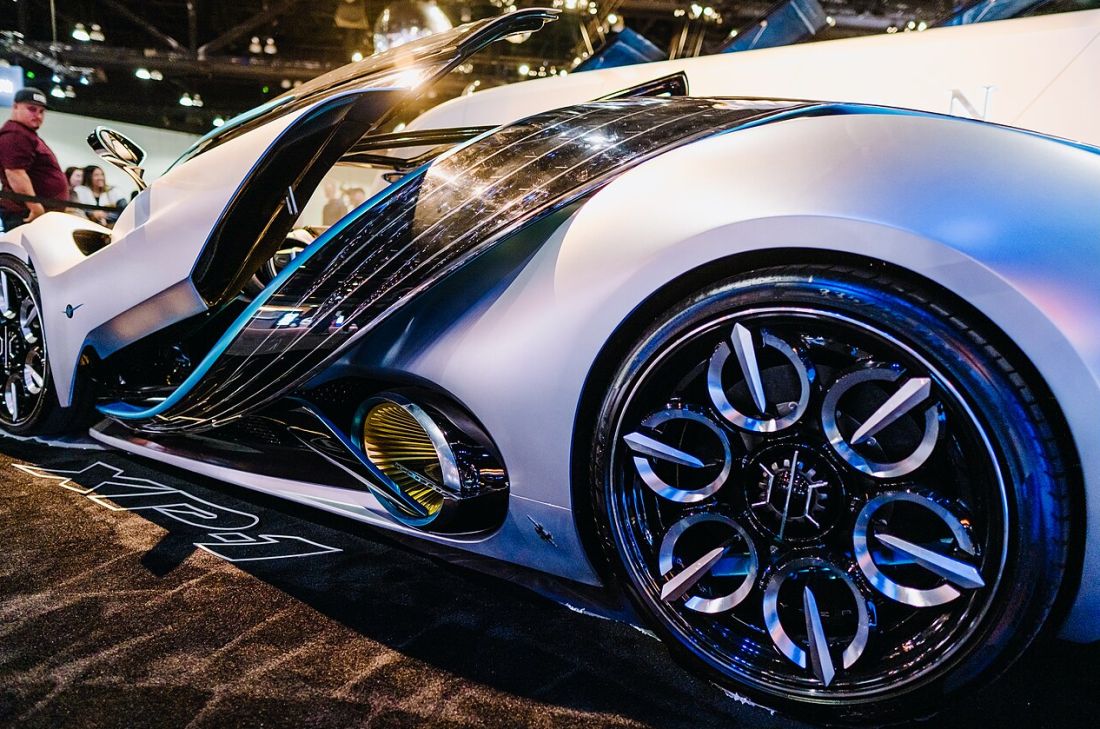
Image: The Hyperion XP-1 is a planned hydrogen-powered sports car being developed by American California-based automobile manufacturer Hyperion Motors. Photo by Stacy Sheff from Los Angeles, USA, CC0, via Wikimedia Commons.
Have you ever heard someone say “a car that runs on water”? It sounds wild, right? As if you just fill it up with tap water in Stockport or Manchester and off it goes. But before you start dreaming of zero-cost motoring, let’s have a chat about what people really mean, what has been tried, and whether there’s any chance it could happen - or ever make sense for a used car you buy from us at Dace Motor Company.

What people mean when they say “water car”
When someone says “a car that runs on water,” they usually don’t mean literally water-as in H?O as fuel. Here are some versions of what people propose:
- Electrolysis / “water fuel cell” idea: You use electricity to split water into hydrogen and oxygen. Then you burn or use the hydrogen to drive a motor.
- “Water + something else” ideas: Some ideas use water with a chemical additive or mix, or use water just as part of the process, not the whole fuel.
- Hydrogen fuel cell cars (real tech): These aren’t “water cars,” but their exhaust is water vapor. They run on hydrogen gas, stored in tanks, which reacts with oxygen to produce electricity and water.
- Claims, myths, exaggerations: People over the decades have claimed they built cars that run purely on water, often without solid proof.
So when you read “water car,” you have to ask: which version is being pitched?
The big rule: you can’t get more out than you put in
Here’s the kicker - there’s a fundamental rule in physics: energy can’t be created from nothing. If you want to split water into hydrogen and oxygen (electrolysis), you need to put in energy (electricity). Then, when hydrogen burns or is used in a fuel cell, you get energy out - but you always lose some in the process (heat, inefficiencies).
So, if someone claims their car uses water directly, and they say it “creates energy” from water alone, that tends to violate that basic rule. That’s why most scientists and engineers view the “water-only car” as a myth.
In fact, the Office for Science and Society wrote an article called The Folly of Water-Fuelled Vehicles, saying you can’t get more energy out than you put in.
MIT’s “Ask an Engineer” also tackled the question “Why can’t cars run on water instead of gasoline?” and explained that breaking water apart always takes more energy than you get back.
So if someone claims their car runs directly on water without any external energy input (like electricity, solar, etc.), that’s a red flag.
The famous case: Stanley Meyer
One of the most talked-about names in this area is Stanley Meyer. Back in the 1990s, he claimed to have built a “water fuel cell” and a car that ran on water. He said you could drive long distances using only water as fuel.
But when the claims were examined in court, experts found that his device was just conventional electrolysis. The court ruled that his claims were fraudulent.
His patents are in the public domain now, but nobody has proven they can actually do what he claimed - under scientific scrutiny.
Some conspiracy theories suggest he was poisoned or silenced, but the official cause of death was a cerebral aneurysm.
So Stanley Meyer is a cautionary tale: a very bold claim, a lot of publicity, but no reliable, reproducible proof accepted by mainstream engineers or scientists.
Real technology: hydrogen fuel cell cars
Even though “water cars” as popularly imagined are mostly myths, there is a real class of vehicles that are close cousins. These use hydrogen gas, not raw water, but produce water as a byproduct. These are fuel cell electric vehicles (FCEVs).
Here’s how they work (simplified):
- You store hydrogen gas in a tank under pressure.
- That hydrogen is fed into a fuel cell. Inside, it reacts with oxygen from the air.
- The reaction produces electricity, heat, and water vapor (as exhaust).
- The electricity drives electric motors which move the car.
So you see, these cars are not running on water - they run on hydrogen. Water is just the exhaust.
A good example is the Toyota Mirai. It’s a commercially sold hydrogen fuel cell car. It stores hydrogen in tanks, and its tailpipe output is mostly water vapor.
You might hear about these in Manchester or the UK. The catch is: hydrogen infrastructure (refuelling stations), safety, cost, and energy production are all challenges.
Why hasn’t the “water car” idea caught on?
Let me list some real challenges - and I’ll try to keep it simple:
- Efficiency loss: Any system that splits water and then recombines for energy loses energy along the way. You lose in conversion, heat, resistance, etc.
- Energy source: Where does the electricity to split water come from? If that electricity comes from fossil fuels or an inefficient process, the benefit is small or negative.
- Storage and handling: Storing hydrogen safely is hard. It needs strong tanks, good materials, safety systems.
- Cost: The components (fuel cells, high-pressure tanks, special materials) are expensive.
- Infrastructure: You need hydrogen refuelling stations. In the UK, there are some, but not many.
- Safety and standards: Hydrogen is flammable; leaks, containment, materials, safety testing-all that adds complexity.
- No free energy: As I said, you can’t beat the laws of physics. Any true “water only” car would have to break fundamental rules.
Because of all this, real automakers who work in this area focus on hydrogen, not water. They accept that hydrogen has to be produced somewhere else (e.g. using electricity, or from natural gas, or from renewables). Then they use it efficiently.
Also, many “water car” claims out there are unverified, and sometimes downright scams. In 2020, a fact-checking article showed that water-motor videos claiming long mileage were wrong: water by itself can’t drive a motor.
Could a “water car” ever be real in the future?
I’m not going to say “never.” Science sometimes surprises us. But given what we know now, here’s how it might (if ever) become real - and how unlikely that is for everyday cars in Stockport or Manchester.
Possible pathways:
- External energy + water splitting: Imagine a car with solar panels or some external energy source. It splits water, stores hydrogen, then uses that. That’s more like a hybrid or energy storage system.
- Breakthrough materials or catalysts: If someone discovers a material or chemical reaction that allows splitting water at extremely low energy cost (far below what we think is possible), then maybe.
- Small scale / niche use: Maybe in boats, in remote areas, or in systems where water is abundant and energy is cheap, you could see special devices.
But for everyday road cars, for carrying people around Manchester, for dealing with cold weather, with safety, with cost constraints - it’s a steep mountain to climb.
In short: it's more realistic that we’ll see hydrogen, battery electric, hybrids, or other alternative fuels, rather than pure “water cars.”
What this means for someone buying a used car in Stockport or Manchester
You might wonder: if water cars were real, would they come into used stock? Would Dace Motor ever offer them? Here’s what matters:
- Right now, there are no mass-produced cars that run on water alone. So you won’t see one in any showroom.
- Hydrogen fuel cell cars do exist, but they’re rare. You might find hydrogen cars in specialty dealerships, but it’s not common among the usual used car brands (Audi, BMW, Toyota, etc.).
- Infrastructure is limiting. Even if you had a hydrogen car, finding a refuelling station in Greater Manchester or around Cheshire might be hard.
- Reliability, servicing, parts - with new tech comes risk. You’d want assured support, warranty, specialists.
- From where Dace stands: our priority is giving you quality, trustworthy used cars with warranties, finance, and peace of mind. A showpiece “water car” based on unverified tech wouldn’t align with that promise.
So for most buyers, your best bets are established technologies: petrol, diesel, hybrids, electric. And maybe, down the road, hydrogen will play a role.
A couple of prototypes & interesting ideas
Just to keep things fun, here are some real prototypes or concepts that play in a related space:
- Riversimple Urban Car: A small UK prototype hydrogen fuel cell car. It doesn’t run on water, but uses hydrogen in a fuel cell.
- Hyperion XP-1: A hydrogen sports car prototype with eye-popping claimed range (over 1,000 miles). But it's still in development.
- “Water fuel cell” gadgets: Over the years, many inventors have claimed to build kits or add-ons that convert your regular car to run on water. None have held up under scientific scrutiny.
- Water + electricity hybrids: Some researchers propose combining water splitting with solar cells or other renewable inputs; these are more realistic directions than pure water engines.
These show that there’s curiosity, invention, and experimentation going on. But turning prototypes into safe, reliable, affordable, mass market cars is a huge leap.
Why this topic still fascinates people
You know what I think? People like the idea because it sounds clean, simple, almost magic. You fill a car with water (something we have plenty of), and it drives. No smog, no petrol, no fuss. It’s a compelling dream.
Also, when petrol prices spike, or we worry about climate change, people want alternatives. Some see “water car” as a shortcut. But shortcuts in physics almost always have hidden costs.
And finally, stories like Meyer’s are dramatic. They pull you in. They mix invention, controversy, sometimes tragedy. They make you ask: what if?
What to watch for in future
If you’re curious, here are things you can keep an eye on (in Manchester, UK, or globally):
- New fuel cell car launches from big brands (Toyota, Hyundai, Honda)
- Hydrogen refuelling stations expanding (if more stations appear in Greater Manchester)
- Advances in catalysts or materials that reduce energy needed to split water
- Research from universities or government labs
- Prototypes shown at motor shows in the UK
If something looks too good to be true - someone claiming a car that runs purely on water, cheap - always ask for independent verification, tests, peer reviews.
I hope this gives you a clear, believable picture: the idea of a car running on water is mostly in myth or wishful thinking today. But parts of it (hydrogen, fuel cells) are real and moving slowly forward.