


The Car That Could Drive on Water - Amphibious Vehicle Experiments
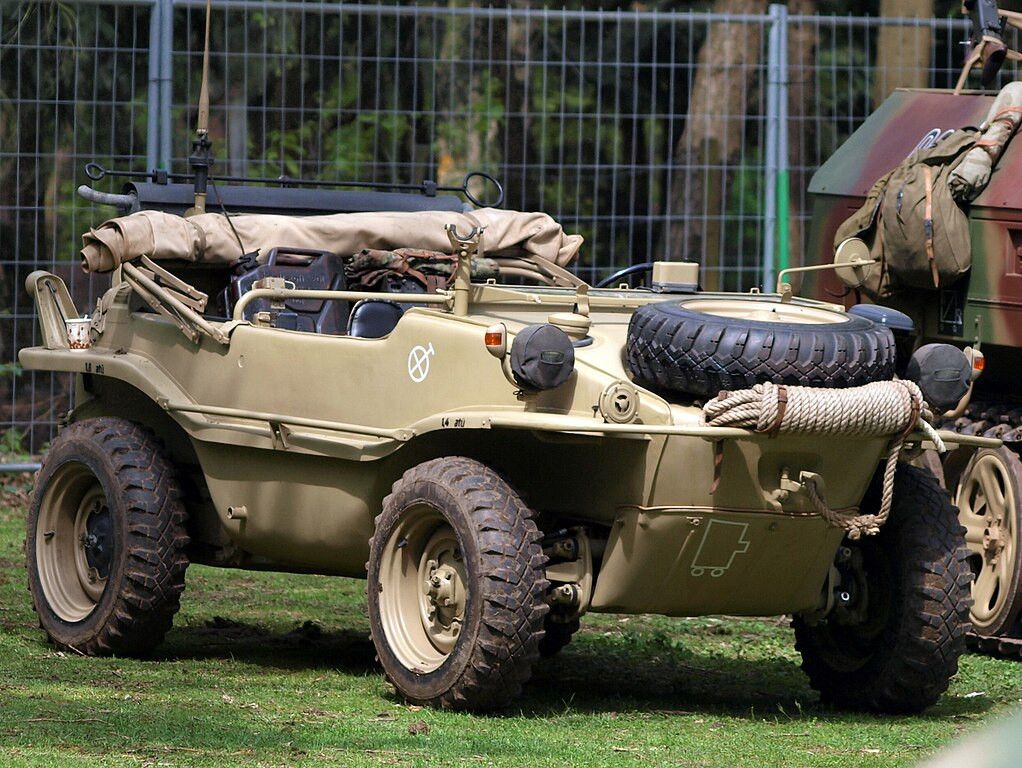
Image: Volkswagen Type 166 Schwimmwagen by AlfvanBeem, CC0, via Wikimedia Commons
Cars that float? Sounds mad, doesn’t it?
Most of us think of cars and water as two things that should never meet. You see a big puddle on the A6 in Stockport after a heavy downpour, and your first thought is usually, “better slow down” not “I bet my car could cruise through like a speedboat.” And yet, people have been trying to build cars that can also travel on water for over a century. Yep, a vehicle that rolls along the road one minute and sails across a river the next. It sounds like something out of a James Bond film - which, by the way, it is - but behind the movie magic there’s a long history of inventors, engineers, and dreamers tinkering away at amphibious vehicles.

The whole idea comes from a simple but tricky question: why stop at roads? If you could cross lakes, rivers, or even shallow seas in your car, you’d cut out half the hassle of travel. Imagine driving from Manchester to Blackpool without having to take the motorway detours, just straight across the Ribble estuary. Sounds brilliant, right? But of course, the difference between sounding brilliant and actually working in real life is massive. Cars are heavy, they’re built to grip the road, not float, and engines don’t really enjoy water very much. Still, that didn’t stop people from trying.
Back in the day, most of these experiments weren’t about fun or holidays. They were about war. Soldiers needed to move quickly across rivers, marshes, and beaches, and waiting around for a bridge wasn’t always an option. So the military pushed the development of amphibious vehicles more than anyone else. Later on, though, that sense of adventure rubbed off on the public. Suddenly, you had quirky inventors and big car brands giving it a go, hoping to sell a car that could handle both Stockport roads and the River Mersey. The truth is, the results have been mixed. Some designs looked clever but sank quicker than you can say “oh no.” Others managed to survive, even thrive, and became legends of engineering.
You can see why this topic still fascinates people. It’s not just about practicality - it’s about that feeling of freedom, of not being limited by where the tarmac ends. And for us at Dace Motor Company, surrounded by all kinds of brilliant used cars from small city runarounds to big 4x4s, it’s fun to look back at these ambitious experiments and ask: could a car that drives on water ever really be a normal thing?
War machines that could swim
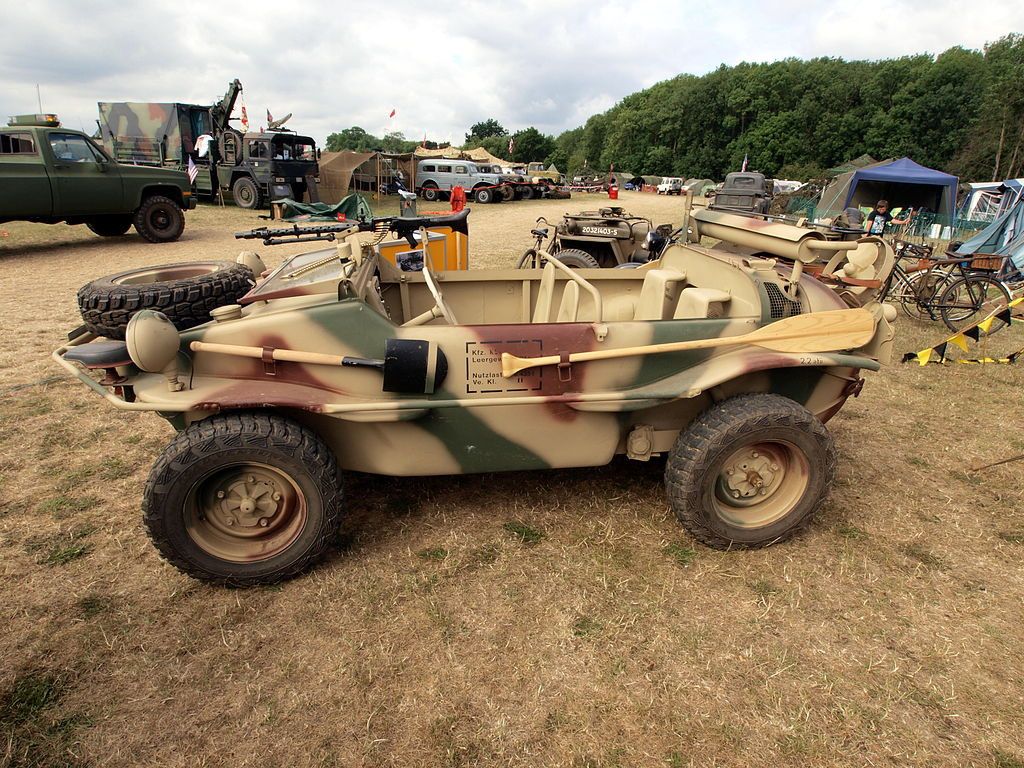
Image: Volkswagen Typ 166 Schwimmwagen by Alf van Beem, CC0, via Wikimedia Commons
Let’s start with the serious side: the military. If you’ve ever read about World War II, you’ll know rivers, canals, and coastlines often got in the way of troops moving quickly. The answer? Vehicles that didn’t care whether they were on dry land or in the drink. The Germans were surprisingly ahead in this game. They built something called the Schwimmwagen - basically a Volkswagen Beetle with a boat hull and a propeller at the back. Doesn’t sound glamorous, but it worked. Thousands of them were used during the war, ferrying soldiers across rivers or sneaking through marshy areas. It wasn’t fast, but it kept moving where normal cars would just get stuck and drown.
On the Allied side, the Americans built a beast called the DUKW, or “Duck” as everyone called it. Imagine a big army truck that could also float, carrying troops and supplies straight off ships and onto beaches. It played a massive role in the D-Day landings, when soldiers stormed the beaches of Normandy. Without those amphibious trucks, getting men and equipment ashore would’ve been much slower and more dangerous. These vehicles were far from stylish, but they were lifesavers.
The Soviets also joined the race, building their own amphibious tanks and personnel carriers. For them, rivers were everywhere, and they needed vehicles that could cross them without waiting for bridges. The thing is, these military vehicles weren’t exactly practical for daily life. They were huge, noisy, and built for war, not popping down to the shops in Manchester for milk. But the technology sparked something. If soldiers could have cars that swam, why not civilians? That’s when the experiments took a more playful turn.
For anyone living near the Peak District, the idea makes a strange kind of sense. Picture driving your car up towards Ladybower Reservoir and then just… gliding onto the water for a shortcut across. The military gave us the foundations, but it was inventors and dreamers who thought: “hang on, this could be fun.”
James Bond makes it cool
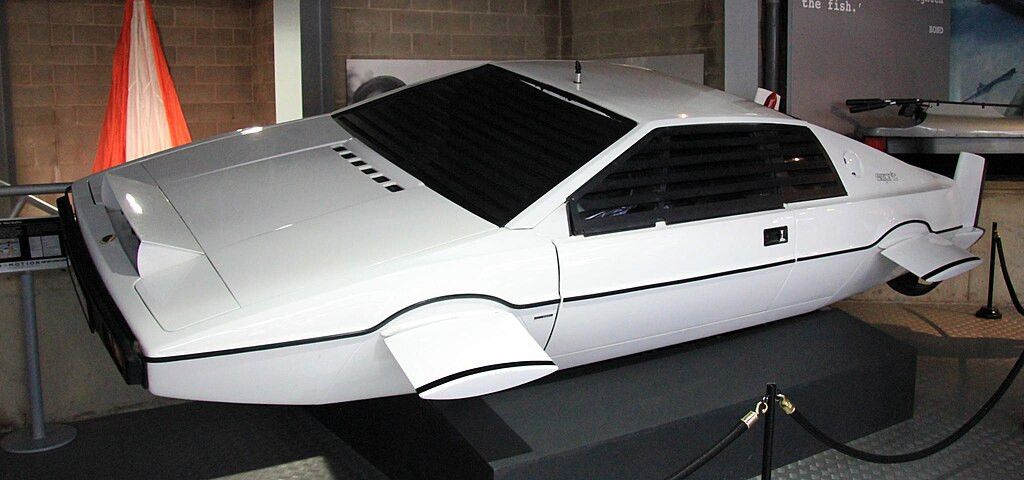
Image: Lotus Esprit (The Spy Who Loved Me) by Karen Roe from Bury St Edmunds, Suffolk, UK, CC BY 2.0, via Wikimedia Commons
Now, let’s be honest. Most people didn’t really care about amphibious cars until James Bond rolled one straight into pop culture history. If you’ve seen “The Spy Who Loved Me,” you’ll remember Roger Moore driving a white Lotus Esprit straight into the sea. Moments later, the car turns into a submarine, complete with fins and torpedoes. It’s one of those classic Bond moments that had everyone thinking, “imagine if that was real.”
Here’s the twist - it was real. Well, sort of. The car used in the film was heavily modified to look like it worked underwater. Several versions were made for different shots, including one that was basically a mini-submarine dressed up like a car. And yes, it could actually move underwater, though very slowly. The idea of driving from Deansgate in Manchester straight into the Ship Canal in a Bond-style Lotus might make you grin, but sadly, it’s not something you’ll be doing any time soon.
Bond wasn’t the only bit of popular culture to make amphibious cars cool, but it was the most famous. It sparked a wave of interest. People wanted to believe that one day, they could drive out of a traffic jam on the Mancunian Way, slip into the River Irwell, and sail past everyone. For a while, inventors leaned into that dream, building prototypes that looked like something you’d expect to see at Salford Quays on a Sunday afternoon.
The funny thing is, Bond made the idea seem sleek and glamorous, but in reality, most amphibious cars looked kind of clunky. Big wheels, chunky bodies, and strange shapes that were meant to float rather than look good outside the Trafford Centre. Still, thanks to cinema magic, the seed was planted: cars that drove on water weren’t just possible, they could also be stylish.
The car companies that actually tried
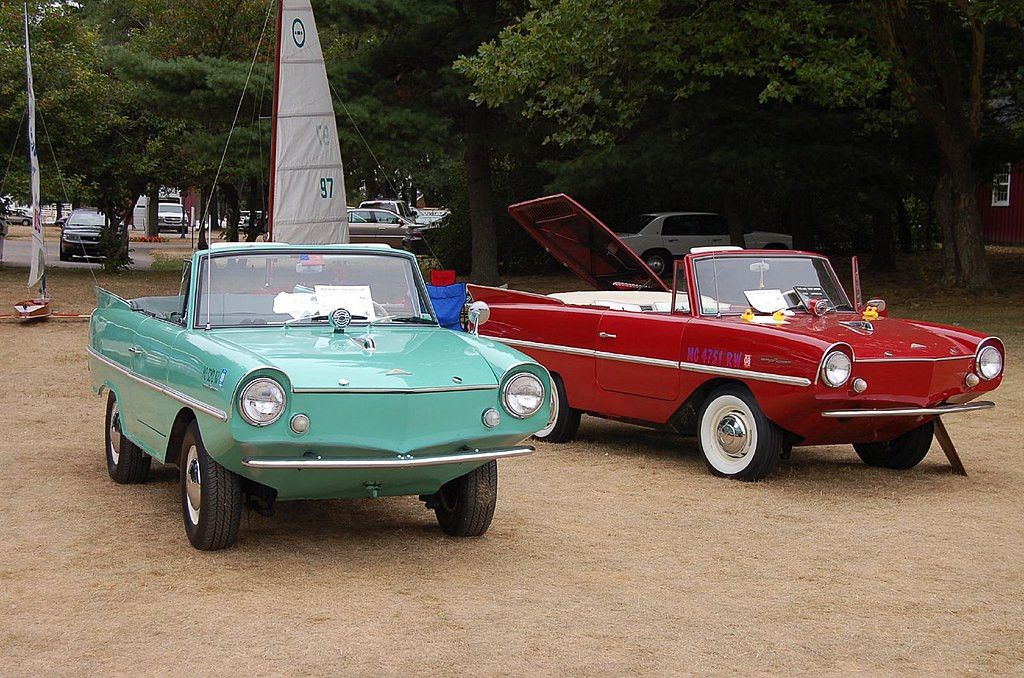
Image: 1966 and 1962 Amphicars by Joe Ross from Lansing, Michigan, CC BY-SA 2.0, via Wikimedia Commons
You might think this was just a hobby for mad inventors, but proper car makers had a go too. In the 1960s, there was a car called the Amphicar. Made in Germany, it was sold in the UK and the US, and it promised something nobody else could: a car that could drive into a lake, turn on its twin propellers, and keep going. And it actually worked. Sort of. Around 4,000 Amphicars were built, and they were popular with people who liked showing off. American President Lyndon B. Johnson famously had one and loved scaring his guests by pretending the brakes had failed as he “accidentally” drove into a lake. Once the panic wore off, the guests realised they were floating safely.
The Amphicar wasn’t perfect, though. It was slow in water, it leaked if you weren’t careful, and it cost a lot to build. By the late 60s, production stopped. But it proved a point - cars on water weren’t just a fantasy. In more recent times, companies have tried again with more advanced technology. You’ve got the Gibbs Aquada, for example, which made headlines in 2004 when Sir Richard Branson drove it across the English Channel in just over an hour. That wasn’t a trick - the car really could switch from road to water in seconds. It was fast enough to be exciting, and sleek enough to look cool.
The problem? Price. These vehicles were expensive to make and even more expensive to buy. We’re talking well into six figures, which isn’t exactly within reach for most families in Manchester or Stockport. And let’s face it, the UK doesn’t have endless sunny lakes to enjoy them on. It rains. A lot. Driving a car into the River Mersey in February? Doesn’t sound too appealing.
Still, every few years another company pops up with a new amphibious car, often making headlines but rarely making it big. They’re tricky to get right. Cars need to be light to float, but strong to handle the road. And you’ve got to keep all the water out of places it really shouldn’t go. It’s a balancing act that even big brands struggle with.
Why they haven’t taken over Stockport (yet)
So, if amphibious cars exist, why don’t we all have one parked outside our houses in Heaton Moor or Eccles? The answer’s simple: practicality. They’re expensive, they’re tricky to maintain, and in everyday life, you don’t really need one. Sure, the idea of bypassing traffic on Kingsway by sailing down the River Mersey sounds tempting, but would you really want to clean all the mud and slime off your car afterwards? Probably not.
Another issue is safety. Cars are designed to handle crashes on roads, not emergencies in water. Amphibious vehicles need to follow boat safety rules as well as car safety rules, and that’s a lot of regulations to get through. It means they’re often sold as luxury toys rather than useful cars for the masses. Plus, here in Manchester and Stockport, we’re not exactly surrounded by tropical beaches and glassy lakes. The thought of taking an amphibious car for a dip in Salford Quays might appeal to some, but it’s hardly the same as cruising across Lake Como.
That being said, the dream hasn’t gone away. With electric cars becoming more common, some inventors reckon they can crack the code. Electric motors don’t need air like petrol engines do, so in theory, they’re easier to adapt for water use. Who knows - in 20 years we might see electric amphibious vehicles zipping about. For now, though, it remains more of a novelty than a necessity.
At Dace Motor Company, we love looking back at these experiments because they show how ambitious people can be. We might not sell cars that float (at least, not yet), but we’ve got everything else covered - from small hatchbacks perfect for Stockport’s busy streets to big 4x4s that can handle the Peak District. And let’s face it, with over 600 quality used cars across our four showrooms, you’re more likely to find your dream car with us than waiting around for someone to perfect an amphibious one. But if they ever do? Well, you can bet we’ll be first in line to test drive it down the Mersey.