


The Car That Could Drive on Railway Tracks
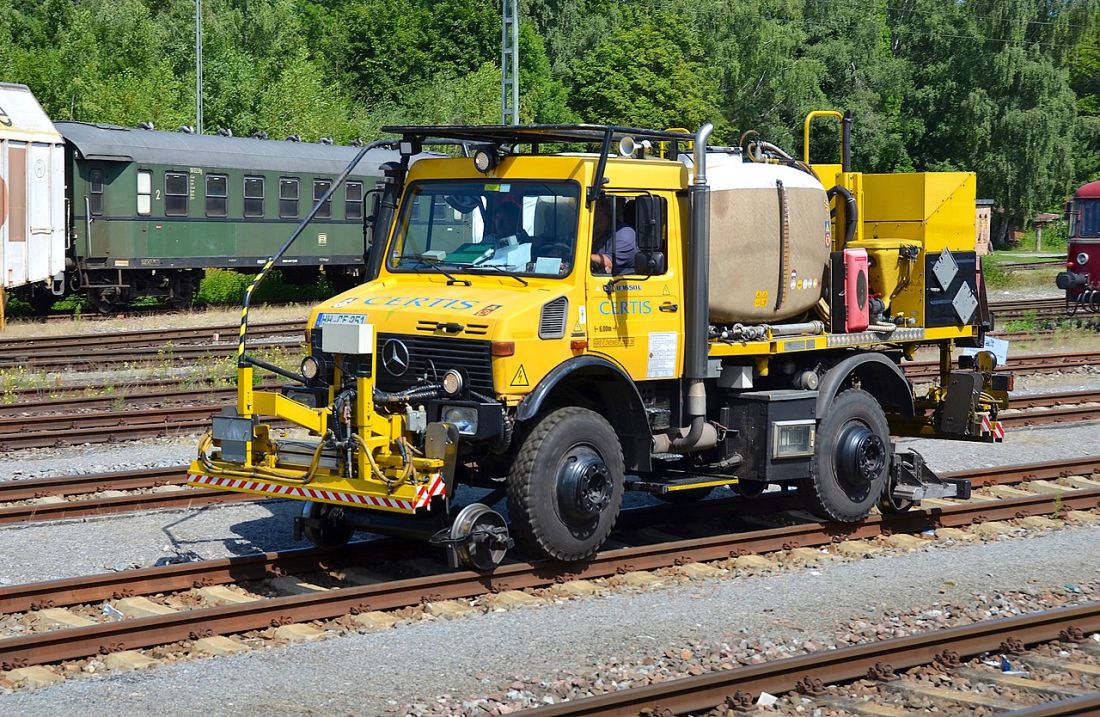
Photo: Certis Unimog, road-rail vehicle used for vegetation control (by Olga Ernst, CC BY-SA 4.0, via Wikimedia Commons)
If you’ve ever walked past the tram lines near Deansgate in Manchester, or taken a ride on the Metrolink through Stockport, you might have spotted those shiny rails and thought: “That’s for trains, right?” But what if I told you that sometime after the Second World War someone built a vehicle that could switch between the road and railway tracks? Yep-sort of a car or bus that could ride on rails. We at Dace Motor Company love quirky motoring history, and this one’s a cracking story.
After World War II, Britain (and many countries) had a big shift going on in transport. More people were buying cars, roads were being improved, railways were struggling with costs, and engineers were tinkering with wild ideas.
In the North West-Stockport, Manchester, the kind of place our customers know well-there were plenty of rail routes, branch lines, old tracks, and road routes. So the idea of a vehicle that could hop from road to rail had some appeal: fewer constraints, more flexibility.
What exactly were these vehicles?
They’re often called road-rail vehicles (or sometimes rail-road vehicles). They’re built so they can run on regular roads and on railway tracks. Most of the time they’re repurposed trucks or buses with extra rail wheels or flanged wheels added.
For example: the Japanese Sumida M.2593 (also known as Type 91) had six road wheels which could be swapped for flanged railway wheels. It went about 40 km/h on road and up to 60 km/h on rails.
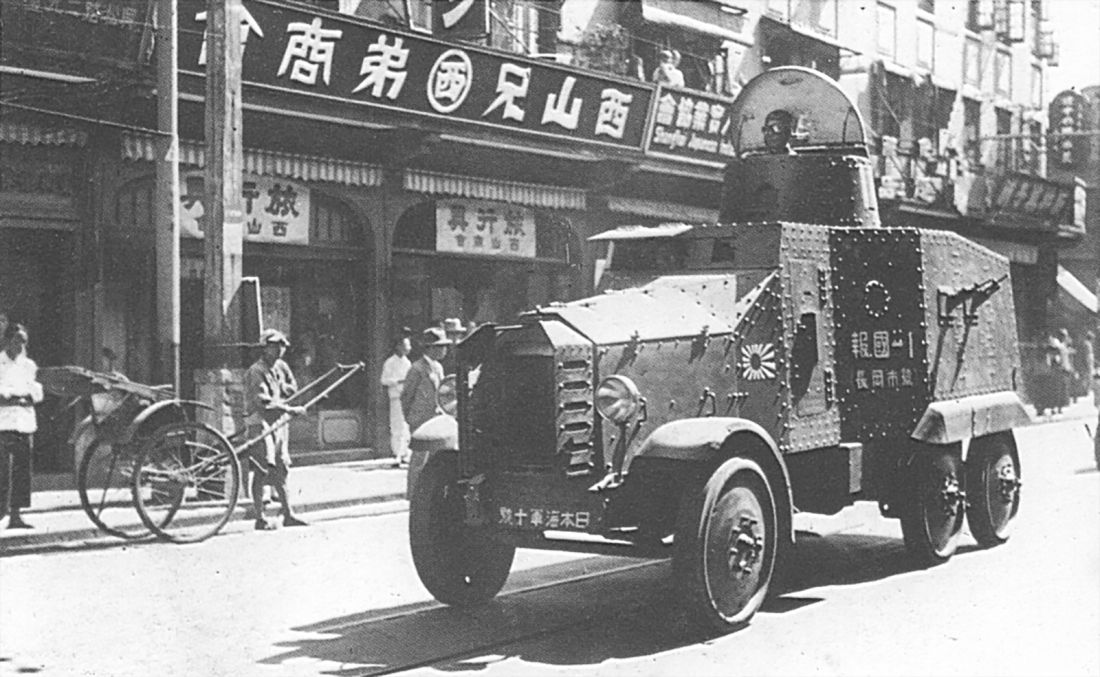
Photo: Sumida Model P armoured car by Imperial Japan military reporter, Public domain, via Wikimedia Commons.
Or the Soviet BAD?2 armoured car from 1932 which could convert to rail mode in about 30 minutes.
These are military examples, but after the war the idea was adapted in civilian contexts, or at least experimented with. In the UK, for instance, there was discussion of "Ro-Railer" type buses that could travel on standard roads, then switch to rails.
Why would someone build such a thing?
There are a few good reasons:
- Flexibility: If you live in Greater Manchester or around Stockport, you’ll know that some of the old railway lines weren’t very busy, or some stations were closed. A vehicle that could drive on road sections and then use existing tracks could link places in creative ways.
- Cost: Building new rails is expensive. If you can use both road and rail infrastructure, maybe you get cheaper expansion. Some engineers thought rails offer less rolling resistance (so less energy wasted) while roads offer steering and flexibility.
- Utility: Maintenance vehicles especially loved this idea-a truck could drive on the road up to a rail line, drop onto the tracks and do inspection or repair work. That way you don’t need a full rail depot or special vehicle for each mode.
The challenges (and why it never really took off)
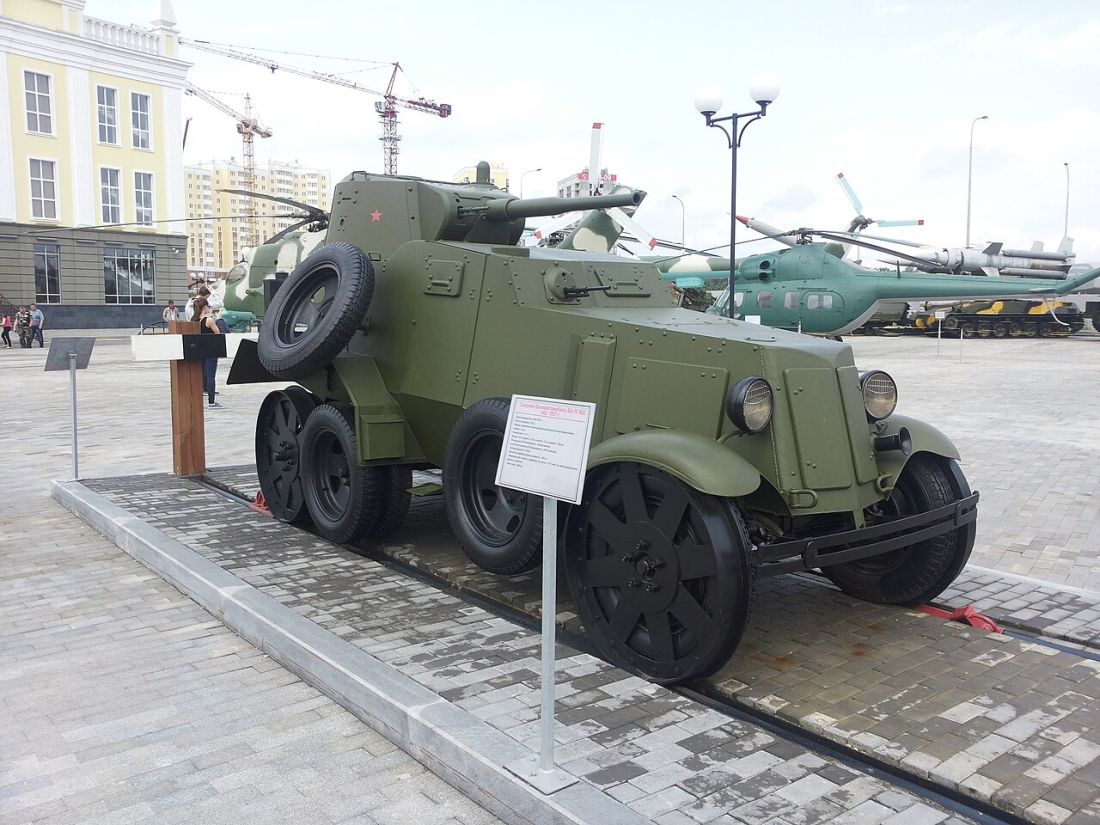
Photo: Road-rail version of BA-10 armoured car by SysMusDes, CC BY-SA 4.0, via Wikimedia Commons.
Cool as the idea is, there were plenty of roadblocks (pun intended).
- Converting between road wheels and rail wheels often took time-minutes, sometimes half an hour. That kind of kills the convenience. For example, the BAD-2 needed about 30 minutes to swap modes.
- The rules and safety systems for trains are strict. A vehicle that’s both road and rail has to comply with two sets of standards. In the UK there are now formal standards for road-rail vehicles.
- Rubber tyres on steel rails = tricky. Traction, braking, sideways forces-all harder than just being on road or rail only.
- Infrastructure issues. The old rail gauges, track spacing, clearance and signalling weren’t always compatible with a hybrid vehicle.
- Economics. Sometimes it was simply cheaper and easier to use separate dedicated vehicles for roads and rails.
An example you might find interesting
One British case that has been documented is the “Ro-Railer” bus prototype used in the UK in the 1930s and discussed after the war. According to a piece in The Railway Magazine, they tested buses that lowered rail wheels and ran on rails. It was ahead of its time, but the costs and practicalities made it hard to scale.
So while perhaps not a “car you could buy for everyday use on road and rail”, the idea did get real-world tests.
So… what about after WWII in the UK and north west specifically?
That’s where things get a bit murky. There doesn’t seem to be a famous UK mass-produced “car that could drive on railway tracks” in the way sci-fi might picture. But there were multiple experimental vehicles and concepts.
Given that in the Manchester/Stockport region you had heavy industrial heritage, many branch lines, and a transport thinking full of trials in the 1950s-60s, it’s very likely that some prototype work or demonstration vehicles touched this idea.
How this connects to what we do
At Dace Motor Company in Stockport we sell used cars of all brands (Alfa Romeo, Audi, BMW, Ford, Honda, Hyundai… you name it). But even though we’re all about the cars you drive on roads today, it’s fun to look back at the quirky ideas of the past. You know, when you pick your next car from our showroom on Greg Street or Buxton Road, you’re using infrastructure built for roads. Imagine if you could just hop off the pavement and onto the rails! It reminds us of how far motoring has come-and how sometimes the oddest inventions don’t become mainstream, but they’re still part of the story.
Some take-aways for you
If you live in the Stockport/Manchester area and you’re into cars-and you happen to like history like we do-here are a few things you might enjoy:
- Take a look at some old branch railway lines around Greater Manchester. Some of them might have odd features (rails in unusual places, disused track, or roads that follow old track beds).
- When you see a ‘road-rail’ vehicle in maintenance works (you’ll spot extra flanged wheels or lowered rail-wheels)-that’s basically the descendant of this idea.
- When you’re choosing your next used car, reflect on how ordinary your drive is compared to someone in the 1950s thinking: “What if my car could also run on the train tracks?”
- Give a nod to the engineering imagination. While the road-rail car idea didn’t become everyday for citizens, parts of it found use in specialist maintenance, shunting, and hybrid transport concepts.
Why this matters
You might ask: “So what? It didn’t become common, the idea kinda died out.” But that’s exactly the point. In motoring and transport history, not everything that’s invented becomes mainstream. Sometimes what matters is the trying.
In our region-Stockport, Manchester-you see layers of transport: canals, railways, heavy industry, roads, trams. The fact that someone once thought: “Hey, let’s combine road and rail” tells you we’ve been inventing and experimenting for decades. It gives context to the cars we drive now.
At Dace Motor Company we believe that when you buy a used car (or think about finance, or get into the process), you’re part of that longer story of transport.
A little asterisk and friendly caveat
I should say: I don’t have a record of one specific mass-market “car for the public after WWII that you could buy and drive on rails” in the UK that became widely used. The best documented examples are military or prototype. But the phenomenon is real, and the idea was trialled in civilian contexts. So the title “The Car That Could Drive on Railway Tracks” is a bit playful-meaning a vehicle concept that changed between road and rail. Not exactly a regular family car you saw in Manchester in 1950. But imagine if you did.