


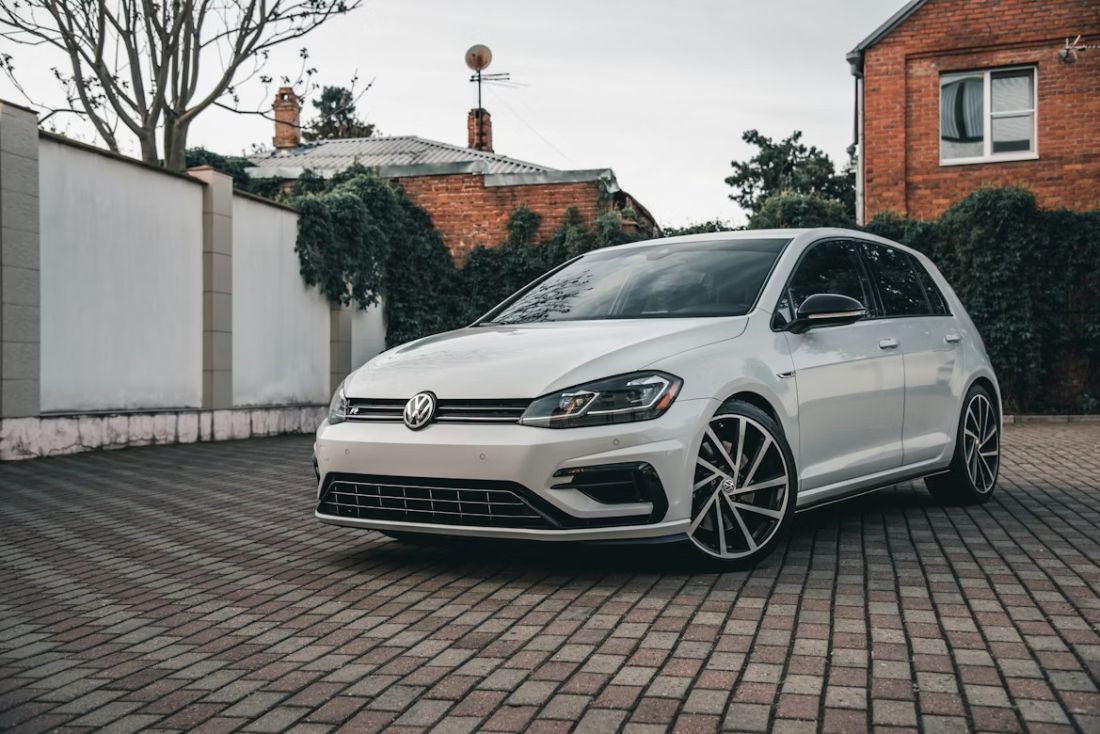
How Volkswagen Builds One Car Platform for Dozens of Models
Picture a “base recipe” that can make loads of different meals
If you’ve ever wondered how one car company can sell a small hatchback, a family car, and a taller “big boot and pram” car that still feel kind of related, this is the trick. Volkswagen uses something it calls “MQB”. That sounds like three random letters, but think of it like a shared build plan. Same core layout. Same key measurements in the front bit of the car. Then they stretch, shrink, and re-shape the rest depending on what the car needs to be. It’s like how a pizza place has the same dough and oven, but you can end up with a margherita, pepperoni, or veggie feast without changing the whole kitchen.
The really important part is what Volkswagen keeps the same. They lock down a few “must-not-change” points so factories can work faster and parts can be shared across models. Volkswagen itself has described one of those fixed points in plain language: the distance between the pedals and the middle of the front wheels stays the same, creating a standard front-end system. That sounds small, but it’s huge. If the driver’s feet, the front wheels, and the front structure line up in a consistent way, you can swap in different body shapes and sizes without re-inventing the hardest parts every single time. And when the hardest bits stay familiar, you can build more cars in more places without constantly re-training people or rebuilding entire production lines. That’s the big idea behind MQB: common bones, different outfits.
So what stays the same, and what can change?
Let’s keep this simple, because car talk can get annoying fast. Imagine the car is made of zones. There’s the “driver zone” where you sit and steer, the “front zone” where the wheels and crash structure live, and the “middle and back zones” where passengers, boot space, and the rear wheels sit. MQB keeps some key stuff in the driver and front zones lined up the same way each time. One widely reported example is that fixed relationship between the pedal box and the front wheel centre line. When that’s fixed, the front structure, key mounting points, and a bunch of costly engineering work can be reused again and again. That’s why you’ll see a car that looks short and tidy at the front, and another that has a longer nose, yet both can still come from the same underlying build plan. The “nose length” can change, the wheelbase can change, and the rear overhang can change, but the basic “where the driver sits compared to the front wheels” doesn’t move around.
What changes is basically everything you can see and a lot you can feel. Volkswagen can make a car longer so there’s more leg room behind you, or taller so you’re sitting higher for easier school-run parking. They can widen it so it feels more planted on the motorway past the Trafford Centre, or keep it narrow so it’s less of a squeeze on older streets near Stockport town centre. They can also mix different engines and drive setups into cars built from the same plan, because the way the engine “sits” and attaches is standardised. Volkswagen’s own materials talk about how this approach lets them integrate different types of drive systems in the same mounting location, which is basically a fancy way of saying: the car’s core “attachment points” are made so different power setups can fit without redesigning the whole front half of the car each time. Same big Lego studs in the same place. Different Lego bricks on top.
Why Volkswagen bothered doing this in the first place
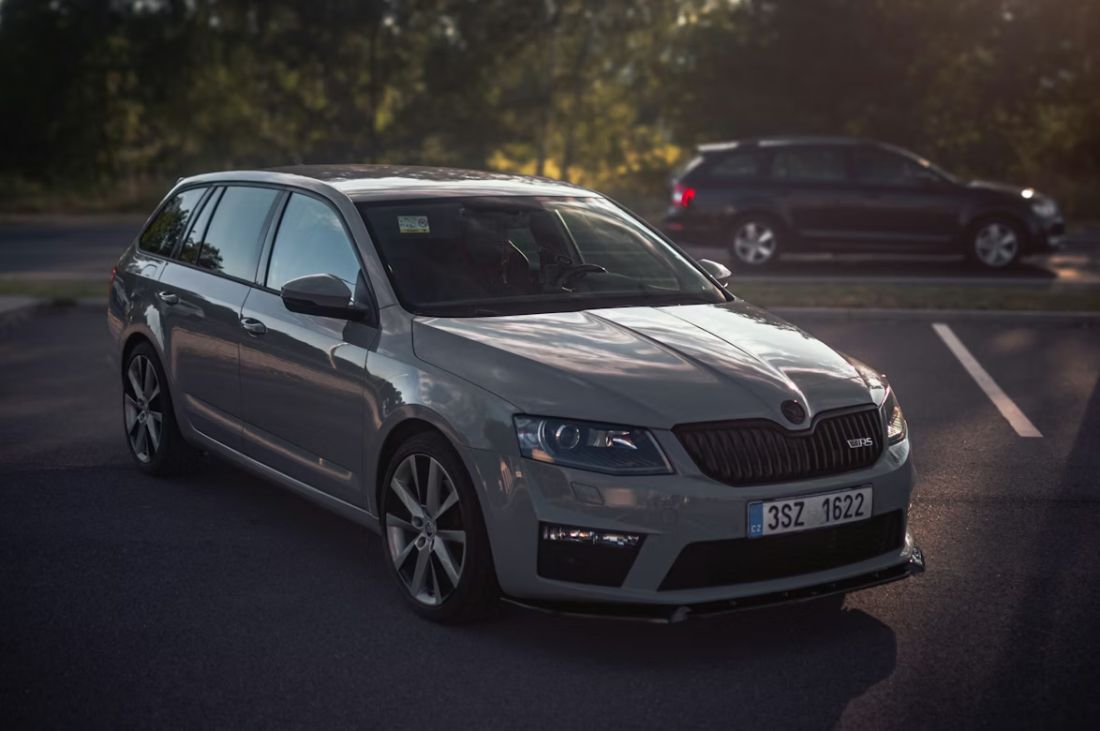
Car development costs a fortune. And not in a “new phone” way. In a “build a whole new factory line, crash test loads of prototypes, and certify everything” way. If every model is totally unique underneath, you end up re-paying those costs again and again. Volkswagen went the other way: spend the effort building one really flexible shared plan, then spread the benefits across loads of vehicles. Volkswagen has publicly marked 2012 as the starting point for MQB, calling it a common basis for a variety of models since then, and it has pointed to production volume in the tens of millions. In their tenth-anniversary press release, Volkswagen said more than 32 million vehicles had been produced on this platform across the group since 2012. That number matters because it explains why they can keep refining the same core design instead of throwing it away every few years. When you’re building that many cars, small improvements add up fast.
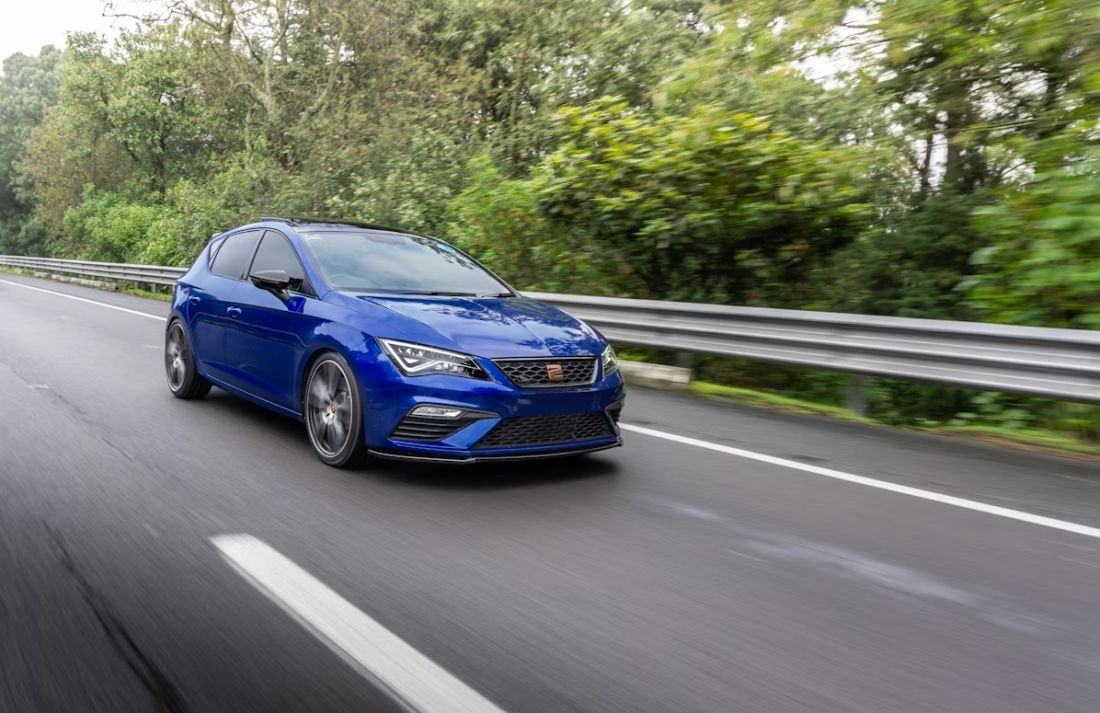
There’s also a factory logic to it. If factories are set up to build cars that share core dimensions and key parts, the company can shift production around when demand changes. Say one model is suddenly in high demand in one market and another slows down. A shared build plan makes it easier to rebalance production without starting from scratch. That’s the behind-the-scenes reason you see a company able to offer so many models without it turning into chaos. And it’s not just Volkswagen badges. This same build plan shows up across brands in the wider Volkswagen family, which is why you’ll find cars that feel different to drive and look totally different, but share the same “base recipe” underneath. As customers at Dace Motor Company will know from browsing used cars, a Volkswagen Golf can feel like a close cousin to a Skoda Octavia or a SEAT Leon in ways that are hard to explain until you realise they’re built from the same core plan. Different styling, different tuning, same basic foundations.
The easiest way to “see” MQB is to look at the Golf
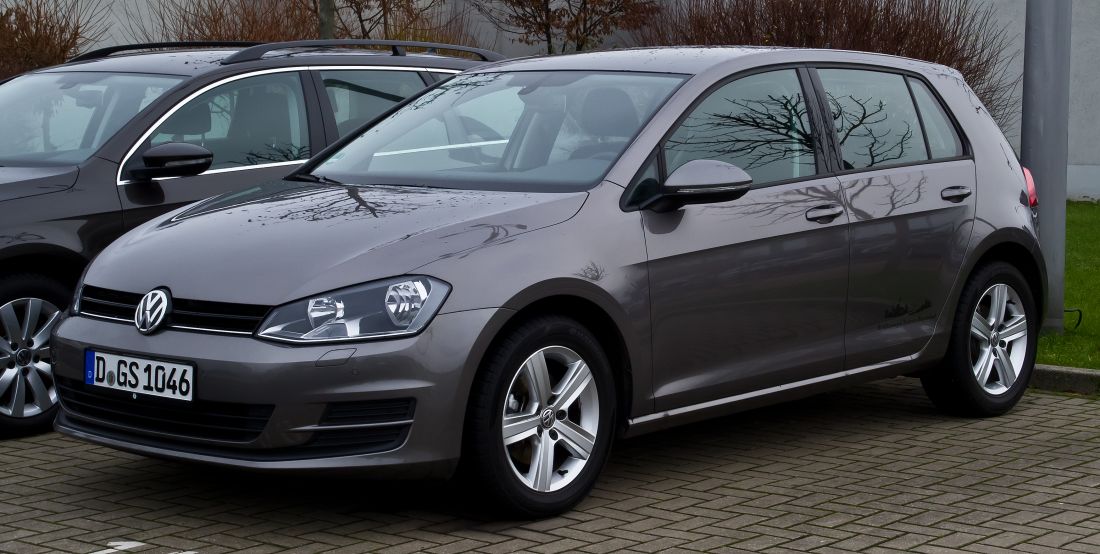
Photo: VW Golf 1.2 TSI BlueMotion Technology Comfortline (VII) by © M 93 Wikimedia Commons.
Volkswagen didn’t start MQB in secret and then casually mention it years later. The rollout is tied to a very specific car: the seventh-generation Volkswagen Golf. Volkswagen’s own newsroom material describes the seventh-generation Golf as a redesigned, lighter Golf based on MQB, with advance sales at the end of 2012 and a wider market launch in spring 2013. That timing matters because it lines up with how people actually experienced it: you started seeing the newer Golf shape and hearing about a new shared build strategy right around then. It wasn’t just marketing fluff either; it explained why the Golf could be updated and spun into different versions without Volkswagen rebuilding the whole thing from the ground up each time.
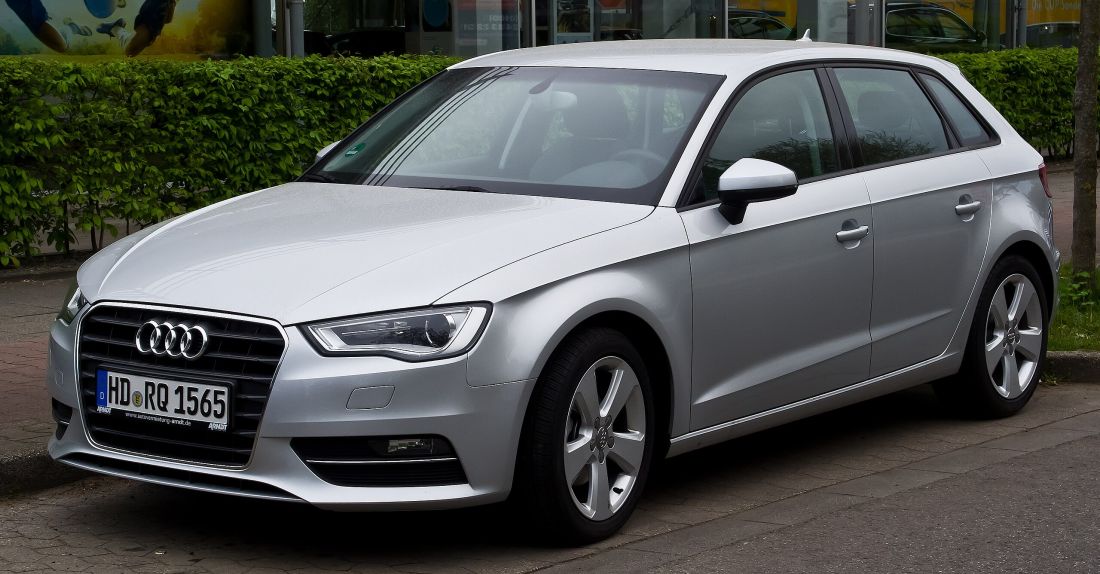
Photo: Audi A3 Sportback 1.6 TDI Ambition (Third generation) by © M 93 Wikimedia Commons.
Here’s where it gets relatable. Think about how many “types” of Golf you’ve seen around Manchester and Stockport. Normal hatchbacks. Estate versions. Sporty ones. Then you notice similar-sized Audis, SEATs, and Skodas parked up near the Etihad on match day, or packed into the car park at MediaCity. They’re not copies of each other, but they’re connected. The Golf Mk7 is also described as sharing the MQB platform with the third-generation Audi A3, the SEAT Leon, and the Skoda Octavia. So when someone says, “That Octavia feels like a Golf with more boot,” they’re not imagining things. Volkswagen’s strategy makes that kind of family resemblance real at a structural level.
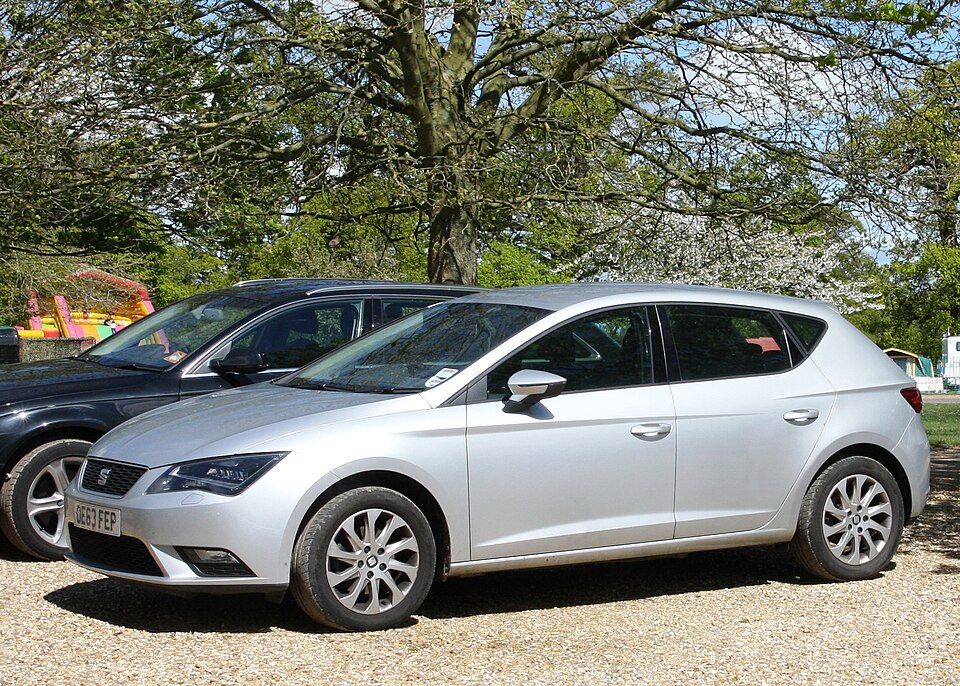
Photo: SEAT Leon (2014) by Charles01, CC BY-SA 4.0, via Wikimedia Commons
And from a used-car point of view, this is where it gets practical. Shared foundations can mean shared parts across a bigger pool of vehicles, which can help with availability and repair options over the long run. It doesn’t magically make every repair cheap, and no one should pretend it does, but it can make certain components less rare than they would be if every model was a one-off. If you’re shopping across brands on a dealer forecourt, you might find that two different cars in two different badges have more in common than you expected, and that can be reassuring when you’re thinking about keeping a car for years rather than months.
How one plan turns into dozens of models without them all feeling the same
This is the part people get stuck on. “If they’re built from the same plan, won’t they all drive the same?” Not really. The shared plan is about core structure and key mounting points, not about personality. It’s like two houses built with the same type of bricks and the same spacing for doors and windows, but one is a cosy terrace and the other is a modern flat with massive windows and a different layout inside. Volkswagen can use the same core measurements and still change suspension tuning, steering feel, sound insulation, seating position, dashboard design, and the whole look of the body. So the end result can be a small car that feels nimble and light, and a larger family car that feels calmer on the motorway, even if they share the same underlying “front-end system” logic.
Another easy way to picture it is to think about the centre section of the car, between the front and rear wheels. MQB lets Volkswagen vary the wheelbase, which is basically how far apart the wheels are. Short wheelbase means a car that’s easier to park and turn in tight spaces. Longer wheelbase means more space inside, and a steadier feel on faster roads like the M60 when traffic finally clears. They can also change the front and rear overhangs, which is just “how much car hangs past the wheels.” That’s why some cars look like they have a stubby nose and others look longer, even though the fixed relationship up front stays consistent. And yes, it’s a bit weird that something as small as “where the pedals sit compared to the front wheels” can lead to so many different vehicles, but that’s exactly why it works. Get that core right, and you can stretch the rest like a tape measure without breaking the whole plan.
Also, there’s a manufacturing side that most people never see. One of the reasons Volkswagen celebrated MQB’s anniversary is the scale it reached. When you’re building millions and millions of cars on a shared plan, you can justify improving the same core systems again and again, and you can roll out newer tech across different models without inventing a new base each time. Volkswagen has talked about how economies of scale from MQB help it bring features into higher-volume cars. Put simply: if the wiring routes, mounting points, and core structure are already “ready” across many models, it’s easier to offer the same safety and convenience tech in more than one car line.
The “factory and parts” side that affects real drivers
Let’s bring it back to real life, because you don’t buy a car platform, you buy a car. The MQB idea can show up in day-to-day ownership in a few ways. One is repair ecosystems. If multiple models share core components, there can be a bigger supply of parts, more familiarity among technicians, and more standardised procedures. Again, that doesn’t mean every fix is cheap, and it doesn’t mean every part is shared, but it can reduce the “what on earth is this part and why is it special?” moments. Another is updates and revisions. Instead of fixing a problem in one model and leaving another model behind, a shared plan can let improvements spread across a wider range faster, because the underlying attachment points and core design are shared. Volkswagen’s own discussion of the modular toolkit strategy describes a flexible architecture where certain concept-defining dimensions can be harmonised across the group, while that key pedal-to-front-wheel distance remains constant. That’s basically the company saying, “We’ve standardised the hardest bit so we can vary the rest.”
If you’re buying used, there’s a second angle: understanding what’s related helps you shop smarter. People in Manchester and Stockport sometimes shop with a mental shortlist like “Golf, Leon, Octavia” or “A3 if the budget stretches.” Knowing they’re related under the skin can help you focus on what really matters: condition, service history, mileage, the way it drives, and whether it fits your day-to-day life. That’s the stuff that makes you happy six months in. Not the badge alone. At Dace Motor Company, we see buyers cross-shop across brands all the time because the practical needs are the same: school runs, commuting into Manchester, weekend trips, parking outside terraced houses, and the usual “I need something reliable but I still want to like it” problem. A shared build plan doesn’t remove the need to do your checks, but it can make the market feel less confusing because you realise some choices are cousins, not strangers.
Common questions people ask, answered like a normal conversation
People ask, “Is MQB just a fancy way of saying they reuse parts?” Yes, but with more discipline than that. Reusing random parts is one thing. Building a whole car family around fixed reference points is another. The fixed reference point you’ll see mentioned again and again in credible explanations is that pedal box to front wheel relationship, because once that’s locked, a lot of other front-end engineering falls into place. That helps with crash structure design, packaging, and how the engine bay is laid out. It’s the difference between “we share a few switches” and “we share the key measurements that factories and safety testing rely on.”
Another question is, “Does that mean all MQB cars are the same quality?” No. Quality comes down to materials, assembly, maintenance, and how the car was treated. A shared plan doesn’t protect a car from poor servicing or rough use, and it doesn’t magically give every model the same cabin feel. You can sit in two related cars and one will feel sharper and more premium, and the other will feel simpler and more practical, because that’s a choice in design and materials. The shared plan is more like a shared skeleton.
And then there’s the money question. “Is it cheaper for them, and do I get anything out of it?” It can be cheaper for the manufacturer in the long run, and Volkswagen has openly framed MQB as a scale strategy. The benefit to drivers can show up as more choice, more consistent rollout of new tech, and a big used market where lots of related models exist at different price points. If you’re using finance, you’re basically trying to balance monthly cost, deposit, and the car you actually want to live with. A big pool of related models can help you find that sweet spot without settling for something you don’t like. And yes, some lenders let you check eligibility with a soft credit search, which means you can explore options without it hammering your credit score just for looking. That’s the kind of practical detail people care about on a rainy Tuesday in Stockport, not just how clever the engineering is.
Where you’ll bump into MQB cars in the real world around Manchester and Stockport
Once you know what to look for, you’ll notice MQB cars everywhere. Park near Manchester Piccadilly and you’ll see plenty of Volkswagens, Audis, SEATs, and Skodas in the same size bands. Head out towards Stockport or Eccles and you’ll see the same story in family driveways: hatchbacks, estates, and taller family cars that are different shapes but feel like they come from the same “school” of design. Volkswagen’s own MQB anniversary press release describes the spread from small cars like the Polo up to larger models like the Atlas (in the United States) and Teramont (in China), which shows how wide the size range can be while still sticking to the same basic build strategy. That’s a big range of cars from one underlying plan.
Now, just because two cars share this build plan doesn’t mean you should buy either one without thinking. For used buyers, the smart move is still the same boring checklist that saves you from headaches: look at service records, check tyres for uneven wear, listen for odd noises over bumps, and make sure everything electrical works the way it should. The “shared plan” idea doesn’t replace due diligence. What it can do is make your shortlisting less stressful. If you like the size and feel of a Golf but you want a bit more boot space, you might look at a related Skoda. If you want something that feels a bit more premium inside, you might check a related Audi. You’re still picking the car on its own merits, but you’re doing it with a better mental map. And when you’re shopping locally, that helps, because you can compare like-for-like without driving all over the North West for cars that don’t even match your needs.
Volkswagen built MQB so it could make loads of models without reinventing the base each time. For drivers, the big takeaway is simple: behind all the different badges and body shapes, there’s a shared logic that explains why certain cars feel familiar, why so many models exist in the same “family,” and why the used market is packed with sensible options across different budgets. If you’re choosing between them, focus on condition and fit for your life first. The platform story is just a helpful extra that makes the whole thing easier to understand.