


How the Euro NCAP Crash Tests Changed the Industry
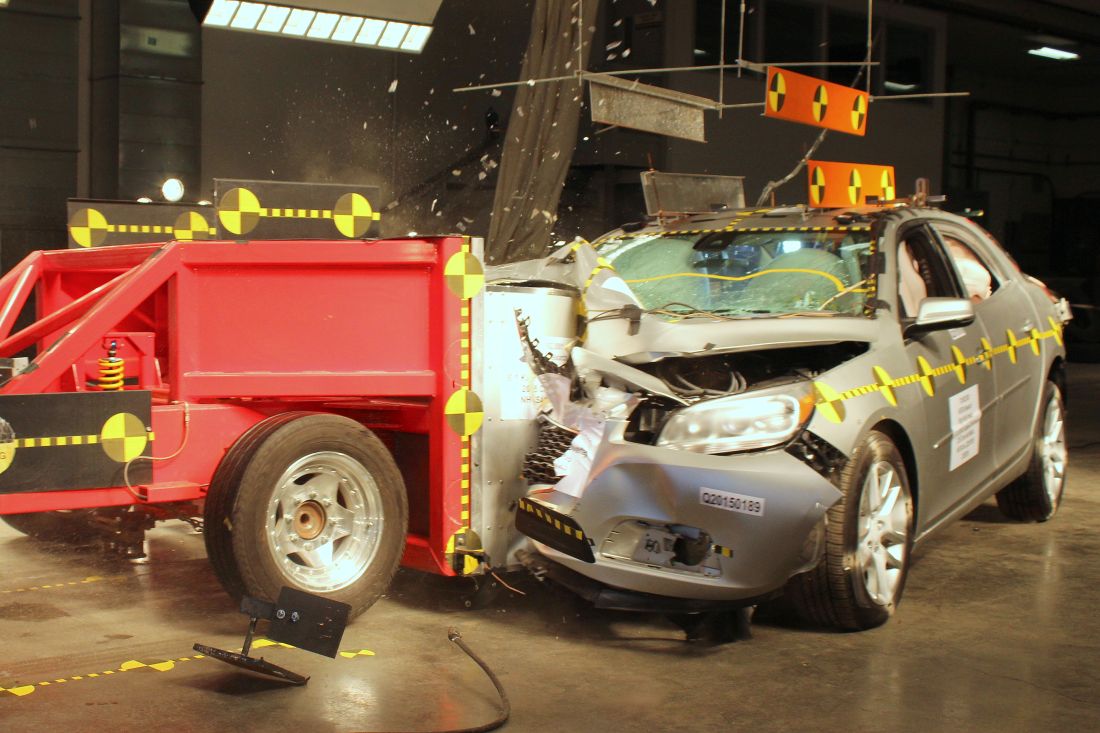
Photo: Passenger-side oblique crash test of a 2015 Chevrolet Malibu by Calspan Corporation, National Highway Traffic Safety Administration.
You know how it is on the M60 around Stockport when it’s dark at four o’clock, the road’s shiny with rain, and everyone’s bumper-to-bumper like it’s a queue for chips. You’re not thinking about “car safety programmes” in that moment. You’re thinking, “Please don’t let anyone do something daft.” That’s why Euro NCAP matters, even if you never plan to watch a crash test video. Euro NCAP is the public name for the European New Car Assessment Programme, an independent group that crash tests cars and publishes the results so normal people can compare models. It’s based in Leuven, Belgium, and it has been publishing results since February 1997. Here at Dace Motor Company, across our sites in Stockport and Eccles, we see the practical side of that every day: people come in with a shortlist of used cars and ask, “Which one is the safer pick for my family?” Stars give them a quick first answer, and the detailed scores give them the second answer. And no, the stars aren’t perfect. The rules change as cars change, and that’s part of the point. When cars get safer, the tests have to get tougher, or the stars stop meaning anything. Euro NCAP has leaned into that from the start, adding new crash types, adding checks for kids in the back, adding checks for people outside the car, and adding checks for technology that helps you avoid a crash in the first place. If you live around Manchester, you see why that wider view matters. City streets near Deansgate have pedestrians stepping out. The A6 can be busy with buses and vans. Cyclists pop up on the edges of junctions. And every now and then there’s a sudden brake-light wave on the Mancunian Way that makes your stomach drop. Euro NCAP helped push the industry from “hope for the best” to “prove it, then show your working.”
Before Euro NCAP, safety was a black box
Before Euro NCAP came along, car makers still had to meet legal safety rules, but that didn’t help buyers compare cars in a clear, everyday way. Picture two used hatchbacks parked up in Reddish. Both “meet the rules.” Great. Which one keeps the cabin stronger in a crash? Which one keeps your head away from hard parts? Which one treats a child seat like it matters? In the early 1990s, you didn’t get a straight answer from a simple public scoreboard, because that scoreboard didn’t really exist. Euro NCAP was formed in 1996 and released its first results in February 1997, and a big part of the point was that it would publish results so consumers could compare safety. According to Euro NCAP’s own anniversary write-up, early backing came from the international motoring federation, an international consumer testing network, and the governments of the United Kingdom and Sweden. Another background detail that matters: the programme’s early roots in the United Kingdom were linked with the Transport Research Laboratory working for the Department for Transport, before it grew into a wider European effort. That mix of government, consumer testing, and independent engineers made the results hard to brush off as “just marketing.” And once the results were public, the pressure changed. A car that scraped through the legal minimum could suddenly look bad next to a rival that did better under tougher, independent tests. Euro NCAP’s own historical review paper, written by people including Dr. Michiel van Ratingen and Aled Williams, talks about how the programme became a major driver for safety improvements because it gave clear consumer information and pushed manufacturers beyond the minimum. If you strip away all the car-industry noise, that’s the heart of it: make safety visible, make it comparable, and watch the market react.
1997: the first public results and the Rover 100 wake-up call
The first Euro NCAP results were revealed on 4 February 1997, and they didn’t pull any punches. The Rover 100, a top-selling small car people knew from British roads, scored just one star. Other popular small cars in that first set, like the Fiat Punto, Nissan Micra, Vauxhall Corsa, and Renault Clio, scored two stars. Let’s face it, that’s the moment the whole idea of “my car must be safe because it’s common” got a wobble. A car can be familiar and still struggle in a serious impact. Euro NCAP’s write-up of that time also points out something else that people forget: when pedestrian protection was assessed in those early days, no vehicle scored more than two points. So it wasn’t just “how safe are you inside,” it was also “what happens to someone outside if a car hits them.” That mattered in towns and cities right away, because city crashes aren’t always high-speed motorway smashes; plenty are lower-speed, messy, and involve people on foot. The public reaction is part of the story, too. Euro NCAP didn’t just publish a number; it published videos and photos that made the results feel real. You could see the crash test dummy’s head whip forward. You could see the steering wheel and dashboard areas moving. You could see how much the passenger space changed shape. That visibility put car makers in a tight spot. If they said the tests were unfair, people could watch the footage and decide for themselves. If they ignored it, rivals would shout about their higher stars. Over time, car makers improved designs to score better, and Euro NCAP kept tightening what “better” meant. That cycle started here, with a small car that got one star and made the whole industry nervous.
The star rating turned safety into something you could shop with
Once Euro NCAP stars became a thing, they spread because they’re dead easy to read. One star, bad news. Five stars, better news. People started using stars the way they use food hygiene ratings: quick signal first, details second. The big turning point here is 2009, when Euro NCAP introduced a single overall safety rating based on four areas: adult occupant protection, child occupant protection, pedestrian protection (later widened to cover cyclists and now described as protection for vulnerable road users), and safety assist, which checks technology that helps prevent crashes. That shift stopped cars from chasing one shiny score while ignoring the rest. A car could no longer hide behind “great adult crash score” if it was weak for kids or weak for people outside the car. It also pushed manufacturers to fit safety technology more widely, because the overall rating could be dragged down by missing features. Euro NCAP later added a “dual rating” idea, so a car can have one rating for standard safety equipment and another rating with an extra safety pack, making it clearer when a model’s safety depends on optional kit. That matters for real buyers, especially in the used market, because two cars with the same badge on the back can have different safety kit depending on trim level and options. This is where the industry change gets really obvious. Manufacturers started planning their cars around these public tests, because buyers were asking about the stars. Dealers were being asked. Reviewers were being asked. Fleet buyers were being asked. And since the tests are public, a weak score could hang around online for years, popping up every time someone searched that model. The end result is that safety became part of shopping talk, not just engineer talk. You might go to the Trafford Centre to choose trainers, then later go home and compare car ratings online. That kind of everyday behaviour wasn’t normal before Euro NCAP made a simple, public scoreboard.
Crash protection grew up: side hits, stronger cabins, and whiplash checks
Even if you never look at the numbers, you’ve benefited from the way these tests pushed car design. One big area is side impacts. In a side crash, there’s less “crumple space” between you and the hit, so the door area and the airbags have to do a lot of work in a split second. Euro NCAP has been assessing side impact protection since the programme started, and technical work from Euro NCAP engineers, including James Ellway, shows how side impact testing and assessment has developed over time. Another area people feel in everyday bumps is whiplash, the neck injury that can happen when you’re hit from behind. Euro NCAP ran its first big round of rear impact, whiplash-focused seat tests and published results on 26 November 2008, saying most seats tested still needed improvement. Then, from 2009, Euro NCAP included whiplash performance in the rating as part of adult occupant protection. That pushed manufacturers to treat seat design like safety equipment, not just comfort. Head restraints improved. Seat backs were tuned to control movement in a rear-end hit. Euro NCAP later extended whiplash checks to include rear seats in 2014, which matters if you’ve got teenagers in the back or you’re giving lifts to family. The bigger picture is that car “survival space” got better. Cabins became stronger. Restraints improved. Airbags became more common in more places inside the car. And these changes didn’t happen by luck. They happened because poor test results were embarrassing in public, and good results sold cars. You can think of Euro NCAP like a tough teacher who marks your homework, then raises the pass mark once everyone starts getting A grades. It sounds annoying, but it keeps the grades honest. And while this is a Europe-wide programme, the benefits show up locally. A low-speed shunt on the A580 East Lancashire Road can still hurt your neck. A side hit at a junction in Heaton Moor can still be brutal. Better seats, better side protection, better cabin strength, all of that is safety you only notice when it saves you from pain.
Then the focus shifted: cars started trying to stop crashes
For years, most safety talk was about “what happens after impact.” Then Euro NCAP started pushing harder on “avoid impact.” This isn’t sci-fi stuff. It’s systems that watch the road and help out when humans mess up, because humans do mess up. Euro NCAP began publishing results for rear-end crash avoidance systems in October 2013 as a warm-up for bringing this tech into the rating from 2014. Their press release talked about real-world claims data showing these systems can cut rear-end crashes by about a quarter or more, which is a big deal because rear-end shunts are everywhere in busy traffic. From 2014, Euro NCAP started including crash avoidance systems like automatic emergency braking and lane support in the rating. Put in normal words, automatic emergency braking is when the car spots you’re about to hit something and applies the brakes, or adds braking if you don’t press hard enough. Lane support is when the car notices you drifting and gives a small correction. You still have to drive. You still have to pay attention. But these systems can help in those “blink and you’re too close” moments, like a sudden stop near the M602, or a quick lane change in busy Salford traffic. Euro NCAP didn’t freeze the tests in time, either. There’s an official Euro NCAP explanation of how their automatic braking tests began in 2014 and then, by 2020, moved to a wider “car to car” assessment across a broad speed range as sensors improved. They also assess braking that helps protect pedestrians and cyclists, and from 2023, motorcyclists are included too, because roads are shared. This part changed the industry in a sneaky way. Manufacturers started fitting more of this safety tech as standard, because missing it could hurt the “safety assist” score and drag down the overall stars. For buyers, that means a used car from the last few years might quietly have features that help prevent the exact kind of low-speed crash that ruins your week, your neck, and your insurance renewal.
2020 brought tougher, more real-road tests
By 2020, lots of cars were doing well in the older-style crash tests, so Euro NCAP made the crash tests themselves feel more like the crashes people actually have. One of the big additions was the mobile progressive deformable barrier test, introduced in 2020. Instead of smashing a car into a fixed object, this test uses a moving trolley with a deformable barrier, and both the test car and the trolley travel at 50 kilometres per hour with a 50 percent overlap. The goal is to represent an offset head-on crash between two moving cars and to look at how well a car protects its own occupants and how “aggressive” it is as a crash partner for the other vehicle. That second part is a big deal, because roads are full of mixed sizes, from small hatchbacks to big sport utility vehicles. A very stiff front end can protect its own occupants but do ugly damage to the other car, so Euro NCAP started shining a light on that trade-off. 2020 also brought in far-side impact testing. Euro NCAP explains that side impacts are around a quarter of all crashes, and nearly half of the people injured in side impacts are sitting on the opposite side from the struck door. Far-side testing focuses on that “sliding across the cabin” problem, including the risk of two front-seat occupants hitting each other. Euro NCAP’s 2020 press release about the Toyota Yaris mentioned centre-mounted airbags that inflate between the driver and front passenger to limit that movement. Euro NCAP’s own summary of its 2020 work says side impact requirements were strengthened by increasing the barrier mass and speed and by adding the far-side test, alongside new crash avoidance scenarios and new rules to promote better post-crash safety for rescuers, including the release of an app called Euro Rescue. That last bit is easy to ignore until you think about real accidents: after a serious crash, getting doors open and getting people out fast can matter as much as the first impact. So yes, it’s a crash test programme, but it has pushed the industry into thinking about the whole timeline of a crash, from the moment risk starts building up to the moment help arrives.
How to use Euro NCAP ratings when buying a used car around Manchester and Stockport
If you’re buying a used car, Euro NCAP info is useful, but you’ve got to read it the right way. First, always look at the year of the test, not just the stars. Euro NCAP has said older results can mislead because the rating scheme changes, and an older star rating is, by default, valid for a maximum of six years after publication. That doesn’t mean a seven-year-old car is suddenly unsafe. It means the stars are tied to the rules of that time, so comparing a 2005 five-star car with a 2024 five-star car is like comparing a phone from your childhood with a phone from now. Both can be “good” in their own moment, but the newer one has to meet tougher expectations. Second, don’t ignore the breakdown. Since 2009, the overall rating has been based on four areas: adult occupant protection, child occupant protection, pedestrian protection (now widened to vulnerable road users like cyclists), and safety assist. If your life is school runs, short trips, and busy junctions, the outside-the-car protection and the crash-avoidance tech can matter a lot. Third, check for dual ratings. Euro NCAP explains that some cars have one rating with standard safety equipment and another rating with an optional safety pack, which can lift the score if it’s fitted. In the used market, that can be the difference between “this model is decent” and “this exact car is decent,” because trim levels and options vary. Fourth, keep an eye on what’s changing next. Euro NCAP announced that, from 2026, assessments will be structured around four stages of safety, each scored out of 100 points and shown as a percentage, with thresholds still deciding the overall stars. In that announcement, Euro NCAP’s Secretary General, Dr. Michiel van Ratingen, said the 2026 rules are meant to push better protection for people in the car and everyone outside it, by nudging manufacturers to keep improving crash protection, crash prevention, and what happens after a crash. That should help buyers see why two cars with the same stars can still feel different in real use. And finally, think about the car’s real history, not just its brochure history. At Dace Motor Company we run full vehicle history checks before cars go on sale, and we include a free three-month warranty with options to extend, so you’re not left sweating about surprise repair bills straight after purchase. If you’re looking at finance, a “soft” eligibility check can help you explore your options without a hard mark on your credit file, which takes the pressure off when you’re comparing cars. The main thing, though, is this: Euro NCAP changed the industry by turning safety into a public score and then making that score harder to earn over time. As a buyer, you can use that work for free. Look up the model. Watch the test. Read the breakdown. Then pick the car that fits your life on Manchester and Stockport roads, not a fantasy version of driving where nothing ever goes wrong.