


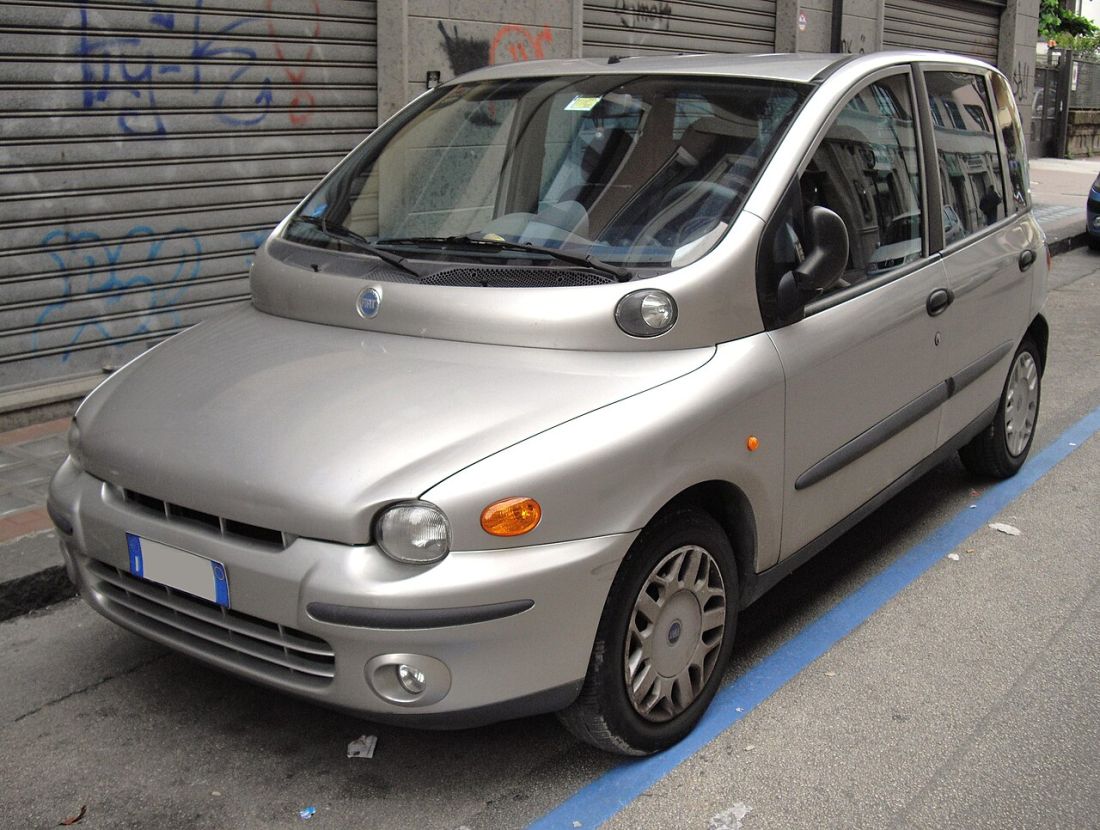
Fiat Multipla: Why One of the Most Mocked Cars Was Actually Clever
Photo: Fiat Multipla by Corvettec6r, Public domain, via Wikimedia Commons.
Let’s face it, the Fiat Multipla has heard every joke going. If cars had feelings, this one would’ve needed a brew, a biscuit, and a quiet sit-down after reading the comments. People called it ugly. Weird. Bug-eyed. Like two cars had been stacked together in a rush. And yes, from some angles, it does look like it’s just seen the traffic on the Mancunian Way at half past five and lost all hope. But here’s the funny bit: behind that odd face was a car that made a huge amount of sense. At Dace Motor Company, where we’re around used cars in Stockport and Manchester every day, we see this all the time. A car can look a bit strange at first, yet still be clever, roomy, useful, and surprisingly easy to live with. The Multipla is a perfect case. It wasn’t trying to impress people outside a wine bar. It was trying to carry families, bags, school stuff, shopping, pushchairs, coats, snacks, and the random sports kit that seems to live in the boot forever. And it did that in a car under four metres long, but wide enough to fit six people across two rows. That’s the sort of idea you might laugh at for five minutes, then quietly admit is brilliant once you’ve had to collect three kids, a grandparent, and a weekly shop from Stockport town centre in the rain.
The old Multipla was odd too, so this wasn’t a total accident
The Multipla name didn’t just appear in the late nineties out of nowhere. Fiat had already used it back in 1956 on the Fiat 600 Multipla, a tiny people carrier that looked like someone had pushed the front of a small van right up to the windscreen. That older car was created by Dante Giacosa, and Fiat’s own heritage story describes it as one of the first mass-produced people carriers. It could carry up to six people, which was a big deal for something so small, and the rear seats could fold to make a long flat load area. It could even be turned into a little camping space, which sounds mad until you picture a family trying to make the most of a small car on a tight budget.
So, when the newer Multipla arrived in the late nineties, it was really picking up an old idea: make a small car do big-car jobs. That’s the bit people missed while laughing at the front end. The Multipla wasn’t strange just for the sake of it. It came from a line of Fiats that cared less about looking posh and cared much more about solving normal problems. You know how it is. Sometimes the thing that works best isn’t the thing that looks slick in the driveway. It’s the thing that gets the dog in, gets the kids belted up, keeps everyone’s knees out of the glovebox, and still squeezes into a tight parking space near the Peel Centre on a busy Saturday.
Six seats, two rows, and a very big “hang on, that’s clever” moment
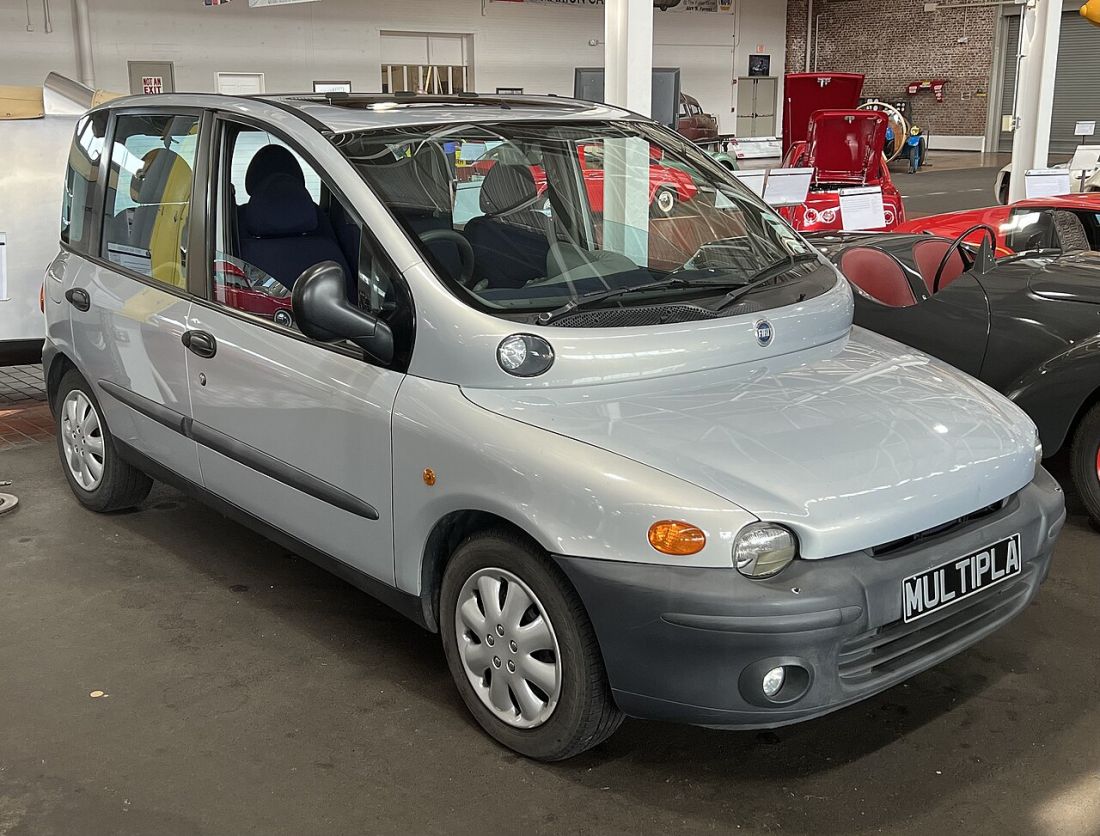
Photo: A 1998 Fiat Multipla in the Lane Motor Museum by TaurusEmerald, CC BY-SA 4.0, via Wikimedia Commons
The main trick was the seating. Most six-seat cars stretch out into three rows, and then the boot turns into a letterbox. Fine if you’re carrying people. Not so fine if you’ve also got bags, scooters, coats, or a pushchair. The Multipla did something different. It had three seats in the front and three in the back. That sounds simple, but it changed the whole feel of the car. Instead of being long, it became wide. Instead of making passengers climb into a third row, it kept everyone easy to reach. Parents could sit up front with two children, or a child could sit in the middle front seat with a proper view out, which must’ve felt like being captain of the ship.
The Museum of Modern Art in New York even featured the Multipla in its 1999 “Different Roads” exhibition, describing how it gave six passengers proper room despite its small outside size. And yes, that same museum mention matters because it shows something important: designers didn’t all see the Multipla as a joke. Some people looked at it and thought, “Actually, this is smart.” The cabin was bright, tall, and open. The windows made it easier for passengers to see out, which is handy for kids who get bored or carsick. It was the kind of cabin where people could chat rather than sit in separate little caves. For a family car, that’s useful. Very useful, really. And if you’ve ever done the school run through Reddish or down the A6 with everyone talking at once, you’ll know that easy seating matters far more than a perfect nose.
Yes, it looked weird. But the weird bits had jobs to do
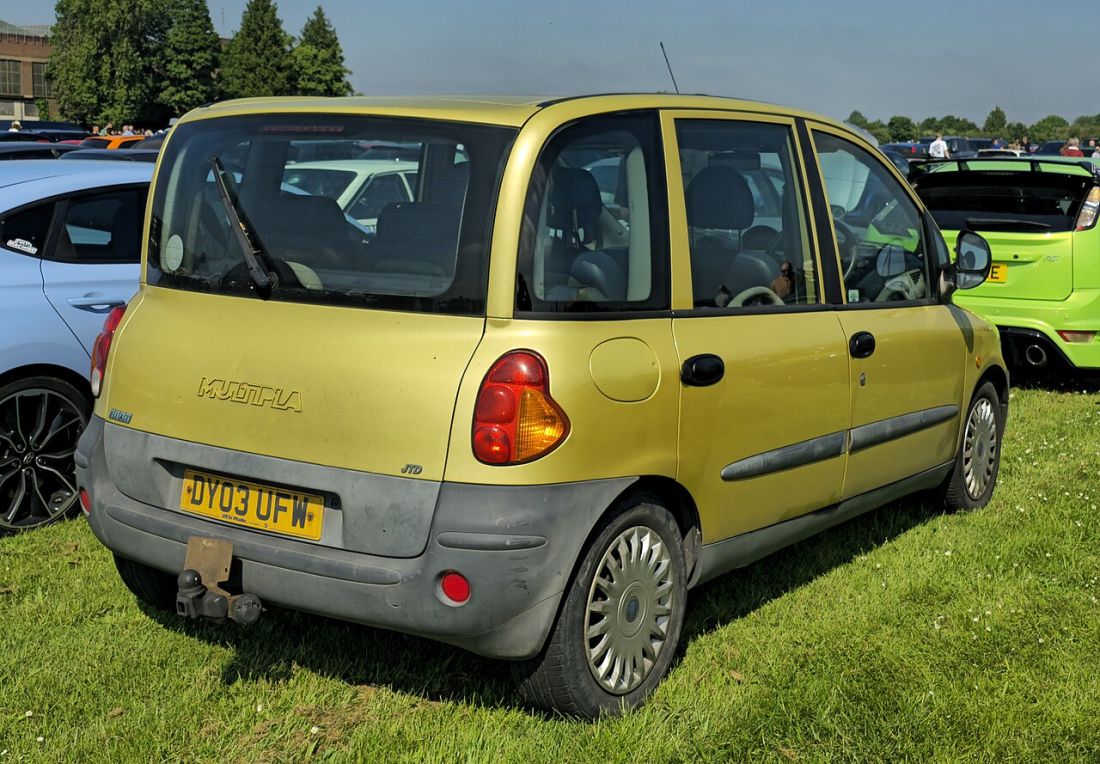
Photo: 2003 Fiat Multipla by Calreyn88, CC BY-SA 4.0, via Wikimedia Commons
The Multipla’s front end got the most stick. Those stacked lights. That extra ridge under the windscreen. The wide stance. The slightly startled face. It didn’t blend in, did it? Park one next to a normal hatchback and it looks like it came from a cartoon drawn by someone who had too much espresso. But the shape wasn’t random. The tall cabin gave people headroom and a big glass area. The low bonnet helped the driver see the road ahead. The raised lights and lower lights helped with visibility, and MoMA’s write-up said the lights being placed at different heights helped night visibility.
That doesn’t mean everyone had to love the look. Taste is taste. Some people like a clean German saloon shape. Some like a tiny Fiat 500. Some like big square off-roaders. Fair enough. But there’s a difference between “I don’t like how it looks” and “it was badly thought out.” The Multipla was thought out. Maybe too honestly, if anything. A lot of cars hide their clever bits under styling that tries not to annoy anyone. The Multipla didn’t bother hiding. It wore the plan on the outside, like a raincoat in Manchester: maybe not glamorous, but you’ll be glad it’s there when the weather turns. And that’s why, after the laughing stops, people who love practical cars start nodding at it. The odd body wasn’t a mistake. It was a clue.
Small outside, big inside, which is exactly what families need
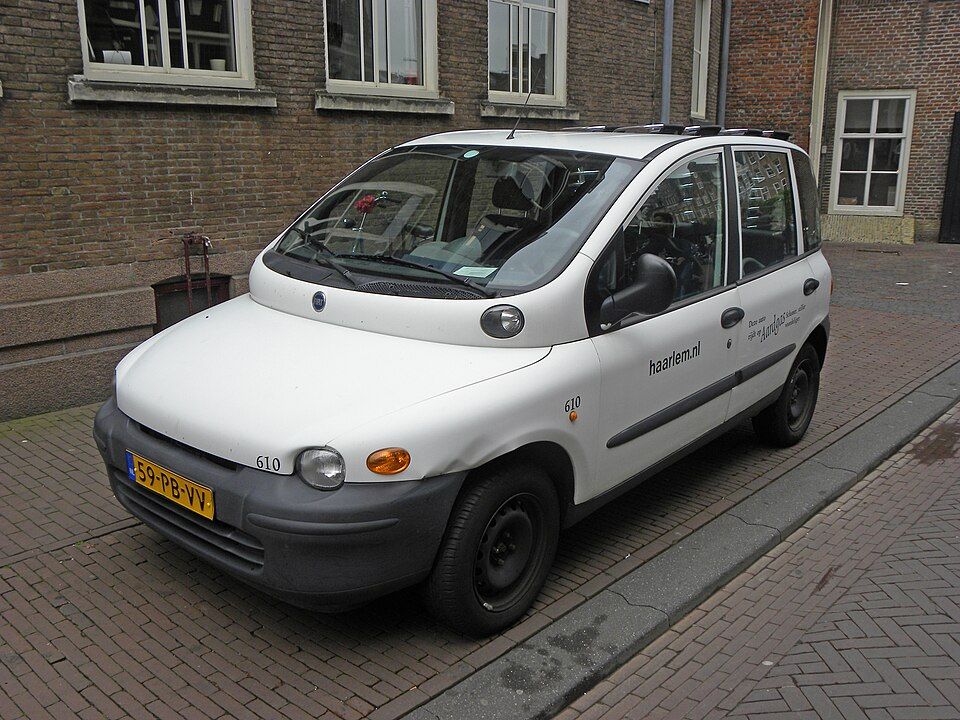
Photo: 2004 Fiat Multipla by Free photos & Art, CC BY 2.0, via Wikimedia Commons.
Here’s where the Multipla starts to look even smarter. Early models were about 3,994 millimetres long, around 1,871 millimetres wide, and about 1,670 millimetres high, with a 2,666 millimetre wheelbase listed by Autozine. In normal talk, that means it wasn’t a long car. It was shorter than many family cars, but much wider and taller than people expected. That width is what gave it the three-abreast seating, while the short length made it easier to park than a big seven-seater. Think about that for a second. You’ve got six seats, decent space, good views, and you’re still not driving something the size of a minibus.
Around Manchester and Stockport, that matters. Roads are busy. Car parks can be tight. Some streets feel like they were planned for horses and handcarts, then someone later said, “Go on, let’s add two-way traffic and wheelie bins.” A car that carries people without being huge has real value. And the Multipla was wide, yes, so you had to be aware of that, but you weren’t dragging a long tail around every corner. For parents, carers, taxi drivers, dog owners, or anyone who treats a car as a moving shed, that’s a strong idea. It’s also a reminder for used car buyers: don’t judge space from the outside. Open the doors. Sit inside. Fold the seats. Check the boot. Bring the child seat. Bring the pram if you need to. The clever stuff is usually found after you stop staring at the badge and start asking, “Will this fit my life?”
The safety story wasn’t perfect, and that matters too
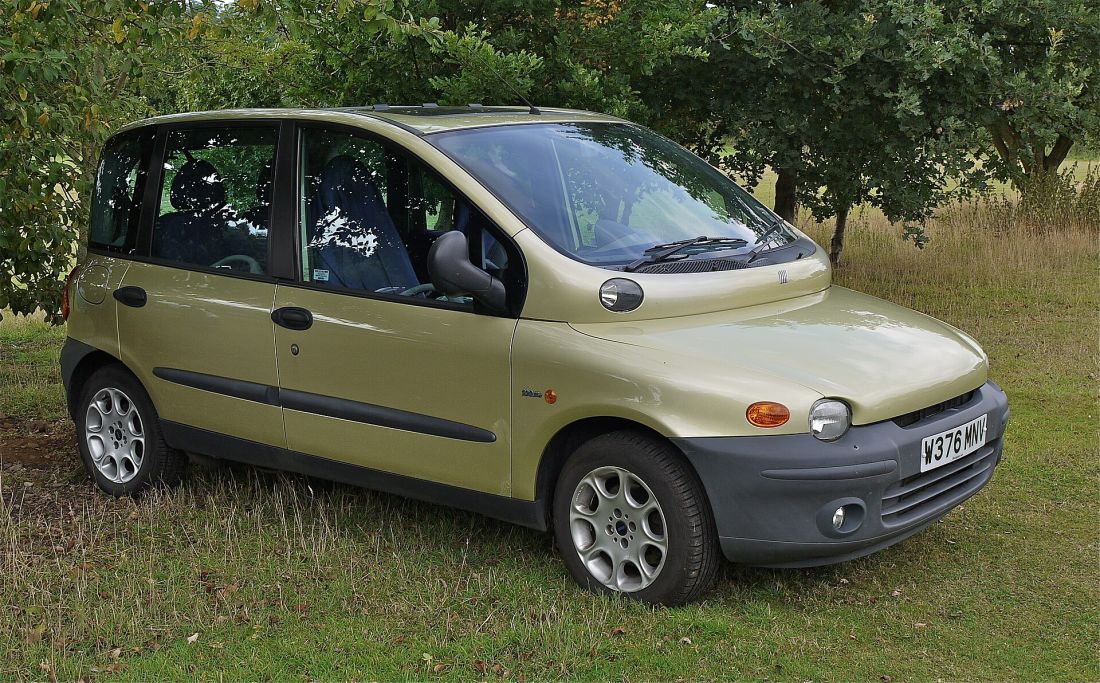
Photo: Fiat Multipla by Mick from Northamptonshire, England, CC BY 2.0, via Wikimedia Commons
We shouldn’t pretend the Multipla got everything right. That wouldn’t be fair. In a 2001 safety test, the European car safety programme tested a Fiat Multipla JTD ELX and said the unmodified car did badly in the frontal crash test, though it did well in the side impact test for a car without side airbags. The same report also noted that three-point belts were fitted for the centre seats, front and rear, which was better than basic lap belts. So, the honest take is this: clever layout, brave design, great space, but not a flawless safety record by later standards. That’s a good lesson for any used car search, Multipla or not. A car can be brilliant in one area and weaker in another. We’ve all been there. You see a car that looks ideal, then you check the history and find gaps. Or you sit in something that looks boring online, then the test drive makes you grin. With older cars, especially ones from the nineties and early two-thousands, you need to look at condition, service history, past repairs, tyres, brakes, and how the cabin has worn. You also need to ask how it fits your driving. Short town trips? Motorway runs? School runs? Camping? The Multipla’s safety test doesn’t erase the clever bits, but it does keep the praise grounded. And that’s how car buying should work. No rose-tinted specs. No panic either. Just a proper look at the whole car.
Why people laughed first and understood later
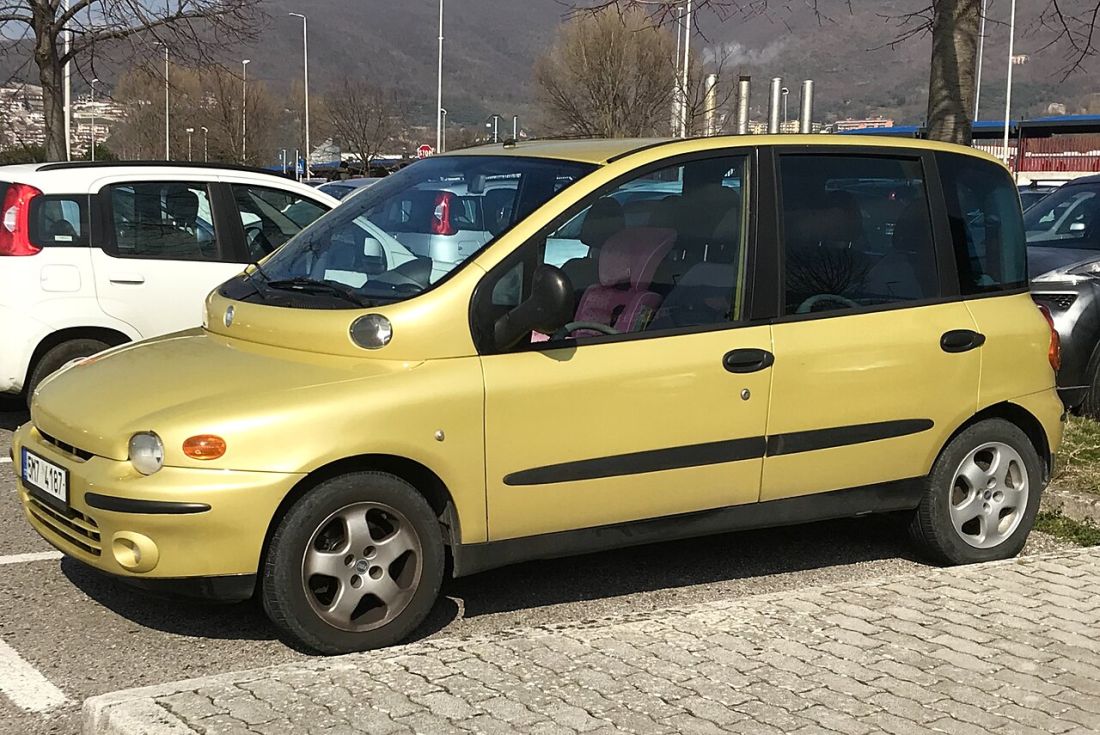
Photo: Fiat Multipla by Corvettec6r, CC BY-SA 4.0, via Wikimedia Commons.
The Multipla had a problem that many clever ideas have: it looked new before people were ready for it. That happens a lot with cars. A design lands, everyone points and laughs, then years later people say, “Actually, that was ahead of its time.” Maybe the Multipla wasn’t pretty. Maybe it still isn’t. But it had ideas that car makers still chase now: better use of space, flexible seating, big windows, a friendly cabin, and a body shape built around real people rather than showroom poses. Hagerty’s interview-led piece on the car explains how the team moved away from a three-row layout because it would have hurt luggage space, and made the car wider so six people could sit in two rows instead.
That one choice tells you nearly everything. The Multipla wasn’t asking, “How do we look safe and normal?” It was asking, “How do we carry six people and their stuff without making the car huge?” That’s a bolder question. It’s also a question that makes sense in real life. Most families don’t live inside glossy car adverts. They live with muddy shoes, last-minute lifts, football bags, traffic near the Etihad, rain on the school run, and someone in the back asking if you’re nearly there after seven minutes. In that setting, clever beats pretty. Not every time, because we all like nice-looking things, but more times than people admit. The Multipla forced that awkward little truth into the open.
What the Multipla can teach us about buying a used car now
The best lesson from the Multipla is simple: look past the first impression. That doesn’t mean ignore style. You have to like your car enough to see it on the drive every morning. But a good used car has to do a job, and the job matters. If you’ve got children, check how easy the rear doors are to use. If you carry parents or grandparents, check the seat height and door opening. If you go to the Lakes, Wales, or just the big shop at Stockport, check the boot with the seats in the position you’ll use most. If you drive through tight streets, check visibility and parking ease. If your family has three children, don’t just count seats, check how wide they are and whether child seats fit side by side. The Multipla got mocked because it looked odd, but many owners loved it because it solved these boring, daily problems with real confidence. And boring problems are the ones that make or break a car. Nobody wants to discover, two weeks after buying, that the boot is useless once the seats are up, or that the back seat turns every trip into a shoulder fight. So, take a bit of Multipla thinking with you. Sit in the car. Move the seats. Open every door. Picture a wet Thursday in February, not a sunny test drive with an empty cabin. That’s when the right car proves itself. Quietly. No fuss.
A car that made sense, even if it made people stare
The Fiat Multipla will probably never be called beautiful by most people. And that’s fine. It doesn’t need a makeover in our memory. The strange face is part of the story. The high roof, wide body, big glass, and six-seat cabin all made it what it was. It was a brave family car that cared about space, light, and people sitting comfortably. It carried ideas from the 1956 Fiat 600 Multipla, then twisted them into a late-nineties shape that still gets people talking. Some cars fade away because they were dull. The Multipla didn’t fade. It became a punchline, then a cult favourite, then a reminder that useful design can look odd at first. And honestly, there’s something very Mancunian about that. A bit scruffy round the edges, not bothered about pleasing everyone, but full of character and better than outsiders expect. If you saw one parked near Stockport Pyramid or crawling through Eccles traffic, you’d look twice. You might laugh. Then, if you opened the door and saw the space inside, you might laugh again, but for a different reason. Because Fiat had pulled off something cheeky. Something practical. Something clever. The Multipla proved that a car doesn’t have to win a beauty contest to win people over. Sometimes it just has to make life easier, one strange-looking trip at a time.