


Cars That Became Famous Thanks to British TV Shows
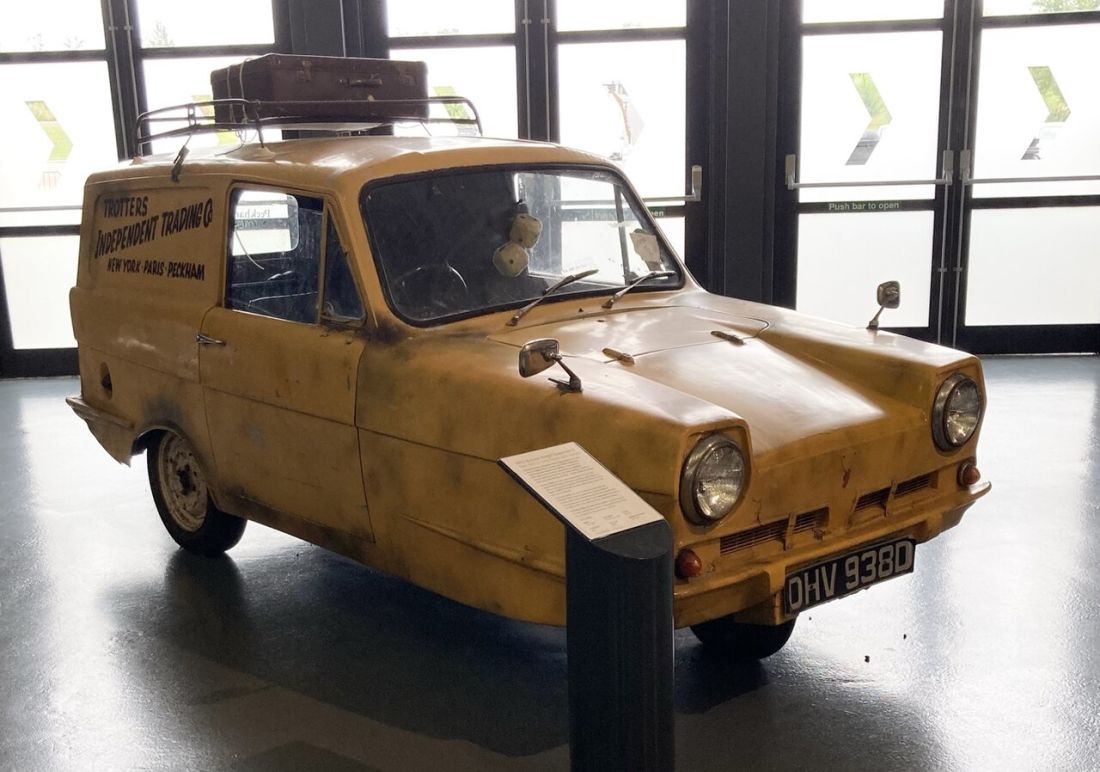
Photo: A Reliant Regal that was used in Only Fools and Horses, on display at the British Motor Museum by Hlliwmai, CC BY-SA 4.0, via Wikimedia Commons.
You know how some cars are just cars, and some cars feel like they’ve got a whole personality? That’s what British television has done again and again. A small yellow van, a grumpy green Mini, a copper-brown Cortina, a posh old Jaguar, they all became part of the story. You could park one of them outside Stockport Market on a wet Saturday morning and someone would point at it before they pointed at a supercar. That’s the funny thing about fame. It doesn’t always need speed, shiny paint, or a huge engine. Sometimes it just needs the right character behind the wheel, a catchy theme tune, and a few moments that stick in your head for years. At Dace Motor Company, we see all sorts of used cars across Manchester and Stockport, from everyday hatchbacks to premium German saloons, and it’s always clear that people don’t just buy metal and tyres. They buy memories, habits, little hopes, and sometimes a car they’ve fancied since watching telly with a brew on the sofa. Dace Motor Company is a family-run used car business with sites around Stockport and Greater Manchester, including Reddish, Manchester Road in Stockport, and Eccles, and the company offers used cars, finance options, history checks, and an in-house warranty. So, let’s have a proper look at the cars British television made famous. No stiff museum talk. Just good cars, great shows, and a bit of local chat along the way.
The Reliant Regal Supervan III from Only Fools and Horses
Let’s start with the little yellow van that somehow became bigger than most luxury cars. Del Boy’s three-wheeler from Only Fools and Horses is widely called a Reliant Robin by people in the pub, but that’s not quite right. It’s a Reliant Regal Supervan III, and the National Motor Museum calls it possibly the nation’s most famous three-wheeled vehicle. That’s a big claim, but come on, it feels fair. The van carried the Trotter family about, carried their stock, carried their dreams, and, most of the time, carried a joke before anyone even said a line. Yellow paint. “Trotters Independent Trading” on the side. New York, Paris, Peckham. Lovely nonsense. The National Motor Museum also says it was the Trotters’ main transport before Del Boy later moved up to a Capri Ghia. The funny bit is that the van looks like the least glamorous thing on the road, yet it’s pure television gold. It’s the sort of thing you’d spot near Stockport Viaduct and instantly smile at, even if you were stuck in traffic and late for work. And that’s why it worked. Del Boy didn’t need a flash car to feel ambitious. The van told you everything. He wanted the good life, but he was still squeezing boxes into a tiny three-wheeler and hoping next week would be better. We’ve all had cars like that in one way or another. Maybe not a yellow Reliant, thankfully, but a car that got us through college, a first job, the school run, or a house move where everyone said, “Yeah, it’ll fit,” and it absolutely didn’t.
Mr Bean’s 1977 Mini 1000
Then there’s Mr Bean’s Mini, the car that looked like it was having a bad day before Mr Bean even climbed in. The Mini most closely linked with the show was a 1977 Leyland Cars Mini 1000 Mark IV in Austin Citron Green, with a matte black bonnet and the number plate SLW 287R. MINI’s own heritage page says that version first appeared in the third episode, The Curse of Mr. Bean, though more than one Mini was used while filming. It’s hard to think of a better car for that character. A big car would’ve ruined the joke. A sleek sports car would’ve felt wrong. The Mini was small, cheeky, stubborn, and somehow able to look embarrassed. That’s a rare gift for a car. It made Mr Bean’s silent chaos even funnier, whether he was packing far too much into it, sitting on top of it, or battling that poor blue three-wheeler that always seemed to be in the wrong place. Around Manchester, a classic Mini still gets attention. You might see one buzzing near the Northern Quarter or parked up by a café in Chorlton, and it pulls people in because it feels friendly. Not perfect. Not polished to death. Just fun. Mr Bean’s Mini became famous because it was the right match: simple car, simple shape, huge character. And it’s a good reminder that a memorable car doesn’t have to be expensive. Sometimes the best car is the one that fits you, your sense of humour, and your daily life. Even if, ideally, you don’t strap an armchair to the roof and steer with a mop.
Gene Hunt’s Ford Cortina from Life on Mars
For us in Greater Manchester, Gene Hunt’s Ford Cortina hits a bit differently. Life on Mars wasn’t just set anywhere. It threw Sam Tyler back into 1970s Manchester, with brick streets, old policing, sharp suits, smoky rooms, and Gene Hunt roaring about like the city owed him money. The car most people picture is the copper-brown Ford Cortina Mark III, the kind of car that looks like it should smell faintly of vinyl seats, petrol, and someone’s dad’s aftershave. The London Evening Standard described Gene Hunt’s original Life on Mars star car as a 1974-registered golden Ford Cortina used in the hit show’s first series, while auction listings and classic car pages link the Gene Hunt look with the Mark III Cortina 2000E or GXL style. The Cortina worked because it felt completely at home in that version of Manchester. It wasn’t a background prop. It was part of Gene’s swagger. If that car came thundering down the Mancunian Way, you’d know exactly who was driving before the door even opened. And let’s face it, Manchester drivers have seen a few bold moves on the road, but Gene Hunt’s driving style is best left on screen. The Cortina also shows why older cars can carry so much feeling. Newer cars can be smoother, safer, cleaner, and easier to live with. But older cars have a shape that sticks. Their colours are braver too. Copper brown with a vinyl roof? That sounds strange now, but on screen it became a badge of character. It told you that Gene was rough, loud, proud, and not about to ask permission.
Inspector Morse’s Jaguar Mark 2
Some television cars shout. Morse’s Jaguar Mark 2 doesn’t. It clears its throat, pulls up outside an Oxford college, and somehow makes a murder mystery feel even more serious. Inspector Morse drove a Jaguar Mark 2, a car with round headlamps, curved wings, polished wood inside, and the sort of quiet confidence that says, “I know exactly where I’m going, even if I’m annoyed about it.” Smiths Instruments describes Morse as driving a British Jaguar Mark 2 around Oxford while solving cases, and the car became tied to John Thaw’s version of the character. It’s a clever bit of casting, really. Morse was clever, moody, cultured, and a bit difficult. The Jaguar fitted him better than a modern police car ever could. You could imagine him pulling up near the Bridgewater Hall after a concert, giving someone a dry look, then driving off without much fuss. That’s the magic here. The Jaguar didn’t need stunts. It didn’t need to crash through boxes or skid around corners every week. It had presence. Loads of it. A car like that makes people slow down and look. It also reminds us that condition matters with older, characterful cars. A classic Jaguar can be beautiful, but beauty alone doesn’t pay for repairs. If you’re buying any used car, classic or modern, you want to know its story, check the paperwork, listen for odd noises, and make sure your heart isn’t doing all the thinking. That’s not boring. That’s how you enjoy the car after the excitement of buying it has calmed down.
The Lotus Seven from The Prisoner
The Lotus Seven from The Prisoner is a different kind of famous. It’s small, low, quick-looking, and full of attitude. Patrick McGoohan’s character, Number Six, drives a Lotus Super Seven in the opening credits, and Hagerty says the first twelve episodes opened with McGoohan driving a Lotus Super Seven Series II demonstrator, registration KAR 120C, with a Cosworth-tuned 1.5-litre engine. That is a proper bit of car nerd joy, but even without the details, you get it straight away. The Lotus looked rebellious. It didn’t look comfy. It didn’t look sensible. It looked like a car for someone who would rather resign, cause trouble, and refuse to explain himself. Perfect, then. The Prisoner was strange, stylish, and full of mystery, and the Seven gave it a burst of speed before the story even got going. It’s also a great example of how television can change the way people feel about a car. The Lotus Seven was already a brilliant lightweight sports car, but the show gave it myth. Suddenly it wasn’t just a car. It was freedom, defiance, and a bit of British weirdness on wheels. Around our part of the country, where you can go from Stockport streets to Peak District bends pretty quickly, you can see the appeal of a light little sports car. Maybe not every day, especially in sideways rain near the A6, but on the right morning? Lovely. The lesson here is simple: the right car can say something before you do. The Lotus said, “I’m not joining in.” And honestly, that’s why people still remember it.
Terry McCann’s Ford Capri from Minder
The Ford Capri already had a bit of swagger before Minder, but Terry McCann’s white Capri gave it another layer. It was the car of a man who looked tough, lived by his own rules, and still spent a lot of time cleaning up Arthur Daley’s messes. H and H Classics described Terry McCann’s famous 1977 Ford Capri 2.0 S from Minder as being driven by Terry in the opening sequence and at points during the series, with the car finished in Ford polar white after restoration. That’s why the Capri worked. It wasn’t just a sporty Ford. It was Terry’s armour. Sleek enough to be cool, common enough to feel real, and sharp enough that kids watching at home could think, “Yeah, I’d have one of those.” You can picture it parked outside a lock-up, a caff, or somewhere slightly dodgy where Arthur is pretending everything is fine. In Manchester and Stockport, the Capri has that same old-school pull. It’s the kind of car that makes someone’s uncle say, “I had one of them,” and then tell a story that starts well and ends with a clutch problem near Bury. The Capri became famous because it looked exciting without being totally out of reach. That’s a powerful mix. It gave normal people a taste of coupe life. Long bonnet, short back, low roof, and enough charm to make a supermarket run feel like a scene. And, yes, if you’re looking at any older sporty car now, you’ll want to check for rust, past repairs, and how well it’s been cared for. Romance is great. A rotten floor is less romantic.
The Sweeney’s Ford Consul and Granada
The Sweeney made big Ford saloons look like they were built for door-slamming, tyre-squealing, and shouting across London streets. The show helped turn cars like the Ford Consul and Granada into proper screen bruisers. The Federation of British Historic Vehicle Clubs says a 1974 Consul was supplied to Euston Films for The Sweeney, with Ford first supplying a blue car before the producers wanted a brighter colour so it would stand out better on camera. That little detail tells you a lot. Television cars aren’t picked by accident. They have to show up. They have to read well on screen. They have to fit the mood. The Sweeney needed cars that felt heavy, fast, and a bit rough round the edges. A tiny city car wouldn’t have done the job. You needed something with weight. Something that could charge round a corner and look like it meant business. The Granada and Consul had that. They were everyday enough for viewers to know them, but tough enough to look right in a chase. Around Greater Manchester, you still see modern versions of that idea. Not the same cars, of course, but the same thinking. Some cars feel calm and family-friendly. Some feel built for long motorway miles. Some feel ready for a rough commute through rain, roadworks, and someone cutting in near the Trafford Centre. The Sweeney’s Fords became famous because they were believable. They weren’t fantasy machines. They were cars you might see on the street, suddenly thrown into high drama. That’s why they stuck. They made normal roads feel like a film set.
Doctor Who’s Bessie
Doctor Who has the Tardis, so it feels a bit cheeky that one of its most loved vehicles is also a little yellow car called Bessie. But there we are. Bessie is charming, bright, and wonderfully odd. The National Motor Museum says Bessie first appeared in Doctor Who and the Silurians in 1970, appeared regularly with the Third Doctor, and was based on a 1954 Ford Popular chassis with an Edwardian Tourer body by Siva Engineering. That’s such a Doctor Who detail, isn’t it? It looks old, but it isn’t quite what it seems. It’s part car, part costume, part joke, and part hero. Jon Pertwee’s Doctor had style, capes, gadgets, and a taste for vehicles that felt dramatic. Bessie fitted that version of the Doctor beautifully. She was sunny and strange, but also useful. She gave the Doctor a way to rush around Earth when the story kept him away from his usual time-travelling box. For younger viewers, Bessie looked like a toy come to life. For adults, she had that kit-car charm and Sunday-drive feel. You can imagine her parked near Lyme Park, getting more attention than half the cars in the car park. Bessie became famous because she made sense in a show where sense is allowed to wobble a bit. She didn’t need to be realistic in a dull way. She needed to feel right. That’s something television does so well. It lets a car be a character, with colour, mood, and quirks. And once people love it, they remember it for decades.
Why these cars still matter
The best thing about these famous British television cars is that they aren’t all dream cars. Some are scruffy. Some are tiny. Some are old saloons your grandad might have known. One is a three-wheeled van with a business name painted on the side. That’s why people love them. They feel close enough to real life. You can keep your posters of supercars, and fair enough, they’re exciting. But there’s a special place in British car culture for vehicles that look like they’ve lived a bit. These cars remind us that a car’s value isn’t just price. It’s the school run where everyone sang badly. The first job commute down the M60. The late-night drive back from town. The car your dad washed every Sunday even though it rained five minutes later. The television cars became famous because they carried stories we understood. Del Boy’s van carried hope. Mr Bean’s Mini carried chaos. Gene Hunt’s Cortina carried swagger. Morse’s Jaguar carried quiet brainpower. Bessie carried magic. Terry’s Capri carried cool. And The Sweeney’s Fords carried pure noise and trouble. So next time you’re looking at used cars, don’t just ask, “What does it cost?” Ask, “Will this fit my life?” Ask if it feels right for your roads, your family, your work, your weekends, your parking space, and your patience. A car doesn’t need to be famous to be loved. But the famous ones show us why we get attached in the first place.