


The Most Unusual AMG Models Ever Made
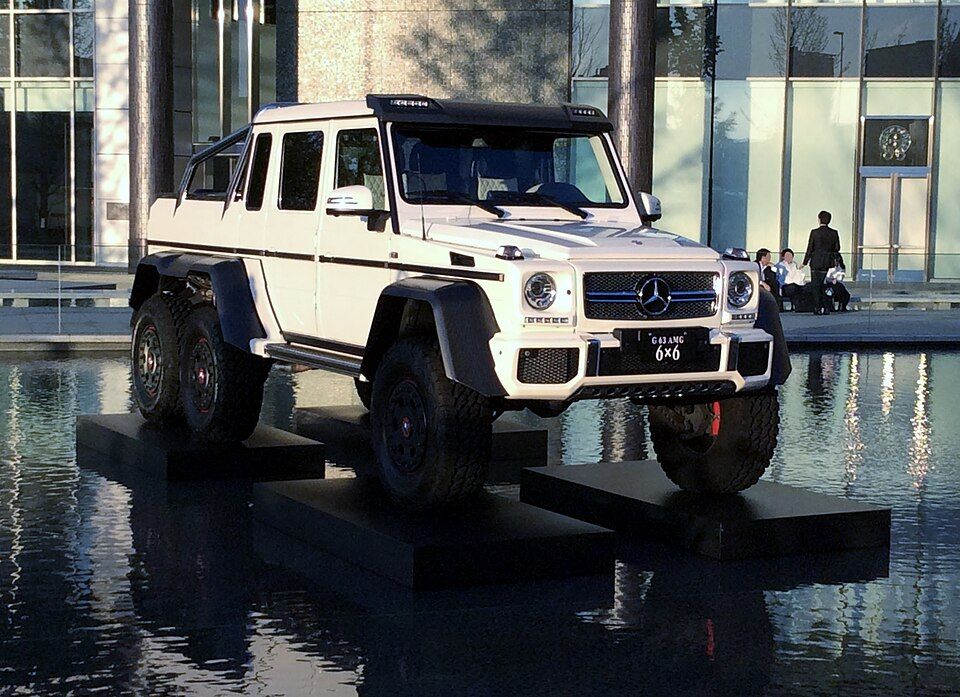
Photo: Mercedes-Benz G63 AMG 6×6 (W463) by Tokumeigakarinoaoshima, CC0, via Wikimedia Commons.
AMG cars have a clear reputation. You expect a serious Mercedes, a huge engine, a deep exhaust note and enough speed to make a quiet slip road feel like the start of a race. That picture is fair, but it misses the stranger side of the story. AMG has built, tested or helped create cars that sound like ideas from a late-night workshop chat: a small family hatchback with two engines, a luxury six-seater that could sprint like a sports car, a diesel coupe wearing an AMG badge, a six-wheel truck and a silent electric gullwing. There was even a Mitsubishi with AMG work on it. Yes, really.
At Dace Motor Company, we spend our days around used cars, so we know that the most memorable machines aren’t always the obvious poster cars. Sometimes the model that sticks in your head is the one that makes you stop, look twice and ask, “Who approved that?” These unusual AMGs matter because they show a company willing to try things, make mistakes, test fresh ideas and build cars that don’t fit into a neat box. Some became rare collector pieces. Some pointed to trends that arrived years later. A few still feel slightly mad now, which is part of the charm.
So, let’s look at the oddballs. This isn’t a ranking based on lap times or price. It’s a collection of AMG machines that broke the normal pattern, whether through their body shape, engine choice, badge, layout or purpose. Picture the sort of cars that could turn heads near Stockport Viaduct, look a bit unreal in Trafford Centre traffic, or make a wet run around the M60 far more dramatic than it needs to be.
Mercedes-Benz A 38 AMG: The Tiny Hatch With Two Engines
The first-generation Mercedes A-Class was built as a clever, compact family car. It had a tall body, a short nose and a special floor layout that gave engineers extra room below the cabin. Nobody looked at it and thought “wild AMG experiment”. That’s exactly why the A 38 is so brilliant.
The car, also described as the A 190 Twin, used two 1.9-litre engines. One sat at the front and drove the front wheels. The other was fitted beneath the rear load area and drove the rear wheels. Together they gave the little hatch around 250 horses, which was a serious figure for a compact car at the end of the 1990s.
It sounds like a shed-built project, but the work was much neater than that. The two engines were linked so the driver could use the car as an all-wheel-drive machine, and reports from the time put the sprint to 100 kilometres per hour at about 5.7 seconds. That was quick enough to trouble proper sports cars of the period. The claimed top speed was around 230 kilometres per hour.
From the outside, the car still looked like a first-generation A-Class with a sportier stance, wider wheels and a few visual clues. The surprise was hidden underneath. You might have seen it parked outside a supermarket and assumed it belonged to someone doing the weekly shop. Then both engines would start.
The strangest part is how sensible the idea was from an engineering point of view. Rather than forcing one huge engine into a tiny front bay, the team used the space built into the car’s unusual floor. It also meant drive went to all four wheels without creating a completely fresh system from scratch.
The A 38 never became a normal showroom model, but it showed the sort of playful thinking that later made compact AMG cars feel believable. Today, a fast A-Class is no shock at all. Back then, a twin-engine version sounded like something your mate would invent after two coffees and a long argument about traction.
Mitsubishi Galant AMG: The Badge That Seems to Be on the Wrong Car
Seeing an AMG badge on a Mercedes makes sense. Seeing one on a Mitsubishi Galant feels like spotting a Manchester tram in the middle of rural Bavaria. Yet the Galant AMG was real.
It came from a period before AMG became fully tied to Mercedes-Benz, when the company still took on outside projects and sold its own conversions. Mitsubishi’s official history includes the Galant AMG in the model’s family tree, and the car remains one of the clearest reminders that the three famous letters once travelled beyond Mercedes showrooms.
The Galant AMG arrived in Japan around the end of the 1980s. It was based on the sixth-generation Galant and used a naturally breathing 2.0-litre four-cylinder engine, rather than the turbocharged setup found in the rally-focused Galant VR-4.
AMG changed the engine breathing, camshafts, exhaust and tuning, lifting output to around 170 metric horses. The car also gained its own body details, wheels, interior trim and badges. It wasn’t a loud, giant-winged special. It looked smart and quite restrained, which makes the badge even stranger at first glance.
There’s a good lesson here. AMG wasn’t born as a simple trim level. It began as an independent engineering business, and its name meant mechanical work, racing knowledge and custom builds. A Galant fitted that older way of working, even though it feels unusual from today’s viewpoint.
It also had a different character from the later turbocharged Japanese saloons many people connect with the era. The Galant AMG was about sharp response and a cleaner, faster-spinning engine, rather than huge boost and dramatic four-wheel-drive launches.
Would most drivers in Manchester recognise one at a set of lights? Probably not. A few keen car fans would, then they’d spend the next hour checking whether the badge was genuine. That rare mix of Japanese saloon and German tuning history makes it one of the oddest genuine AMG-related cars.
Mercedes-Benz C 30 CDI AMG: The Diesel That Broke the Rulebook
For years, AMG meant petrol engines, noise and high revs. Then the C 30 CDI AMG arrived with a diesel engine. Even now, that sentence sounds a little strange.
Launched in the early 2000s, the C 30 used a 3.0-litre, five-cylinder turbo diesel with 231 horses and 540 newton metres of pulling force. It could reach 100 kilometres per hour in 6.8 seconds and was limited to 250 kilometres per hour. Those figures were strong for the time, especially for a compact diesel Mercedes.
The engine started life as a smaller Mercedes diesel, then AMG increased its size and changed major parts to create the 2,950 cubic centimetre unit. It used common-rail fuel injection and a turbocharger, and each engine carried the builder’s signed plaque.
You could buy the C 30 as a saloon, estate or Sport Coupé, depending on the market. That made it even more unusual. This wasn’t a one-off motor-show toy. It was a proper customer car, built for people who wanted huge mid-range shove and longer-distance economy without giving up the AMG badge.
Imagine the use case around Greater Manchester. You could leave Stockport, join the motorway, cruise across the region and still have enough low-rev force to pass slower traffic without much drama. It was fast, but its personality came from a strong surge rather than a screaming engine.
That split opinions. Some fans felt a diesel could never carry the same emotion as a big petrol V8. Other drivers saw it as a clever mix of pace and everyday range.
AMG never turned diesel into a long-running family of models. That makes the C 30 feel like a fascinating branch that ended early. Yet the basic idea, a fast premium car with a fuel-saving engine and serious real-road pace, became very common across the industry.
The C 30 was strange, but it wasn’t silly. It simply arrived before many buyers were ready to accept what it was.
Mercedes-Benz R 63 AMG: The Family Bus With a Hand-Built V8
The Mercedes R-Class was hard to describe from the start. It was part estate car, part luxury people carrier and part large sport utility vehicle. It had a long cabin, up to six seats in many versions and the kind of shape built for airport runs, family holidays and huge weekly shops.
Then AMG fitted a 6.2-litre V8.
The result was the R 63 AMG, one of the funniest examples of putting a very serious engine into a body that looks ready for a school run.
This wasn’t a mild upgrade. The long-wheelbase R 63 had 510 horses, 630 newton metres of pulling force and permanent drive to all four wheels. Mercedes-Benz’s archive lists a 0 to 100 kilometres per hour time of 5.1 seconds and a limited top speed of 250 kilometres per hour.
It weighed 2,375 kilograms without passengers, yet it could move with the urgency of a much smaller car. The brakes were huge, the wheels measured 20 inches and the air suspension was tuned to cope with the extra speed.
The production figure makes it even more special. Mercedes-Benz records 238 long-wheelbase examples. That’s tiny beside normal family-car numbers, and it helps explain why many enthusiasts have never seen one in person.
The R 63 also disappeared after a very brief run from 2006 to 2007. Buyers may have struggled with the idea, the price, the fuel use or all three. A fast estate was easy to grasp. A fast luxury people carrier sat in a strange middle ground.
And yet, the R 63 makes sense once you picture real life. You could carry several adults, luggage and shopping, then join the motorway with the sort of acceleration that would make everyone look up from their phones.
It was excessive, but useful. Ridiculous, but comfortable. A bit like wearing racing boots to walk around the Arndale Centre. You don’t need to do it, but you’ll remember the person who did.
Mercedes-Benz G 63 AMG 6x6: Six Wheels and Zero Interest in Being Subtle
The normal G-Class already looks ready to climb a wall. The G 63 AMG 6x6 looked ready to climb the wall, cross the roof and park on the other side.
Revealed in 2013, it used three axles, six driven wheels, huge tyres and portal axles that raised the body far above the wheel centres. It mixed military-style off-road hardware with a leather-lined luxury cabin and an AMG V8. The result was closer to a desert truck than a normal road car.
The 5.5-litre twin-turbo V8 produced 544 horses and 760 newton metres of pulling force. Drive went through a seven-speed automatic gearbox to all six wheels.
The vehicle had five differentials that could be locked, plus a tyre-pressure system that let the driver adjust the tyres from inside the cabin. Ground clearance was about 460 millimetres and the official wading depth was around one metre.
Those numbers explain why it could cross deep sand and rough ground, but they don’t explain the visual shock. It was nearly six metres long, well over two metres wide and tall enough to make many city car parks feel like a bad idea.
This is where the 6x6 becomes funny for UK readers. Manchester roads can get wet, potholes can be nasty and a winter trip over Snake Pass can turn grim, but six driven wheels might be a touch excessive.
Parking near Deansgate would become a group project. A narrow Stockport side street would feel like an off-road stage. Fuel stops would become regular social events.
Still, the car had real engineering beneath the theatre. It drew from a military six-wheel G-Class layout and then added the speed, finish and noise expected from AMG.
Very few cars have mixed luxury and heavy-duty off-road ability in such an extreme way. The 6x6 wasn’t trying to blend in. It arrived, filled the view and made every normal sport utility vehicle look slightly shy.
Mercedes-Benz SLS AMG Electric Drive: The Silent Gullwing From the Future
The SLS AMG was known for its long bonnet, dramatic upward-opening doors and a large petrol V8. The Electric Drive version removed the engine that many buyers saw as the heart of the car.
In its place came four electric motors, one for each wheel, and a large battery pack. The shape still looked familiar, but the car beneath the skin was completely different. In 2013, that was a bold move. Electric supercars were still rare enough to feel like science fiction.
The finished car delivered 552 kilowatts, equal to about 740 brake horses, and 1,000 newton metres of pulling force. It reached 100 kilometres per hour in 3.9 seconds and was limited to 250 kilometres per hour.
Each motor could be controlled separately, so the car could send a different amount of drive to each wheel. That helped it turn, grip and settle itself in a way a normal mechanical four-wheel-drive system couldn’t copy as quickly. It also used a different front suspension layout to make room for the electrical hardware.
Then came the Nürburgring result. Mercedes-AMG recorded a lap time of 7 minutes 56.234 seconds on the long northern track, making the SLS Electric Drive the first electric series-production car to go below eight minutes there.
That mattered because it showed an electric car could be much more than a quiet city machine. It could survive a demanding track lap and still deliver serious speed.
The oddness came from the contrast. Gullwing doors suggested old-school drama. The bright paint looked like a highlighter pen. Yet the car moved without the V8 roar people expected.
The price was also huge, around 416,500 euros in Germany, so it was never going to be common. Even so, it predicted the direction of modern fast cars: individual motor control, instant response and software shaping how the car moves.
It looked strange in 2013. Now it looks like an early warning.
Mercedes-Benz SL 73 AMG: A Calm Roadster With a Giant 7.3-Litre V12
The SL 73 AMG didn’t look as wild as the six-wheel G-Class. That’s what made it so sneaky.
The body was based on the elegant R129 Mercedes SL, a car linked with comfort, solid build quality and relaxed open-top driving. Under the bonnet, though, sat a 7.3-litre V12.
Mercedes-Benz’s archive lists 525 horses and 750 newton metres of pulling force, with 0 to 100 kilometres per hour taking 4.8 seconds. The normal top speed was limited to 250 kilometres per hour, but cars could be prepared for speeds close to 300 kilometres per hour at a customer’s request.
A 7.3-litre engine is huge in any road car. In a two-seat luxury roadster, it feels even stranger.
AMG created it by heavily changing the V12 from the SL 600. The work included a larger bore and stroke, along with changes needed to handle the extra output. It still used a five-speed automatic gearbox, so the car’s character wasn’t about frantic gear changes. It was about a deep reserve of shove that could send the heavy roadster forward with very little fuss.
The SL 73 also has a famous link outside Mercedes. A related version of the AMG-built 7.3-litre V12 was used by Pagani in early Zonda models. That connection makes the SL feel like a supercar engine wearing a smart suit.
You could cruise through Cheshire with the roof down, looking calm, while carrying an engine linked with one of the most exotic cars ever built.
It’s unusual because it hides its scale. The badge is small. The styling is tidy. There are no extra axles or bright electric paint. But the number “73” tells the story.
This was AMG asking how far it could stretch a grand touring roadster without turning it into a cartoon. The answer was 7,291 cubic centimetres, twelve cylinders and enough speed to make a clear motorway feel very short.
Mercedes-Benz 300 TE AMG Hammer Wagon: The Estate Car That Scared Supercars
Before AMG became part of Mercedes-Benz, customers could take a sensible Mercedes and pay the independent company to transform it. The Hammer is the car that made this idea famous.
Most people picture the saloon or coupe, but the estate version is the stranger machine. It had the square shape, big load area and practical cabin of a late-1980s Mercedes wagon, plus a large AMG V8 and the supporting changes needed to handle the speed.
Hammer specifications varied because these were converted cars rather than one fixed factory model. Some used 5.6-litre engines, while later builds reached 6.0 litres.
The best-known versions used AMG’s four-valve cylinder heads and could make around 375 horses, a huge figure at the time. Car and Driver tested a Hammer saloon at 0 to 60 miles per hour in five seconds, with a measured top speed of 178 miles per hour.
The wagon carried the same basic shock value into a body made for dogs, luggage and family life.
One famous North American 300 TE conversion, nicknamed “The Mallet”, used a 6.0-litre AMG V8 rated at 310 horses and was one of two such single-cam wagons recorded by the auction house that later sold it.
Other Hammer-style estates used different engine setups, so it’s best to treat each surviving car as its own story. That variation is part of the appeal. These cars came from a period when a customer, a base Mercedes and a large budget could produce something deeply personal.
The estate shape makes the whole idea land harder. A low sports car is meant to be fast. A boxy wagon with roof rails isn’t supposed to chase one.
The Hammer estate helped create a formula that later became normal across German brands: the very fast family car. Anyone who has seen a modern AMG estate blast past on the M60 can trace part of that attitude back to these rare, slightly intimidating machines.
Why These Strange AMGs Still Matter
These cars came from different decades and had very different jobs, but they share one habit: they challenged what an AMG was allowed to be.
The A 38 put two engines in a small hatchback. The Galant carried the badge onto a Japanese saloon. The C 30 used diesel. The R 63 turned a family cruiser into a V8 bruiser. The G 63 6x6 added an axle, the SLS Electric Drive removed petrol, the SL 73 hid a giant V12 under a tidy bonnet and the Hammer estate made practical bodywork feel slightly dangerous.
Some ideas lasted. Fast compact AMGs became normal. Electric AMG cars moved from experiment to showroom. High-speed sport utility vehicles and estates now make up a big part of the market.
Other ideas stopped almost at once. There hasn’t been another diesel AMG like the C 30, and a twin-engine hatchback still sounds wonderfully unlikely.
That mix is what makes the history interesting. A company’s character isn’t built only by its biggest successes. It also comes from the side roads, the prototypes and the models that made buyers scratch their heads.
For used-car fans, there’s another point. Rare doesn’t always mean sensible to own. Parts can be difficult, running costs can be serious and specialist knowledge matters.
A strange badge or low production number shouldn’t replace a full history check, careful inspection and a proper look at previous repairs. We’ve all seen cars that seem exciting in an advert but look very different once the paperwork and condition are checked.
Still, let’s face it, sensible choices aren’t the whole reason people love cars. The unusual ones give us stories. They start conversations at meets, fill late-night searches and make a normal drive feel like an event.
That’s why these AMGs remain fascinating. They remind us that behind the serious German image, there has always been room for a little mischief.